






George Washington Pays for Building Materials for Mount Vernon, Likely to Repair the Roof


Delivered to recipient Tench Tilghman in person by Gouverneur Morris
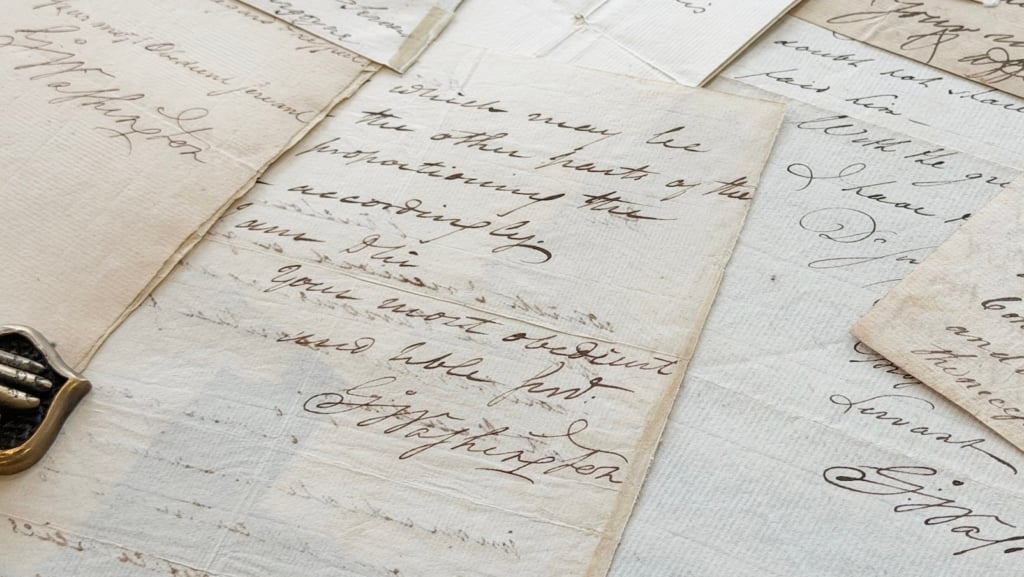
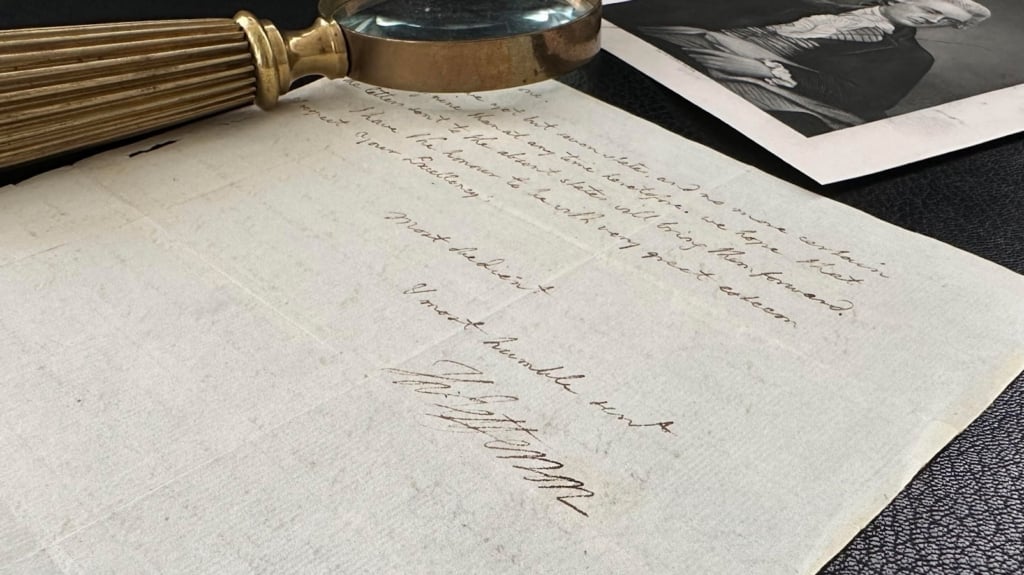
“By Mr Gov’r Morris I send you two Guineas and an half, which is about the cost of the plank you were so obliging as to send me by the Baltimore Packet.”
George Washington was actively engaged in making improvements to his Mount Vernon estate in 1785. There were a number of...


“By Mr Gov’r Morris I send you two Guineas and an half, which is about the cost of the plank you were so obliging as to send me by the Baltimore Packet.”
George Washington was actively engaged in making improvements to his Mount Vernon estate in 1785. There were a number of construction projects and much need for lumber.
Specifically, the iconic cupola crowning George Washington’s Mount Vernon estate was constructed during a major remodeling phase begun in 1785. It was designed for architectural symmetry, to cool the home in the summer, and to provide stunning views of the Potomac River. The construction utilized specially cut planks and exterior timber to mimic the aesthetic of cut-stone.
Richard Boulton was a house joiner hired by George Washington in 1785 to work at Mount Vernon. He came recommended by Virginia statesman William Fitzhugh, and on May 21, 1785, he signed articles of agreement with Washington to finish the New Room “in a plain and elegant manner, either of Stucco, Wainscot, or partly of both,” depending on Washington’s preference. His planned scope also included putting a new roof on the mansion, building the ceiling for the piazza, and doing the joiner’s work in the greenhouse — working alongside Mount Vernon’s other carpenters and joiners, some of whom were enslaved.
Washington agreed to pay him five shillings per day in Virginia currency plus a gallon of rum per week, and to transport his tools from Maryland at no charge. But by June, Boulton wrote to say he couldn’t hold up his end of the bargain because of pressure from his creditors. Washington’s reply on June 24, 1785 was pointed — he dismissed Boulton’s excuse as futile, noted that Boulton’s property and labor were the means available to satisfy his creditors, and pressed that he’d waited a long time on Fitzhugh’s recommendation and now had a leaking roof and endangered furniture as a result of the delay, insisting Boulton begin the work without further delay. “The roof of my house yields to every rain, & the furniture in no part of it is secure from the injuries which result therefrom.”
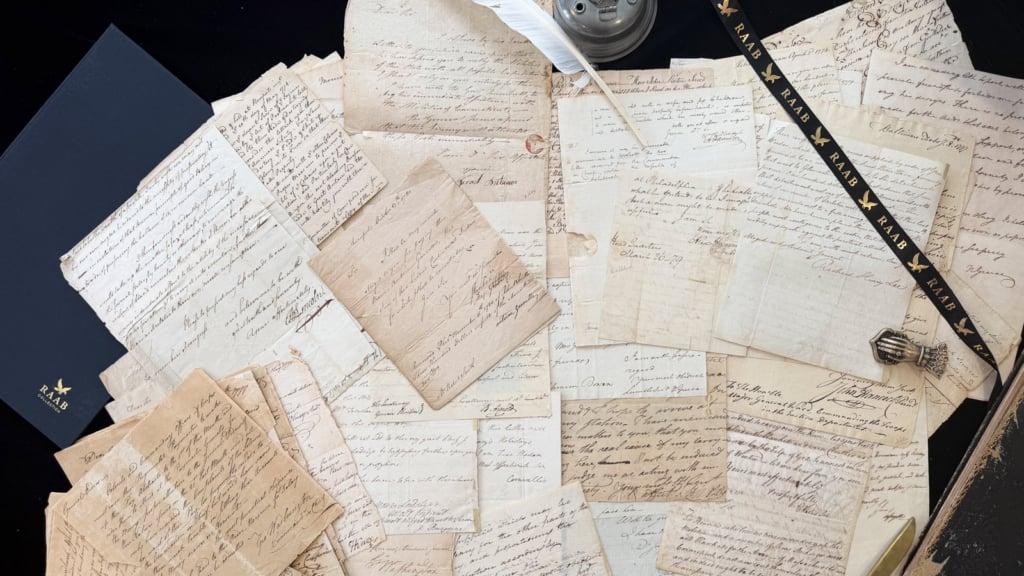
Washington wrote his long-time aide, Tench Tilghman, on May 23 asking him to secure lumber to be used by Richard Boulton to make interior improvements. Tilghman wrote Washington in response on June 4 that he had sent by the packet 357 feet of plank to merchant John Fitzgerald for Washington at a charge of £4.6.9 Maryland currency. The planks sent to Fitzgerald are likely the planks mentioned in this letter. In an entry dated June 30 in his cash accounts, Washington notes owing Tilghman money for planks.
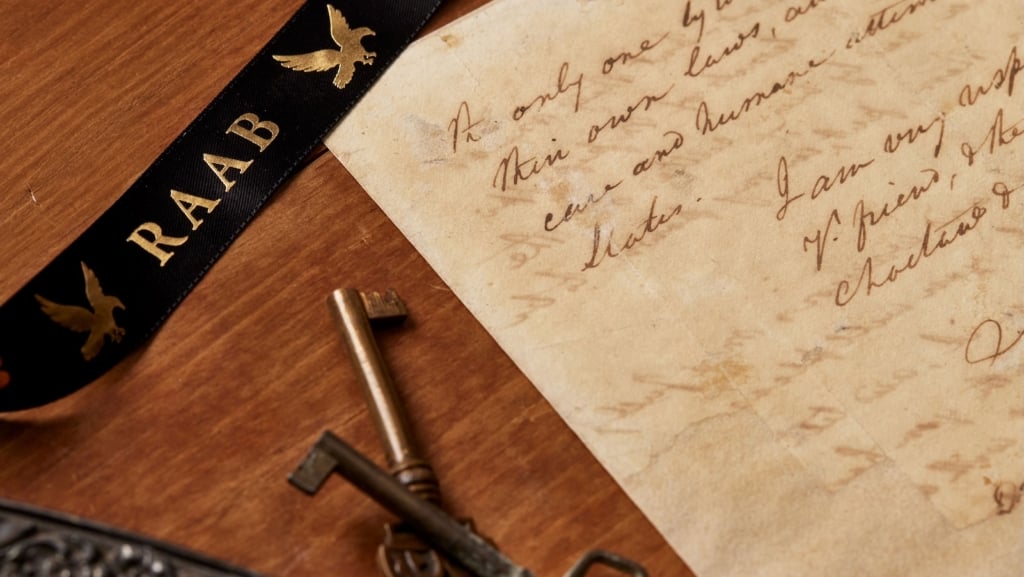
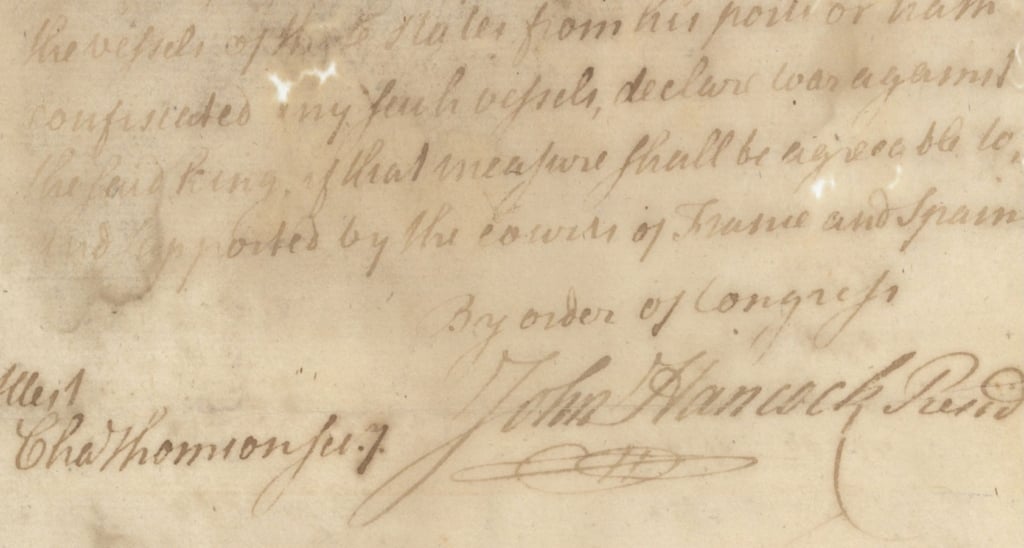
Autograph letter signed, Mount Vernon, July 6, 1785, to Tench Tilghman, and hand delivered to Tilghman by Founding Father Gouverneur Morris, repaying Tilghman for the money he had laid out for lumber. “Dear Sir: By Mr Gov’r Morris I send you two Guineas and an half, which is about the cost of the plank you were so obliging as to send me by the Baltimore Packet. Please to accept my thanks for your attention to that matter, and the assurances of the sincere esteem and regard with which, I am, Dear Sir, Y’r Most Obed’t and Affect. Hble. Serv’t, G. Washington.” The integral address panel in Washington’s hand is still present, addressed to “Tench Tilghman, Esq., Baltimore, Favored by Govr. Morris, Esq.” With integral address panel.
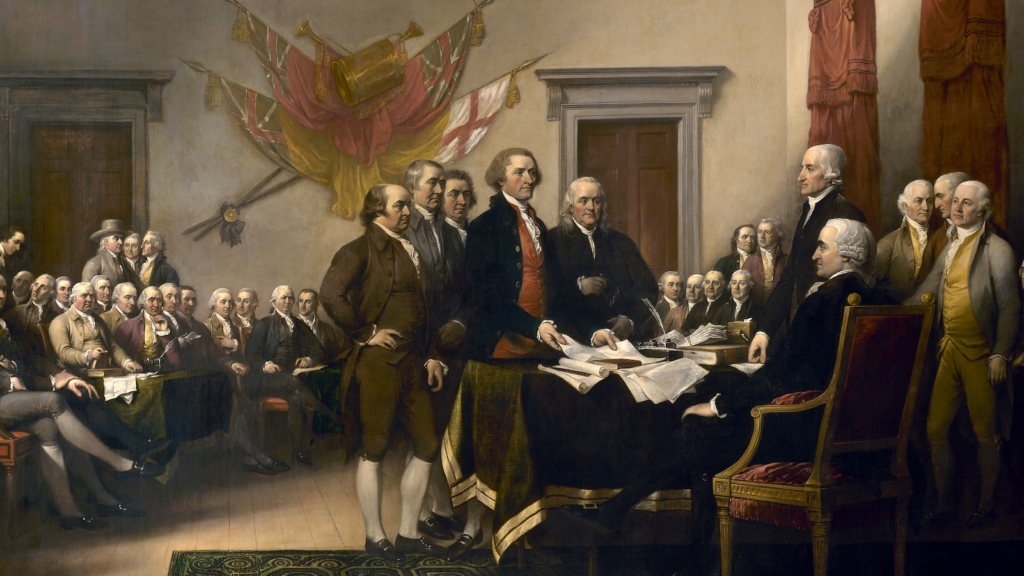
Gouverneur Morris contributed in multiple ways to building the core foundation of American government. At the start of the Revolution, Morris abandoned his British allegiances and devoted himself fully to the American revolutionary cause. Morris utilized his voice in the Continental Congress to assist General George Washington in reforming and financing the American military. After the Revolution, Morris and Washington remained steadfast in their joint pursuit of a strong central government, as the two statesmen worked alongside one another at the Constitutional Convention in 1787. He served as Washington’s second ambassador to France and proved an extremely valuable diplomatic envoy during the climactic years of the French Revolution. A signatory of both the Articles of Confederation and the United States Constitution, Morris was closely involved in the long process of establishing a functional, democratic government. Morris was at Mount Vernon from 5 to 7 July, 1785. Morris had been in Virginia prosecuting a lawsuit for Robert Morris to collect a debt from Carter Braxton. He was tasked by Washington to deliver this letter to Tilghman personally.
On July 17, 1785, Washington wrote Tilghman, “By Mr Gouvereur Morris I sent you the amount of the cost of plank, which you were so obliging as to send me from Baltimore.”

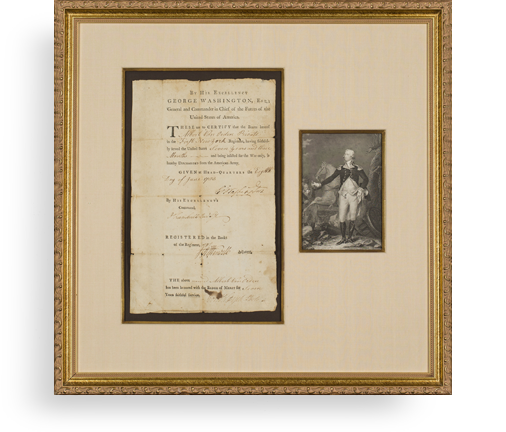
Frame, Display, Preserve
Each frame is custom constructed, using only proper museum archival materials. This includes:The finest frames, tailored to match the document you have chosen. These can period style, antiqued, gilded, wood, etc. Fabric mats, including silk and satin, as well as museum mat board with hand painted bevels. Attachment of the document to the matting to ensure its protection. This "hinging" is done according to archival standards. Protective "glass," or Tru Vue Optium Acrylic glazing, which is shatter resistant, 99% UV protective, and anti-reflective. You benefit from our decades of experience in designing and creating beautiful, compelling, and protective framed historical documents.
Learn more about our Framing Services

