




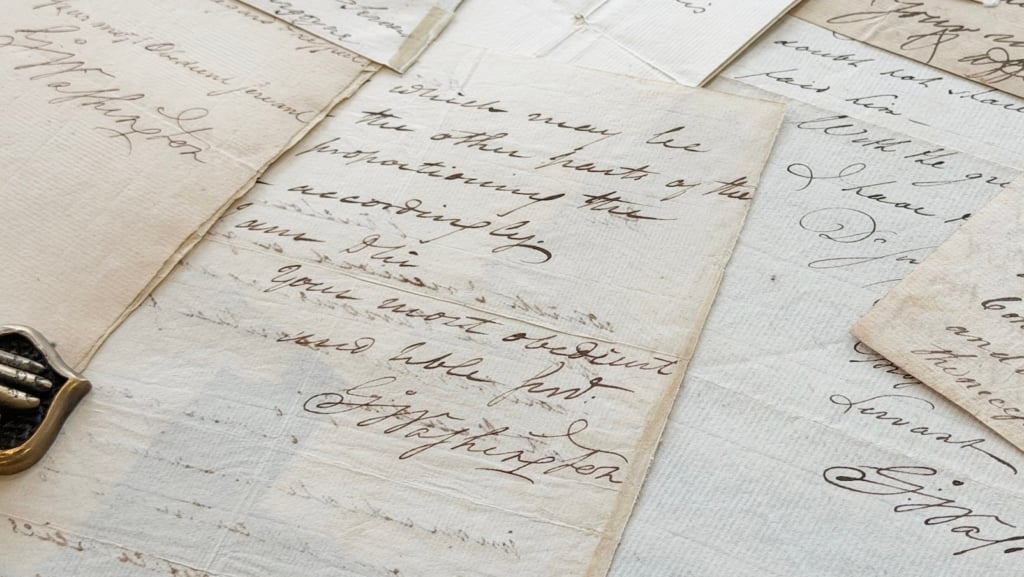
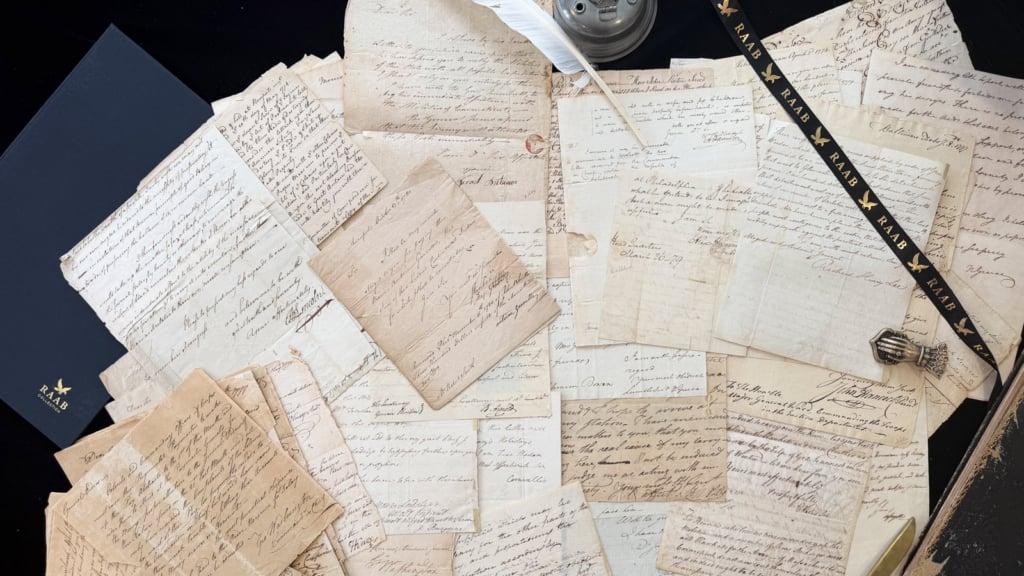
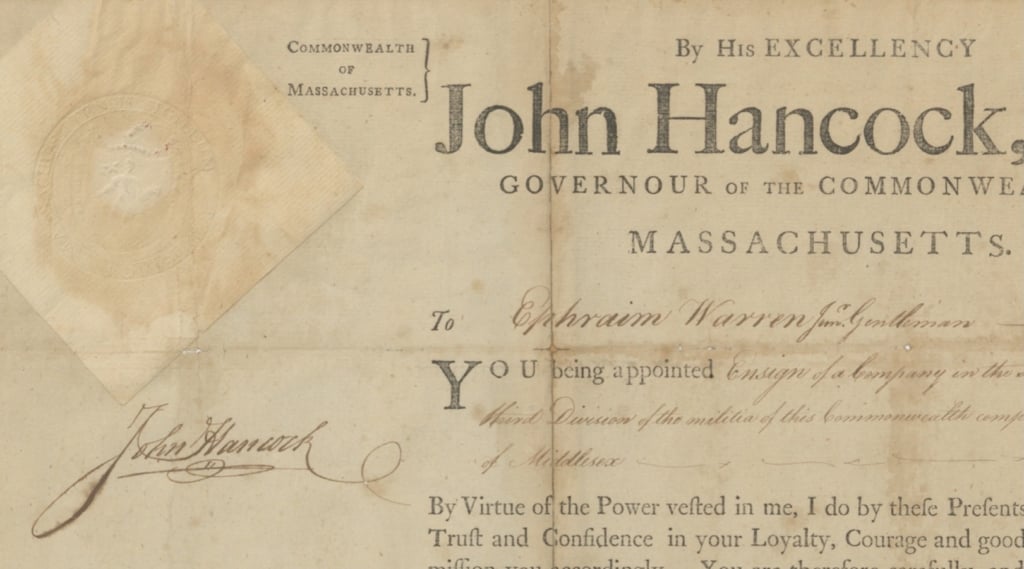
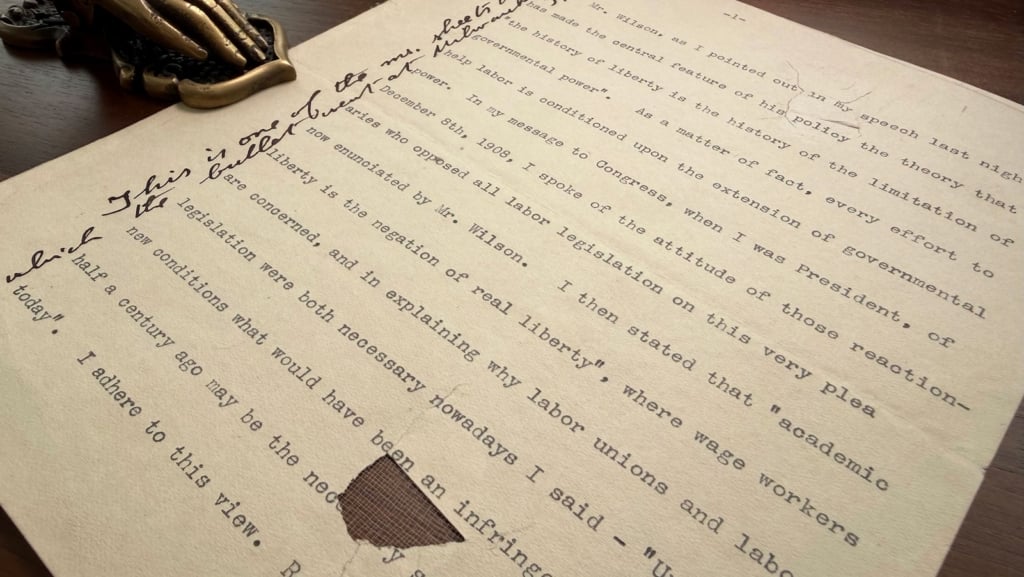
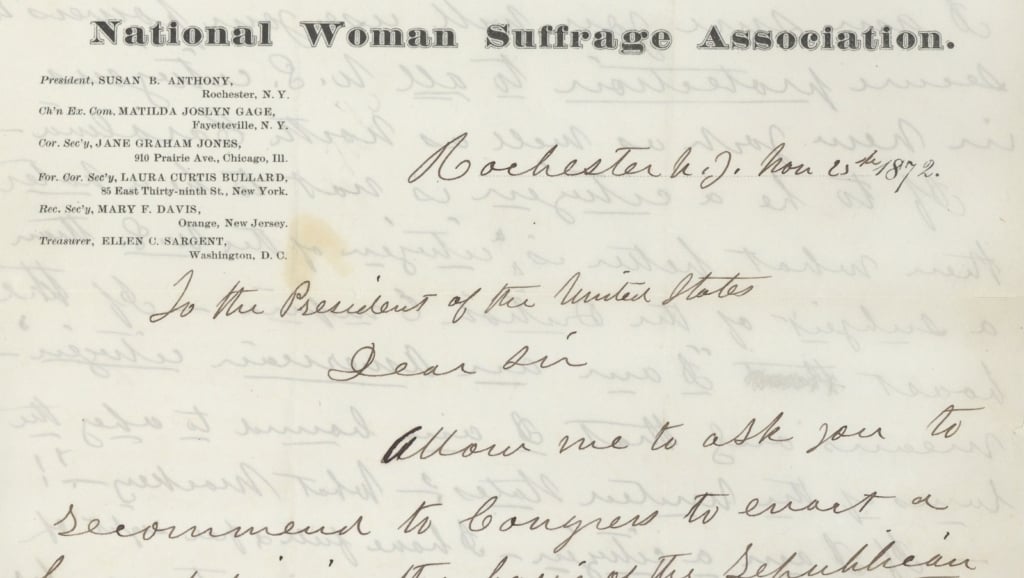
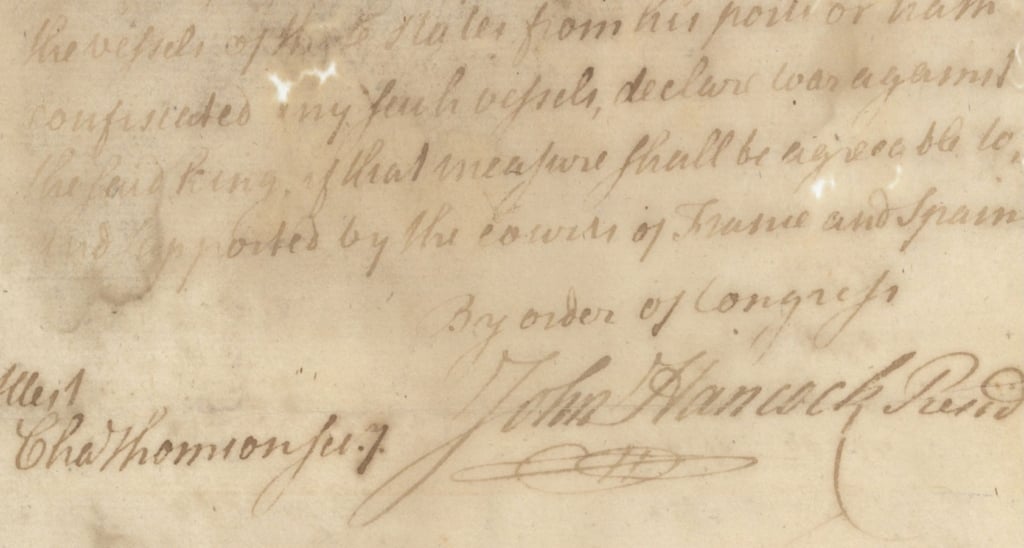
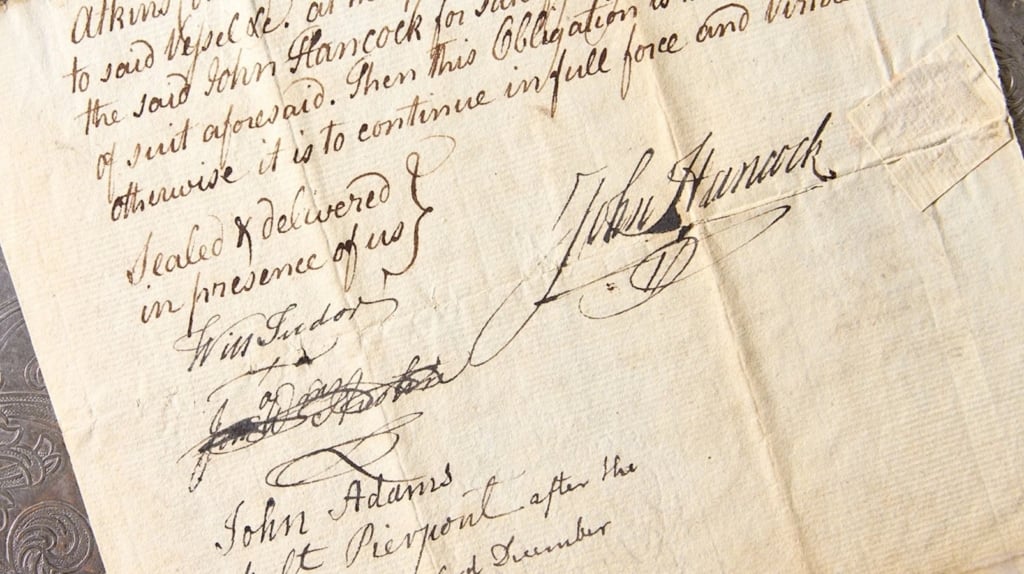
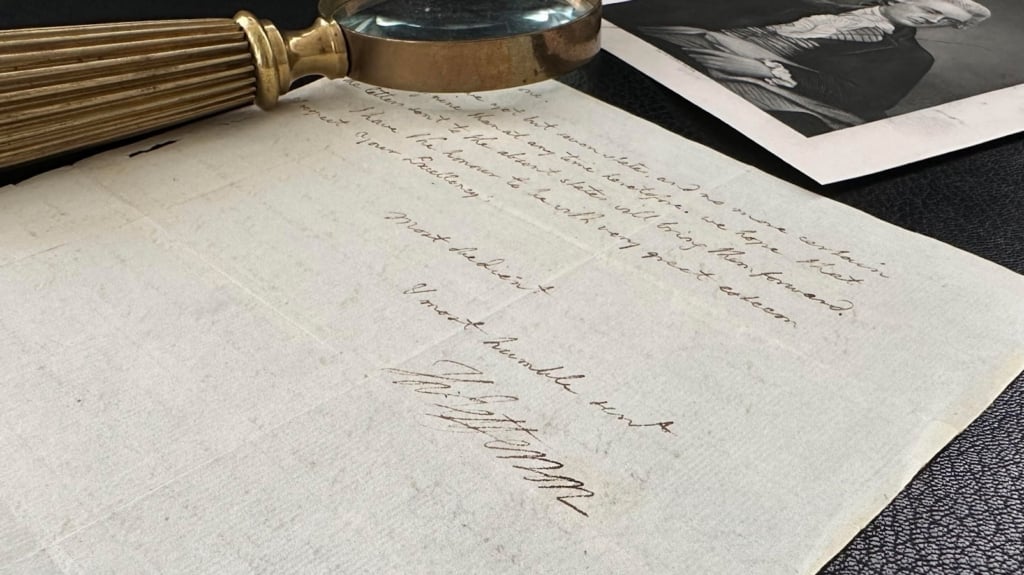
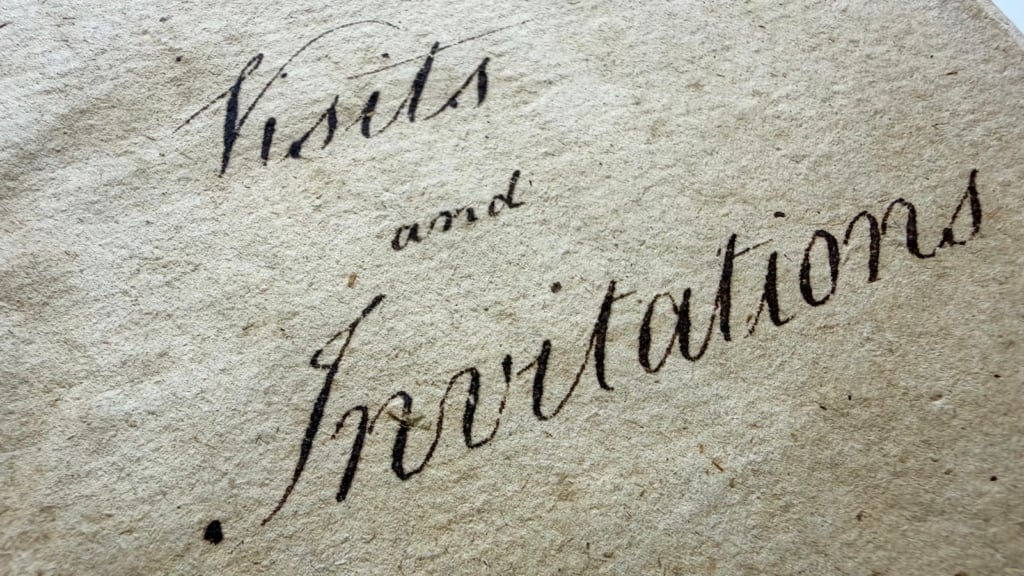
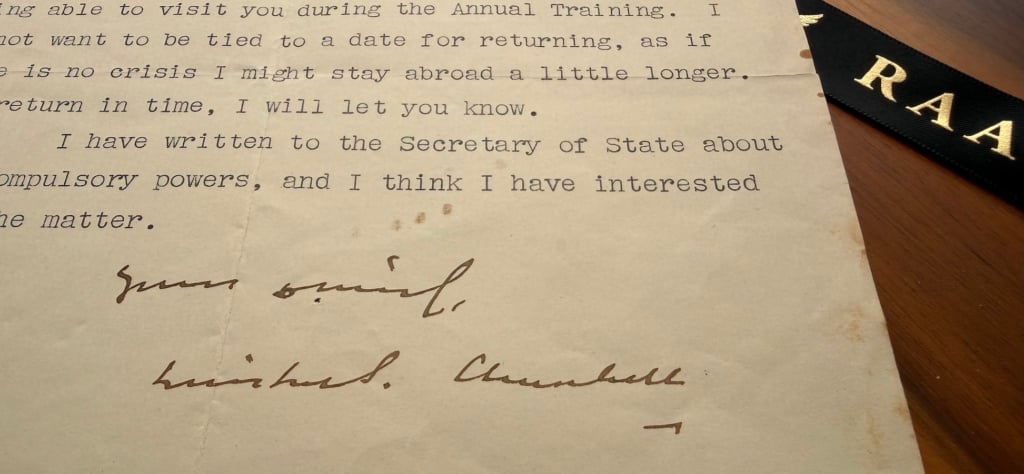
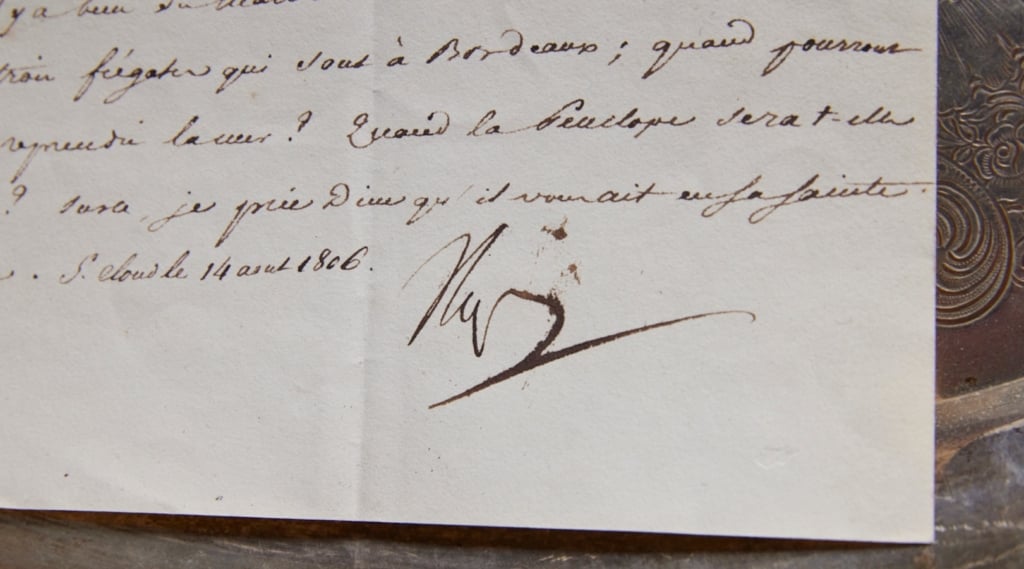
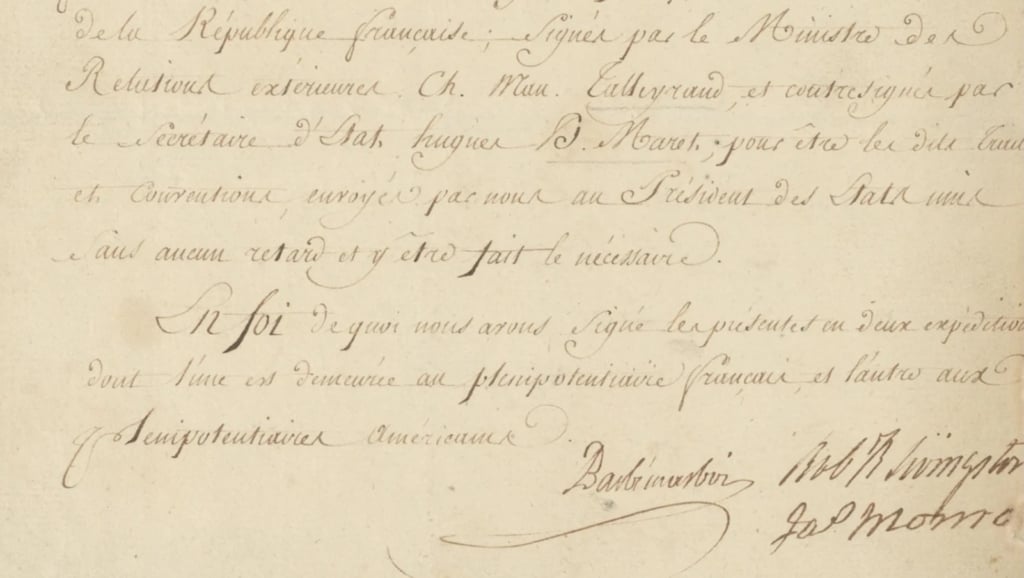


The Raab Collection has discovered, acquired, and sold a major collection of Revolutionary War-era documents, a generational collection unseen in 75+ years, centered around General George Washington, his allies, and his adversaries.
Nathan Raab was interviewed on the Inspired by History podcast about this archive, which includes original letters of Washington, John Hancock, Alexander Hamilton, Benedict Arnold, Marquis de Lafayette, and many others. Listen to the interview below or via your podcast player of choice. Or, if you prefer, read this lightly edited transcript of the conversation with photos and embedded links to more resources.
Today we’re talking about a major collection of Revolutionary War documents. I hinted at this in a previous episode when I talked to Steven Raab about prominent autograph dealers of the past. The collection is a recent Raab acquisition. It had been in the same family for nearly a century, and it is chock-full of incredible documents. Should we start with how many documents in total?
Nathan: Oh boy. I want to say 70, representing 200 to 300, perhaps more, pages worth of material.
When the seller first contacted you, called you, emailed you, what did he say about the collection that right off the bat suggested that this could be the real deal, and a big deal?
Nathan: So the seller contacted us around a year ago and said he’d inherited some material from a relative who had passed away, and the material had been bought a long time ago, and it was signed by people like George Washington, John Hancock, Alexander Hamilton, and that there were multiples. So it wasn’t just one George Washington, it was several. It wasn’t just one Alexander Hamilton, it was several. And then listed some other names who really got our attention. There were letters of Cornwallis from America during the war, and a variety of other really remarkable uncommon pieces that reflect the fact that they were bought so long ago at a time when this material was more readily available.
So, this person mentioned all the right names, all the right eras, to give us a sense that this wasn’t a run-of-the-mill phone call. There was something more here.
Walk us through the next steps. When you have a discovery like this, do you invite this person to your office? Do they spend the day with you paging through the documents? What’s the process like?
Nathan: Well, in this case, we needed to test the theory, so the person that was saying all the right names and the reference to the time period in which it was acquired, everything seemed right, but I wanted to see. Send me images of a handful of these pieces, a representative group. After some time we received those images, and our suspicions were validated. In fact, the material was remarkable. It was diverse. It was really focused on George Washington specifically. Even the pieces that aren’t signed by Washington are signed by people who were working for or with Washington, and many of them mention Washington by name.
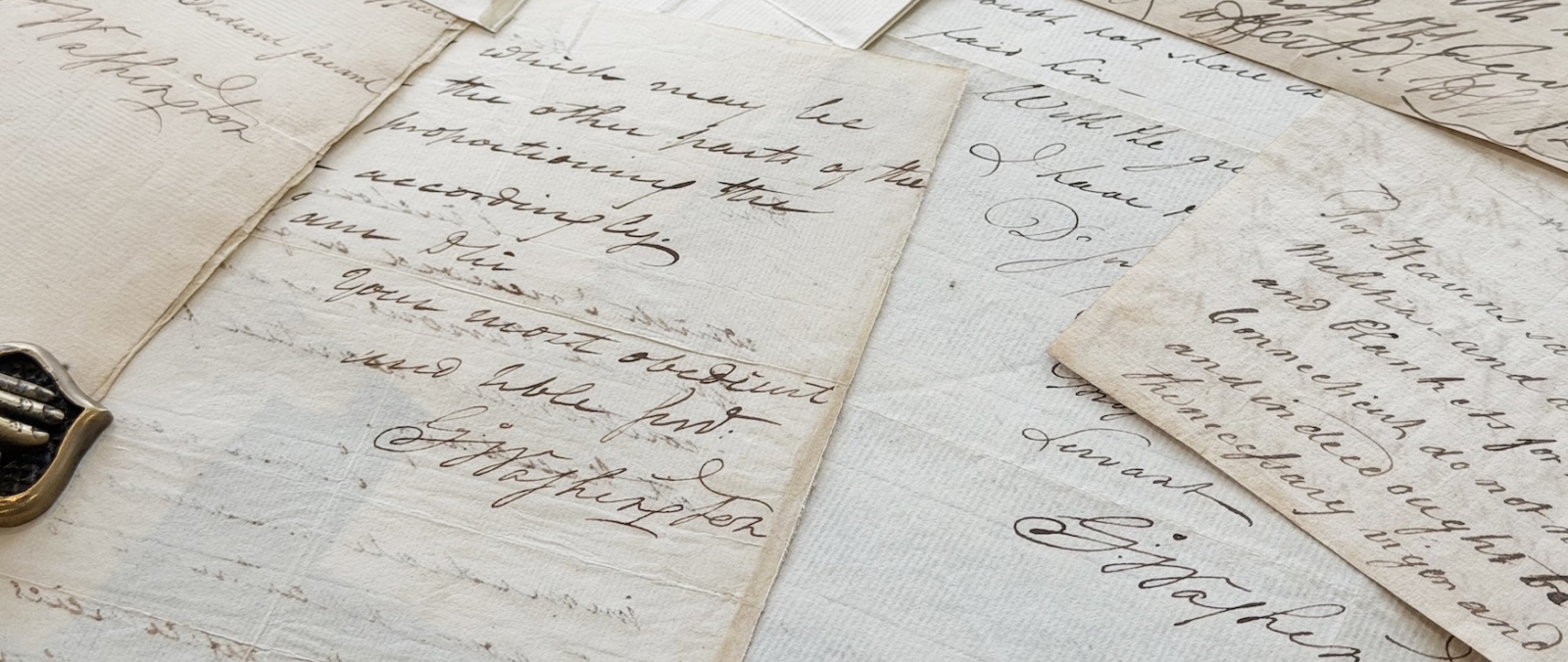
It is a George Washington-focused collection. The person had a clear preference, and that came across in the handful of scans that were sent. At that point, it’s time to start talking specifics. Okay, well, what else is in the collection? How can we see the remainder of the collection?
In this case, we invited the person up to our offices in suburban Philadelphia, and he brought the entire collection. We sat there over the course of several hours and flipped through all of the letters, read all of the letters, understood the historical significance, and then came to an agreement at the end of that period.
But it was a great joy to sit there and read these letters, which hadn’t been read by anybody outside the immediate family in close to a century.
So you take a quick look at the content, the authenticity, and then you come to this agreement, and then for you, the real research begins.
Nathan: Yes. I mean, it’s definitely stages. The first contact, is this something worth pursuing? The second stage is to understand the collection, understand its value. The third step is to acquire the collection. And yes, at that point, particularly with a collection of this size and depth, and that really is a nuanced collection put together by somebody who’s sophisticated and historically knowledgeable, the next step is really the most time-consuming, and that’s when the real work begins, and that’s cataloging and describing all of these pieces and all the diversity of this group. Then the next step, of course, will be to find them a new home.
Let’s talk about some of the high-point pieces. You mentioned, of course, Washington already. I don’t know if you want to say how many Washingtons there are, or if there’s one particularly that stands out. I mean, I took a peruse of the catalog, and for me, there was one that I found really interesting.
Nathan: I’m curious which one that is.
It’s the one where he’s writing to Robert Morris, and he’s sending a letter, and he’s referencing Charles Lee, and is this also in Hamilton’s hand?
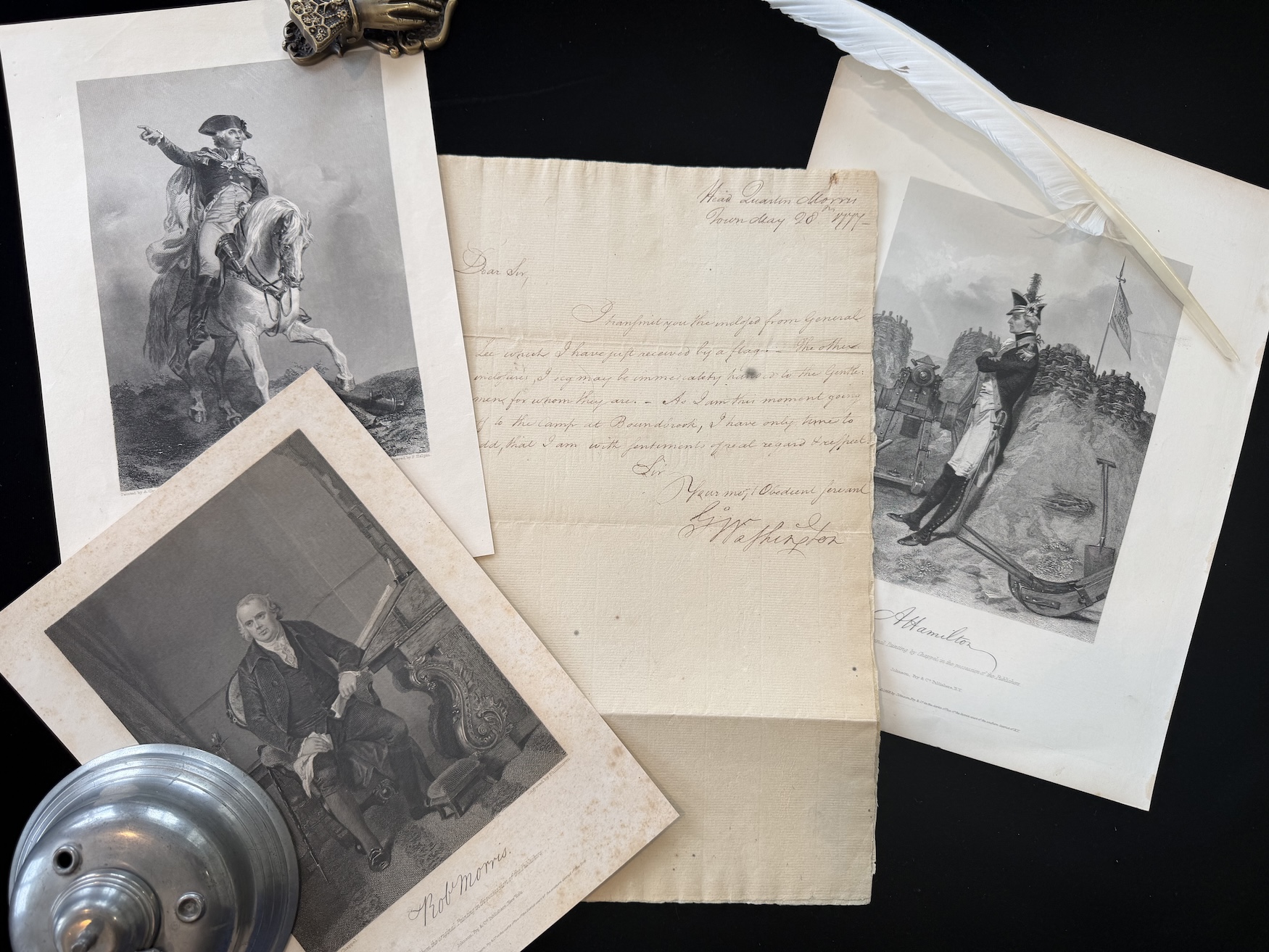
Nathan: Yes. So, you know, the diversity of the Washington material is itself remarkable. There are four Washington letters. One of them is an in-depth assessment of the military capabilities of the Continental forces and of the British.
Another is a letter of Washington to Robert Morris. It’s signed by Washington, the body is in the hand of an aide-de-camp who happens to be Alexander Hamilton, forwarding a confidential missive from the then imprisoned Charles Lee. And so the connection between Washington, Morris, Hamilton, and Lee is really quite remarkable. One doesn’t see that every day.
There’s another letter ordering supplies sent to what would end up being the next British attack point. This is a letter of Washington to Henry Knox.
The fourth one is a letter of Washington after the war is mostly done, the war is basically over, and he’s waiting for news that the peace treaty has been completed, but he mentions Lafayette in the letter, and I don’t recall the last time I saw a letter of Washington mentioning Lafayette by name.
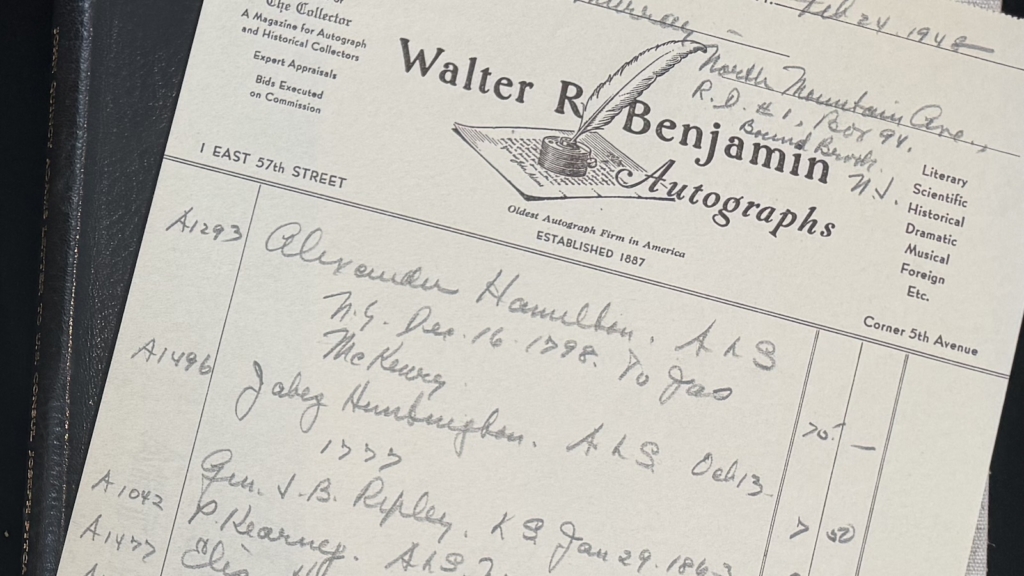
The man who collected this material had interesting, eclectic, well-informed taste, and one can see that. He also worked with the people who were at the top of their field. He’s buying primarily from the Walter Benjamin firm, which is the oldest operating firm, the most reputable firm at that time. The daughter had taken it over, Mary Benjamin, but he was buying from the cream of the crop.
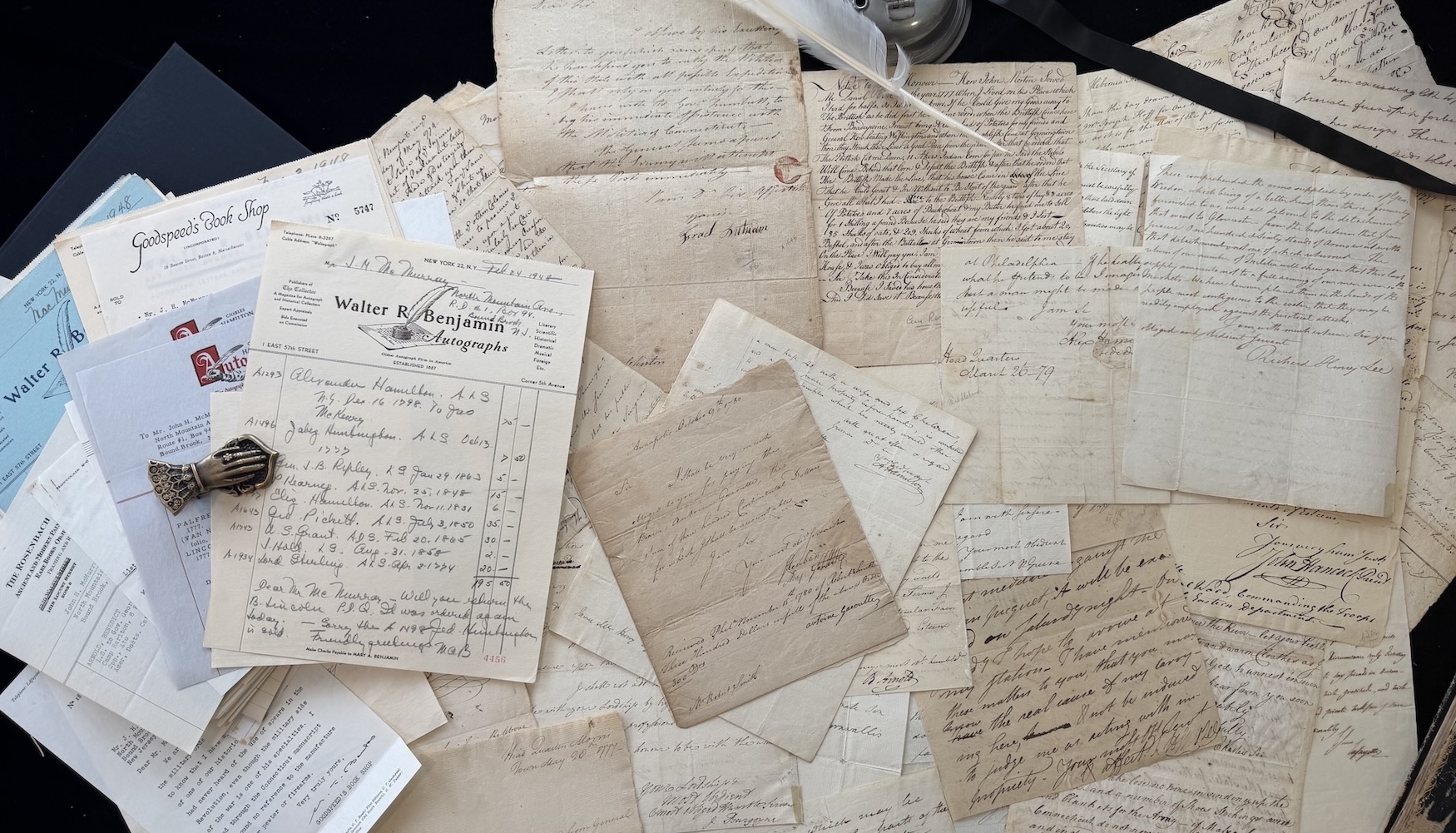
You mentioned Washington, Hamilton, there’s also a John Hancock, there’s also an Aaron Burr, a Benedict Arnold, so you’ve got these names that of course everyone knows, and then you have even more depth, another level where there’s Charles Lee, and Henry Knox, and Lord Stirling, and Israel Putnam. What does that say about the collector?
Nate: So yes, we today know the big names, the Alexander Hamiltons, the Benedict Arnolds, the John Hancocks, and there are powerful war-date letters of all of these grand figures. But, you know, somebody who’s building a sophisticated, in-depth collection around the Revolutionary War, and who really knows their history will know the names like Israel Putnam and Lord Stirling and Nathanael Greene.
These were prominent patriots before the war and then during the war. They fought in well-known battles. They were elevated to positions of generalship, and their autographs are highly sought after and very uncommon, during the war. Light-Horse Harry Lee maybe signed a lot of things after the war, but finding his letters from the Revolutionary War is very, very, very, very uncommon. And Mary Benjamin, who was operating in 1948, noted that in a letter to him that this is very uncommon to find.
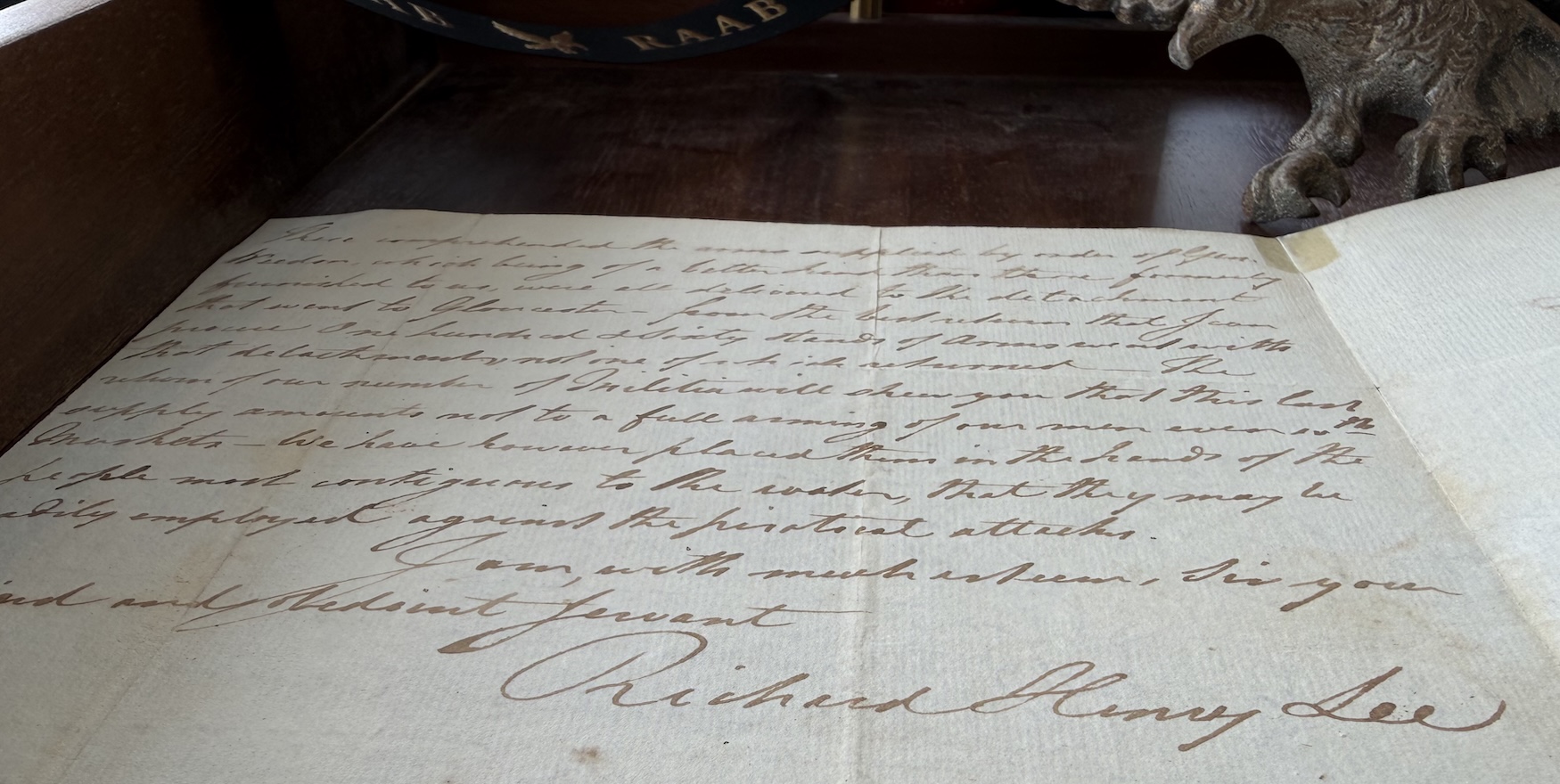
There’s a war-date letter of a Signer of the Declaration from Virginia, Richard Henry Lee. These are things that with each passing year become – they were never common – and with each passing year, they become more and more uncommon, and to find them all in a collection suggests to me that the person was buying from somebody who had access to the best material, in this case, of course, it was Mary Benjamin. And that the person knew their history, suggests that the person was doing this out of a genuine love for the era, a love for Washington. That comes across in the collection. A lot of these letters, as I mentioned, reference Washington. The Israel Putnam letter mentions Washington. It relates to a letter that he’s received from Washington and is of the highest historical value.
The person was sophisticated. He didn’t buy any letter. He bought a letter of Cornwallis talking about patriotism for his own country written from Charleston in 1780.
He didn’t buy any letter of Philip Schuyler, another Revolutionary War figure who falls in the same category. He bought one referencing the Battle of Saratoga.
He knew all of the prime figures. He knew the secondary figures, and he knew the tertiary figures. I mean, there are letters in here of aides-de-camp for Washington. You know, there are spectacular letters of James McHenry, who would go on to become Secretary of War, and his other aides. Tench Tilghman. These are men who worked with Washington, were writing on his behalf. Most of these mention Washington, and it’s not by accident that he acquired them. He understood his history. There’s a whole archive in here, nine pieces from a particular point in time during the war, which includes a contemporary copy of a Washington order, a vivid description of a battle.
These things don’t come up every day. It’s just fascinating material that reflects both the time in which it was acquired, which is again, nearly 100 years ago, and the sophistication of the buyer who understood the history and brought that knowledge to bear in his collecting. He bought what he loved, that’s obvious, and what he loved, has become just increasingly rare. To find it all in one place still intact at one time is exciting.
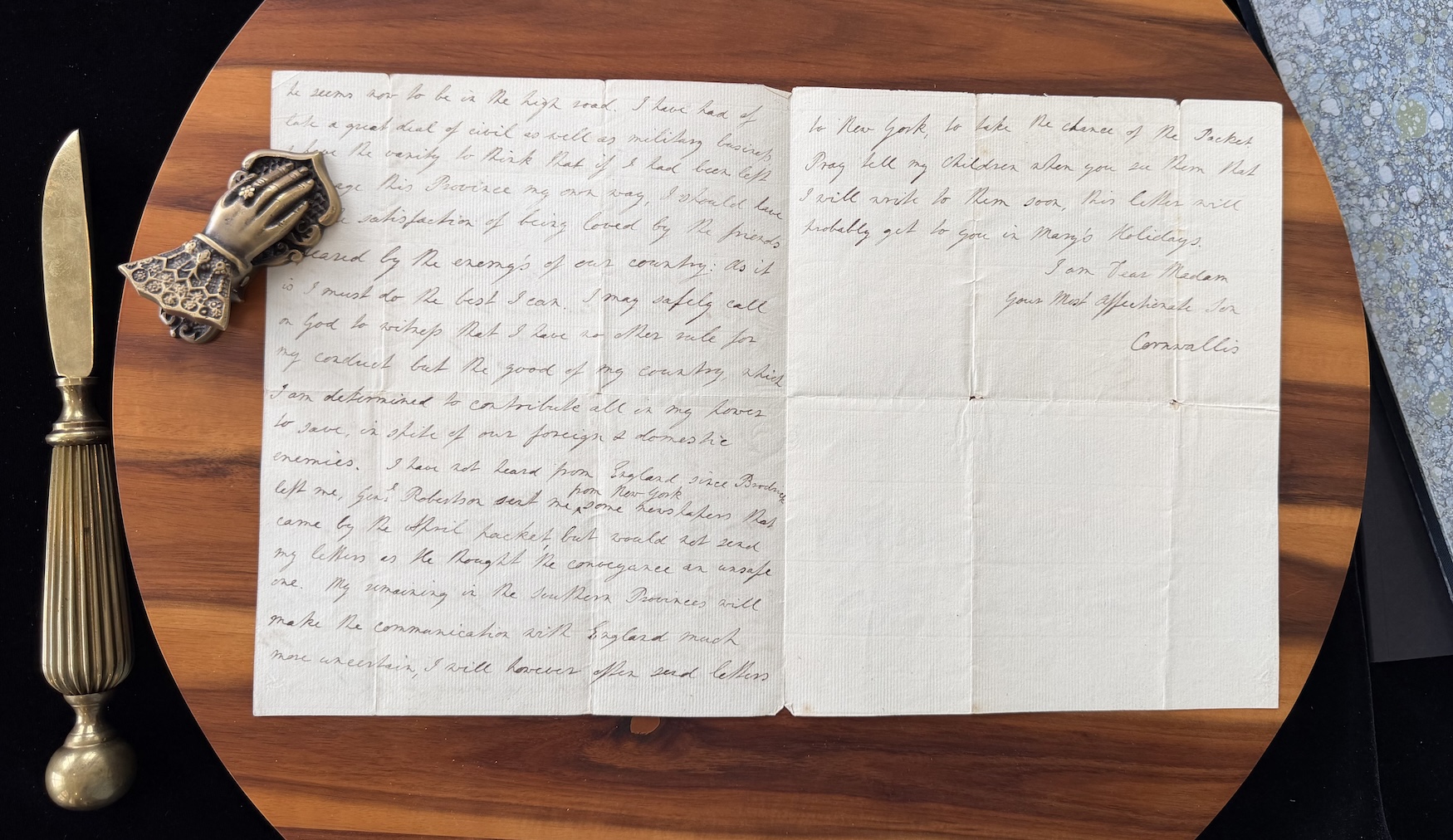
It’s funny that you mention the Cornwallis and the Schuyler. Those are two that I literally pulled out to make sure that we mention. They really caught my eye.
Nathan: Yeah, the Cornwallis is such an interesting look on the war from the other perspective. He’s writing to his mom from Charleston 1780, talking about how he intends to fight and win it for love of country, and it’s just … I’ve never seen a better letter of Cornwallis, but I’ve never seen a more eccentric letter of Cornwallis.
Like, you’d see a letter of Cornwallis, a battle order or something like that, and that itself would be quite valuable. But this is just so eccentric and interesting. To his mother? You know, ‘God, King, and Country’ kind of a thing. It’s just spectacular. There’s a letter of Burgoyne, who would go on to lose at Saratoga, petitioning for his first generalship in 1762, mentioning Townshend of the Townshend Acts and the king. It’s just really uncommon stuff. You just don’t see it.
Many of the documents are New York, New Jersey related, or is it just that so much of the Revolutionary War happened in that area?
Nathan: So many of the pieces revolve around the encampment at Bound Brook and then Middlebrook in New Jersey, and they focus around that Tri-state area, New York, New Jersey. So much of the correspondence revolves around the encampments between 1777 and 1779, and so much of what is going on in the correspondence, although not all of it, but certainly there’s a core of that, that takes place in the New Jersey, New York area. I don’t know exactly where the collector lived. My presumption is that the original buyer, 80-something years ago, is from that Middlebrook area.
What would it take to put together this collection in today’s market, or is it even possible?
Nathan: Well, it’s possible because we have the material now. It’s very, very rare, but it’s certainly possible. I mean, we just bought the material, so it does exist. But, this is a generational collection, and, you know, it would take seven figures to acquire the lot of it. The challenge in today’s world, setting this collection aside, is finding the material.
Finding a war-date, just to go back to Israel Putnam, is not the easiest thing to find. I mean, the Benedict Arnold letter references the allegations brought against him, and he bemoans the attack on his character in the exact moment when it first surfaces, in a letter to Governor Clinton of New York. I’m only aware of one other letter of Benedict Arnold referencing the attacks on him that led to his treason, and that was a long time ago. So yeah, you could put together a collection like this with some patience. You’d have to have a lot of patience, and you’d have to have a lot of money.
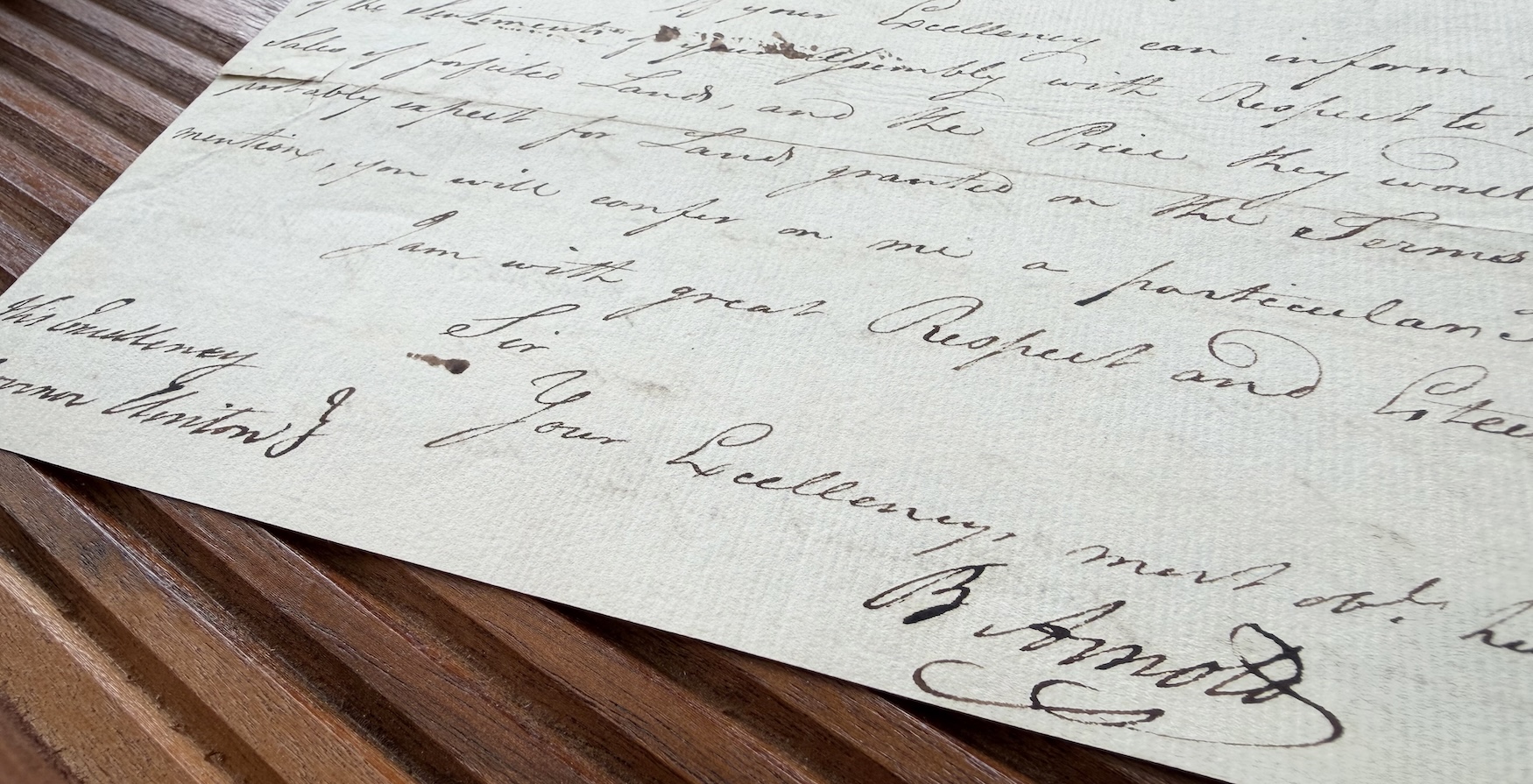
That’s what I was thinking, patience, but also, yeah, money. Does it feel extra meaningful to be working on this collection, cataloging these letters and documents, as we head into the America 250 anniversary in July?
Nathan: I think at any point I would have found this fascinating. This is the kind of collection that comes along very seldom. The fact that it happens to be the anniversary I don’t think gives me any more or less joy.
It does give you hope that there are collections still out there just like this one…?
Nathan: Yes. It is proof that there are still great collections that have been kept together. It gives you hope that the next call could be that. You just never know who the next person is who’s going to knock on your proverbial door and have a collection that looks something like this, that was put together so long ago. I mean, certainly collections do come up that were put together more recently. They tend to be different, different in focus and different in scope.
What fascinates me about this collection is the intense sophistication of the buyer and the type of material that’s just really hard to put together all at once today. But, it reminds you that there are discoveries left to be made.
To learn more about collecting Revolutionary War-era documents, visit our dedicated Revolution & Republic page. More episodes of Inspired by History are available here, or on your podcast player of choice.
