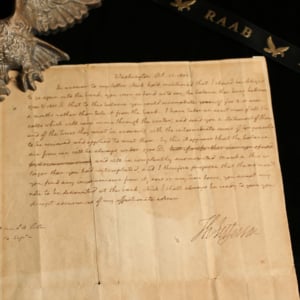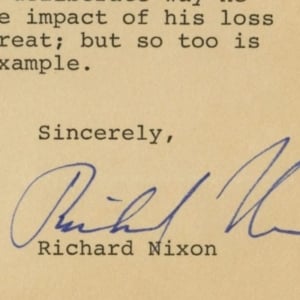




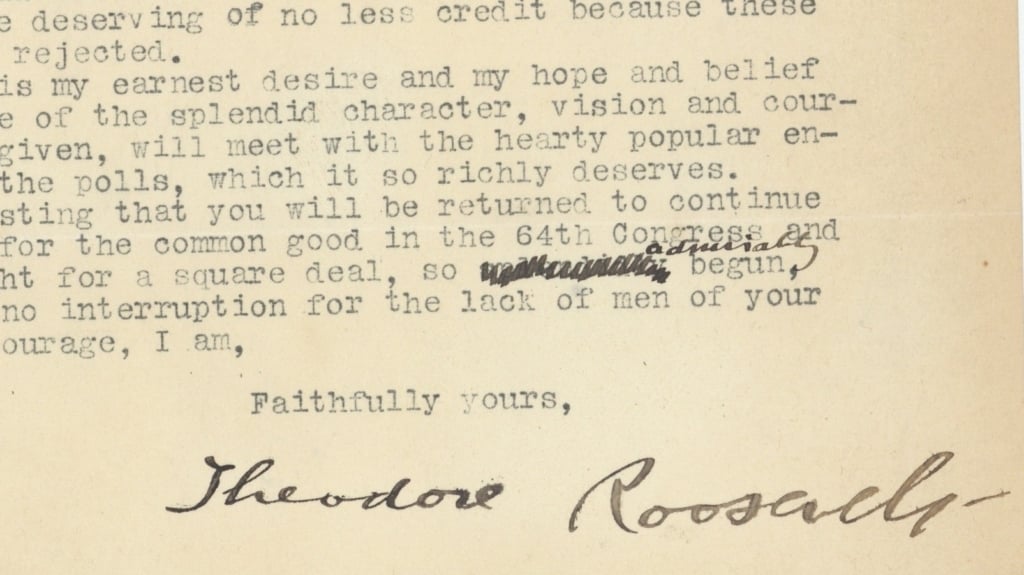
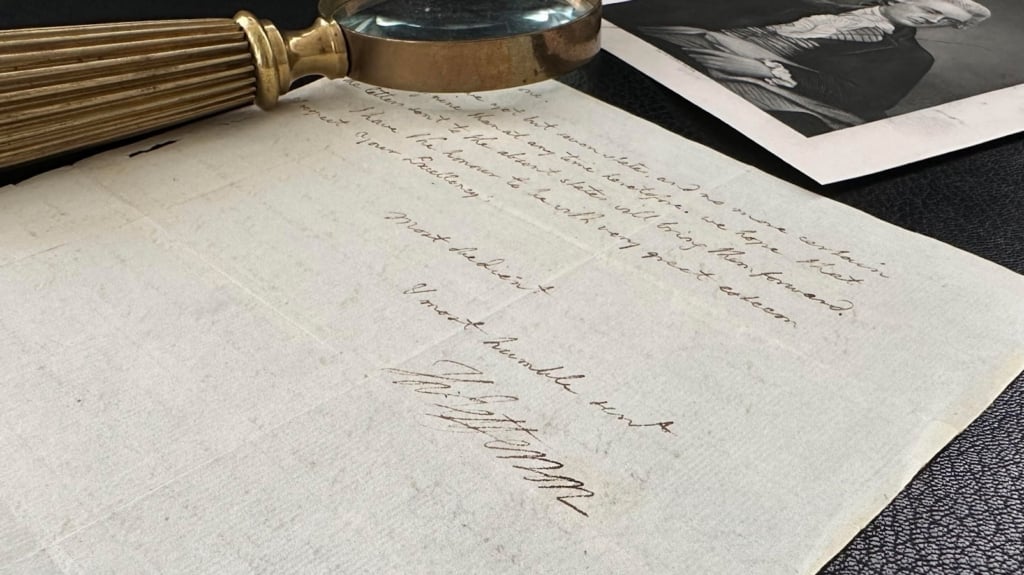
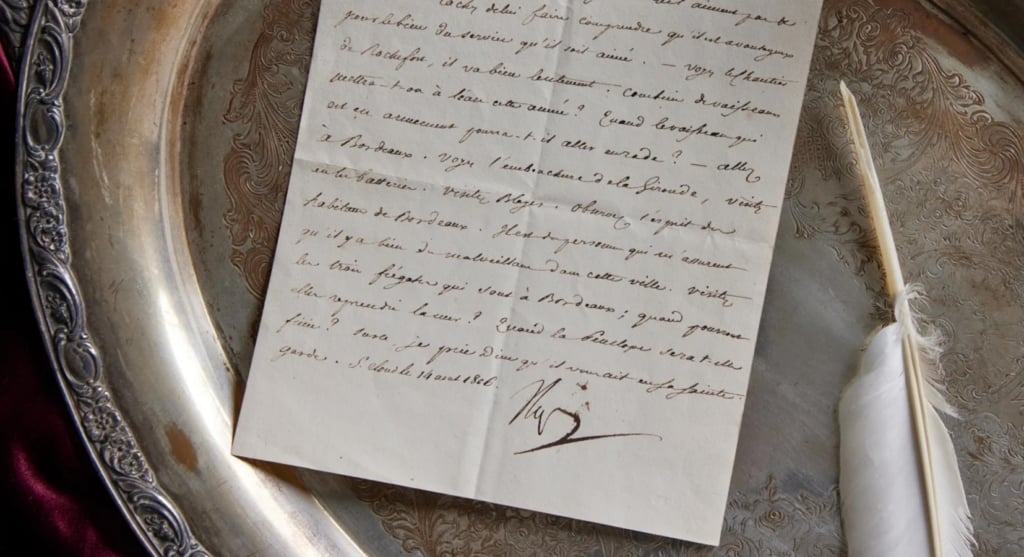
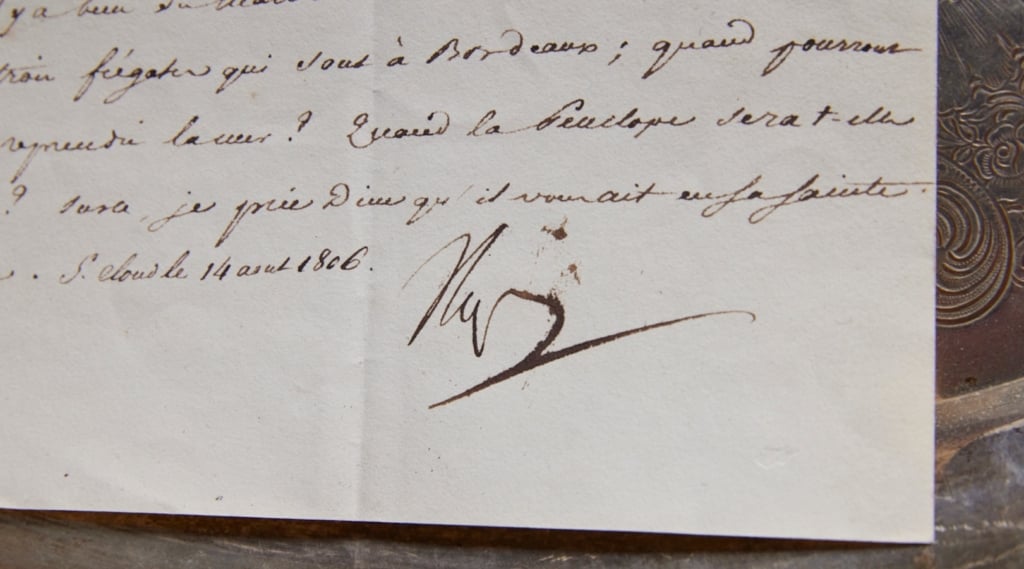


In the world of historical documents, manuscripts, and autographs, forgery has always been a concern. Experts have dealt with it for more than a century, and although the ways and whys may be different, forgeries still surface today.
Nathan Raab was interviewed on the Inspired by History podcast about famous forgers, forgery avoidance, and how he authenticates historical documents. Listen to the interview below or via your podcast player of choice. Or, if you prefer, read this lightly edited transcript of the conversation with photos and embedded links to more resources.
Famous Forgers
Forgery has been around for centuries, but there are a few forgers that stand out to those in the documents and autographs world, right?
Nathan: Well, there are some well-known forgers, some particularly adept artists. I say art because forgery is, in a sense, an art. A dishonest art, but an art nonetheless. So there certainly are some forgers over the years who have convinced, well, a variety of well-meaning and even knowledgeable people by being really good at forging.
Charles Weisberg, for example. Robert Spring and Joseph Cosey are probably the two most famous, and they operated in the mid to late 19th century and early 20th century. They were ne’er-do-wells circulating around the autograph and rare book field, and a lot of their forgeries are now in major institutions, not having been identified as such at the time that they were acquired. So they were quite good.
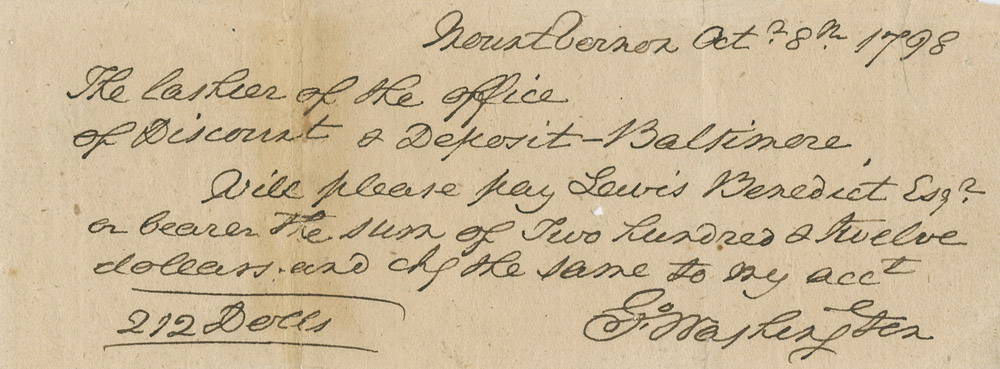
Particularly Robert Spring and Joseph Cosey have almost become collectible in their own rights.
Nathan: I would say the forgeries of Spring and Cosey, and I have a few of them, they can sell for $1,000 or so. They’re not extremely valuable, and if you walked into a conversation thinking you had something authentic and were told it was a forgery, you wouldn’t be pleased, but they’re not valueless and they’re fairly hard to find.
Is there anyone in the 20th or even 21st century who comes close to those two?
Nathan: Well, there’s a famous example of Lee Israel and there was that movie [“Can You Ever Forgive Me?”]. She forged primarily literary autographs, authors, and she was quite adept at it.
These folks eventually get caught for the most part. There are people operating now who lack the sophistication and ability of some of the finer forgers, but usually a qualified, experienced expert in the field will be able to identify them. More and more the issues become reproductions, high-resolution reproductions and the other forms of duplication, which usually you can spot in person, but can be difficult to spot in a scan.
The world is so interconnected that it can be fairly hard to operate a large-scale forgery operation amongst a more sophisticated clientele. Certainly there are online marketplaces where you could operate without great disturbance. But once you reach a more experienced, knowledgeable, sophisticated level, it’s harder to do that today than it was back then.
These high-resolution scans – they would have to be printed on old paper?
Nathan: I’ve seen that, they are, but it’s less that, it’s more like a signed photo that has its own gloss to it. The gloss of the pen and the gloss of the photo are similar, so, in a sense, the reproductive aspect is hidden.
Forgery Avoidance
For the layman, can you suggest a few easy forgery avoidance techniques?
Nathan: Well, for the true layman, the best way to avoid buying forgeries is to buy from somebody who you trust and has the experience to be able to help you. You don’t go and operate on yourself if you need a surgery, you go and you find a qualified doctor to do it for you, and although it’s not the same, the same premise applies when you’re dealing with something where there’s a risk. You go to people who are knowledgeable to avoid that risk. And if over time you feel that you’ve gained the knowledge to operate on your own, in some cases there’s no harm to that. But I’m not aware of somebody who’s put together a major collection, who didn’t, at least for a time, rely heavily on one or two really trusted, genuinely experienced experts, dealers.
Yeah, because you could say, well look out for letters where the handwriting doesn’t look “right.” But what does that mean?
Nathan: It means nothing if you don’t know what “right” is. Going back to the medical analogy, it’s like reading an x-ray or an MRI. There are people who are trained to be able to do that and tell you what you’re looking at. It doesn’t mean a lot to me, but I’m not in the habit of reading my own x-rays. You wouldn’t advise it.
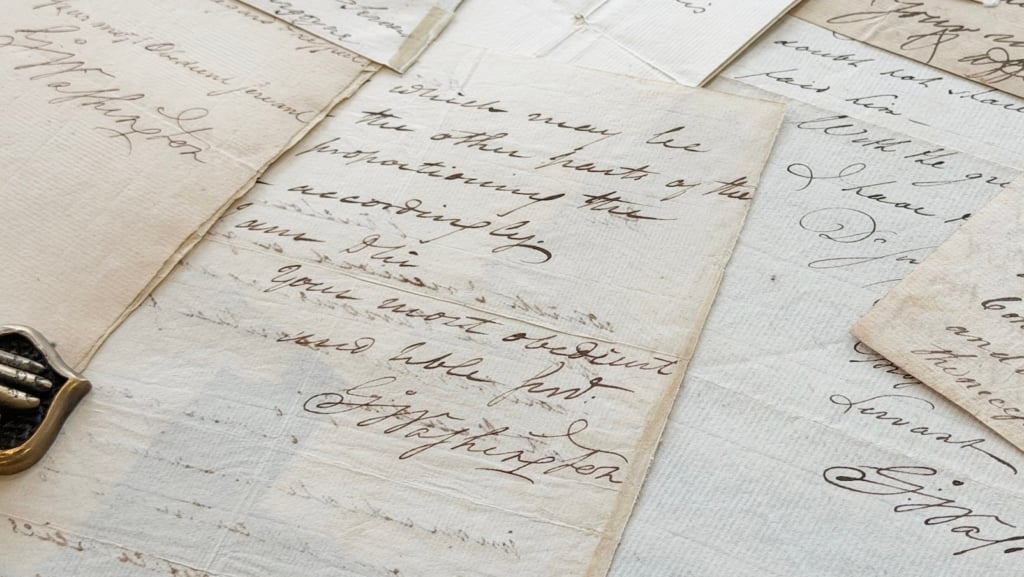
So much of this is common sense. If the person wasn’t born when the thing was signed, it’s probably not authentic. If the person wasn’t in the location that matches the dateline of the letter. If Washington wasn’t in that town at that time, it’s probably not authentic. It’s the whole context.
You can’t just look at the signature. You have to understand the entire history of the piece. And by history, I don’t mean provenance. Of course that’s relevant, but I don’t mean provenance. I mean, you have to understand the context in which it was originally written, the size of the paper, the ink, the person that’s being written to. Is it a known letter? Who is keeping track of such things? Is the handwriting consistent with the handwriting in that period? Particularly in the early years, is it straight? They knew how to write straight. So if you have something going up and down, you’re dealing with somebody who may have learned to write more recently. We didn’t take handwriting classes the way a lot of them had, so it’s the whole thing.
Generally speaking, if you have, let’s just say for the sake of this conversation, 10 criteria against which you are measuring the authenticity of anything, if it fails one of them, it fails all of them. The signature is one of those criteria. I’m not suggesting it’s not. For reasons that may not be obvious to the person looking at it, in some cases, something is written but not signed. Someone can go in later and add a signature. The document itself could be authentic, but the signature is not, so it’s not as if the signature helps you authenticate the entire thing. It’s actually the reverse. The context will help you draw out the authenticity of the signature, which then must also prove itself. It’s a series of interlocking criteria which all feed into each other and must all be consistent, internally consistent and authentic. Like I said before, if one of them fails, they all fail.
Case Study: Forged Lincoln Letter
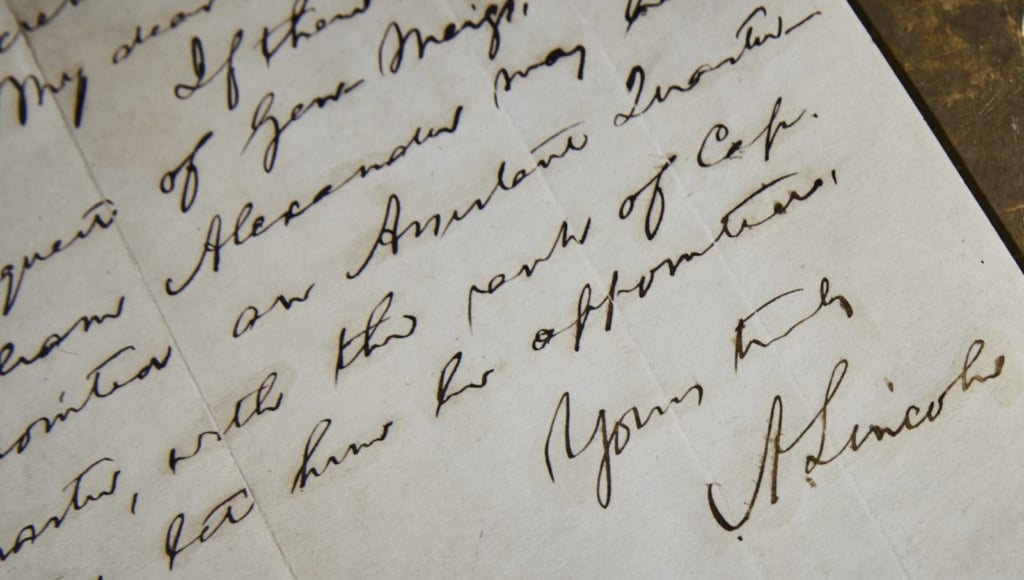
So you talked a little bit about paper and ink and context. Provenance too. Provenance, sort of with caveats, right? I’m thinking of a forged Lincoln document that you helped to uncover years ago and wrote about in your book, The Hunt for History.
Nathan: That was an early Abraham Lincoln letter, and the signature wasn’t terrible. It was a published letter, which had long been thought to be authentic. It was being offered for sale by a very reputable, knowledgeable dealer, in this case, a book dealer. I liked it, but the more I looked at it, the more I just felt uncomfortable with it. It wasn’t anything I could put my finger on. It was more, you know, when you’ve been doing this for long enough, it becomes an initial gut feeling that you get sort of a queasy feeling in your stomach that this isn’t right.
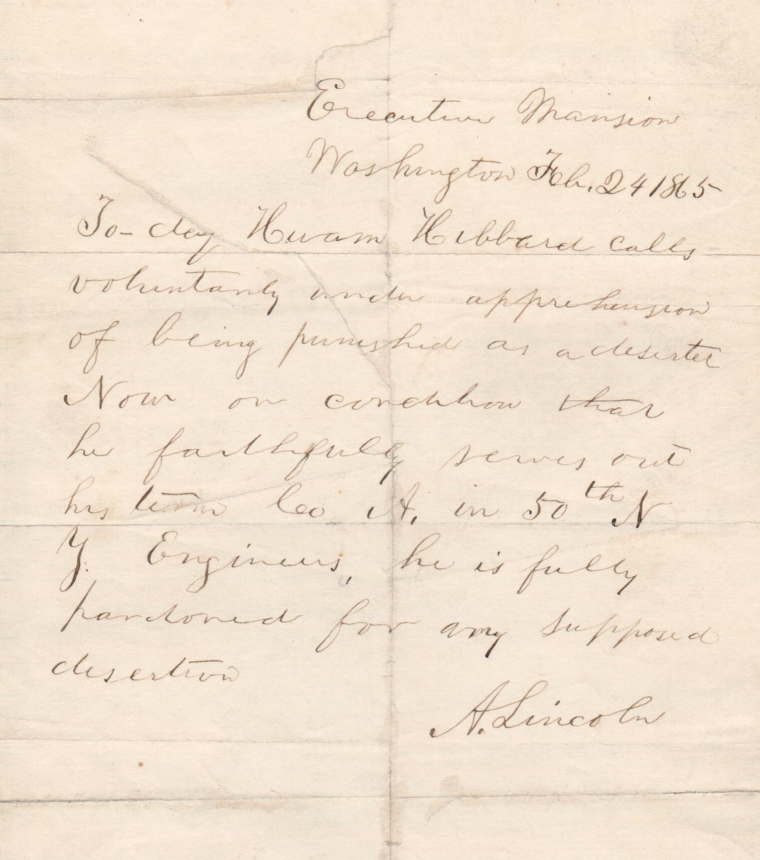
The piece should feel right to somebody who’s looked at a thousand of these things, and if it doesn’t, it doesn’t mean it’s not authentic. It just means it requires a second, third, fourth, fifth look. And as I looked at the letter, it wasn’t the signature that gave me a hard time. It was the rest of the letter. The lines weren’t straight. It didn’t look like somebody who knew how to write, somebody who was writing in that era. When people took handwriting classes and practiced writing and there was no typewriter or computer, the ability to communicate in an educated fashion was conveyed in some cases through the way that you wrote, and in this letter, the lines weren’t straight.
Some of the letters within the actual communication were malformed, and I just came to the conclusion this could not be authentic. Lincoln could not have written this letter. What that lesson taught me was even if someone whose opinion and respect you value, and someone who is operating an honest business and has handled such things before, even if they say it’s authentic, you always need to bring fresh eyes and fresh scrutiny and a certain amount of skepticism to the authentication process. These things get more and more valuable each day, and so mistakes are costly, so it just pays to walk in the door with a certain amount of skepticism and a fine eye. Some people take the position that they don’t want to work through a dealer or an expert to help them put together these collections and, particularly in the beginning, that’s always a big mistake.
In that case too, it was the book dealer who was selling it, but it was also a scholar from decades before who had published the letter and said: this is a real Abraham Lincoln letter. It reminds me of when a fact gets put into a biography, it can get repeated in every next biography and every other history until somebody 50 years later goes back to the source material and says, wait a minute, that thing we’ve been saying for 50 years is not true anymore, or it was never true.
Nathan: There’s history and there’s lore. There are all sorts of quotations that we repeat as having originated with such and such a person, which maybe they did, maybe they didn’t, but the probability is they didn’t. Some of these quotations are really funny. I always take them with a grain of salt. You never know.
But in this business, you have to start out being suspicious of everything that comes across your desk?
Nathan: Yeah. I think you can be suspicious in a healthy way. You can make a document prove itself without being overly pessimistic. I think you should be suspicious of the document, not the person. My experience is most people selling forgeries don’t know that they’re forgeries. They’ve inherited something or they were sold something and that ends up not being authentic. They’re not trying to cheat me. They don’t know any different. I generally don’t impute criminal motives on people selling forgeries because it’s just not my experience.
There are people that come to us with–and they’re usually not the most sophisticated forgers–they’ll come to me with a forgery, and it’s very obvious they’ve gone onto my own website, copied something that I own, and are trying to sell it to me. Somebody quoted me a letter of George Washington, and I’m thinking, I own the original of this letter. They had forged my letter to sell it to me. Not the smartest approach. Somebody once came to me and said they had the same letter of George Washington that I had, and naturally I was very interested in that fact. They came to my house, and what they had was a reproduction of my letter. They weren’t trying to cheat me. They genuinely thought that they had that. There was nothing nefarious there.
Somewhat related to this forgery question is the common misconception that everything old is rare. There are dealers and auction houses that capitalize on that by labeling every document as “excellent” and “rare,” but what do those terms really mean and how do you apply them?
Nathan: Well, everything’s relative. There’s no universally accepted definition. I think if you’re using the word “rare” too frequently, that’s not so rare, is it? In a sense, everything we have is unique, but I would say a military commission signed by Abraham Lincoln is not uncommon. It’s not unique, it’s not rare. It’s the most common form of his signature that one generally sees out there, even though it’s valuable and quite desirable. You couldn’t call it rare.
There are things that are rare, and things that are uncommon. So I would say something that’s uncommon is something that you’ll see a few times a year, but not many. Something that’s rare is something that you may see once a year or once every few years. Very rare, less often than that. These are moving definitions, and usually if we make such a claim, we’ll define it further in the description: this is how often one sees that, this is why we’ve defined it as such.
The line between rare and uncommon is not a formally defined one.
To learn more about forgery visit our Learning section on forgery, and read The Ten Steps We Take to Authenticate Historical Documents.