




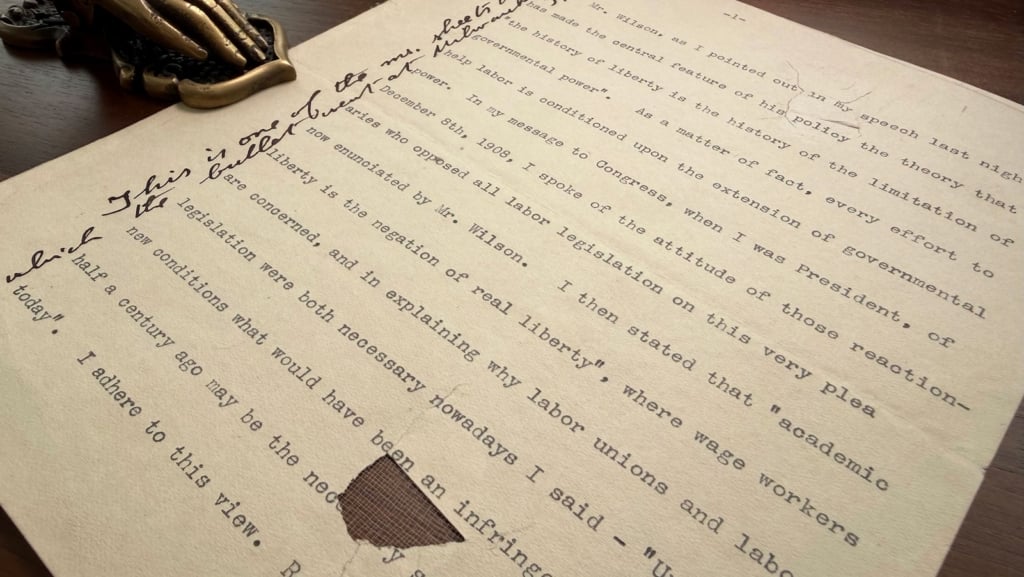
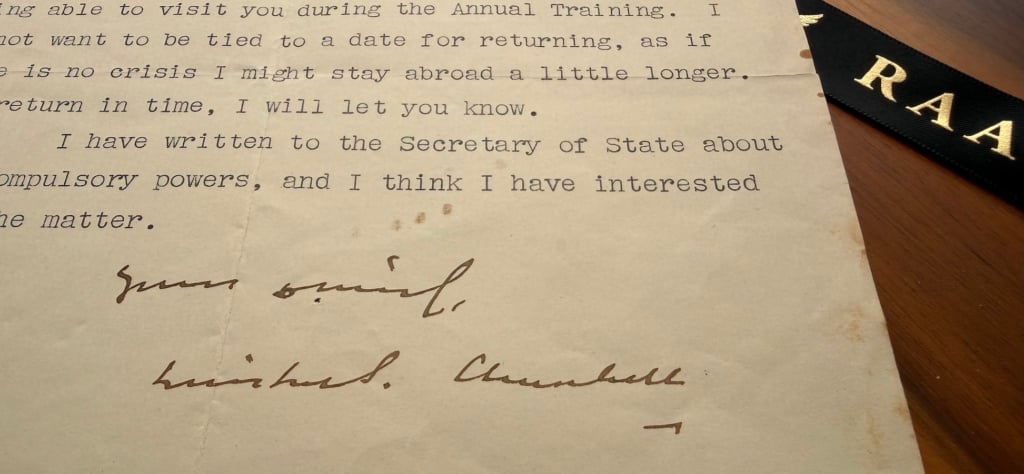
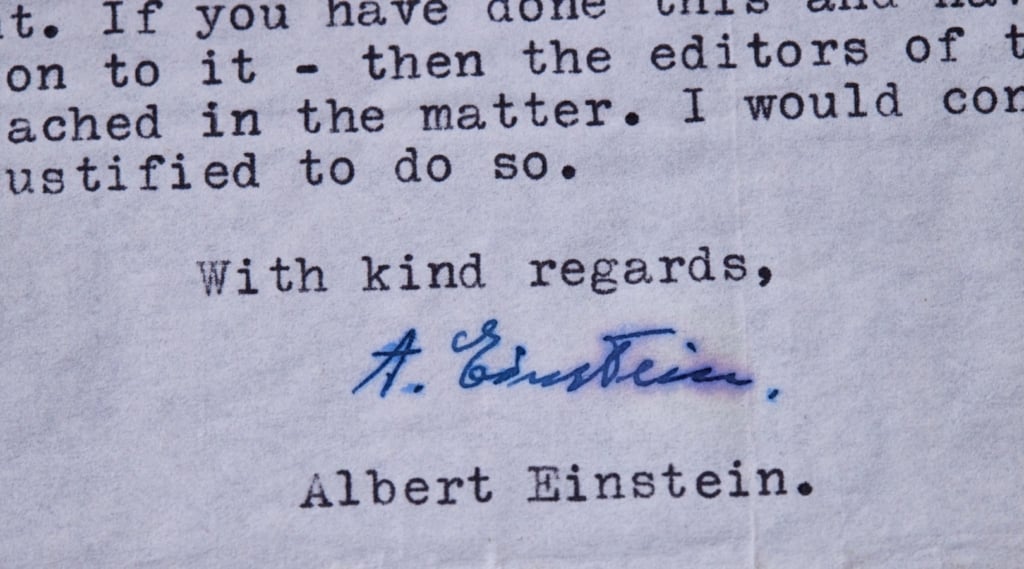
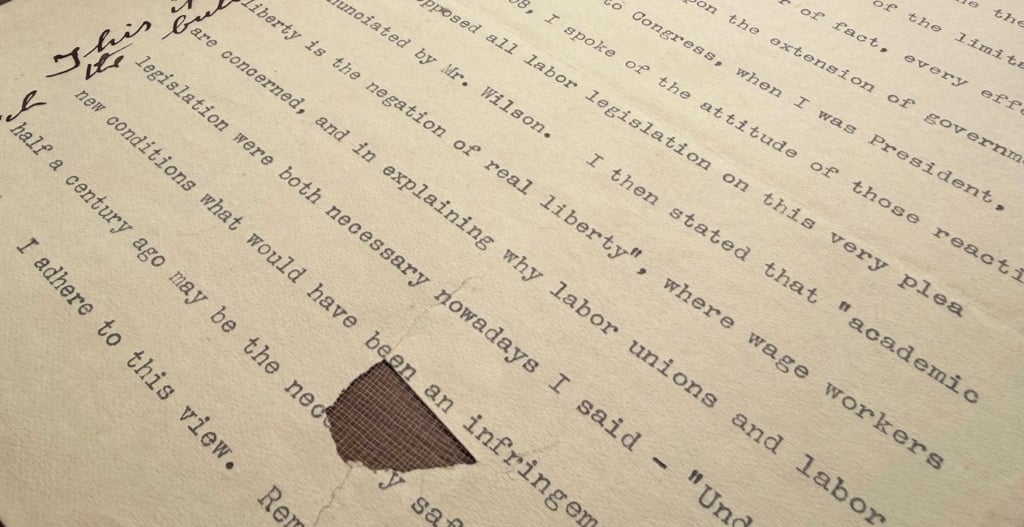
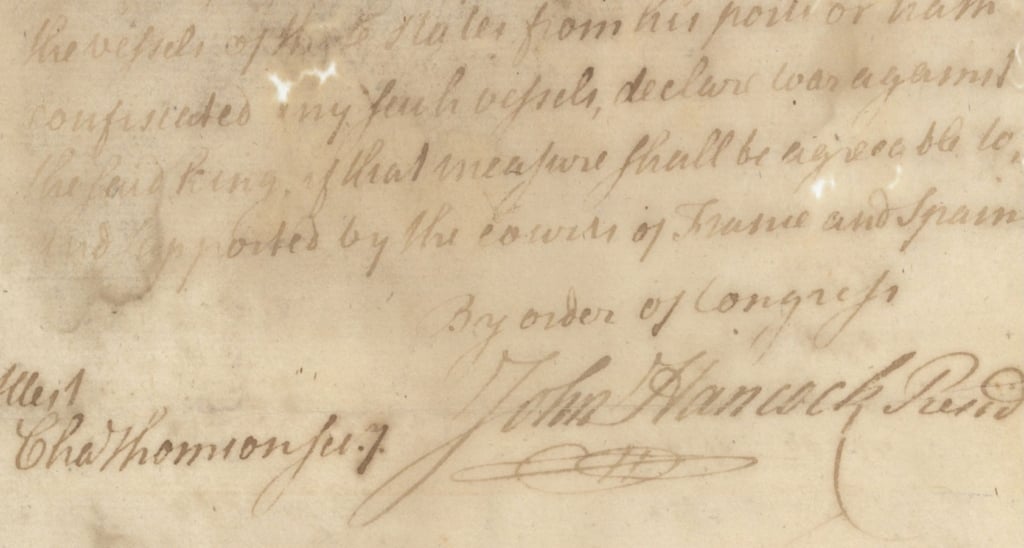
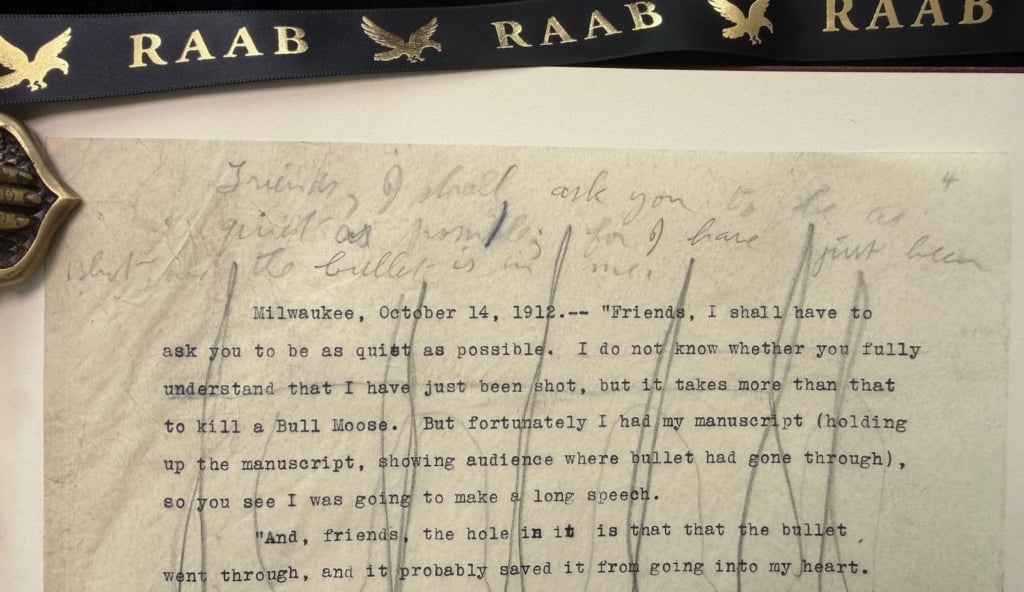
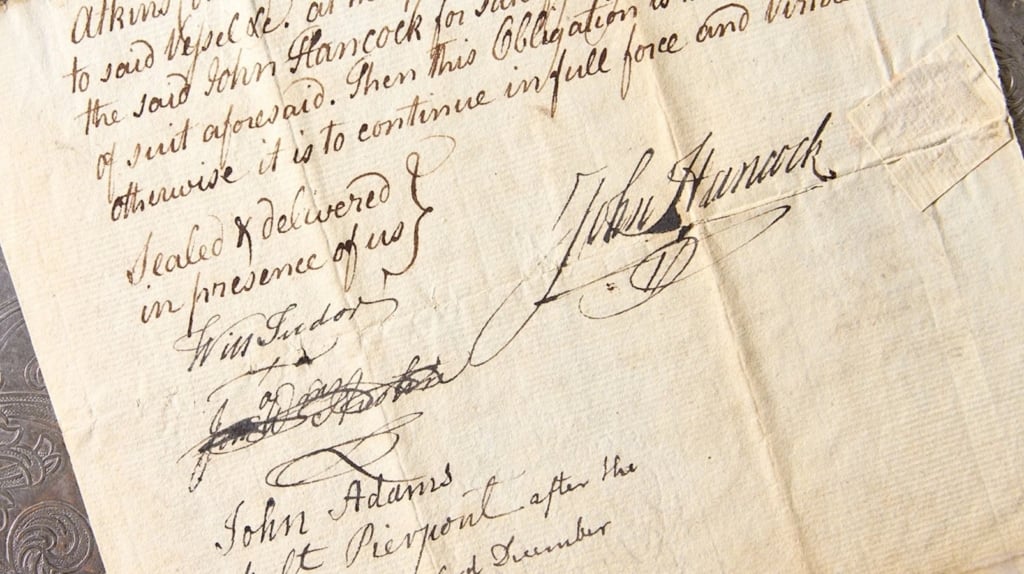
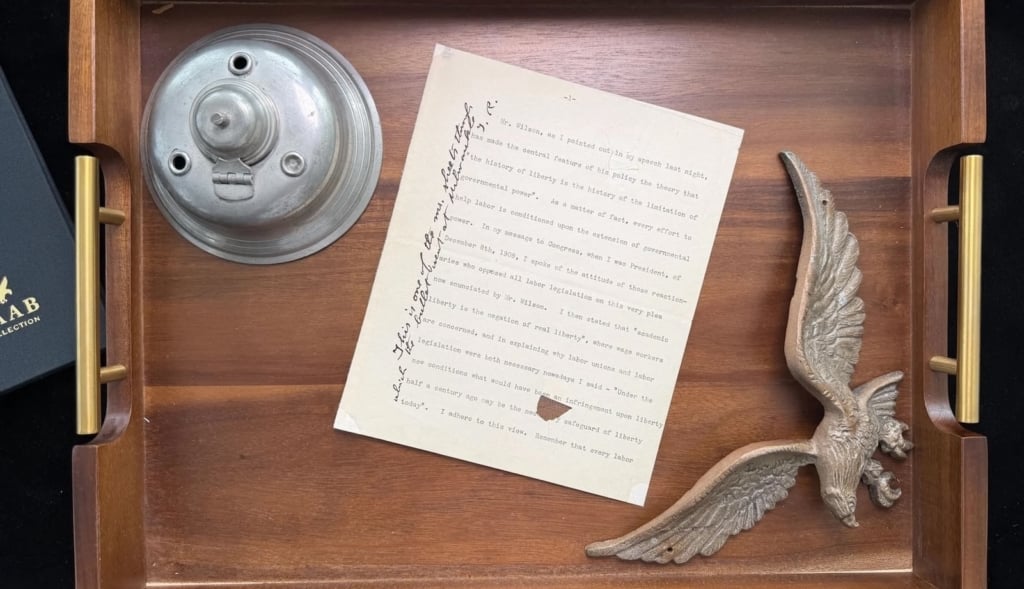
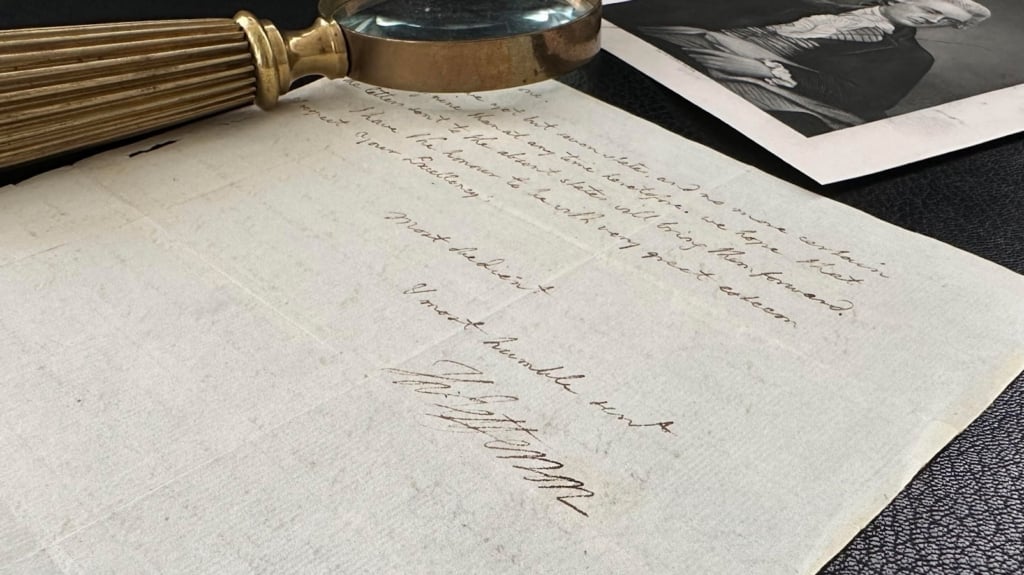
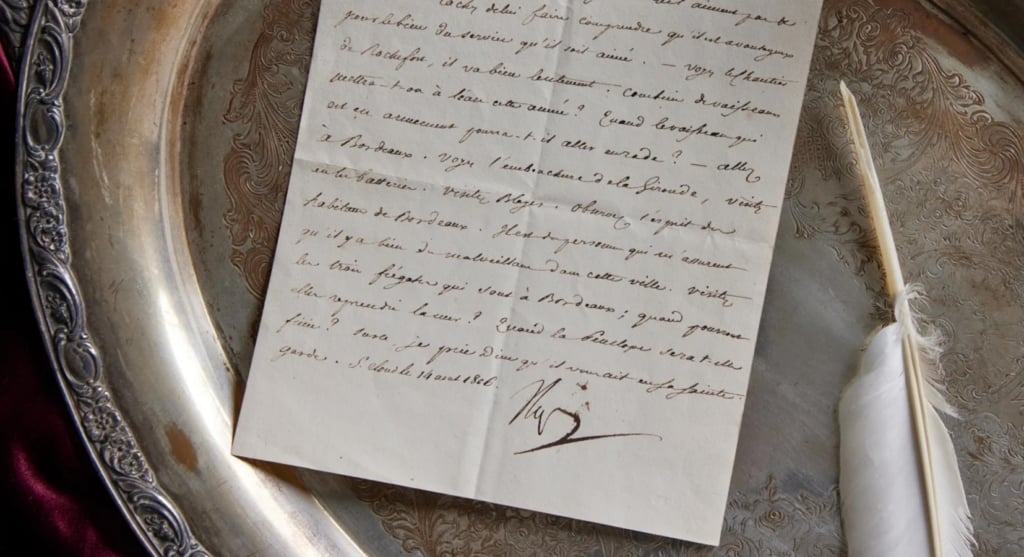
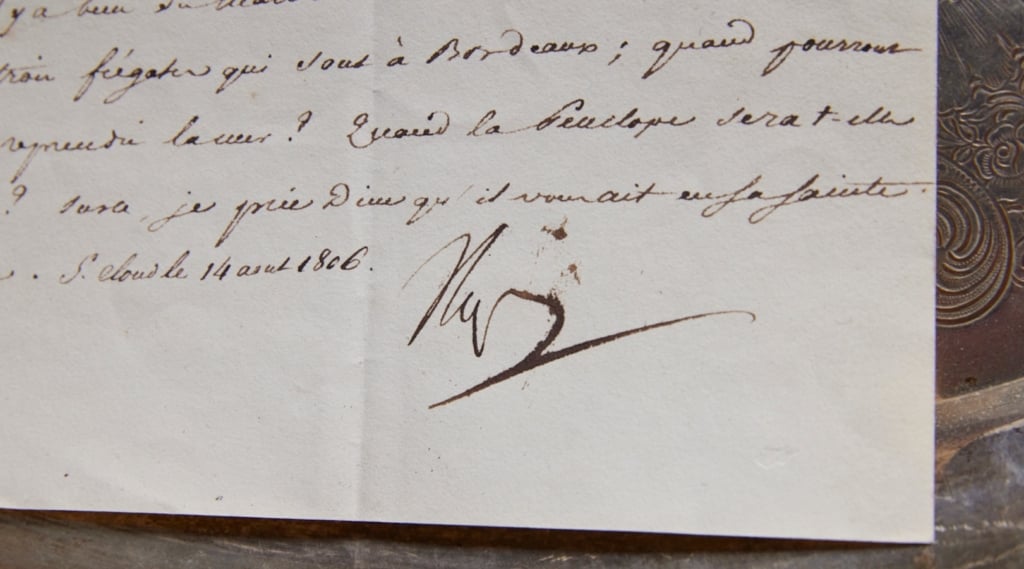
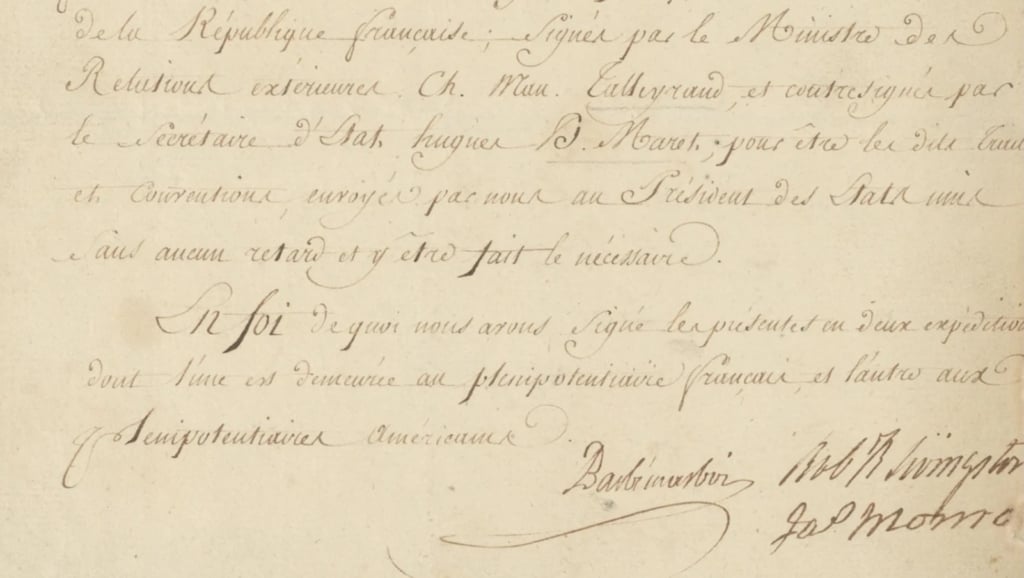


Some questions we must ask when authenticating historical documents: Is this a copy produced by a secretary, machine, or autopen? If so, what is a copy worth compared to the original?
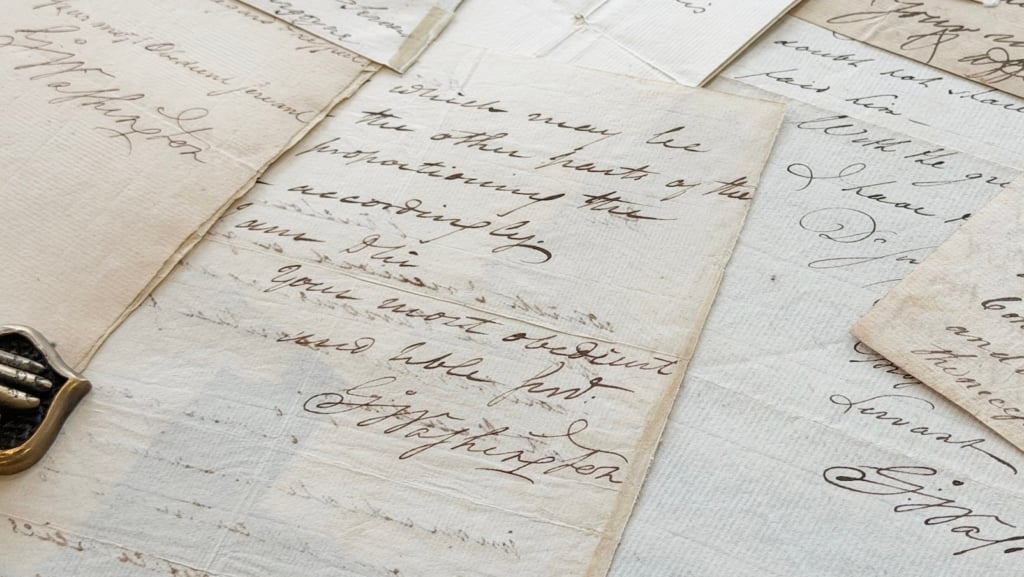
In 1804, Charles Wilson Peale introduced then President Thomas Jefferson the polygraph machine, which uses interconnected pens to make a simultaneous copy of an outgoing letter. Jefferson used it routinely from May 1804 onwards. Below is an example of how a polygraph might work, with one hand controlling the pen. It is important to know that while he usually sent the non-polygraph copy, that is not always the case, and other clues on the letter will aid you in a determining which was the sent copy definitively.

The Value of Copies: Polygraphs, Autopens, Letterpress
For most the history of the industry, these polygraph copies were considered akin to the autopen, meaning they fetched low prices or were not brought to market, thought of as less desirable copies of the authentic (and usually mailed) original. In recent years, a few of these have appeared at auction, noting the rarity of such polygraph letters on the market. They are certainly fascinating glimpses into the early use of letter copying and they might well be desirable to a subset of collectors, provided they understand what they are buying, which is a copy of an original that might also be acquired. Though we have not had such a combination, it would be theoretically possible to own both the copy and the original. At that point, you could make your own determination of which you felt was more valuable. So what is a polygraph actually worth? We generally see them in recent years selling for 1/10 to 1/4 of the price of an original, if they sell. But the absence of them routinely on the market makes a firm statement of value difficult.
Another example below: Jefferson also made letterpress copies, more akin to our carbon copies today. Which would you rather have? The original or the letterpress?

Presidential Land Grant Documents & Secretarial Signatures
Another issue we deal with quite frequently is people looking to sell or receive appraisals for Presidential Land Grant documents (in later years sometimes known as Homestead Certificates.) Land Grant documents can be beautiful documents, which collectors often choose to frame and display. Also, depending on the signatory, they can be worth some money. For example, an authentic James Madison Land Grant might sell for $1,500, an authentic John Quincy Adams example might sell for $1,000, and an authentic Andrew Jackson example might sell for $2,000 or more. The problem arises sometime in 1833, during Andrew Jackson’s 2nd term as President. Jackson made the decision that the President would no longer sign Land Grants and from that date forward, they were signed in proxy by a secretary. To the trained eye, this can be spotted quite easily for a few reasons. Simply knowing that after Jackson’s 2nd term as President the President usually did not sign them is key.
We say usually because there are rare circumstances where a president, for reasons that have been lost to time, has signed one. There appears no logic to it, they were not people of note and nothing of special distinction is attached to the parcel of land. These are desirable but, since they are after all land grants, the ceiling of their value is limited.
However, if you do not know that, here are a couple tips to spot them or prove the point:

Let’s take a look at the FDR land grant pictured above. In a secretarial document such as this, in the signature portion there is a space that says “By the President” where people initially get fooled. As we can see, it is signed, “Franklin D. Roosevelt.” To a trained eye, it is apparent that this is not his signature. However, another indication is that directly underneath, there is a space denoting “By ______ Secretary.” That signature is actually the signature of the secretary that has also signed for the President. On an authentic Land Grant we do not see this portion. Pictured below is an authentic signature portion of a James Madison Land Grant document to show the difference. It features the same “By the President” portion, but the space for the secretarial signature does not exist. The other signature we see is the signature of the Commissioner of the General Land Office, who would sign all of these documents.

Sometimes secretaries went to great lengths to mimic the signature of the President. Pictured below is the signature portion of an Ulysses S. Grant secretarial Land Grant to illustrate this point. The secretary here has done quite a good job of copying Grant’s signing style.

The most important knowledge when authenticating a Land Grant is remembering that Land Grants signed after Jackson’s 2nd term are almost all secretarial. However, you can easily prove this point by using these tools.