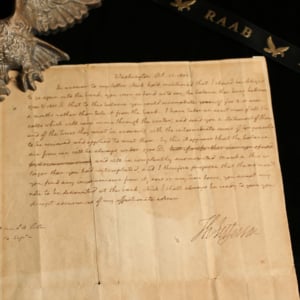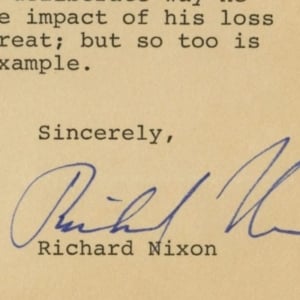




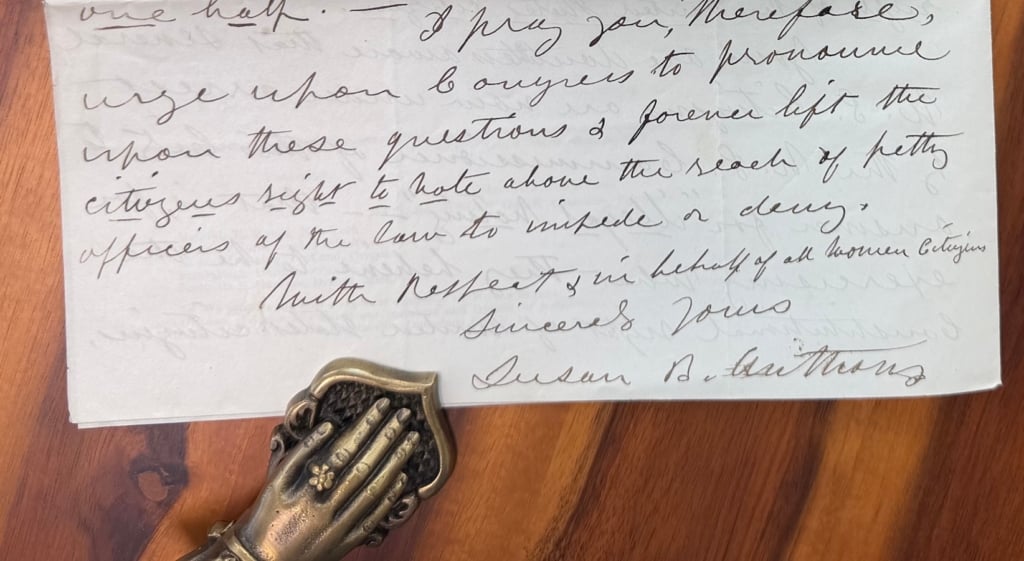
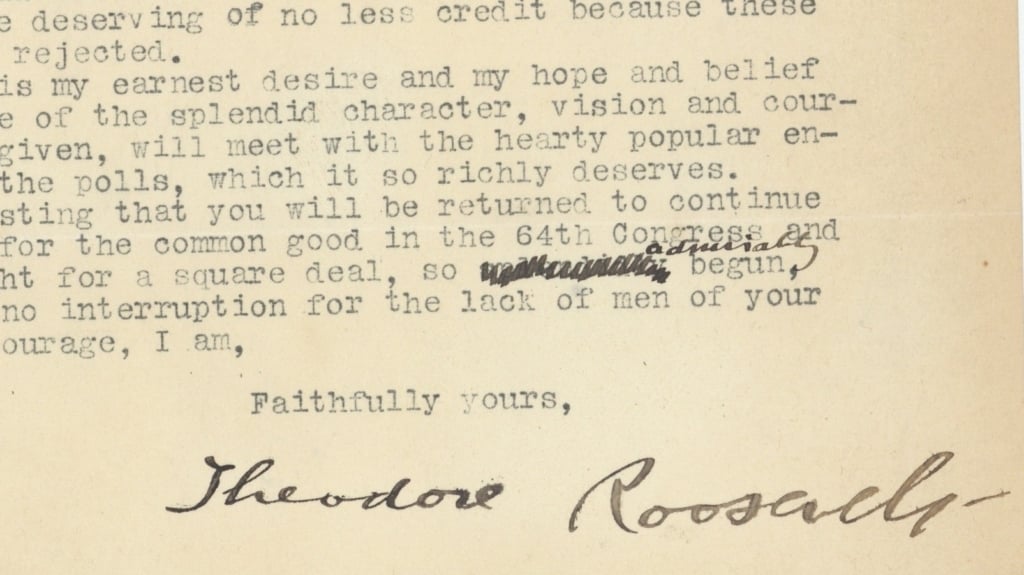
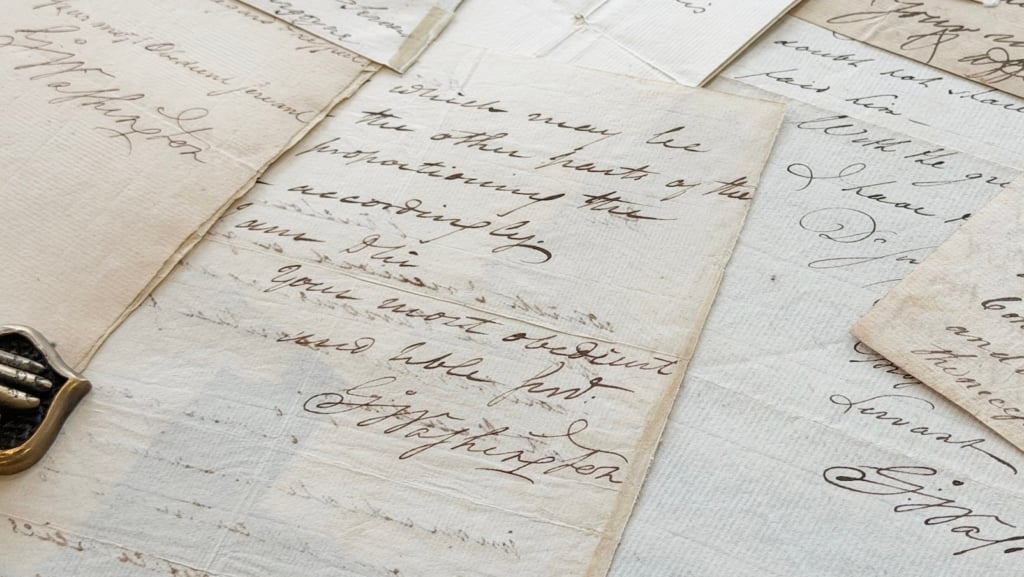
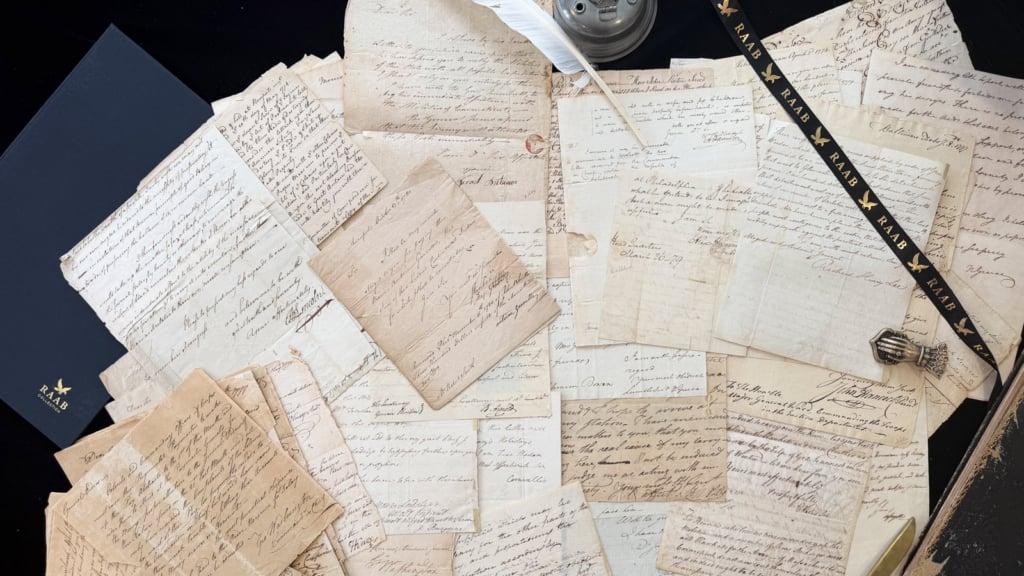
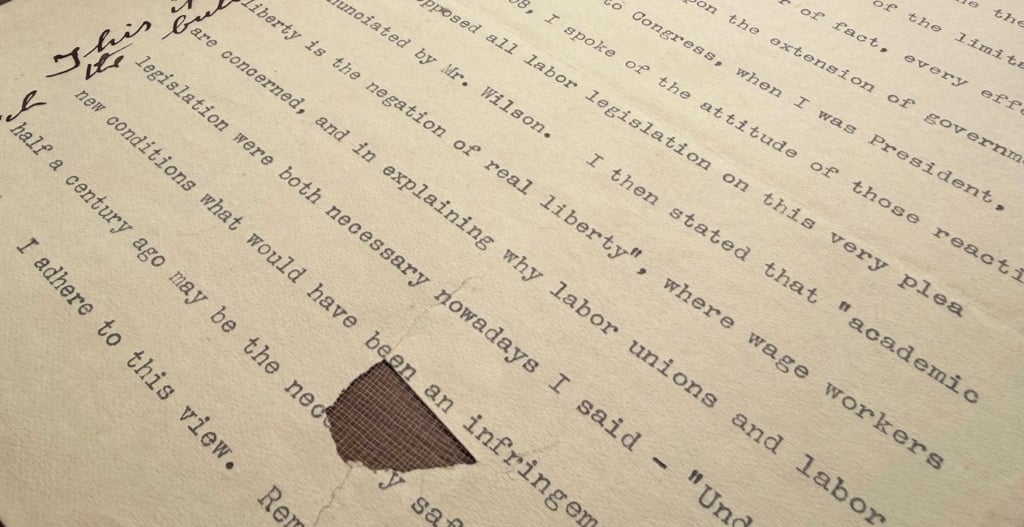
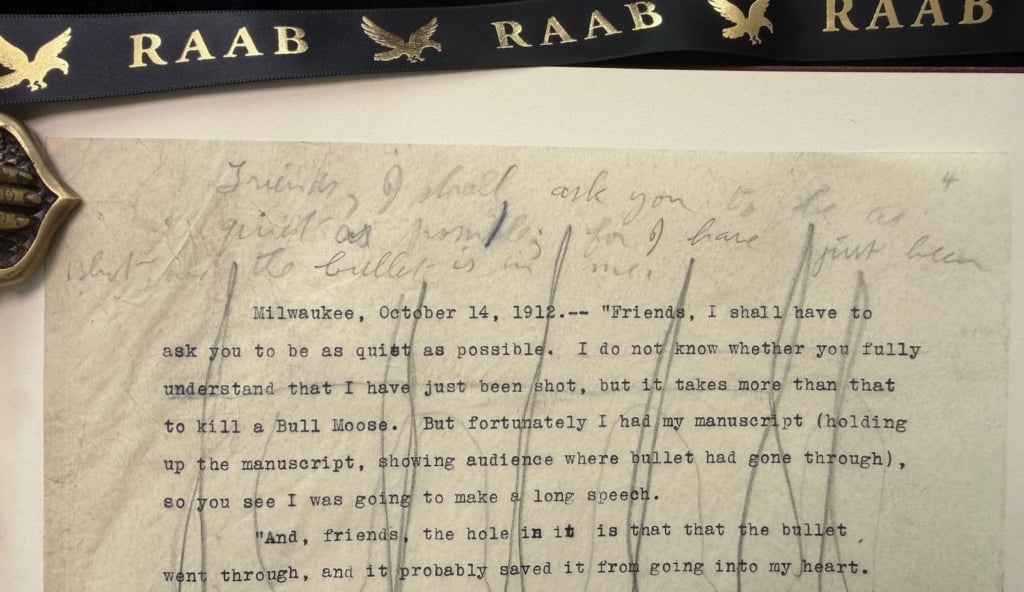
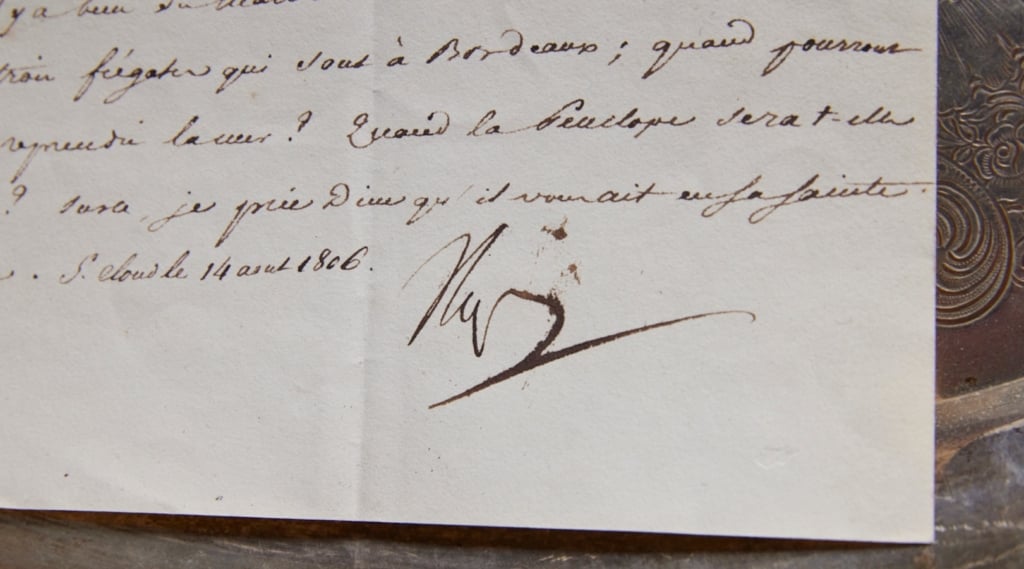
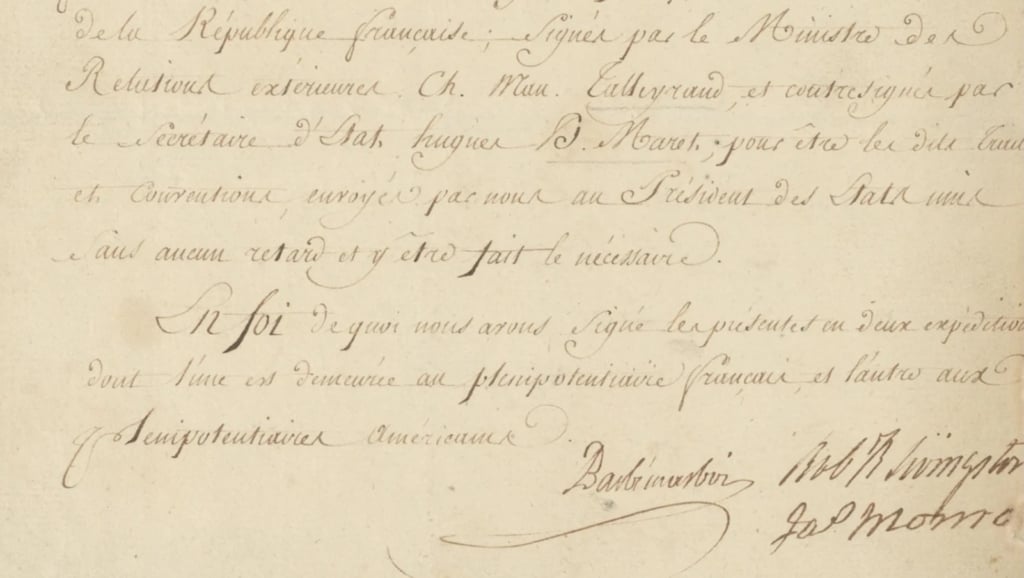


For the Inspired by History podcast, we’re producing a series of episodes on how to start and build a collection of historical documents. In the fifth of this series, we speak with Nathan Raab, president of The Raab Collection, about historical document authentication.
Listen to the interview below or via your podcast player of choice. Or, if you prefer, read this lightly edited transcript of the conversation with photos and embedded links to more resources.
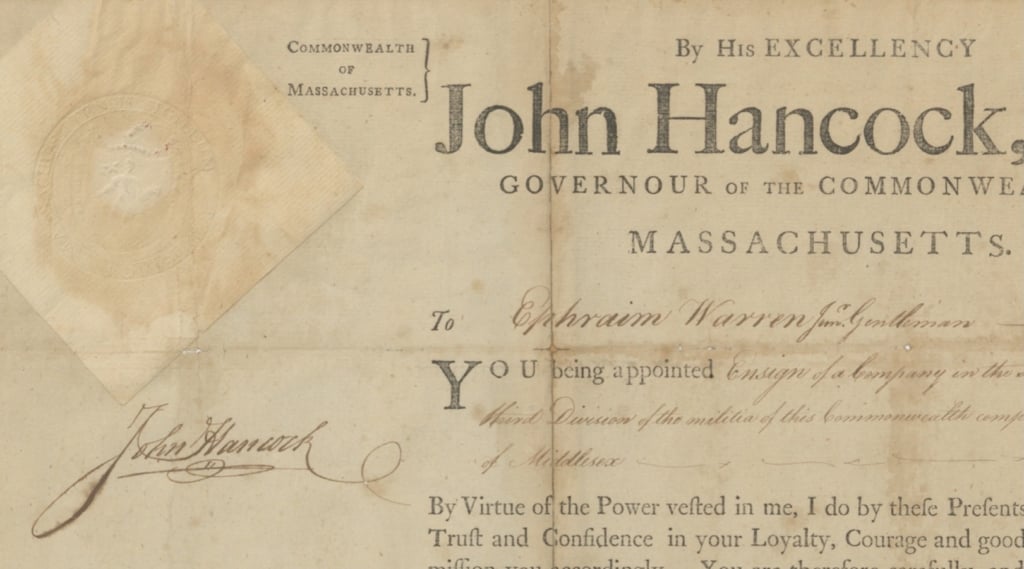
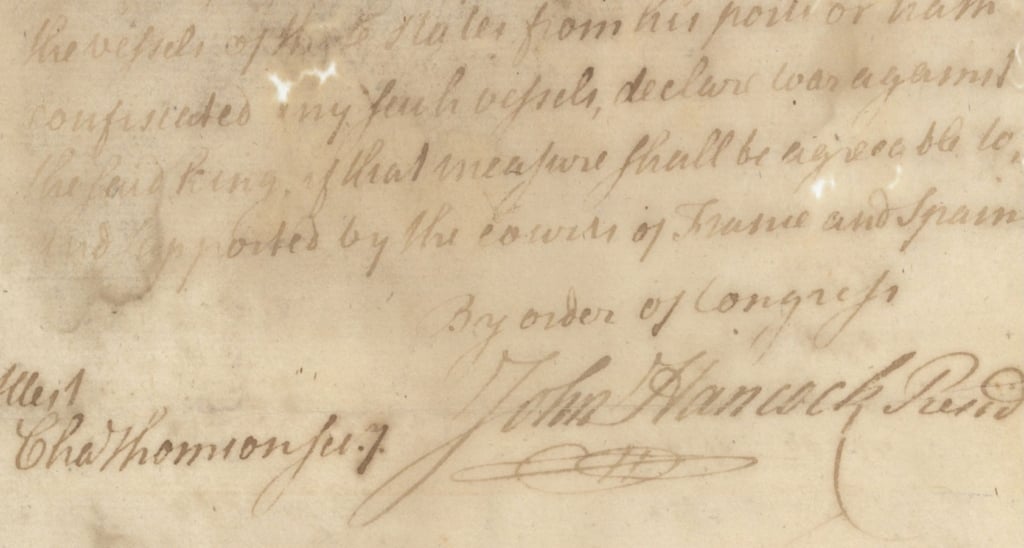
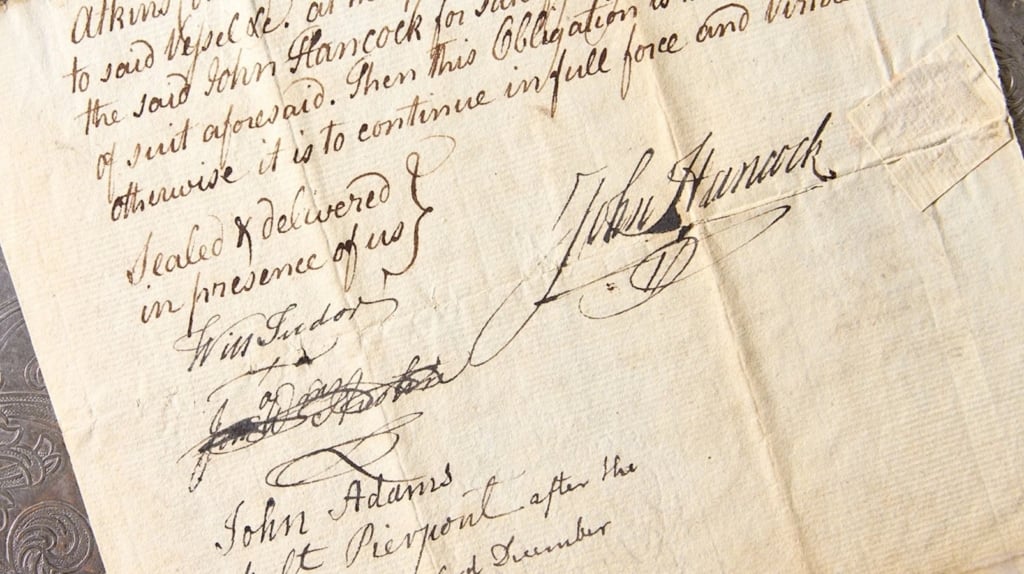
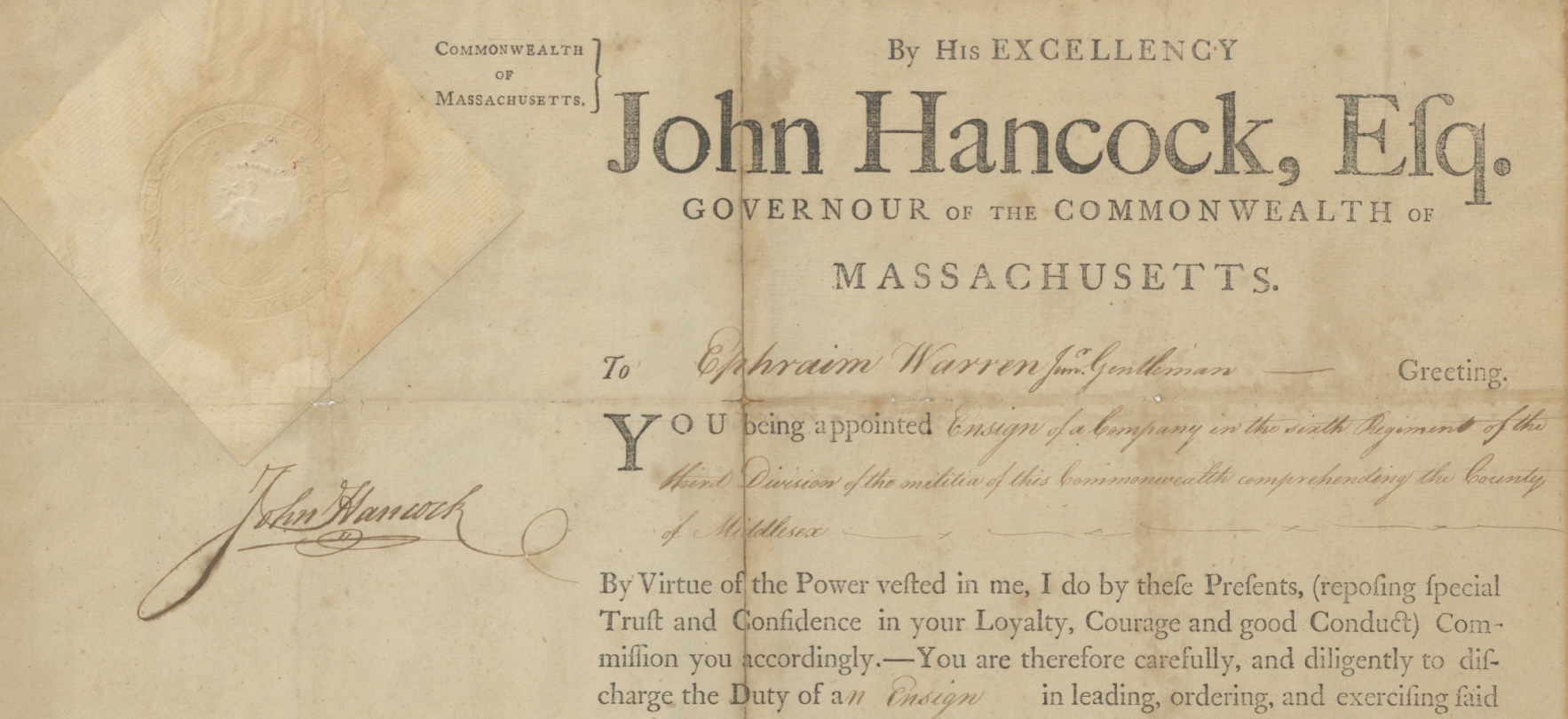
Today our topic is historical document authentication: what it is, the steps an expert takes during the authentication process, forgery, and a lot more. Nate, authentication is obviously a big and important topic in your world. I thought we might start with an example to help illustrate what you do. So let’s say someone emails you, and they have inherited a document signed by John Hancock. Where do you start? Do you have a mental checklist you follow?
Nate: The first thing that I look at is, I just get a takeaway from it. How does it feel? It’s a purely kind of emotional, visceral response that comes with seeing thousands of these things over the course of decades. There’s a truism in our space, which is, it takes 10 years to get truly comfortable seeing these things and being confident in your assessment, and probably 20 to really think of yourself as a genuine expert. And that is just simply a reflection on repetition.
Malcolm Gladwell writes in his book, Blink, that a true expert, they have that blink moment where they look at something and it either feels right or it doesn’t feel right, and that you still go on to do your research and make sure that you are right, but that for somebody who has the requisite experience, that that blink moment will 9,999 times out of 10,000 prove to be correct, and that your further research will only verify what you at very first suspected, felt.
So no, I’m not sitting there with a checklist saying, “Is this there? Is this there?” I am getting a “How does this feel?” vibe, and if it doesn’t feel right, it ain’t right.
Once it’s in your hands, then there are checks for paper and ink and that kind of thing?
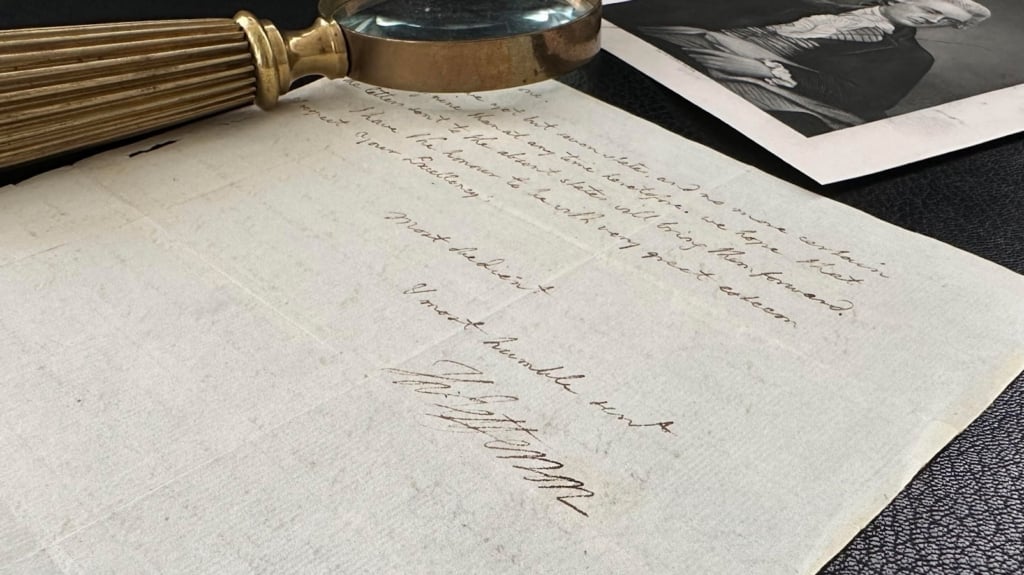
Nate: The way that I think about this is, how do I answer the question: How did you authenticate this? Which is not a terribly uncommon question for people who are new to us. And I think the answer is somewhat surprising. I don’t do it the way people think that you do it. They think, “Oh, you have got to take a magnifying glass and look at the signature,” and there certainly are times when I do that. It’s not that I don’t do that, but it’s not the most important element. There are multiple touchpoints on any document, and they all have to pass the test. It’s not as if you have to pass three-quarters pass the test. They all have to pass the test. The evidence of forgery in one area is evidence of forgery of the entire thing
So is the paper correct? Is the ink correct? Does the format look right? Who signed it? Was the person in the location where the thing came from on that day? Does the signature look right? The signature is an important element, but it is often the last thing that you look at. I look at it initially to see who’s involved in the document, but I’m not looking at it to see if is it authentic because forgers practice the signature. They don’t practice the other stuff because people don’t look at it as closely.
Are the numbers written the way the person wrote the numbers? Is there show-through on the back in the way that you’d assume that there would be show-through? These are the individual elements that an expert will go to once the initial feel test has been accomplished.
If it feels right, I’ll look at these elements to confirm my feeling, and if it feels wrong, I’ll look for evidence of why it feels wrong in those elements. And there’s not one. There’s like 15 of them. You know, I wrote a book on this subject – it’s a plug for my book – called The Hunt for History, where I go into some length about various times when I was confronted with authentication challenges. And there are authentication challenges. There are times when either something doesn’t feel right, and you can’t quite figure out why. It’s not obvious, and you really have to dig. Or, something feels right initially, and then as you sit with it and spend more time with it, you realize, well, why is that there? Why did this other person also sign it? And then you walk away feeling unsettled by the whole experience. But these are the minority, the tiniest minority of examples. In most cases, it is fairly clear-cut, and further research, which is necessary, will only confirm the initial reaction.
Staying on the Hancock example, I’m guessing you don’t need to worry about an autopen signature in that case.
Nate: Well, not with Hancock. Hancock was in business, and so there were people, they didn’t sign his name, but they might write out a manuscript, a bill of lading or something, so something which you may think could potentially be in his hand wouldn’t be in his hand. But no, with the signature, there’s obviously no autopen, although Jefferson used a form of autopen back then. So that’s the challenge, the Jefferson autopen, but not in the way we think of it today.
The hardest part in our job is authenticating glossy signed photographs. Ink has depth. You think of ink as going on a piece of paper and it being completely flat, but it’s really not. At a much more local level, a nearly microscopic level, which is perceptible to the eye, less so mine now that, the older I get, it becomes harder (but that’s a separate subject, hence the need for reading glasses). But it is perceptible, so you can see depth in ink on a piece of paper, on vellum, on wood pulp paper, on many signed photographs. But these newer glossy signed photographs, the gloss in the photograph tricks the eye and creates the impression of depth, which may not be there.
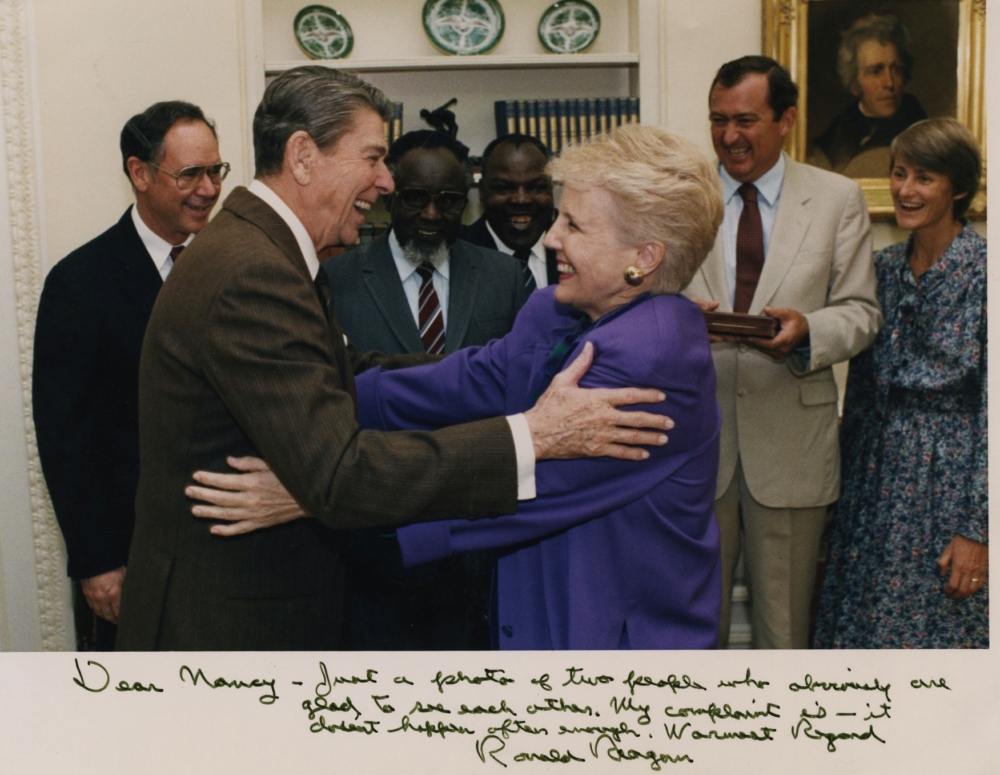
So a glossy signed photograph could in fact be a reproduction. I suspect some of these four president signed photos – the signed photos that are signed by multiple presidents – are reproductions, and I suspect that for a couple reasons. First of all, there’s too many of them. They would’ve only signed them together or if some enterprising person had access to them and collected them ex post facto. And I’ve seen letters of the presidents saying that they promised the other presidents they would only sign a certain number of them. The presence of so many seems to conflict with that.
Since I have a generally positive impression of people and like to believe that most people are not out to cheat you, the likelihood is that they’re simply reproductions and that it is hard to identify them. So, in a range of challenges, I would say that is the most challenging in today’s environment.
You hinted at this before. I think many of us have this vision of a historical document expert with a magnifying glass and a high-intensity light. You talked about whether or not that was an accurate point, but are there tools you use?
Nate: Yes, there are tools. There are ways that you can look at these documents. You can look at them microscopically. I have done that. You can use light as a means to cast different forms of shadow, make things visible that wouldn’t otherwise be visible. You can use conservators’ techniques to see if ink moves on a sheet of paper. The lack of ink movement on a sheet of paper would be a bad thing, and you have to do this without damaging the document.
You want to see ink movement. Ink is not part of the paper. It is a separate thing that goes onto the paper. So lack of ink movement would indicate some kind of printing or copying process. But the necessity to use those on everyday documents to me is more of a sign of just lack of experience and ability than anything else. You shouldn’t need that.
You talked about how long it takes to become an expert. How long does it take a collector to become skilled enough to have confidence in what they’re buying?
Nate: Well, the same level as a dealer? It would take the same amount of time. A dealer is seeing far more examples. So I’m seeing 20 new things a day, and I have been for 20 years. There are some days when I see 50 new things a day. I’m seeing a collection of 75 pieces next week. Collectors are never going to have access to that kind of material.
The demands on a dealer are much higher. I’m not buying from prominent, experienced others. In the vast majority of cases, I’m buying from private collectors or heirs who have themselves inherited the material. The entire burden of proof falls on the expert in that case, because you are on the front lines of discovery and authentication.
So for a collector to get to the point where he or she could do that would take decades, same as it has me. The challenge for the collector is to be able to find things, identify reputable sellers, and you learn over the course of years. Are you going to catch an experienced dealer in a mistake? I mean, listen, everybody makes mistakes. The most knowledgeable, competent person in the world is going to make a mistake in their own given field because that is the nature of humanity. We are by nature subject to error no matter how hard we try, and there’s no amount of training that can train you out of being human, nor would you want that.
But in the vast majority of cases, the vast, vast, vast, vast, vast majority of cases, a reputable expert in this is the best you’re going to get, and a reputable expert with a guarantee and a reputation within the field who stands behind his or her own material is the pinnacle of authentication and good business.
Collectors can learn where the polluted streams are, so to speak, and learn to avoid them. They can become much more familiar than anyone else, including some inexperienced dealers, and be better than them at authentication. But to reach the level of somebody who’s been doing this full-time at the highest level for decades would require the same thing from the collector.
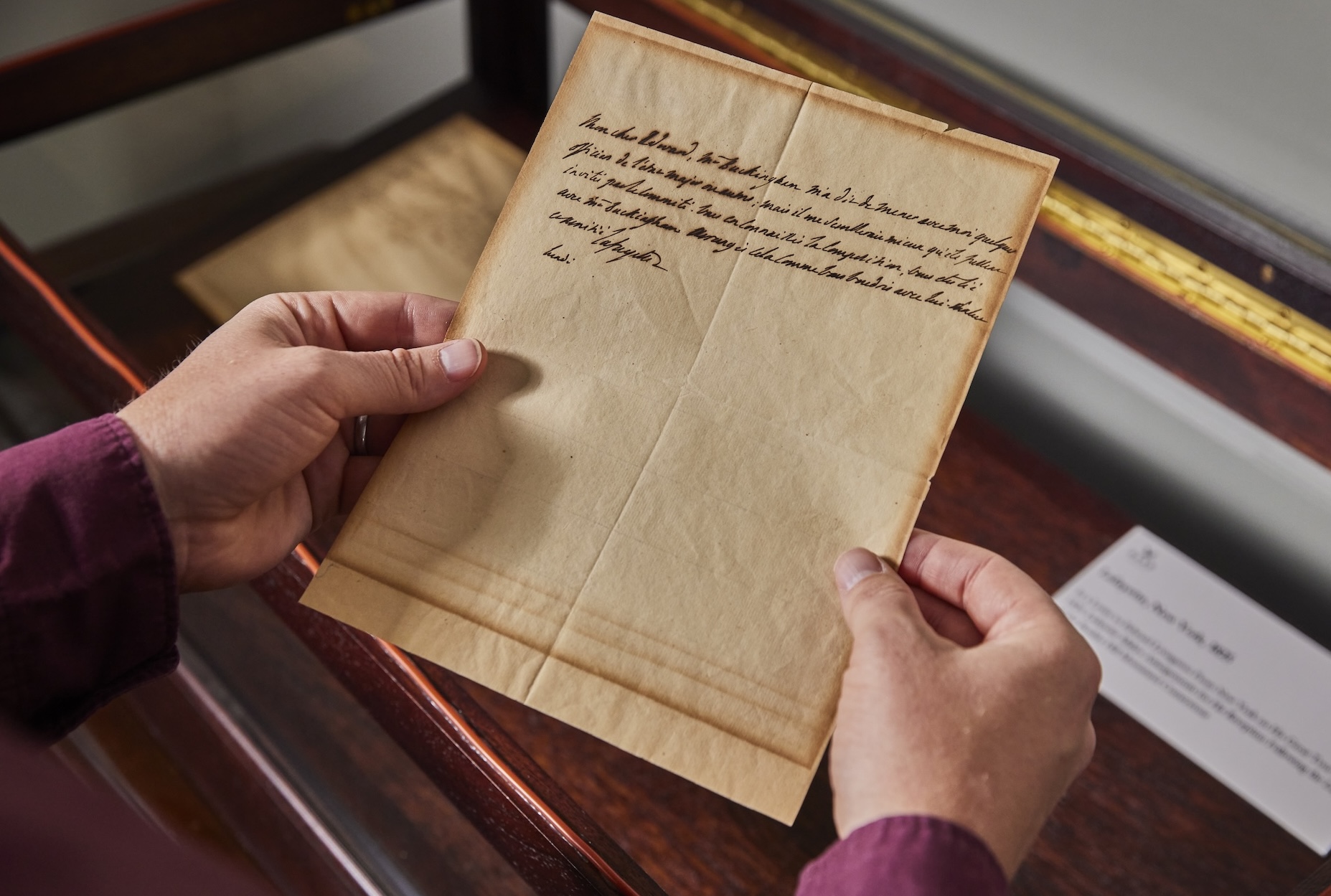
You mentioned a guarantee, which I was going to ask about because that’s a really important part of what makes a reputable dealer reputable and why you’d want to work with somebody. So explain to me what is the Raab guarantee?
Nate: Well, any reputable seller in this field will have a guarantee where everything is guaranteed to be authentic for your lifetime, that if something was shown to not be authentic, that you would stand behind that and refund the money, and of course, we have that.
Pretty simple. Pretty straightforward.
Nate: Yeah, people generally don’t want to buy things that aren’t authentic. I think that’s a reasonable expectation from a seller.
Here’s another big question. What is a COA, and what is your opinion of them?
Nate: A certificate of authenticity is a piece of paper with writing on it. It doesn’t guarantee. It gives the opinion of the person writing that certificate of authenticity that something is not authentic or authentic. It is simply the opinion of that person, so I guess my response to that is it matters very much whose name is on that piece of paper. It also doesn’t protect the buyer at all if it’s not issued by the person that’s selling it.
We issue COAs at the request of the buyer, and if it ends up not being authentic – Now, keep in mind that’s not happened – but if it ends up not being authentic, then that person would be protected. But they would be protected whether we had issued the COA or not because the policy remains regardless.
A third-party COA, which I think is the heart of the question, these are created by either third-party companies or third-party individuals who look at material and issue an opinion for a fee. It’s a business, so they issue an opinion for a fee, and the fee can be less or more. Sometimes they examine things based on scans and images, and sometimes they do them in person. More often it’s the former. They analyze them. But it’s a business model, and the business model is to issue more of the COAs for presumably making more money.
The value of a COA, in our field, I should say that the COA companies exist at a much more robust level in the sports market, and it matters very much whether the person knows what they’re doing, whether they’ve seen the document with enough precision to form an educated opinion, and, again, what the expectations of the consumer are.
In general, our customers do not ask for them, and we do not accept or provide them. We will issue our own guarantee based on our now half-century of collective experience. But really, our invoice is sufficient as a COA. But if a customer asks for one, we’ll supply one, of course.
Avoiding Forgeries: The Basics
Now we turn our attention to forgery. Forgers have been around for centuries, but there are a few that stand out to those in the documents and autographs world.
Nathan: Well, there are some well-known forgers, some particularly adept artists. I say art because forgery is, in a sense, an art. A dishonest art, but an art nonetheless. So there certainly are some forgers over the years who have convinced, well, a variety of well-meaning and even knowledgeable people by being really good at forging.
Charles Weisberg, for example. Robert Spring and Joseph Cosey are probably the two most famous, and they operated in the mid to late 19th century and early 20th century. They were ne’er-do-wells circulating around the autograph and rare book field, and a lot of their forgeries are now in major institutions, not having been identified as such at the time that they were acquired. So they were quite good.
Particularly Robert Spring and Joseph Cosey have almost become collectible in their own right.
Nathan: I would say the forgeries of Spring and Cosey, and I have a few of them, they can sell for $1,000 or so. They’re not extremely valuable, and if you walked into a conversation thinking you had something authentic and were told it was a forgery, you wouldn’t be pleased, but they’re not valueless and they’re fairly hard to find.
Is there anyone in the 20th or even 21st century who comes close to those two?
Nathan: Well, there’s a famous example of Lee Israel and there was that movie [“Can You Ever Forgive Me?”]. She forged primarily literary autographs, authors, and she was quite adept at it.
These folks eventually get caught for the most part. There are people operating now who lack the sophistication and ability of some of the finer forgers, but usually a qualified, experienced expert in the field will be able to identify them. More and more the issues become reproductions, high-resolution reproductions and the other forms of duplication, which usually you can spot in person, but can be difficult to spot in a scan.
The world is so interconnected that it can be fairly hard to operate a large-scale forgery operation amongst a more sophisticated clientele. Certainly there are online marketplaces where you could operate without great disturbance. But once you reach a more experienced, knowledgeable, sophisticated level, it’s harder to do that today than it was back then.
These high-resolution scans – they would have to be printed on old paper?
Nathan: I’ve seen that, they are, but it’s less that, it’s more like a signed photo that has its own gloss to it. The gloss of the pen and the gloss of the photo are similar, so, in a sense, the reproductive aspect is hidden.
For the layman, can you suggest a few easy forgery avoidance techniques?
Nathan: Well, for the true layman, the best way to avoid buying forgeries is to buy from somebody who you trust and has the experience to be able to help you. You don’t go and operate on yourself if you need a surgery, you go and you find a qualified doctor to do it for you, and although it’s not the same, the same premise applies when you’re dealing with something where there’s a risk. You go to people who are knowledgeable to avoid that risk. And if over time you feel that you’ve gained the knowledge to operate on your own, in some cases there’s no harm to that. But I’m not aware of somebody who’s put together a major collection, who didn’t, at least for a time, rely heavily on one or two really trusted, genuinely experienced experts, dealers.
Yeah, because you could say, well look out for letters where the handwriting doesn’t look “right.” But what does that mean?
Nathan: It means nothing if you don’t know what “right” is. Going back to the medical analogy, it’s like reading an x-ray or an MRI. There are people who are trained to be able to do that and tell you what you’re looking at. It doesn’t mean a lot to me, but I’m not in the habit of reading my own x-rays. You wouldn’t advise it.
So much of this is common sense. If the person wasn’t born when the thing was signed, it’s probably not authentic. If the person wasn’t in the location that matches the dateline of the letter. If Washington wasn’t in that town at that time, it’s probably not authentic. It’s the whole context.
You can’t just look at the signature. You have to understand the entire history of the piece. And by history, I don’t mean provenance. Of course that’s relevant, but I don’t mean provenance. I mean, you have to understand the context in which it was originally written, the size of the paper, the ink, the person that’s being written to. Is it a known letter? Who is keeping track of such things? Is the handwriting consistent with the handwriting in that period? Particularly in the early years, is it straight? They knew how to write straight. So if you have something going up and down, you’re dealing with somebody who may have learned to write more recently. We didn’t take handwriting classes the way a lot of them had, so it’s the whole thing.
Generally speaking, if you have, let’s just say for the sake of this conversation, 10 criteria against which you are measuring the authenticity of anything, if it fails one of them, it fails all of them. The signature is one of those criteria. I’m not suggesting it’s not. For reasons that may not be obvious to the person looking at it, in some cases, something is written but not signed. Someone can go in later and add a signature. The document itself could be authentic, but the signature is not, so it’s not as if the signature helps you authenticate the entire thing. It’s actually the reverse. The context will help you draw out the authenticity of the signature, which then must also prove itself. It’s a series of interlocking criteria which all feed into each other and must all be consistent, internally consistent and authentic.
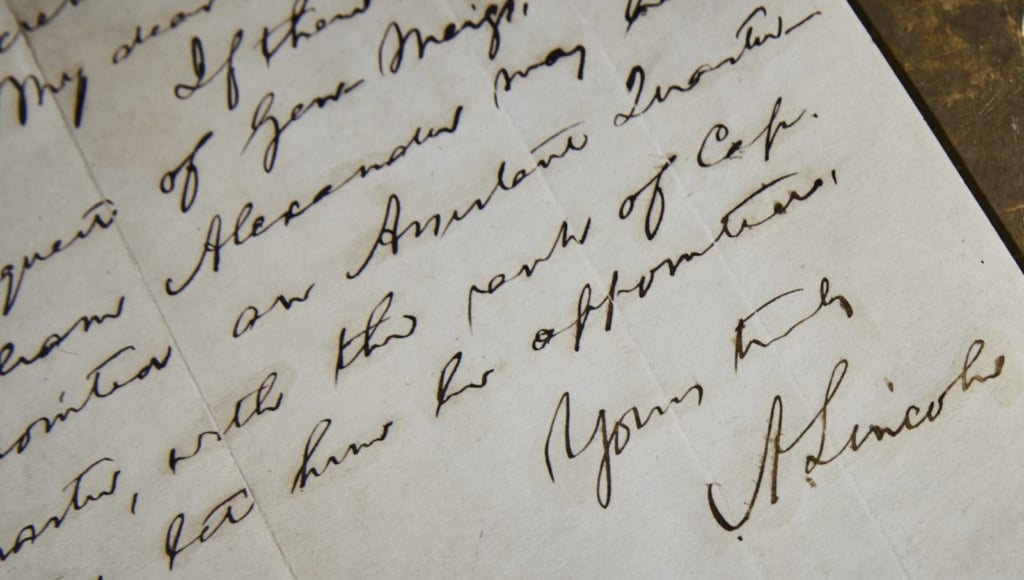
So you talked a little bit about paper and ink and context. Provenance too. Provenance, sort of with caveats, right? I’m thinking of a forged Lincoln document that you helped to uncover years ago and wrote about in your book, The Hunt for History.
Nathan: That was an early Abraham Lincoln letter, and the signature wasn’t terrible. It was a published letter, which had long been thought to be authentic. It was being offered for sale by a very reputable, knowledgeable dealer, in this case, a book dealer. I liked it, but the more I looked at it, the more I just felt uncomfortable with it. It wasn’t anything I could put my finger on. It was more, you know, when you’ve been doing this for long enough, it becomes an initial gut feeling that you get sort of a queasy feeling in your stomach that this isn’t right.
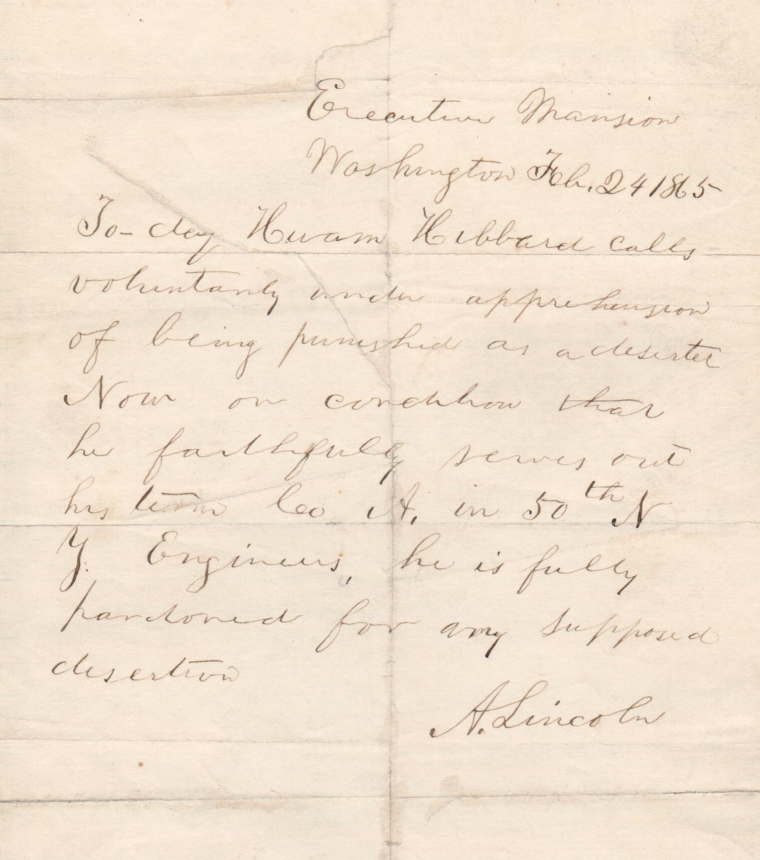
The piece should feel right to somebody who’s looked at a thousand of these things, and if it doesn’t, it doesn’t mean it’s not authentic. It just means it requires a second, third, fourth, fifth look. And as I looked at the letter, it wasn’t the signature that gave me a hard time. It was the rest of the letter. The lines weren’t straight. It didn’t look like somebody who knew how to write, somebody who was writing in that era. When people took handwriting classes and practiced writing and there was no typewriter or computer, the ability to communicate in an educated fashion was conveyed in some cases through the way that you wrote, and in this letter, the lines weren’t straight.
Some of the letters within the actual communication were malformed, and I just came to the conclusion this could not be authentic. Lincoln could not have written this letter. What that lesson taught me was even if someone whose opinion and respect you value, and someone who is operating an honest business and has handled such things before, even if they say it’s authentic, you always need to bring fresh eyes and fresh scrutiny and a certain amount of skepticism to the authentication process. These things get more and more valuable each day, and so mistakes are costly, so it just pays to walk in the door with a certain amount of skepticism and a fine eye. Some people take the position that they don’t want to work through a dealer or an expert to help them put together these collections and, particularly in the beginning, that’s always a big mistake.
In that case too, it was the book dealer who was selling it, but it was also a scholar from decades before who had published the letter and said: this is a real Abraham Lincoln letter. It reminds me of when a fact gets put into a biography, it can get repeated in every next biography and every other history until somebody 50 years later goes back to the source material and says, wait a minute, that thing we’ve been saying for 50 years is not true anymore, or it was never true.
Nathan: There’s history and there’s lore. There are all sorts of quotations that we repeat as having originated with such and such a person, which maybe they did, maybe they didn’t, but the probability is they didn’t. Some of these quotations are really funny. I always take them with a grain of salt. You never know.
But in this business, you have to start out being suspicious of everything that comes across your desk?
Nathan: Yeah. I think you can be suspicious in a healthy way. You can make a document prove itself without being overly pessimistic. I think you should be suspicious of the document, not the person. My experience is most people selling forgeries don’t know that they’re forgeries. They’ve inherited something or they were sold something and that ends up not being authentic. They’re not trying to cheat me. They don’t know any different. I generally don’t impute criminal motives on people selling forgeries because it’s just not my experience.
There are people that come to us with, and they’re usually not the most sophisticated forgers, they’ll come to me with a forgery, and it’s very obvious they’ve gone onto my own website, copied something that I own, and are trying to sell it to me. Somebody quoted me a letter of George Washington, and I’m thinking, I own the original of this letter. They had forged my letter to sell it to me. Not the smartest approach. Somebody once came to me and said they had the same letter of George Washington that I had, and naturally I was very interested in that fact. They came to my house, and what they had was a reproduction of my letter. They weren’t trying to cheat me. They genuinely thought that they had that. There was nothing nefarious there.
To learn more, listen to other episodes in the Masterclass series, subscribe to hear more from Inspired by History, and visit The Raab Collection website’s Learn section, particularly “The Ten Steps We Take to Authenticate Historical Documents.”