



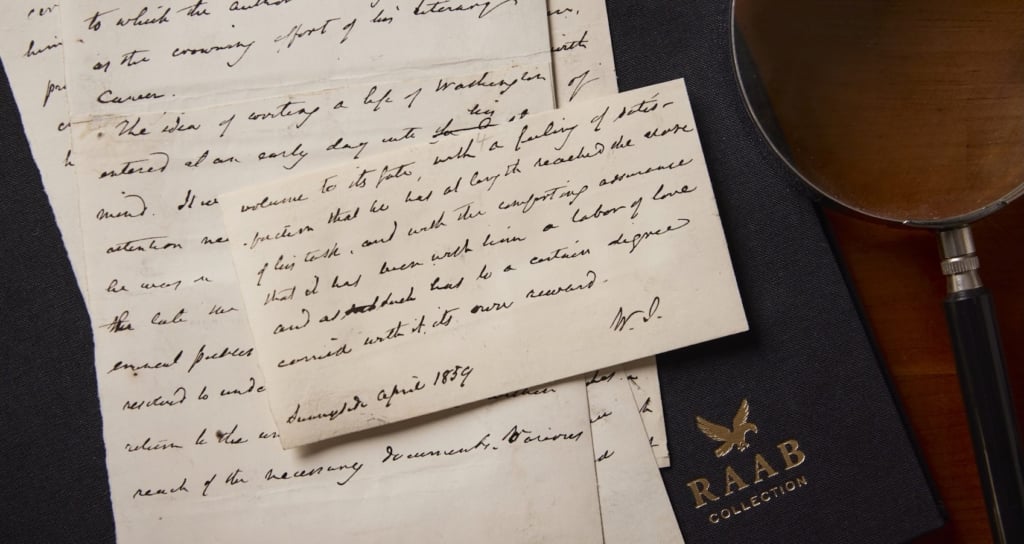


A survey of the types of documents signed by President Roosevelt that collectors can expect to find in today’s market
Theodore Roosevelt was born into a wealthy New York family but chose civil and military service. He famously led the “Rough Riders” during the Spanish-American War, a position that catapulted his political career. He was elected Governor of New York in 1898 and Vice President of the United States in 1900. Only a year later, upon the assassination of President William McKinley, Theodore Roosevelt became President. He excelled during his nearly two terms as President, instituting major reforms and ushering the U.S. into a leading role on the international stage.
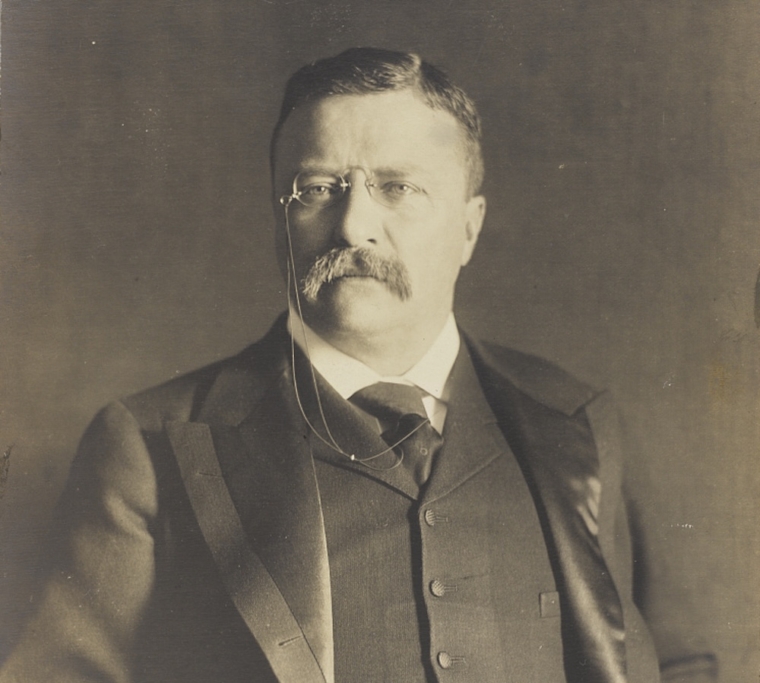
Roosevelt and The Rough Riders
Teddy Roosevelt served in various appointed and elected positions at the state and national level for four decades. After serving in the New York State Assembly and as New York City Police Commissioner early in his career, he was named Assistant Secretary of the Navy, a position he gave up in order to volunteer for active duty as Lieutenant Colonel of the First US Volunteer Cavalry, or “Rough Riders.” His success there made him a national hero, pictured in newspapers all over the world.
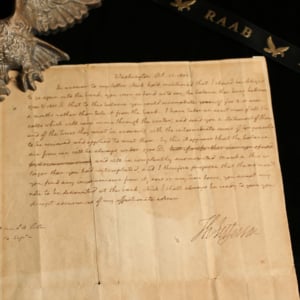
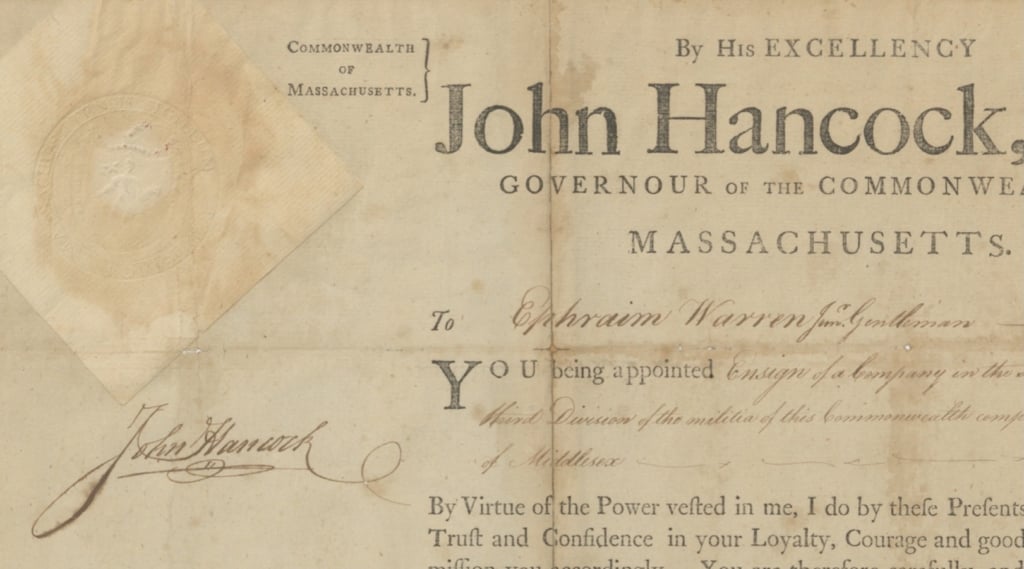
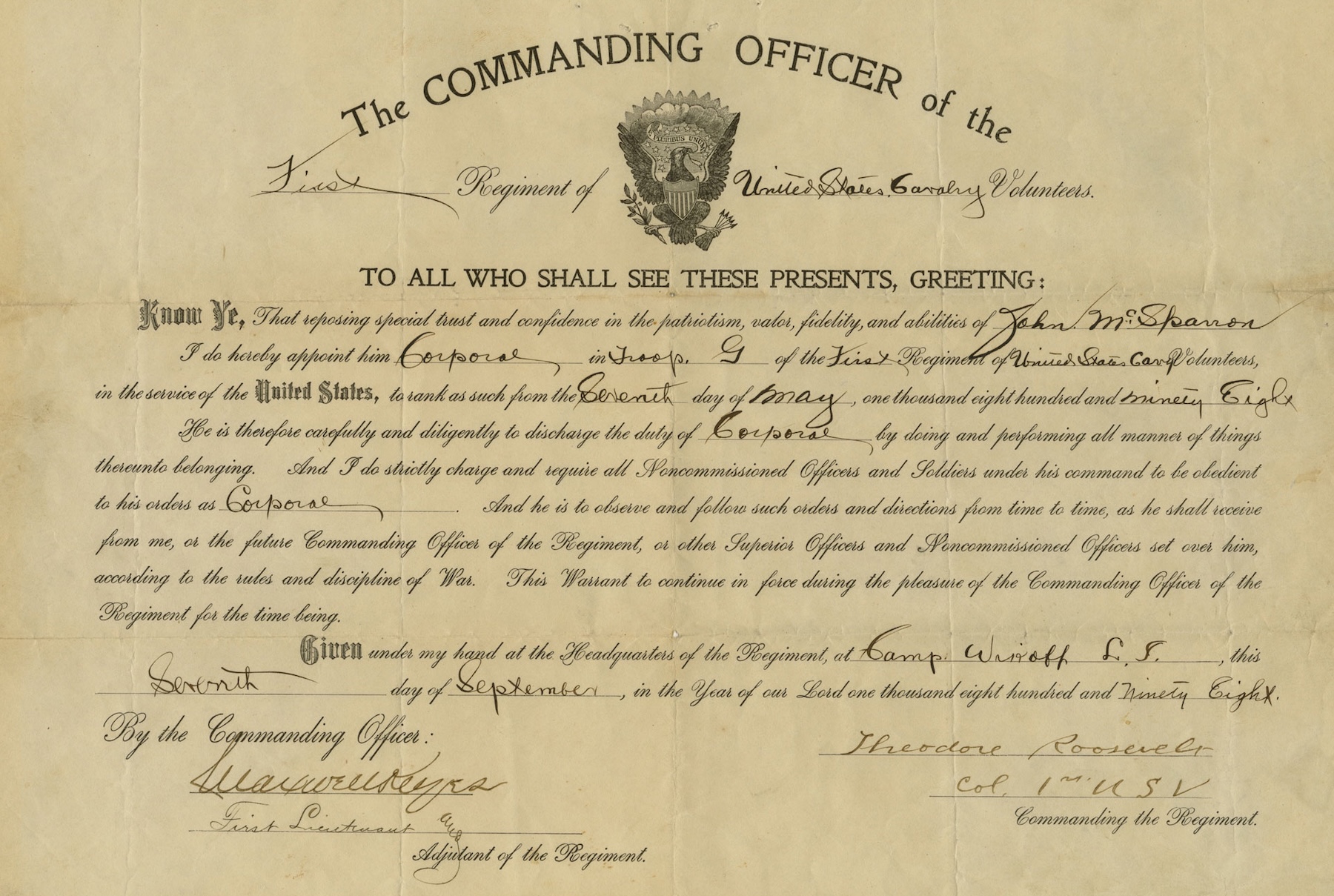
Roosevelt signed or inscribed photographs of himself in uniform to give to friends and acquaintances, examples of which are collectible today. We have carried several over the past decades. In addition to signed photos, letters of Roosevelt and military appointments signed by him from this era (example pictured below) also occasionally surface for sale.
Roosevelt as Governor of New York
When the war ended, Theodore Roosevelt returned home, where he campaigned on his newfound celebrity to become New York’s Governor. Documents from this brief period of his life are uncommon. Some, such as his original, handheld manuscript victory message, given on Election Night, 1898, are more than uncommon; this one is unique.
On that night, a key moment in his rise, he told his supporters: “I shall do all in my power to redeem every promise I have made, expressed or implied…I believe I can best serve the Republican Party by doing everything I can to help it serve the state. I shall strive to administer the office of governor in the interests of the whole people. It is by so doing that I can best show my appreciation of the support given me by the independents and Democrats…”
Roosevelt only served two years as governor, but in those years, he became known as a reformer, passing nearly 1,000 bills into law, some that improved labor conditions and working hours, particularly for women and children.
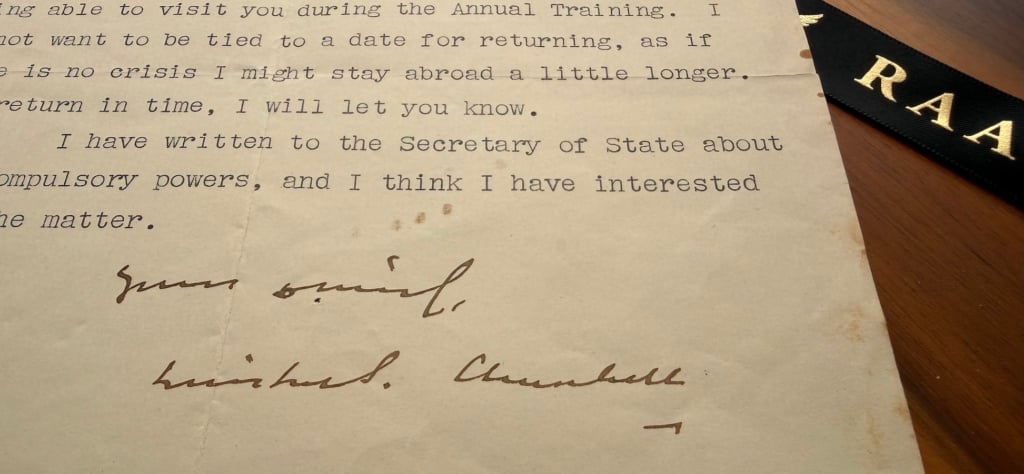
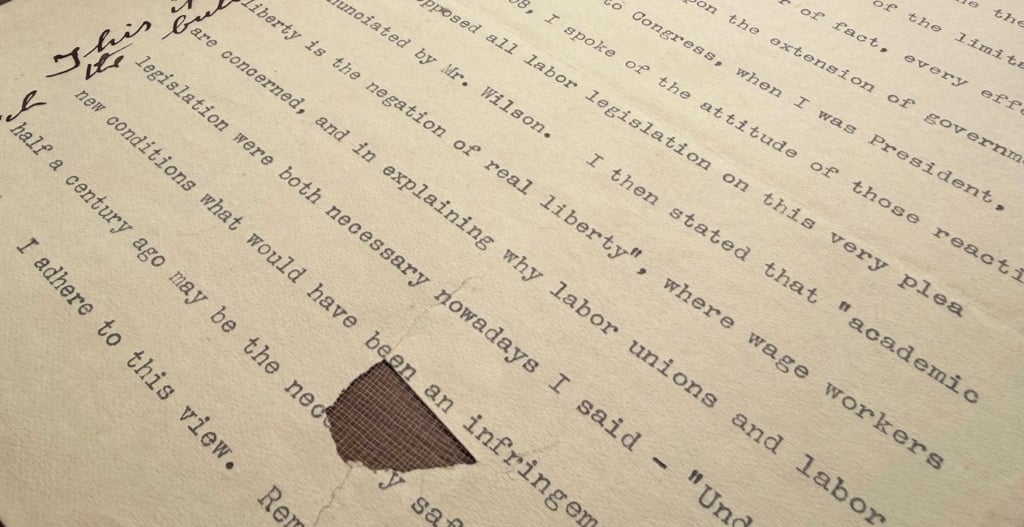
As a correspondent, Theodore Roosevelt was productive and prolific. In the 1890s, he began to use a typewriter, yet still managed to put a personal touch on his letters by changing a word or two or adding punctuation in his own hand.
When a female supporter in upstate New York wrote to Roosevelt after his gubernatorial win, she pressed him to mention women’s suffrage in his upcoming inaugural address. In response, Roosevelt indicates his open mind on the subject. “There is very much concerning the legislation for women about which I should like to consult with the advocates of woman suffrage.” Handwritten corrections and edits show that he gave the letter his personal attention.
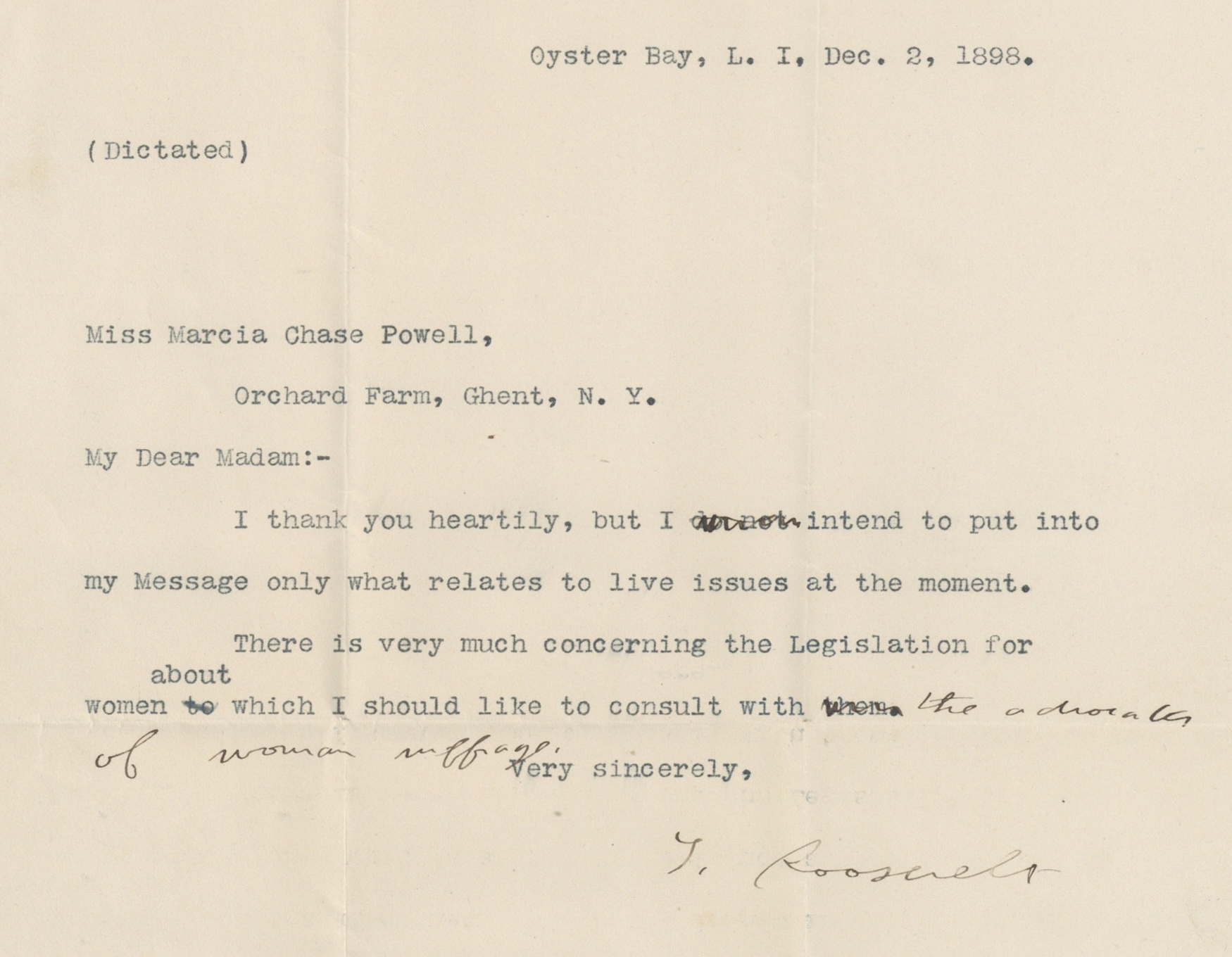
This is the only letter of Theodore Rosevelt we have ever seen on the topic of women’s rights, a subject that most politicians of time opposed or ignored. Raab obtained it directly from the family of the recipient and it has never before been offered for sale. It’s worth noting that Roosevelt did, in fact, mention his support for women’s rights in his speech.
Theodore Roosevelt Becomes President
Because of the assassination of President McKinley in 1901, early in his term, Theodore Roosevelt ends up serving almost two full terms as President. During that time, there were certainly many appointments, letters, manuscripts, and speeches written or signed by him.
Appointments
Presidential appointments signed by presidents in power for several years or more are not terribly uncommon, but depending upon the historical figures involved and the condition of the document, they can still hold significant value. In some cases, presidential appointments have been handed down as family heirlooms, to descendants, and thus have never been offered for sale before.
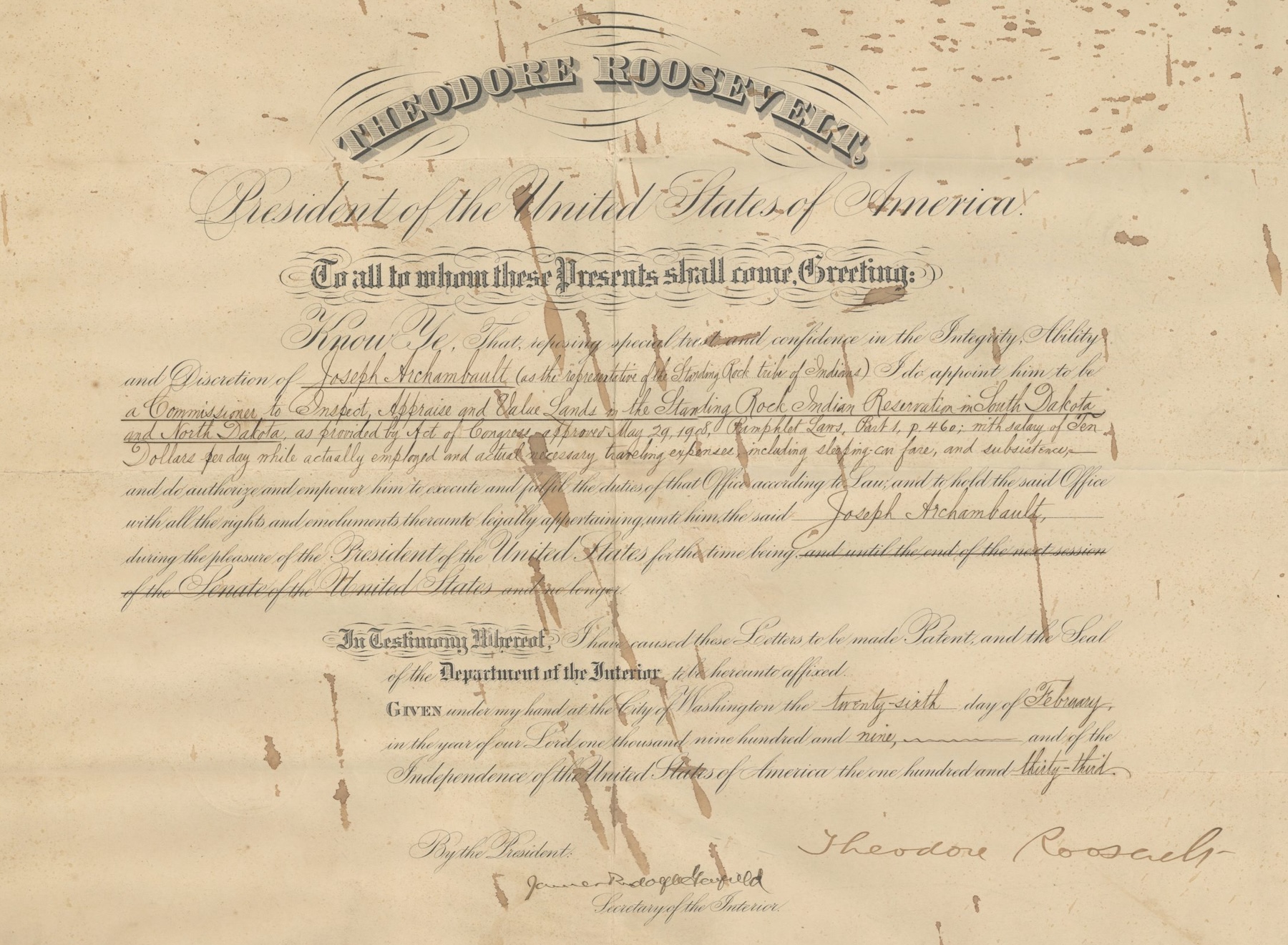
Examples currently in our inventory include the 1903 appointment of Roosevelt’s solicitor general, Henry Martyn Hoyt Jr. and the 1904 appointment of Roosevelt’s Commerce and Labor Secretary Victor H. Metcalf. Another, signed in 1909, appoints a Native American to survey the great Standing Rock reservation for U.S. takeover.
Letters
Roosevelt wrote letters on a range of subjects with aplomb. His correspondence was, in some ways, a throwback to that of his early predecessors: he was as high-toned as Washington, as analytical as Adams, as philosophical as Jefferson, and on occasion, as blunt as Jackson. No president since has written better letters. Below are a few examples.
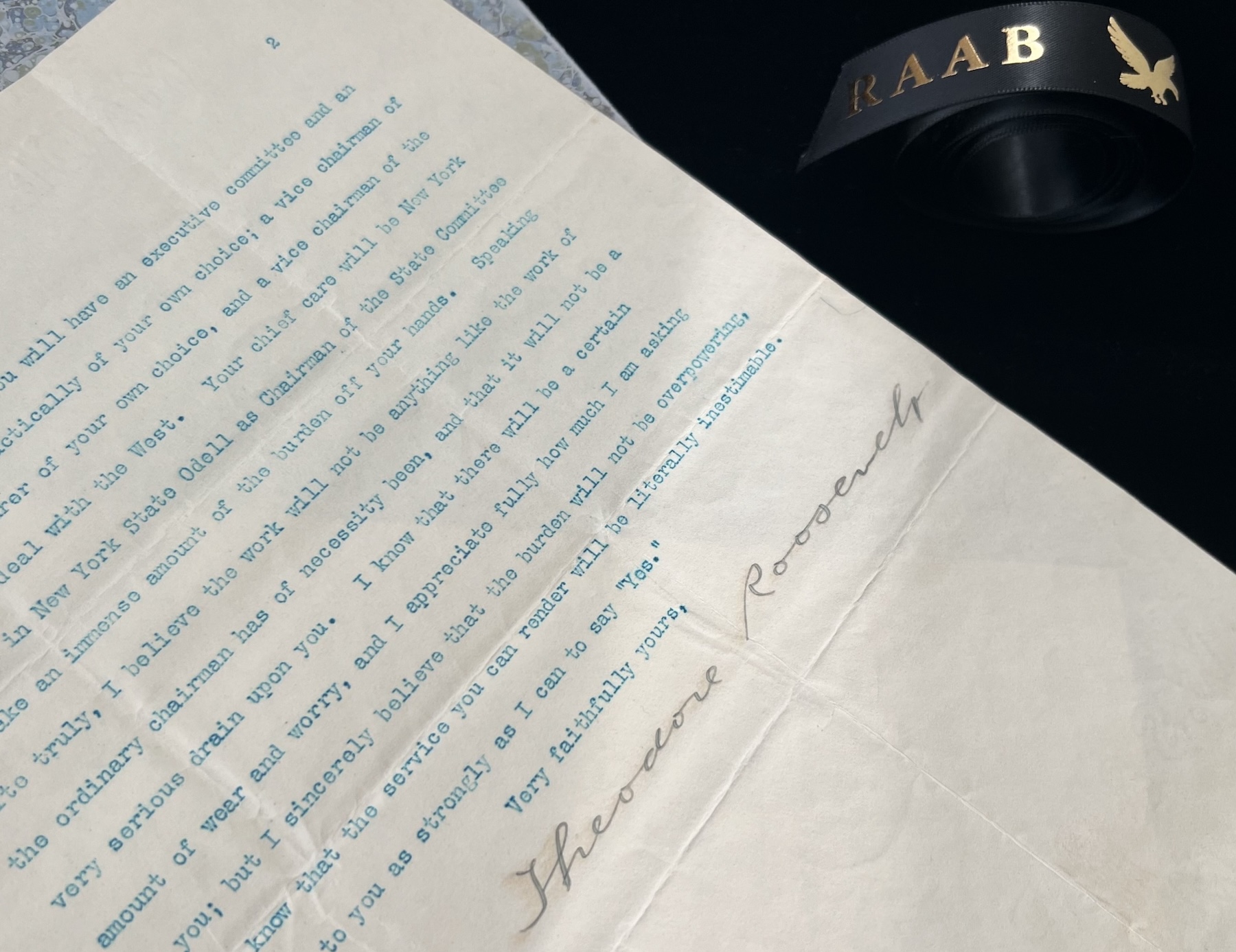
This Theodore Roosevelt letter cajoles Cornelius Bliss, a New York politico, to become his campaign manager in 1904. Edward F. O’Keefe, CEO of the Theodore Roosevelt Presidential Library, wrote of it when he guest curated an exhibit for Raab. “This rare document takes history inside one of TR’s most consequential political decisions in 1904: the selection of his campaign manager. It was a good one. TR won in a landslide: 336 to 140 in the electoral college and well over 2.5 million in the popular vote.”
This important Roosevelt letter from 1907 is packed with commentary demonstrating his courage, attacking the wealthy malefactors and Wall Street, defending sending the White Fleet, discussing Japan, and ending with a mention of Mark Twain. Written to reformer and journalist Dr. Albert Shaw, it also includes a Puck cartoon that Roosevelt himself cut out and appended to his letter.
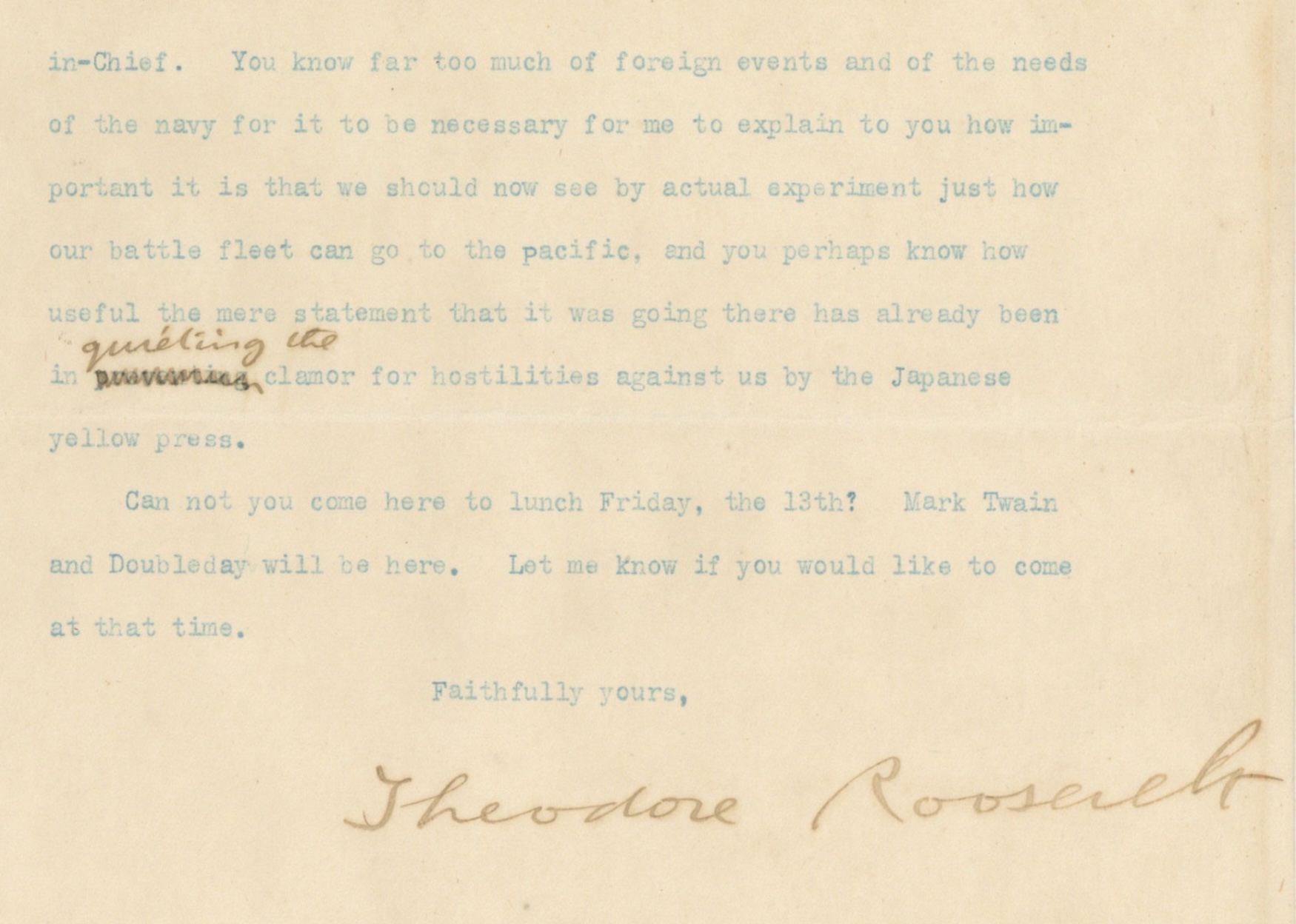
“I will tolerate no assault upon the navy or upon the honor of the country, nor will I permit anything so fraught with menace as the usurpation by any clique of Wall Street senators of my function as Commander-in-Chief.” –Theodore Roosevelt, 1907
Roosevelt did not run for President in 1908 and instead supported his former Secretary of War, William Taft. By 1912, however, he was disillusioned with Taft and decided to run as a third-party candidate, for the Progressive or “Bull Moose” Party. While on the campaign trail that fall, Roosevelt was shot by a would-be assassin. He lived, but lost the election.
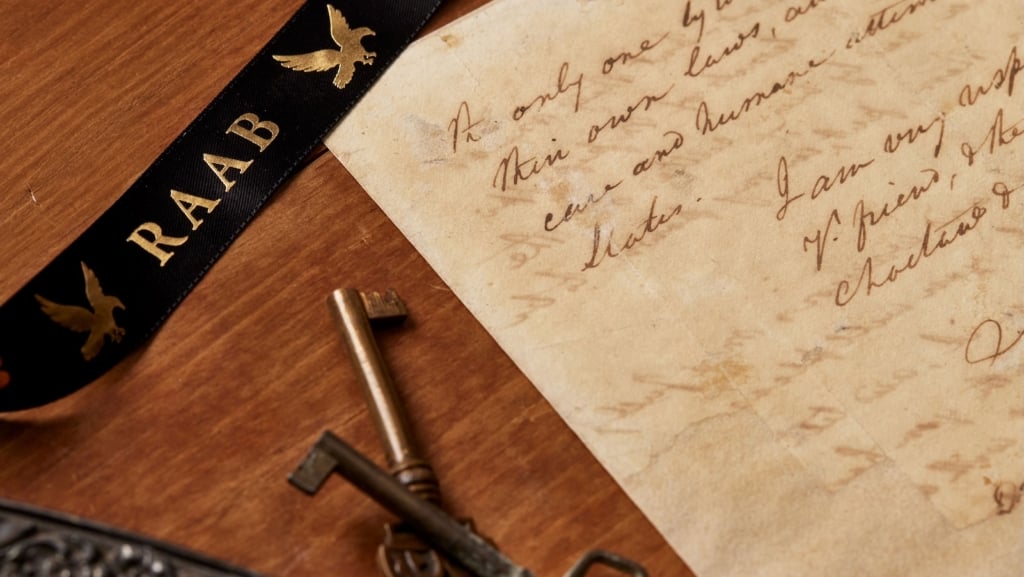
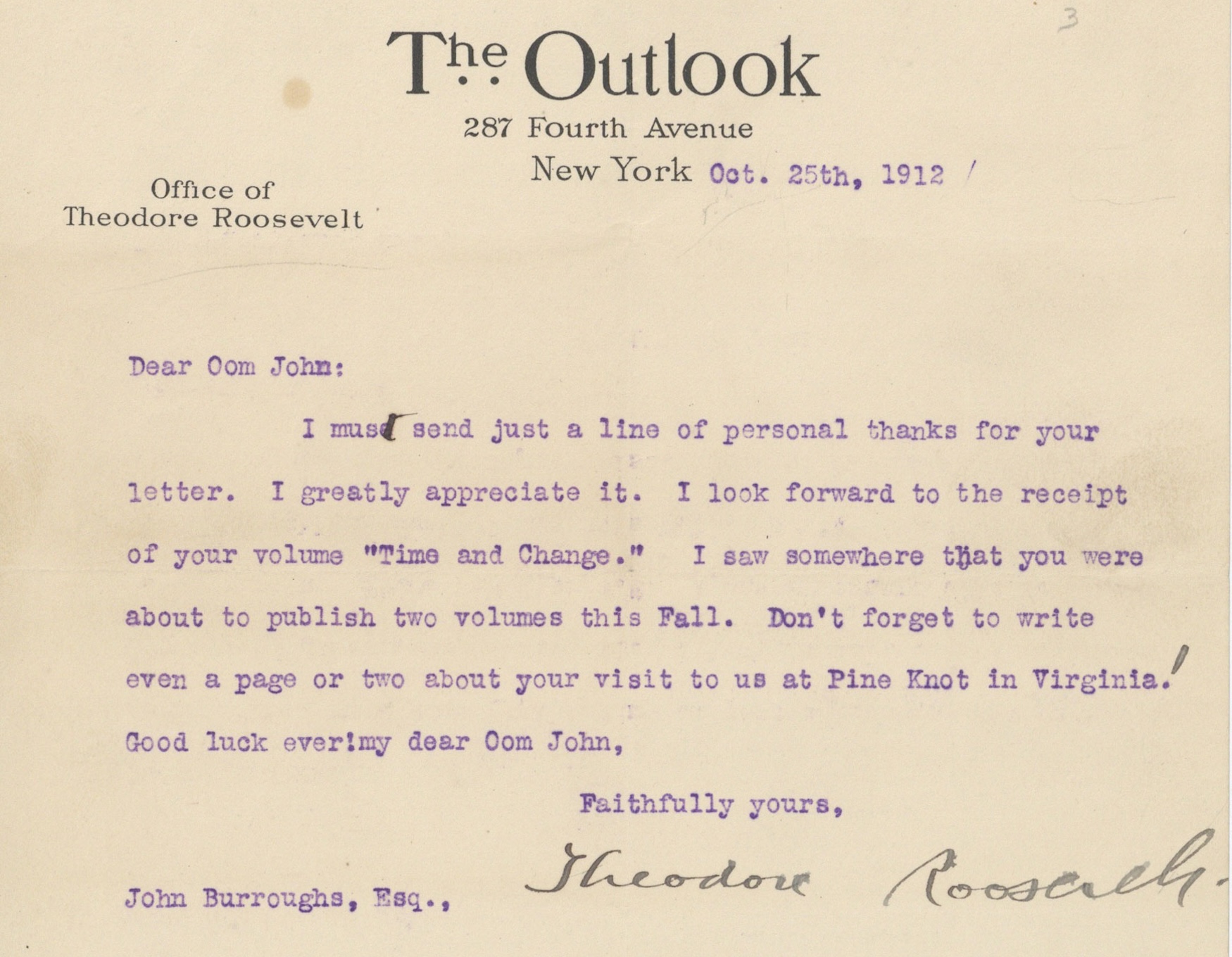
This letter was written in reply to the concerns of Roosevelt’s friend, the nature writer John Burroughs, mere days after the assassination attempt. The two men had kept up a yearslong correspondence on the subjects of wildlife – as seen in his 1903 letter to Burroughs – conservation, literature, and journalism.
Manuscripts
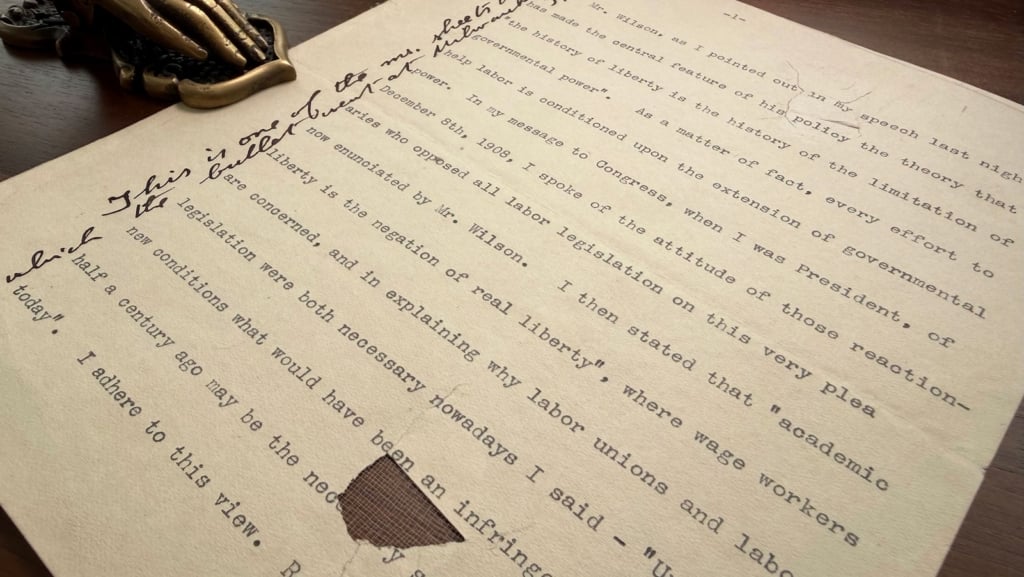
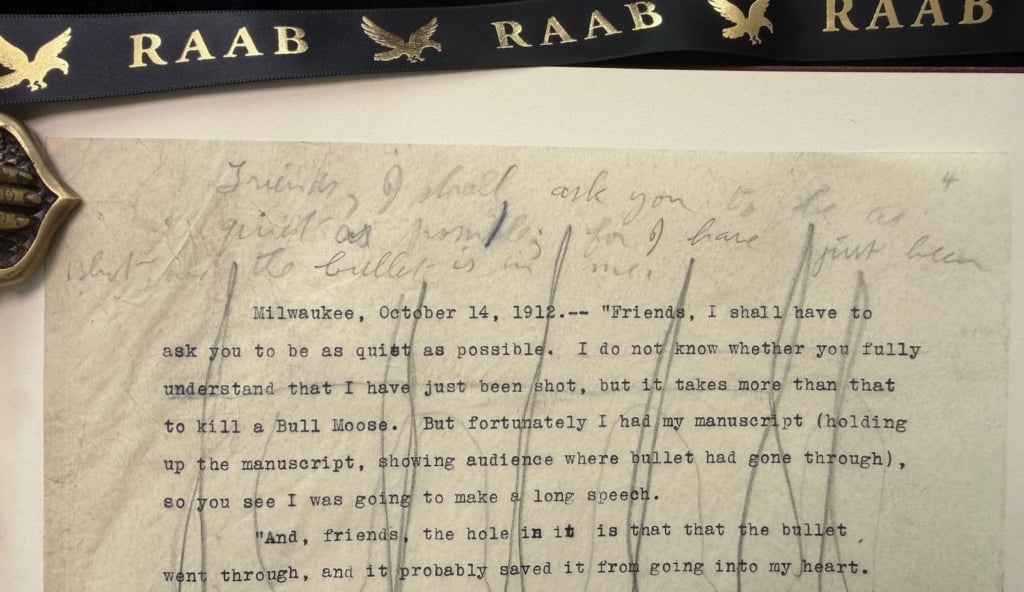
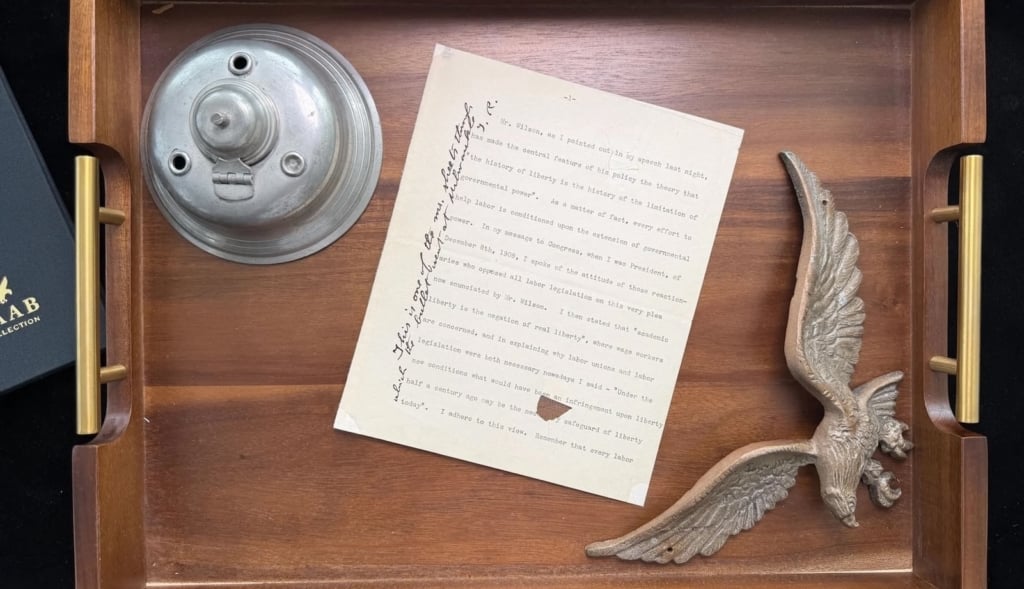
Theodore Roosevelt was a consummate writer – of letters, articles, books, and speeches. Occasionally, full manuscripts surface, as was the case recently with an annotated copy of the speech he gave just after he had been shot in 1912. It was an extemporaneous speech typed by his stenographer which he then edited and annotated into a form fit for print.
Another important piece is the 21-page manuscript of an article Roosevelt wrote about American greatness in 1911. In it, he articulates a purely American philosophy and a foreign policy demanding high moral standards and strength, rather than pacifism: “The true lovers of peace… have been those who followed, even though afar off, in the footsteps of Washington and Lincoln.” The ensuing article was published in The Outlook.
Roosevelt’s Post-Presidency Life
Theodore Roosevelt spent his post-Presidential years as a magazine editor, first for The Outlook and then for Metropolitan magazine. Many of his documents from this era are on Outlook or Metropolitan letterhead, and their content is primarily political in nature. Below are a few examples.
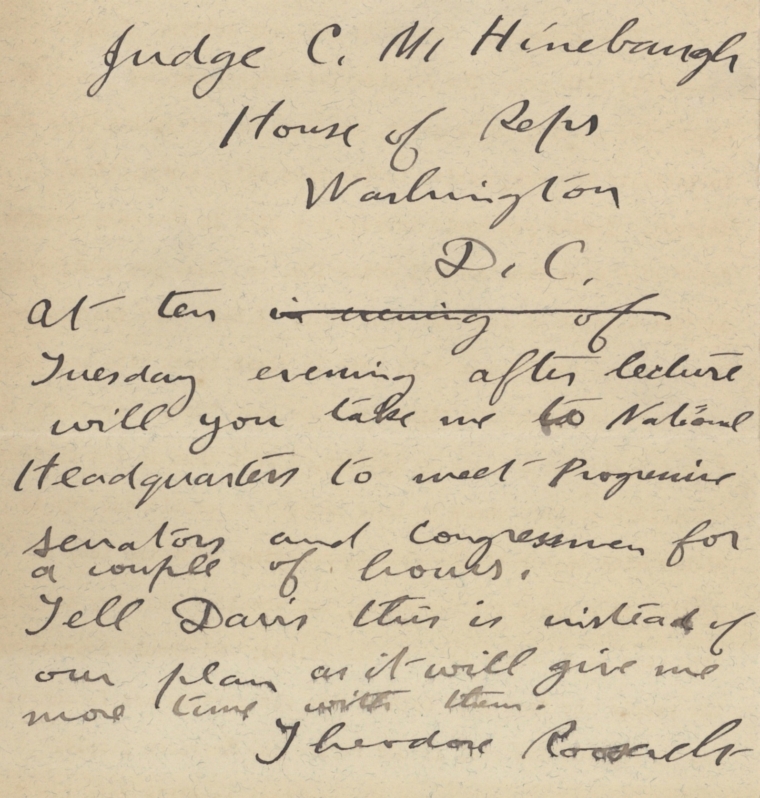
In 1913, fresh from his defeat, Roosevelt writes to Congressman William Hinebaugh, seeking to hold together the Progressive Party. An important and rare letter, it was obtained by Raab directly from Hinebaugh’s descendants and has never before been offered for sale.
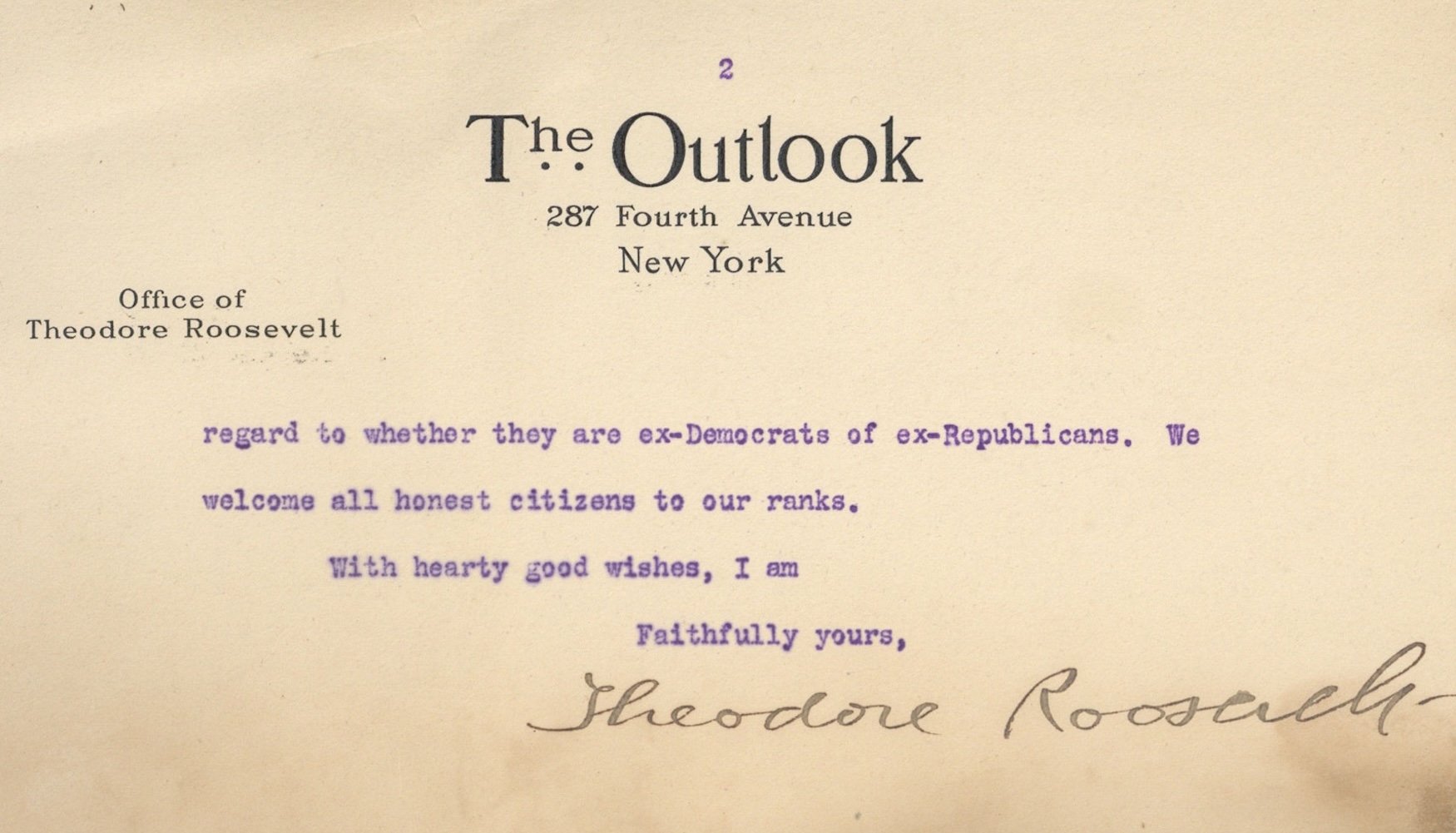
That same year, Roosvelt evokes Lincoln in an extraordinary and moving letter to the head of the Progressive Club of Worcester, Massachusetts: ““The Progressive Party stands today precisely where the Republican Party stood in the days of Lincoln.”
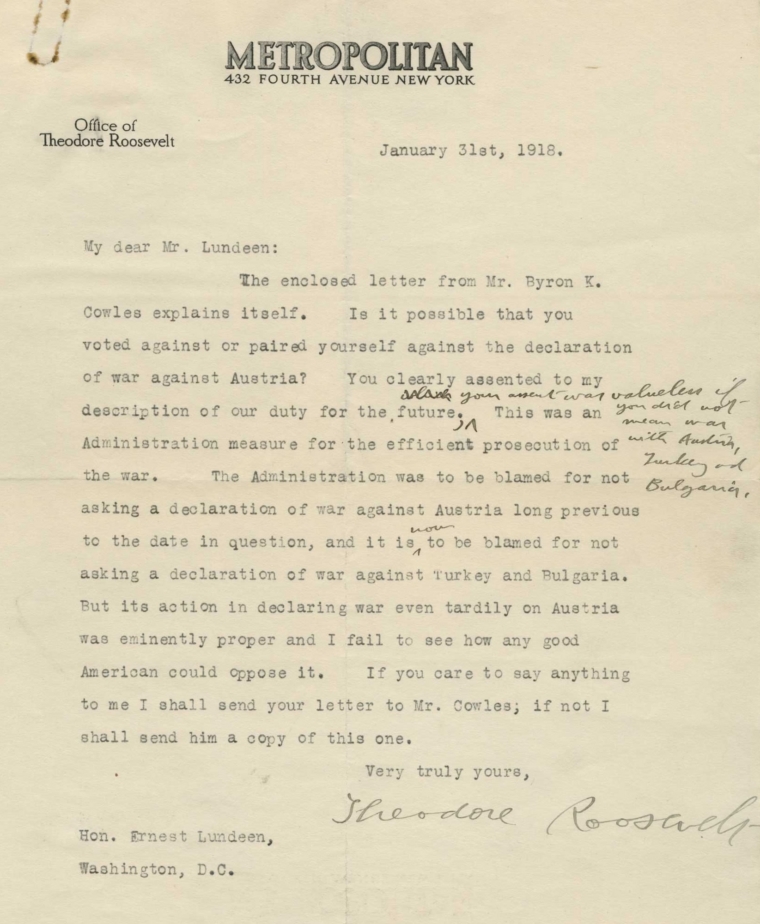
In 1918, during World War I, Roosevelt writes to future U.S. Senator Ernest Lundeen of Minnesota to express his shock that Lundeen opposed the declaration of war against Germany’s ally, Austria-Hungary. “Is it possible that you voted against or paired yourself against the declaration of war against Austria?…I fail to see how any good American could oppose it.”
Collecting Theodore Roosevelt Signed Documents
Theodore Roosevelt is considered one of the most revered American presidents, as his presence among the four greats at Mount Rushmore National Memorial attests. (He was also the first American to ever win a Nobel Prize; he received the Nobel Peace Prize in 1906.) Autographs and historical documents signed by him are actively collected; his letters are rich in content and often personalized, even when typed. To learn more about buying or selling TR documents, visit our dedicated Theodore Roosevelt page and listen to the Inspired by History podcast episode, “This Piece of Paper Saved Theodore Roosevelt’s Life … and Then Disappeared.”
Raab’s recent discovery of two important Theodore Roosevelt documents was covered by The Guardian, Smithsonian magazine, the Chicago Tribune, and live on WGNTV-Chicago.