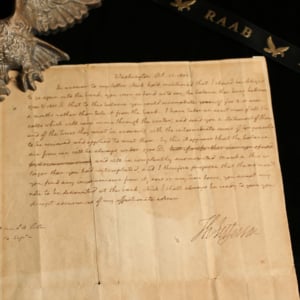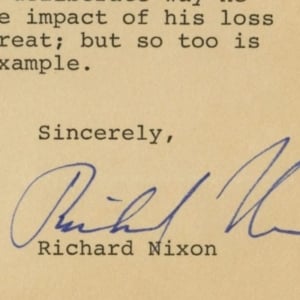





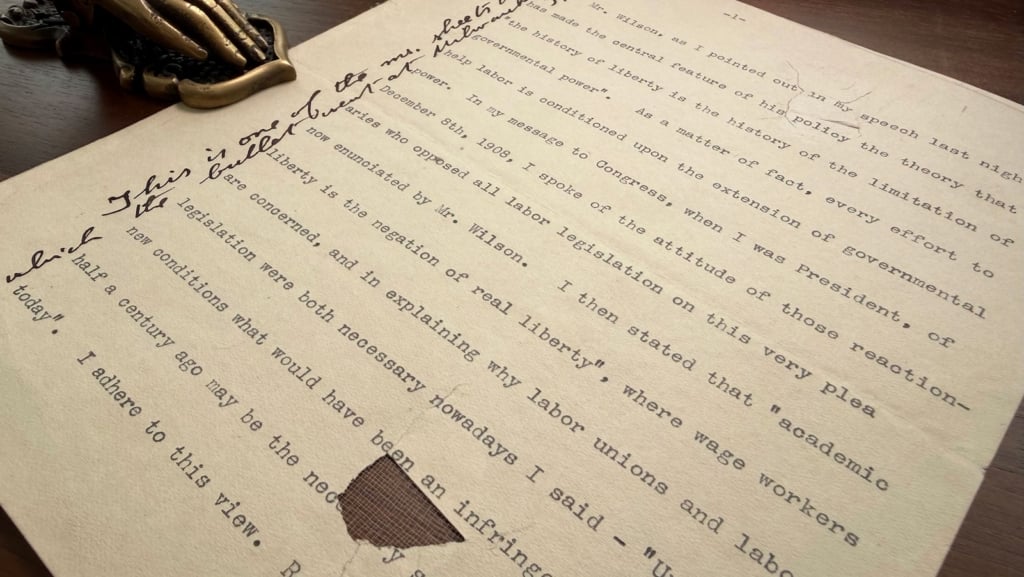
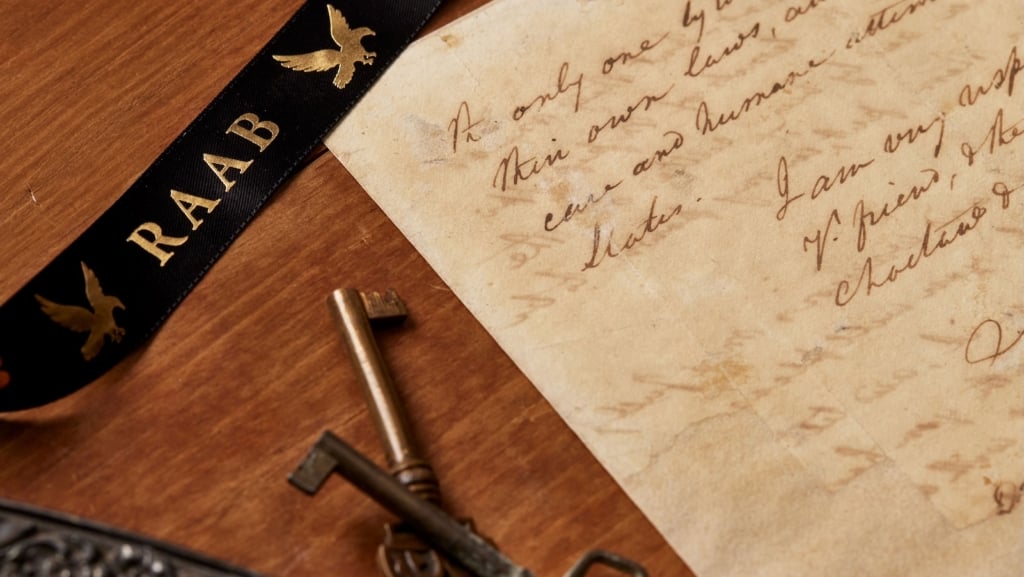
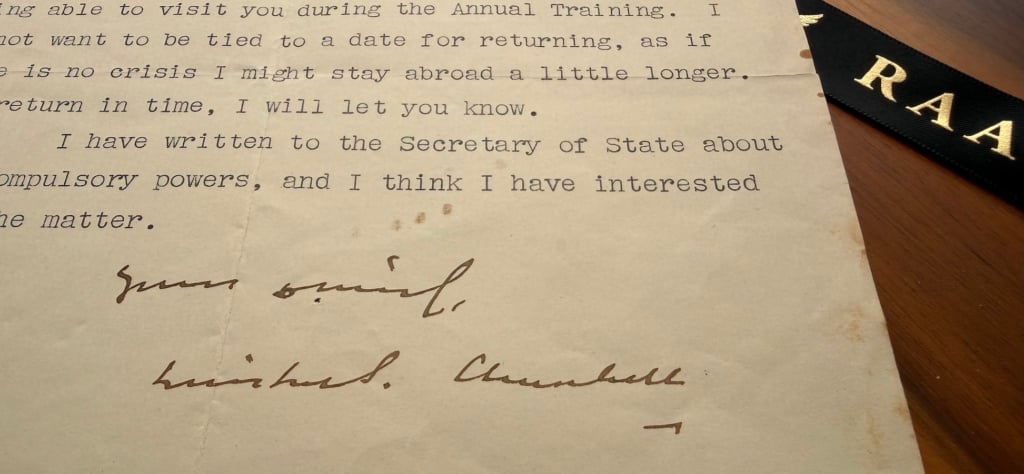
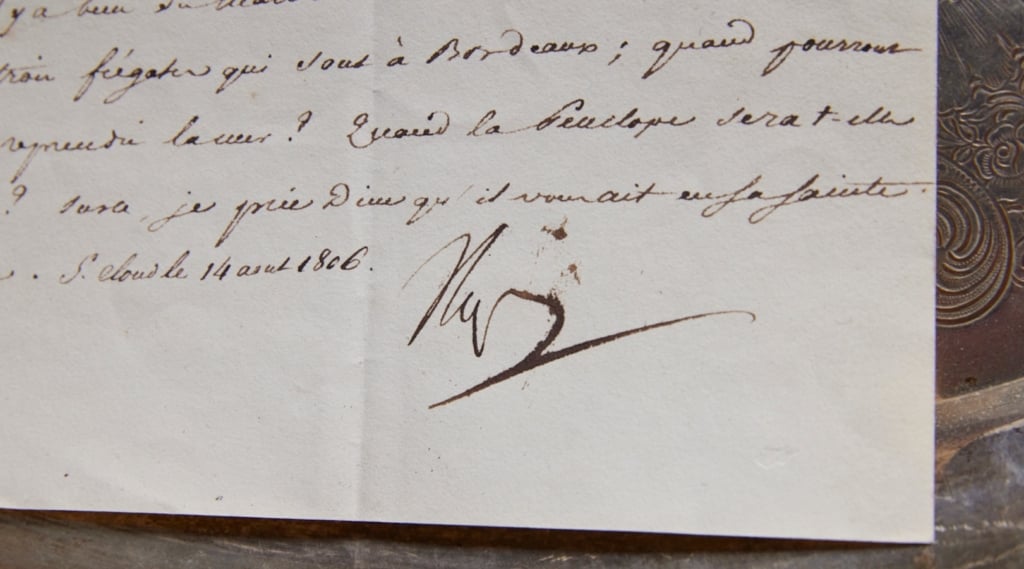
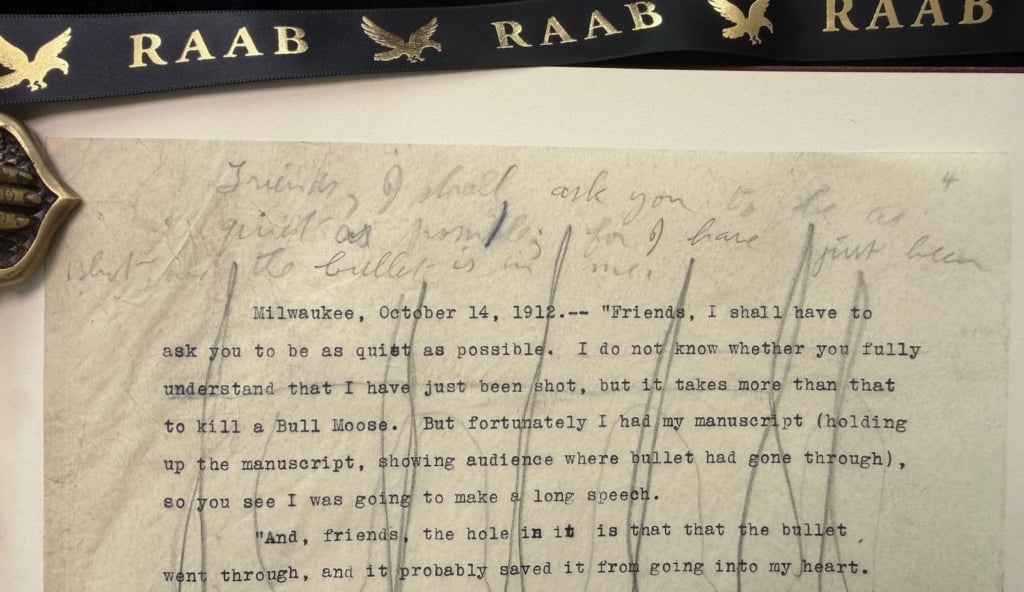
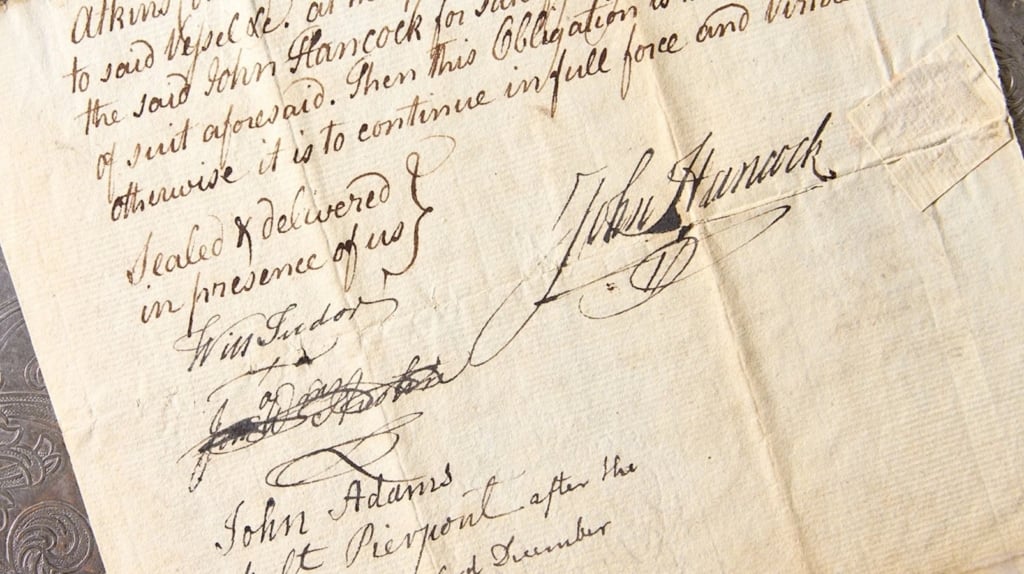
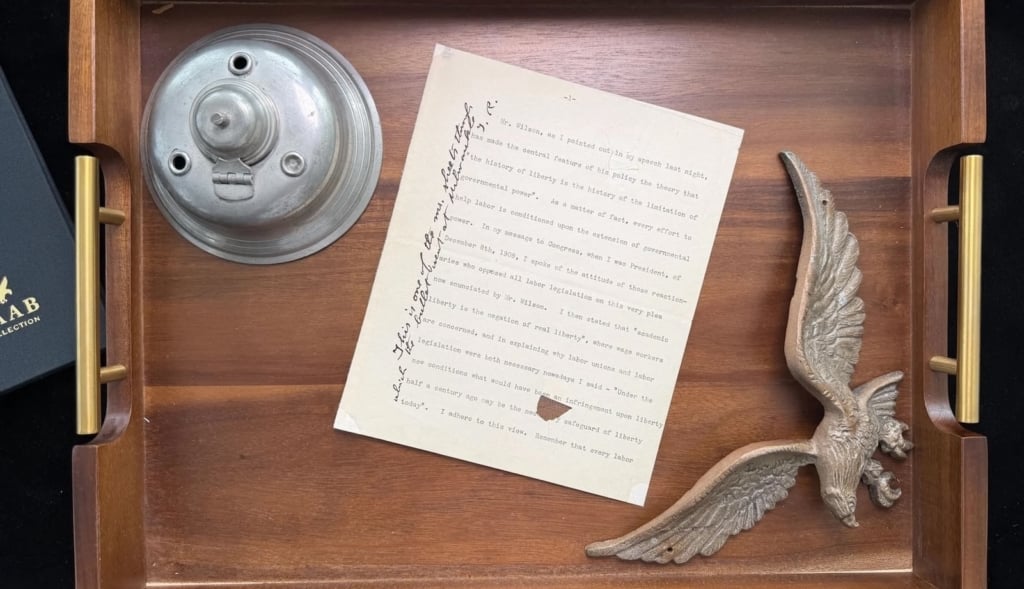
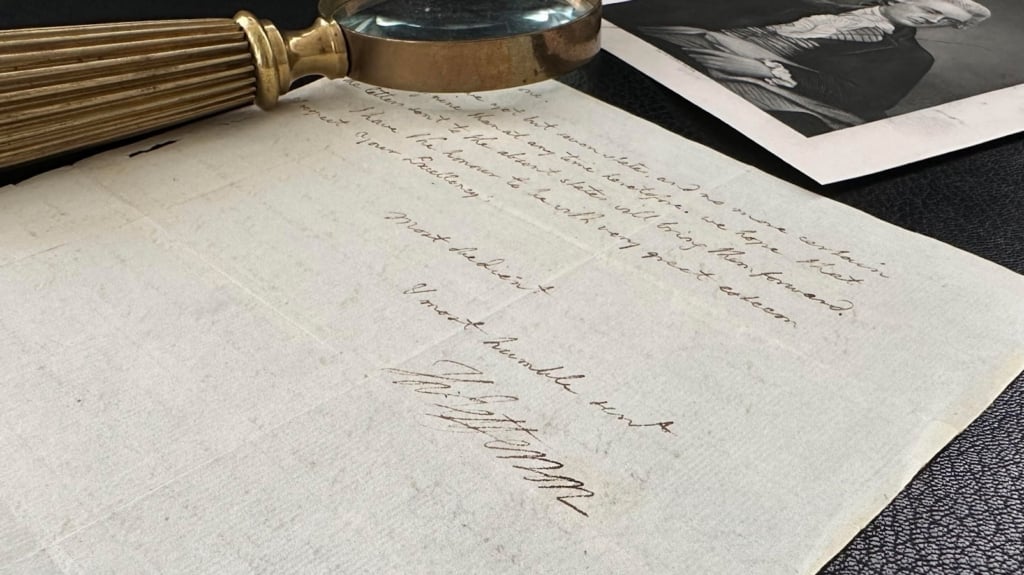


For the Inspired by History podcast, we’re producing a series of episodes on how to start and build a collection of historical documents. In the sixth of this series, we speak with Nathan Raab, president of The Raab Collection,
Listen to the interview below or via your podcast player of choice. Or, if you prefer, read this lightly edited transcript of the conversation with photos and embedded links to more resources.
Today our topic is creating a focus for your collection, which is another way of asking, why do people collect what they collect? Beginning collectors may be tempted to buy every interesting document they encounter without considering if their collection will ever be more than the sum of its parts. A good advisor can help steer you while also remembering that collecting is a passion and rules are sometimes made to be broken.
Nate, do you advise collectors to begin with a broad interest and narrow it down from there, or choose a niche from the beginning?
Nate: Practically speaking, most collectors begin with either a very broad focus and slowly over time narrow it, or they start with a very narrow focus and slowly over time expand it. And I think the lesson here is whatever you choose in the beginning is not where you’ll end up.
The process of collecting is a process of learning what is available, learning what makes you happy, and it’s a process of self-exploration. So it’s of course inevitable and desirable to start with some kind of focus. You can’t buy everything and you can’t learn about an area if you’re trying to learn about all areas at the same time. You have to realize that wherever you start out, your journey will take you somewhere different. So you may start out collecting one thing and end up collecting that thing plus other things, or you may start collecting one thing and end up collecting not that one thing and a bunch of other things.
Do you think there’s a lot of strategy involved, or is it more just driven by passion, or, ‘I like this piece’ or ‘I like this person’?
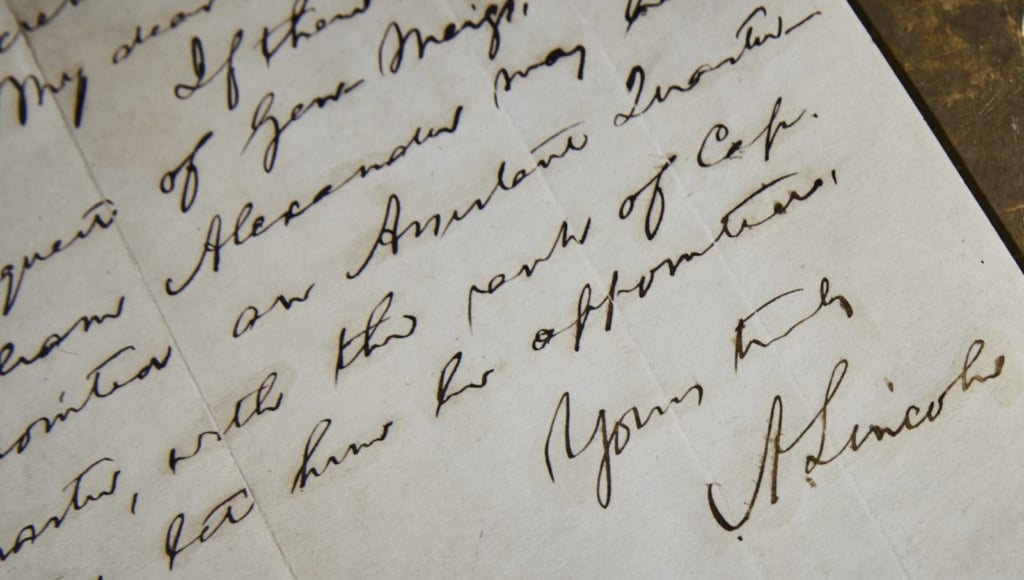
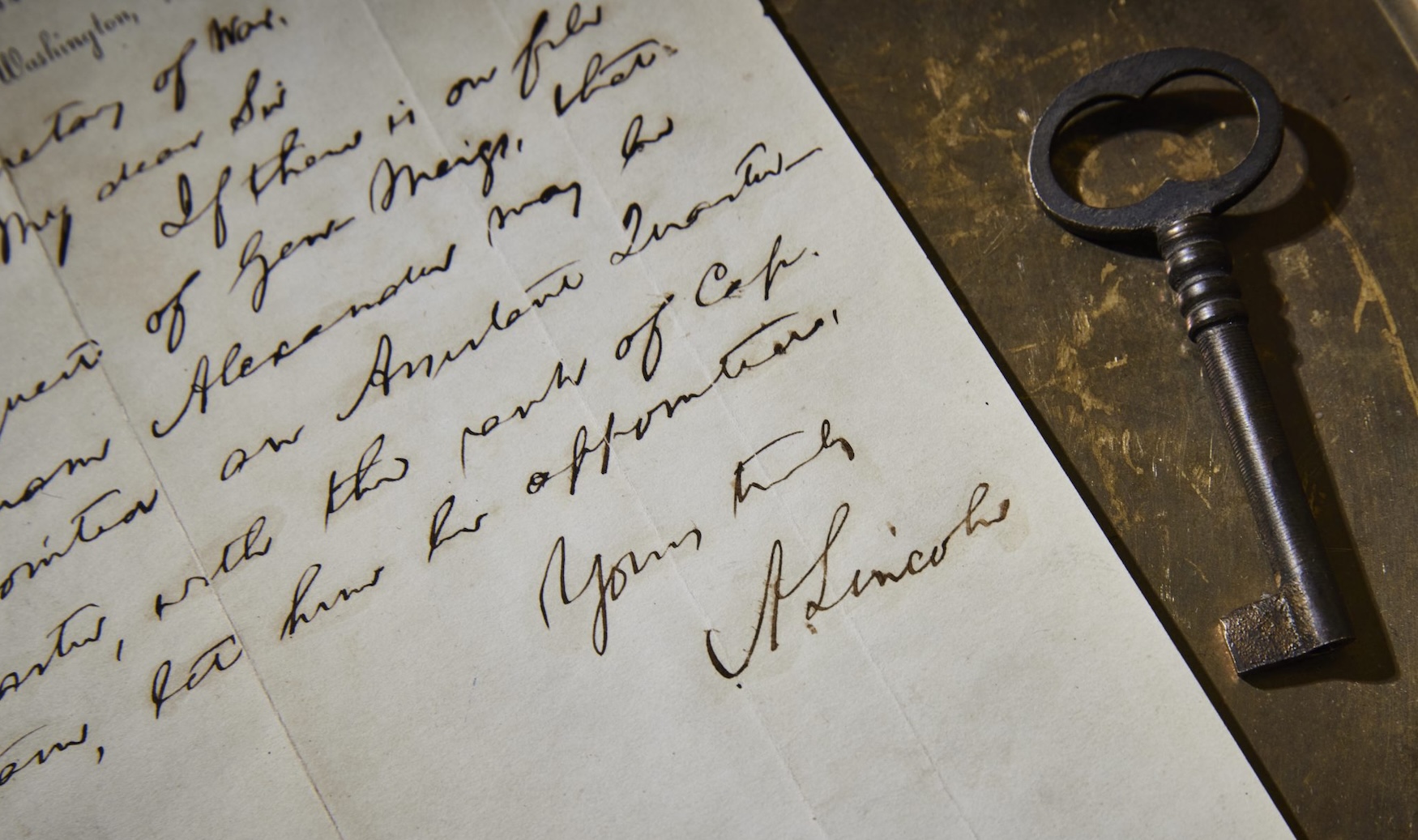
Nate: I think that people are drawn to this, most people are drawn to this by a passion for a specific area. They’ve read a book, and they realize that not only can they learn about what Abraham Lincoln did in this period, but they can buy a letter or document that directly relates to it. They can own an original piece of history rather than living through the words of an author. They can live through Lincoln’s words himself, to use an example.
I suppose people may start out with a strategy, but I think the greatest collections are built on a passion and a desire to feel close to an era or a person rather than a more analytical strategy divorced from that passion.
In your 20+ years in the business, what patterns have you noticed in what collectors collect? Are people collecting different figures or themes today than they did 20 years ago?
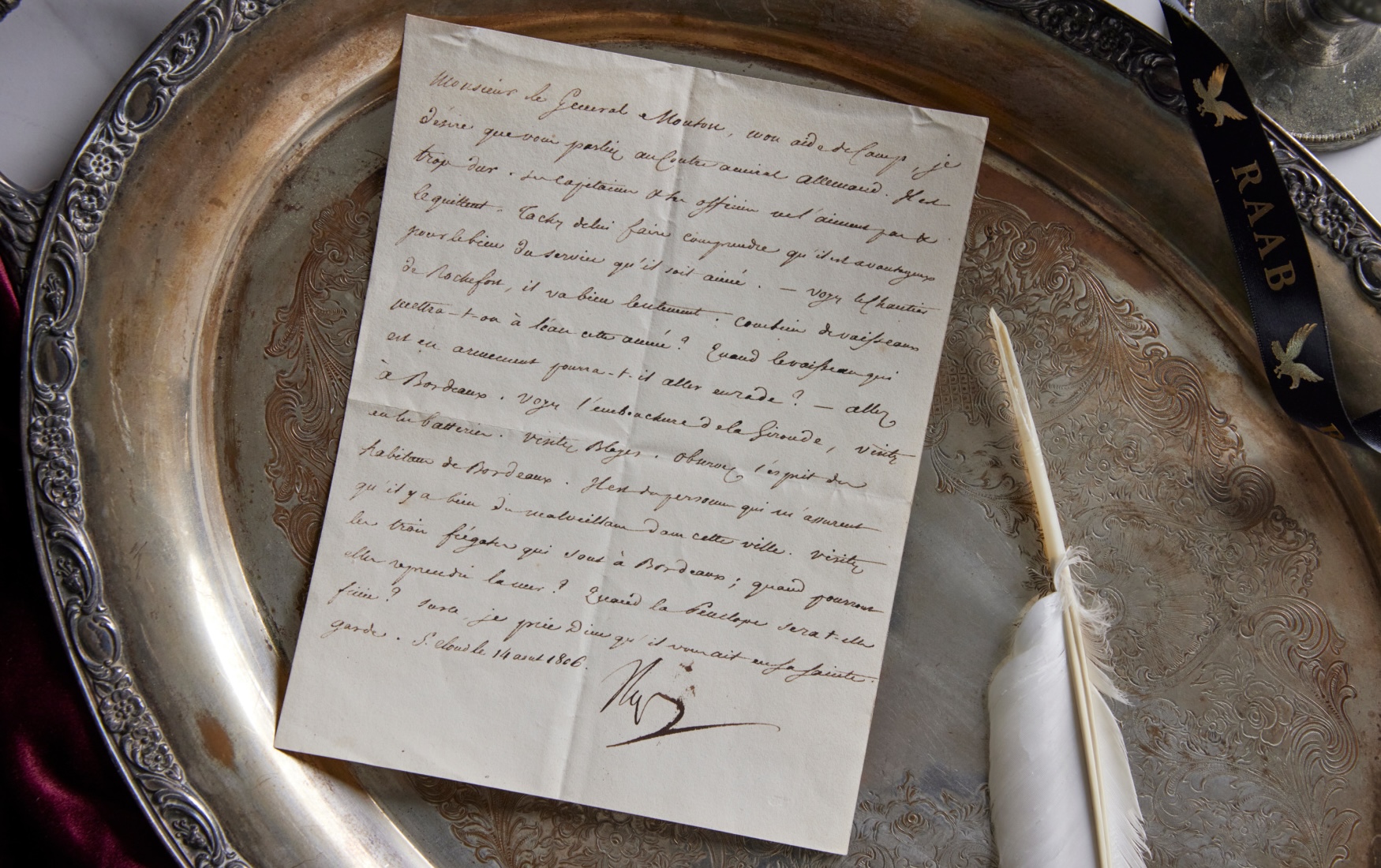
Nate: Yeah, I’d say 20-30 years ago there was a broader base. So people might collect a lot of letters of lesser-known Civil War figures or lesser-known 19th-century presidents in addition to Washington, Lincoln, Napoleon, all of those. There would be a broader base, and perhaps that was born out of a broader, humanities educational background that people who were collecting that era had.
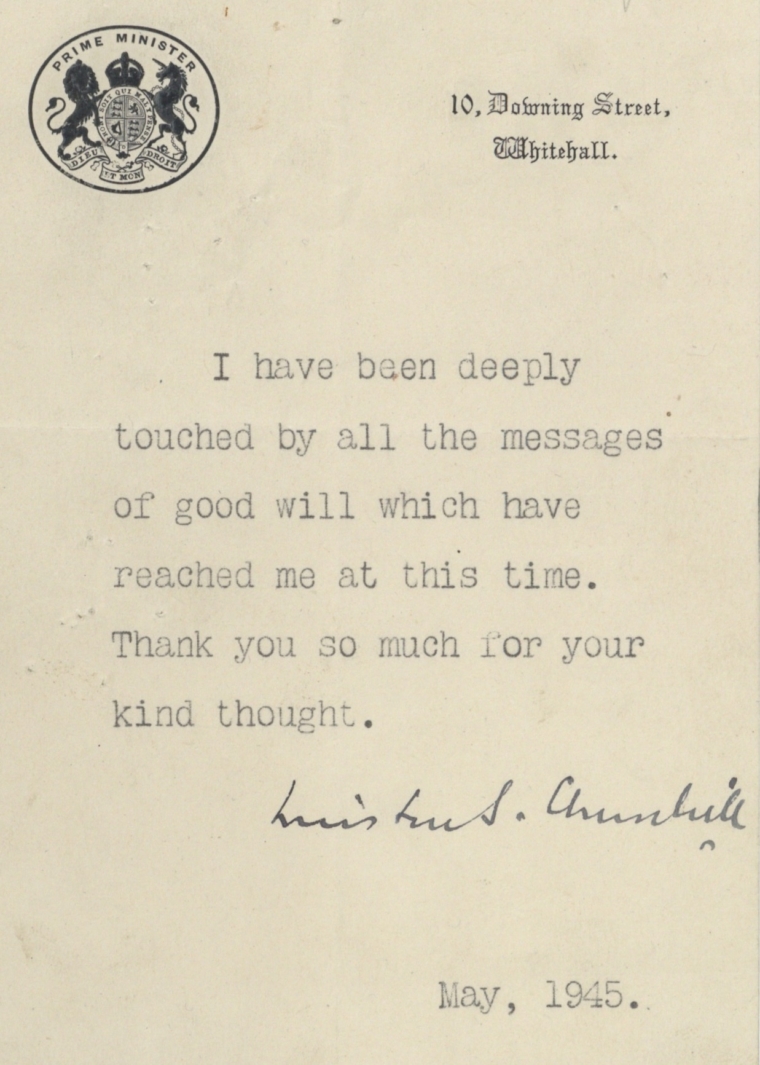
Today, the educational focus has changed slightly, the demographic has changed slightly, and the collecting patterns have reacted accordingly. Today it’s a lot of major figures, so it’s not literally but figuratively, the Mount Rushmore approach of the people who you greatly admire, have on a pedestal, want to associate with, perhaps see a little bit of yourself in that person. And so rather than collecting a lot of Jacques Macdonald, one of Napoleon’s generals, you might just want Napoleon. Rather than collect something from one of Churchill’s cabinet members, you’re just looking for Winston Churchill. That’s a general trend, which of course, every rule has exceptions, and this one does as well. Some people put together very broad, diverse collections, but more and more you see the bigger names dominating the market.

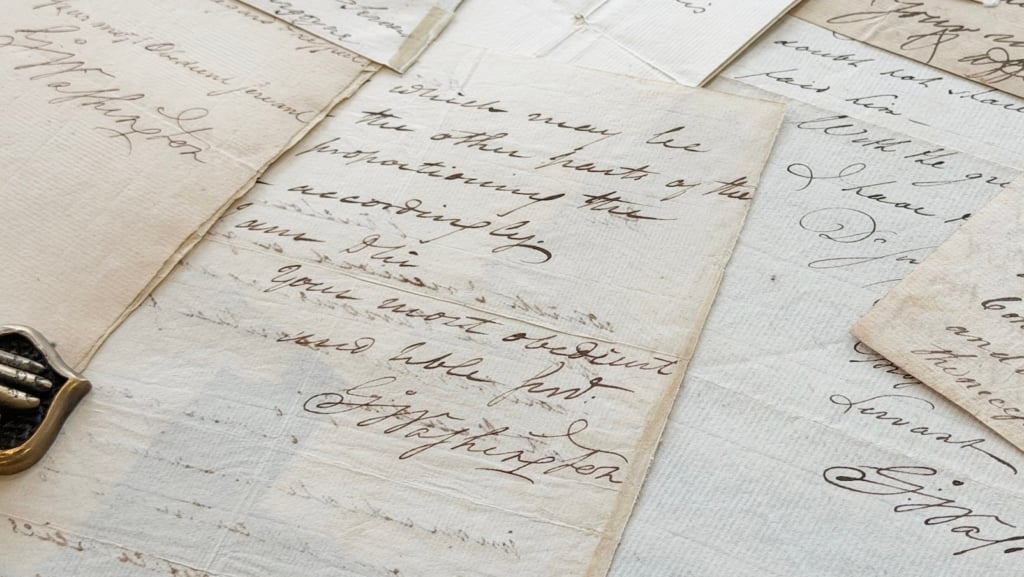
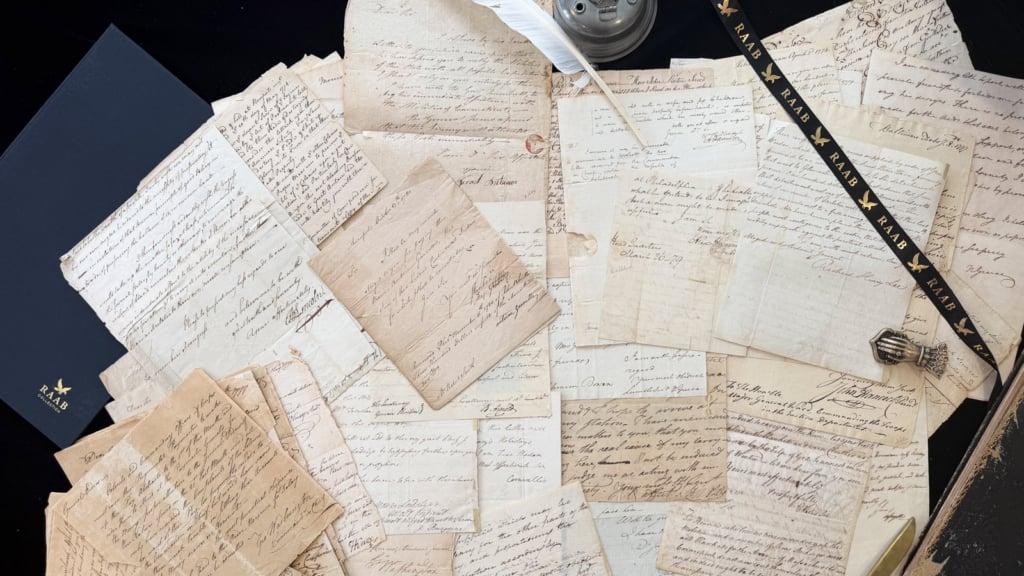
I think we saw a little bit of an example of this with your most recent Washington collection, which was created 75-80 years ago, and had a lot of those, sort of, I don’t want to call them minor figures, but figures that whose names aren’t taught in school, don’t ring a bell, aren’t household names. That kind of collection is a little bit different from collections that are built today?
Nate: Yeah, that was really an old world collection. Because it was put together nearly a century ago, the man putting it together was interested in the entire era, and yeah, they’re not minor figures, but they’re just lesser known today. I think it’s important to note that. Certainly James McHenry was a major player. He was Secretary of War, aide to Washington during the war, and finding really important letters of James McHenry – I mean, a lot of those are really difficult to find now, but they’re important, and they had value back then, and they have value now for really experienced, seasoned collectors who want to really understand the entire era.
These lesser-known names who are very important and valuable in their own right give context to the rest. They allow us to better understand the era and the figures around them, so you learn a lot about Washington through the work of Washington’s aides. And this man who built a collection around Washington understood that. His collection was a very sophisticated collection. The buyer of that material is also a very experienced, sophisticated, knowledgeable buyer.
Obviously figures like George Washington, Abraham Lincoln never go out of style?
Nate: Well, there’s a saying we always have in our business, which is, “You can’t have too much Washington, you can’t have too much Lincoln.” Obviously somewhat facetiously, our niche in the market is, it’s not quantity, it’s quality. But I think it goes to say that since the beginning of autograph collecting in America, those two names have never gone out of style.
Judging by the popularity of Washington, Churchill, Napoleon, for example, leadership seems to be a real catalyst for collectors. Would you agree with that?
Nate: I think it’s important to say leadership in the face of adversity. So, each one of these men, and there are certainly examples of women doing the same, were successful and motivational and showed strong leadership in the face of difficult odds. There was some emotional element, some emotional obstacle that they surmounted, some goal that they achieved that was admirable to humanity.
The collectors of those people often see or aspire to see some of those traits in themselves, or it’s a sense of deep admiration to accomplish something that many might aspire to, but that few are able to accomplish.
Once a focus is established, what makes a collection feel coherent rather than just a group of interesting items?
Nate: I think at the center of every collection is the collector. I don’t think you can have true coherence without some knowledge of the collector or the collector’s goals. In some cases, it’s obvious. This collection we’re talking about was clearly built around Washington and a certain geographical focus, but you really have to understand where the collector’s coming from, and at the end of the day, the only thing that matters in terms of coherence is the collector.
If the collector who’s spending the money and gets to enjoy the pieces thinks that the collection makes sense, the collection makes sense. It’s not for me to tell a collector, “Hey, this collection is ridiculous,” or, “This collection isn’t internally consistent,” because I’m not inside that person. Maybe to him or her it’s completely internally consistent. Doesn’t mean it’s the collection that I would put together for my personal use, but I’m not the collector.
There are a variety of elements that someone might look for. It might be temporal. It might be, okay, well, I want between these dates, I want something like this man did, I want Washington in the greater New York area during the war, things that relate directly to the war, and all the figures around him. I mean, there was a clear nexus there. There are some people for whom they’re drawn into the American story, and they’re looking for great moments. There’s some people who are drawn into great moments in global history. Sometimes the focus is really small, and sometimes it’s very large.
Some people simply want the best of the best. And if you’re able to afford that, then that’s your focus. People’s focuses are all different. There’s no one reason people collect. And the desire to collect and the scope that you create is purely subjective, comes from inside you, which is why you should never let anybody tell you, “This is what you should collect.”
You should never let anybody tell you, “This is what you should collect.”
A proper guide will give you the benefit of expertise. “Hey, you’re looking at this piece. If you’re patient, you’ll find something better which is the same, accomplishes the same goal that this piece does.” Or, ” Hey, I see that you’re looking at a letter from X to Y. You should know that the correspondence of Y came out a few years ago. There’s 1,000 of these pieces. This is not as rare as you think it is. It’s a great letter, but just know that you will find other things like this.” Or, “Hey, I’ve never seen anything like this before. Of course you could find something like this, but I wouldn’t bet on it, and you might have to wait 40 years.” So it’s an issue of do you want it, or do you want to cross your fingers and hope that something might come along that could be decades away? That is what a proper guide will tell you, not, “Hey, nobody collects X anymore,” or, “Nobody collects Y.” Because if the collector is collecting X or Y, then somebody collects it.
Yeah, I tend to collect somebody who no one collects, but I think that at some point, that actually will build value in that person and in the collection.
Nate: Subsequent buyers are attracted to knowledge and sophistication. If you know your subject, and you collect interesting quality material of that subject, regardless of what the subject is, you will find a buyer down the road for that material. There are countless examples of people showing the vision to collect things that other people weren’t as focused on at the time, but their vision was later bought by other people.
Albert Barnes in the art world is a great example of that. Somebody who collected impressionists and indeed hung out with impressionists at a time when, of course, they were known and they weren’t entirely side characters, but you could buy their work for a song. Today it’s worth hundreds of millions of dollars.
So again, if your goal in collecting is to enjoy the material, to gain inspiration, motivation, context, happiness, joy out of your collection, you have to collect what you like. You’re the one who is with the material, so no one should be telling you what you should collect or shouldn’t collect. Our collectors are sophisticated, knowledgeable. It’s not my job to say, “That’s not what you should collect.” It’s my job to give them context and the benefit of my experience and let them make the decision of what they should or should not do.
After working with hundreds, maybe thousands, of collections, is there something that experienced collectors understand that beginners usually don’t?
Nate: It’s a very good question. Experienced collectors have a better sense of what they like, what they want to collect. Every experienced collector has a story of the thing that they bought before they knew who to work with, and maybe they bought it on some online marketplace that is now not authentic, and they spent a lot of money, and oh, they bought all these things which they don’t really want anymore, and they used to focus there, now they focus here. Every experienced collector has those stories without fail. So rest assured, where you are today is not where you’ll be then.
The experienced collectors have that perspective, and they also, I think, have a sense of patience. Twofold, they have a sense of patience: “Well, I don’t need to buy this. There will be another piece.” And at the same time, when they see something that they like, they have a sense of, “I’m going to get this.” There’s not the hemming and hawing. There’s not the “Oh, maybe I shouldn’t.” You know, because a lot of collectors who are inexperienced will see something that they like and not buy it for whatever reason, and then five years later, they’ll tell me, “You know, you once had this document, and I really wanted it, and I didn’t buy it, and I regret not having bought it, and you sold it a long time ago.” I hear that several times a year. Something that slipped through the cracks. I think the really experienced collectors, there’s less of that. There’s “I saw the piece. I didn’t want it, so I didn’t buy it, and I’m not looking back.” Or: “I see this piece that you have. I’m buying it, and hopefully it’s still available.”
In the grand scheme of collecting is a journey of self-knowledge, it’s a better sense of self, as it pertains to these documents.
I think that’s pretty insightful. Financial value aside, what would you say distinguishes a great collection?
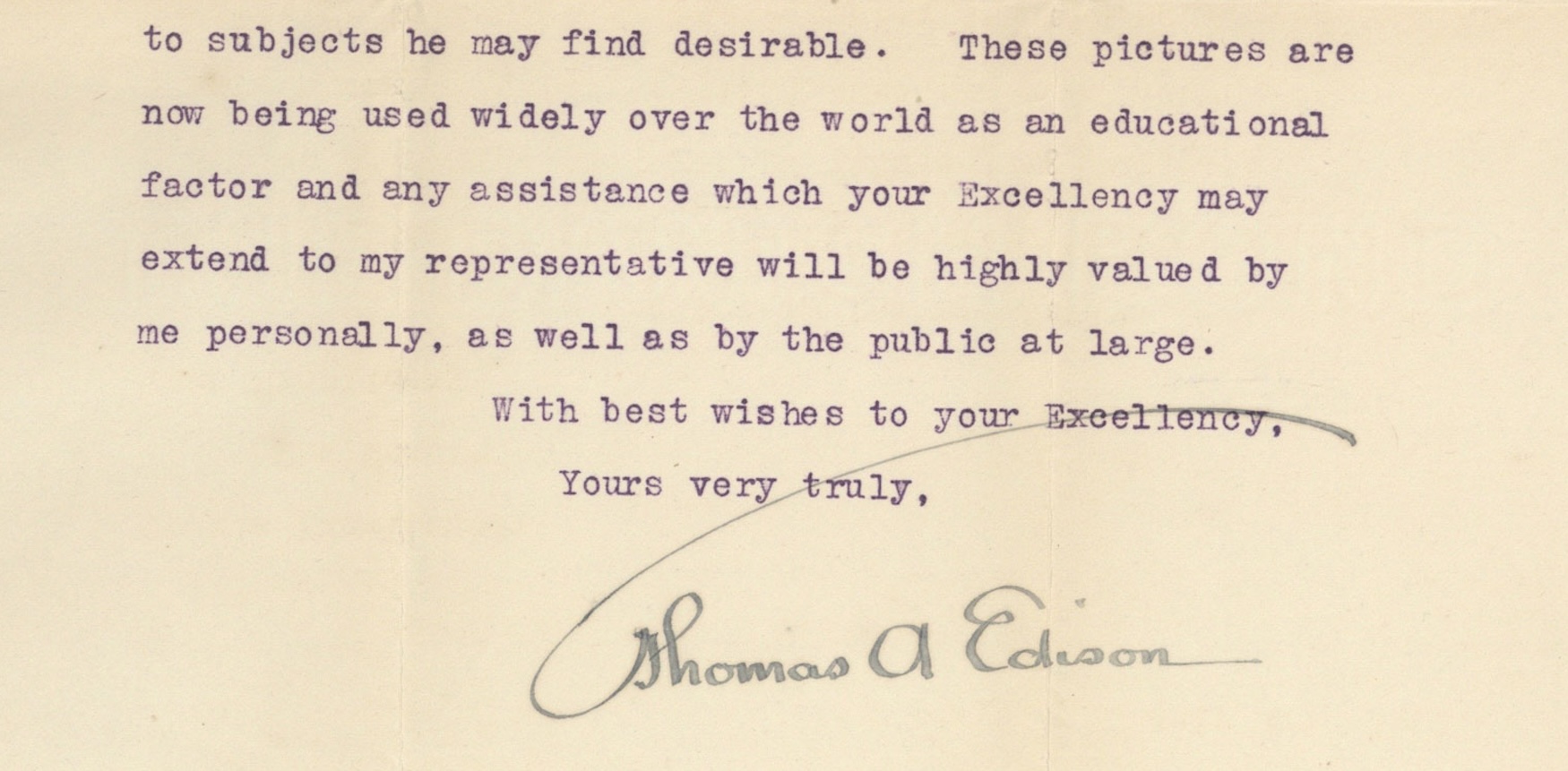
Nate: The knowledge of the collector. What brings value to these documents – and everything’s in a range, right? So a George Washington range is much larger. The potential value of a great George Washington piece is much higher than the potential value of a Thomas Edison piece. No Edison piece has broken into the millions, and several Washington pieces have. But somebody who’s knowledgeable about these eras and these people will understand what makes the documents important. What is it about this document that other people will care about? What is it that I care about? Is this event that this document represents important? Is it evocative of a true character of this person?
The great collection will capture these men and women at important moments in their own lives and in the broader history that they helped to mold. In short, the documents will be more important internally, consistently. So regardless of the value, in the range in which that person sells, the great collections will respond to that question. And I’ve seen people put together great collections on a shoestring budget, and I’ve seen people spend millions on collections that I wouldn’t buy on a shoestring budget.
The short answer is, it’s the knowledge of the collector. It’s not the collection.
To learn more, listen to other episodes in the Masterclass series and subscribe to hear more from Inspired by History.