






Benjamin Franklin, In Service to His Country at War, Laments that this Service has Taken Away from His Philosophical and Scientific Work


He confirms this and makes clear that science was his first love: “I am so engag’d in publick Affairs, that I cannot give the Attention I wish to philosophical [scientific] Subjects, which used to afford so much Pleasure.”
Mentioning Beccaria’s illness, he says “Science suffers with you”
He writes Giambatista Beccaria, a researcher of electricity, physicist and defender of Franklin’s electricity theories
Benjamin Franklin began experimenting with electricity as early as 1745, demonstrating the electrical property of lightning and inventing the lightning conductor. His famous treatise, “Experiments and Observations...


Mentioning Beccaria’s illness, he says “Science suffers with you”
He writes Giambatista Beccaria, a researcher of electricity, physicist and defender of Franklin’s electricity theories
Benjamin Franklin began experimenting with electricity as early as 1745, demonstrating the electrical property of lightning and inventing the lightning conductor. His famous treatise, “Experiments and Observations on Electricity”, caused a sensation in the scientific world when first published in 1751. Franklin had based his work on letters that he wrote to Peter Collinson, an official of the Royal Society, who communicated Franklin’s ideas to that Society. In addition to the electrical experiments, it contained the important discovery of the course of storms over North America and other important meteorological observations. The treatise ranked in the eyes of many of Franklin’s contemporaries as far beyond any of his political achievements. Harvard and Yale awarded him honorary degrees in 1753; he received the highest award of the Royal Society, the Copley Medal, the same year; and he was elected to the Society in 1756, the first American to be so honored.
Giambatista Beccaria was a professor of experimental physics at Turin from 1748, and learned about Benjamin Franklin’s scientific discoveries about electricity in June 1752. By July 2 he had drawn electricity from the atmosphere by means of a conductor on his house. His experimentation proceeded so rapidly and successfully that the next year he published his book “Dell’elettricismo artificiale e naturale”. This work contained a letter rebutting attacks on Franklin’s work. Joseph Priestley, author of the “History of Electricity”, praised Beccaria’s work in the highest terms, saying the work of most others “fell far short of what was done by Signior Beccaria at Turin’”.
The French physicist Jean-Antoine Nollet had developed a theory of simultaneous effluence and affluence of electrical particles that conflicted with the hypothesis Franklin published in “Experiments and Observations”. Nollet attacked Franklin’s theory in “Lettres sur l’électricité” in 1753. While Franklin was distressed, he declined to respond, and so was particularly gratified that Beccaria took up his banner and defended his work.
Franklin did his most important scientific work — the kite experiment, his theory of electrical “plus” and “minus” charge, the invention of the lightning rod — mostly in the 1740s and early 1750s, before he became a full-time diplomat. Once he took up sustained public service (colonial agent in London from 1757, then the Continental Congress, then his diplomatic mission to France from 1776 to 1785), his experimental output dropped sharply. He simply didn’t have the time or quiet, well-funded leisure that serious experimentation required. So in terms of output — papers, experiments, discoveries — diplomacy made his significant work in science impractical. However, even while abroad, he kept up scientific correspondence with figures across Europe. So he didn’t abandon science, but his demanding jobs limited what he could do.
In early 1781, pursuant to their scientific friendship, Franklin wrote Beccaria for one final time. Beccaria died in May 1781, just three months after he would have received this letter.
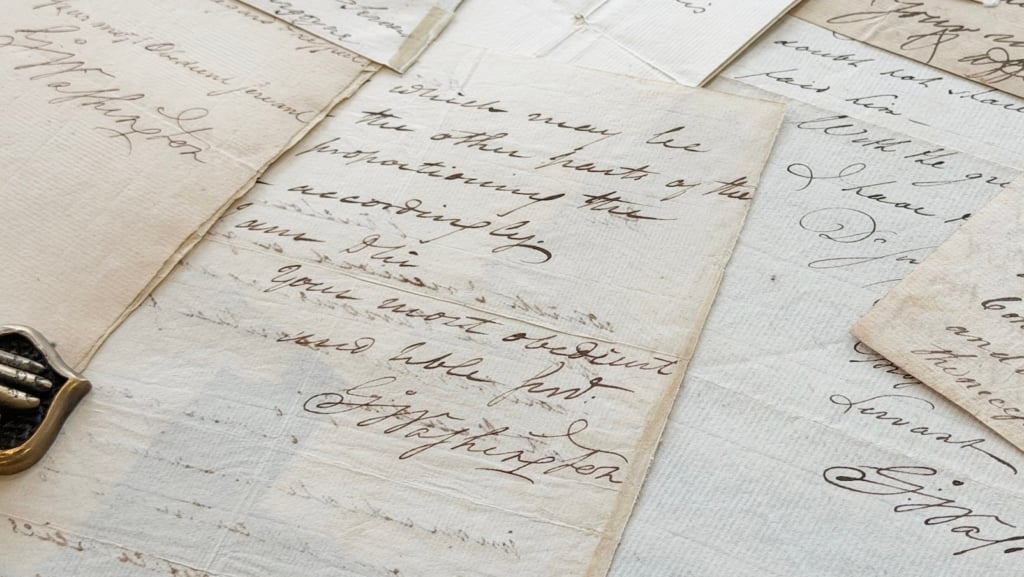
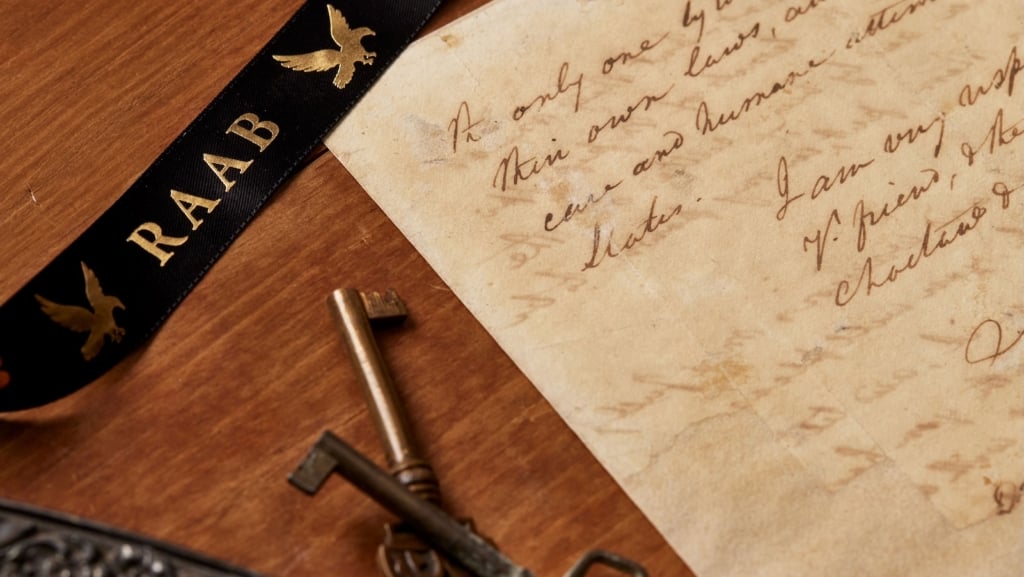
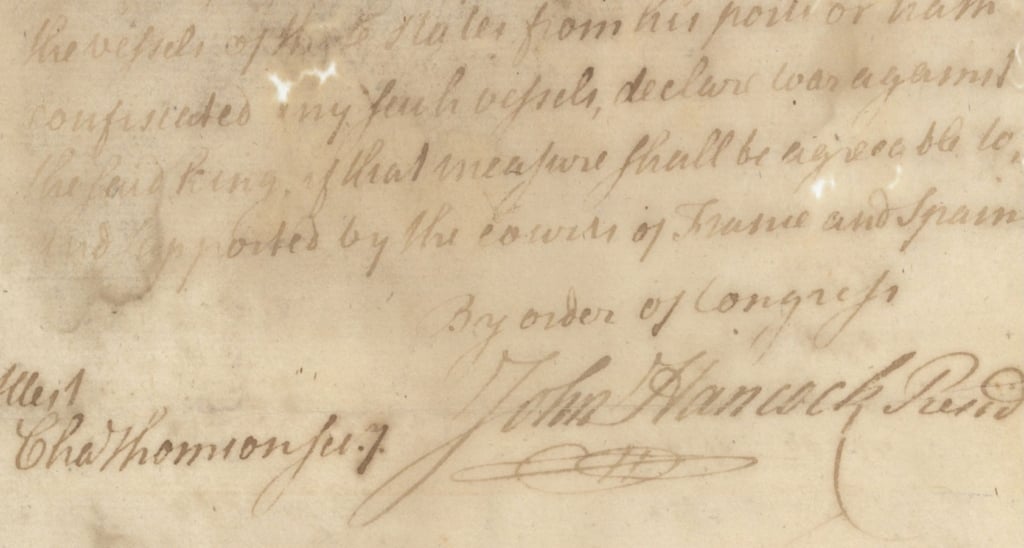
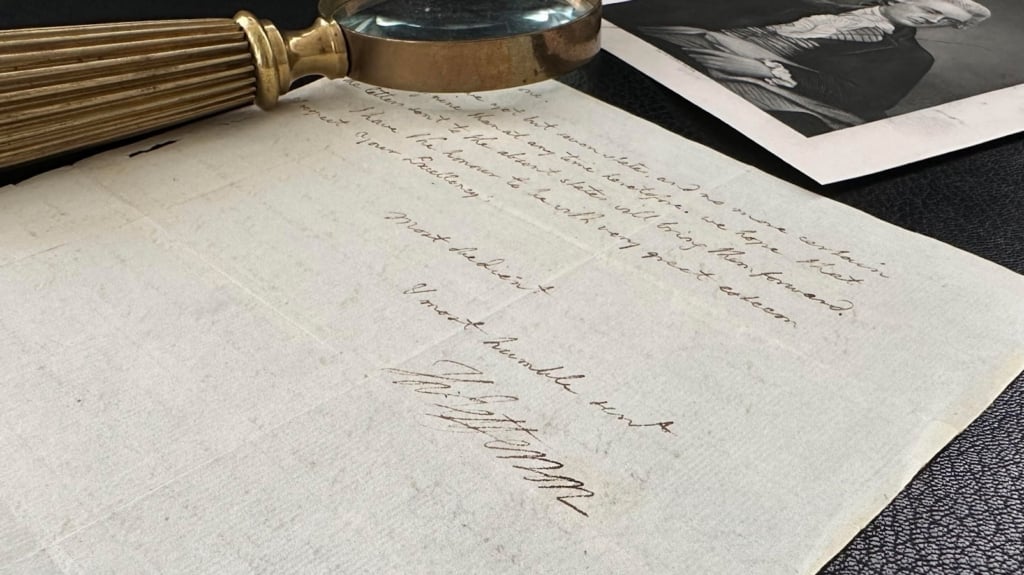
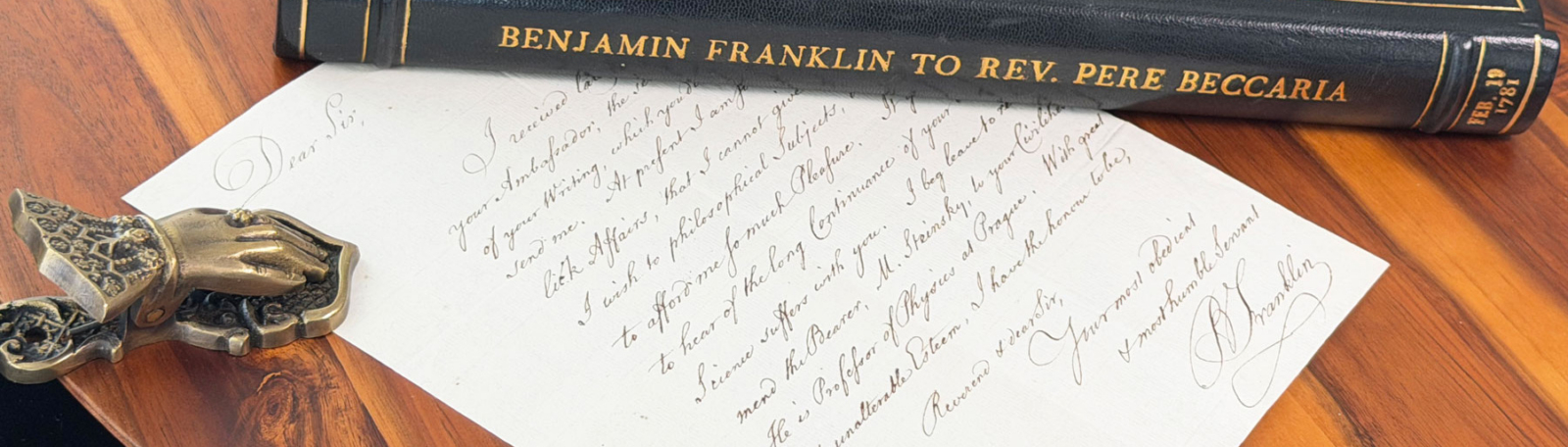
Autograph letter signed, Passy, near Paris, February 19, 1781, to Giambatista Beccaria, thanking him for copies of his works and regretting that diplomatic affairs prevent him from indulging his interest in science. With a black morocco folding-case.
“I received lately through the hands of your Ambassador, the several ingenious Pieces of your Writing, which you did me the honour to send me. At present I am so engag’d in publick Affairs, that I cannot give the Attention I wish to philosophical Subjects, which used to afford so much Pleasure. It grieves me to hear of the long Continuance of your Illness. Science suffers with you. I beg leave to recommend the Bearer, M. Steinsky, to your Civilities. He is Professor of Physics at Prague. With good & unalterable Esteem, I have the honour to be, Reverend & dear Sir, Your most obedient & most humble Servant.” Franklin and Beccaria exchanged fourteen letters, according to The Papers of Benjamin Franklin, but this is the only one by Franklin to survive in its original holograph.
Franklin’s response was carried by Professor François Steinsky, with whom Franklin corresponded on scientific matters, who was then on a sabbatical sponsored by Maria Theresa, Archduchess of Austria, traveling through Switzerland, Holland, England, France, and Italy. However, until recently the original recipient’s letter carried by Steinsky was thought not to have survived, and Franklin’s text was known only by the press copy in the Library of Congress.
Implicit in Franklin’s letter is his gratitude for Beccaria’s long championing of Franklin’s work on electricity, and the mutual admiration the men had for each other. The preface to Beccaria’s “Dell’elettricismo artificiale e naturale” directly admits his profound debt to that ‘most celebrated writer on electricity, Benjamin Franklin.’ Applying a rigorous experimental and inductive technique, Beccaria was able to develop Franklin’s brilliant insights to a point which amazed his contemporaries and laid the foundations for later quantitative studies. For his part, Franklin was among the very first to acknowledge Beccaria’s work on electricity as the most profound and organic study that had appeared on the subject, and he continued to follow the Turinese professor’s work with keen interest until the latter’s death. Franklin himself noted to Peter Collinson in 1754, “I am much pleased with Mr. Beccaria’s Book on Electricity for his curious experiments, Clear Expression, and Excellent Methods. I beg the favour of you to present Him my sincere Thanks for the Countenance he has afforded my Opinions and the handsome defense he has made of some of them, against the Attacks of Mr. Nollet. Our Different experiments and Observations on Lightening…”
This is the only Franklin letter we have ever seen clearly stating that he is too busy with politics and diplomacy to have time for science, and that science had given him so much pleasure.

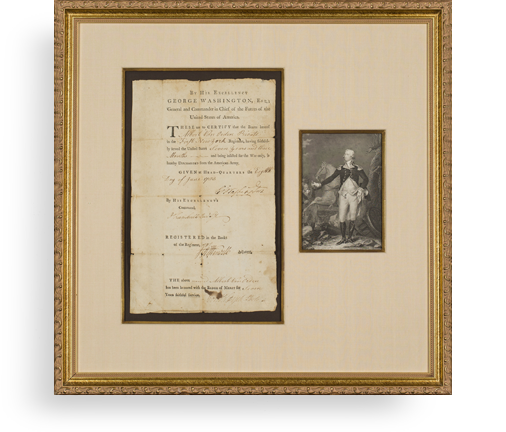
Frame, Display, Preserve
Each frame is custom constructed, using only proper museum archival materials. This includes:The finest frames, tailored to match the document you have chosen. These can period style, antiqued, gilded, wood, etc. Fabric mats, including silk and satin, as well as museum mat board with hand painted bevels. Attachment of the document to the matting to ensure its protection. This "hinging" is done according to archival standards. Protective "glass," or Tru Vue Optium Acrylic glazing, which is shatter resistant, 99% UV protective, and anti-reflective. You benefit from our decades of experience in designing and creating beautiful, compelling, and protective framed historical documents.
Learn more about our Framing Services


