






General George Washington and His Aide Alexander Hamilton Issue Dramatic Battlefield Orders in the Struggle for the Hudson River


Washington writes to Gen. Alexander McDougall, apprising him of the situation and of instructions to Gen. Israel Putnam
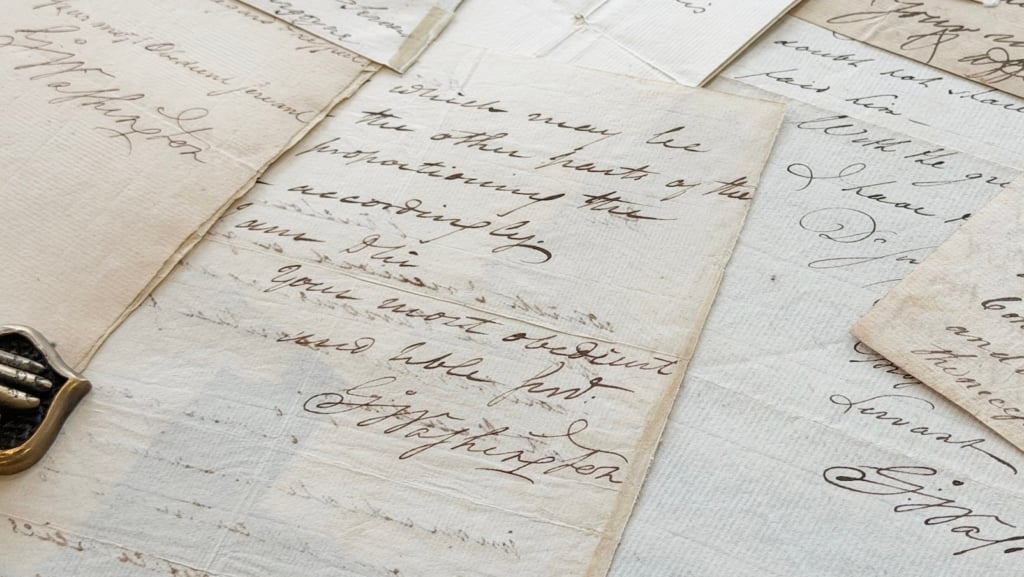
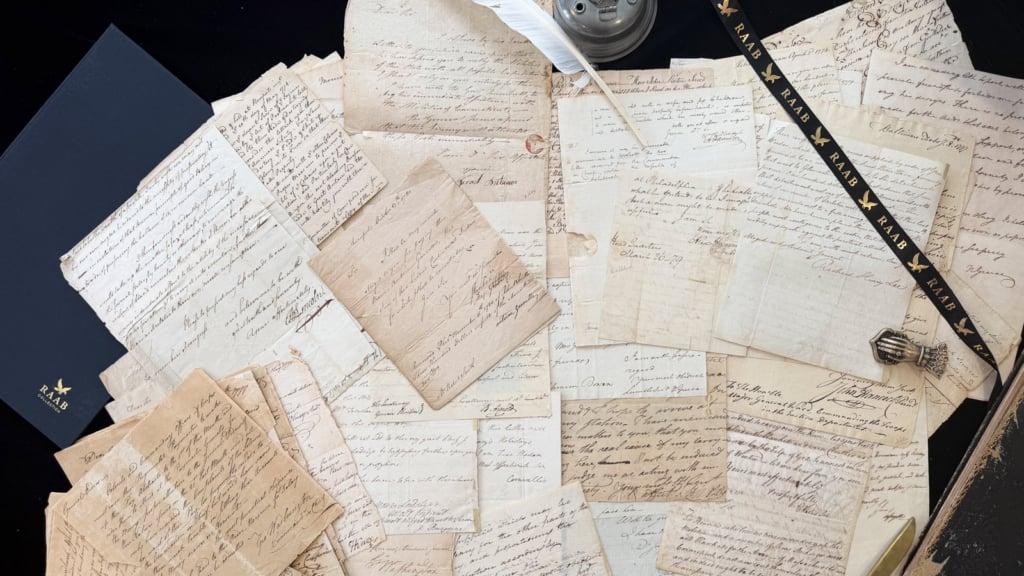
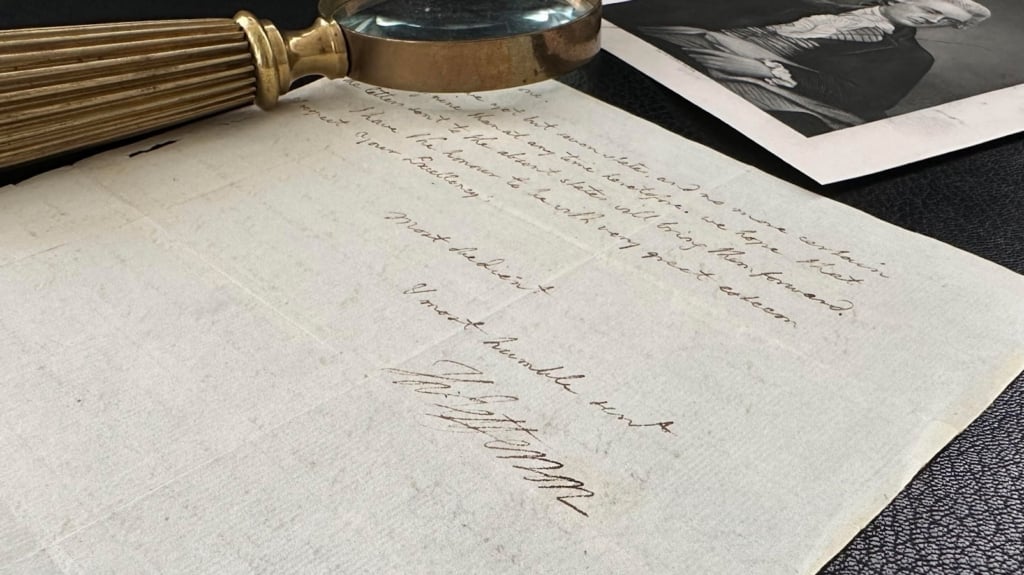
An extraordinary association piece: The letter signed by Washington, the text written by Hamilton, who has also franked the communication using Washington’s name
A remarkable rarity, we have never before seen an example of Hamilton using Washington’s franking privilege
“If you receive any further advice, you will be pleased instantly...


An extraordinary association piece: The letter signed by Washington, the text written by Hamilton, who has also franked the communication using Washington’s name
A remarkable rarity, we have never before seen an example of Hamilton using Washington’s franking privilege
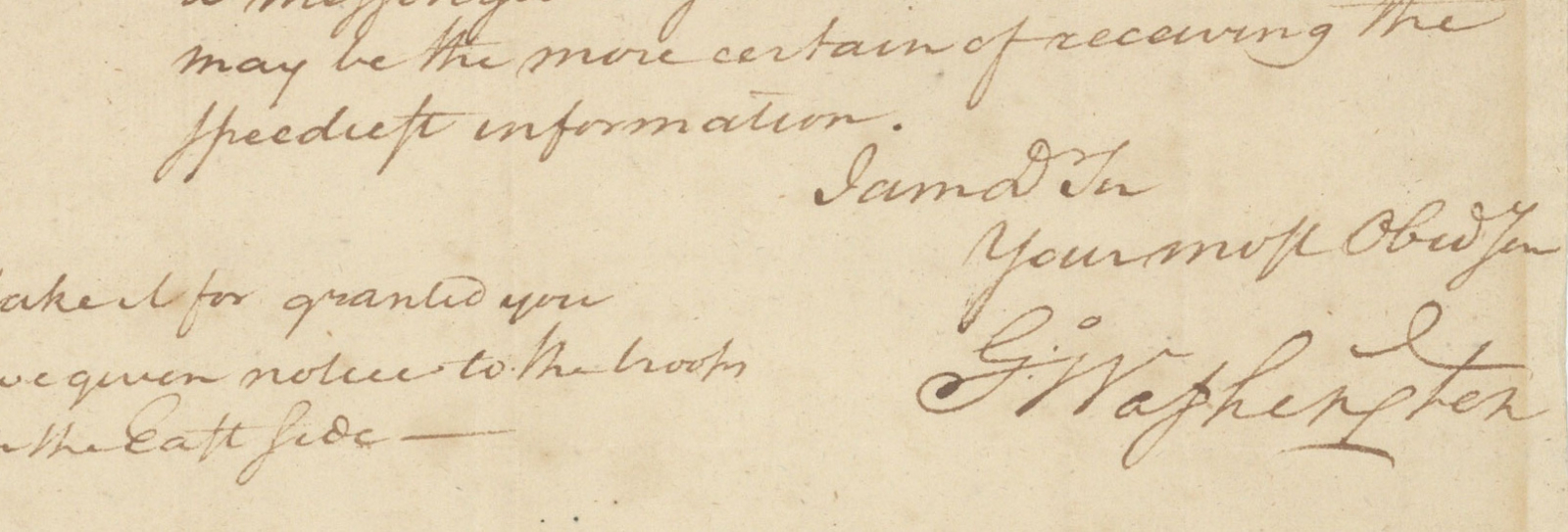
“If you receive any further advice, you will be pleased instantly to give me notice of it; and at the same time, send a messenger to General Putnam, that he may be the more certain of receiving the speediest information.”
In June 1779, the Hudson Highlands became a major military battleground when about 6,000 British troops moved up the Hudson River. They threatened to seize control of the Hudson, block American access to a key river crossing, and thus split off New England from the other states. General George Washington positioned his American army to stop the British and protect West Point.
It started when, on June 1, 1779, British forces led by General Henry Clinton sailed up the Hudson. They seized Stony Point and Verplanck’s Point, positions located just over ten miles from West Point. The British also burned American posts and captured Fort Lafayette. In response, recognizing the danger, and thinking at first the British intended to strike at West Point, Washington shifted the headquarters of the Continental Army to Smith’s Clove and then to New Windsor, New York. From this strategic Hudson Valley location, where they could monitor British movements, Washington and officers like Alexander Hamilton and Gen. Anthony Wayne planned the successful American attack on the British at Stony Point that would take place in July.
Alexander McDougall commanded the Continental Army’s Hudson Highlands defenses, including West Point, during this key stretch of the war — most notably from late 1778 into 1779, and again later in the war. Throughout the spring and into June, 1779, General Israel Putnam was commanding American forces on the west side of the Hudson River in New York, guarding critical mountain passes against British incursions. So McDougall and Putnam had commands in the same region.
Col. Butler had warned Washington that that a party of British of about 400 Men were on the opposite side of the River apparently with a design to reconnoitre the landing.
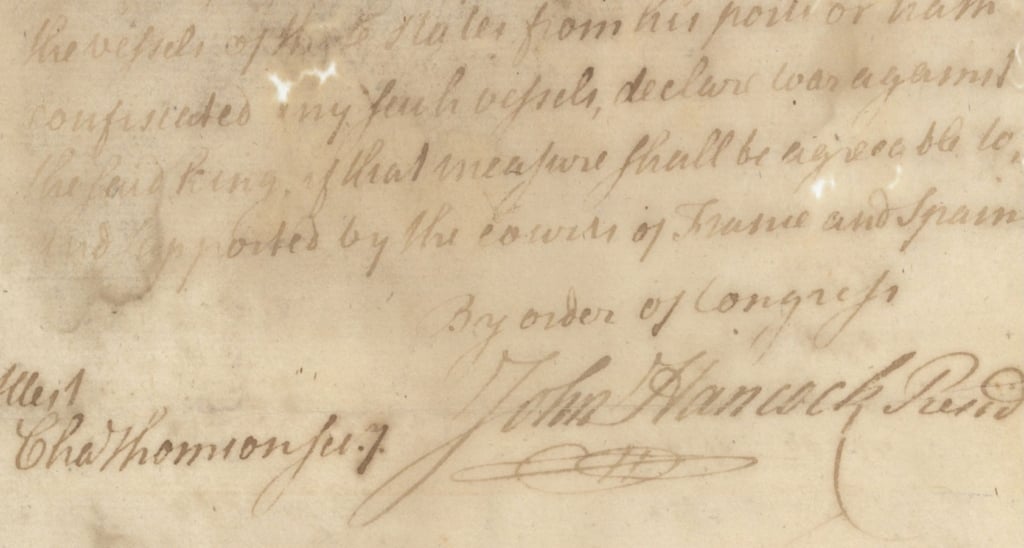
Letter Signed, “Head Quarters” [New Windsor]; “45 Minutes past 9 P.M.,” June 23, 1779, being a dramatic battlefield communication from George Washington to McDougall, written in the midst of British preparations to threaten and potentially seize West Point, and giving us a real-time sense of a swiftly changing situation. It is written in Hamilton’s hand as Washington’s aide-de-camp, signed by Washington himself, with integral address leaf franked by Hamilton, “Public Service,” and docketed in another hand on the address leaf.
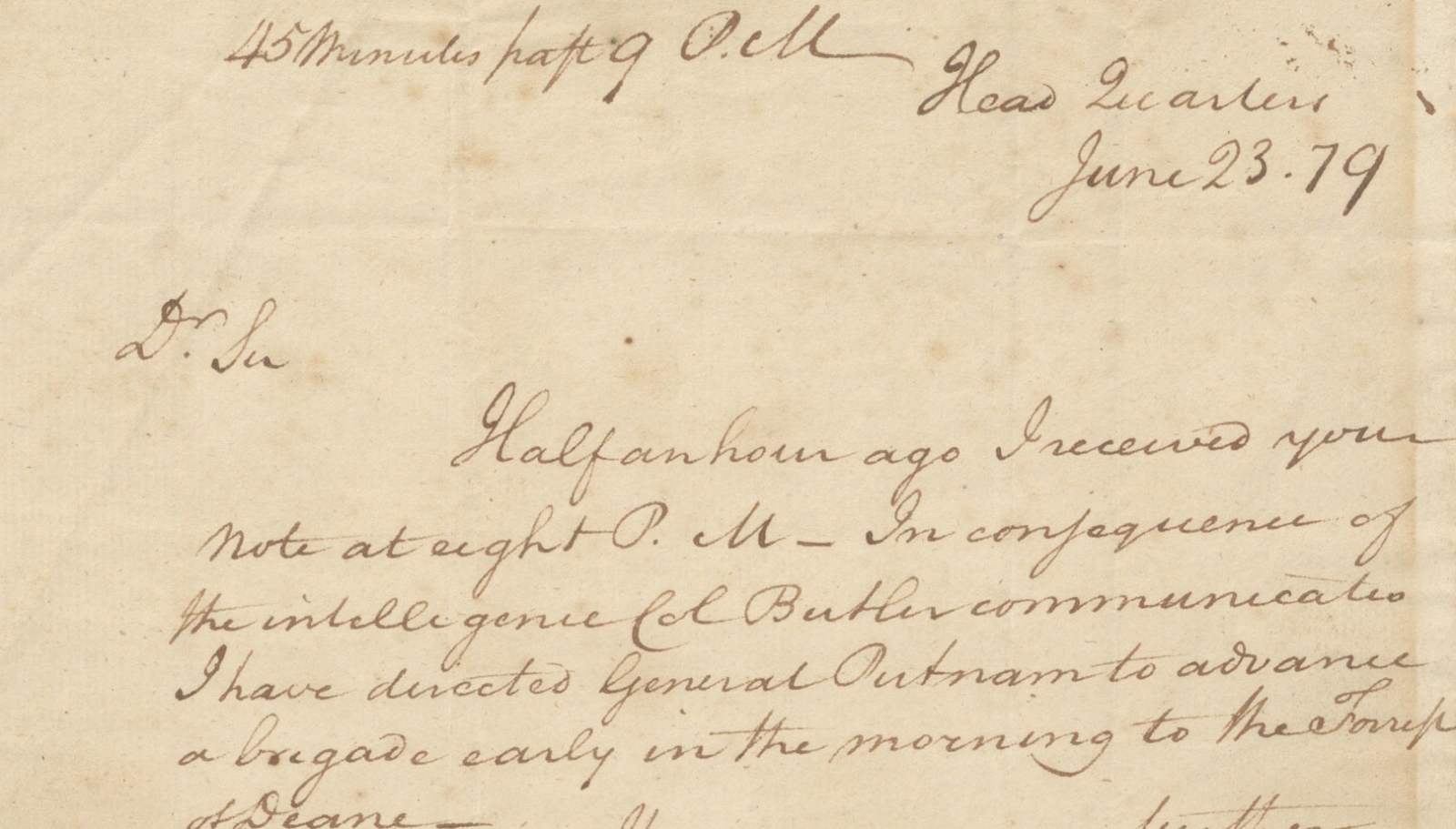
“Dr Sir, Half an hour ago I received your Note at eight P.M. In consequence of the intelligence Col. Butler communicates I have directed General Putnam to advance a brigade early in the morning to the Forest of Deane.
“If you receive any further advice, you will be pleased instantly to give me notice of it; and at the same time, send a messenger to General Putnam, that he may be the more certain of receiving the speediest information. I am Dr Sir, Your most Obedt. ser., Go: Washington.” He adds a brief postscript: “I take it for granted you have given notice to the troops on the East side.” This correspondence was urgent – dated in hours and minutes, not days.
Reports of Redcoats reconnoitering the landings at Kings Ferry made him wonder whether their next move might be up or down the river. Later that same night, at approximately 10:30 P.M., Washington issued further instructions to General Israel Putnam via Hamilton, to order troop positioning, and directing him to advance troops in response to reports that British forces were probing the river crossings: ”…a party of the Enemy of about 400 Men were on the opposite side of the River apparently with a design to reconnoitre the landing. In consequence of this intelligence-[Washington] desires you will as soon as possible to morrow morning advance Genl. Smallwood with his Brigade to the Forest of Deane.”
Two days later, on June 25, it was clear to Washington that “the enemy seem to be in suspense,” awaiting reinforcements to strengthen their ability to attack West Point and the other fortifications along the Hudson Highlands. On June 28 he ordered Anthony Wayne to plan an attack on Stony Point, and Washington made his own reconnaissance of the target on July 6, where he saw that British fortifications were incomplete and vulnerable. Wayne launched his bold and successful nighttime attack that recaptured Stony Point on July 16.
A very rare and dramatic battlefield communique, and a wonderful association piece of two great Founders, Washington and Hamilton, containing crucial orders in defense of the Hudson River, and relating to the events that led to the victory at Stony Point.

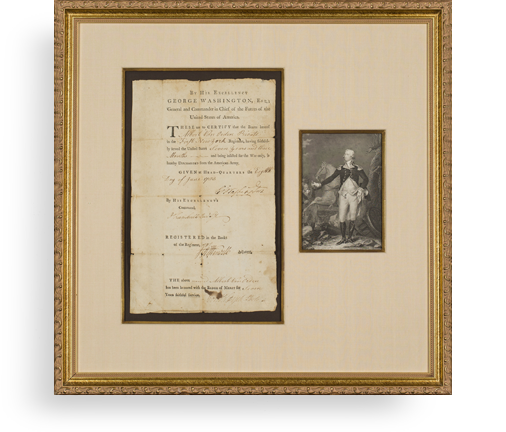
Frame, Display, Preserve
Each frame is custom constructed, using only proper museum archival materials. This includes:The finest frames, tailored to match the document you have chosen. These can period style, antiqued, gilded, wood, etc. Fabric mats, including silk and satin, as well as museum mat board with hand painted bevels. Attachment of the document to the matting to ensure its protection. This "hinging" is done according to archival standards. Protective "glass," or Tru Vue Optium Acrylic glazing, which is shatter resistant, 99% UV protective, and anti-reflective. You benefit from our decades of experience in designing and creating beautiful, compelling, and protective framed historical documents.
Learn more about our Framing Services

