






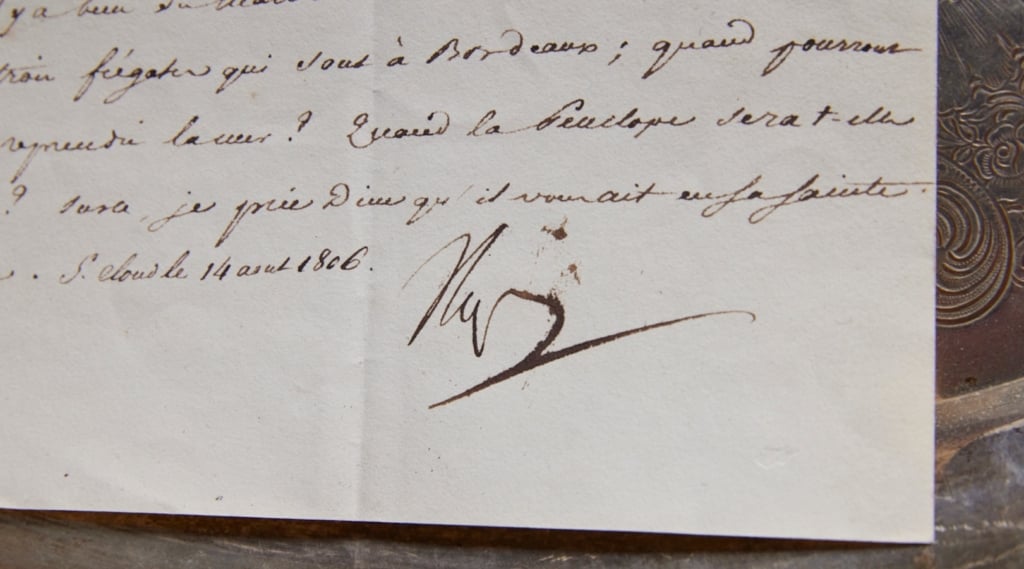
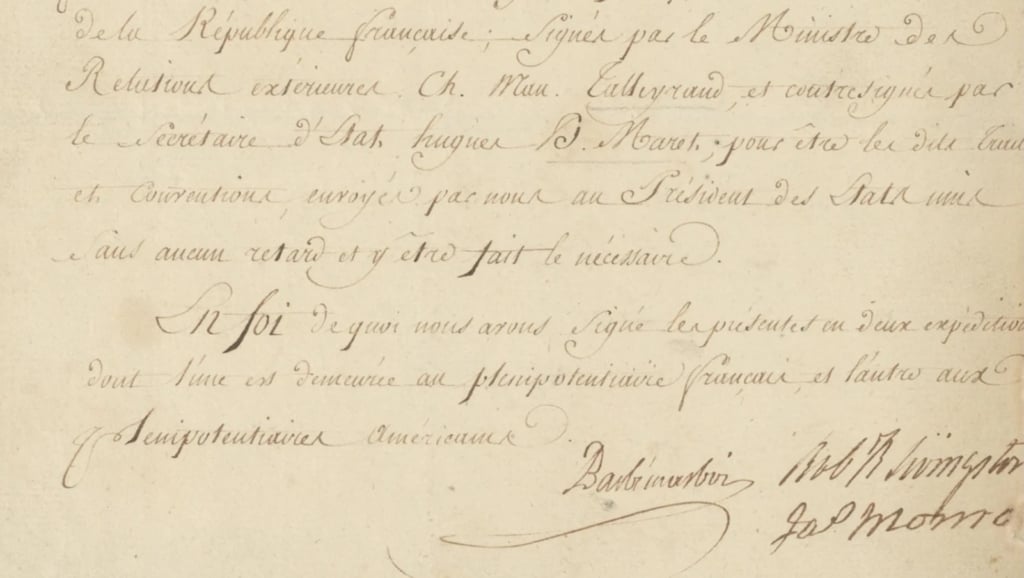


Napoleon in Cairo: His Original, Full Decree From Newly Conquered Egypt, December 1798, Bringing Egyptian Lands Under French Control

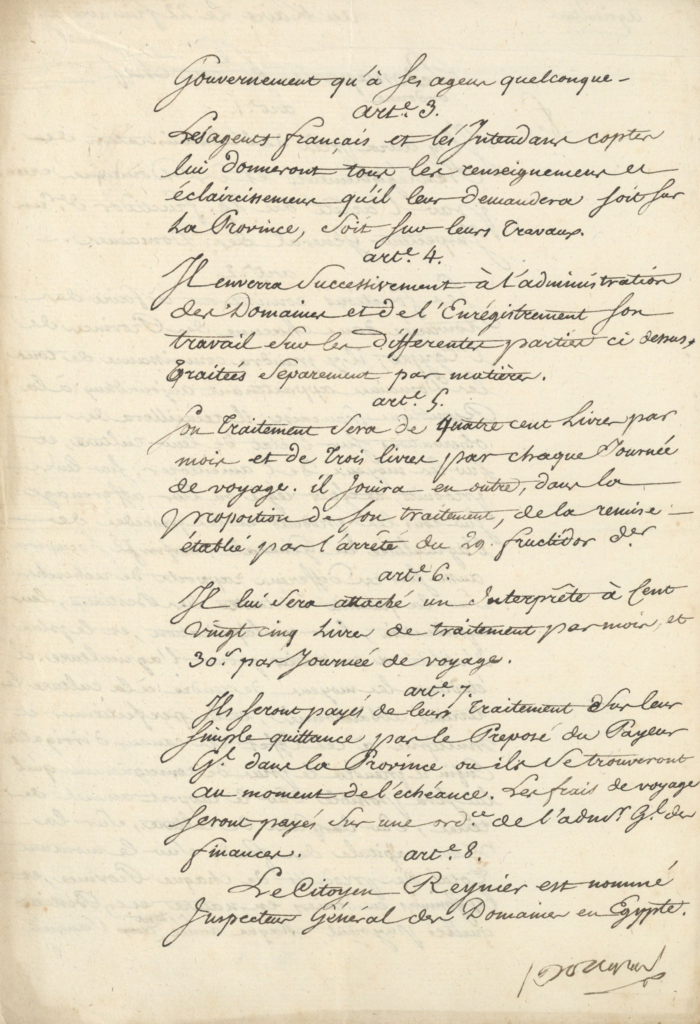

He appoints the first Inspector General of the lands of Egypt, just months after his naval defeat by Lord Nelson, and the Egyptian uprising when citizens of Cairo took up arms against Napoleon's occupying French army
- Currency:
- USD
- GBP
- JPY
- EUR
- CNY
 This currency selector is for viewing only.
The Raab Collection only accepts USD payments at checkout.
Exchange rates are updated hourly. Rates may be inaccurate.
Cut off from France and facing a revolt among the Egyptians, he gives sweeping power to live off new French lands: “functions shall consist of surveying each of the Provinces of Egypt; he shall there take stock of all the Domains belonging today to the French Republic”
A rare complete decree,...


Cut off from France and facing a revolt among the Egyptians, he gives sweeping power to live off new French lands: “functions shall consist of surveying each of the Provinces of Egypt; he shall there take stock of all the Domains belonging today to the French Republic”
A rare complete decree, all the more so given its early date and having been accomplished from Cairo itself
By December 1798, Bonaparte had been in Egypt about five months — the fleet had landed at Alexandria in July, the Mamluk beys had been crushed at the Battle of the Pyramids on July 21, and Cairo had become the French headquarters. But 1798 also brought serious strain: the French fleet had been destroyed by Lord Nelson at Aboukir Bay on August 1 (cutting Bonaparte off from France and reinforcement), and a major popular uprising in Cairo in October had been put down with considerable bloodshed. Bonaparte was consolidating an occupation that had to sustain itself indefinitely, since there was no realistic prospect of naval resupply or evacuation.
Alongside the military campaign, Bonaparte imported the full apparatus of French revolutionary administration into Egypt — an Institut d’Égypte for the savants, a Commission des Sciences et des Arts, and, as here, fiscal bureaucracies transplanted wholesale from metropolitan France. The Administration de l’Enregistrement et des Domaines was a French revolutionary-era institution responsible for registering legal acts and managing state-owned property and revenue. By creating an “Inspecteur Général des Domaines” for Egypt — building on a foundational decree of 29 Fructidor (roughly two and a half months earlier) — Bonaparte aimed to treat confiscated Mamluk and Egyptian lands, and other properties now claimed by “la République française,” as French assets to be surveyed, valued, and exploited for revenue exactly as if they were newly annexed French territory.
Designated for the Army of the Orient in 1798, General Reynier spent the next few years with the expedition to Egypt, initially commanding a division of the army. Seeing action almost immediately, in June of 1798 he seized the isle of Gozzo, and in the following months he served at the Battle of the Pyramids, was victorious over the Mamelukes at El-Khanka, and was appointed Governor of the province of Charquieh.
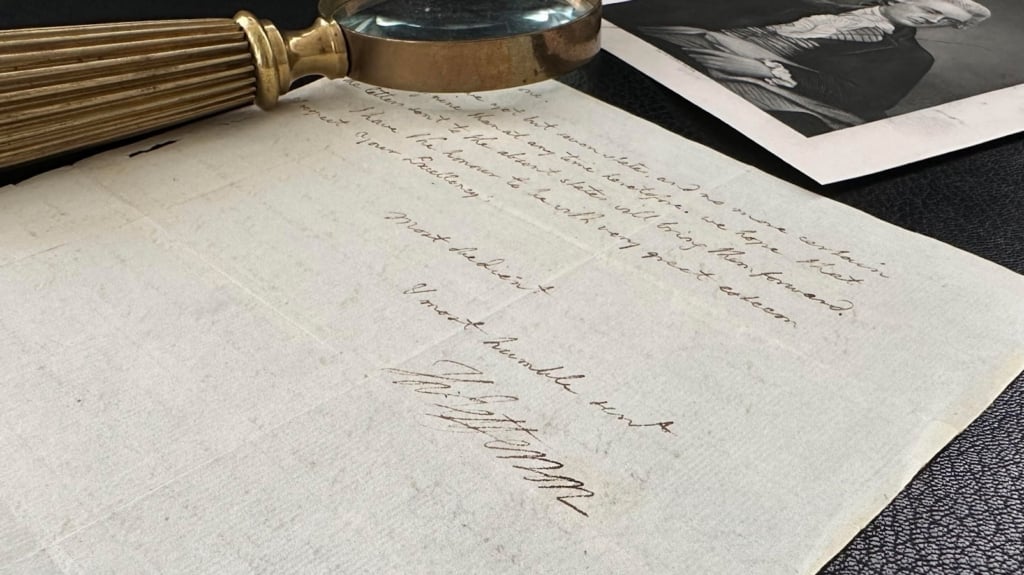
Document signed, Cairo, December 12, 1798, 2 pages back to back, being the complete decree naming the first Egyptian inspector general:
“Bonaparte, General-in-Chief, orders:
“Art. 1. There shall be, attached to the administration of Registration and of Domains created by the decree of the 29th of last Fructidor, an Inspector General of Domains.
“Art. 2. His functions shall consist of surveying each of the Provinces of Egypt; he shall there take stock of all the Domains belonging today to the French Republic; he shall gather observations on the state of their cultivation, and on the means of improving it; on their yields, on their direct management or their leasing out; on all the products and processes of agriculture in general… He shall study the means of restoring abandoned lands to cultivation, and of improving and multiplying, to that end, the irrigation canals. Finally, he shall gather as much information as he possibly can on the annual yield of the lands, on their costs of cultivation, on the capital value of the properties…
“Art. 6. An interpreter shall be attached to him, at a salary of one hundred twenty-five livres per month, and 30 [livres] per day of travel….
“Art. 8. Citizen Reynier is named Inspector General of Domains in Egypt.”
An important document from the French occupation of Egypt.

Frame, Display, Preserve
Each frame is custom constructed, using only proper museum archival materials. This includes:The finest frames, tailored to match the document you have chosen. These can period style, antiqued, gilded, wood, etc. Fabric mats, including silk and satin, as well as museum mat board with hand painted bevels. Attachment of the document to the matting to ensure its protection. This "hinging" is done according to archival standards. Protective "glass," or Tru Vue Optium Acrylic glazing, which is shatter resistant, 99% UV protective, and anti-reflective. You benefit from our decades of experience in designing and creating beautiful, compelling, and protective framed historical documents.
Learn more about our Framing Services

