






The Presidential Ethics of Thomas Jefferson: He Accepts a Now Famous Gift of Rare Champagne but Refuses to Profit Personally by Bypassing Customs Duties, Saying It Would Be Improper


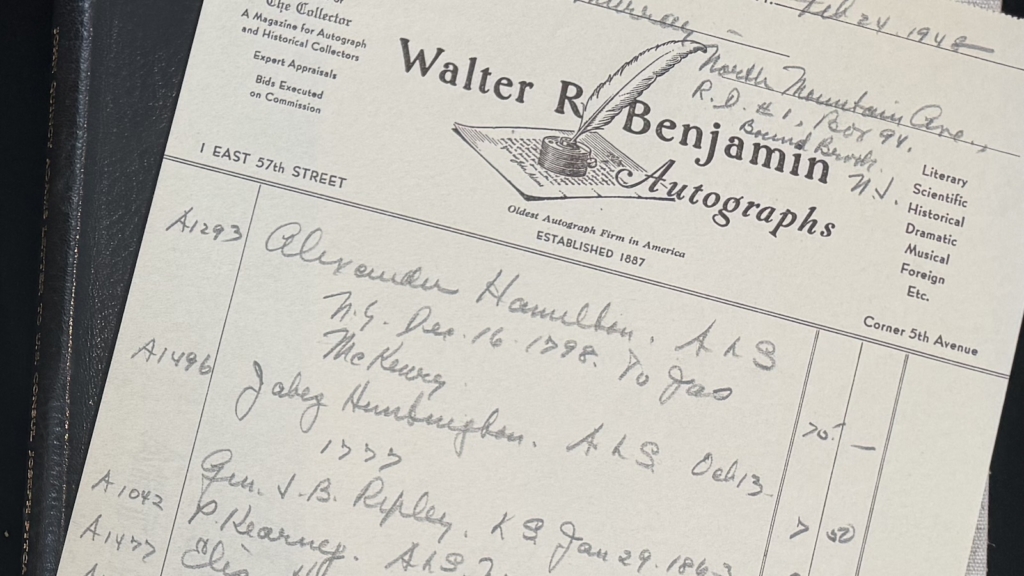
Obtained from the direct descendants of Revolutionary War hero and customs collector Peter Muhlenberg and never before been offered for sale.
“Monsr. d’Yrujo, the Spanish minister here, has been so kind as to spare me 200. bottles of Champagne, part of a larger parcel imported for his own use, & consequently privileged from duty. But it would be improper for me to take the benefit of that. I must therefore ask the favor...


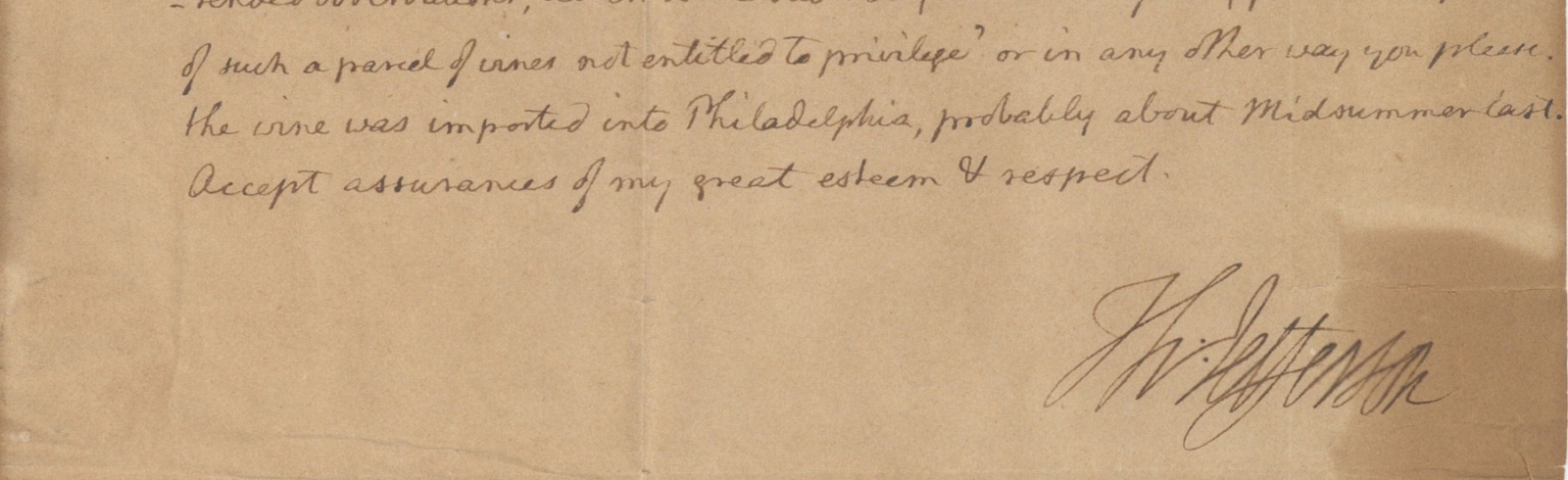
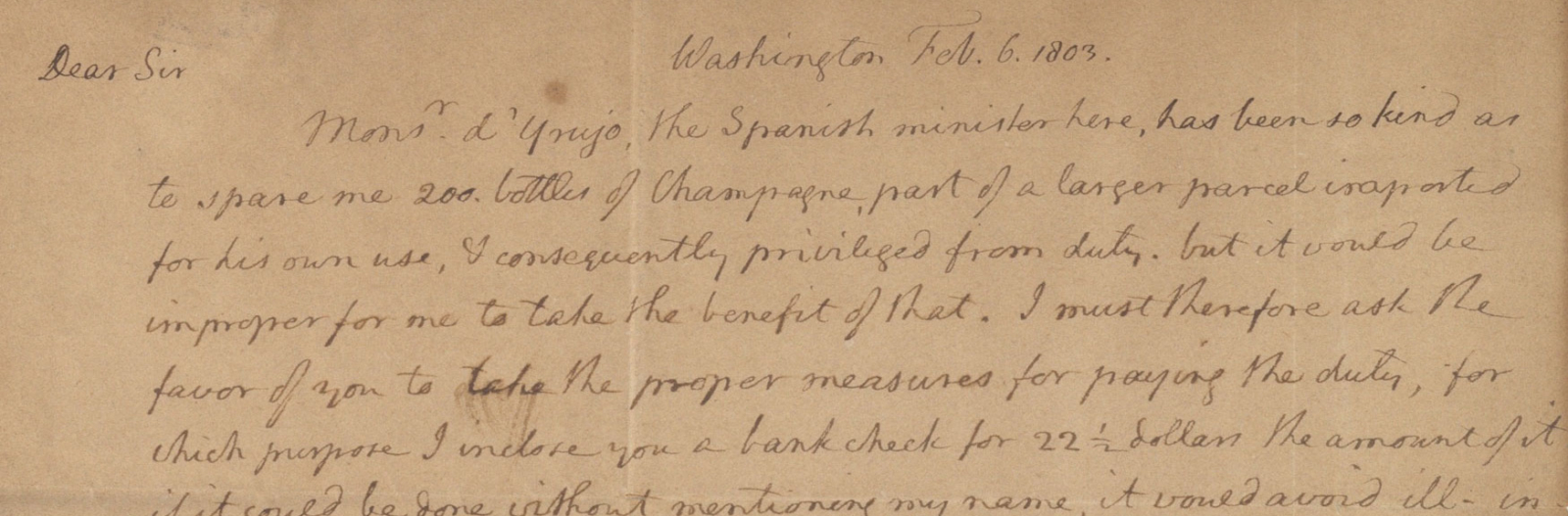
“Monsr. d’Yrujo, the Spanish minister here, has been so kind as to spare me 200. bottles of Champagne, part of a larger parcel imported for his own use, & consequently privileged from duty. But it would be improper for me to take the benefit of that. I must therefore ask the favor of you to take the proper measures for paying the duty, for which purpose I inclose you a bank check for 22½ dollars the amount of it.”
Thomas Jefferson was America’s first prominent true oenophile (wine lover). He developed his taste for champagne during his years as U.S. Minister to France (1785–1789), when he traveled through the Champagne region and visited producers directly. He became a major importer of French wines back to the United States, and champagne was a recurring favorite. He’s known to have ordered from producers whose houses still exist today, including Moët. During his presidency and after, Jefferson notably spent thousands of dollars on imported wine, importing many hundreds of bottles of champagne for state dinners at the White House. Jefferson is often credited with helping popularize champagne among the American elite, since his enthusiasm and connections shaped what many Americans considered fashionable to serve.
Rev. John Petter Gabriel Muhlenberg was a member of Pennsylvania’s prominent Muhlenberg political dynasty. His brother Frederick was the first speaker of the United States House of Representatives. John Peter became a respected figure in the newly independent United States. During the early years of the Revolution, he became a follower of patriot Patrick Henry. His contributions to the revolutionary cause included service as the chair of the Committee of Safety in Virginia’s House of Burgesses (1775) and as a member of Virginia’s provincial convention in 1776. From 1776 to 1783, he also served in the Continental Army, as colonel, brigadier-general, and finally as a major-general. Muhlenberg took part in the fighting at Charleston, Brandywine, Stony Point, and Yorktown, as well as in the winter at Valley Forge. Later, back in Pennsylvania in 1784, his German neighbors elected him as Montgomery County’s representative to Pennsylvania’s Supreme Executive Council, the state’s governing body under its first constitution. At the end of his three-year term, Muhlenberg served as vice president of this body. Shortly thereafter, Muhlenberg, as an anti-Federalist, was elected a Pennsylvania representative to the U.S. Congress, serving from 1789 to 1795 and again from 1799 to 1801. He was considered a key figure in the Democrat-Republican party of Pennsylvania, managing Thomas McKean’s successful campaign for governor and helping to elect Thomas Jefferson as U.S. president. In 1801 he was elected to the U.S. Senate, but before taking his seat, he resigned to accept the position of supervisor of U.S. customs in the Pennsylvania District. In 1803 he became Collector of Customs of the Port of Philadelphia. He remained active as a Lutheran layman until his death in 1807.
In late 1802, the Spanish ambassador, Mr. d’Yrujo, gave Jefferson 200 bottles of his own champagne. This famous gift kept good company and was a centerpiece at some of Jefferson’s great events.
Architect Benjamin Latrobe, after his first dinner at the President’s House, wrote the following account to his wife: “I went to dine with the President. His two daughters, Mr. and Mrs. Madison, Mr. Lincoln (Attorney General), Dr. Thornton, a Mr. Carter from Virginia, and Captain [Meriwether] Lewis (the President’s Secretary) were the party. The dinner was excellent, cooked rather in the French style…Wine in great variety, from sherry to champagne, and a few decanters of rare Spanish wine, presents from Chevalier D’Yrujo. The conversation, of which Mr. Madison was the principal leader, was incomparably pleasant, and though Mr. Jefferson said little at dinner besides attending to the filling of plates, which he did with great ease and grace for a philosopher, he became very talkative as soon as the cloth was removed.
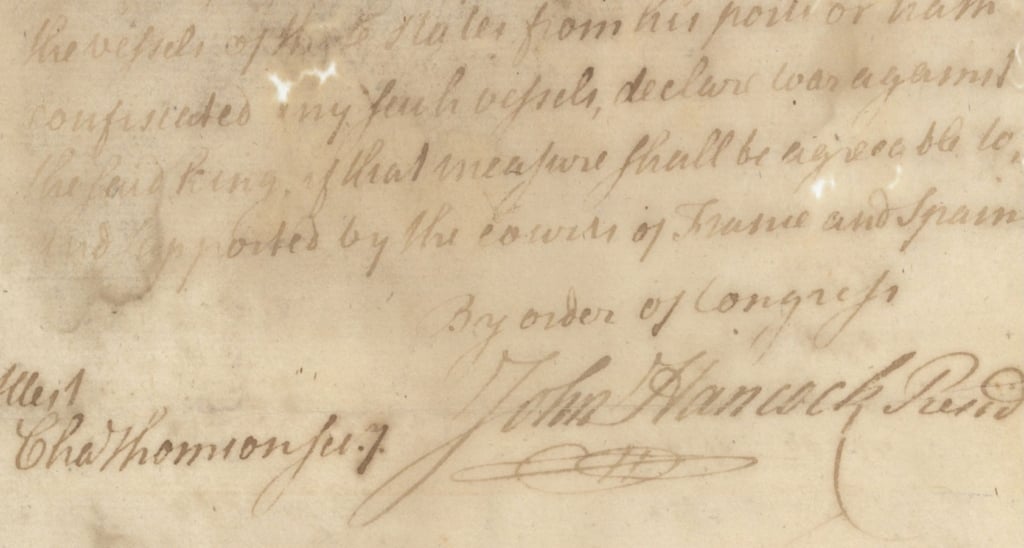
The collecting of duties was a crucial method of generating revenue for the new government, part of Alexander Hamilton’s revenue system. Circumventing this was considered unethical and illegal and Jefferson was at the time the nation’s Chief Executive. Champagne was arguably exempt from customs duties, but accepted the champagne and refused to accept the customs windfall, saying it was improper for him to do so. Instead he paid the customs duties, sending a check to Muhlenberg in his capacity of Collector of Customs. This is that very letter to Muhlenberg, refusing to act in an inappropriate fashion for his own benefit.
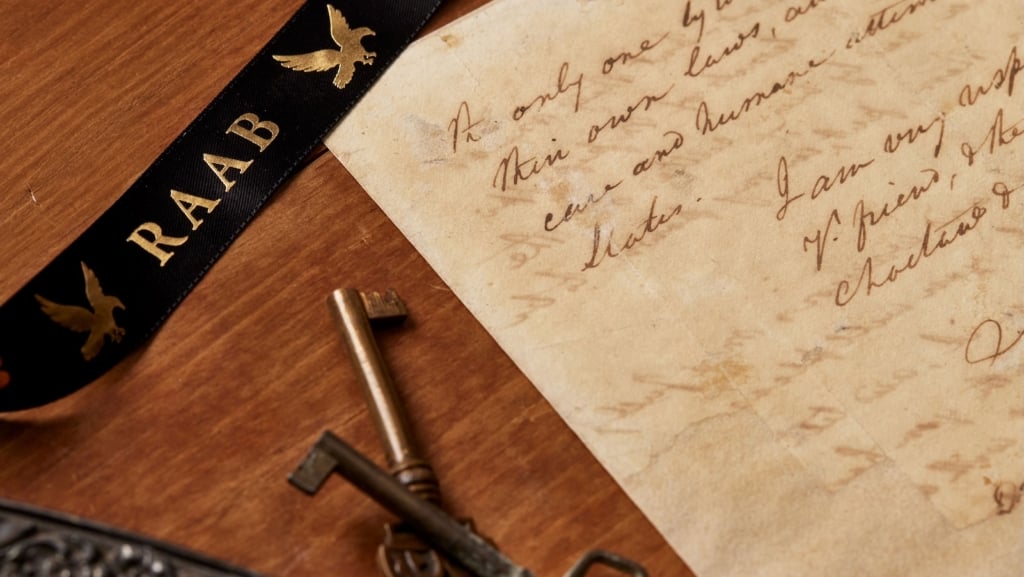
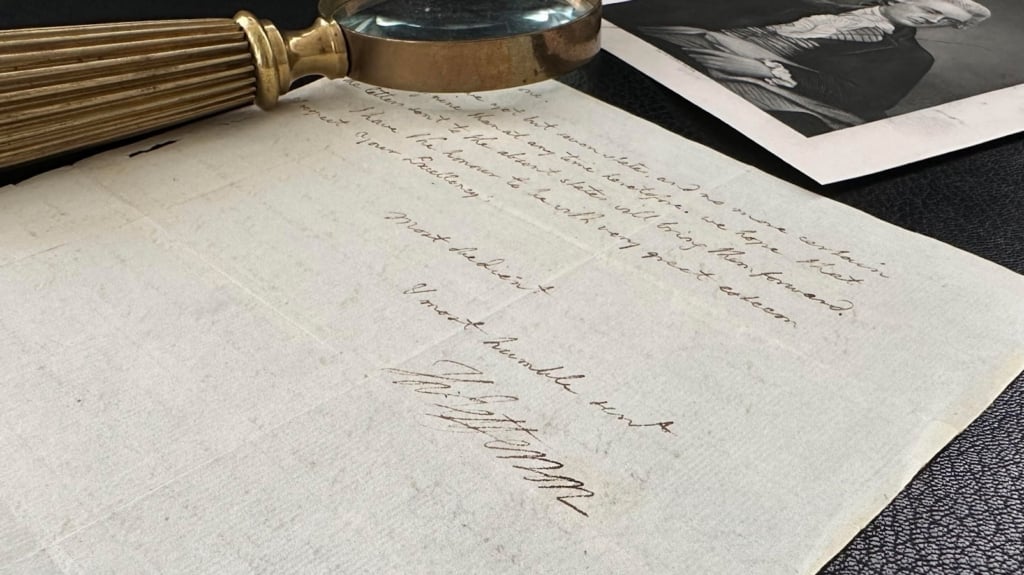
Autograph letter signed as President, Washington, February 6, 1803, to Muhlenberg, showing that accepting favors as president is . “Dear Sir, Monsr. d’Yrujo, the Spanish minister here, has been so kind as to spare me 200. bottles of Champagne, part of a larger parcel imported for his own use, & consequently privileged from duty. but it would be improper for me to take the benefit of that. I must therefore ask the favor of you to take the proper measures for paying the duty, for which purpose I inclose you a bank check for 22½ dollars the amount of it. if it could be done without mentioning my name, it would avoid ill-intended observations, as in some such way as this ‘by duty paid on a part of such a parcel of wines not entitled to privilege’ or in any other way you please. the wine was imported into Philadelphia, probably about Midsummer last. Accept assurances of my great esteem & respect. Th: Jefferson.”
We obtained this letter from the Muhlenberg descendants and it has never before been offered for sale.
The ethical stand taken by Jefferson in this letter is almost startling, and shows the high character of the man, as he refuses to enrich himself or accept favors at the government’s expense.

Frame, Display, Preserve
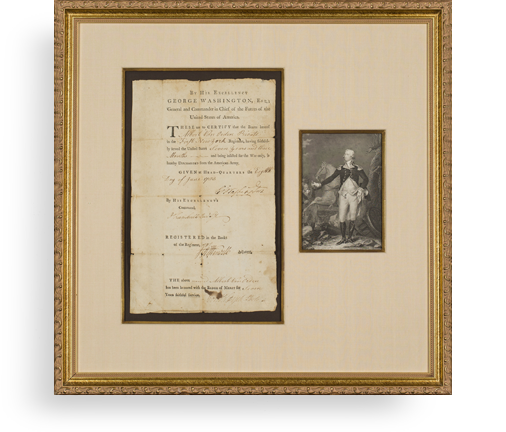
Each frame is custom constructed, using only proper museum archival materials. This includes:The finest frames, tailored to match the document you have chosen. These can period style, antiqued, gilded, wood, etc. Fabric mats, including silk and satin, as well as museum mat board with hand painted bevels. Attachment of the document to the matting to ensure its protection. This "hinging" is done according to archival standards. Protective "glass," or Tru Vue Optium Acrylic glazing, which is shatter resistant, 99% UV protective, and anti-reflective. You benefit from our decades of experience in designing and creating beautiful, compelling, and protective framed historical documents.
Learn more about our Framing Services

