






In the Year of Some of His Greatest Advances, a Modest Nikola Tesla Says He Doesn’t Deserve His Fame


The great inventor tells an admirer: “I thank you very much for the expression of your good opinion, but l am grieved to know that I am not in any way deserving it.”
This is the year he invented a radio-controlled boat, and made other advances
Nikola Tesla was born in 1856 and became one of the great inventors in the world. In his career, he developed induction motors, harnessed the power of alternating current, and even experimented with wireless power. He had an idea...


This is the year he invented a radio-controlled boat, and made other advances
Nikola Tesla was born in 1856 and became one of the great inventors in the world. In his career, he developed induction motors, harnessed the power of alternating current, and even experimented with wireless power. He had an idea of wireless lighting and electricity distribution and made experiments on the subject in New York and Colorado Springs. He understood the possibility of wireless communication, and performed early X-ray imaging. He invented, predicted or contributed to the development of hundreds of technologies of the modern world. Some of them are the remote control, computers, smartphones, and robotics.
1898 was an important year for Tesla. At the first Electrical Exhibition at Madison Square Garden in New York, Tesla presented his most recent invention: a radio-controlled boat called the telautomaton. In doing so, Tesla performed the first public demonstration of the wireless transfer of commands at a distance by controlling the movements of the boat with radio waves. The moment was a pioneering step in the field of remote control and also one of the earliest milestones in the birth of robotics and automation.
For this demonstration, Tesla built a small iron-hulled boat that could be steered remotely using radio waves – no wires connecting the controller to the boat. He controlled the boat’s rudder, propeller, and even onboard lights from a control box, making it move through a small pool in front of a startled audience. The crowd was so baffled by the seemingly magical technology that some people reportedly accused Tesla of using telepathy or hidden trickery to control it, since wireless remote control was completely outside their frame of reference at the time. This is widely regarded as one of the earliest public demonstrations of remote control technology and a precursor to modern robotics and radio-guided devices (including, eventually, guided missiles and drones). Tesla filed a patent for the remote-control technology that same year. He tried to interest the U.S. military in the invention for use in naval warfare (for example, for torpedo guidance), but he struggled to find backers who took the concept seriously at the time – it was simply too far ahead of its era.
Also in 1898, Tesla continued refining his advanced ideas about wireless transmission of energy and information. He was increasingly obsessed with the idea of transmitting power without wires across long distances. This is the year often associated with Tesla’s alleged “earthquake machine” — a mechanical oscillator experiment that caused vibrations strong enough to worry his neighbors and, according to popular legend, nearly shook his own building apart. News about Tesla’s earthquake machine spread, but rather than being celebrated, it was met with fear. Tesla sought funding to develop the device further, but found investors wary of such destructive potential. Years later, scientists confirmed the power of mechanical resonance.
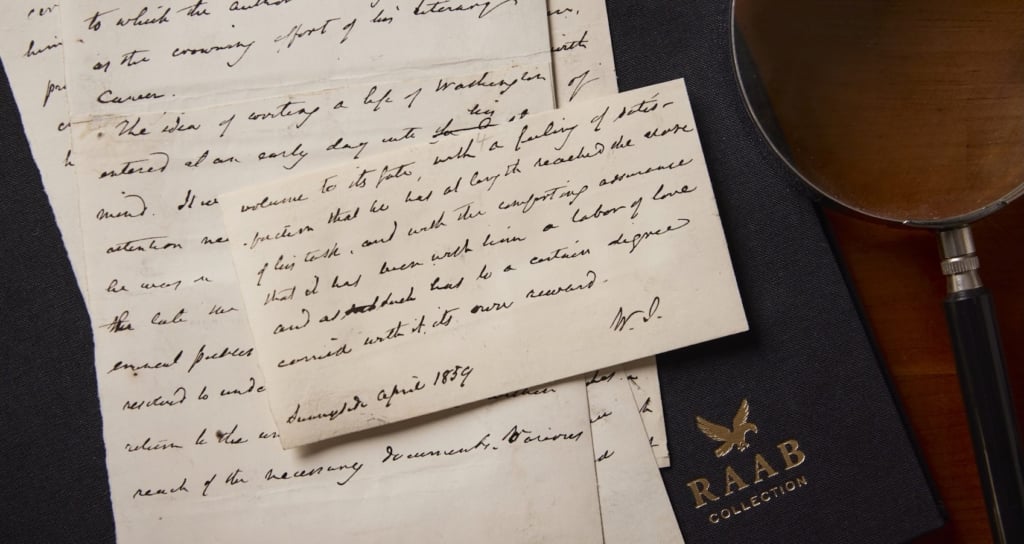
Typed letter signed, New York, March 28, 1898, to Mrs. Martha McCoullough Williams, just months before the Electrical Exhibition at Madison Square Garden, showing the visionary inventor’s great modesty. “My dear Madam: Your favor of March 10th, which was received in due course, would have been answered before this had l not been suffering from the grip all this time. I thank you very much for the expression of your good opinion, but l am grieved to know that I am not in any way deserving it.
“I would with pleasure comply with your request if it were of another nature, but it has been my rule, to which I have adhered firmly, not to furnish any material for interviews. Hoping that, in view of this, you will have the kindness to excuse me and regretting very much my inability to meet your wish, I remain, Yours very truly, N. Tesla.” Apparently she had sought an interview, and Tesla did not give interviews. The letter is quoted on the teslauniverse.com website.
A very uncommon letter, being just our second Tesla letter in all these years.

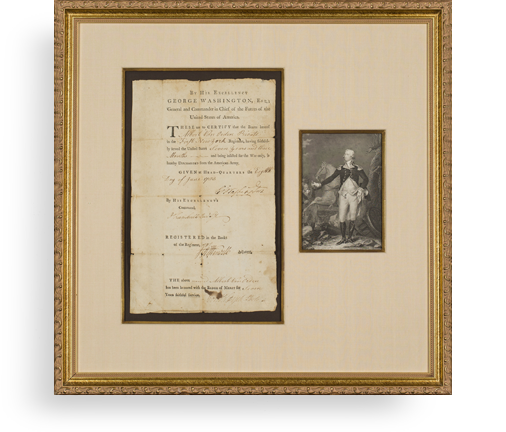
Frame, Display, Preserve
Each frame is custom constructed, using only proper museum archival materials. This includes:The finest frames, tailored to match the document you have chosen. These can period style, antiqued, gilded, wood, etc. Fabric mats, including silk and satin, as well as museum mat board with hand painted bevels. Attachment of the document to the matting to ensure its protection. This "hinging" is done according to archival standards. Protective "glass," or Tru Vue Optium Acrylic glazing, which is shatter resistant, 99% UV protective, and anti-reflective. You benefit from our decades of experience in designing and creating beautiful, compelling, and protective framed historical documents.
Learn more about our Framing Services
