






President Thomas Jefferson Arranges With the Collector of the Port of Philadelphia to Have Goods He Is Importing Shipped by Sea and Not Land


He writes Peter Muhlenberg that the shipment, quite likely wine, must go by sea, “as it’s contents will not bear a transportation by land”
We obtained this letter from the Muhlenberg descendants and it has never before been offered for sale
Thomas Jefferson was an avid importer of European goods throughout his life, reflecting both his personal tastes and his belief that America should absorb the best of European culture and craftsmanship. Wine was one of...


We obtained this letter from the Muhlenberg descendants and it has never before been offered for sale
Thomas Jefferson was an avid importer of European goods throughout his life, reflecting both his personal tastes and his belief that America should absorb the best of European culture and craftsmanship. Wine was one of his greatest passions. He traveled through French and Italian wine regions while serving as U.S. Minister to France and became one of early America’s most knowledgeable wine connoisseurs. He imported Bordeaux, Champagne, Burgundy, and Italian wines, and kept detailed records of vintages and shipping.
There were other categories of Jefferson’s acquisitions. Jefferson amassed one of the largest private libraries in America, much of it sourced from Parisian booksellers. He also imported paintings, busts, and prints from Europe, many of which he displayed. Jefferson had a deep interest in science and ordered items like thermometers, telescopes, surveying equipment, mounting for his polygraph, and other precision instruments that weren’t yet manufactured in the U.S. He received shipments of foodstuffs, furniture, mirrors, clocks, and decorative items, some of which he had custom-made in France to his own specifications. An enthusiastic horticulturist, Jefferson imported seeds, cuttings, and plants for Monticello’s gardens, always experimenting with European varieties alongside native species.
William Kirkpatrick was a merchant and shipper who had settled in Málaga, Spain, and built a successful business there, including a vineyard and a cotton plantation. Once Jefferson became president, Kirkpatrick cultivated a friendly relationship with him, in part through gifts of wine. As early as September 1803, Kirkpatrick shipped Jefferson a selection of wine from his family’s own vineyards, including a special cask of aged Málaga wine from the 1747 vintage, describing it as a rarity Jefferson wouldn’t otherwise find in America.
Rev. John Petter Gabriel Muhlenberg, known generally as Peter Muhlenberg, was a member of Pennsylvania’s prominent Muhlenberg political dynasty. His brother Frederick was the first speaker of the United States House of Representatives. Peter became a respected figure in the newly independent United States. During the early years of the Revolution, he was a follower of patriot Patrick Henry. His contributions to the revolutionary cause included service as the chair of the Committee of Safety in Virginia’s House of Burgesses (1775) and as a member of Virginia’s provincial convention in 1776. From 1776 to 1783, he also served in the Continental Army, as colonel, brigadier-general, and finally as a major-general. Muhlenberg took part in the fighting at Charleston, Brandywine, Stony Point, and Yorktown, and spent the winter at Valley Forge with George Washington. Later, back in Pennsylvania in 1784, he was elected him to Pennsylvania’s Supreme Executive Council, the state’s governing body under its first constitution. At the end of his three-year term, Muhlenberg served as vice president of this body. Shortly thereafter, Muhlenberg, as an anti-Federalist, was elected a Pennsylvania representative to the U.S. Congress, serving from 1789 to 1795 and again from 1799 to 1801. He was considered a key figure in the Democrat-Republican party of Pennsylvania, managing Thomas McKean’s successful campaign for governor and helping to elect Thomas Jefferson as U.S. president. In 1801 he was elected to the U.S. Senate, but before taking his seat, he resigned to accept the position of supervisor of U.S. customs in the Pennsylvania District. In 1803 he became Collector of Customs of the Port of Philadelphia. He served in those posts concurrently until his death in 1807.
With Jefferson an importer of goods, and Muhlenberg Collector of the port in Philadelphia, the two men had occasion to be in touch about customs matters as well on issues of shipping – such as to where and when the imported goods should be sent.
On April 9, Muhlenberg wrote to Jefferson, sending along a note, handed him by Consul O’Brien, carried on board the vessel Martha from Kirkpatrick in Malaga. The papers of Thomas Jefferson note that it sent along “Six clay Figures made in this Place, Two representing a man & woman dancing the Bolero, to the music of the Guitar which is played by a third Person, A Smugler & his Mistress, All five in the proper spanish Dress, which the People they represent wear on festival days, to make up half a Dozen Another Common figure has been added”; Kirkpatrick wishes O’Brien to present these “objects of Curiosity” to the president and hopes they will merit his approbation.”
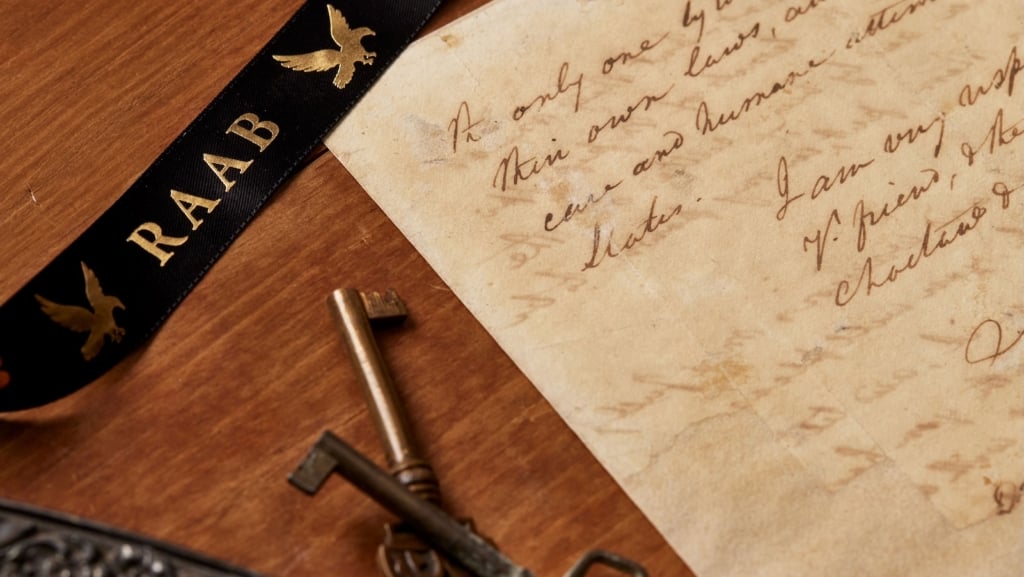
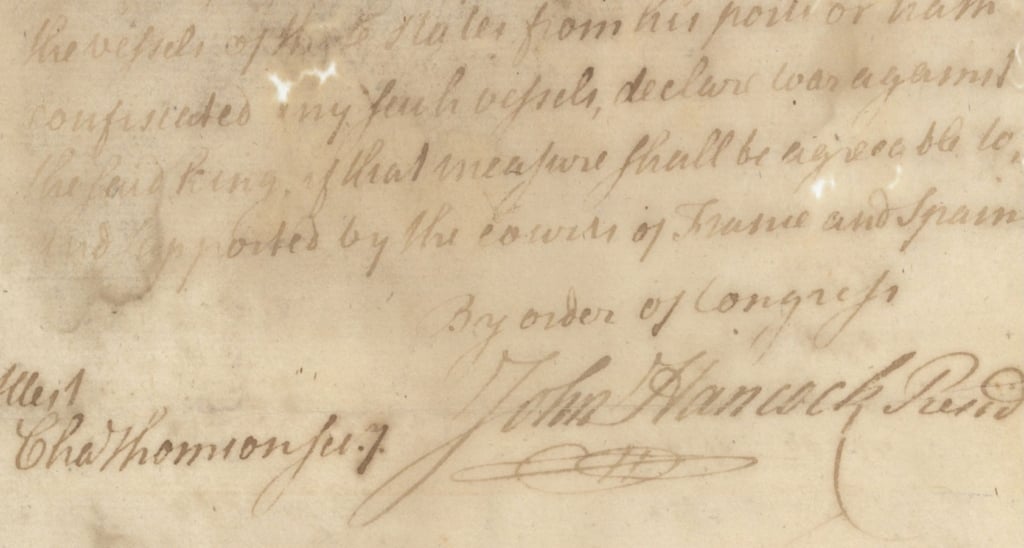
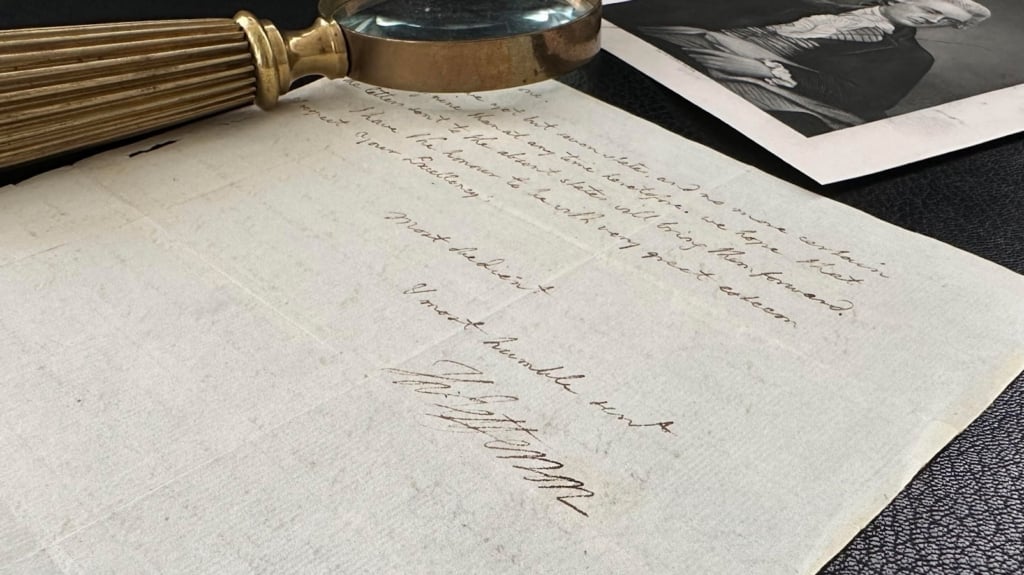
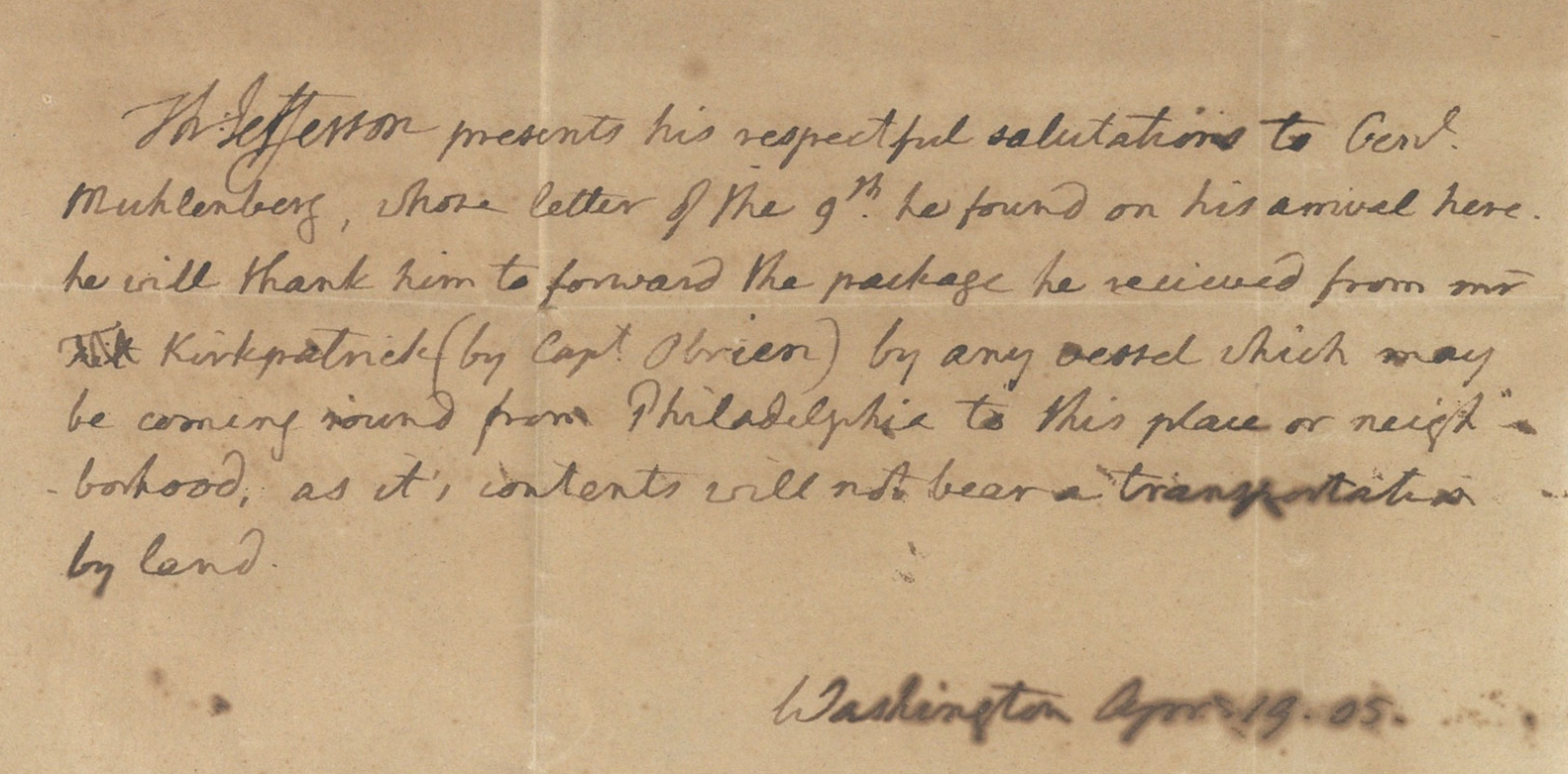
Autograph letter signed as President, in the third person, Washington, April 19, 1805, to Muhlenberg, seeking to have a package sent him by ship rather than over land. “Th: Jefferson presents his respectful salutations to Genl. Muhlenberg, whose letter of the 9th he found on his arrival here. he will thank him to forward the package he received from mr Kirkpatrick (by Capt. O’brien) by any vessel which may be coming round from Philadelphia to this place or neighborhood, as it’s contents will not bear a transportation by land.” We obtained this letter from the Muhlenberg descendants and it has never before been offered for sale.

Frame, Display, Preserve
Each frame is custom constructed, using only proper museum archival materials. This includes:The finest frames, tailored to match the document you have chosen. These can period style, antiqued, gilded, wood, etc. Fabric mats, including silk and satin, as well as museum mat board with hand painted bevels. Attachment of the document to the matting to ensure its protection. This "hinging" is done according to archival standards. Protective "glass," or Tru Vue Optium Acrylic glazing, which is shatter resistant, 99% UV protective, and anti-reflective. You benefit from our decades of experience in designing and creating beautiful, compelling, and protective framed historical documents.
Learn more about our Framing Services

