







Two Manuscripts from Circa 900 AD Italy, From a Work By Carolingian Poet & Encyclopedist Hrabanus
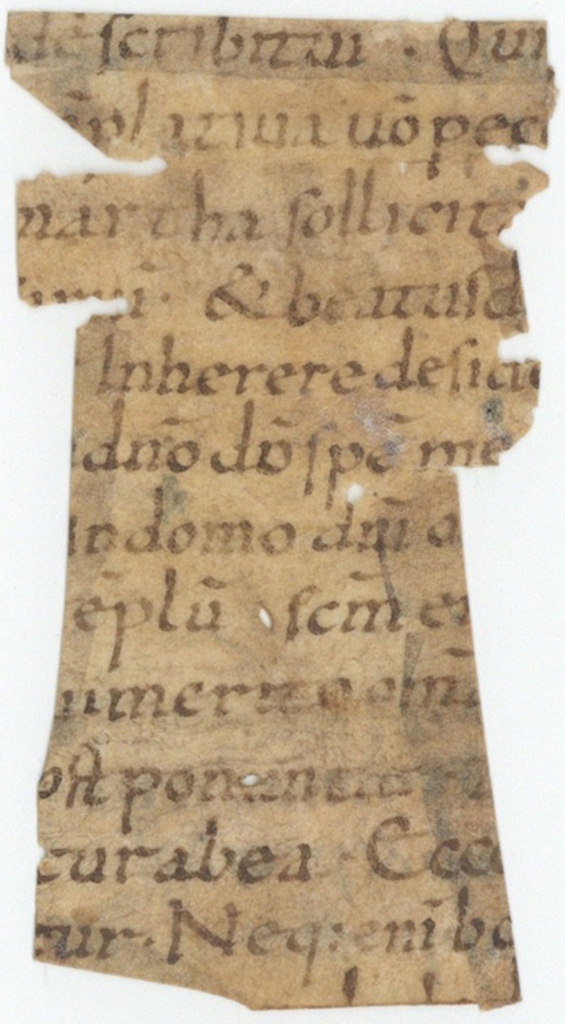
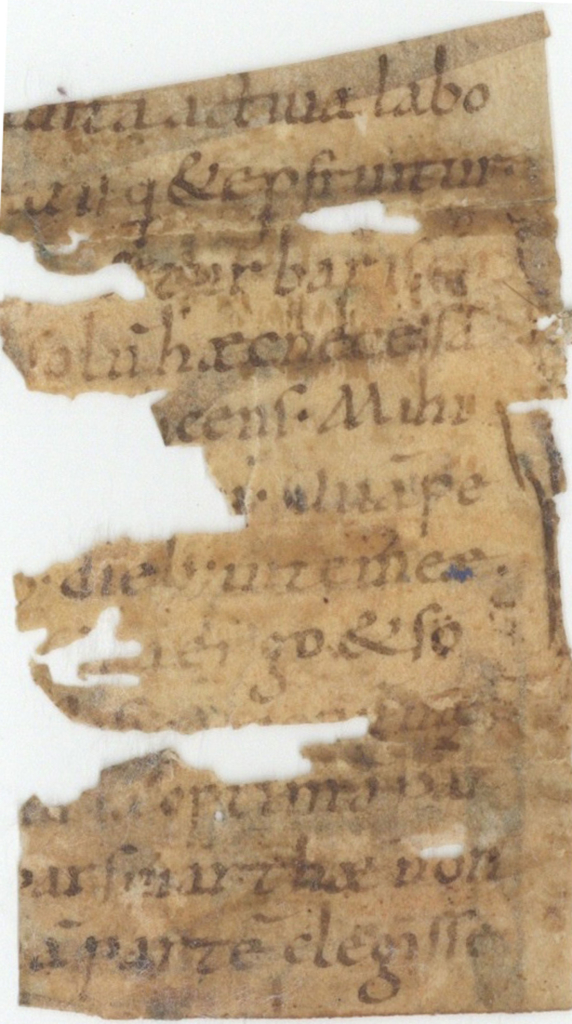
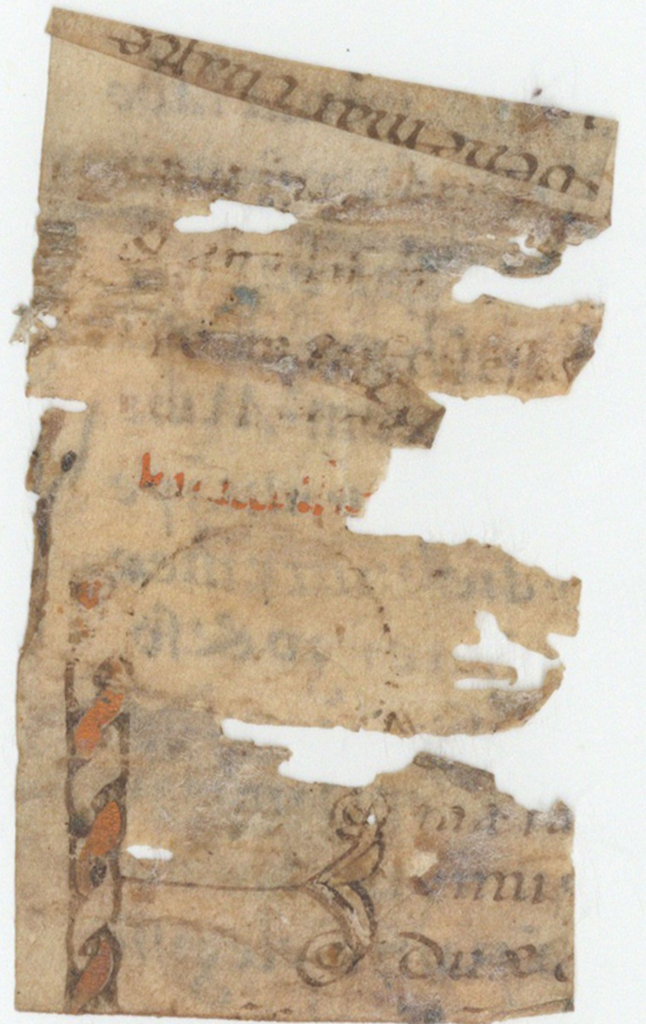

These two fragments are all that relate from a long lost religious commentary, copied just decades after the death of the original author
- Currency:
- USD
- GBP
- JPY
- EUR
- CNY
 This currency selector is for viewing only.
The Raab Collection only accepts USD payments at checkout.
Exchange rates are updated hourly. Rates may be inaccurate.

The late eighth century saw a new power rising in Europe in the form of the empire of Charlemagne (747-814). Originally from the region of northeastern France and the adjacent territories of the Low Countries, within a few decades most of Europe from the Channel to the Pyrenees, westwards into much of...


The late eighth century saw a new power rising in Europe in the form of the empire of Charlemagne (747-814). Originally from the region of northeastern France and the adjacent territories of the Low Countries, within a few decades most of Europe from the Channel to the Pyrenees, westwards into much of Germany, and downwards into Italy had fallen under his sway. It is clear that he saw the correct fostering of religion and learning as a vehicle to give this unit a collective identity, remaking the Roman Empire as he saw it out of the fragmented and disparate communities left behind when that power structure fell in the fifth century. The Bible alongside other liturgical books was to be carefully edited and corrected by court theologians, and copies distributed across the realm, ensuring a form of standardization.
One enormous stumbling block to these aspirations was the nature of contemporary script itself. In the so-called ‘Dark Ages’, writing and study had fallen back to just a handful of religious communities and their scriptoria, with each using the scrawling letter forms of late Roman cursive to form their own local scripts, usually barely legible by those outside their communities. Thus, Charlemagne set Alcuin, perhaps his principal court scholar, up as an abbot in Tours, and from there a new script emerged, balancing great legibility with speed to write – this, Carolingian minuscule. From Tours it rapidly spread across Europe, replacing previous scripts everywhere except in Spain (where Visigothic minuscule clung on) and Montecassino (where Beneventan minuscule survived). This new script was the vehicle of the social cohesion of Europe as it clawed its way into the Middle Ages proper. Incidentally, it was also the script that the humanists returned to in the fifteenth century when they were trying to find an alternative to the angular and often messy forms of gothic script, believing that the books written in this were the last Roman ones surviving, and as such was then picked up by early printers and popularized, becoming today the basis of most electronic fonts, including ‘Times New Roman’ (hence the name).
Rabanus Maurus Magnentius (780 – 856), also known as Hrabanus or Rhabanus, was a Frankish Benedictine monk, theologian, poet, encyclopedist and military writer who became archbishop of Mainz in East Francia. He was the author of the encyclopedia De rerum naturis (“On the Nature of Things”). He also wrote treatises on education and grammar and commentaries on the Bible. He was one of the most prominent teachers and writers of the Carolingian age, and was called “Praeceptor Germaniae”, or “the teacher of Germany”. He also studied under Alcuin of York, Charlemagne’s chosen architect of his intellectual reform. It was Alcuin who gave him the name ‘Maurus,’ honoring him with the name of St Benedict’s favorite disciple. Hrabanus served the school and library of Fulda and his own written works reflect on subjects ranging from biblical commentaries, an encyclopedia in the style of Isadore of Seville, and a work intended to improve Frankish martial skills.
Paterius was a bishop of Brescia. He is known as a compiler, in particular of works of Pope Gregory I, for whom he had worked as a notary.
Two fragments from Hrabanus Maurus, Homilies 150 and 151, quoting Paterius’ lost commentary on Luke 10, in Latin, manuscript on parchment [probably Italy, c. 900]. (77 x 43 mm ; 72 x 39 mm) 2 fragments from the same leaf, recovered from post-medieval binding. 13 lines of Carolingian minuscule, with use of et-, st- and ct- ligatures; remnants of rubrications, and one 7+ line initial F (Fratres fiducium tale… from Homily 151) with stem formed of intertwined red and negative space blank parchment, with terminals ending in stylised openwork foliage sprays. Scuffs, holes, fraying to edges.
These fragments are the sole known survivors of a Carolingian manuscript of Hrabanus Maurus, produced within decades of the saint’s death. Furthermore, the small scraps of text carry the weight of bearing quoted material from a long-lost text of Paterius, whose work was known and used by Hrabanus before its disappearance from history. Here Hrabanus quotes the work of Paterius (d. 606), from whom we have only one surviving work: an anthology of Pope Gregory I’s biblical exegesis. This work is fragmental— the commentary on the New Testament only has only Genesis to the Song of Songs remaining. The later sections have been in part recovered through 12th century records of excerpts. These 10th century fragments predate those excerpts, demonstrating the centuries-long importance of this now-lost work.
These important fragments are a remarkable survival of an increasingly rare and far-away moment of history that laid the seeds for a modern Europe and host the ghosts of an important scholar from nearly a millennium and a half ago.

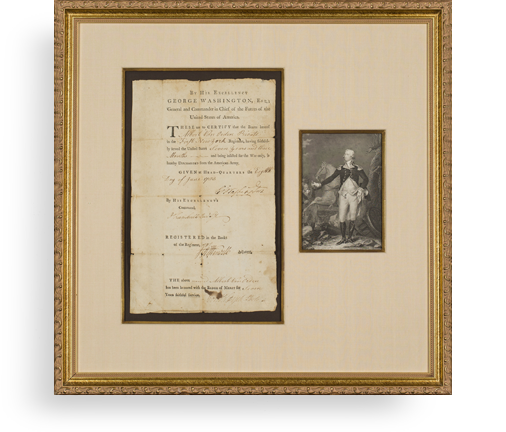
Frame, Display, Preserve
Each frame is custom constructed, using only proper museum archival materials. This includes:The finest frames, tailored to match the document you have chosen. These can period style, antiqued, gilded, wood, etc. Fabric mats, including silk and satin, as well as museum mat board with hand painted bevels. Attachment of the document to the matting to ensure its protection. This "hinging" is done according to archival standards. Protective "glass," or Tru Vue Optium Acrylic glazing, which is shatter resistant, 99% UV protective, and anti-reflective. You benefit from our decades of experience in designing and creating beautiful, compelling, and protective framed historical documents.
Learn more about our Framing Services


