







A Lost and Fascinating Fragment from the Hand of George Washington, Attesting to the Roman Influence on the Founding Fathers
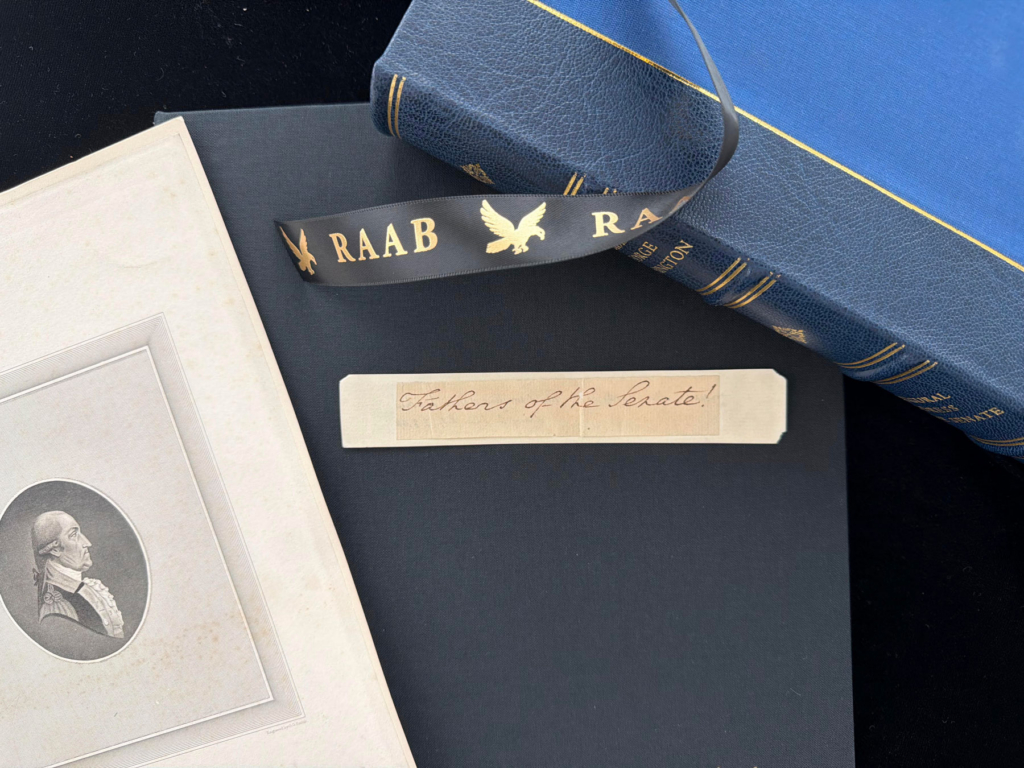
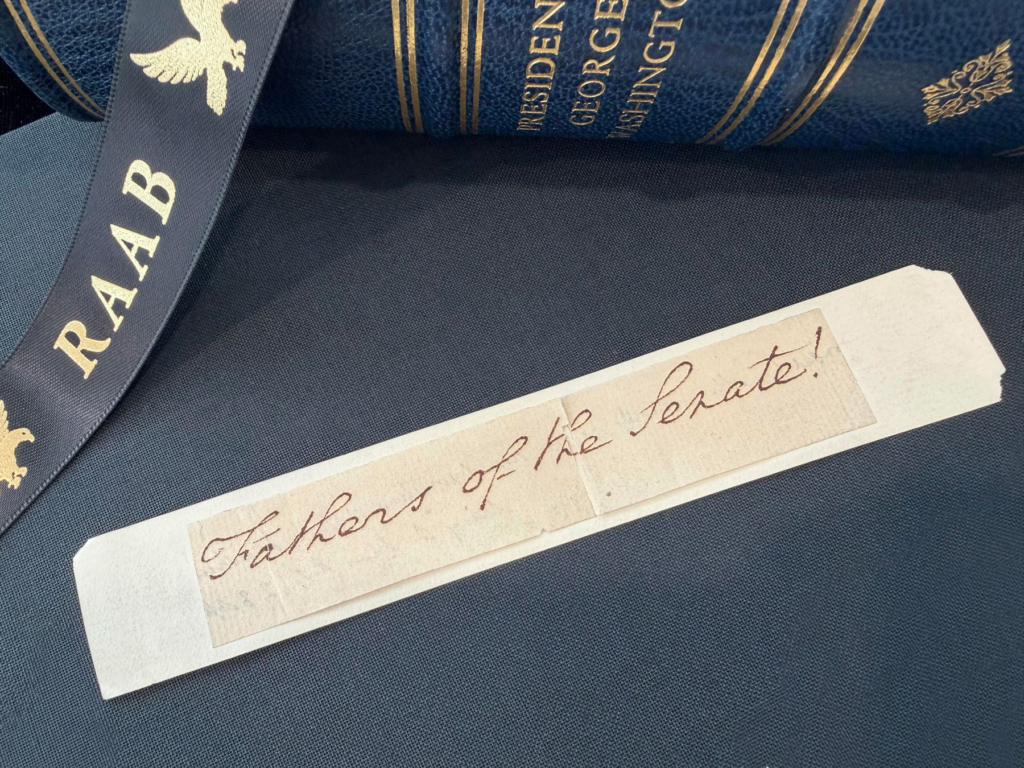


"Fathers of the Senate”, writes Washington
- Currency:
- USD
- GBP
- JPY
- EUR
- CNY
 This currency selector is for viewing only.
The Raab Collection only accepts USD payments at checkout.
Exchange rates are updated hourly. Rates may be inaccurate.

Cut up and disseminated by Washington historian Jared Sparks in the early-mid 19th century, the original manuscript has been lost
This phrase was not known to have existed – no example of this phrase appears anywhere else in his known works
The Founding Fathers consciously looked to ancient Rome as a...


Cut up and disseminated by Washington historian Jared Sparks in the early-mid 19th century, the original manuscript has been lost
This phrase was not known to have existed – no example of this phrase appears anywhere else in his known works
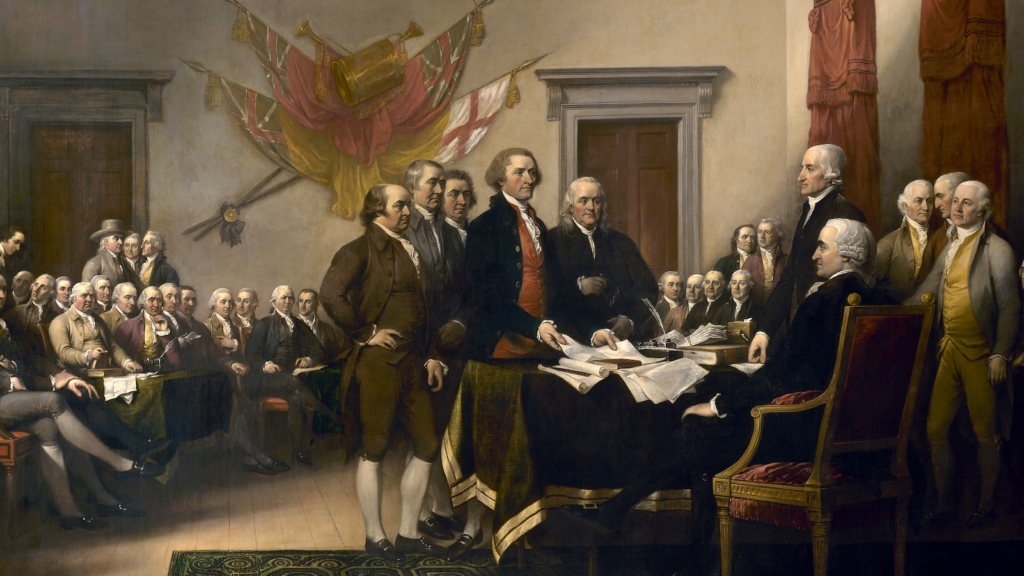
The Founding Fathers consciously looked to ancient Rome as a model when designing their new republic. Educated in the classics, George Washington, Thomas Jefferson, John Adams, and James Madison studied Roman history and political theory, seeing in the Roman Republic an example of a balanced, mixed constitution that combined popular representation with elite deliberation. They admired Roman virtues such as civic duty, public sacrifice, and resistance to tyranny, often invoking figures like Cincinnatus as models of republican leadership. Roman language and symbolism entered American political culture as well: the very term “Senate” was taken directly from Rome, and classical forms of address and imagery were common in early American speeches, architecture, and public writings. In this way, the founders did not simply borrow Roman names; they consciously adapted Roman ideals to shape a modern republican government grounded in law, virtue, and the separation of powers.
In ancient Rome, the expression “Fathers of the Senate” came from the Latin phrase patres conscripti, the formal mode of address used when speaking to the Roman Senate. The word patres (“fathers”) reflected the Senate’s origins as a council of the leading patrician family heads, who were regarded as the symbolic fathers of the Roman state. Over time, as new members were enrolled from outside the old patrician class, the phrase evolved into patres conscripti—literally “conscripted fathers”—but it retained the dignified sense that senators were the elder guardians of Rome’s political and moral order. Roman orators such as Cicero, Sallust’s speakers in the Catiline debates, and others regularly opened their speeches with this address, much as later legislatures used phrases like “Gentlemen of the Senate.” The expression thus conveyed both seniority and authority, presenting the Senate as a body of wise, paternal figures entrusted with the preservation of the Republic.
One of the most famous examples of that phrase occurs with Cicero in his First Catilinarian Oration of 63 BC, delivered in the Senate against the conspirator Catiline. Although the speech opens with the celebrated line “How long, O Catiline, will you abuse our patience?”, Cicero soon turns to address the senators directly as patres conscripti, invoking them as the paternal guardians of the Roman state. Washington would have been familiar with Cicero, as was John Adams, who held Cicero in high regard.
George Washington may well have avoided the expression “fathers of the Senate” because it carried classical and aristocratic overtones that did not sit comfortably with the political tone he wished to establish in the new republic. Although the founders admired ancient Rome, Washington was consistently careful in his public language to emphasize republican simplicity, equality, and constitutional propriety rather than hierarchy or inherited authority. Referring to senators as “fathers” might suggest a body of political patriarchs or elders with a quasi-aristocratic standing, an implication that could recall the British House of Lords or the patrician elite of Rome—precisely the kinds of associations many Americans were anxious to avoid after the Revolution. Instead, Washington’s surviving addresses use neutral, institutional forms such as “Gentlemen of the Senate,” which stressed the Senate’s role as a constitutional body rather than a class of paternal guardians. In this way, his language reflected his broader effort to shape a restrained, non-monarchical presidency and a political culture grounded in civic equality rather than titles or traditional honorifics.
However, in his speeches, including those drafted for him by others, he toyed with the language.
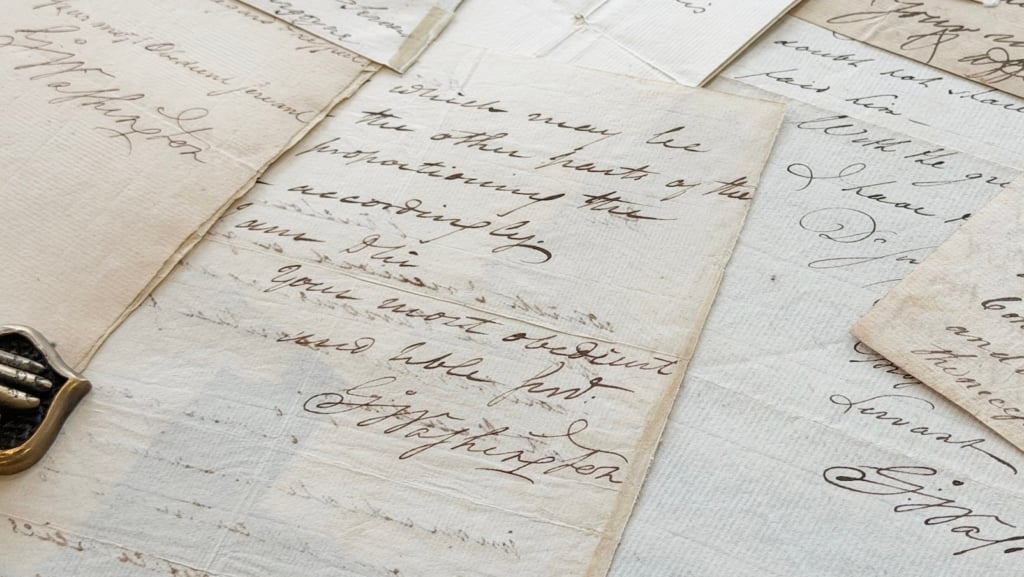
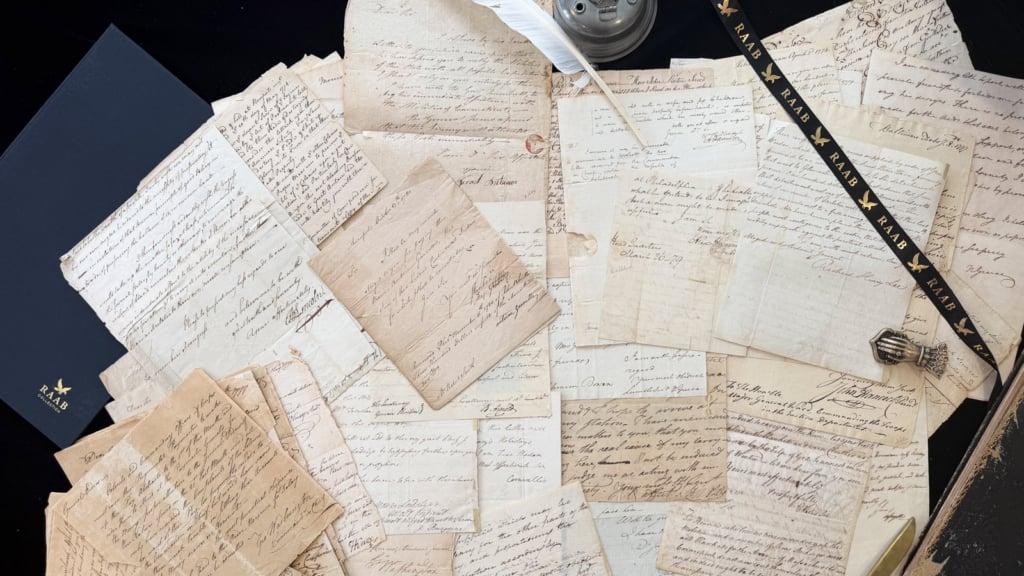
Jared Sparks was the editor of Washington’s papers, and Washington’s nephew Justice Bushrod Washington had given Sparks the originals of many of Washington’s papers to perform his task. Sparks started work on his edition of Washington’s papers in 1829. He came across for instance a draft of the first inaugural address. Besieged by autograph seekers, Sparks cut the address in snippets of varying size and distributed them to those seeking a fragment of the revered first president’s handwriting. The surviving fragments are frequently accompanied by a notation by Sparks that they are genuine examples of Washington’s writing.
Sparks did this with other letters, speeches, and papers, as well and there is no known list of what he cut or what was lost. For instance, he also distributed Washington’s presidential diary.
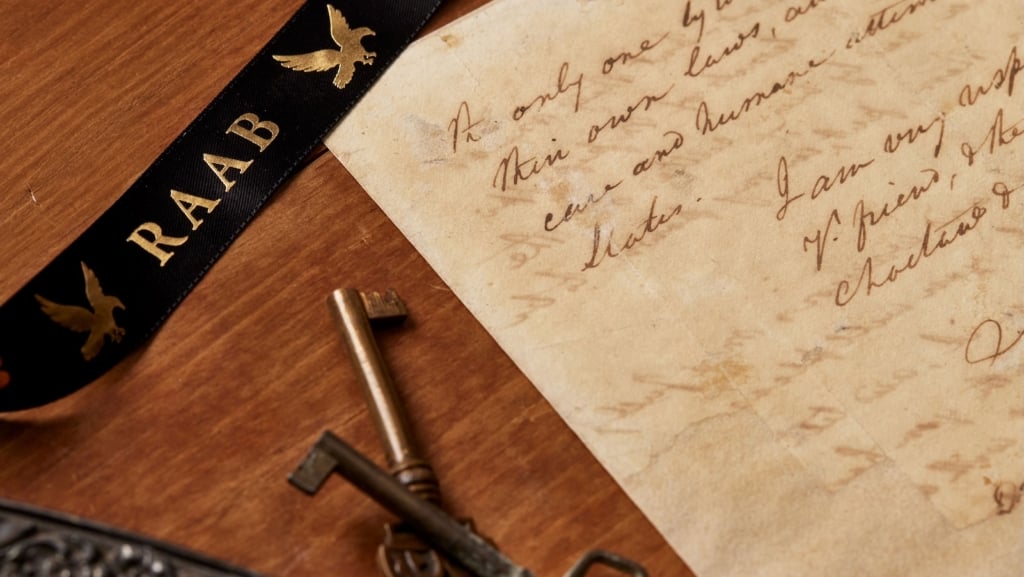
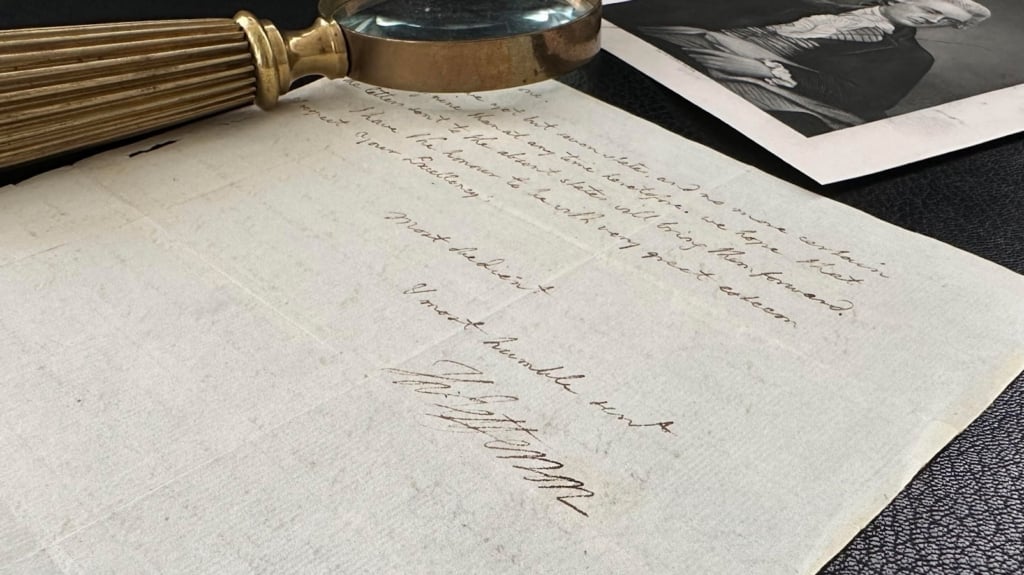
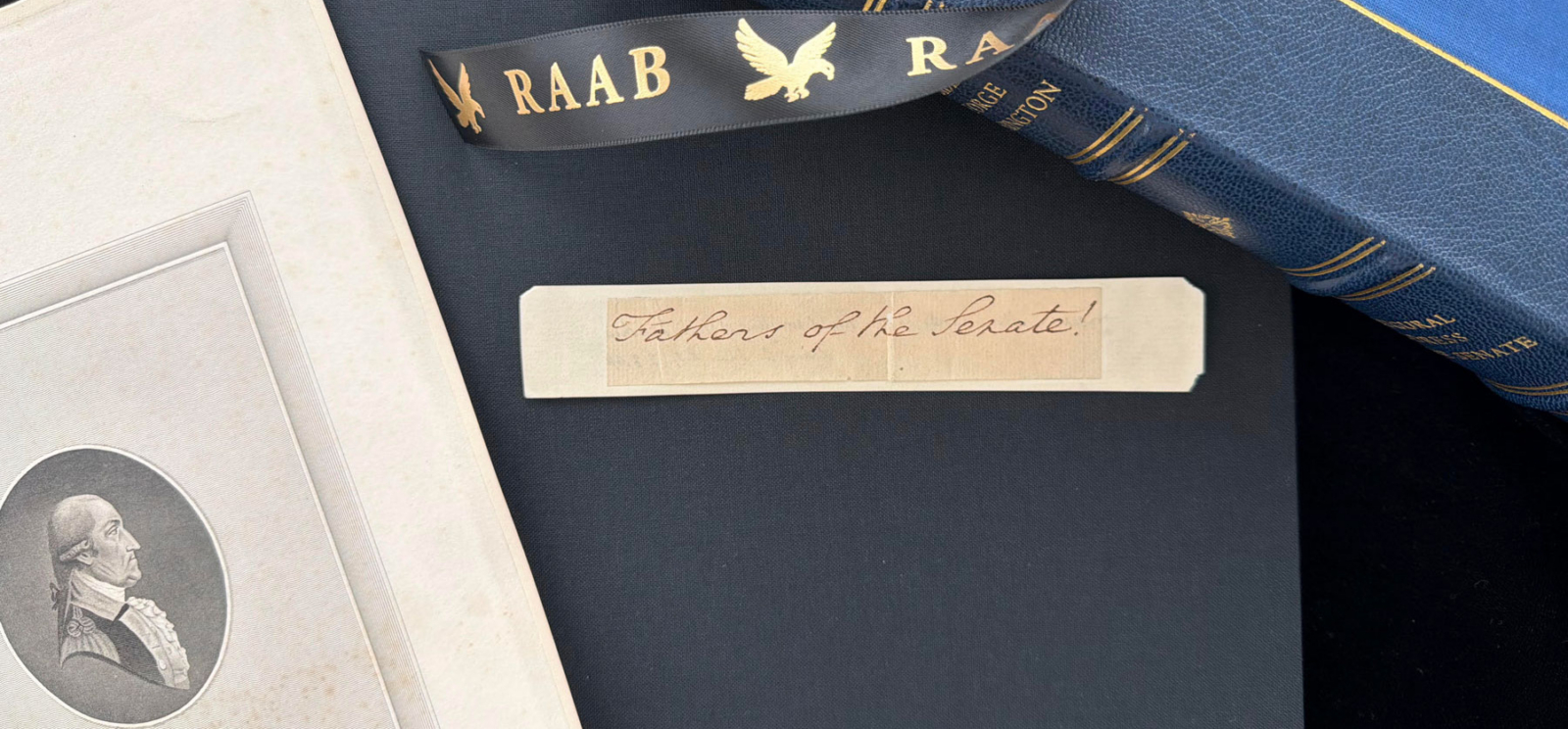
Manuscript, in the hand of Washington, no date, but almost certainly as President, “Fathers of the Senate,” with the provenance on the back in the hand of Jared Sparks’ wife, attesting that the great historian had removed this from a manuscript in his possession.
We have not been able to determine with certainty the original manuscript from which Sparks took this fragment. We can however speculate that given the nature of the piece, the types of pieces that Sparks had, and the presence of the exclamation point, that the most likely source would have been a draft of a speech, the final of which omitted the more patrician sounding “fathers” reference.
Our gratitude to Mount Vernon and the Papers of George Washington for their assistance in researching this piece.

Frame, Display, Preserve
Each frame is custom constructed, using only proper museum archival materials. This includes:The finest frames, tailored to match the document you have chosen. These can period style, antiqued, gilded, wood, etc. Fabric mats, including silk and satin, as well as museum mat board with hand painted bevels. Attachment of the document to the matting to ensure its protection. This "hinging" is done according to archival standards. Protective "glass," or Tru Vue Optium Acrylic glazing, which is shatter resistant, 99% UV protective, and anti-reflective. You benefit from our decades of experience in designing and creating beautiful, compelling, and protective framed historical documents.
Learn more about our Framing Services


