






President Theodore Roosevelt Hopes to Save His Old Regiment of the New York National Guard
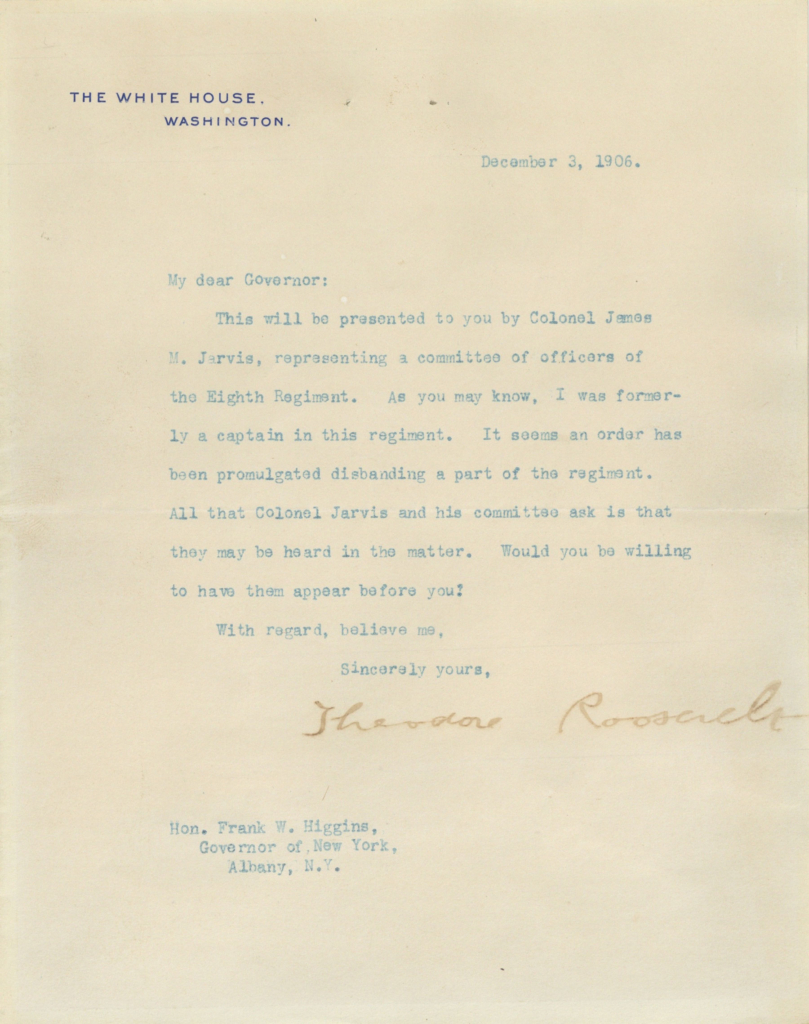

The regiment was being downsized and reorganized, and TR asks the New York governor to see its officers’ representatives who sought to rescind the order
“This will be presented to you by Colonel James M. Jarvis, representing a committee of officers of the Eighth Regiment. As you may know, I was formerly a captain in this regiment. It seems an order has been promulgated disbanding a part of the regiment. All that Colonel Jarvis and his committee...


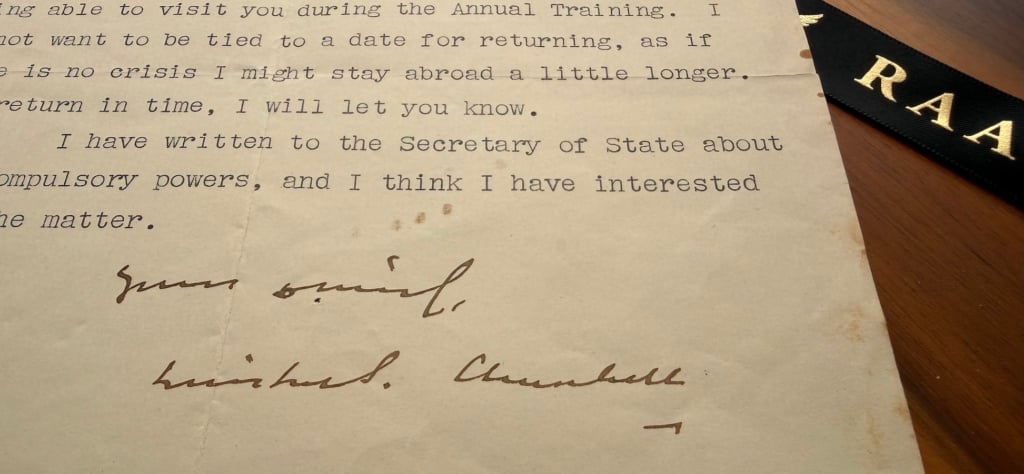
“This will be presented to you by Colonel James M. Jarvis, representing a committee of officers of the Eighth Regiment. As you may know, I was formerly a captain in this regiment. It seems an order has been promulgated disbanding a part of the regiment. All that Colonel Jarvis and his committee ask is that they may be heard in the matter.”
Theodore Roosevelt was appointed a second lieutenant in Company B, Eighth Regiment, New York National Guard in 1882. He resigned from the National Guard as a captain in 1886. Years later, he described his experience in the National Guard as “invaluable.” With a clear memory of his experiences in the National Guard and as a colonel with the United States Army in Cuba during the Spanish-American War, Roosevelt became 26th president of the United States in 1901.
On November 27, 1906, New York Governor Frank Higgins approved a recommendation of Major Gen. Roe reducing the Eighth Regiment of New York National Guard to a battalion because of factional differences among the officers. The formal order, issued then, states: “In accordance with the recommendations of the commanding officer, First Brigade, approved by the commanding officer, National Guard, A, C, and E Companies of the Eighth Regiment, infantry, are hereby directed to be disbanded and mustered out. The enlisted men of these companies who may desire to be transferred to other companies shall be given an opportunity to make application for transfer and be transferred before the date fixed for the muster out. The commanding officer, National Guard, is directed to see that the foregoing provisions are carried out on December 10, 1906, on or before which date all property shall be turned in to the proper staff officers. The Eighth Regiment, infantry, being reduced to less than eight companies by the muster-out of A C, and E companies, Dec. 10, 1906, its field and staff officers will be rendered supernumerary [superfluous] by operation of law and its non-commissioned staff officers will be discharged and mustered out on that date.”
On December 3, 1906, Roosevelt was approached by a colonel of the Eighth Regiment, saying the regiment had been significantly downsized and asking TR to intervene on behalf of those in the regiment opposed to the downsizing order. He agreed to do so.
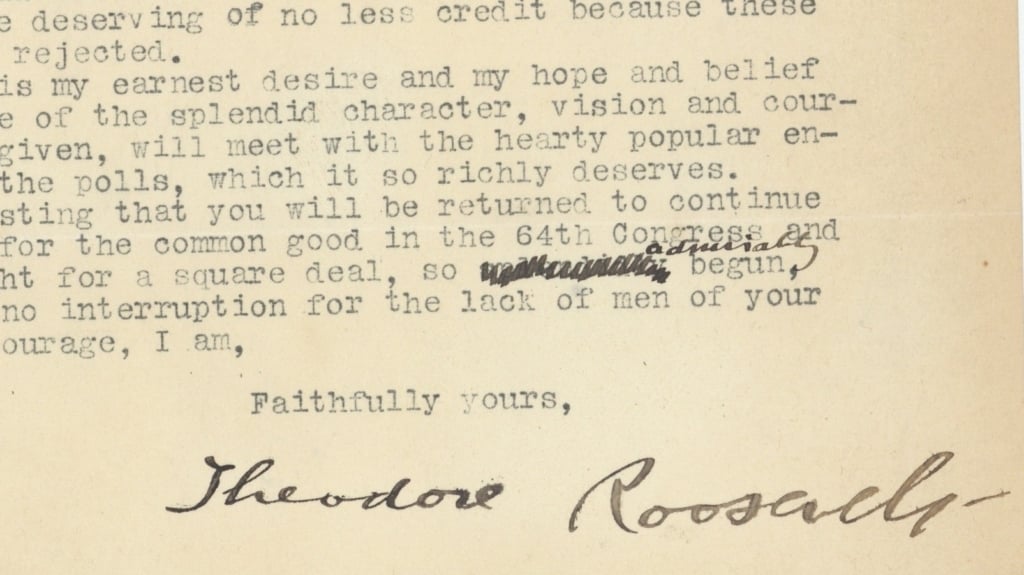
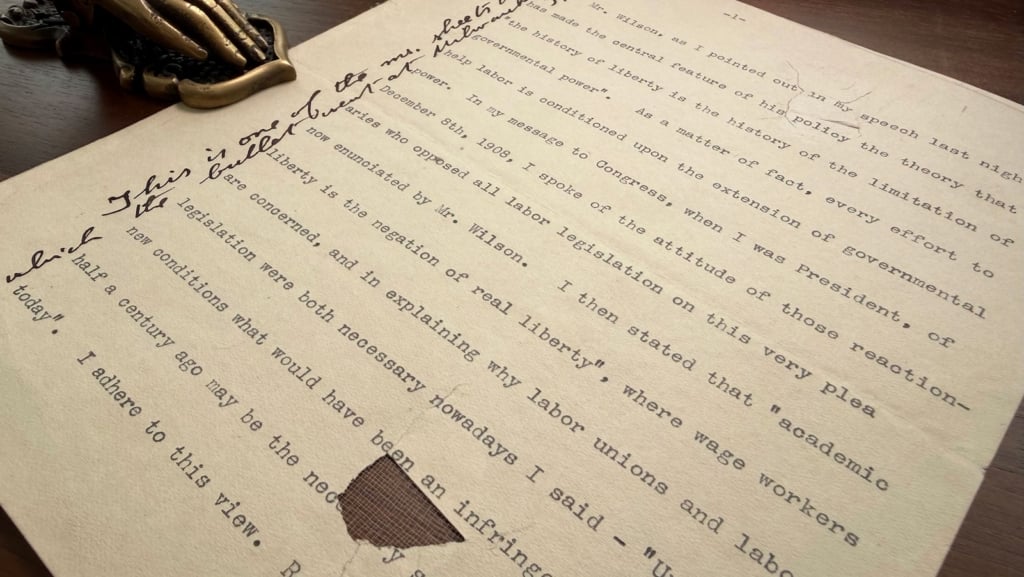
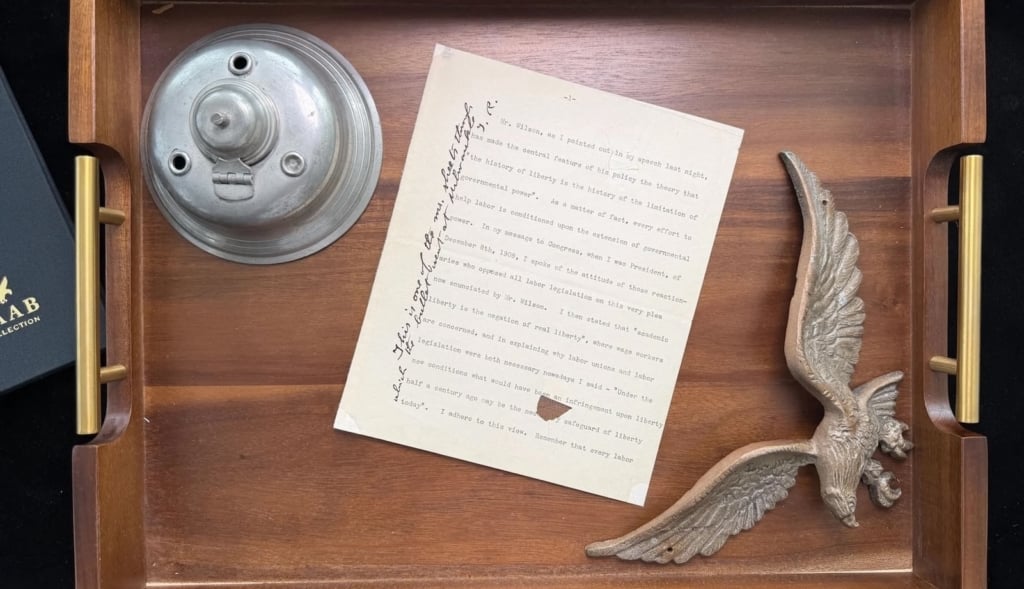
Typed letter signed, on White House letterhead, December 3, 1906. to Governor Higgins, requesting that “Higgins see an officer of the regiment, surely to ask him to reconsider the downsizing order. This will be presented to you by Colonel James M. Jarvis, representing a committee of officers of the Eighth Regiment. As you may know, I was formerly a captain in this regiment. It seems an order has been promulgated disbanding a part of the regiment. All that Colonel Jarvis and his committee ask is that they may be heard in the matter. Would you be willing to have them appear before you?”
If Higgins agreed to meet with Jarvis, it does not seem to have done any good. The 8th Regiment of the New York National Guard was reorganized and redesignated as the 8th Infantry Battalion in 1906. This was part of a larger reorganization within the New York National Guard during that period. Later, in 1908, it was reorganized again, first as the 8th Infantry Regiment and then as the 8th Artillery District, Coast Artillery Corps.

Frame, Display, Preserve
Each frame is custom constructed, using only proper museum archival materials. This includes:The finest frames, tailored to match the document you have chosen. These can period style, antiqued, gilded, wood, etc. Fabric mats, including silk and satin, as well as museum mat board with hand painted bevels. Attachment of the document to the matting to ensure its protection. This "hinging" is done according to archival standards. Protective "glass," or Tru Vue Optium Acrylic glazing, which is shatter resistant, 99% UV protective, and anti-reflective. You benefit from our decades of experience in designing and creating beautiful, compelling, and protective framed historical documents.
Learn more about our Framing Services
