





Charles Dickens, on Behalf of One of His Charitable Committees, Asks a Potential Participant for a Financial Contribution

- Currency:
- USD
- GBP
- JPY
- EUR
- CNY
 This currency selector is for viewing only.
The Raab Collection only accepts USD payments at checkout.
Exchange rates are updated hourly. Rates may be inaccurate.
Dickens actively used his celebrity and cash to aid charitable institutions. In 1843, Charles Dickens was involved in charitable and professional committees, most notably forming a committee to raise funds for orphaned children. Late in the year, he worked on “A Christmas Carol”, which was published in December 1843.
Autograph letter signed,...

Dickens actively used his celebrity and cash to aid charitable institutions. In 1843, Charles Dickens was involved in charitable and professional committees, most notably forming a committee to raise funds for orphaned children. Late in the year, he worked on “A Christmas Carol”, which was published in December 1843.
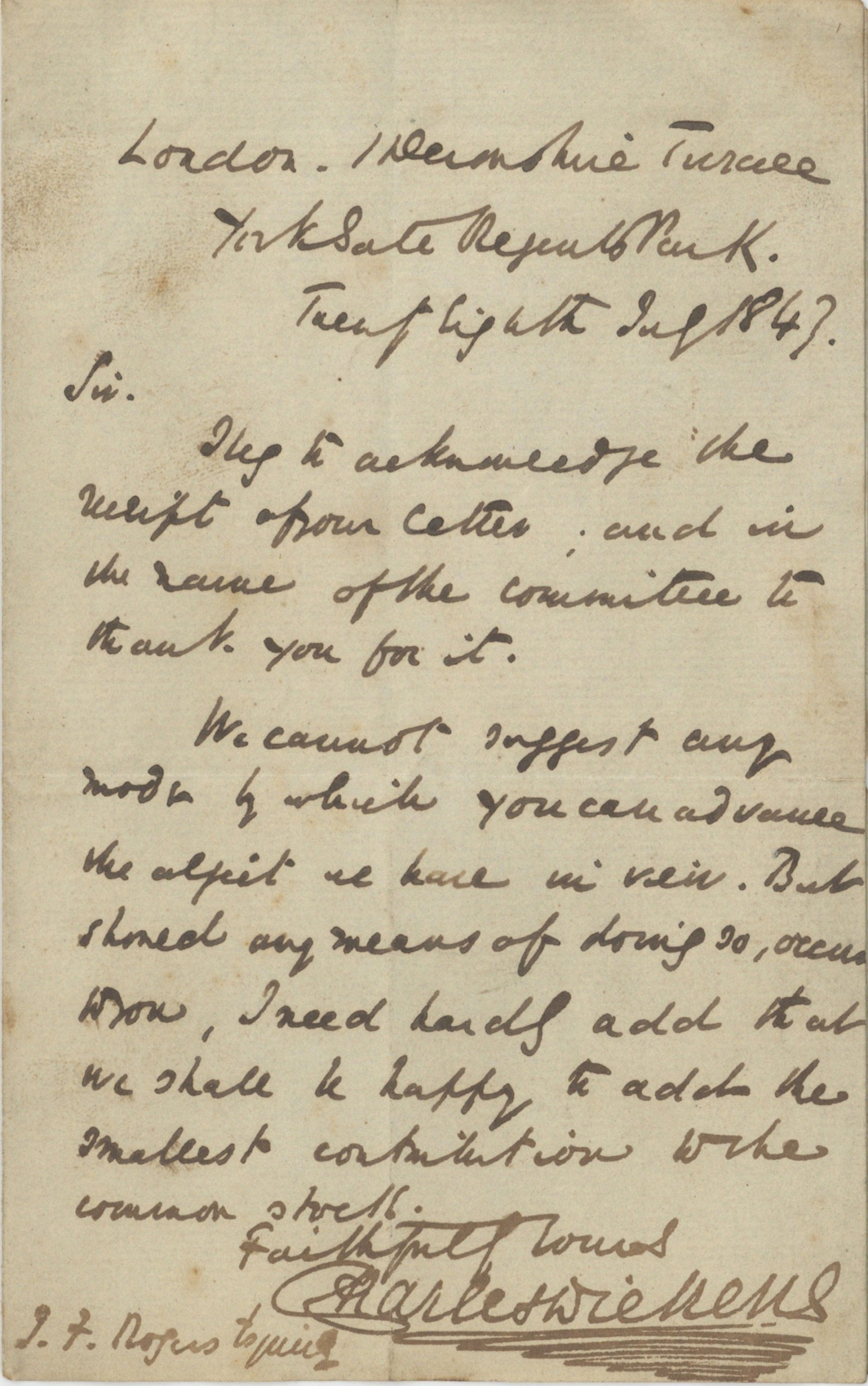
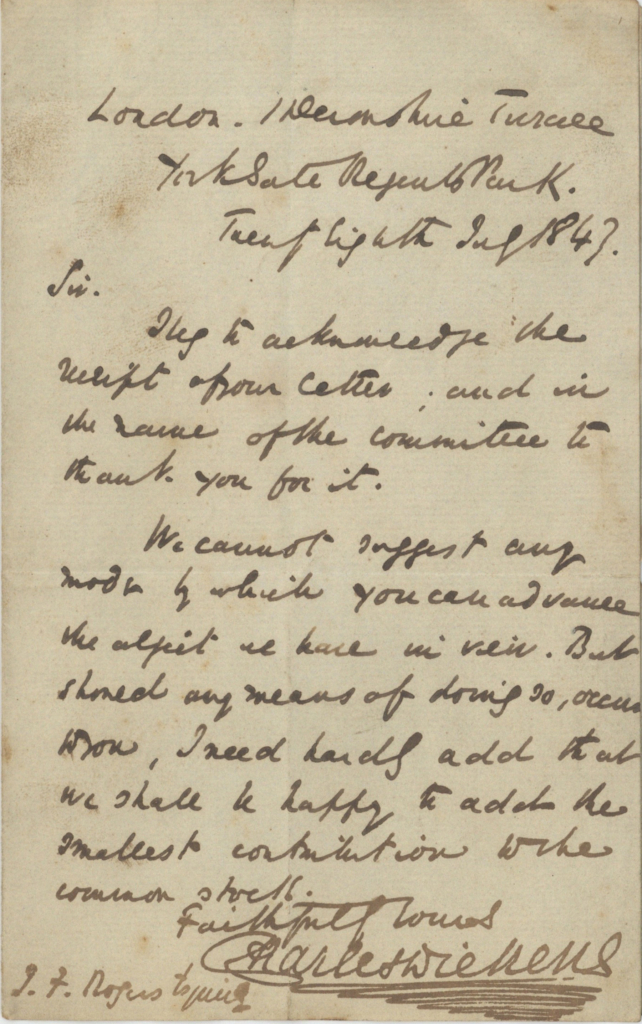
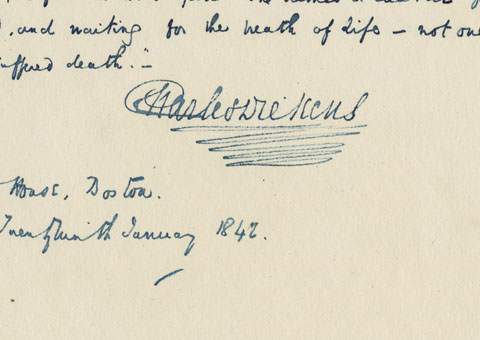
Autograph letter signed, from his home at 1 Devonshire Terrace, July 28, 1843, to J.F. Rogers, thanking him for his interest in one of the organizations with which Dickens was working.. The recipient was possibly related to Samuel Rogers, the banker-poet who Charles Dickens held in high regard, dedicating his 1841 novel The Old Curiosity Shop to him as a “faithful friend”.
“I beg to acknowledge the receipt of your letter, and in the name of the committee to thank you for it. We cannot suggest any mode by which you can advance any object we have in view. But should any means of doing so occur to you, I need hardly add that we shall be happy to add the smallest contribution to the common stock.” Clearly, Rogers’ offer to help was not in the form of a financial contribution, but that is what Dickens requests.
A fine letter relating to his charitable work, written the year he published “A Christmas Carol.”

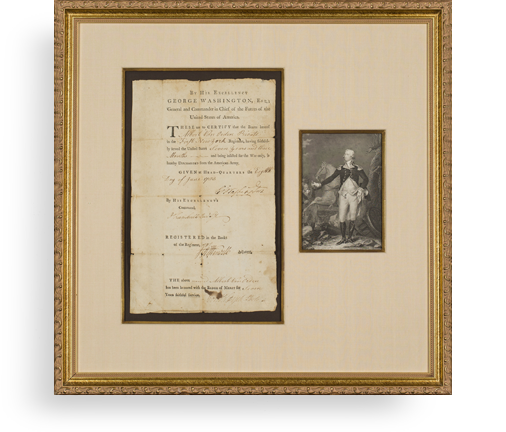
Frame, Display, Preserve
Each frame is custom constructed, using only proper museum archival materials. This includes:The finest frames, tailored to match the document you have chosen. These can period style, antiqued, gilded, wood, etc. Fabric mats, including silk and satin, as well as museum mat board with hand painted bevels. Attachment of the document to the matting to ensure its protection. This "hinging" is done according to archival standards. Protective "glass," or Tru Vue Optium Acrylic glazing, which is shatter resistant, 99% UV protective, and anti-reflective. You benefit from our decades of experience in designing and creating beautiful, compelling, and protective framed historical documents.
Learn more about our Framing Services