





Arms Inventor and Manufacturer Samuel Colt Seeks to Get Paid by the U.S. Government for Its Very First Order of Rifles from Colt’s Arms Company
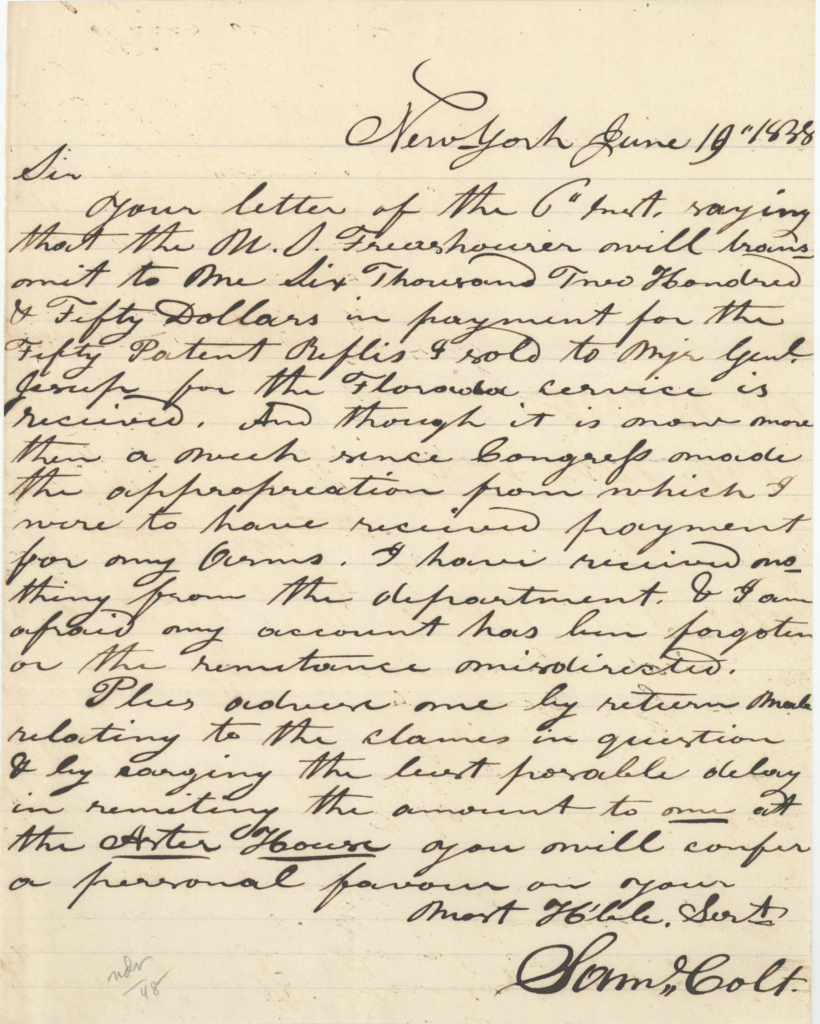

The money was due Colt for rifles bought in 1838 and being used in the Second Seminole War, but he was still waiting for payment
- Currency:
- USD
- GBP
- JPY
- EUR
- CNY
 This currency selector is for viewing only.
The Raab Collection only accepts USD payments at checkout.
Exchange rates are updated hourly. Rates may be inaccurate.
“And though it is now more than a month since Congress made the appropriation from which I were to have received payment for my Arms. I have received nothing from the department”
A very early letter of Colt, in a private collection since the 1940s
Samuel Colt was an inventor and...


“And though it is now more than a month since Congress made the appropriation from which I were to have received payment for my Arms. I have received nothing from the department”
A very early letter of Colt, in a private collection since the 1940s
Samuel Colt was an inventor and arms manufacturer, and while he is universally celebrated for his revolutionary revolvers, his company also pioneered some of the earliest repeating rifles. Colt’s production methods were groundbreaking. He was at the forefront of the Industrial Revolution, and his use of interchangeable parts helped him become one of the first to make efficient use of the assembly line manufacturing process.
In March 1836, Colt formed the Patent Arms Company and began operation in an unused silk mill along the banks of the Passaic River in Paterson, New Jersey.
The outbreak of the Second Seminole War between the U.S. government and the Seminole tribe in Florida provided Colt and his Patent Arms Manufacturing Company with their first big break. Seminole warriors had learned that soldiers were vulnerable while reloading their single-shot firearms, and they developed a tactic of drawing fire, then rushing the temporarily defenseless soldiers and wiping them out before they could fire a second volley. Colt’s revolving rifles were quite effective against this. In 1838, the U.S. Army and the 2nd U.S. Dragoons ordered and deployed Colt’s five-shot Ring Lever revolving rifle in the humid swamps of Florida. This rifle was Colt’s first successful contract with the U.S. military. The total quantity of those rifles produced in 1838-41 was approximately 500.
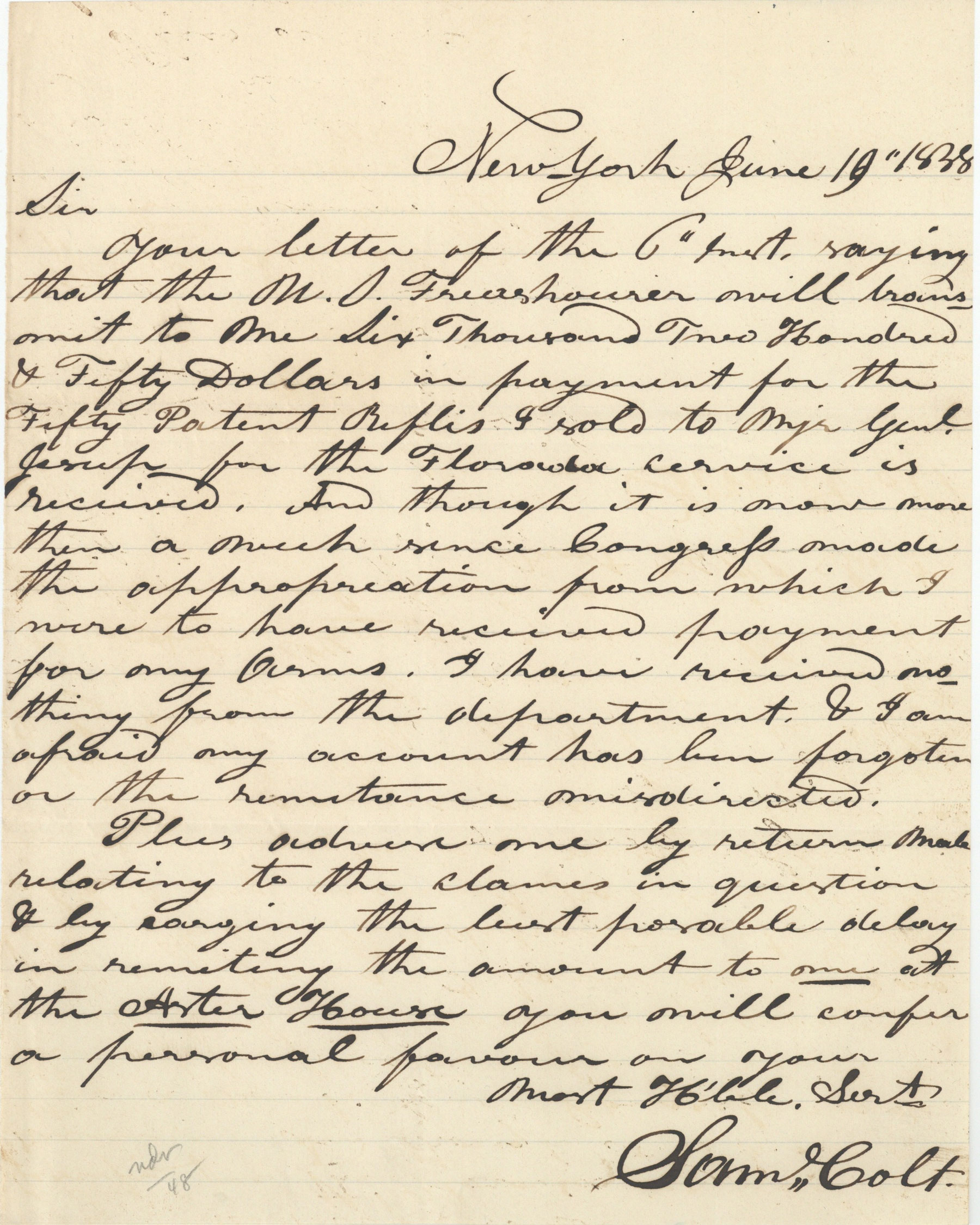
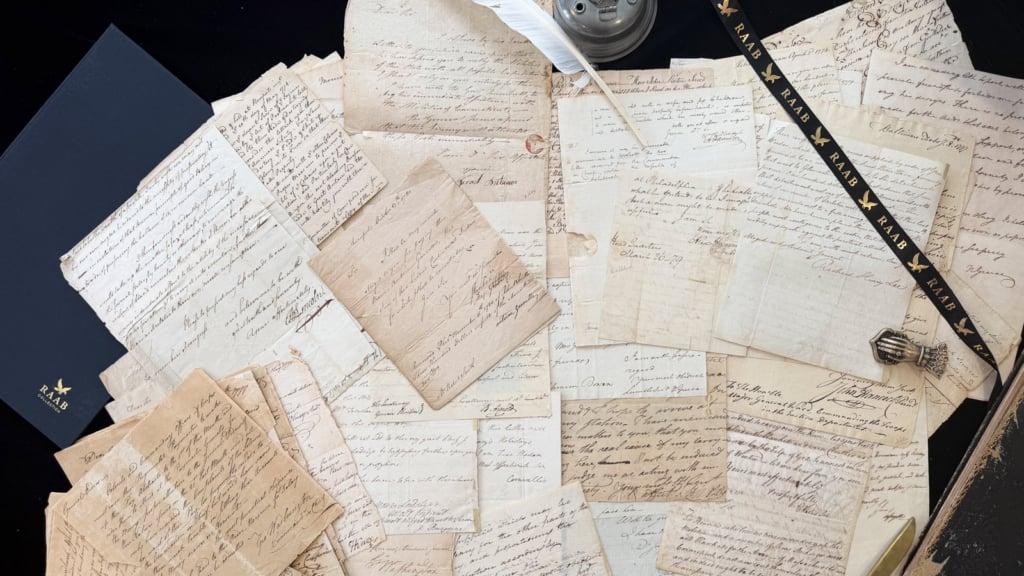
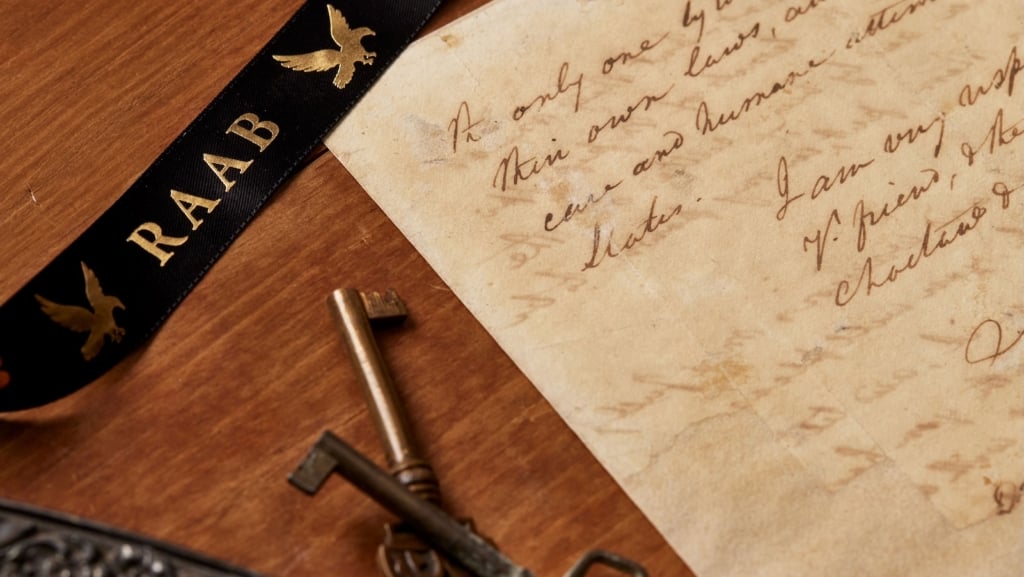
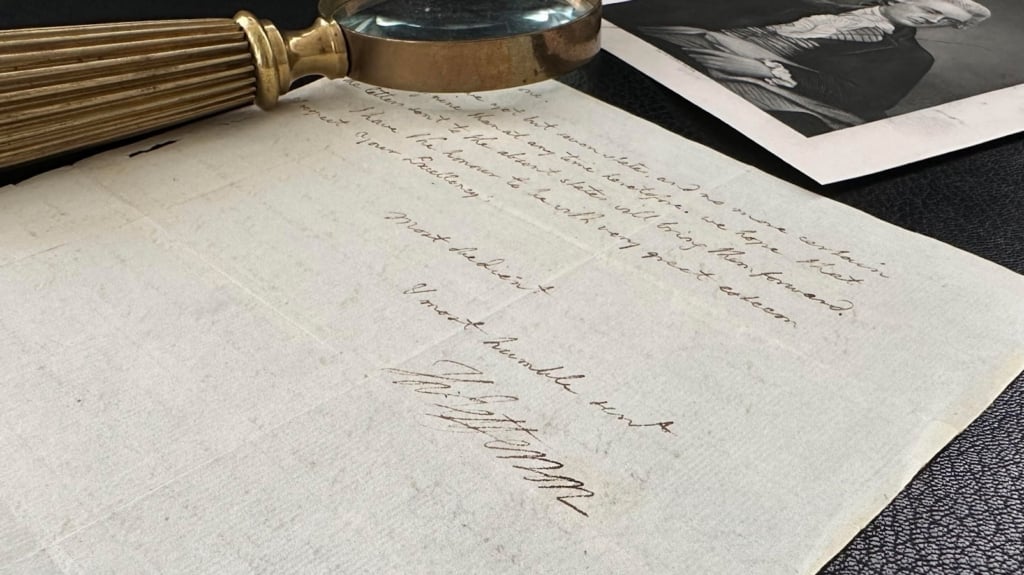
Autograph letter signed, New York, June 19, 1838, to a U.S. Government official, stating that he is still waiting to be paid for his initial firearms sale to the U.S. Government. “Sir, Your letter of the 6th inst. saying that the U.S. Treasurer will transmit to me Six Thousand Two Hundred & Fifty Dollars in payment for the Fifty Patent Rifles I sold to Mjr. Genl. Jesup for the Florida service is received. And though it is now more than a month since Congress made the appropriation from which I were to have received payment for my Arms. I have received nothing from the department & I am afraid my account has been forgotten or the remittance misdirected.
“Please advise me by return Mail relating to the claims in question & by [urging] the least possible delay in remitting the amount to me at the Astor House you will confer a personal favour on your Most H’ble. Servt., Sam. Colt.” The value of the $6250 in today’s money would be about $240,000, so this was a substantial sale for Colt.

Frame, Display, Preserve
Each frame is custom constructed, using only proper museum archival materials. This includes:The finest frames, tailored to match the document you have chosen. These can period style, antiqued, gilded, wood, etc. Fabric mats, including silk and satin, as well as museum mat board with hand painted bevels. Attachment of the document to the matting to ensure its protection. This "hinging" is done according to archival standards. Protective "glass," or Tru Vue Optium Acrylic glazing, which is shatter resistant, 99% UV protective, and anti-reflective. You benefit from our decades of experience in designing and creating beautiful, compelling, and protective framed historical documents.
Learn more about our Framing Services