






Secretary of State Thomas Jefferson’s (and George Washington’s) First Formal Neutrality Instructions on the Outbreak of the French Revolutionary Wars
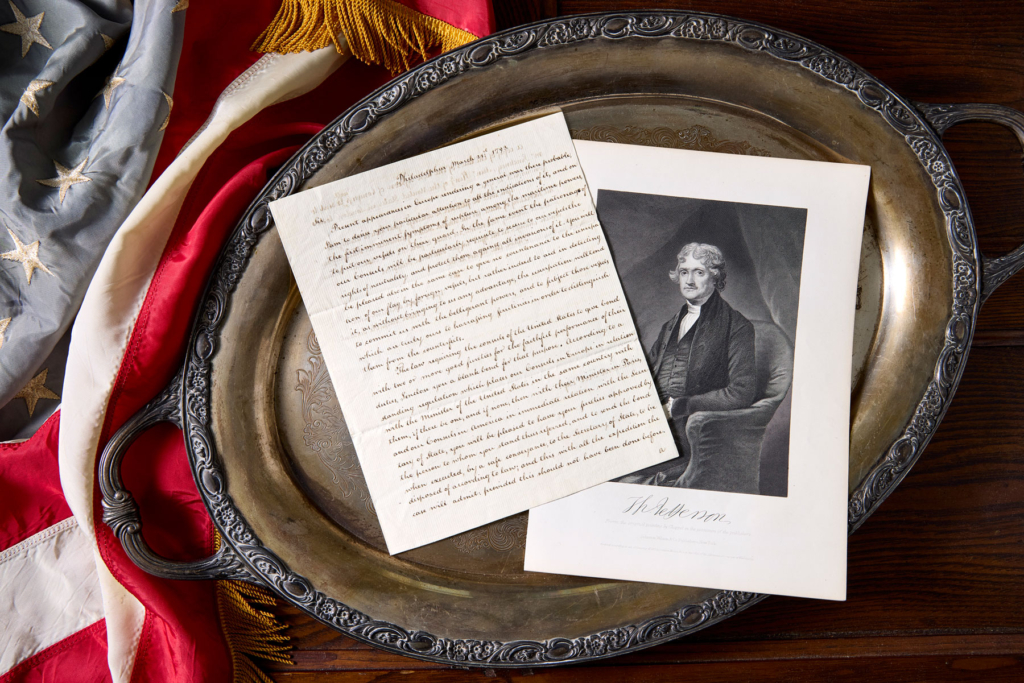
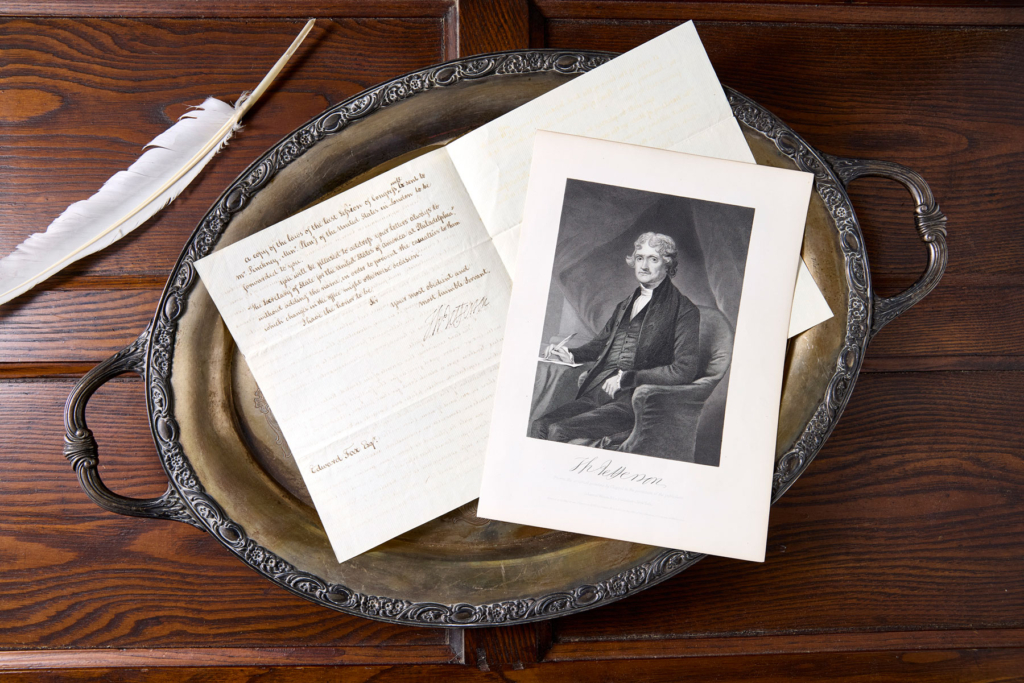


This is the first statement of neutrality, made famous in the book and musical Hamilton, issued the day Washington called a cabinet meeting to get formal opinions from Jefferson, Hamilton and his cabinet on American neutrality, the text approved by Washington himself
- Currency:
- USD
- GBP
- JPY
- EUR
- CNY
 This currency selector is for viewing only.
The Raab Collection only accepts USD payments at checkout.
Exchange rates are updated hourly. Rates may be inaccurate.

In the musical Hamilton, it is depicted in the song “Cabinet Meeting Number 2”
Having just learned of Louis XVI’s death: “Secure to our vessels the rights of neutrality, and protect them against all invasions of it”
He asks them to be vigilant to protect American shipping, trade and neutrality...


In the musical Hamilton, it is depicted in the song “Cabinet Meeting Number 2”
Having just learned of Louis XVI’s death: “Secure to our vessels the rights of neutrality, and protect them against all invasions of it”
He asks them to be vigilant to protect American shipping, trade and neutrality and to protect the American flag from being stolen and used against the new nation
The text of these instructions was approved by President Washington, including the emphasis on the need to prevent foreign vessels from illegitimately flying the American flag, and granting consuls the authority to inspect and investigate ships suspected of misrepresenting their nationality
“On the first imminent symptoms of rupture among the maritime powers…you will be pleased also…to give no countenance to the usurpation of our flag by foreign vessels, but rather indeed to aid in detecting it, as without bringing to us any advantage, the usurpation will tend to commit us with the belligerent powers, and to subject those vessels which are truly ours to harassing scrutinies in order to distinguish them from the counterfeits.”
The Consuls were instructed to send all their correspondence to Jefferson directly, an indication of the importance of the instructions
“The debate on who to support during the wars of the French Revolution (Britain? France?) divided Washington’s Cabinet. Secretary of State Jefferson in this document expresses Washington’s desire to keep the United States neutral in this ever-growing conflict,” writes historian Robert G. Parkinson
Following the French Revolution, other European monarchies became increasingly alarmed and saw France as a threat to their own internal security. France declared war on Austria as a preemptive measure on April 20, 1792, thus initiating a conflict that included the Habsburg Monarchy, which controlled Hungary as well. Prussia, having allied with Austria that February, declared war on France in June 1792. The execution of French King Louis XVI on January 21, 1793, enraged Europe’s monarchical powers and led to a rapid expansion of the anti-French alliance. In early February 1793, France declared war on Great Britain and the Dutch Republic. In March, it declared war on its former ally, Spain. Portugal, Naples, and other states also joined the anti-French coalition in that month. All the great powers on the continent of Europe, except for Russia, were then embroiled in war.
The French had also dispatched a new minister, Edmond-Charles Genêt, who was already on his way to the U.S. to rally support for France.
In March 1793, the U.S. government, Washington and Jefferson learned of the death of Louis XVI. At a cabinet meeting on March 12, Washington first raised the question of neutrality. According to Jefferson’s notes, the president asked his cabinet to consider “whether we should declare our neutrality, or await events.” This was not yet a formal decision, but it put neutrality on the table as the policy to be discussed. Jefferson wanted neutrality observed in practice but without a public proclamation; Hamilton pushed for a formal, public statement.
A second meeting took place. On March 22. Jefferson records in his “Anas”: “Mar. 22. The President called a meeting of the heads of departments, in which he proposed for consideration, 1. Whether a proclamation should issue to prevent our citizens from taking part in any hostilities on the seas, with or against any of the belligerent powers. 2. Whether we should receive the minister from the Republic of France. 3. Whether we should not issue a proclamation for the purpose of preventing interferences by our citizens in the war.” The very next day, Hamilton would begin working on his formal draft of the neutrality proclamation.
But on March 22, Washington convened his secretaries to ask three urgent questions:
1) Should a proclamation issue, warning U.S. citizens not to take part in the war?
2) Should the United States receive Genêt, the new minister from the French Republic?
3) How should the U.S. handle its 1778 alliance with France given the changed circumstances?
By doing this, Washington was making sure the executive branch had a united policy before Genêt arrived and before American private adventurers took matters into their own hands.
Perhaps at this meeting, Jefferson brought Washington the draft of a text, this very letter, and Washington approved its warnings on neutrality and the American flag.
Tensions in Europe were at a boiling point, but had not yet received news of the actual expansion of the wars, though it knew it was imminent. When the war news arrived in April, it intensified the rivalry between Alexander Hamilton’s pro-British Federalists and Thomas Jefferson’s pro-French Democratic-Republicans. To avoid being drawn into a European war, President George Washington issued his Proclamation of Neutrality on April 22, 1793. The proclamation formally declared the U.S. impartial in the conflict and warned citizens against aiding either side.
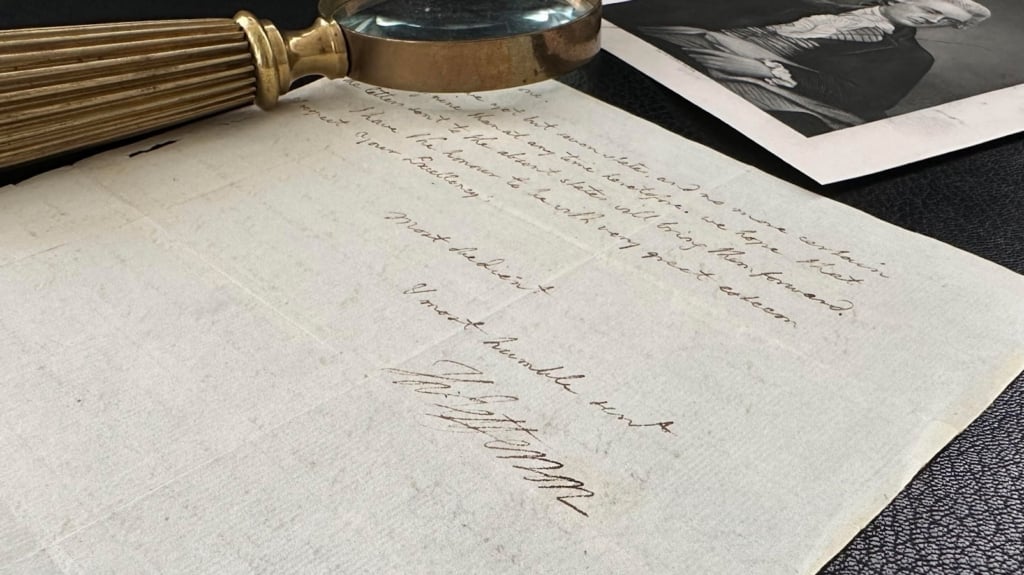
Robert Fox was a Quaker shipping agent in Falmouth, England, and father of the noted English scientist of the same name. Fox senior was nominated and confirmed as the United States Consul at that port under the mistaken name of Edward Fox in February 1793. He was sent his consular instructions by Secretary of State Thomas Jefferson in March, still under the name Edward Fox. He responded to Jefferson pointing out the mistake in name, and saying that Robert Morris, who recommended either him or his brother to serve as American consul, had informed them that the appointment was made, and there is no Edward Fox in Falmouth—and asking for another appointment in his own name. In the meantime he would act as consul if the U.S. minister in London did not object (which he did not). Fox also told Jefferson he would abide to the best of his ability by his directions, would sign the required bond, and informed him that since the outbreak of war between Britain and France, a great number of American ships had arrived in Falmouth and been permitted to leave with their cargoes to wherever their proprietors choose, though lately none has been ordered to France, but many to Spain. He hoped soon to receive his new appointment and would immediately inform the U.S. minister in London of anything important. Fox functioned as acting U.S. consul until he was renominated and reconfirmed under his own name in May 1794 and served with distinction until his death in 1818.
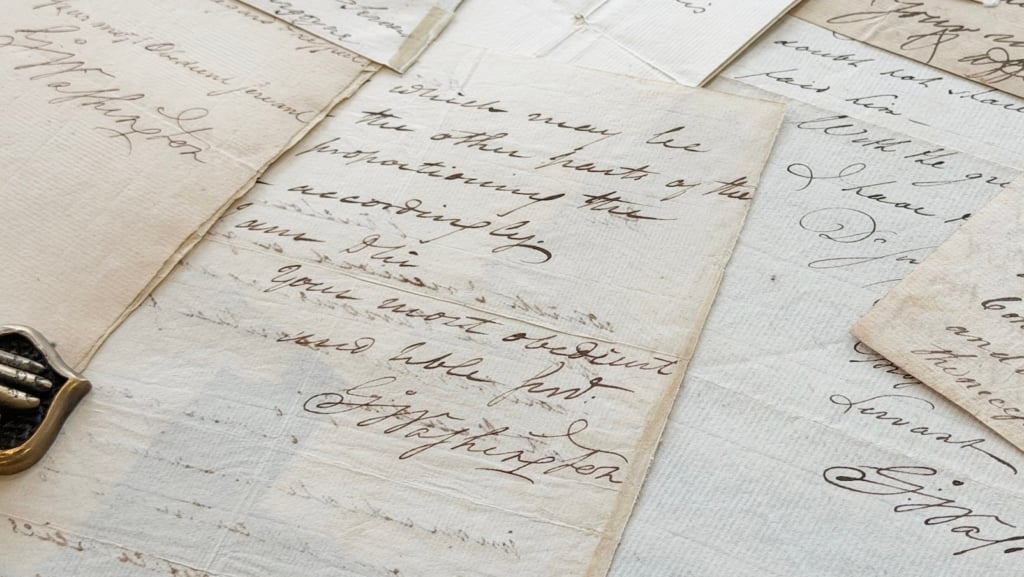
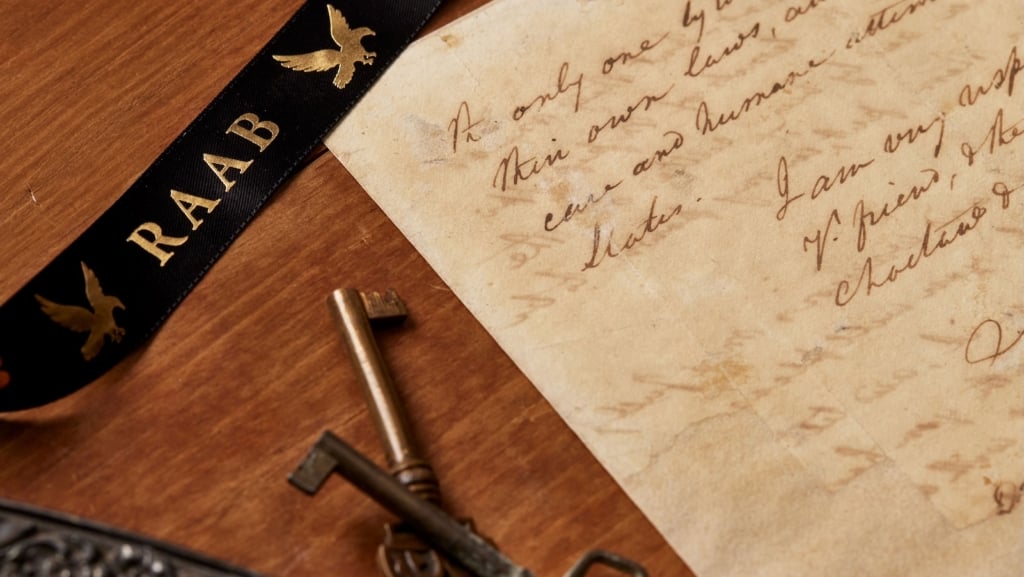
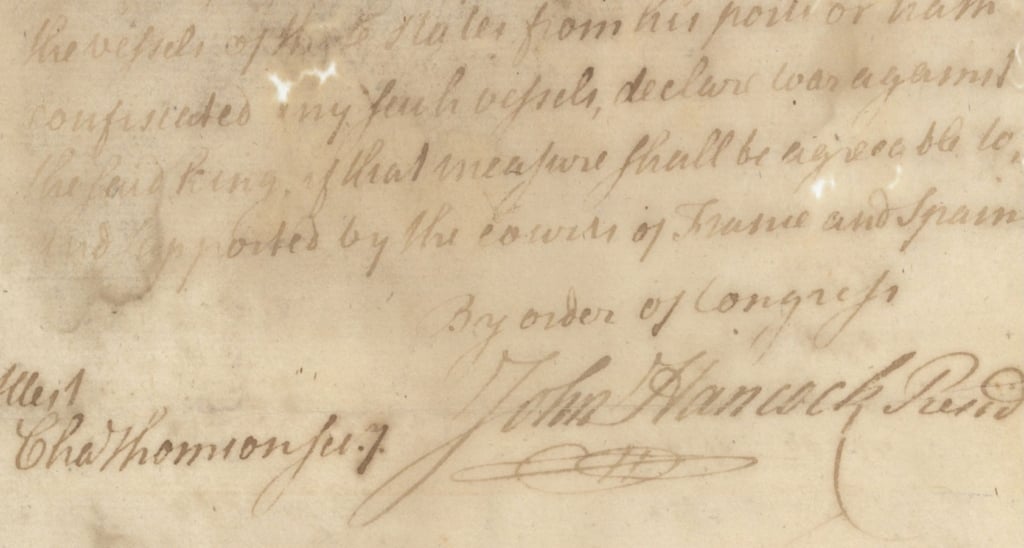
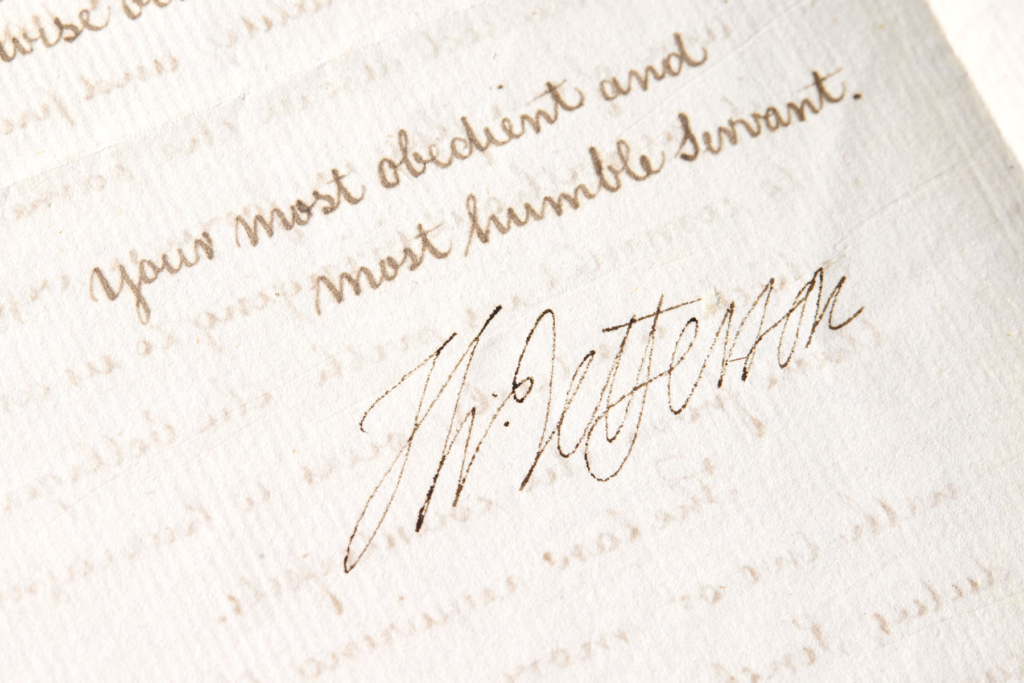
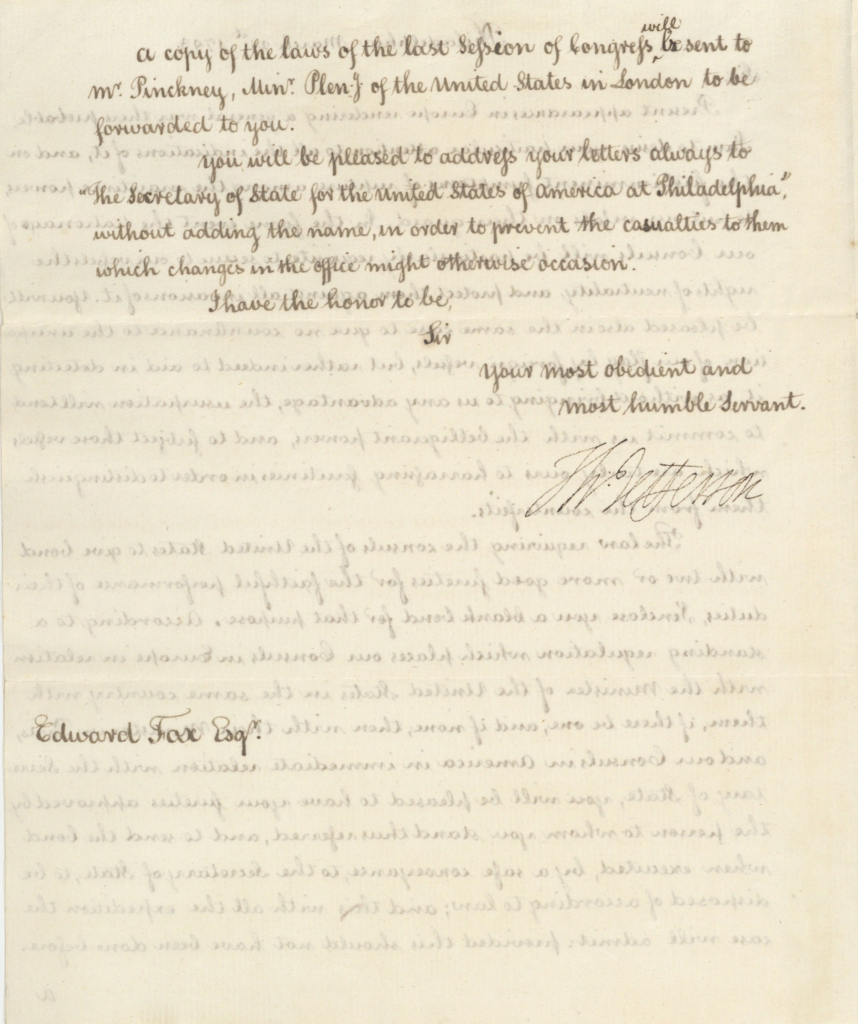
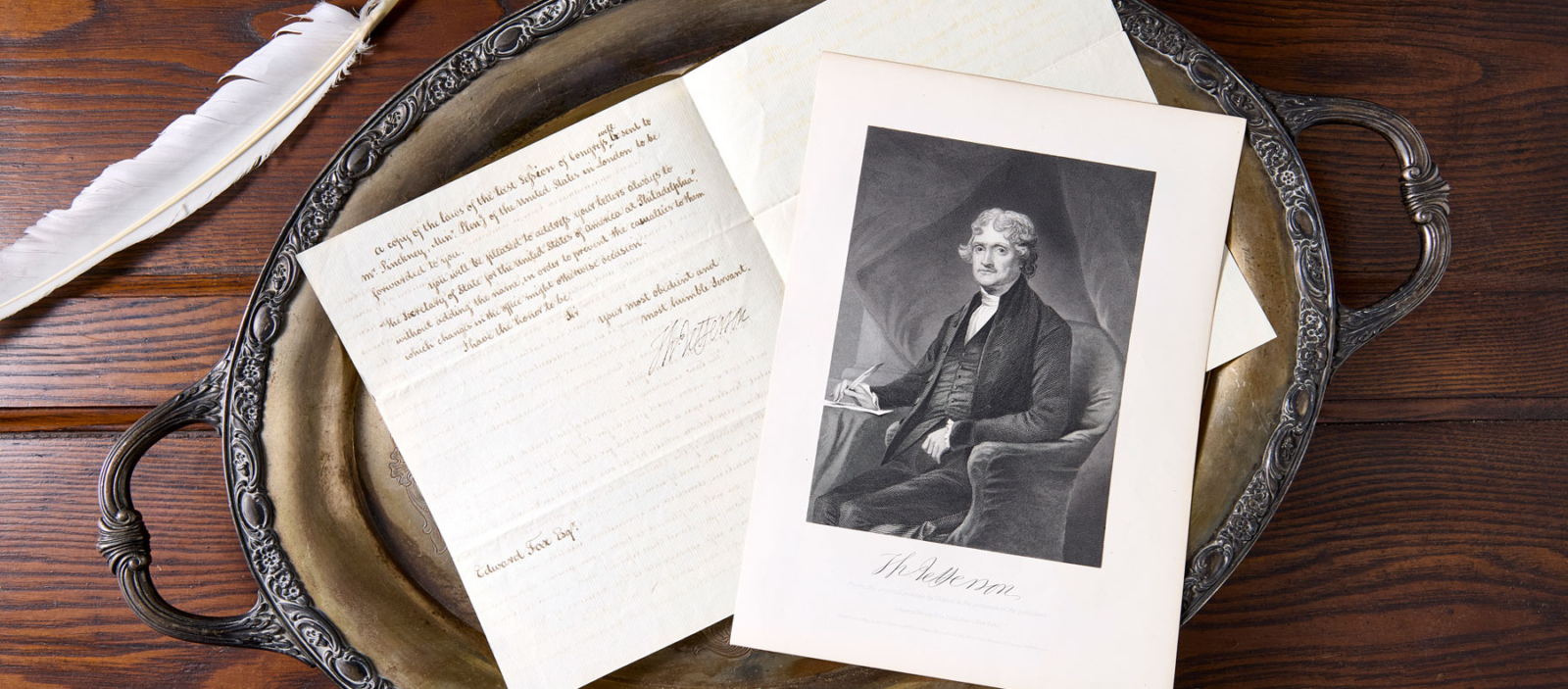
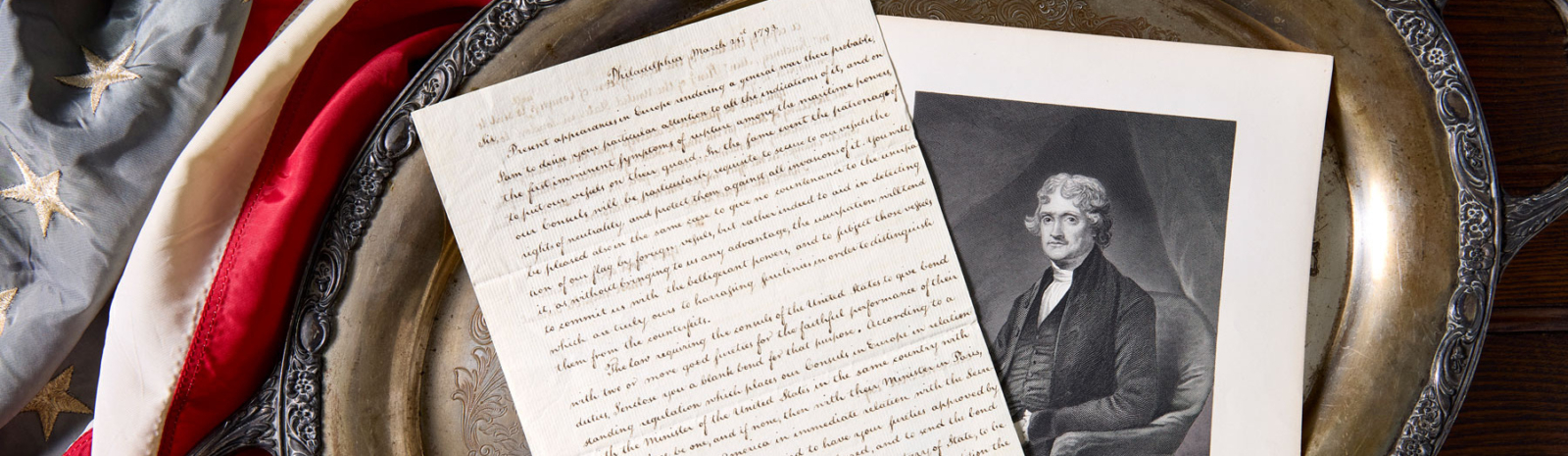
Important circular letter signed by Thomas Jefferson to U.S. Consuls, to reinforce American neutrality amid the escalating war in Europe, the content of which was approved by President Washington according to the National Archives, two pages, Philadelphia, March 21, 1793, addressed to Consul Robert W. Fox (under the mistaken name of Edward Fox), containing the U.S. government’s instructions to its consuls on the war and the responsibilities they would have in protecting American interests, trade, and neutrality. Jefferson emphasizes the need to prevent foreign vessels from illegitimately flying the American flag, and grants consuls the authority to inspect and investigate ships suspected of misrepresenting their nationality. Additionally, Jefferson mandates that consuls provide a bond with two or more guarantors to ensure their actions aligned with U.S. interests and its commitment to neutrality.
“Present appearances in Europe rendering a general war there probable, I am to desire your particular attention to all the indications of it, and on the first imminent symptoms of rupture among the maritime powers, to put our vessels on their guard. In the same event the patronage of our Consuls will be particularly requisite to secure to our vessels the rights of neutrality, and protect them against all invasions of it. You will be pleased also in the same case to give no countenance to the usurpation of our flag by foreign vessels, but rather indeed to aid in detecting it, as without bringing to us any advantage, the usurpation will tend to commit us with the belligerent powers, and to subject those vessels which are truly ours to harassing scrutinies in order to distinguish them from the counterfeits.
“The law requiring the consuls of the United States to give bond with two or more good sureties for the faithful performance of their duties, I enclose you a blank bond for that purpose. According to a standing regulation which places our Consuls in Europe in relation with the Minister of the United States in the same country with them, if there be one, and if none, then with their Minister in Paris, and our Consuls in America in immediate relation with the Secretary of State, you will be pleased to have your sureties approved by the person to whom you stand thus referred, and to send the bond when executed, by a safe conveyance, to the Secretary of State, to be disposed of according to law; and this with all the expedition the case will admit: provided this should not have been done before.
“A copy of the laws of the last Session of Congress will be sent to Mr. Pinckney, Minister Plenipotentiary of the United States in London to be forwarded to you. You will be pleased to address your letters always to ‘The Secretary of State for the United States of America at Philadelphia, without adding the name, in order to prevent the casualties to them which changes in the office might otherwise occasion…” Thomas Pinckney was the U.S. minister to Great Britain from 1792 to 1794. We can find no other example of this letter having reached the market previously.
This was a crucial letter in every way, replete with instructions to the Consuls to take actions to protect American interests. And there was real cause for concern that justified the letter. Both the French and British violated U.S. neutrality, leading in time to the Phony War with France in 1798 and the War of 1812 with Britain. We found no evidence that another copy of this important letter has come up for sale.

Frame, Display, Preserve
Each frame is custom constructed, using only proper museum archival materials. This includes:The finest frames, tailored to match the document you have chosen. These can period style, antiqued, gilded, wood, etc. Fabric mats, including silk and satin, as well as museum mat board with hand painted bevels. Attachment of the document to the matting to ensure its protection. This "hinging" is done according to archival standards. Protective "glass," or Tru Vue Optium Acrylic glazing, which is shatter resistant, 99% UV protective, and anti-reflective. You benefit from our decades of experience in designing and creating beautiful, compelling, and protective framed historical documents.
Learn more about our Framing Services


