





John Adams Marvels That the Seeds of Independence He and Benjamin Franklin Planted in the Courts of Princely France Would Grow Into the Great American Experiment and an Expanding Nation

“Thirty nine years ago, I little thought I should live to see the Heir apparent to the Princely Palaces and Gardens of Passy my Fellow Citizen in the Republican Wilderness of America laying the Foundation of more ample domains and perhaps more splendid Palaces…”
- Currency:
- USD
- GBP
- JPY
- EUR
- CNY
 This currency selector is for viewing only.
The Raab Collection only accepts USD payments at checkout.
Exchange rates are updated hourly. Rates may be inaccurate.
He praises the son of the “French Father of the American Revolution” for coming to live in the United States – “the Republican Wilderness” -, laying the foundation for his future prosperity
Adams is also happy that his move proves that the motto – if things are going well, make no...


He praises the son of the “French Father of the American Revolution” for coming to live in the United States – “the Republican Wilderness” -, laying the foundation for his future prosperity
Adams is also happy that his move proves that the motto – if things are going well, make no changes – is hardly universally applicable
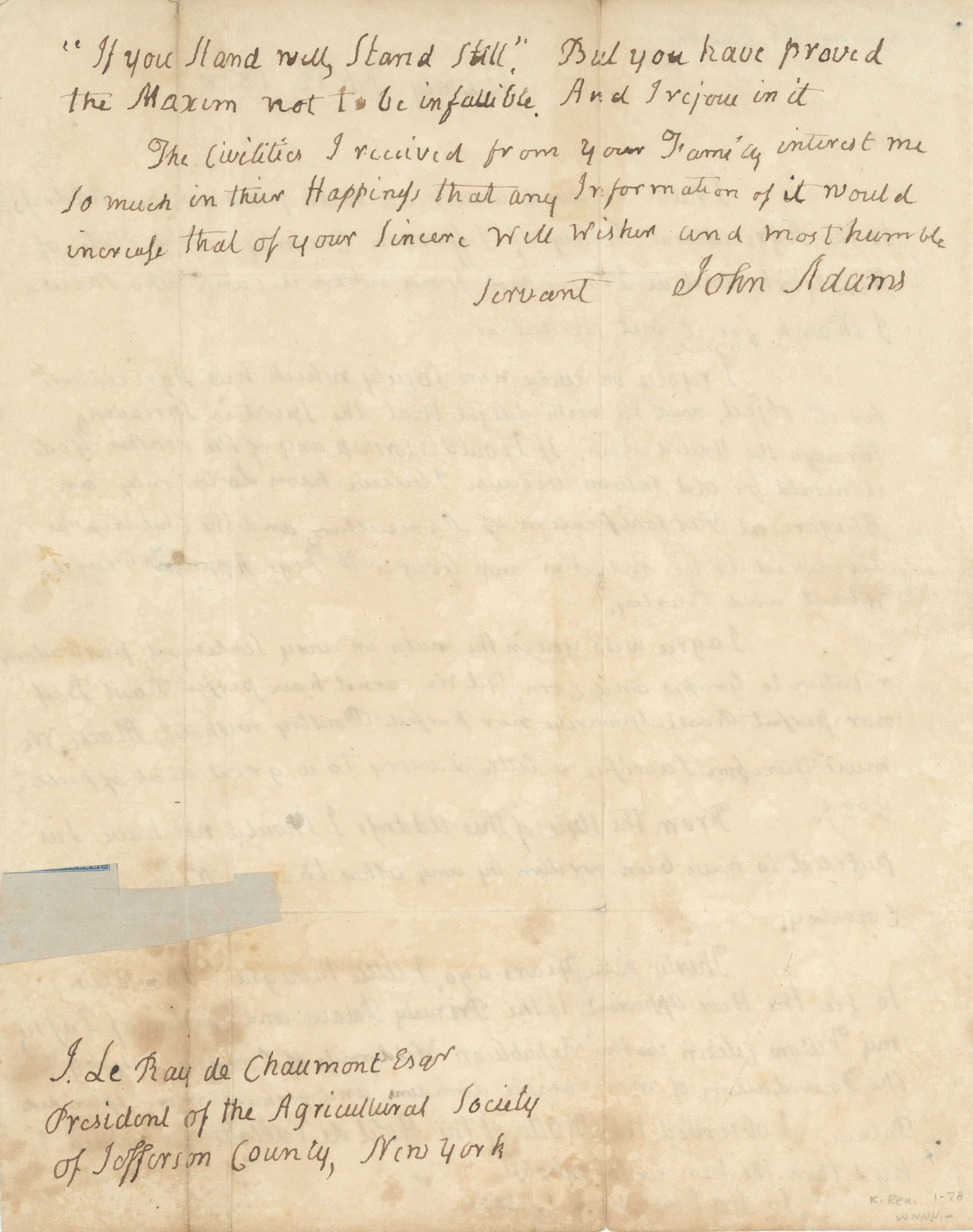
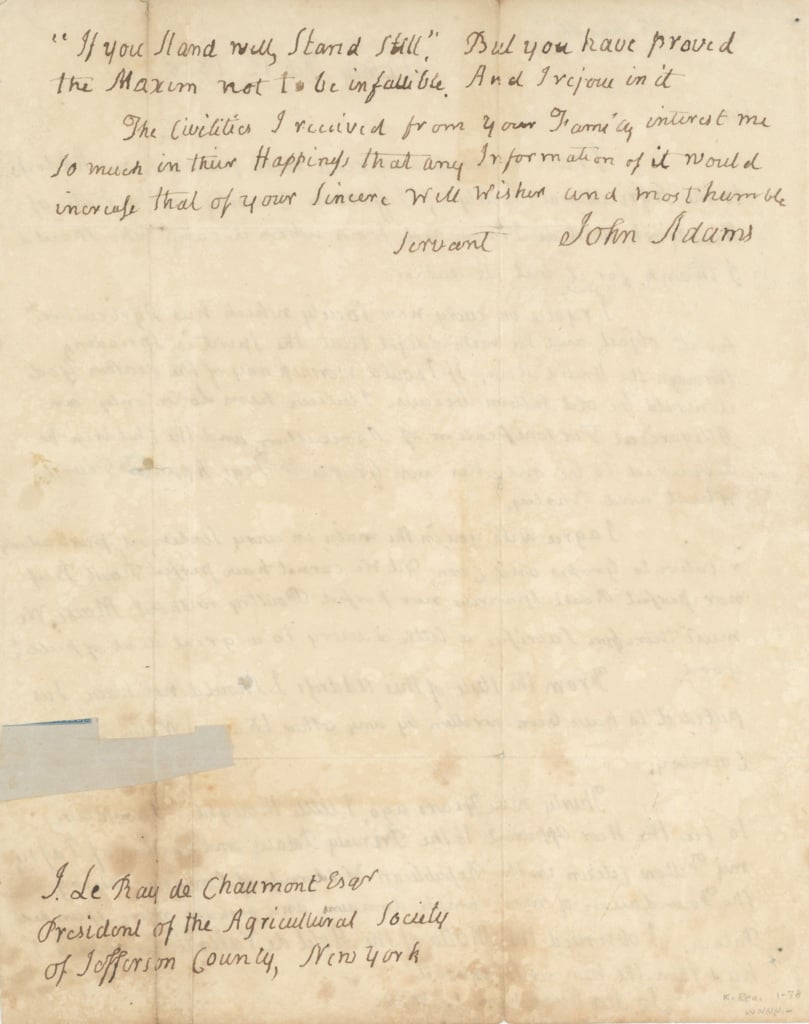
“I observed the motto of the Hotel de Valentinois which I had then the honor to inhabit ‘Se sta bene non se move’ – ‘If you stand well, stand still.’ But you have proved the Maxim not to be infallible. And I rejoice in it.”
“As they neared their eighties, John Adams and Thomas Jefferson reflected on what they had done in 1776 and what the American Revolution meant to the march of liberty throughout the world. This letter discusses the connections between the Declaration and the ‘candid world’ it addressed, seeing a common effort to spread liberty throughout the world,” writes historian Robert G. Parkinson
From the moment Benjamin Franklin arrived in Paris in December 1776, one of his closest friends and allies was Jacques-Le Ray de Chaumont, who provided Franklin (as well as John Adams in the 1780s), with housing at the Hotel de Valentinois, his home in Passy, as well as invaluable access to the King and court of France. This led to France providing essential military supplies and aid to the American cause during the Revolution. For these reasons, Jacques-Le Ray de Chaumont is known as the French Father of the American Revolution. When Adams arrived, he noted the inscription over the door at the Hotel in his diary, “a Motto over the Door Si sta bene, non se move, which I thought a good rule for my Conduct. If you stand well do not move; or stand still.” He would repeat this line in letters to John Marshall, Thomas Jefferson and his son over the years, among many others. Likewise, Thomas Jefferson and others would adopt it and use it.
James Le Ray de Chaumont was the son of Jacques Donatien Leray de Chaumont. Le Ray de Chaumont approved of his father’s aid to the U.S. He acted as a courier for letters and diplomatic correspondence when he came to the United States in 1785 to petition Congress for reimbursement for his father’s services. While on that mission he determined to make a commitment to the new American nation. He was naturalized as a United States citizen, married an American, and joined a group of exiled French nobility who were investing in the U.S. and speculating in land. The extensive landholdings he acquired in New York included two Jefferson County towns named for him, Leraysville (later Leray) and Chaumont. Le Ray de Chaumont divided his time thereafter between the United States and France, with his longest stay at his Leraysville mansion being 16 years – between 1816 and 1832. James Monroe visited him there in 1817. Le Ray de Chaumont’s friends and associates included Alexander Hamilton, Madame de Staël, Gouverneur Morris, and DeWitt Clinton, among others.
A strong supporter of internal improvements, like canals and turnpikes, from 1817–29 Le Ray de Chaumont served as the first president of the Jefferson County Agricultural Society, and he was elected president of the New York State Agricultural Society before his departure for France in 1832. When he became president of the Jefferson County Agricultural Society, Le Ray de Chaumont gave a speech – “An Address, delivered at the meeting at the Agricultural Society of Jefferson County, December 29, 1817.” This was published in New York in 1818.
The speech opened with the election of DeWitt Clinton as an honorary member; proceeded with a resolution to promote the use of domestic fabric by fining members who wore clothing made of foreign material five dollars per year; continued by outlining the purpose of the society, highlighting the benefits of the local climate and soil, calling on members “to take all proper measures for the advancement of agriculture” as the surest way to promote American freedom, happiness, morality, and wealth; then urged the “fair countrywomen of Jefferson County” to advance domestic manufactures; and concluded with the society’s articles of association and by-laws, a table of agricultural premiums to be offered for 1818, and letters from Clinton, John Adams, and others.
On February 4, 1818, Le Ray de Chaumont sent his old friend, John Adams, an early edition of his Address.
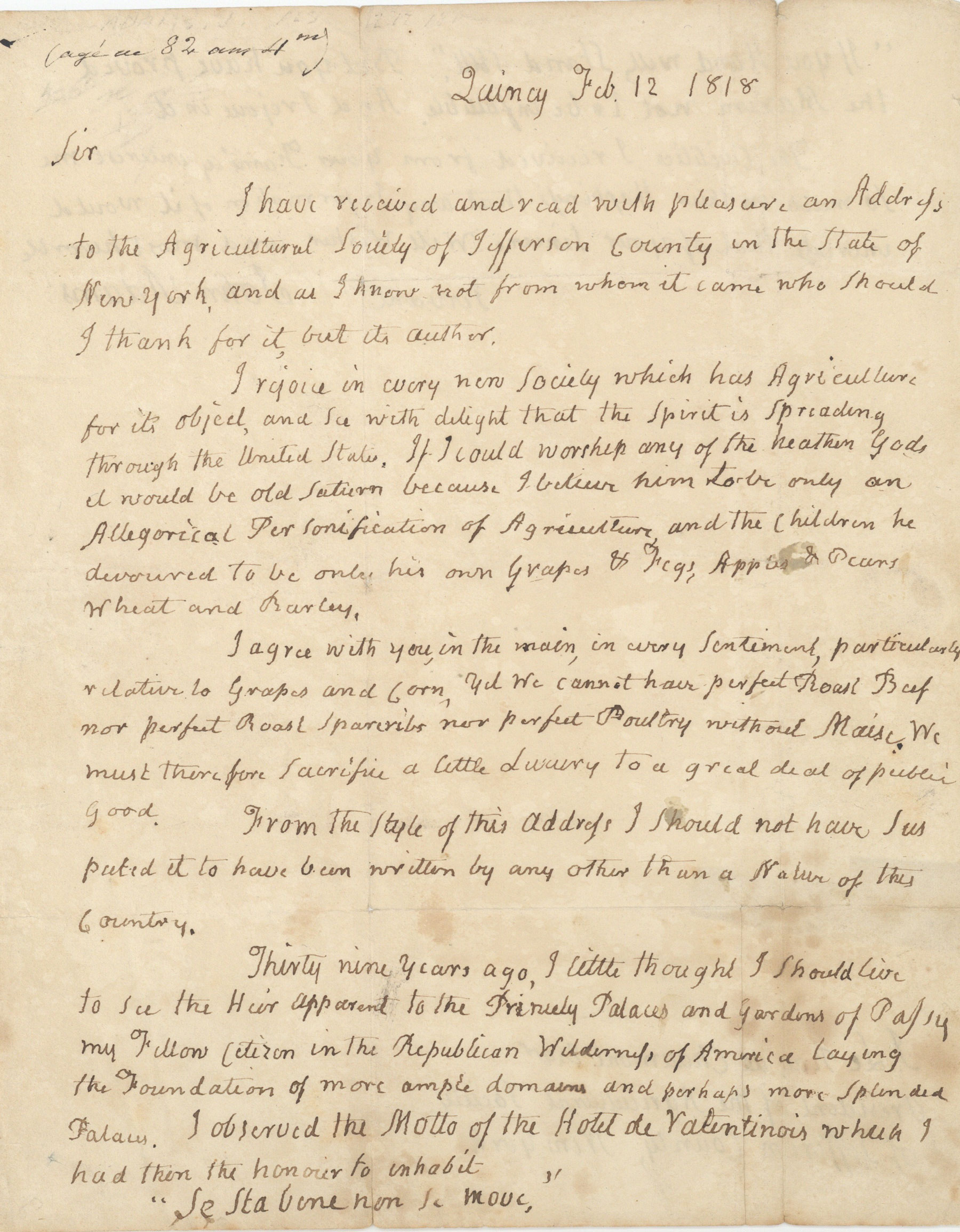
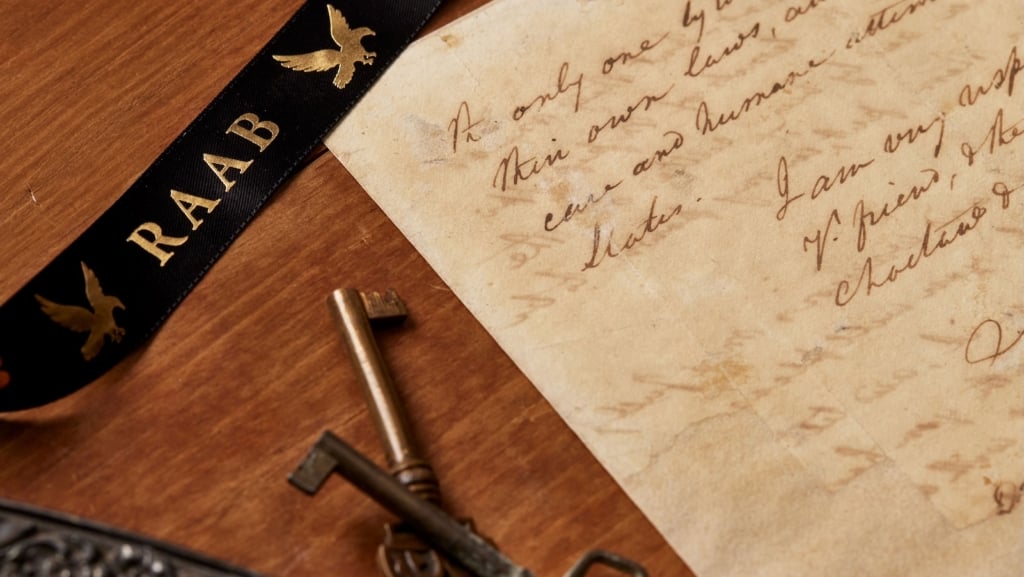
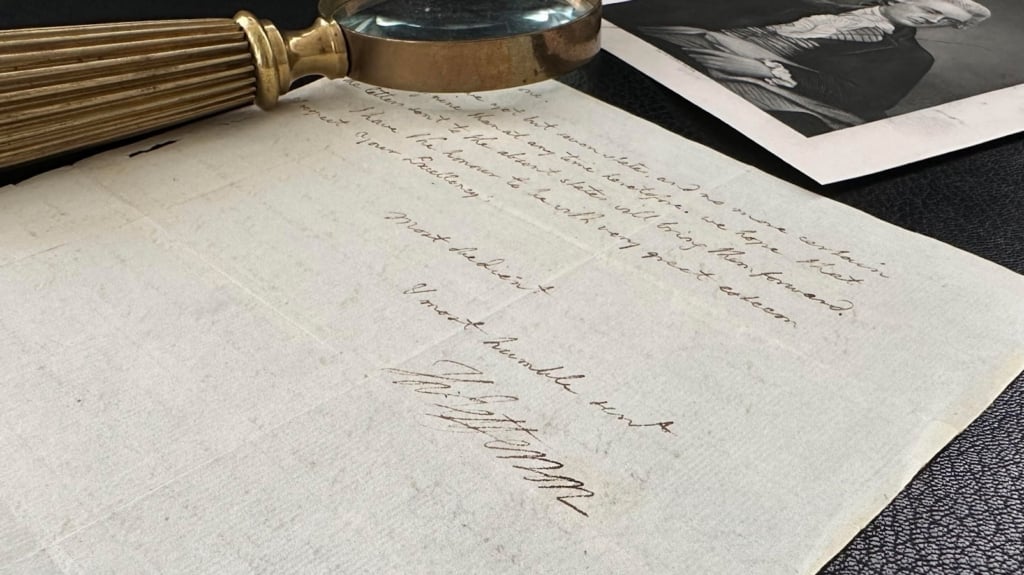
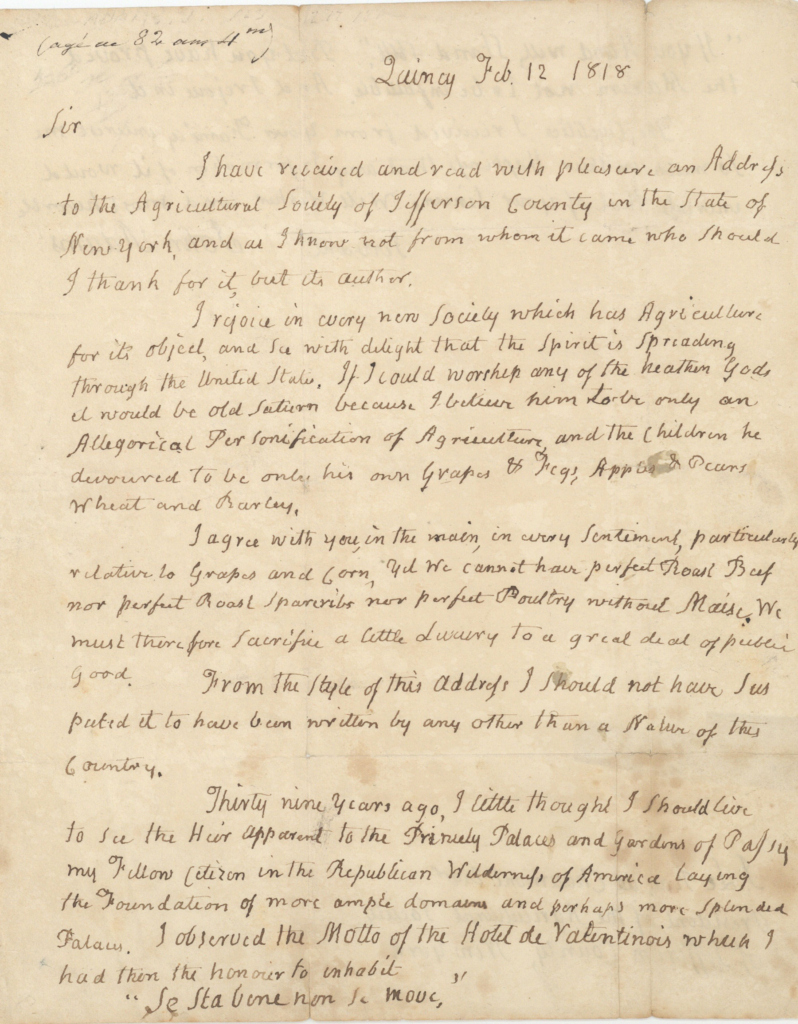
This is that very letter. Autograph Letter Signed, two pages, Quincy, February 12, 1818, to James Le Ray de Chaumont, expressing his joy that and surprise that Chaumont had chosen to live his life in the United States and lay the foundation for a prosperous future, and that contrary to the motto of the Hotel de Valentinois – if things are going well, make no changes – Chaumont was well off yet made the change to come to America. Adams also approvingly commented that Chaumont’s writings already sounded like they were written by a American, and promoted agriculture.
“I received and read with pleasure an address to the Agricultural Society of Jefferson County in the state of New York, and as I know not from whence it came, who should I thank for it but its author. I rejoice in every new society which has agriculture for its object, and see with delight that the spirit is spreading through the United States. If I could worship any of the heathen gods, it would be old Saturn because I believe him to be only an allegorical personification of agriculture, and the children he devoured to be only his own grapes & figs, apples & pears, wheat and barley.
“I agree with you, in the main, in every sentiment, particularly relative to grapes and corn. Yet we cannot have perfect roast beef, nor perfect roast spareribs, nor perfect poultry without maize. We must therefore sacrifice a little luxury to a great deal of public good. From the style of this address, I should not have suspected it to have been written by any other than a native of this country.
“Thirty nine years ago, I little thought I should live to see the Heir apparent to the Princely Palaces and Gardens of Passy my Fellow Citizen in the Republican Wilderness of America laying the Foundation of more ample domains and perhaps more splendid Palaces. I observed the motto of the Hotel de Valentinois which I had then the honor to inhabit ‘Se sta bene non se move’ – ‘If you stand well, stand still.’ But you have proved the Maxim not to be infallible. And I rejoice in it. The Civilities I received from Your Family interest me so much in their Happiness that any Information of it would increase that of your Sincere Well Wisher and most humble servant, John Adams.”
Adams’s response was greatly appreciated by Chaumont, and he incorporated it into the second edition of his Address, sending a copy to another good old friend in April, Thomas Jefferson.
A fascinating letter to the son of Benjamin Franklin’s key ally in France during the Revolution, in which Adams calls the United States “the Republican Wilderness” with opportunity for great prosperity, and praises the son for moving to America in contravention of the old motto that if things are good, don’t change them.

Frame, Display, Preserve
Each frame is custom constructed, using only proper museum archival materials. This includes:The finest frames, tailored to match the document you have chosen. These can period style, antiqued, gilded, wood, etc. Fabric mats, including silk and satin, as well as museum mat board with hand painted bevels. Attachment of the document to the matting to ensure its protection. This "hinging" is done according to archival standards. Protective "glass," or Tru Vue Optium Acrylic glazing, which is shatter resistant, 99% UV protective, and anti-reflective. You benefit from our decades of experience in designing and creating beautiful, compelling, and protective framed historical documents.
Learn more about our Framing Services