





Albert Einstein, Whose Letter to FDR Helped Usher in the Nuclear Age, Urges Scientists to Avoid Military Involvement and to Rely on Morality in Taking Courageous Positions

"If those who see the light do not stand honestly and courageously for the good, the world will get deeper and deeper into the morass."
- Currency:
- USD
- GBP
- JPY
- EUR
- CNY
 This currency selector is for viewing only.
The Raab Collection only accepts USD payments at checkout.
Exchange rates are updated hourly. Rates may be inaccurate.

On scientists and military work: “The majority of really good scientists in this country have withdrawn from military work…The young ones who cannot lean upon a standing of their own have generally given in to the almost irresistible pressure. One cannot expect it to be any different…”
Einstein and other scientists...


On scientists and military work: “The majority of really good scientists in this country have withdrawn from military work…The young ones who cannot lean upon a standing of their own have generally given in to the almost irresistible pressure. One cannot expect it to be any different…”
Einstein and other scientists faced the harsh reality of the product of their work after the war and the bombing of Japan; Here Einstein in a way grapples with his own role
On the timeless nature of fighting for what you believe: “The truth appears foolish to the insane….Lost people are content to find themselves in agreement with the masses.”
Although Albert Einstein’s participation in the production of the atomic bomb was limited, the public perceived his role as crucial, and he was in fact the face of the project to many. The reasons were that although he did not work on the Manhattan Project, the US effort to build the bomb, his famous equation, E=mc2, provided the theoretical basis for understanding the immense energy released in nuclear fission, which is the process that powers the bomb. And his 1939 letter to President Roosevelt, co-signed by Leo Szilárd, alerted the US government to the potential of nuclear weapons and prompted the start of research that eventually led to the Manhattan Project. Feeding the public perceptions of his responsibility were publications like The Smyth Report, a history of the development of the bomb published the day after the bombing of Nagasaki, which ascribed great historical weight to Einstein’s 1939 letter to President Franklin D. Roosevelt in catalyzing the development of the bomb. In 1946, Time magazine published the famous cover featuring Einstein’s portrait backgrounded by an enormous mushroom cloud emblazoned with “E=mc2,” and the accompanying article by Whittaker Chambers referred to him as “the father of the bomb,” a title which resonated in the popular imagination. A March 1947 Newsweek cover featured Einstein, above the headline “Godfather of the Atomic Bomb”. Einstein was hounded by the association throughout the rest of his life, culminating in his November 1954 admission to Linus Pauling, “I made one great mistake in my life when I signed the letter to President Roosevelt recommending that atom bombs be made….”
Albert Einstein was known for his dedication to morality, which he said was “of the highest importance”, as well as beliefs that stemmed from morality, like pacifism, anti-militarism, and loyalty to the facts taught by science. He viewed morality as fundamentally human, and believed that ethical behavior should form a basis for both individual well-being and the collective good of humanity. Thus for Einstein, the pursuit of morality was the most vital human endeavor, essential for bringing beauty and dignity to life and ensuring the survival and thriving of the human race. He shared these beliefs with Dr. Herbert Jehle.
Dr. Jehle was a pioneering theoretical physicist whose work spanned quantum field theory, biophysics, and astrophysics. He was a student and friend of Einstein in the 1920s in Germany; and a disciple and friend of Dietrich Bonhoeffer. At Princeton in 1947 he provided Richard Feynman with the spark which would lead to his path integral formulation. Einstein had left for the United States in 1933, the same year that Jehle received his doctorate from the Technische Hochschule Berlin. In the same year, Dietrich Bonhoeffer, Jehle’s friend and mentor stepped down from his professorship at Berlin, in protest of the Nazi ascent to power. In 1940, Jehle refused to assist in the German armament and atomic project, and was interned in concentration camps. Escaping in 1941 with the help of Quaker and Christian relief organizations, Jehle made his way to the United States, where he took a position at Harvard University, until leaving for Princeton in 1947. At Princeton, Jehle’s pacifist beliefs coincided with Einstein’s own and they reconnected, bonding over shared views of social responsibility and ethics in science, and playing music together regularly, Einstein on violin, Jehle on the piano.
Jehle was also the editor of the Society for Social Responsibility in Science newsletter, of which Einstein was a member. Jehle additionally submitted articles to other science publications. During the 1950s, Jehle collaborated with Linus Pauling on DNA research, as well as advocating with Pauling for peace. In the early 1960s, Jehle worked as a consultant to Marshall Nirenberg at the NIH on DNA-coding, for which Nirenberg also won a Nobel Prize for in 1968.
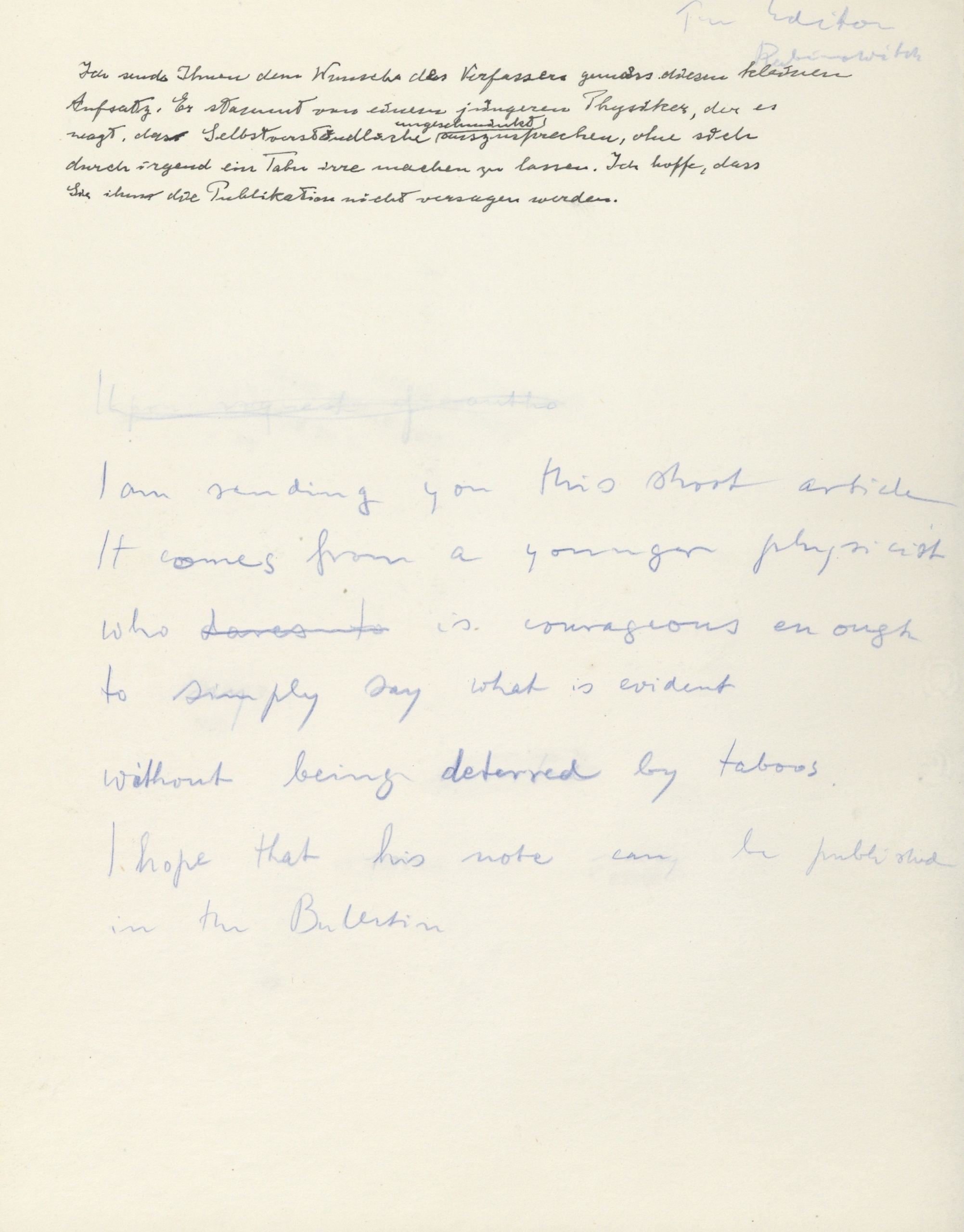
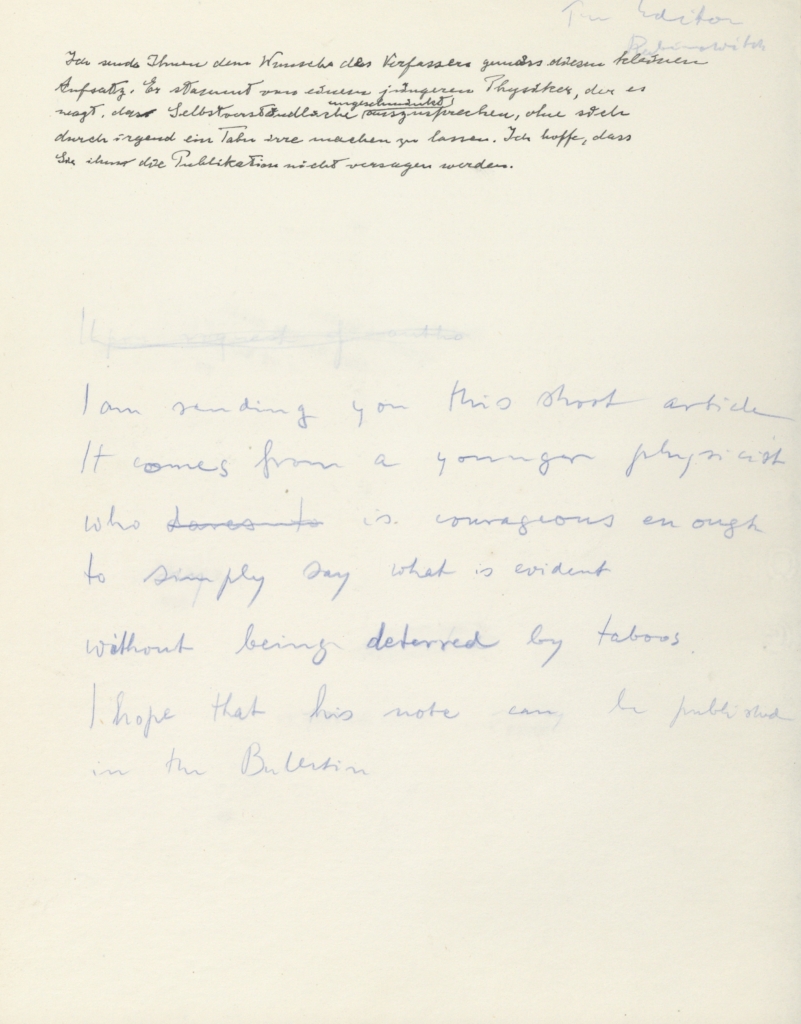
Jehle’s 1949 article, “For a Universal Morality,” asserted that “participation in war preparations posed a challenge to man’s conscience under any circumstances… [and] urged that scientists refuse to participate in war work under any government, democratic or totalitarian” (see Nathan & Norden, Einstein on Peace, p 514). The editor of the Bulletin, Eugene Rabinowitch, rejected the article in a letter to Einstein, to which Einstein replied advocating Jehle’s position, praising Jehle for not being “deterred by taboos”, and then sent this letter to Jehle.
It is interesting to think how time and war had affected Einstein’s thinking. Where his letter did much to advance the nuclear militarization and, as a scientist, he felt a need to intervene, here is advocating the opposite.
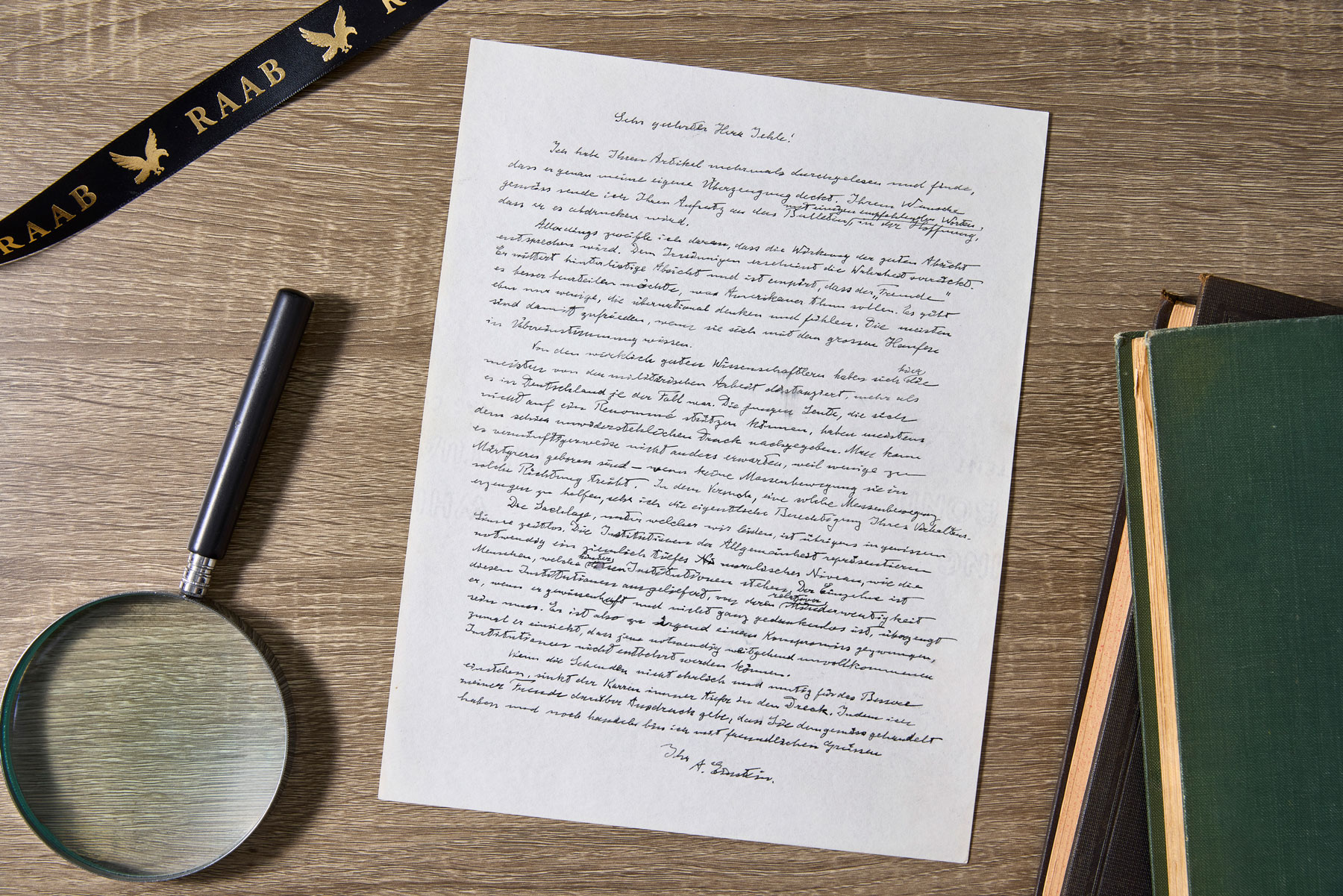
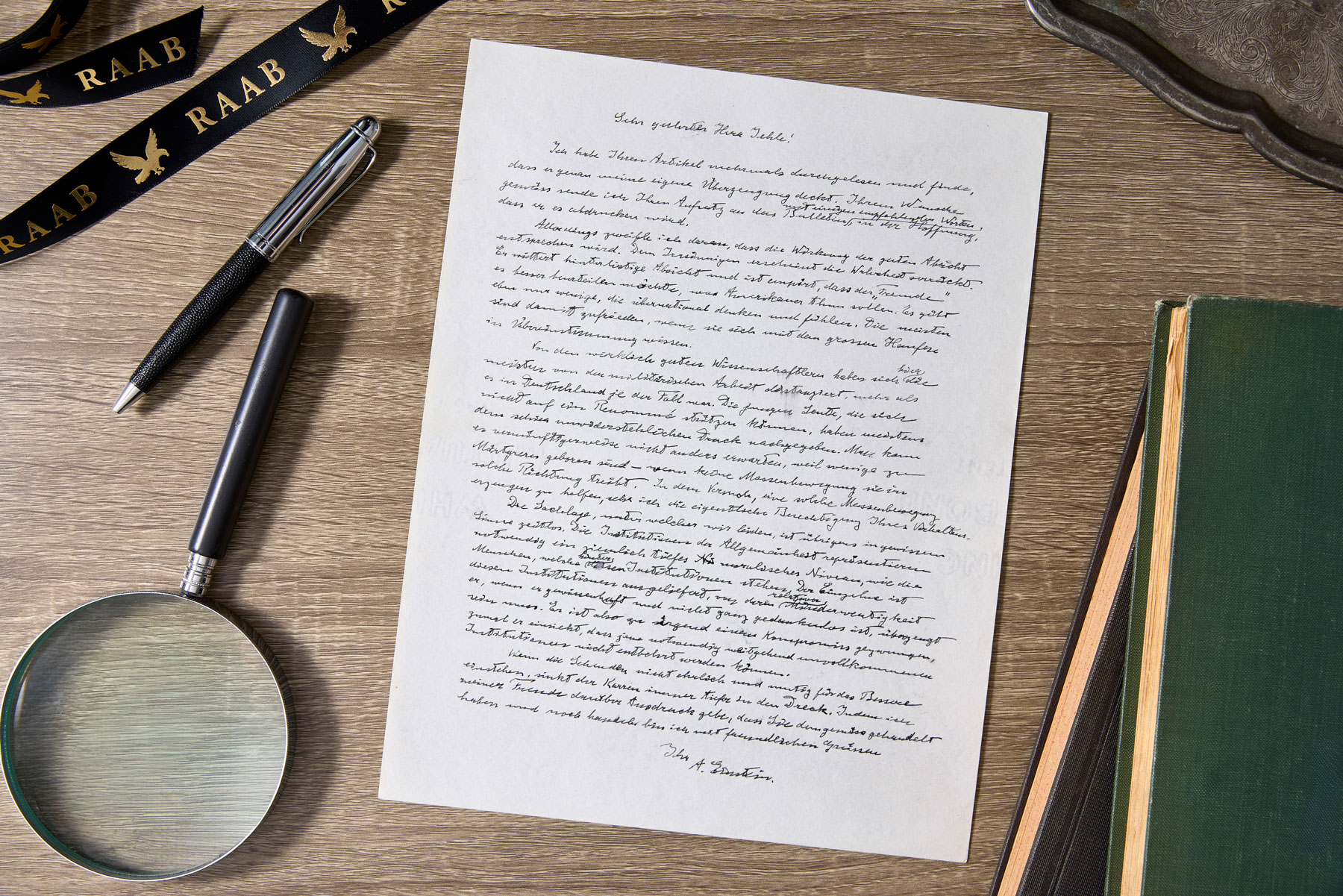
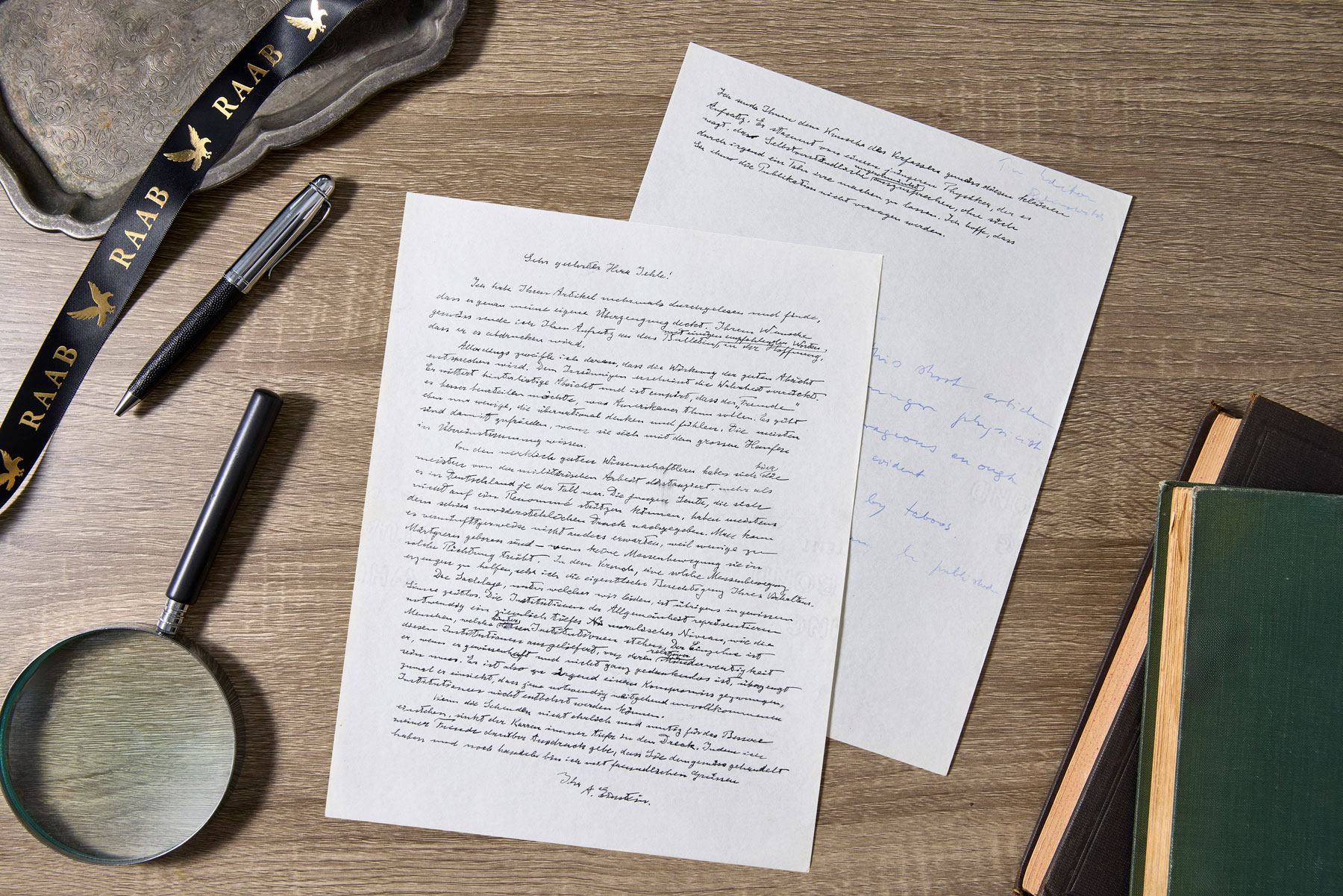
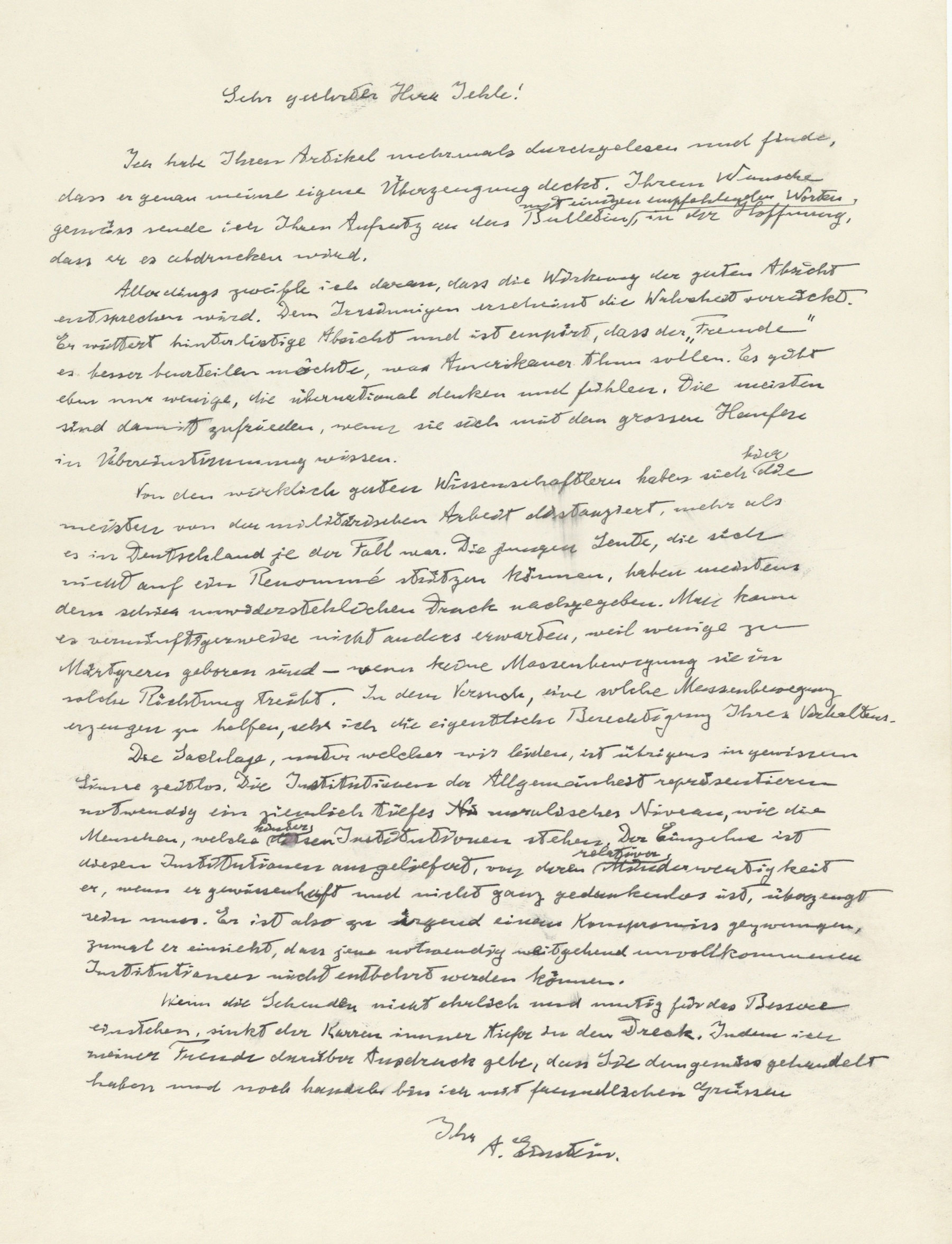
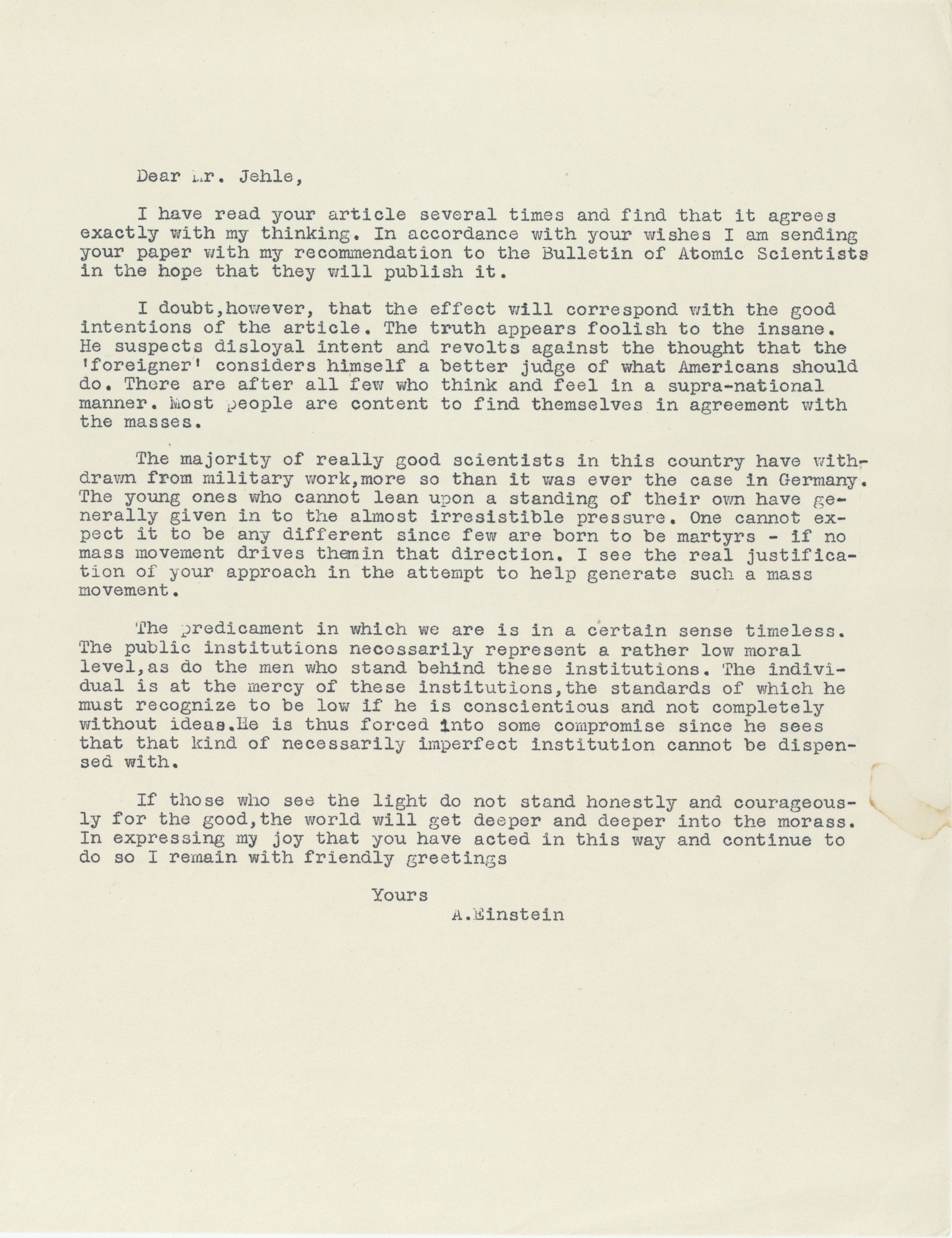
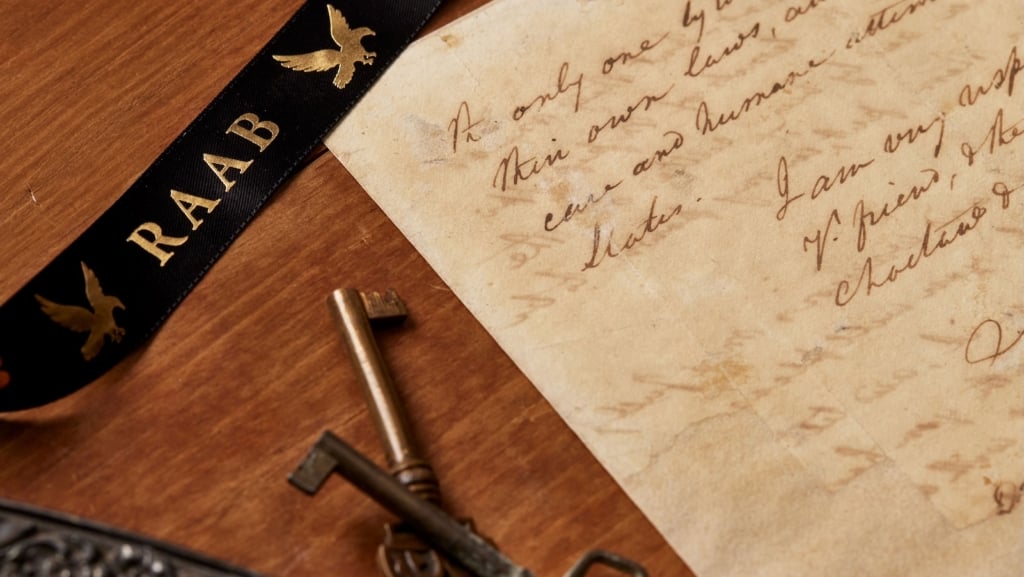
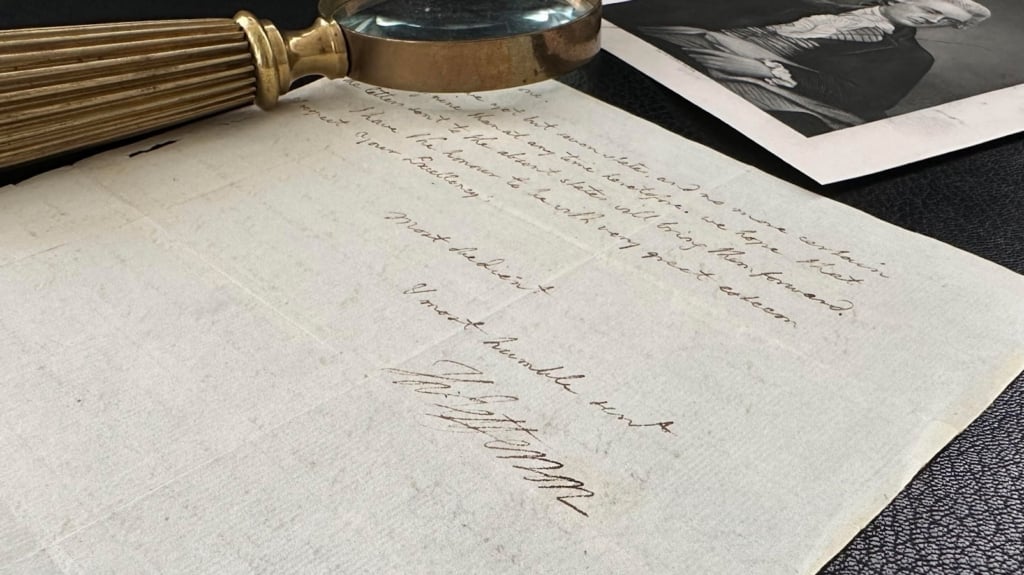
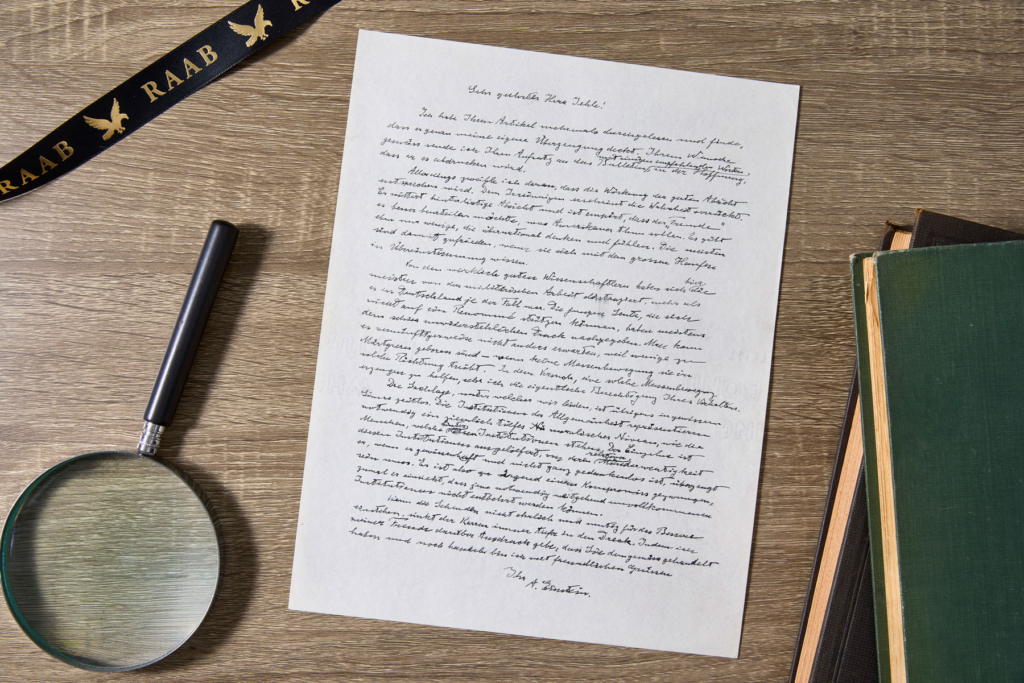
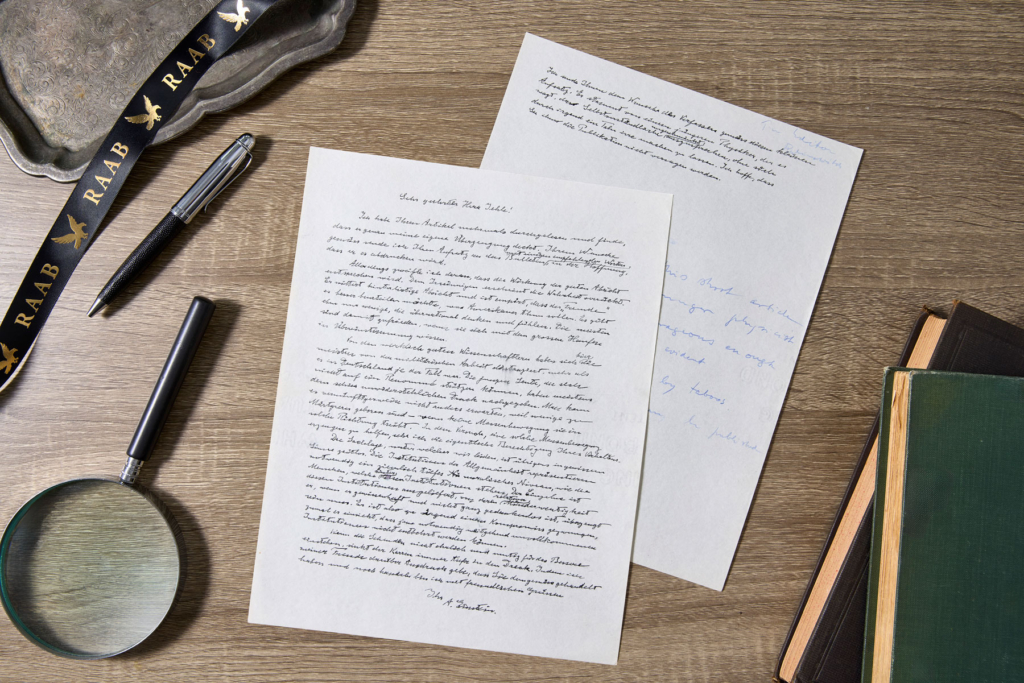
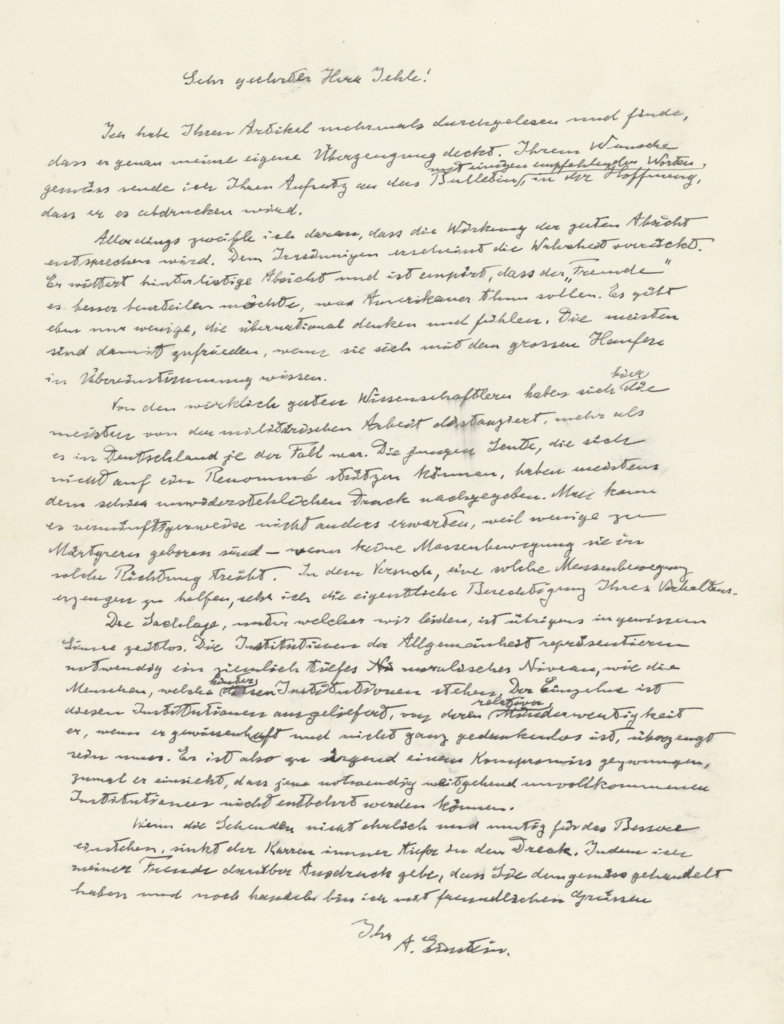
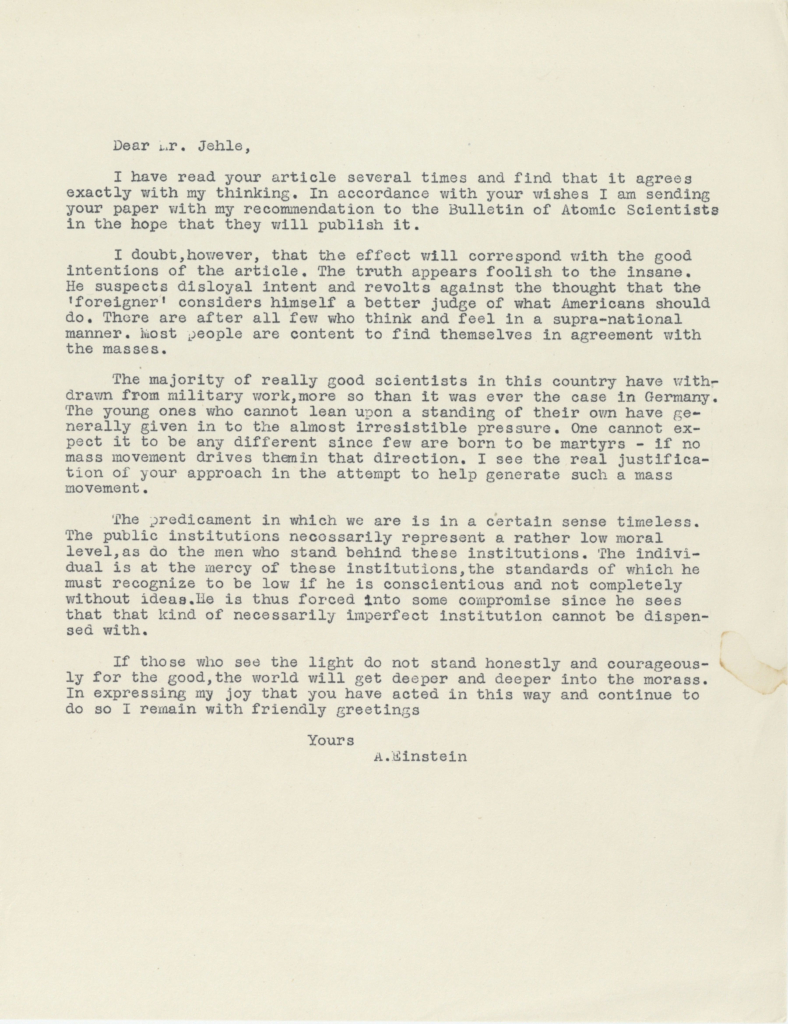
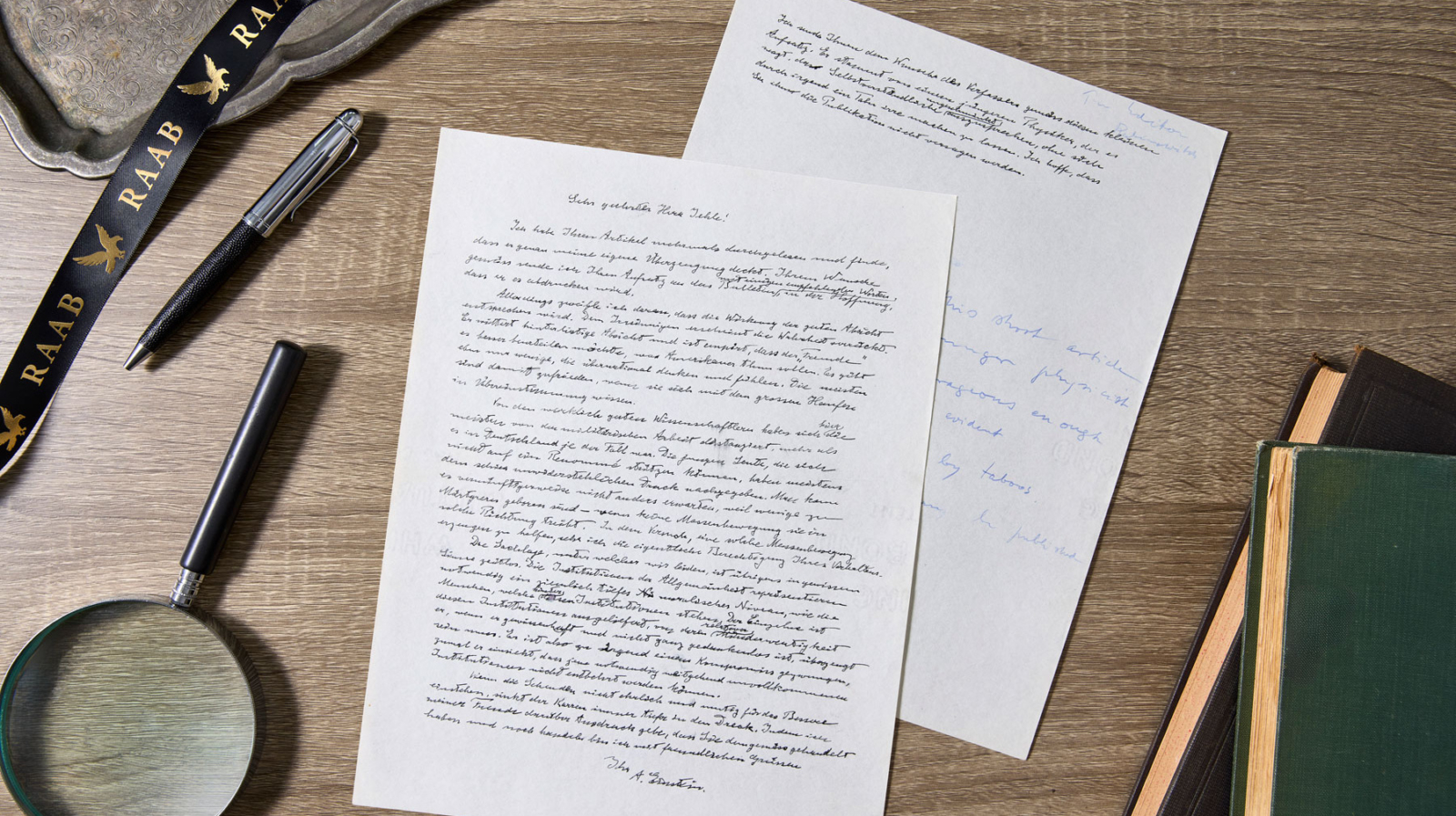
Autograph letter signed, on paper watermarked “Whiting Mutual Bond Rag Content,”[Princeton, 1949] to Herbert Jehle, endorsing the article by Jehle that had been submitted to the Bulletin of Atomic Scientists, on the topics of science and morality, and cautioning Jehle on the complications of his position in the post-war world. “I have read your article several times and find that it agrees exactly with my thinking. In accordance with your wishes I am sending your paper with my recommendation to the Bulletin of Atomic Scientists in the hope that they will publish it.
“I doubt, however, that the effect will correspond with the good intentions of the article. The truth appears foolish to the insane. He suspects disloyal intent and revolts against the thought that the ‘foreigner’ considers himself a better judge of what Americans should do. There are after all few who think and feel in a supra-national manner. Lost people are content to find themselves in agreement with the masses.
“The majority of really good scientists in this country have withdrawn from military work, more so than it was ever the case in Germany. The young ones who cannot lean upon a standing of their own have generally given in to the almost irresistible pressure. One cannot expect it to be any different since few are born to be martyrs – if no mass movement drives them in that direction. I see the real justification of your approach in the attempt to help generate such a mass movement.
“The predicament in which we are is in a certain sense timeless. The public institutions necessarily represent a rather low moral level, as do the men who stand behind these institutions. The individual is at the mercy of these institutions, the standards of which he must recognize to be low if he is conscientious and not completely without ideas. He is thus forced into some compromise since he sees that that kind of necessarily imperfect institution cannot be dispensed with.
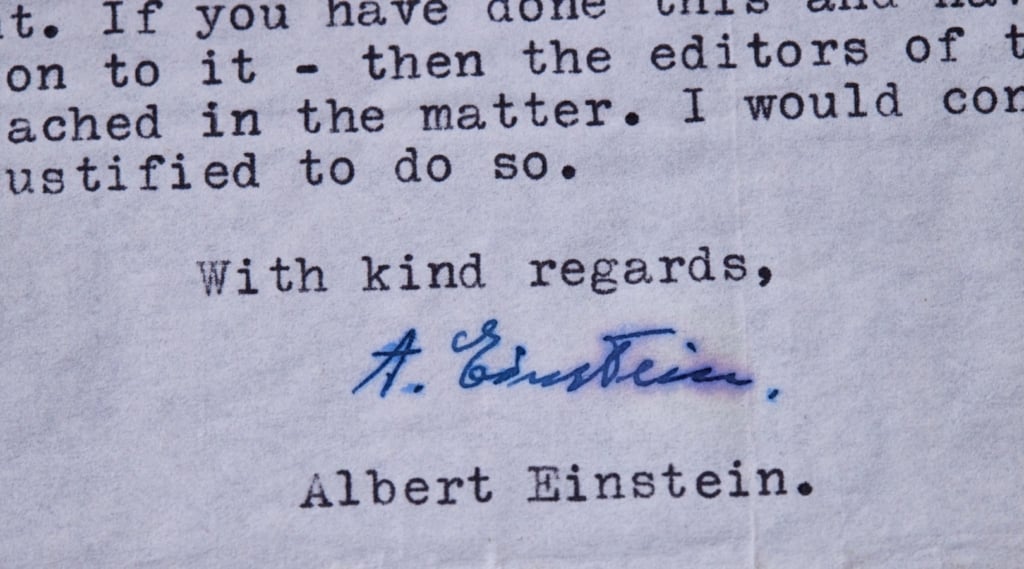
“If those who see the light do not stand honestly and courageously for the good, the world will get deeper and deeper into the morass. In expressing my joy that you have acted in this way and continue to do so I remain with friendly greetings. Yours, A. Einstein.”
With: Autograph statement as a PS from Einstein in German, with Jehle’s autograph English translation beneath and annotations above, transcribing his recommendation for Jehle which Einstein sent to the editor of the Bulletin. “I am sending you this book article. It comes from a younger physicist who is courageous enough to simply say what is evident without being deterred by taboos. I hope that his note can be published in the Bulletin.”
An important letter reflecting Einstein’s post-war advocacy for morality and peace, and assessments of the place of scientists in the moral sphere, as well as realistic observations on and understanding of world politics.
We obtained this letter directly from the Jehle family.

Frame, Display, Preserve
Each frame is custom constructed, using only proper museum archival materials. This includes:The finest frames, tailored to match the document you have chosen. These can period style, antiqued, gilded, wood, etc. Fabric mats, including silk and satin, as well as museum mat board with hand painted bevels. Attachment of the document to the matting to ensure its protection. This "hinging" is done according to archival standards. Protective "glass," or Tru Vue Optium Acrylic glazing, which is shatter resistant, 99% UV protective, and anti-reflective. You benefit from our decades of experience in designing and creating beautiful, compelling, and protective framed historical documents.
Learn more about our Framing Services