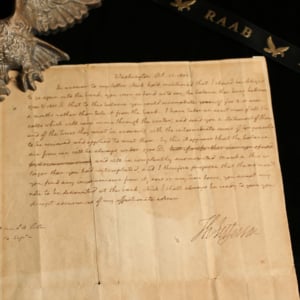




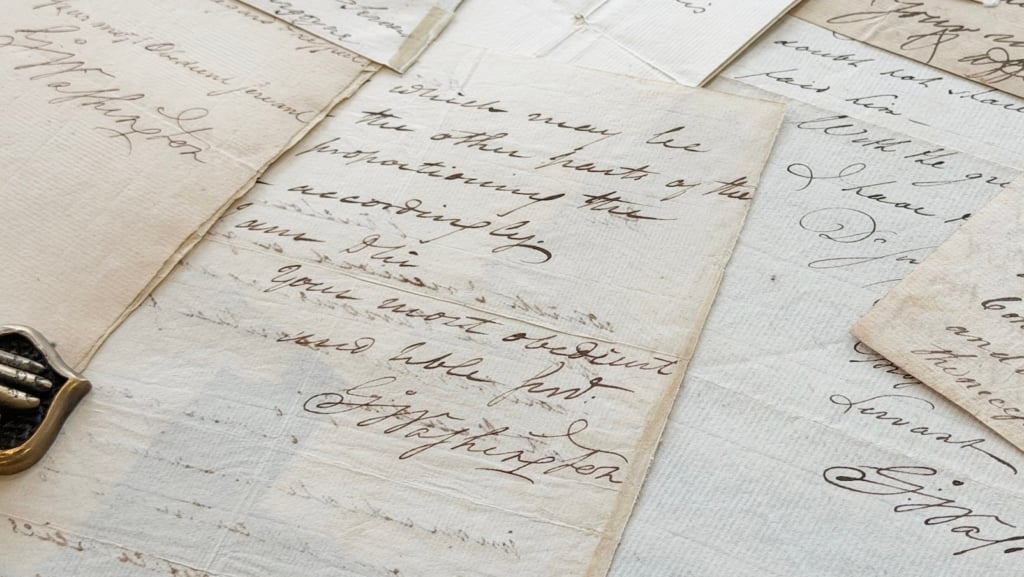
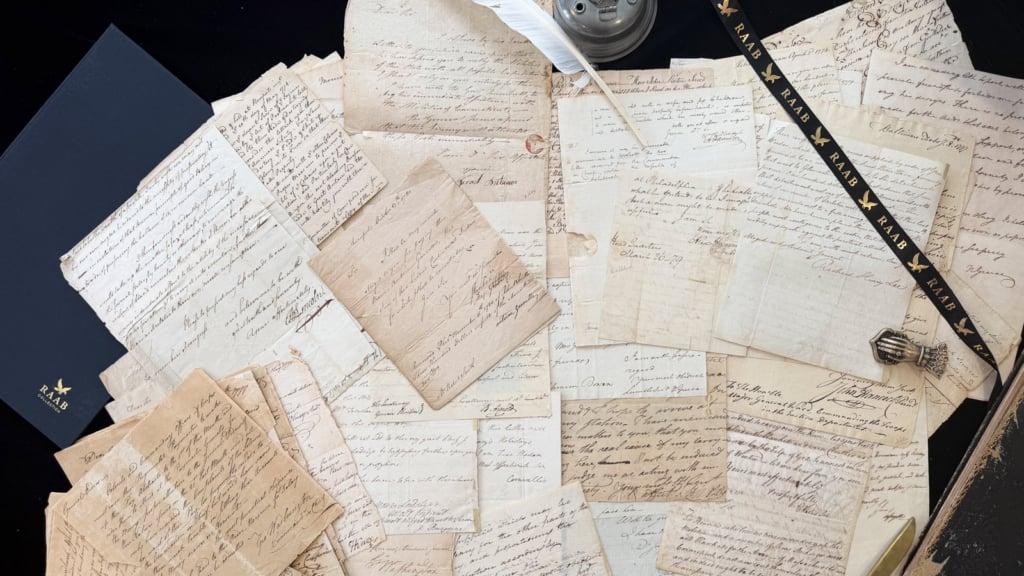
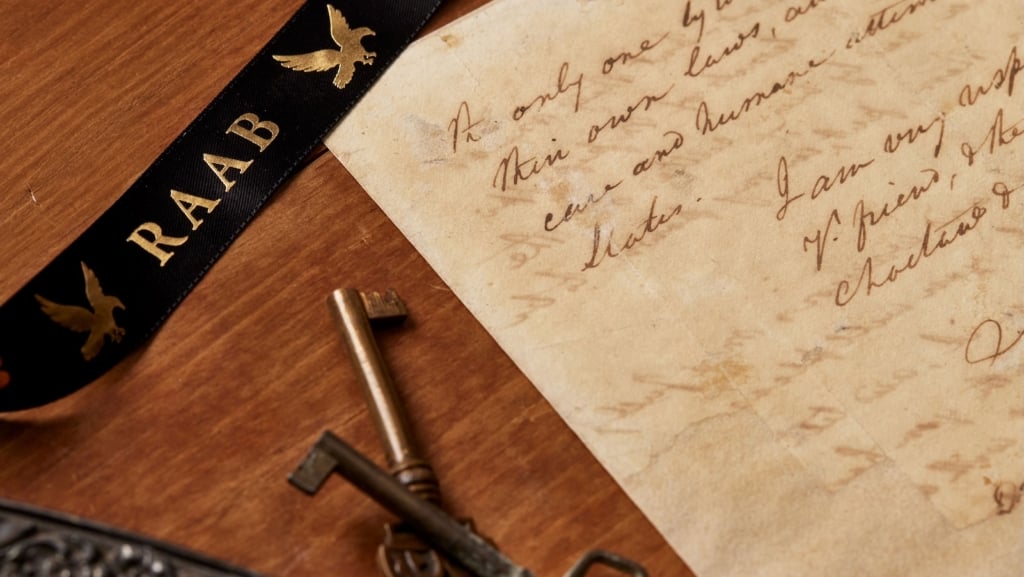
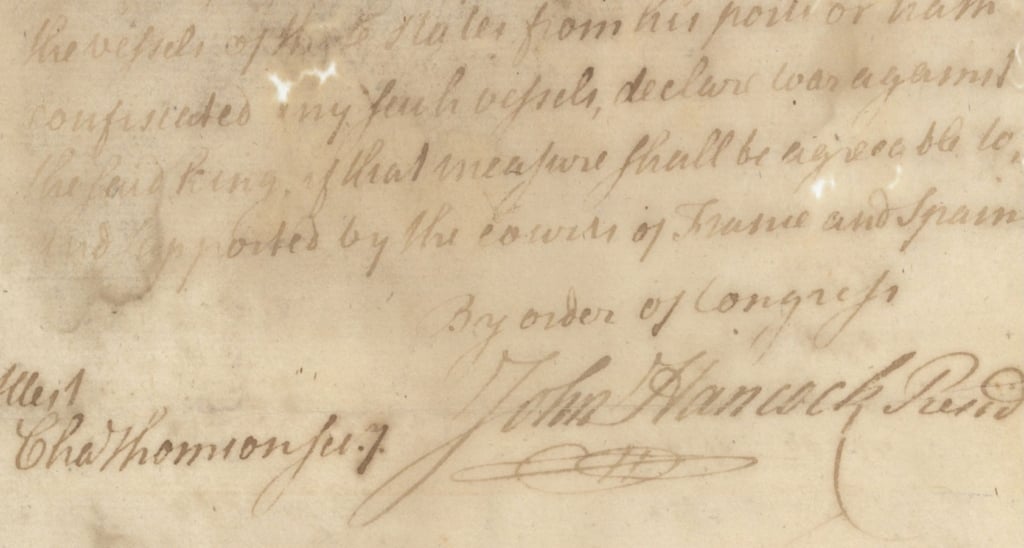
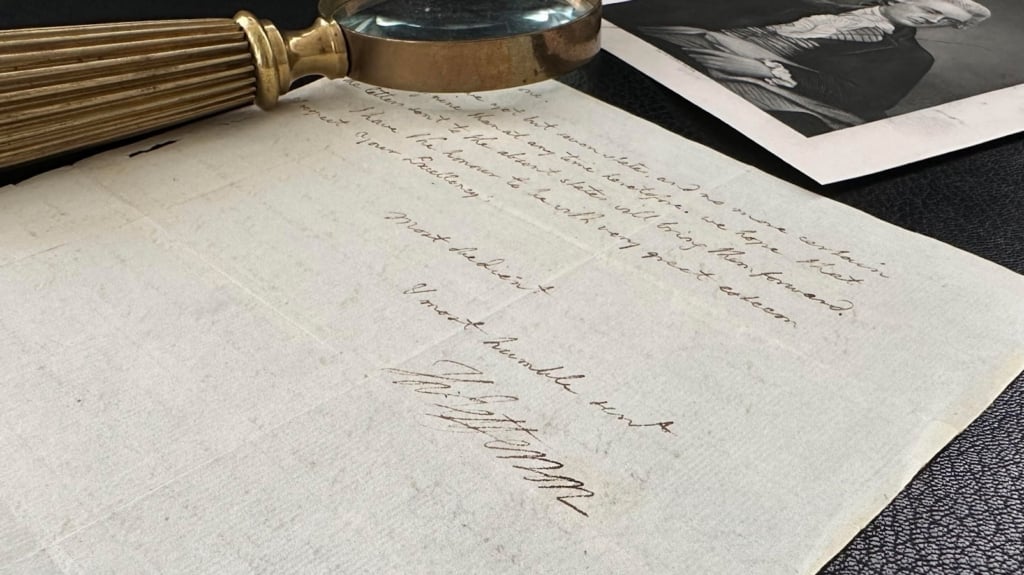
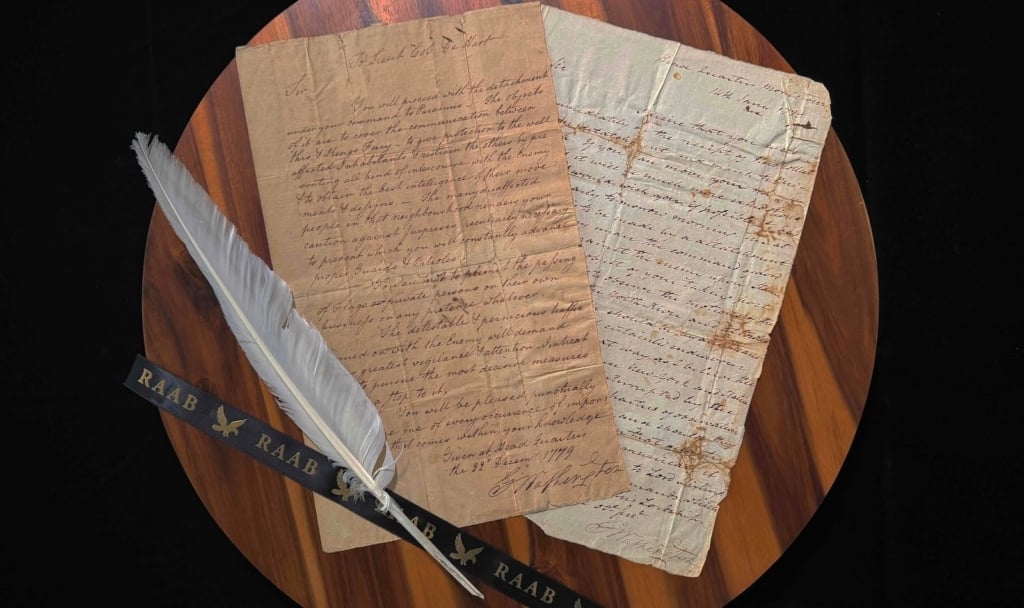
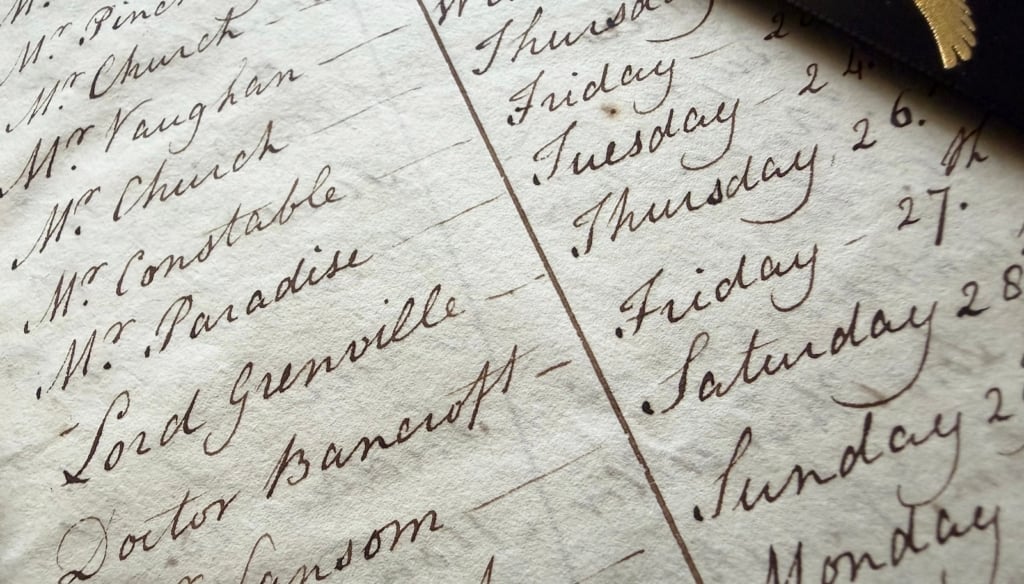


The Raab Collection recently acquired three George Washington letters from the direct descendants of his Secretary of State and War, Timothy Pickering. Written while President, these remarkable letters discuss issues of the highest import and have come to market for the first time ever.
Nathan discussed the newly discovered Washington letters on the Inspired by History podcast. You can listen to the interview below or via your podcast player of choice. Or, if you prefer, read this lightly edited transcript of the conversation with photos and embedded links to more resources.
These letters are addressed to Timothy Pickering, so let’s start there because Pickering was clearly in Washington’s inner circle, and yet his name might be unfamiliar. Who was he?
Nathan: Pickering was a close colleague of Washington, not only during Washington’s administration, but also during the Revolutionary War. He served in the colonial militia, served in the upper echelon of the quartermaster department, and maintained Washington’s confidence such that he served in three separate positions within Washington’s Cabinet: Secretary of State, Secretary of War, and Postmaster General. Washington turns to him in times of crisis and major decisions for his opinion. Although his name is not as well known as Jefferson or Adams–and Pickering also served in the Adams administration–he was nonetheless an important Founding Father and one who was witness to some of the great events of the early Republic.
I didn’t remember that somebody else had been Secretary of State under Washington. So he took over when Jefferson resigned?
Nathan: Correct. He was Secretary of State when Jefferson resigned and then moved into the position of Secretary of War.
My understanding is you were contacted by his descendants, who said they had some letters of Washington’s?
Nathan: Yeah, it’s the kind of phone call that I wish I got every day: ‘I’m the descendant of somebody who kept an active communication with George Washington. And by the way, our family has kept letters of Washington and we’re looking to sell them’ is a very exciting phone call to get and made all the more exciting by the fact that this wasn’t a casual acquaintance of Washington, but a close friend and Cabinet member, and that the letters were not from after the war or after his administration in the context of pontificating, but they were during his administration. These are letters in Washington’s hand to his Cabinet member during his administration of the highest import. To find them still retained within the family and that they were looking for the next owner is exciting.

Did you go and meet the descendants?
Nathan: Typically the way these things work is we’ll have a conversation with them and we’ll assess whether we’re interested. We get 20 emails a day from people around the world looking to sell their historical treasures, and maybe we’re interested in one, maybe not. So a lot of our job is filtering. Obviously, when an email like this comes in, it is usually in the first line, ‘Hey, we’re so-and-so, and we have this…’ If they send images, well then we’re off to the races. We know more or less what they have and then, then we’re talking details.
Our business model is to buy the things outright and to pay promptly on receipt. That’s a compelling acquisition position. In this case, when we came to an agreement with the family, I met the representative of the family, shook her hand, transferred the money, and walked away with these three letters of George Washington.
Were these letters known to exist?
Nathan: Their continued survival in the original format may not have been known, and in fact, I think probably was not. The content of them is published. There’s a note in the Washington Papers, not of the survival of these letters, but that Octavius Pickering–which is quite a name–examined copies held in the Massachusetts Historical Society to verify that they were in fact, authentic copies, in that the content was the same from the original.
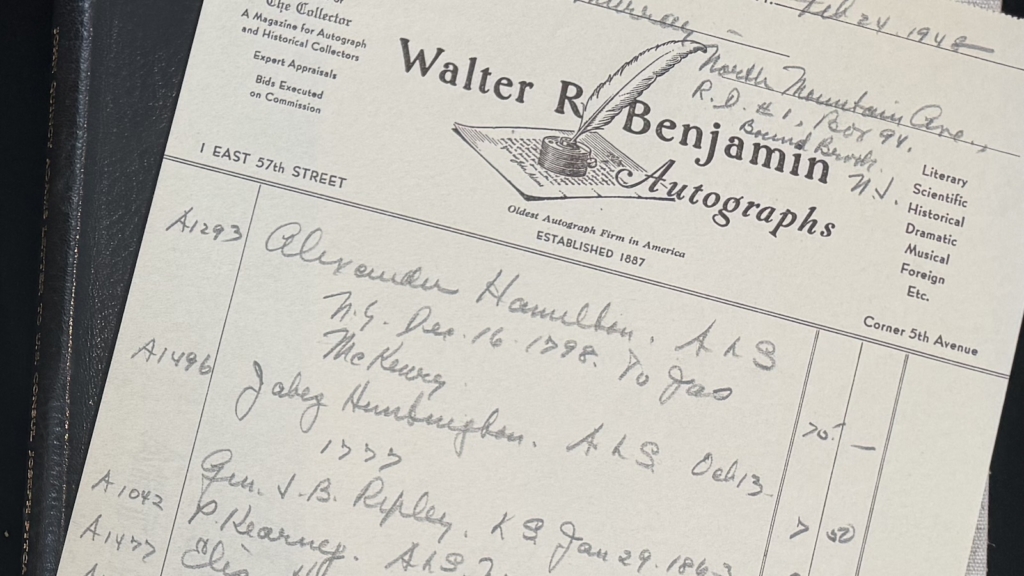
Although it doesn’t state it in the Washington Papers, the strong implication is that he had access to the originals. So, if you imagine that these letters were sent to Timothy Pickering, the Secretary of State and War, and we see them resurface indirectly with Octavius Pickering in the immediate aftermath of the Civil War, and then they resurface with the family again in 2025. So we do have an interim point of ownership there.
Let’s talk about the content of the letters. In one letter, there’s this very powerful line where Washington, in response to a request that he submit to the House all of the papers related to the Jay Treaty negotiations, asks Pickering, “Whether that Branch of Congress hath—or hath not a right, by the Constitution.” And this is a very political statement, right? What is he saying in 21st-century language there?
Nathan: Yes, you’re correct, this is quite a statement. He is grappling with his rights as President–Chief Executive of the Executive Branch–to defy a request by the Legislative Branch. The House has voted to demand this information. The Jay Treaty was an important treaty. It was in a sense the first great treaty under the Constitution, which resolved a lot of the remaining issues from the Revolutionary War with England. It also formed a wedge between those who were pro England and pro French, and in a sense contributed to our modern party system.
In this letter, he is grappling with, ‘do I have the right as President, under the Constitution, to say to the House, ‘I’m not giving you this.’ (He mentions the Constitution in this letter, which one rarely sees.) Now we know that today as Executive Privilege. It is a word that certainly wouldn’t have been on the tip of people’s tongues, Executive Privilege, the way it is today, where it’s regularly invoked by a variety of people from both parties and it’s in the news with some regularity. Back then it was just Washington saying, ‘Hey, do I have the right to do this? What is your opinion on this subject?’ He had asked the same question only once before in relation to a military expedition where the House had requested information and Washington responded to the House: ‘Well, I have the right to not give this to you, but I’m going to give it to you.’ That was in 1791, 1792. Here we are in 1795, 1796. Subsequent to this letter, the response he gets from Pickering is, ‘I don’t think you need to.’ And then Washington tells the House, ‘not only do I have a right to not give it to you, I’m not giving it to you. I have the right under the Constitution to withhold this information because you, the House of Representatives, are asking for information about a treaty and you are not part of the treaty process that is vested in the Executive Branch and in the Senate.’ The House has no Constitutional role in the treaty process.
Interesting – it’s at the dawn of America and it’s all still being worked out. Is it true that he sent this kind of letter to all of his Cabinet members and said something like, read us over send me your thoughts … We’re meeting tomorrow. I want to hear from everybody.
Nathan: Yeah. He reached out to Wolcott, to Hamilton. I think he sent something akin to this to a handful of people. Those letters are in institutions. It was Pickering, the recipient of this letter, whose response resulted in the policy because Hamilton volunteered to draft letters either acceding to the House demand or denying it. Pickering took a strong position–let’s not give them anything–and Washington went with Pickering.

In another of the letters, we also get a glimpse of James Monroe getting into some hot water. What was that about?
Nathan: During the Jay Treaty process and the buildup to the Napoleonic Wars, Washington lost confidence that Monroe was accurately relating American policy and that he had become a little too closely aligned with the French faction, telling the French, ‘well, this is our policy, but secretly you know, some people are against the Jay Treaty and because we think it’s too pro-American or, here’s what we’re really thinking,’ that kind of behind the scenes, which Washington, who was really walking a tightrope in this stretch, just didn’t feel accurately represented the official policy. Monroe is not supposed to be giving his own opinion. He’s supposed to be America’s representative. At least that was the thought. So, Washington recalls him. He puts in Pinckney.
And what you have here is Pickering, who is a Secretary of State, charged with recalling these people, recalling Monroe, and instituting Pinckney, going back and forth with Washington about what’s the best way to do this? How do we bring back Monroe? How do we install Pinckney? And Washington is giving his opinion on what format that should take. He mentions Monroe by name. Again, this is an ALS of Washington as President to Pickering on a formal matter, but you really see Washington taking a personal role in this major diplomatic move.
The two factions are there. The Federalists, led by Washington and the Jeffersonian Democrats who are sort of pro French. Those are the factions that were there at the beginning.
Nathan: You definitely see this playing out in real time. And Pickering was, I suppose, probably more aligned with what we think of today as the pro English side. There was a tug of war within the Cabinet and it continued to play out over the course of the next generation. Jefferson would be President, Madison and Monroe would be President. And the political parties would develop, in the early years, roughly along these lines.

You’ve seen many George Washington documents and autographs in your career. When you are evaluating, or valuing, his letters, what is your foremost consideration? Aside from authenticity, of course.
Nathan: The content. Particularly as it pertains to Washington. Is Washington saying something of historical import? Does history care about this subject? I mean, listen, these things are valuable no matter what. Washington signs his name to a sheet of paper, it’s worth a lot of money. But there’s a big difference between Washington talking about his crops, which again is desirable, and Washington, as President, writing to his Cabinet member instituting the first ever claim of Executive Privilege against the House. So, is the content compelling? Does it relate to something that the historical figure has a strong legacy he’s known for doing? In the case of these three letters, of course the answer is yes across the board.
In the other Washington letter that we haven’t discussed, you see Pickering as sort of a spy on the ground going to these anti-Jay Treaty meetings, particularly a very well known one in Philadelphia, and reporting back to Washington. Washington writes back and he wants the opinion of the people. He wants to hear what people think about the Jay Treaty, but he really wants it from common, moderate voices, not the mob. So that kind of thing where you see Washington as the first people’s representative in the White House, the Executive Mansion, I suppose, actively seeking out from his Cabinet member the feedback of the people in such an important matter is also compelling.
I’ve been doing this now for 20 years. We’ll just charitably say I’m in my forties. I might have to go another 20 years before finding a group of letters like this, of this import of Washington from a direct descendant, somebody who was himself a prominent figure. Which adds to the excitement of the acquisition and makes us content to have the letters for as long as we have them until we find them new homes.
To learn more about George Washington, visit our dedicated Washington page and read Raab’s “Illustrated Guide to Buying George Washington Autographs & Documents.”