






President George Washington Seeks the Reaction of the People to the Jay Treaty
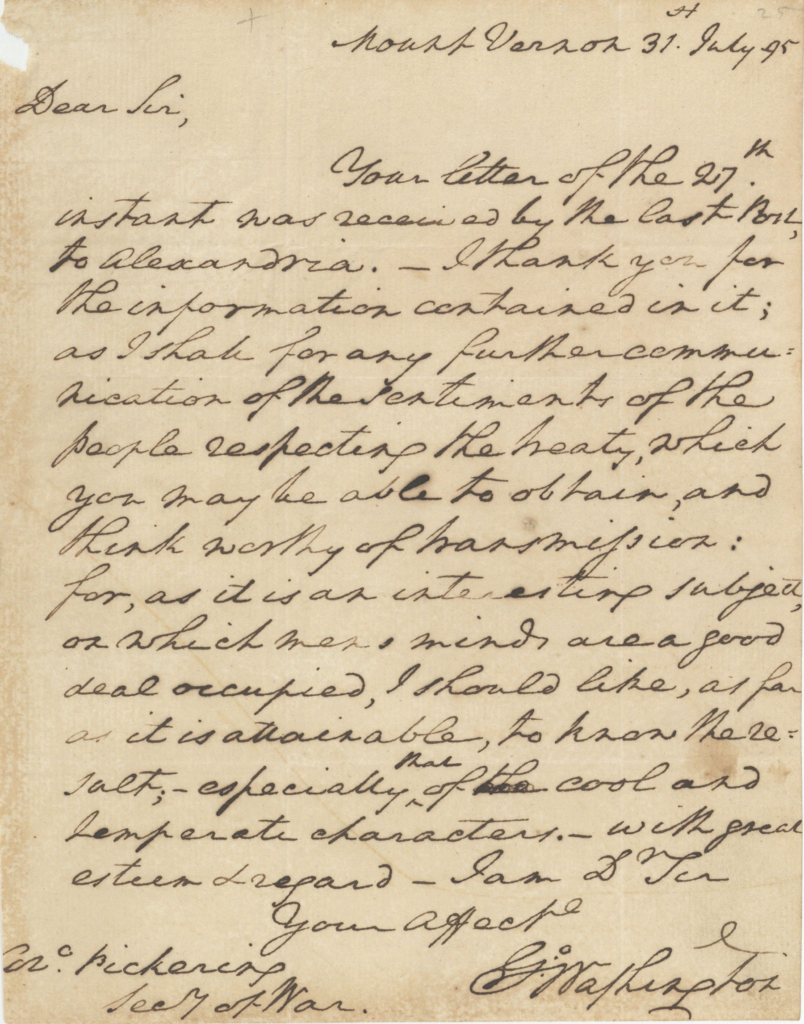

He writes Secretary of War Thomas Pickering to gather "any further communication of the sentiments of the people”, noting that the treaty is a subject on which "mens minds are a good deal occupied"
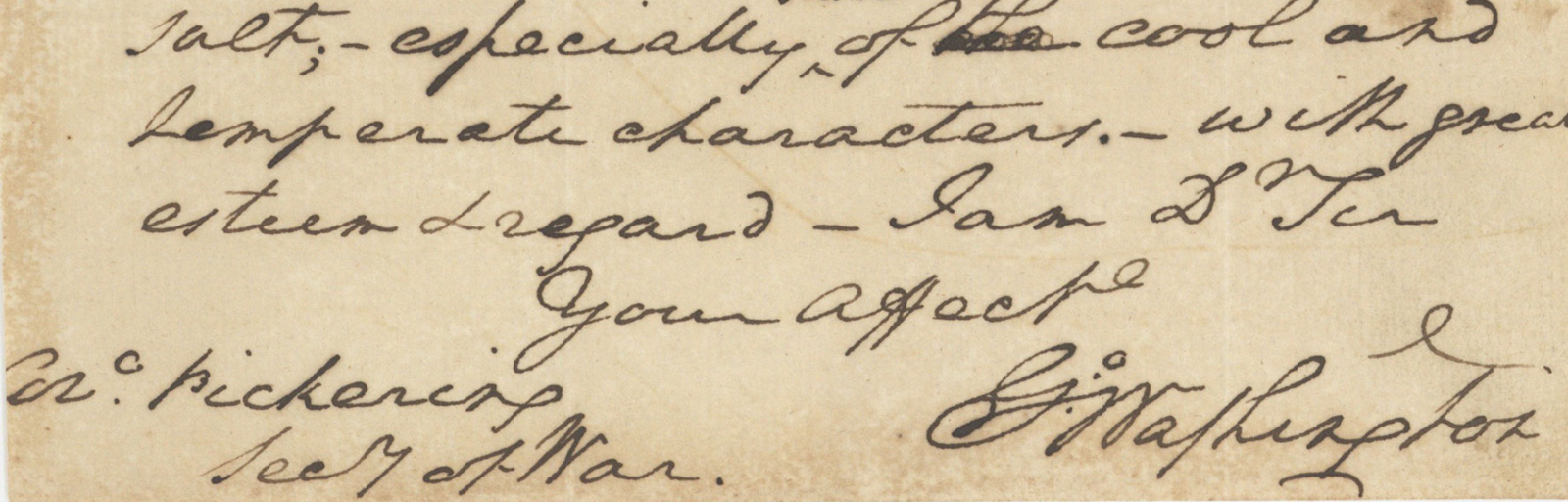
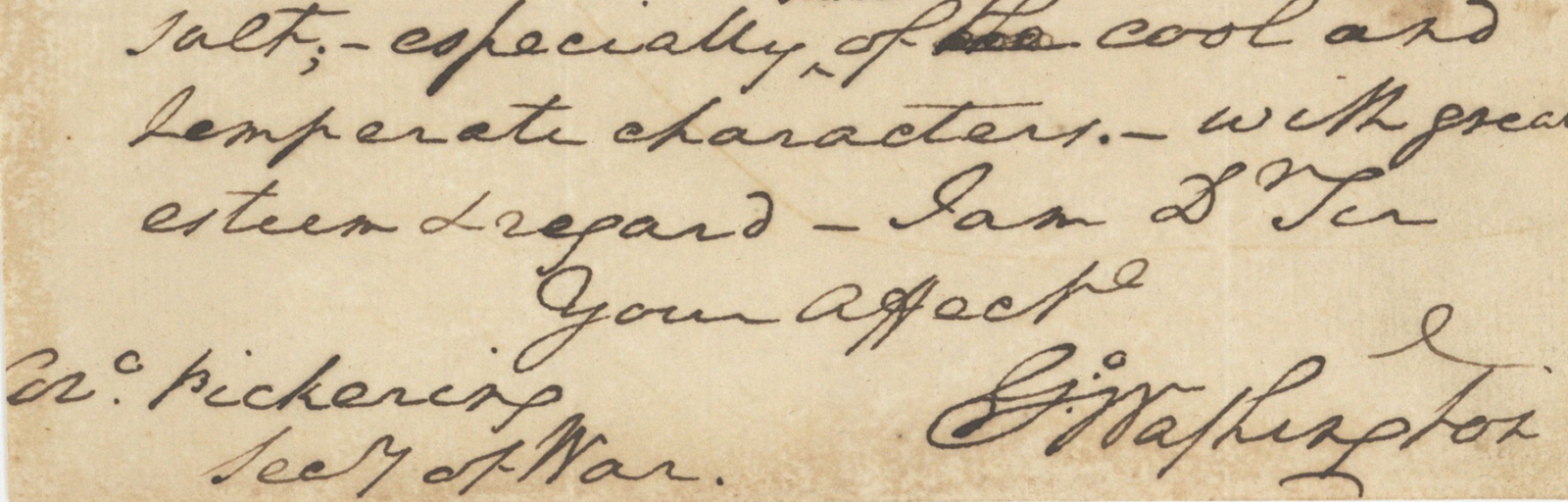
He acknowledges a large meeting opposing it, eschews the mob utterances and wants to hear from “cool and temperate characters”
This letter was acquired by us from the direct descendants of Pickering and has never been offered for sale before
A very rare letter of Washington to a cabinet member
...

He acknowledges a large meeting opposing it, eschews the mob utterances and wants to hear from “cool and temperate characters”
This letter was acquired by us from the direct descendants of Pickering and has never been offered for sale before
A very rare letter of Washington to a cabinet member
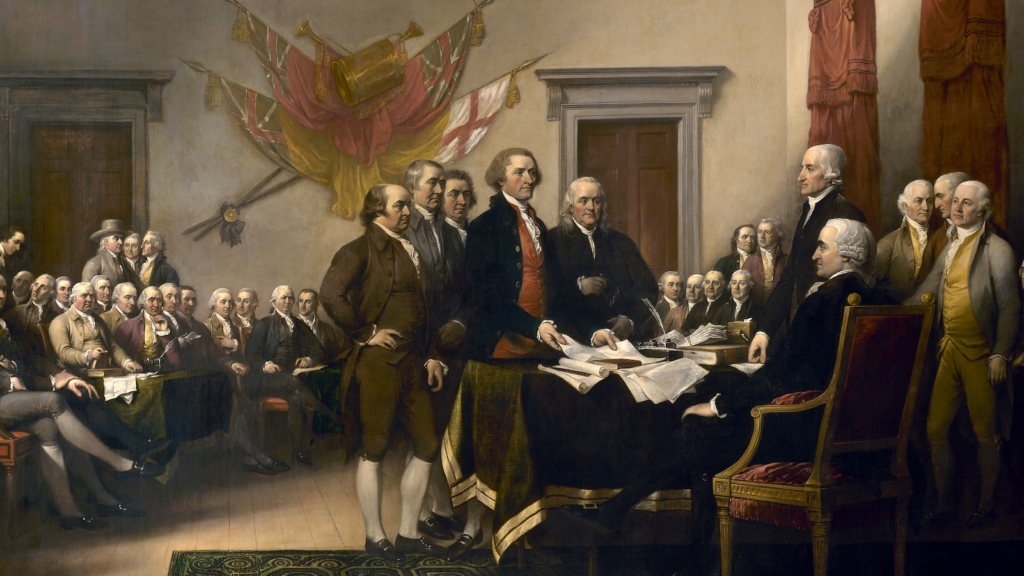
The Jay Treaty, officially titled the Treaty of Amity, Commerce, and Navigation, was a 1794 agreement between the United States and Great Britain designed to resolve lingering disputes from the American Revolution and avert another war. Negotiated by Chief Justice John Jay at the direction of President George Washington, the treaty sought to address several pressing issues: British forces still occupying frontier forts in the Northwest Territory, the seizure of American ships trading with France, unpaid prewar debts owed to British creditors, and unsettled boundary questions along the U.S.–Canada border. Under the treaty’s terms, Britain agreed to evacuate its western forts by 1796, and both nations established joint commissions to settle outstanding debts, boundary disputes, and maritime claims. In return, the United States granted Britain most-favored-nation trading status and limited access to American markets while receiving modest rights to trade in the British West Indies. Although the treaty helped secure peace and stabilize Anglo-American relations, it failed to address key grievances such as impressment of American sailors, fueling fierce domestic controversy. Federalists defended the treaty as a necessary act of diplomacy, while Jeffersonian Republicans denounced it as a betrayal of the Revolution’s ideals. Despite the uproar, the treaty narrowly won Senate approval in 1795, laid the groundwork for a decade of stable relations with Britain, and marked one of the earliest major tests of executive authority in foreign affairs under the new Constitution.
The Senate approved the Jay Treaty on June 24, 1795, and the United States ratified it on August 14, 1795. After Britain’s ratification on October 28, 1795, the two countries exchanged ratifications in London that same day.
Even after Senate ratification, the public still had not seen the Treaty. While secrecy was still in place, a Philadelphia newspaper, the Aurora (edited by Benjamin Franklin Bache), obtained and published the full text of the treaty on June 29, 1795—without authorization. This leak sparked an enormous public uproar. Citizens held protest meetings, burned copies of the treaty, and condemned what they saw as pro-British concessions. The factions here helped set America down the two-party political system road. By late July 1795, this anger had spread from Philadelphia to major cities including New York, Boston, Charleston, and Richmond, culminating in mass demonstrations, effigy burnings, and even violence.
One of the largest such meetings took place in Philadelphia on July 25, 1795, where citizens who objected to the Treaty sent a formal note to President Washington. Secretary of War Timothy Pickering attended “as a spectator” and on July 27, wrote to President Washington. He felt the quality of the attendees to be low, writing “These few men, with a mixed company still less qualified, or totally unqualified, are impudently brought forward by their leaders to express the sense of the great city of Philadelphia! To declare the meaning and effect of a long and intricate treaty—intricate from the objects it embraces, utterly beyond the knowledge of the mass of the small meeting of citizens who pronounced upon its merits! and this without the least explanation or discussion!”
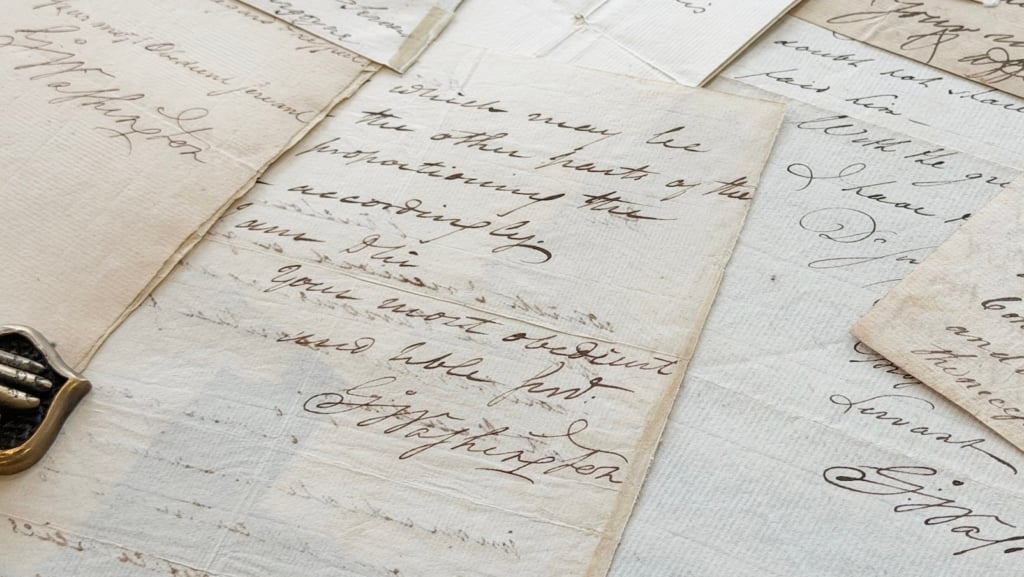
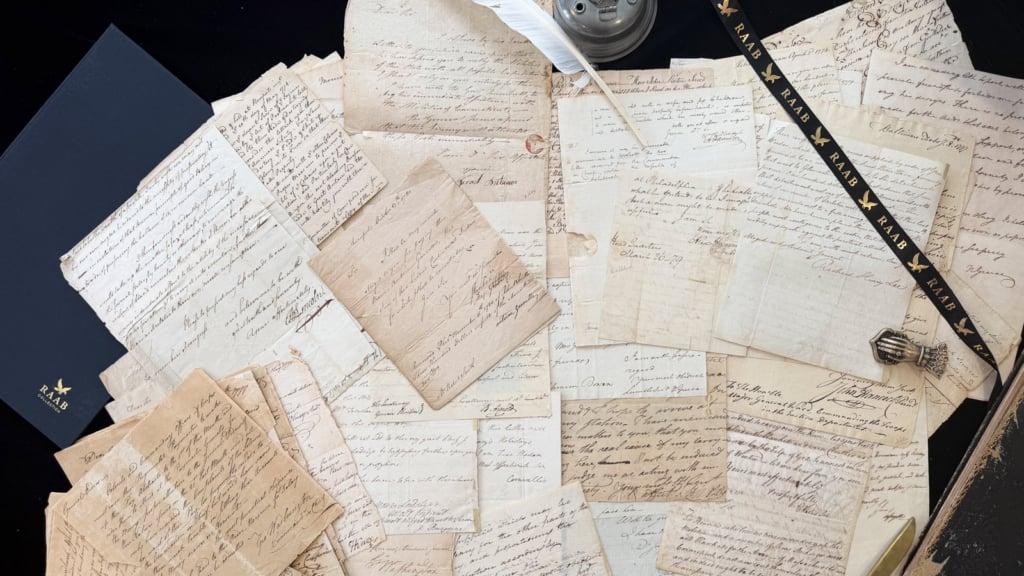
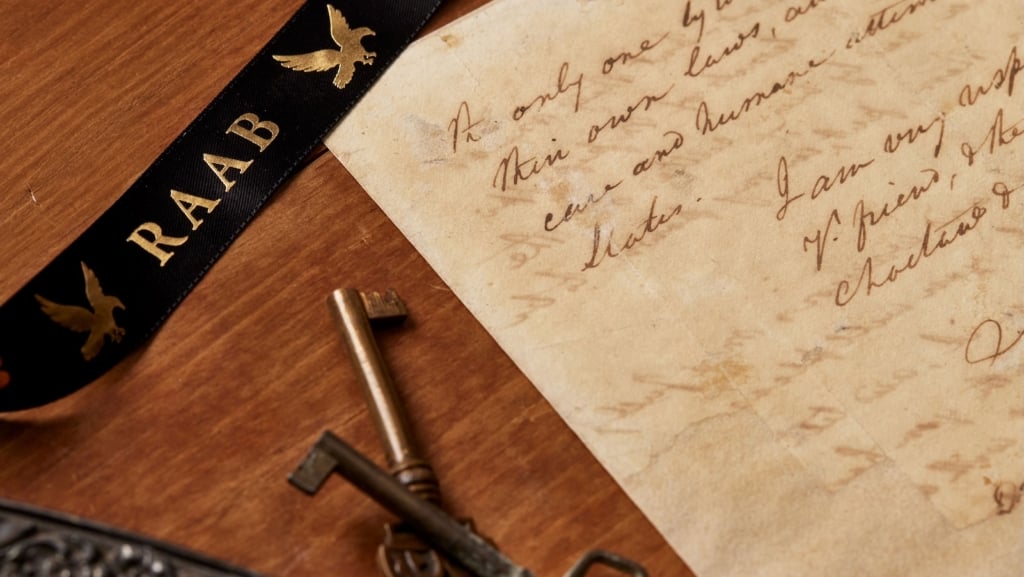
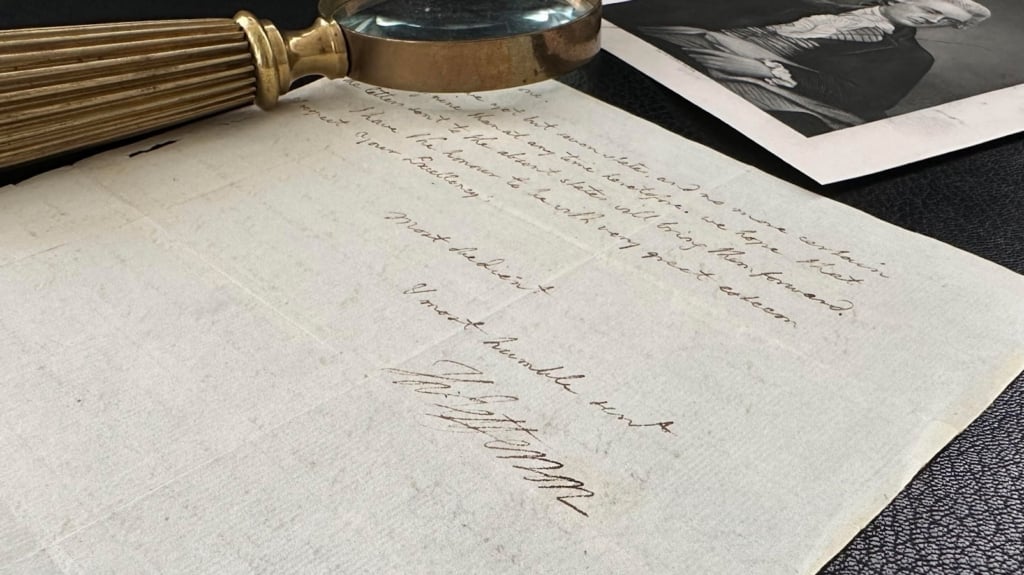
Autograph letter signed, as President, Mount Vernon, July 31, 1795, to Pickering, Secretary of War. “Dear Sir, Your letter of the 27th instant was received by the last Post to Alexandria. I thank you for the information contained in it; as I shall for any further communication of the sentiments of the people respecting the treaty, which you may be able to obtain, and think worthy of transmission: for, as it is an interesting subject, on which mens minds are a good deal occupied, I should like, as far as it is attainable, to know the result; especially that of cool and temperate characters. With great esteem & regard. G. Washington”. A copy exists on deposit at the Massachusetts Historical Society. The Washington papers notes: “This document was certified as a “true copy” by Octavius Pickering in 1866. The original cover, in GW’s handwriting, is filed with the transcript and is marked “private.” Clearly at the time, O. Pickering was in possession of this very letter.
This letter was acquired by us from the direct descendants of Timothy Pickering and has never before been offered for sale.

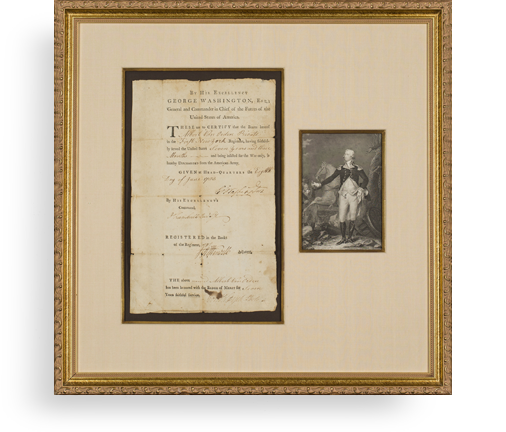
Frame, Display, Preserve
Each frame is custom constructed, using only proper museum archival materials. This includes:The finest frames, tailored to match the document you have chosen. These can period style, antiqued, gilded, wood, etc. Fabric mats, including silk and satin, as well as museum mat board with hand painted bevels. Attachment of the document to the matting to ensure its protection. This "hinging" is done according to archival standards. Protective "glass," or Tru Vue Optium Acrylic glazing, which is shatter resistant, 99% UV protective, and anti-reflective. You benefit from our decades of experience in designing and creating beautiful, compelling, and protective framed historical documents.
Learn more about our Framing Services
