



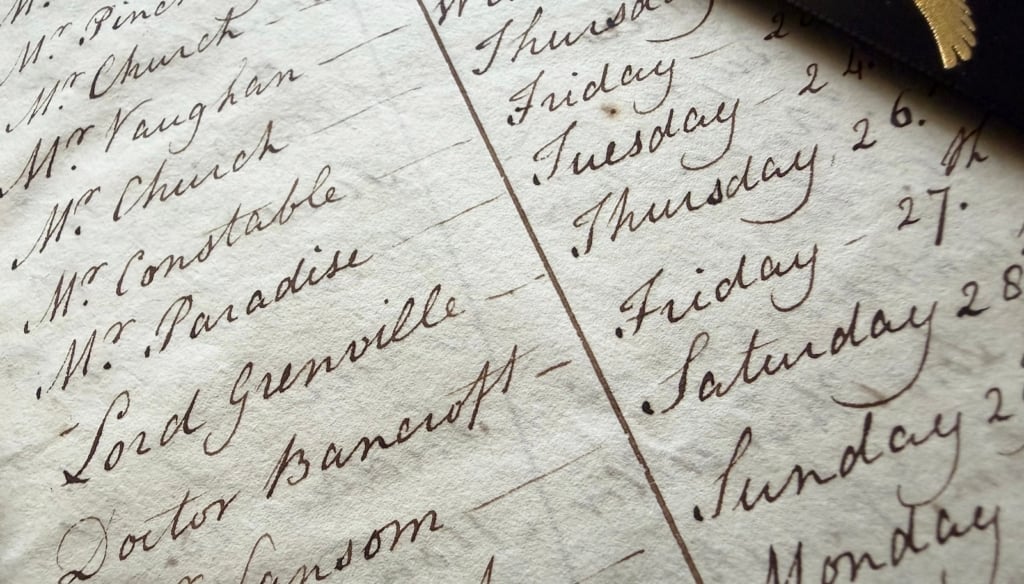


President George Washington Writes His Secretary of State Timothy Pickering Approving the Letter Recalling James Monroe as Ambassador to France and Appointing Charles C. Pinckney


Monroe had tried to soothe the French by implying that many Americans (including himself) opposed the Jay Treaty, to Washington’s displeasure
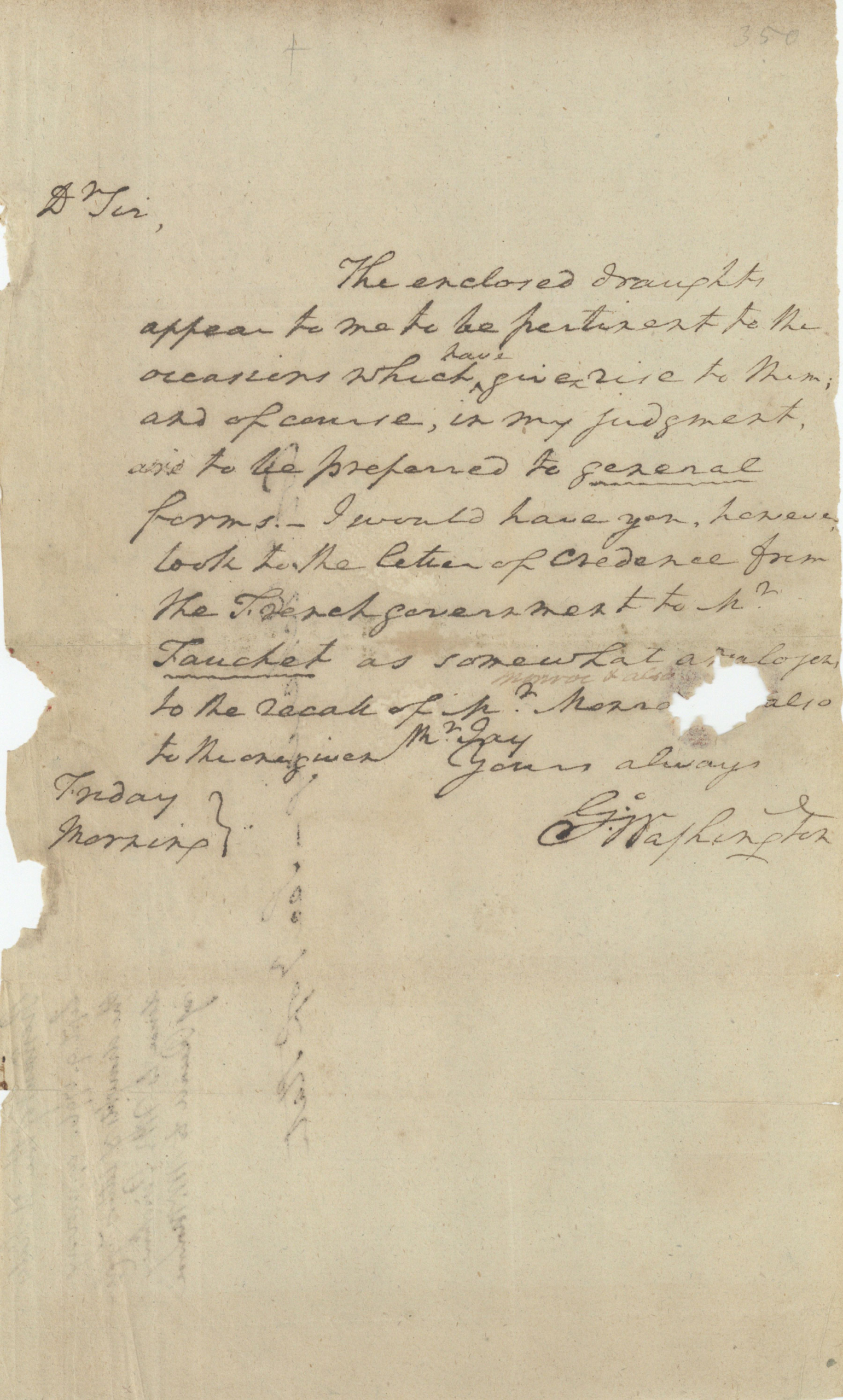
He makes suggestions to Pickering, analogizing the language used to recall Monroe and the Credence previously given to John Jay
He would sign both letters of credence and recall that very day
This letter was acquired by us from the direct descendants of Pickering and has never before been offered...


He makes suggestions to Pickering, analogizing the language used to recall Monroe and the Credence previously given to John Jay
He would sign both letters of credence and recall that very day
This letter was acquired by us from the direct descendants of Pickering and has never before been offered for sale
A very rare letter of Washington as President to a cabinet member

James Monroe, a staunch Jeffersonian-Republican, was sympathetic to the French Republic during the French Revolutionary Wars. Washington’s administration, led by Federalists like Secretary of State Timothy Pickering and Treasury Secretary Alexander Hamilton, sought neutrality and wanted to maintain good relations with Great Britain through the Jay Treaty (1794). Monroe’s overt friendliness to the French Directory—and his apparent hostility toward Britain—made the administration feel he was undermining U.S. neutrality.
When news of the Jay Treaty reached France, the French government was angered, viewing it as a betrayal of the 1778 Franco-American alliance. Monroe tried to soothe them but also hinted that many Americans (including himself) opposed the treaty. This appeared to Washington and Pickering as disloyalty and a failure to defend U.S. policy abroad.
Washington came to believe Monroe had allowed his personal and partisan sympathies to interfere with his official duty. Reports from France suggested Monroe was more aligned with the French revolutionary cause than with his own government’s policies. In August 1796, Washington decided to recall him.
Washington appointed Charles Cotesworth Pinckney, a respected South Carolinian Federalist and former Revolutionary War officer, to replace Monroe. Pinckney was seen as more reliable and less partisan—someone who would firmly represent U.S. neutrality and support the administration’s stance amid rising Franco-British tensions.

On September 9, 1796, Secretary of State Timothy Pickering wrote to Washington, “In draughting the letter of credence for Mr Pinckney, the motives for his appointment, arising out of the present state of things between the U. States & France, pressed me to depart from the usual formalities of this diplomatic instrument: it is therefore respectfully submitted to your consideration, for any alterations you may deem proper previous to its being transcribed. I also submit the draught of a letter to Mr Monroe, and of his letter of recall.”
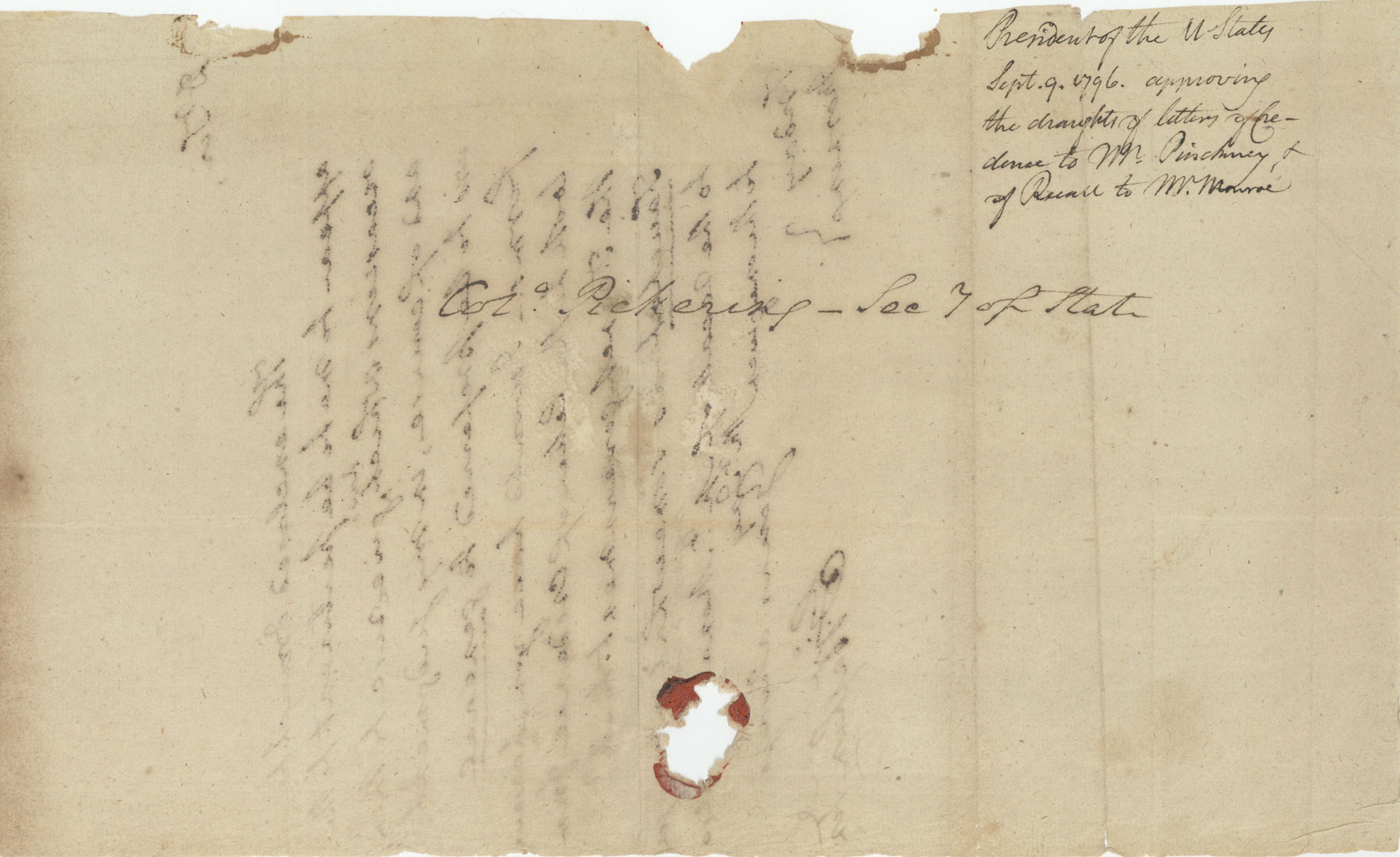
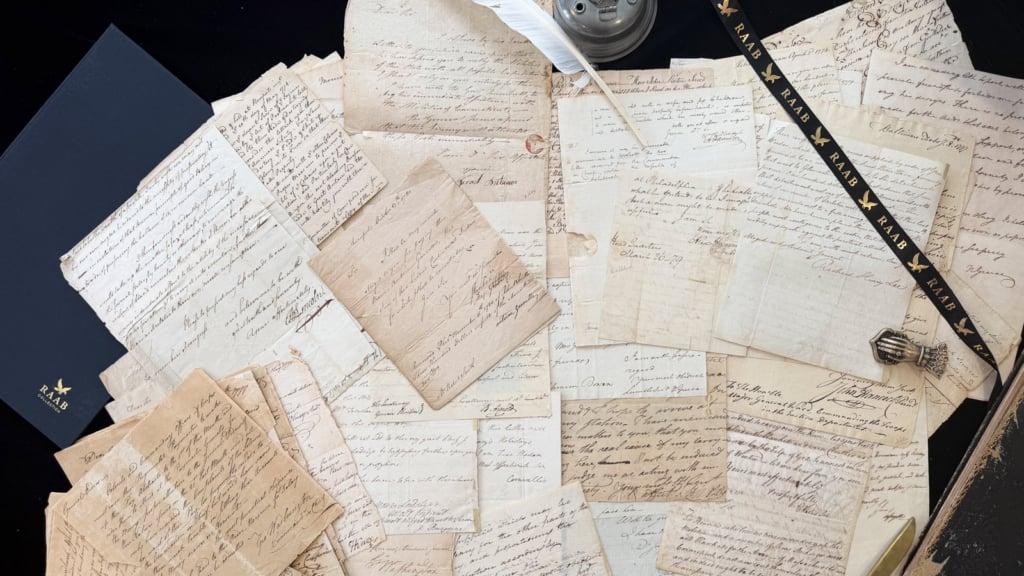
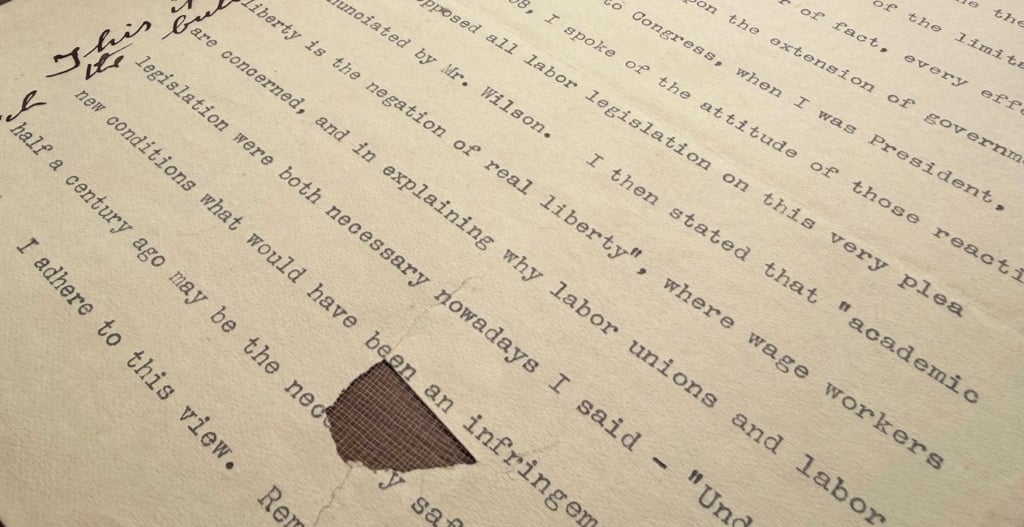
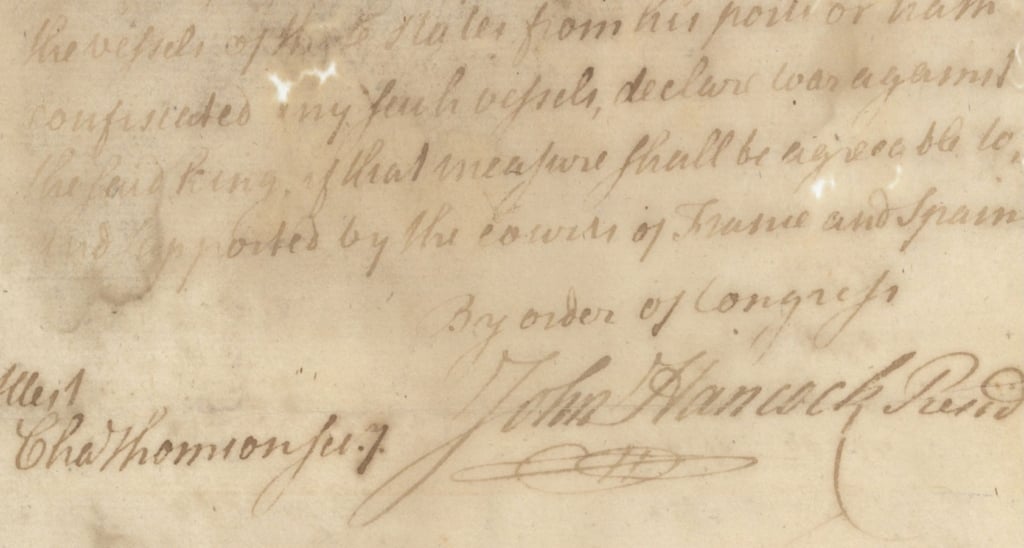
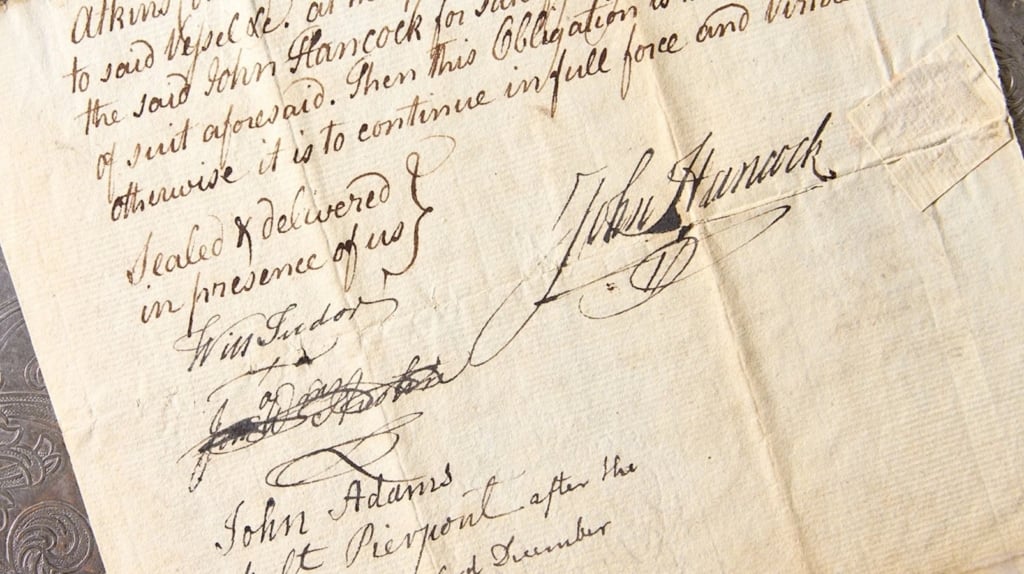
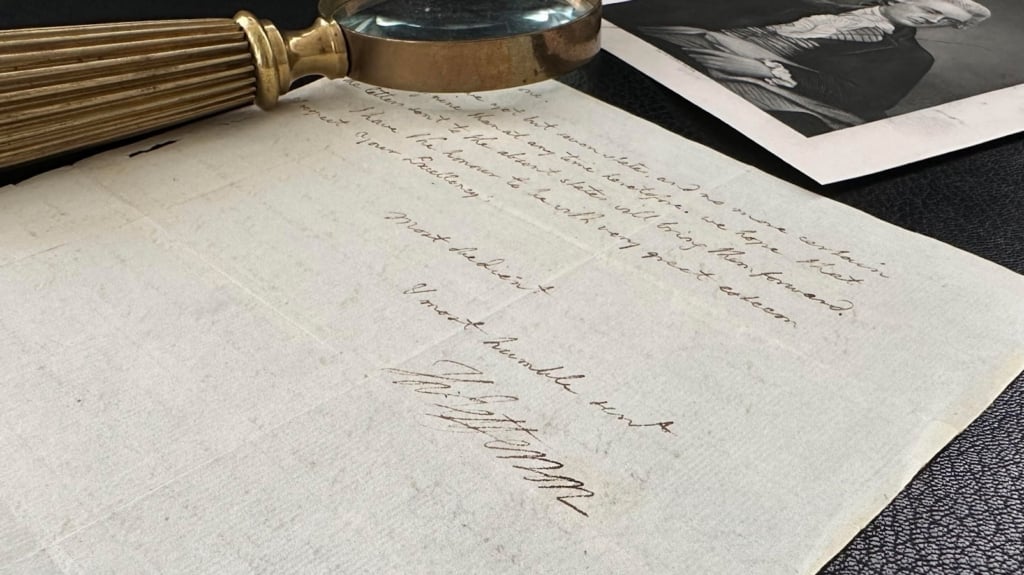
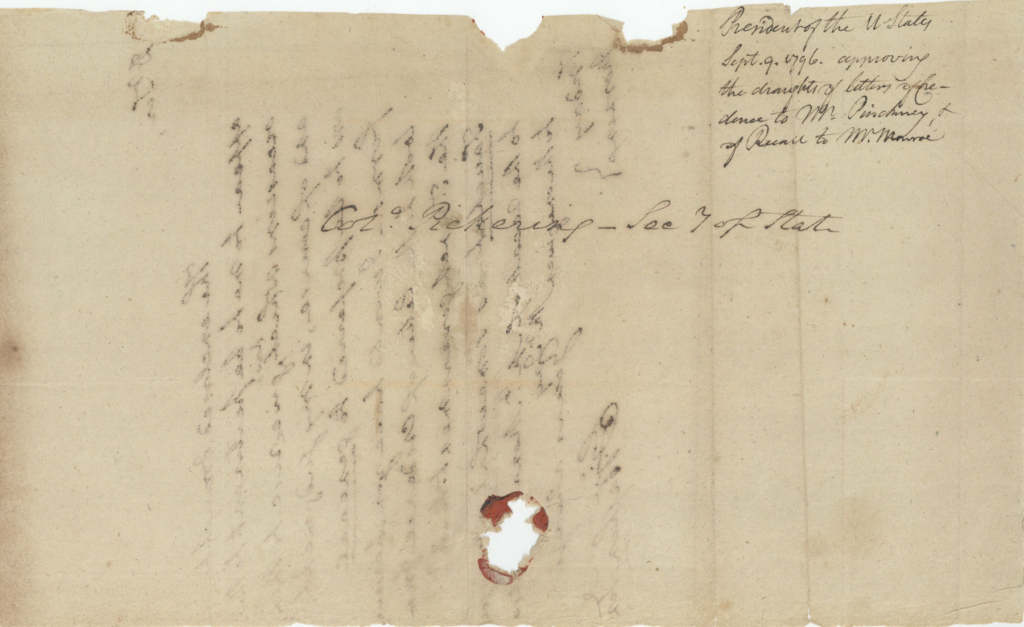
Washington responded in this Autograph letter signed, as President, no date but September 9, 1796, in his hand, addressed to “Col Pickering – Sec, of State.” “The enclosed draughts appear to me to be pertinent to the occasions which have given rise to them; and of course, in my judgment, are to be preferred to general forms. I would have you, however, look to the letter of credence from the French government to Mr Fauchet as somewhat analogous to the recall of Mr Monroe & also to the one given Mr Jay”. A transcript exists in the Massachusetts Historical Society. Octavius Pickering certified this transcript as “A true copy” in 1866, implying he had access to this letter at the time. Timothy Pickering has docketed this, noting “President of the U. States September 9, 1796 approving the draughts of letters of Credence to Mr. Pinckney and of recall to Mr. Monroe.” There is a small hole in the middle of the letter from the old seal affecting one word.
Washington signed a letter of credence to the Directory of the French Republic on this very date for Pinckney and another letter notifying them of Monroe’s recall.
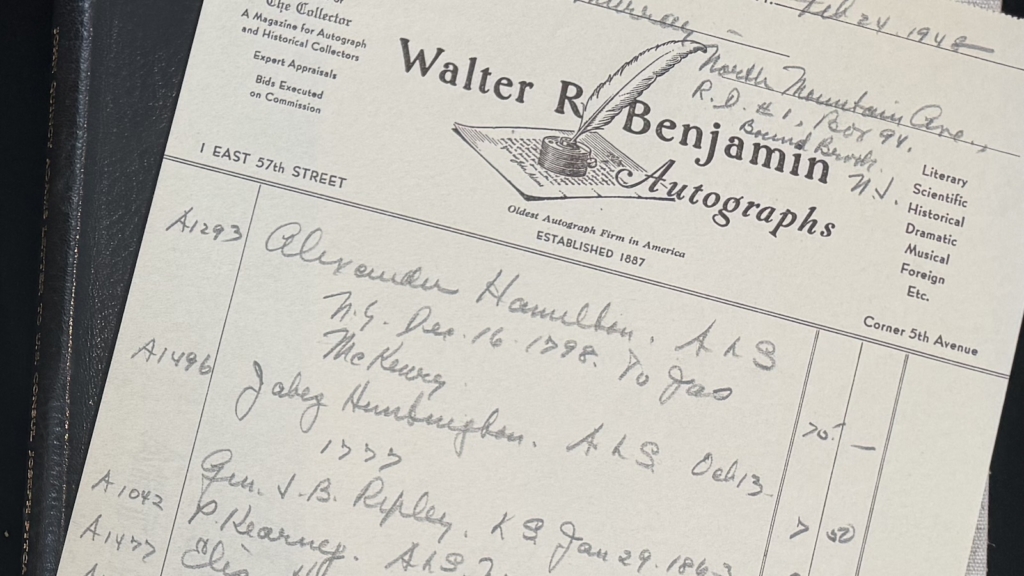
This letter was acquired by us from the direct descendants of Pickering and has never before been offered for sale.

Frame, Display, Preserve
Each frame is custom constructed, using only proper museum archival materials. This includes:The finest frames, tailored to match the document you have chosen. These can period style, antiqued, gilded, wood, etc. Fabric mats, including silk and satin, as well as museum mat board with hand painted bevels. Attachment of the document to the matting to ensure its protection. This "hinging" is done according to archival standards. Protective "glass," or Tru Vue Optium Acrylic glazing, which is shatter resistant, 99% UV protective, and anti-reflective. You benefit from our decades of experience in designing and creating beautiful, compelling, and protective framed historical documents.
Learn more about our Framing Services