





President Abraham Lincoln Allows a Key Kentucky Advisor to Cross the Lines into the Confederacy to Attend the Trial of His Son
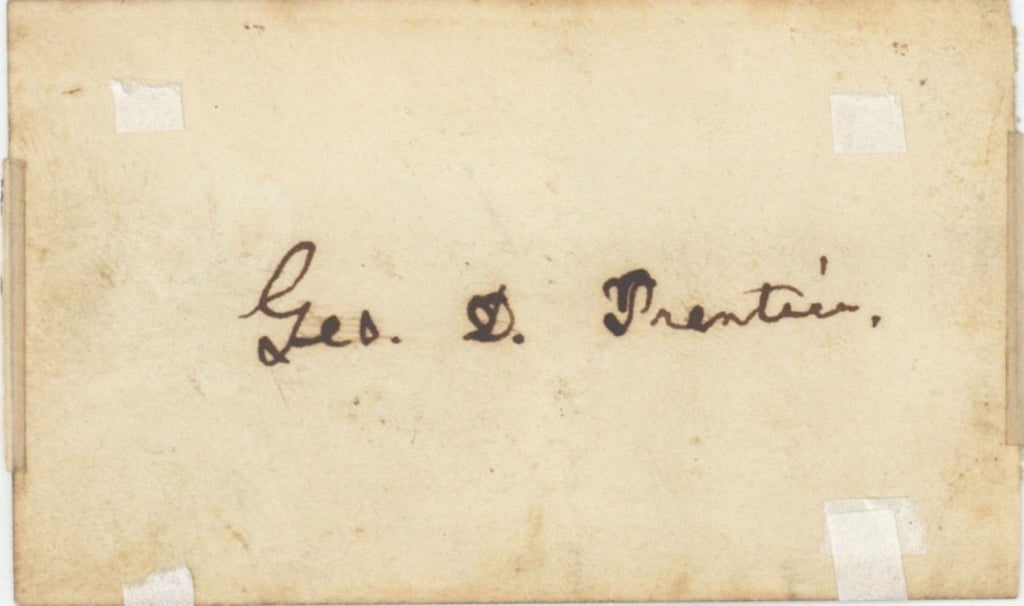

This document was once owned by the Carnegie family, Mrs. Thomas Carnegie, the sister-in-law of Andrew Carnegie
- Currency:
- USD
- GBP
- JPY
- EUR
- CNY
 This currency selector is for viewing only.
The Raab Collection only accepts USD payments at checkout.
Exchange rates are updated hourly. Rates may be inaccurate.
Journalist George D. Prentice’s son was a Confederate officer captured by Union forces, who would later be charged with murder
George D. Prentice was born in Connecticut on December 18, 1802, and graduated from Brown University in 1823. He came to Kentucky in 1830 to write a campaign biography entitled The Biography...


Journalist George D. Prentice’s son was a Confederate officer captured by Union forces, who would later be charged with murder
George D. Prentice was born in Connecticut on December 18, 1802, and graduated from Brown University in 1823. He came to Kentucky in 1830 to write a campaign biography entitled The Biography of Henry Clay and remained in this state until his death on January 22, 1870, in Louisville. Prentice became the editor of the Louisville Journal, the newspaper of the Whig Party. The main focus of this paper was the promotion of Henry Clay’s agenda and his multiple presidential campaigns. Prentice brought the Journal from upstart newspaper to the most widely read newspaper in the western United States because of his wit and command of the English language. Upon the failure of the Whig Party, Prentice supported the Know-Nothing Party. Prentice then supported John Bell and his Unionist platform in the 1860 election, calling for the Southern states to stay in the Union. Following the repeal of neutrality in Kentucky, the pro-Union Prentice wrote in the Louisville Journal on September 19, 1861: “Well, thank God, we at last have weighed anchor, and set out for the haven of safety and of honor. Now, let all possible sail be spread, and the noble ship of state be driven into the lines of her insolent foe with the whole might of the valor and devotion of her true men.” Prentice became part of Lincoln’s core group of advisors for Kentucky affairs during the war. But despite Prentice’s Unionist satisfaction that Kentucky was no longer neutral, his two sons fought in the Confederate army, one dying in 1862 and the other being captured in 1863.
The son of Prentice, Clarence J. Prentice, was one of the most colorful Kentuckians in the Confederate Army. From 1863 to 1865 he commanded the 7th Confederate Cavalry Battalion. Based in southwestern Virginia, the 7th was composed of mountaineers who resided along the Kentucky-Virginia border. The unit was difficult to discipline and was regarded as a “black sheep” battalion by other units in the department. While some members of the battalion accompanied Gen. John Hunt Morgan on his last Kentucky raid, they were part of the dismounted brigade. Prentice and the balance of the 7th was left behind to guard Pound Gap. In his “Kentucky Cavaliers in Dixie”, George Dallas Mosgrove left a lively pen portrait of the young officer. He described the 7th as wild and difficult to discipline but added that the men were afraid of Prentice who was a crack shot. Major Prentice was captured on March 31, 1863.
George Prentice wrote to Lincoln to enlist his help in securing a parole for his son. In his letter to Lincoln, dated Journal Office, Louisville, Ky., May 6, 1863, Prentice stated: “I wrote to you last week in regard to my son, Major Clarence Prentice, now a rebel prisoner at Camp Chase. He would ere this have been forwarded for exchange but Gen. Burnside, at my solicitation, consented to have him detained until I could have time to hear from you. I think there has been time, but I have received nothing from you either by mail or telegraph. I know that the pressure of the affairs of state upon you is very great. Perhaps you did not read my letter at all. Major Prentice is the only child left to me. My household is very desolate. My son is tired of the war, but unfortunately he thinks the south right. I ask you to direct his release upon his taking the non combatants oath and giving bond and security for its scrupulous observance. If you cannot do this, as I painfully fear you cannot, I earnestly appeal to you to parole him to stay outside of both the United States and the Southern Confederacy until after the rebellion. I should scarcely venture, Mr. President, to make this appeal to you but that I think I have served the Union cause faithfully, devotedly and successfully. I have suffered very much and sacrificed very much in its behalf—more, I am sure, than any other man in Kentucky; and I am likely, even at the best, to suffer and sacrifice much hereafter. I think there is not a candid and intelligent Union man in this state who would hesitate to say to you that I have saved it to the Union politically.
“And now, dear sir, pray grant me what I ask in behalf of my only son. His mother is half delirious, and so am I. I am scarcely capable of performing my daily duties to the country, but, if my request were granted, I feel I should be buoyant with new life. Please let me know your decision soon, for, if my son cannot be paroled upon either of the conditions I have mentioned, I want him sent forward as soon as possible to City Point, as he is extremely uncomfortable in his present situation.”
Ten days later Lincoln issued an order, written on the back of Prentice’s letter, instructing General Burnside to parole young Prentice “to remain outside the limits of both the loyal and disloyal States, or so-called ‘Confederate States,’…during the present rebellion, and to abstain from in any wise aiding or abetting said rebellion.” He was released in May 1863. However, Clarence Prentice immediately upon his release from Camp Chase violated his oath and re-entered the Confederate Army. He was promoted to lieutenant colonel. Only a few months after his parole, he was back to robbing banks, burning courthouses, and spreading terror and destruction generally along the Kentucky-Virginia border.
In the fall of 1863, after being released from Union custody, Prentice shot and killed a hotel proprietor named White in Abingdon, Va. during a “personal difficulty.” His trial was set for November 8, 1864, in Abingdon, and his father wanted to attend and assist him at his trial. George Prentice again wrote Lincoln asking for his assistance.
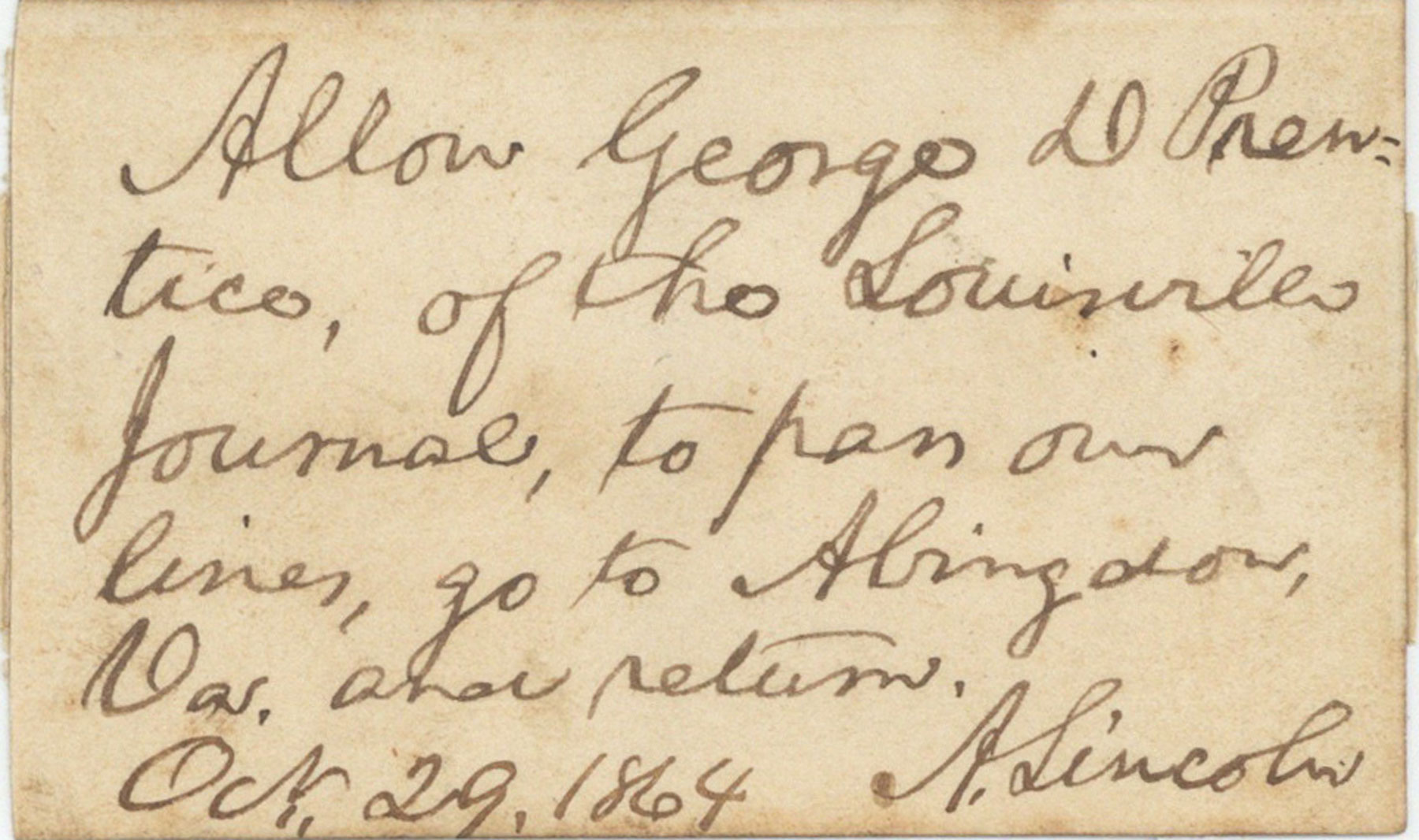
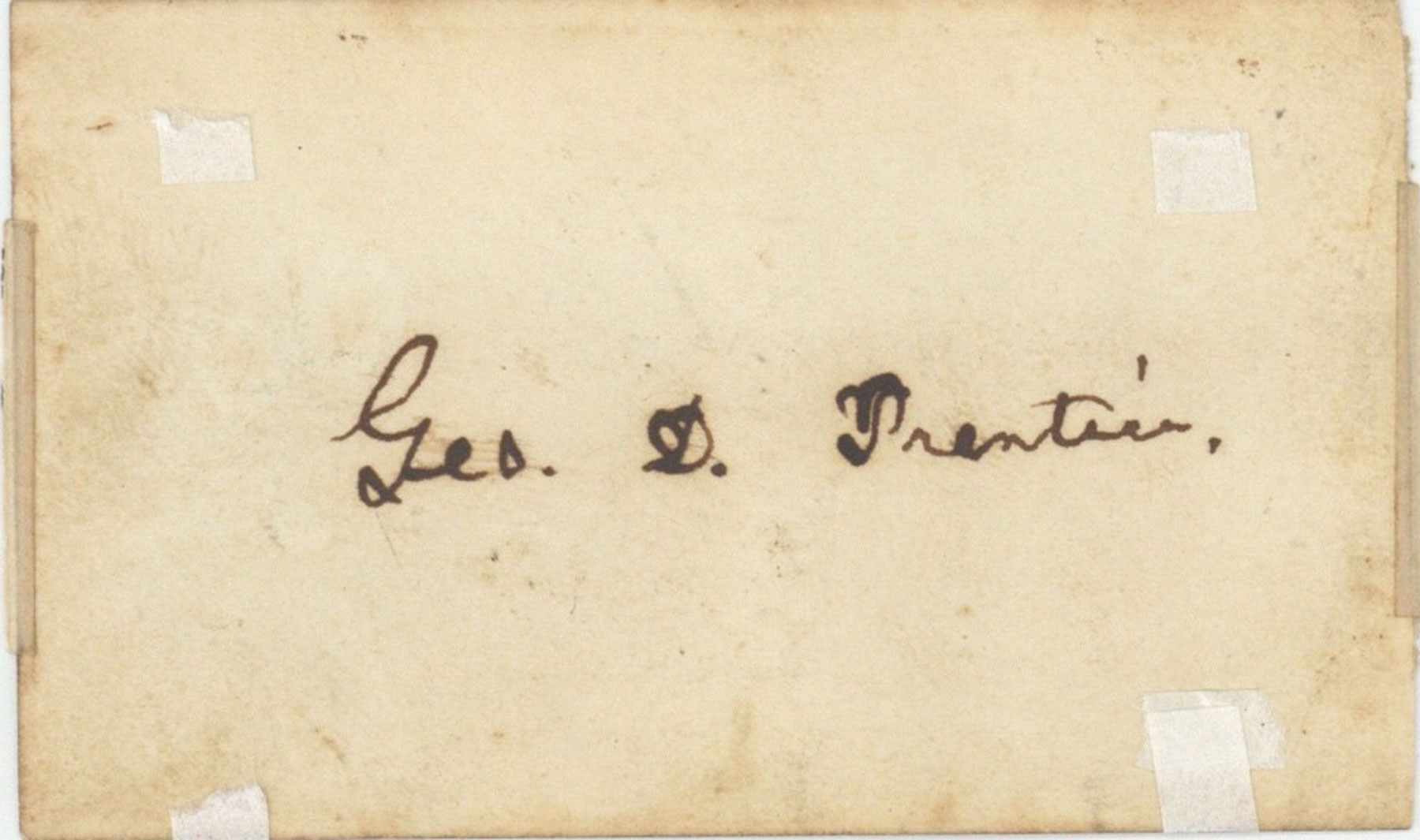
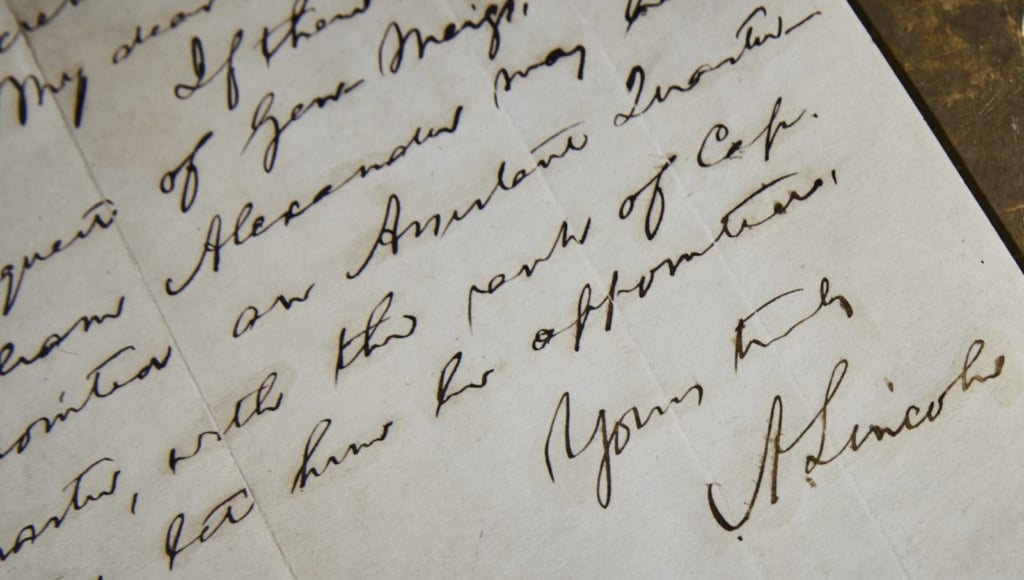
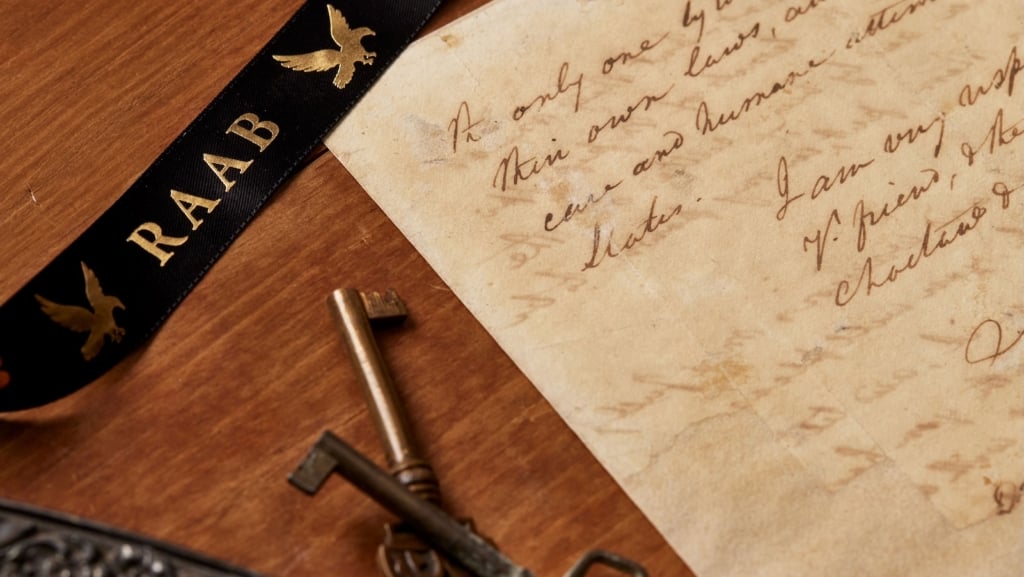
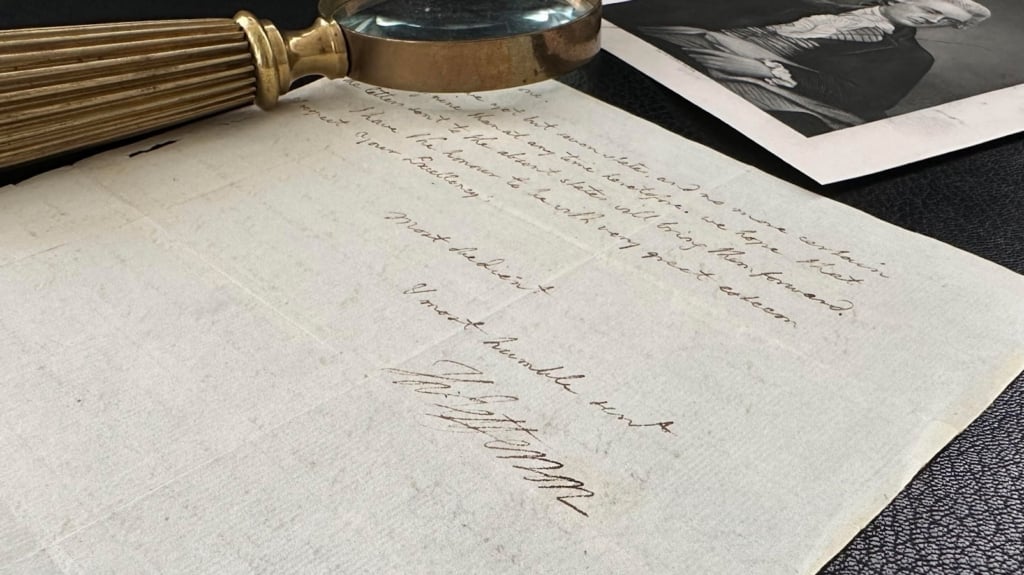
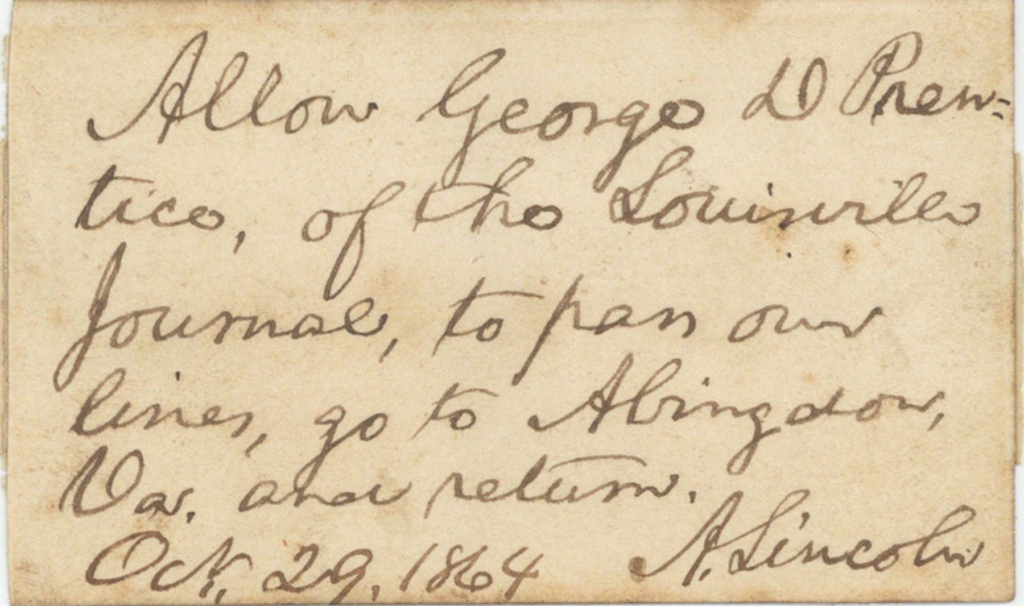
Lincoln complied with Prentice’s request. Autograph note signed, Washington, October 29, 1864. “Allow George D. Prentice of the Louisville Journal to pass our lines, go to Abingdon, Va., and return.”
Prentice also wrote to Secretary of State William Seward on October 25, 1864. A letter of Captain R. H. Baptist exists, October 22, 1864, to Prentice, offering to give evidence in the forthcoming trial of his son, saying “a conversation occurred between White & myself, that ought to be made known in the trial of your son by all means.” Prentice sought Seward’s help in lining up Baptist up as a witness for his son: “Capt Baptist, who formerly served under my son…and is now a prisoner…at Johnson’s Island, writes to me some facts which would be of vast importance to my erring child in his approaching trial…and which Capt. B. says he would state on oath…if he could be paroled to the Southern Confederacy or exchanged…I think that the exchange of Capt Baptist would subserve the cause of truth, humanity and justice.’’ After being shown Baptist’s letter, Lincoln arranged for his parole so that he could testify on behalf of Clarence Prentice.
Thus did Lincoln intervene twice to aid his Kentucky advisor.
Clarence Prentice was acquitted of the murder charge. He continued to serve in the Confederate Army until the war ended.

Frame, Display, Preserve
Each frame is custom constructed, using only proper museum archival materials. This includes:The finest frames, tailored to match the document you have chosen. These can period style, antiqued, gilded, wood, etc. Fabric mats, including silk and satin, as well as museum mat board with hand painted bevels. Attachment of the document to the matting to ensure its protection. This "hinging" is done according to archival standards. Protective "glass," or Tru Vue Optium Acrylic glazing, which is shatter resistant, 99% UV protective, and anti-reflective. You benefit from our decades of experience in designing and creating beautiful, compelling, and protective framed historical documents.
Learn more about our Framing Services