






President Abraham Lincoln Wants a Unionist Kentucky Congressman to See the Army Adjutant General, Likely to Discuss Kentucky’s Military’s Role in the War
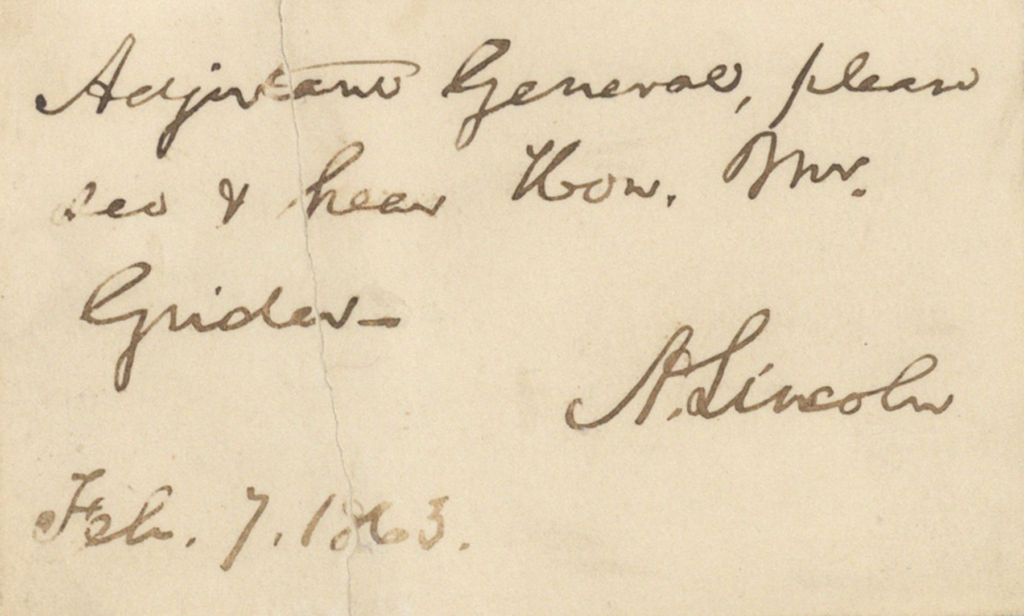

This comes the very day Congress passed an Act authorizing the Kentucky governor to raise troops, and giving the President the authority to control their use
- Currency:
- USD
- GBP
- JPY
- EUR
- CNY
 This currency selector is for viewing only.
The Raab Collection only accepts USD payments at checkout.
Exchange rates are updated hourly. Rates may be inaccurate.
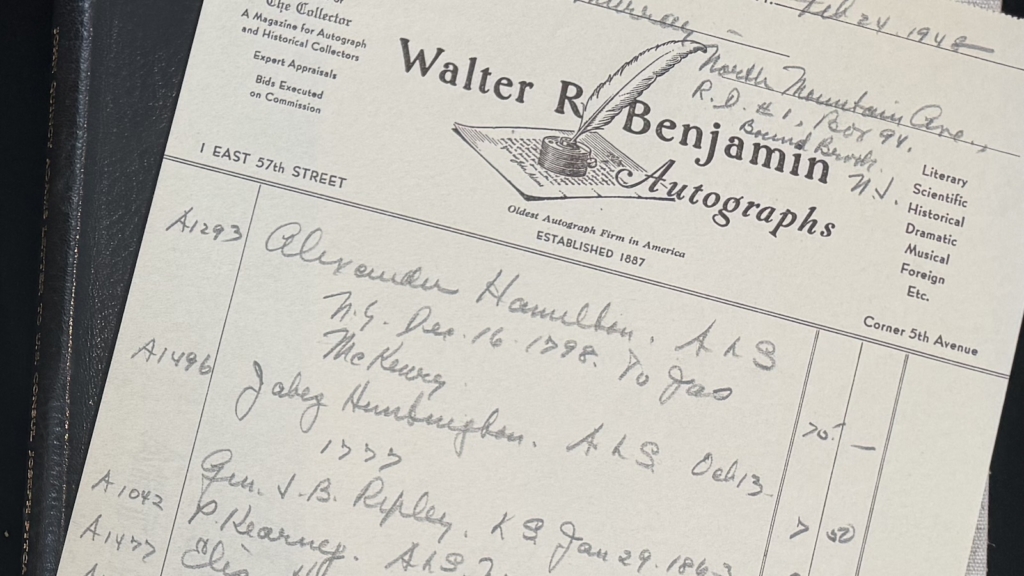
This document has been in a private collection for a generation
Kentucky Unionists were important to Lincoln, a Kentucky native, as he famously said, “I hope to have God on my side, but I must have Kentucky.”
The Congressman, Henry Grider, apparently needed to see Thomas to discuss the Act,...


This document has been in a private collection for a generation
Kentucky Unionists were important to Lincoln, a Kentucky native, as he famously said, “I hope to have God on my side, but I must have Kentucky.”
The Congressman, Henry Grider, apparently needed to see Thomas to discuss the Act, its impact on Kentucky, and the details of how the recruitment would be handled
Kentuckian Henry Grider was a Whig who served in Congress from 1843-1847, and then, as a Unionist, from March 4, 1861 until 1865. For the Thirty-ninth Congress (1865–1867), Grider shifted to the Democratic Party but retained his commitment to the Union, serving from March 4, 1865 until his death in office on September 7, 1866. Grider represented a Kentucky pro-slavery but Union-loyal constituency, and he retained that point of view throughout the Civil War. Kentucky Unionists like Grider were particularly important to Abraham Lincoln, a Kentucky native, who had famously said, “I hope to have God on my side, but I must have Kentucky.” Lincoln is known to have consulted with Grider about Kentucky affairs and relied on his support and that of the Kentucky delegation to Congress.
On February 7, 1863, Congress passed an Act providing that “the Governor of the State of Kentucky, by the consent and under the direction of the President of the United States, shall have power to raise and organize into regiments a volunteer force not exceeding twenty thousand, rank and file, to be raised within the State of Kentucky, to serve for the term of twelve months, to be employed within the limits of Kentucky in repelling invasion, suppressing insurrection, and guarding and protecting the public property: Provided, That at any time it may be necessary, in the discretion of the President of the United States, these troops may be employed out of the limits of Kentucky against the enemies of the United States.”
Thus the Governor of Kentucky would raise a force of 20,000 volunteers to serve in Kentucky, but President Lincoln had the authority to order them used outside the state. This Act was received with mixed reviews in Kentucky, and on the very day it was enacted, Grider’s son, Benjamin C. Grider, a slave-holding Unionist, resigned from the Union Army. From the timing of his resignation, one can surmise that he disapproved of the Act. He had commanded the 9th Kentucky Volunteers.
Lorenzo Thomas was the Adjutant General of the U.S. Army at that time, and his job was to maximize operational effectiveness of the army by manning, recruiting for and sustaining military operations.
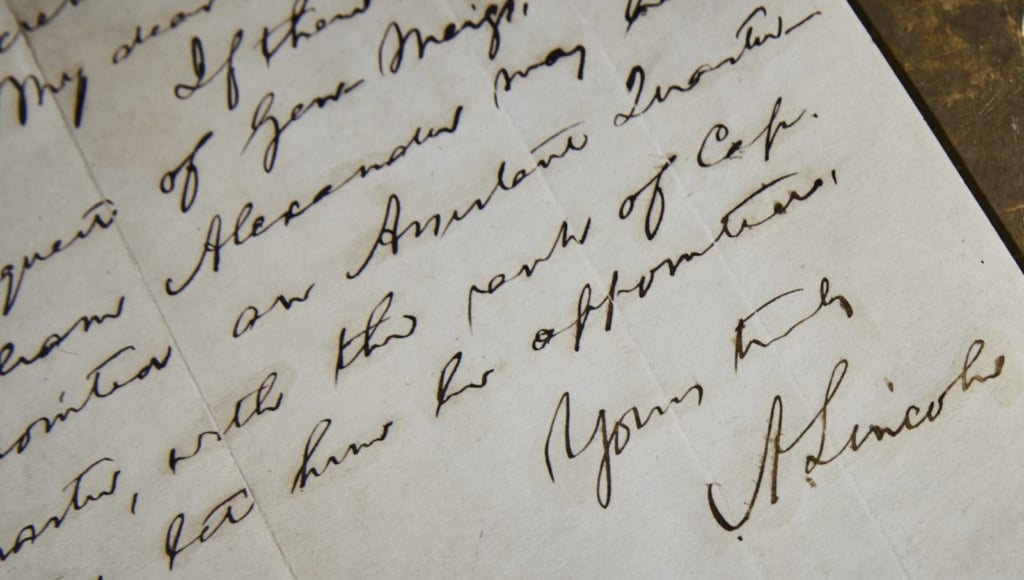
Autograph note signed, Washington, February 7, 1863, the day of the Act, to Lorenzo Thomas, expediting Grider’s ability to see Thomas. “Adjutant General, Please see and hear Hon. Mr. Grider. A. Lincoln.” It seems clear that Grider needed to see Thomas to discuss the Act, its impact on Kentucky, and the details of how the recruitment would be handled and managed. Not in Basler. A separation running vertically archivally mended.
This is a very scarce communication involving Lincoln aiding a Kentucky Unionist.

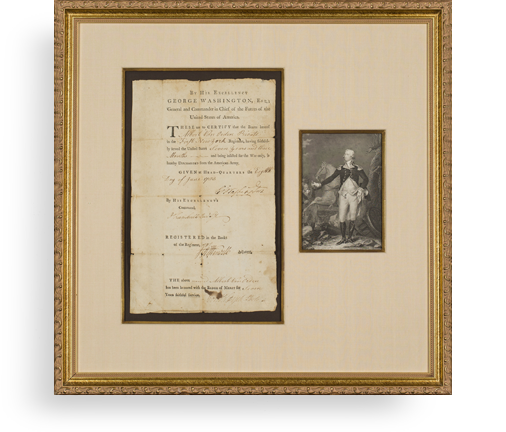
Frame, Display, Preserve
Each frame is custom constructed, using only proper museum archival materials. This includes:The finest frames, tailored to match the document you have chosen. These can period style, antiqued, gilded, wood, etc. Fabric mats, including silk and satin, as well as museum mat board with hand painted bevels. Attachment of the document to the matting to ensure its protection. This "hinging" is done according to archival standards. Protective "glass," or Tru Vue Optium Acrylic glazing, which is shatter resistant, 99% UV protective, and anti-reflective. You benefit from our decades of experience in designing and creating beautiful, compelling, and protective framed historical documents.
Learn more about our Framing Services
