







Surviving Pieces from the Great Choirbook Owned and Commissioned by Ferdinand and Isabella
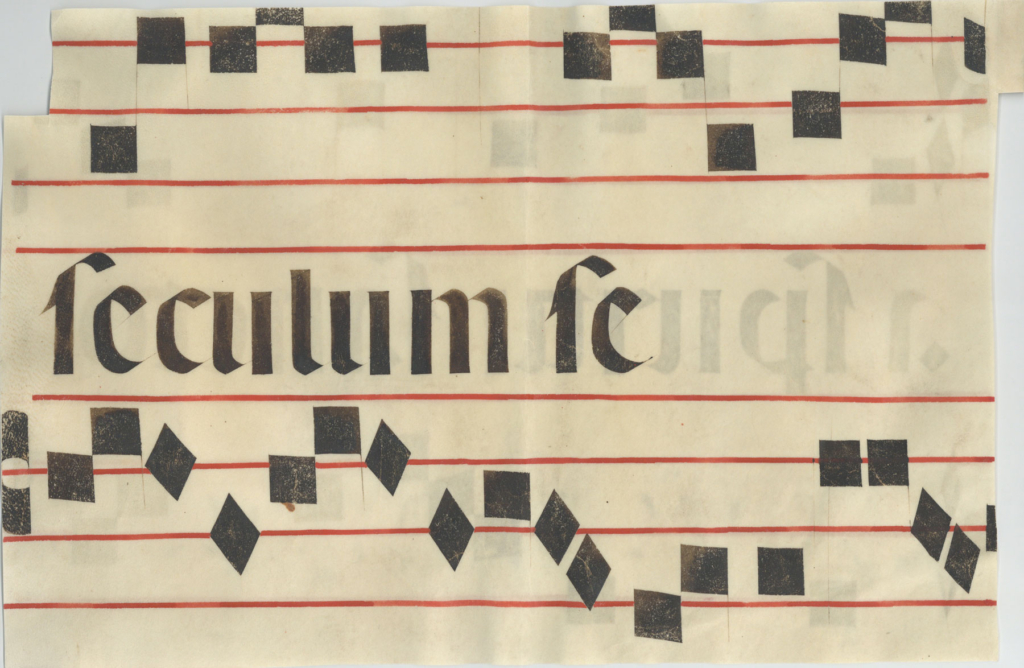
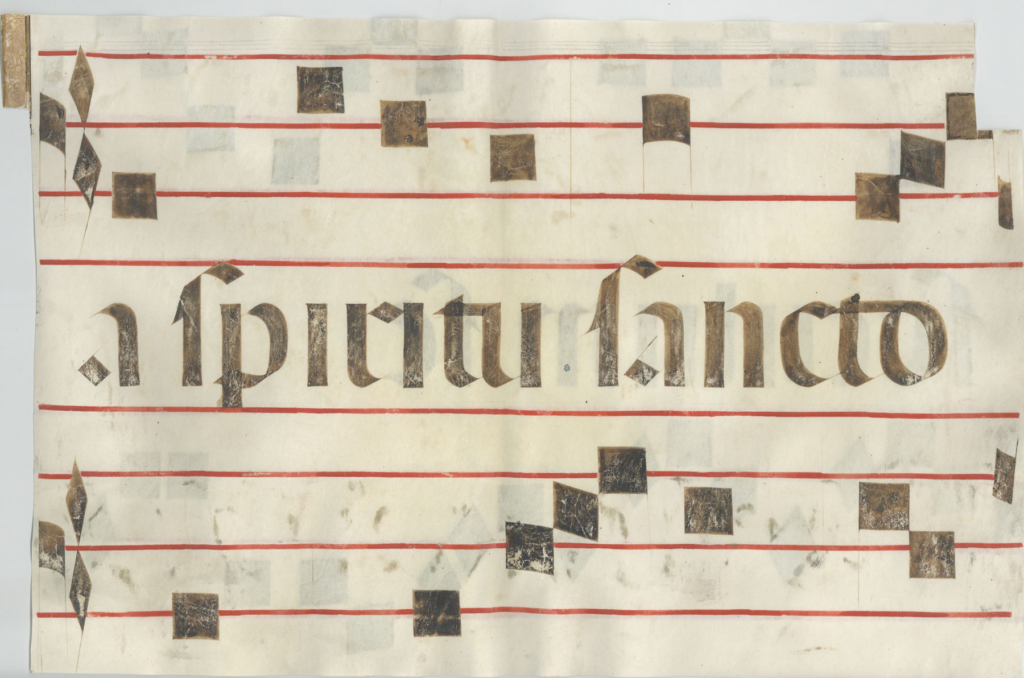



5 original fragments from the Gradual of the Spanish Monarchs, showing the grandeur and illumination of one of the finest books in Spain in the 15th century, touched by the Monarchs themselves
- Currency:
- USD
- GBP
- JPY
- EUR
- CNY
 This currency selector is for viewing only.
The Raab Collection only accepts USD payments at checkout.
Exchange rates are updated hourly. Rates may be inaccurate.
Other fragments of these are now in collections at the Morgan Library, the Fitzwilliam Museum in Cambridge (MS. 293 a-b), and the Museo Arqueológico in Madrid
When Isabella’s half-brother Henry died in 1474, she asserted her claim to the throne of Castille, which was contested by thirteen-year-old Joanna, who was connected to...


Other fragments of these are now in collections at the Morgan Library, the Fitzwilliam Museum in Cambridge (MS. 293 a-b), and the Museo Arqueológico in Madrid
When Isabella’s half-brother Henry died in 1474, she asserted her claim to the throne of Castille, which was contested by thirteen-year-old Joanna, who was connected to Portuguese royalty. Joanna sought the aid of her husband (who was also her uncle), Afonso V of Portugal, to claim the throne. This dispute between rival claimants led to the War of 1475–79. Isabella called on the aid of Aragon, with her husband, the heir apparent, and his father, Juan II of Aragon providing it. Juan II died in 1479, and Ferdinand succeeded to the throne in January 1479. In September 1479, Portugal and the Catholic Monarchs of Aragon and Castile resolved major issues between them through the Treaty of Alcáçovas, including the issue of Isabella’s rights to the crown of Castile. Through close cooperation, the royal couple were successful in securing political power in the Iberian peninsula.
Soon after, King Ferdinand II of Aragon (1452-1516) and Queen Isabella of Castile (1451-1504), joint monarchs of Spain, commissioned a large choir book, and that volume originally had their initials, insignia, armorial emblems and arms. J.D. Bordona in his Spanish Illumination, 1930, p. 61, describes it as “one of the most sumptuous and artistic series of choir-books in all Spain”, and tentatively ascribes it to the royal illuminator Juan de Carrion, who worked in Avila from the 1470s. It may have been produced for their own personal use, or for presentation as a royal gift, and it was next in the Dominican convent of Santo Tomás Aquino, in Avila, Old Castile, almost certainly given to that house during the campaign of rebuilding there paid for by Ferdinand and Isabella. They clearly felt some deep affinity to the community, and later in October 1497 when their only son Prince Juan of Asturias died before them, they buried him in the church there. The parent volume of these cuttings was doubtless used to continue to say the liturgical office over his tomb.
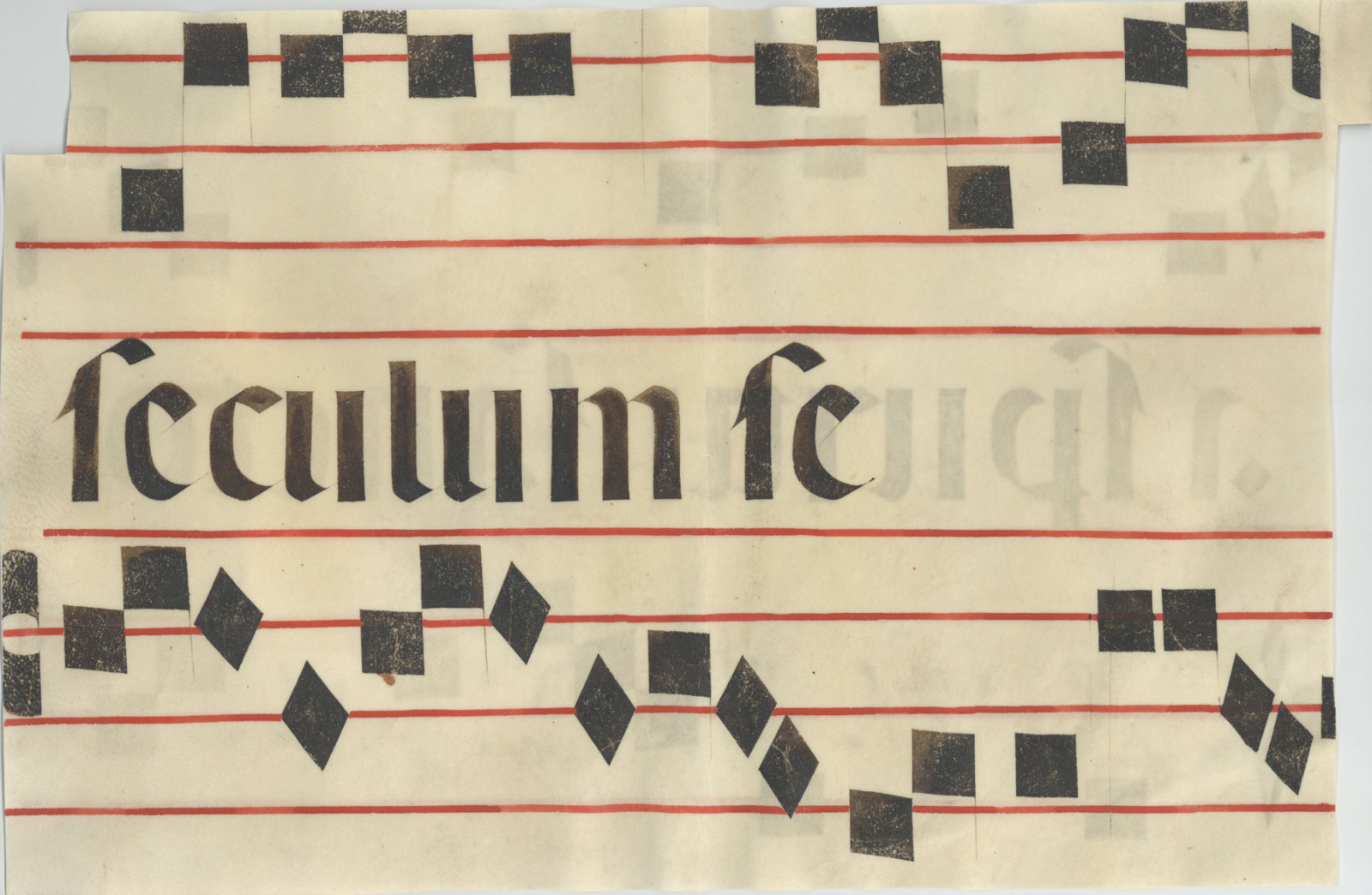
By the nineteenth century certain areas of a large number of leaves of the book had become scuffed and damaged, and were partly repainted in an amateurish fashion, or repaired with modern vellum. The book then came into the possession of Manuel Rico y Sinobias, who cut it up and dispersed it widely. By 1918, two cuttings were in the Fitzwilliam Museum in Cambridge (MS. 293 a-b), and others emerged on the market in the Mettler sale, Mensing, 22 November 1929, lot 98, as well as with H.P. Kraus, cat. 112 (1965), no. 45, and Sotheby’s, 10 December 1996, lots 23 and 24, and again, 5 July 2005, lot 40. Other cuttings can be traced in the Museo Arqueológico in Madrid (Exposición de codices miniados Españoles, 1929, nos. civ-cvii and fig. 68) and the Zeileis collection (see Più Ridon le carte, II, 2002, pp. 414-15).
Few surviving objects have such a secure provenance in the ownership and actual hands of the grand Renaissance monarchs, Ferdinand and Isabella, joint monarchs of Spain, patrons of Christopher Columbus and by papal decree owners of both North and South America. The parent volume of these cuttings was certainly commissioned by them, and doubtless carefully inspected by them, and perhaps even used for some time by the royal couple in their devotions, before presentation to the religious community where they would later bury their only son.
5 separate cuttings from the Gradual of Ferdinand and Isabella, in Latin, illuminated manuscripts on vellum
[Spain (Castile, probably Avila), c. 1482-1492]
1) Large cutting with remains of a single line of text in the highest ornamental grade of Iberian liturgical script and two lines of music in square notation on a 5-line red stave (rastrum: 109mm.), tab at one upper corner preserving part of the sumptuous illuminated border with a detailed and tiny bird with a halo picked out in gold brushwork on pink grounds edged in gold, overall: 268 by 410mm;
2) Long and thin cutting of a single line of text, with similar remnants of border at one side, bowed at base to cut around the miniature once there, and at outer corner to cut around the corner miniature of the original leaf, 50 by 419mm.;
3) Small cutting from the edge of the same leaf, with the edges of the rastrum and part of the border there in gold foliage on pink or blue grounds contained within a gold border by a geometric knot infilled with green and red, once trimmed at edges and repaired with nineteenth-century vellum and gold paint, 105 by 30mm.;
4-5) Two miniatures from the nineteenth-century phase of repairs of the book, both painted on modern vellum and pasted over the damaged originals, both with partial remains of an original letter on reverse, each approximately 95 by 70mm.;

Frame, Display, Preserve
Each frame is custom constructed, using only proper museum archival materials. This includes:The finest frames, tailored to match the document you have chosen. These can period style, antiqued, gilded, wood, etc. Fabric mats, including silk and satin, as well as museum mat board with hand painted bevels. Attachment of the document to the matting to ensure its protection. This "hinging" is done according to archival standards. Protective "glass," or Tru Vue Optium Acrylic glazing, which is shatter resistant, 99% UV protective, and anti-reflective. You benefit from our decades of experience in designing and creating beautiful, compelling, and protective framed historical documents.
Learn more about our Framing Services


