





Nathan Raab: Q&A with The Raab Collection’s President
We sat down with Nathan Raab, president of The Raab Collection and author of the bestselling book The Hunt for History, who recently marked his 20th anniversary with the firm, to record a special episode of the Inspired by History podcast, wherein we discussed frequently asked questions about buying and selling autographs, including his advice about creating a meaningful collection of historical documents.
You can listen below or via your podcast player of choice. Or, if you prefer, you can read this lightly edited transcript of our conversation with embedded links to more resources.
First question: How did you get into this business of buying and selling historical documents? I mean, it is a pretty unusual business to be in.
Nathan: Well my dad started this business when I was in middle school. My father and I continue to work together, and I sort of grew up with it as a backdrop to my life and in my mid twenties joined the business and have been here since.
Your dad was a collector before he became a dealer?
Nathan: Yes. He was an attorney, franchise attorney, for decades and began collecting historical documents, well, I suppose probably when I was in lower school, and slowly determined that he could sell pieces and buy better pieces with the money that he made off the pieces that he sold, which over the course of several years eventually became the core of what we now think of as The Raab Collection, our business.
Describe the day-to-day work of a historical documents dealer.
Nathan: Well, I can describe my day-to-day work, which is, it lacks description. It can be anything from describing a document that we’ve acquired, meeting with a customer, and every day we get quoted many pieces from people looking to sell to us. So that process involves sorting through the many documents that are sent through our website for us to decide which we want to acquire and making offers on those pieces. A lot of research is involved, but I think the short answer is that no day is the same, and I never really know what the day’s gonna be like until it gets going. The day that I’ve had up until 4:30 PM could be very different from the day that begins at 4:30 and ends whenever, depending on what communications I get throughout that day.
What’s the best part about working with these pieces of history?
Nathan: I think the best part is the discovery aspect of it. Finding things that no one’s seen, feeling like you’re really in the front row of historical discovery. Getting really nitty gritty, down and dirty, with the documents to uncover secrets that they can tell you that maybe nobody has recognized before. So that’s the exciting part, finding new things, seeing new things, having a different, more profound appreciation of the document and the history that created it.
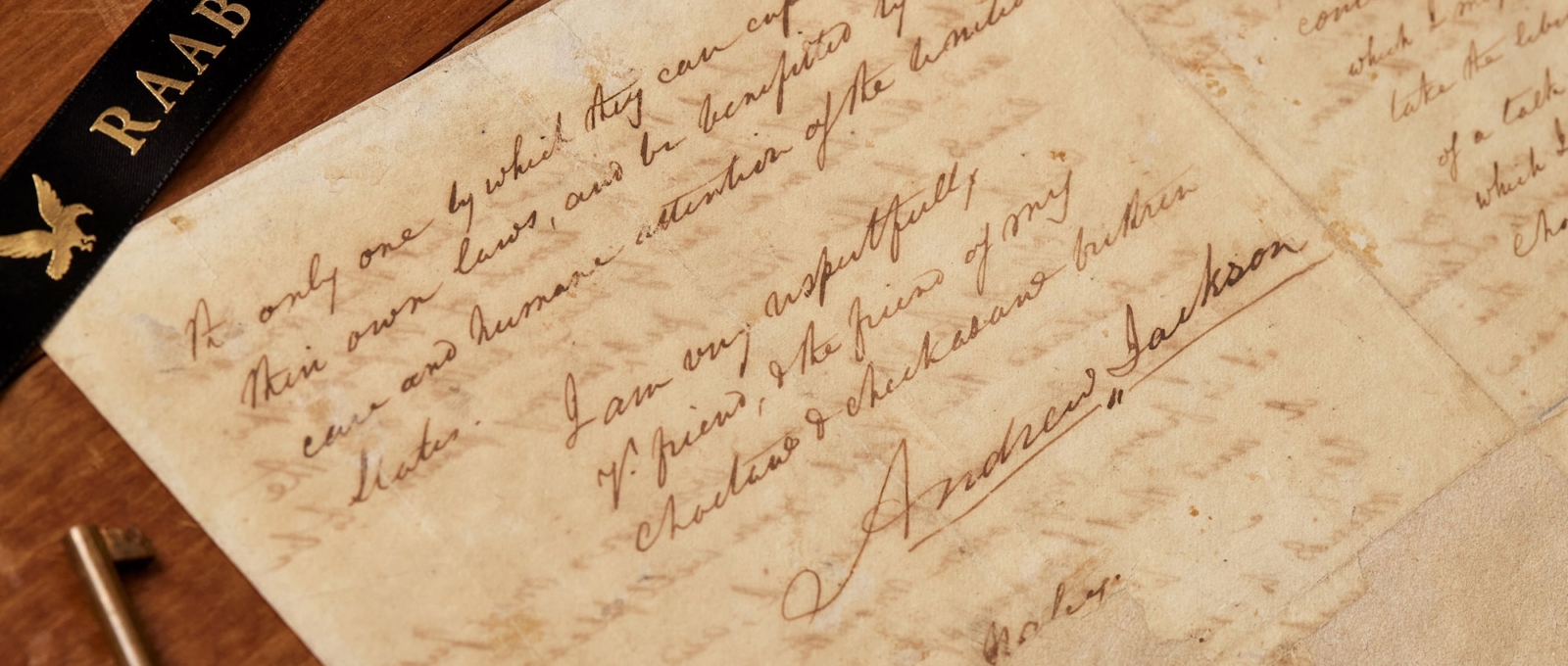
Tell us about the process of authenticating historical documents. How do you do it? When somebody sends you a photo of something or brings in a piece for you to look at, what’s the process like?
Nathan: Well, asking that question is a little bit like asking a doctor how he knows you have x ailment or don’t have x ailment. The short answer is the same with me, which is I’ve done this enough times to be able to recognize whether something’s authentic or not, almost immediately. Once you’ve seen enough, and of course you go into more detail in your research process, but the research tends to confirm your initial suspicion.
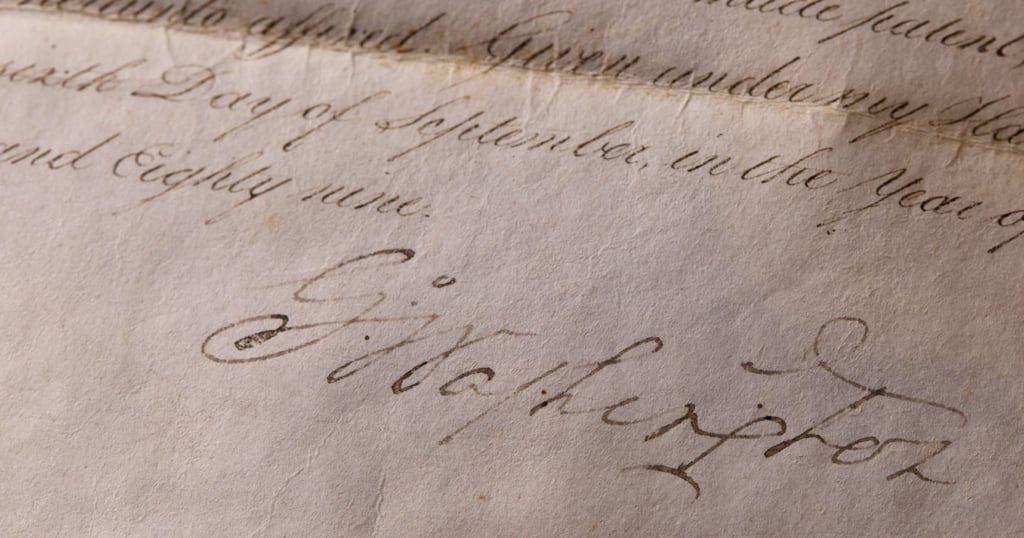
The longer answer is that you need to have a knowledge, not of the signature itself, which is sort of, what people think of the most. They think of authenticating a signature. Although there is an aspect of this business that is authenticating the signature, the more powerful, the complete, the more accurate and reliable way to authenticate a document is the whole context of the document: Is the format correct? Is the paper correct? Is the ink correct? Is the historical context correct? Does the document look like a document from that era ought to look? Are there additional notations added on the side, which are odd and different, which might indicate the presence of a forger on the document? And the very last thing you look at is the signature. In a sense, a qualified authenticator could basically authenticate a document without spending a lot of time on the signature, but focusing elsewhere.
I bet a lot of people would find that surprising.
Nathan: I think that’s true. You see these videos of people with magnifying glasses poring over [a signature], like what about this loop, or that loop? If you are at that point with a document, some other previous step has failed. You should never be at that point with the document.
If someone wanted to sell a historical document or autograph to Raab, how does it work?
Nathan: Well, many people do that every day. We are quoted, in some cases, tens of documents every single day and the challenge for us is sorting through them. But we buy things outright. We’re not an auction site. So if somebody wanted to sell us a document, they would contact us, and most pieces we do not make offers on, but assuming we wanted to make an offer, we would make an offer. If that was acceptable to you, you would send it to us, and we pay promptly on receipt.
Everything that you see on our website, we own, we’ve paid for ourselves, we’ve invested in the document, we believe in the piece. The positive for the people who sell to us is they can set the price that they want, and if we’re amenable to that, they’ll have [payment] usually the day that the document arrives, certainly within 24 hours.
So if somebody wants to sell you a George Washington document, they don’t need to go first to some third-party authenticator who tells them yes, it’s real, genuine, and then come to you. You do that part for yourself.
Nathan: I should say that when you’re selling a document to us, not only is there no need to get a third party authentication, but we disregard them. They’re not important in our process. Generally speaking, if you go and get a third-party authentication from somebody who may or may not have anywhere near the amount of expertise we have, we will not use that, and it’s money that comes out of the amount of money that we would pay you otherwise. So if you’ve gone out and spent a couple hundred dollars for an authentication, we don’t use that. You’ll sell to us for the same amount you would’ve with or without that authentication and you’ll just be out the $200 or whatever it is.
The people who do business in this field, people who buy and sell, ought to have the qualifications and expertise to authenticate themselves. If not, why are you doing this? If you are a businessman, but not a document expert and you require the assistance of a third-party, non-affiliated authentication company, perhaps that would be less useful to your clients than if you had your own independent expertise to be able to authenticate and understand the material that you’re selling. So we believe that sellers should have that ability.
You mentioned these third-party authenticators. Are you talking about certificates of authenticity, these COAs that people are sometimes promised to verify that their document is genuine?
Nathan: What is a certificate of authenticity? It’s only as good as the opinion of the person issuing it. Do you know the person who’s issuing it? Has the person who’s issuing it actually looked at the original? The people who buy and sell this material at the level that we’re buying and selling ought to stand by their own material and have the knowledge and experience to be able to authenticate it themselves. Like us, we’re now a two-generation business. We’ve been doing this now for four decades. My father’s been in the industry, collecting, for a lot longer than that, and we stand behind and issue our own certificates of authenticity for the lifetime of the collector. We do not require or even want third-party certificates of authenticity when we’re buying material.
I guess another way to put it is, why would you want to do business with somebody who needed a third-party certificate of authenticity? Why would anybody want to do that? You need to be able to look the vendor in the eyes and say, ‘you looked at this, and you authenticated the material, and if there’s a problem with it, you’ll stand behind it.’ To me, that’s just basic business.
To borrow the doctor metaphor, you wouldn’t go to a doctor and have the doctor give you an opinion and say ‘that other guy gave this opinion and that’s the opinion we’re going with.’ No, you would be like, ‘I need to find a doctor who can assess these things himself.’ They’re not selling an authentication. They’re selling the piece of paper. There’s language in these certificates that say they’re not binding. It’s obviously a profitable business.
It works for comic books and baseball cards…
Nathan: Maybe it’s more valid in those spaces. I have no idea. But certainly from my perspective, it’s not a world that we encounter with too much regularity, but it definitely tends to be people who are coming from the sports world.
There are not many people dealing with this type of material at this level globally. Our focus on quality and not quantity has allowed me really to spend a lot of time with the documents. It’s conducive to learning authenticity and really understanding the history. Authenticating a document is a process, but it’s a process that’s sparked by an initial impression. Somebody who’s seen 400 documents signed by Abraham Lincoln will look at a document signed by Abraham Lincoln that’s just walked in their door and they’ll know immediately in their gut not because they’ve looked at this curvature of the ink or that stamp, they’ll get a gut feeling, there’s something wrong with this piece. And they’ll look again. They’ll figure out the individual elements that make it bad, so to speak, that make it not authentic. But that process was informed right off the bat by that gut feeling.
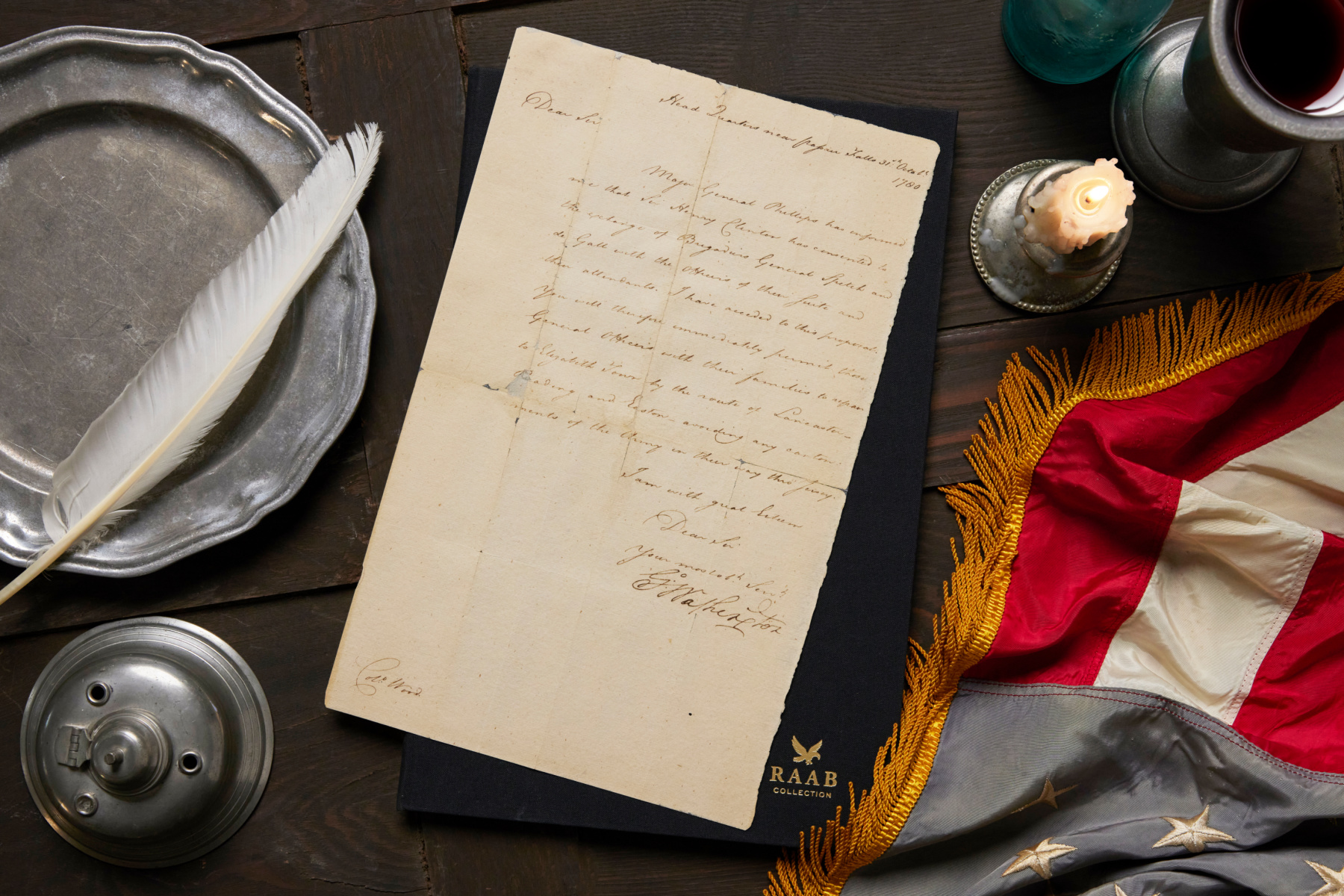
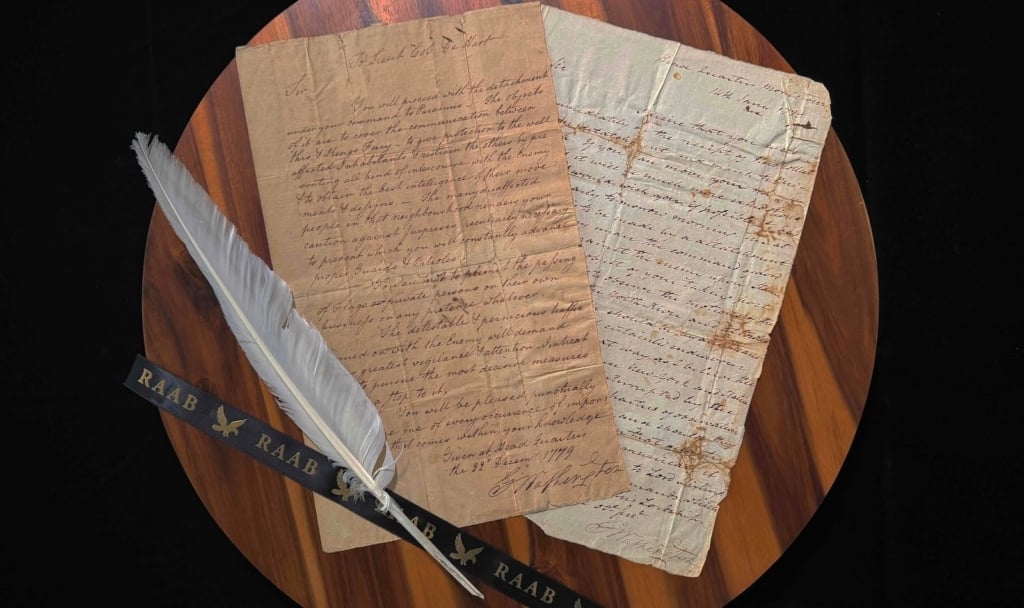
I had somebody come into my office two days ago with a document that, on a scan, looked like an authentic George Washington discharge document that Washington would’ve issued at the end of the Revolutionary War, discharging his officers, and he signed these. They’re out there, they’re nice, they’re desirable, they’re less common. This person walked into my office–they wanted to hand-deliver it as opposed to ship it–and within one second I was like, there is something wrong with this document.
And within two seconds I was like, this is a reproduction. But it was a really good reproduction designed to somehow deceive. I don’t think the people selling the document were being deceptive; I think they themselves were on the receiving end. As you look more closely, there are the individual elements that confirm that the paper is off. It’s not laid paper. They’ve created holes in the paper to make it look like it’s been damaged over time, as if it were an authentic document. But those holes themselves are giveaways because the holes aren’t uniform. They don’t show a uniform color of paper. You can see where the outside of the paper was, the ink and the inside is still white. Like the original paper it was printed on the holes are wrong. You can see where it was cut on the top to create an improper antique border of the paper.
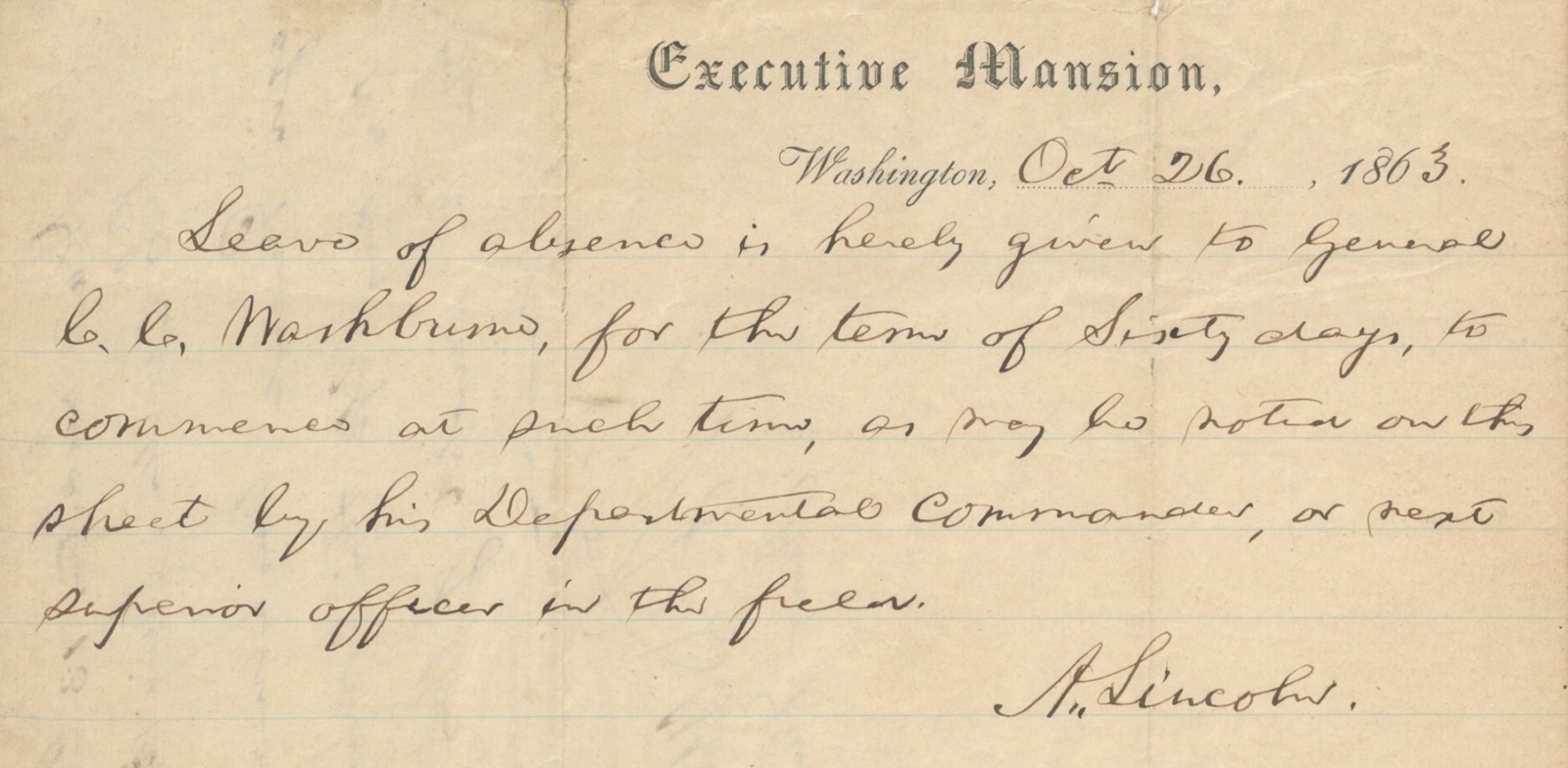
The very next day, somebody came in with a Lincoln document. They set it on the table. I knew immediately that it was authentic, and as I looked over it, the Stanton signature was authentic. The man’s story was valid. The paper was right. It had the proper notations. The seal was present. All these individual elements that just confirmed my original gut reaction, which is that the Lincoln was authentic.
You’ll notice that neither one of those cases am I mentioning the signature because that is the very last thing that I care about in those moments. It’s not the giveaway. Another way to look at it is, if you’re a forger, what are you gonna spend the most time doing? The signature. That is where you will spend the most time. So, a cut signature on a blank piece of paper from a very good forger would be a challenge for an authenticator to look at because there’s no context. Some people, and in many cases we would also, depending on the format, refuse to carry simple cut signatures without context, because forgery is an art, it’s deceptive art, but there are people who are good forgers. So when you’re dealing with these out of context cut signatures, not cut off an obvious document, where you just can’t place why this person signed, present real challenges that even an experienced authenticator would have a difficult time with.
So the signature is certainly a piece of the document, but I think it’s not the market we look for.
What about buying from The Raab Collection? Is it as easy as buying anything else on the internet?
Nathan: We have an e-commerce component to the website. You can order directly online or you can contact us and we accept major credit cards, we accept checks, wires; we even accept crypto. We’re trying to make it as easy as possible to buy from us.
And what if somebody wanted to come in and meet you? If you had a buyer or a seller, or wanted you to make a house call, is that something you do?
Nathan: Depending on the circumstance. Our office is open by appointment. We’re in suburban Philadelphia. I just entertained somebody yesterday who was selling me a Lincoln document, and they came to the office, and I met with them. So of course we love to meet our clients. The reality is it doesn’t happen very often. Our business is national and international, so I would say I probably meet 1-2% of my buyers or sellers in person, maybe less. There’s no need for it. But some people prefer it. In those cases we’re happy to oblige.
What differentiates The Raab Collection from other venues that buy or sell historical documents?
Nathan: Our focus is on quality, not quantity, and on customer service and genuine in-depth knowledge of the history and the document. In many ways, we’re operating the same as a firm in the early 20th century would’ve operated. We look for fewer documents, but the documents that we find tend to be more interesting.
We are in this for the length of the career of the collector, so to speak. We’ve had customers with us since the start of the business, which at this point is four decades. We do that by maintaining those kinds of relationships and by dealing with people fairly. Our model is to find these individual documents that are interesting and to not focus on the volume of the material, but on the importance of the document. To buy it ourselves. So 100% of the pieces on our website are wholly owned by The Raab Collection. Without any consignments or partnerships, we own 100% of the material.
What piece of advice do you give to new collectors of historical documents?
Nathan: In many ways, I would give the same piece of advice to a new collector as we practice within our own business. I would advise the collector to act likewise, which is to not focus on the number of pieces that you acquire, or buying something just because the price is right. Just because you can afford something doesn’t mean you should buy it. Focus on the quality of the piece and whether it speaks to you and put together the collection that’s meaningful to you based on the quality of the document. Buy fewer pieces within whatever your budget is. Buy better pieces. If you have a thousand proverbial dollars to spend, don’t buy 10 pieces of $100. Buy one piece for $1,000. That’s general, generic advice.
Think of collecting as a process. Where you can really dig in, and it’s experiential, where you can really scratch that collecting itch and really get to experience the things that are meaningful to you and you can draw inspiration from that and not as a financial operation. We sell these things as purchases of passion and interest primarily, and our customers tend to be very historically educated.
You’ve said before that you don’t believe in market trends when it comes to collecting historical documents, but are there certain historical figures who remain popular no matter what?
Nathan: I don’t believe in micro trends. I mean, there are macro movements. I suppose a macro trend is by definition, not a trend. But I don’t believe that just because someone’s birthday is coming up, or it’s the anniversary of so and so, that there’s a fundamental shift in the market. We certainly don’t operate that way. It’s more of a marketing technique than it is a reality.
There are certainly people whose legacies are entrenched and fixed, and that those legacies go well beyond their own generation or the succeeding generation. I mean, the obvious examples are Abraham Lincoln and George Washington. They’ll be collected until there is no field left, which hopefully will be never. Some folks whose legacies have taken a hit would be someone like Woodrow Wilson, who, when I first came into the business, was more actively collected by people whose parents would talk about them.
I think the bottom line is people should buy the things that they love, not let someone else put their collection together, or convince them to buy something because it happens to be someone’s birthday. That’s my general aversion to trends. The trend also takes the focus away from the historical import and puts it into a different realm. It somehow cheapens the process. Trends are, by definition, transitory. The things that we’re selling, they’ve been around for generations, centuries, sometimes millennia.
Where does The Raab Collection get its material from? Where do you find these historical documents?
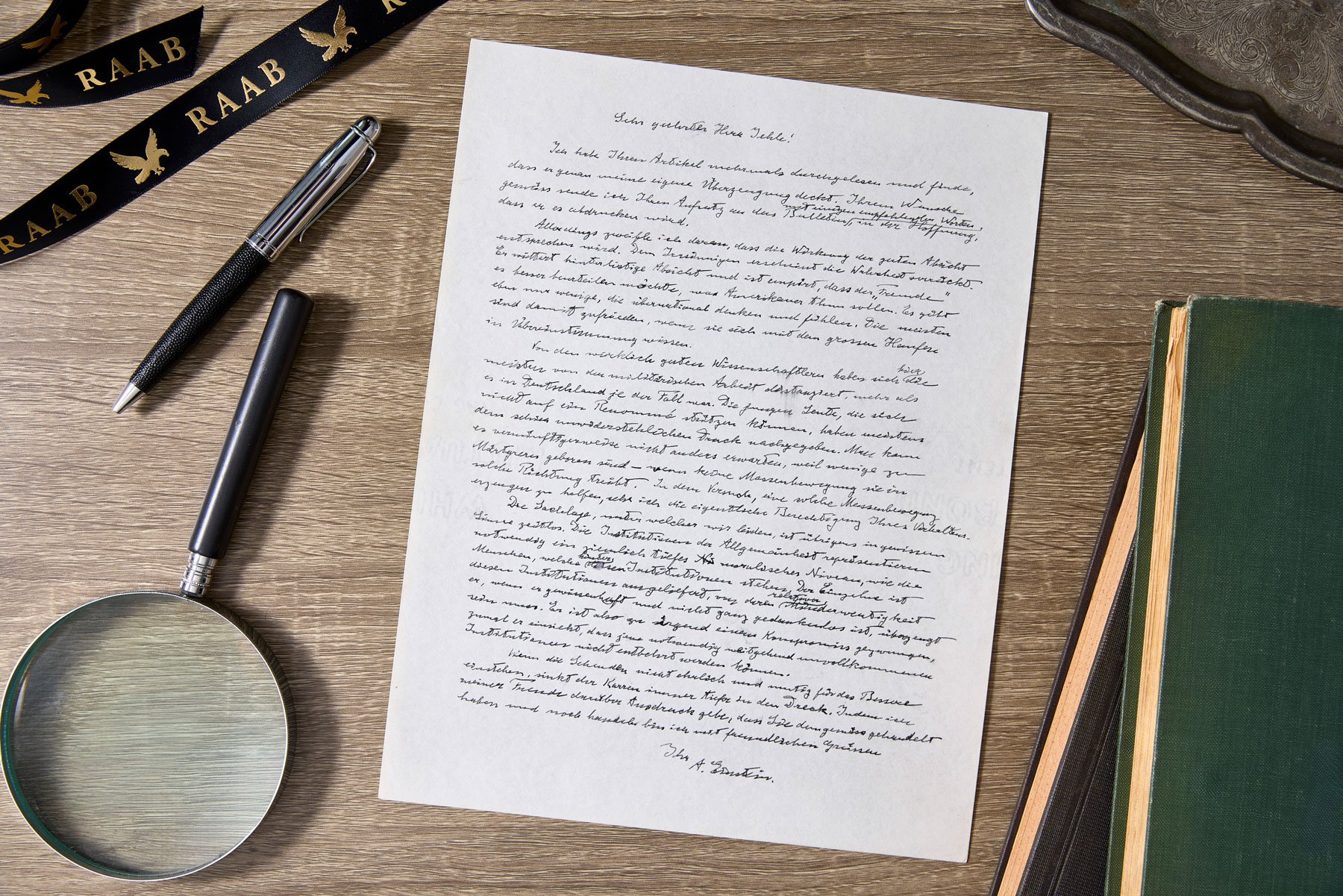
Nathan: Well, we find them where they are. We buy from direct descendants of famous people who received letters from prominent figures. So if your grandfather or great-grandfather was a scientist with Albert Einstein and corresponded with him, you may have a lot of things signed by Einstein. We’ve bought a lot from the descendants of Einstein’s colleagues. There are descendants of Revolutionary War generals who still have correspondence from George Washington, and we’ve bought from them. There are people alive who received letters from famous people themselves. So we’ve bought stuff from people who were children who wrote to Franklin Roosevelt and received letters from Franklin Roosevelt, so their name is the same name on the letter.
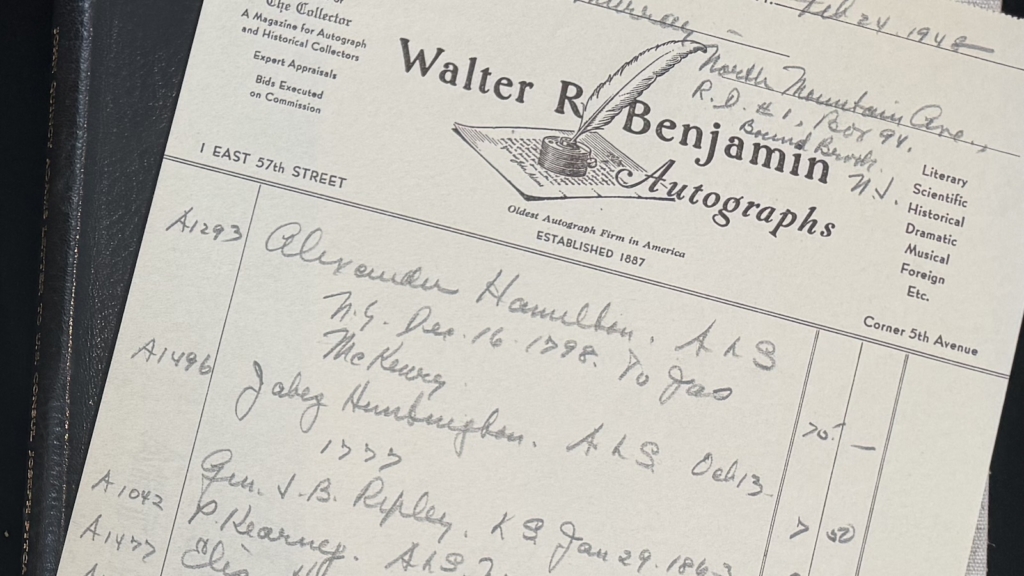
We just bought a letter from JRR Tolkien about The Hobbit from the man who wrote to Tolkien and received this response. We also buy a lot from private collectors, people who might have bought 20, 30 years ago and just have decided the time has come to sell. They don’t have anybody to hand it down to and would prefer the money over the object. We buy a lot from those private collectors and we buy from people who have inherited from the private collectors. If your grandfather was a collector and bought from one of the prominent early 20th century dealers like Walter Benjamin, or even later guys like Bob Batchelder, passed it down to you, you inherited these documents, you might want to sell. We buy from them. That is where 80%, more or less, of our acquisitions come from: descendants, private collectors, heirs, recipients. Then there’s a certain percentage that we buy when something of interest to us shows up at auction, where maybe it might be underappreciated, where we see more value than the seller might see.
Do you have a question about a historical document in your collection? Email us at [email protected], and we may answer in a future episode of Inspired by History.