



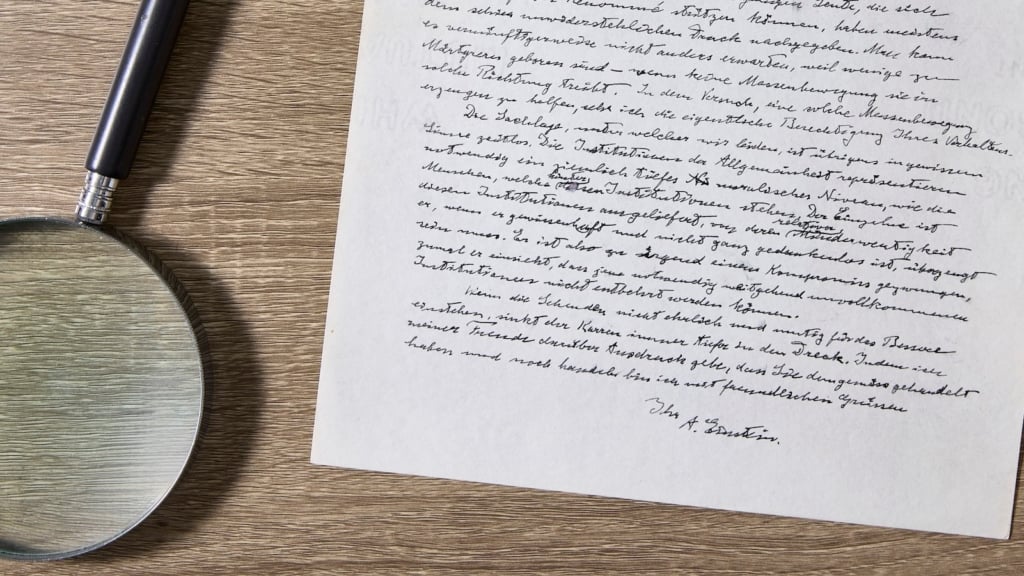


President Abraham Lincoln Grants a Leave of Absence for the Hero of the Battle of Brownsville, Texas, Union General Cadwallader C. Washburne, at the Behest of His Brother and Lincoln Political Ally, Congressman Elihu Washburne
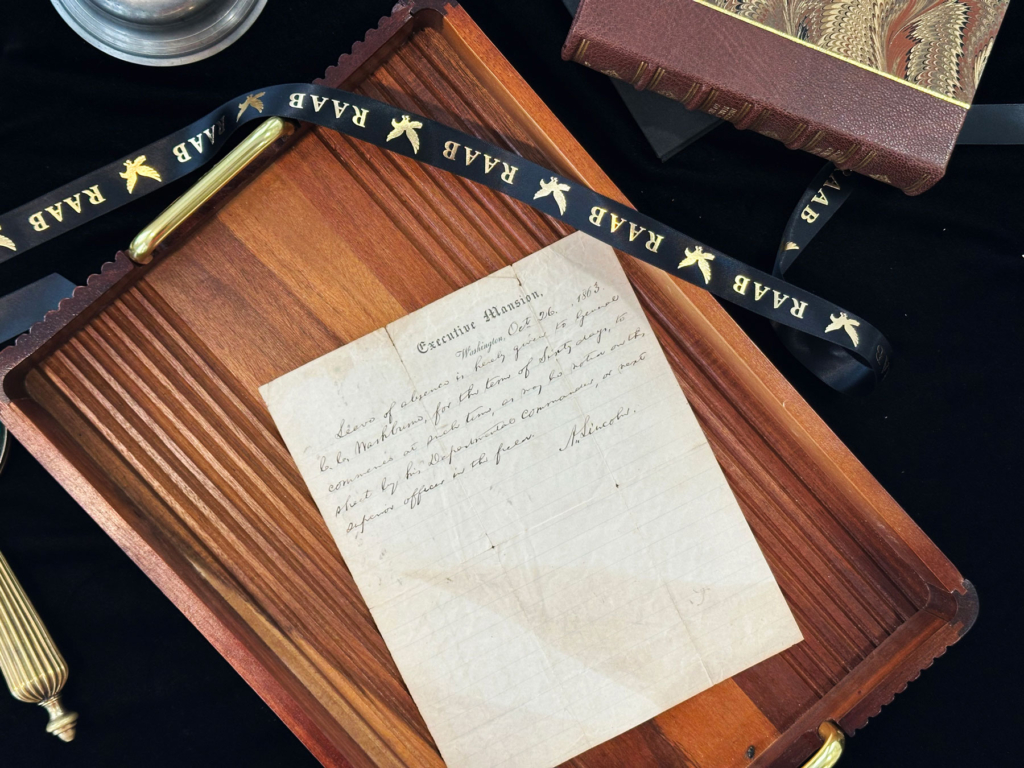


This newly discovered, unpublished letter traveled to the tip of Texas and there was also signed by the victorious Brownsville Generals, Washburn and Dana; this was the most distant point occupied by Union forces within the Confederate States - the tip of Texas
Rare document connecting President Lincoln, the War, and Texas;
Washburne would postpone this leave to finish the job in Texas and would use that leave to inform Lincoln in person on the state of affairs in Texas for the Union Army
This letter does not appear in any of...


Rare document connecting President Lincoln, the War, and Texas;
Washburne would postpone this leave to finish the job in Texas and would use that leave to inform Lincoln in person on the state of affairs in Texas for the Union Army
This letter does not appear in any of Lincoln’s published correspondence and was for generations in a private collection
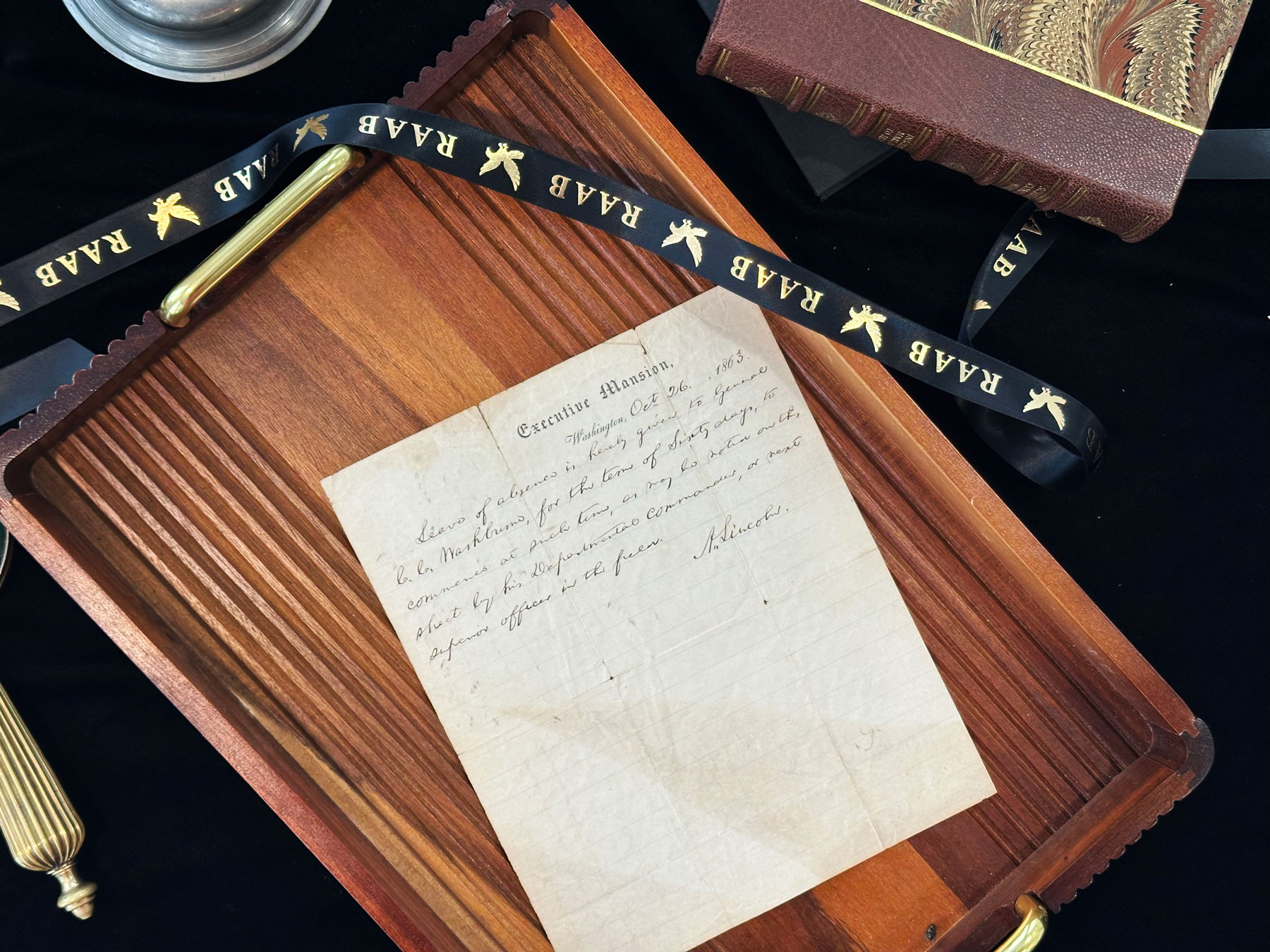
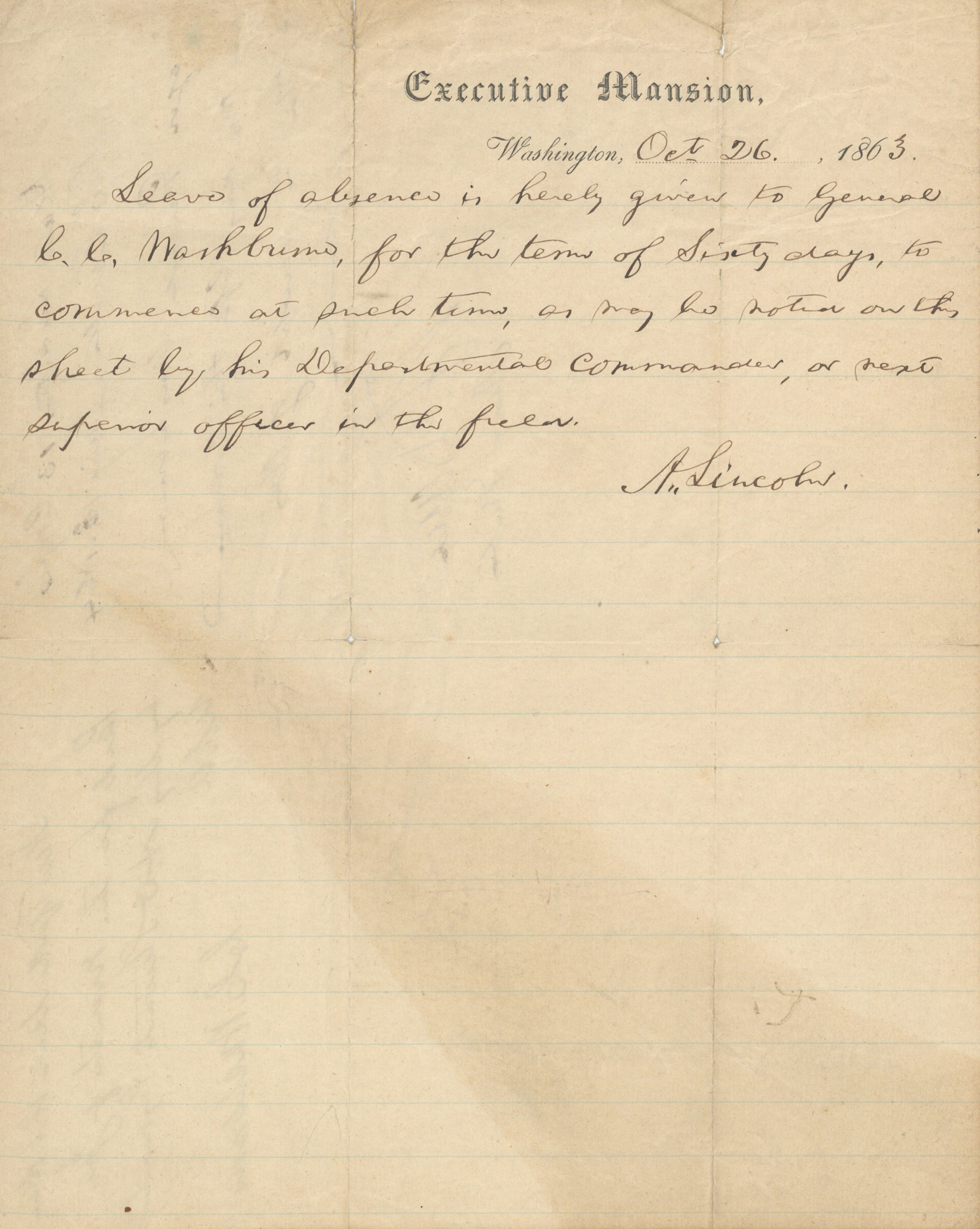
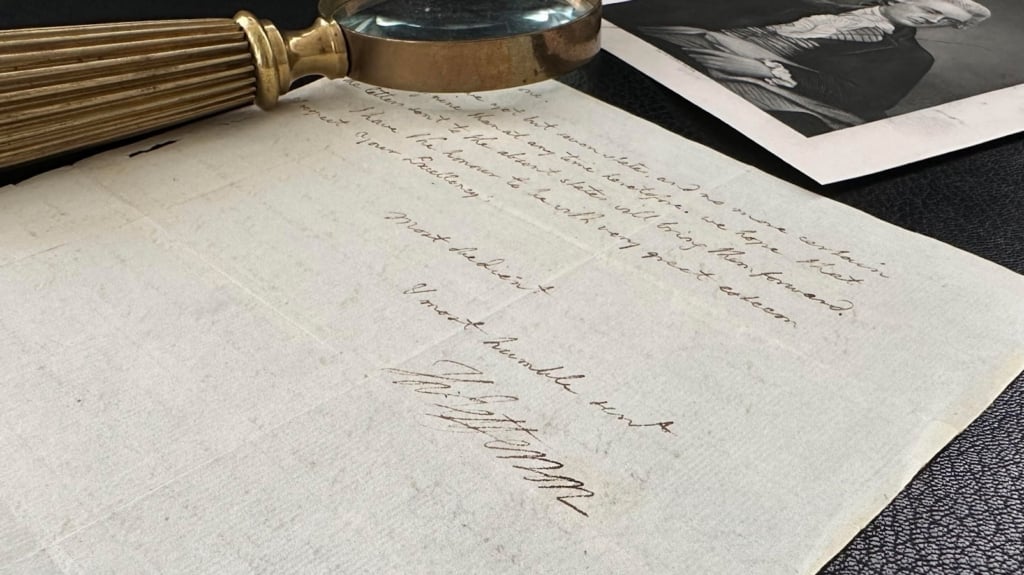
“Leave of absence is hereby given to General C.C. Washburne, for the term of sixty days, to commence at such time as may be noted on this sheet by his Department Commander, or next superior officer in the field.”
Learn more on the Inspired by History podcast

Elihu B. Washburne served as a congressman from Illinois before, during and after the Civil War. He was a strong political ally of Abraham Lincoln and the primary promoter of Gen. U.S. Grant’s career. He later served President Grant as Secretary of State and U.S. minister to France.
His brother was Major General Cadwallader C. Washburne, who took part in the siege of Vicksburg in 1863. He was then given command of the 1st Division of the XIII Corps, and led Union forces on an attack on lower Texas in late 1863 to disrupt the lucrative cotton trade that supplied the Confederacy and to support a hoped-for larger Union coastal campaign against Texas. This was the Battle of Brownsville, fought from Nov. 2-6, 1863, was part of the Union’s Gulf Coast campaign aimed at disrupting Confederate trade routes. Brownsville, Texas, held particular importance because it connected the Confederacy with Matamoros, Mexico, providing a conduit for cotton exports in exchange for weapons and supplies, all beyond the reach of the Union blockade. In an expedition launched by Major General Nathaniel P. Banks, Union troops landed near the mouth of the Rio Grande and advanced inland. The field command was entrusted to Major General CC Washburne, who led some 6,000 men in the move against Brownsville. Facing overwhelming numbers, Confederate forces evacuated the town, destroying stores and equipment as they withdrew. On November 6, 1863, Washburne’s men occupied Brownsville, delivering a swift Union victory that closed a vital Confederate outlet and showcased federal power along the Texas frontier.
Supporting the effort was Major General Napoleon J.T. Dana, who played a central role in the operation. Dana commanded troops in the campaign, working closely with Washburn in consolidating Union control after the landing and occupation. His leadership contributed to the stabilization of the captured town and the extension of federal authority along the Rio Grande, an outcome that also served a larger diplomatic purpose by signaling to France—then intervening in Mexico—that the United States intended to assert its influence in the region. He took over for Washburne on the latter’s leave.
This was the farthest south point of Union troop presence in Confederate territory during the Civil War. They then went on to Matagorda Island, and its coastal community, Palo Cavallo, before capturing Fort Esperanza on that island in November 1863. After this coastal campaign, Washburne and his troops were transferred back to Mississippi and Tennessee. In the post-war decades, Washburne was an industrial empire builder and founder of General Mills.
On September 20, 1863, Gen. C.C. Washburne wrote to his brother, Congressman Elihu B. Washburne, respecting his desire for a leave to handle pressing business at home. On October 12, 1863, Elihu forwarded the request to President Lincoln, praising his brother’s service and appealing for compassion, and also discussing a letter Washburne had received from Lincoln’s old friend and former U.S. representative from Galena, Illinois, Thompson Campbell, who was a member of the California legislature in 1863-1864. The topic of that letter was to indicate Campbell’s support for Lincoln’s reelection.
Here is Congressman Washburne’s letter to Lincoln, October 12,1863, requesting a leave for his brother and discussing the upcoming presidential election: “Mr. Lincoln: Notwithstanding the troubles that surround us, the time has come when we must confront the question of our next Presidential Candidate. I think you ought to let some of your confidential friends know your wishes and feelings in that regard. I write you now on this subject because I have a recent letter from Hon. Thompson Campbell’ touching the question of our Candidacy. He was one of the most effective and vigorous champions of our cause in California, before the late election, and is a member of the Legislature from California, San Francisco. Speaking of the Presidential Candidate, he says: ‘If he wishes the nomination, I am clearly for your friend, Mr. Lincoln’. He says he consented to go into the Legislature for the purpose of being better able to shape things in regard to the delegates to the National Convention next year. He says further, and it is well to heed it, that if he be not greatly mistaken, the whole patronage of the Government in California will be yield wielded against you next summer. Campbell has done more to sustain your administration for the last six months, than all the office-holders in the State put together. and if he only knew your wishes and views I think he can be relied upon for an equally efficient service hereafter. Thompson Campbell had represented the Galena, Illinois district in Congress (1851-53) before moving to California. Should you deem it best to make any suggestions to me in regard to these things, you know me well enough to be assured they will be properly and discreetly used.”
He then went on to discuss the leave for his brother. “I enclose you a private letter from my brother, Maj. Genl. Washburne, [dated September 20, 1863 but not present], and you will see what he says about a leave of absence. He went into the Service at the sacrifice of immense business interests, and he has served faithfully and acceptably in the most sickly climates for the last two years. His business imperatively requires his presence at home for a short time, and I think under the circumstances his request is not unreasonable. – A longer leave than twenty days must be granted by Genl. Halleck. Twenty days would not more than enable him to get home from where he now is. If you will ask that such leave be given and transmitted to me here, at Galena, Illinois, it will be a favor for which I will feel very grateful to you, and which shall be more than reciprocated by me.”
Lincoln responded on October 26, sending along the requested leave of absence as well as news of his tender of the collectorship of Portland, Maine to the Congressman’s other brother, Israel, former governor of Maine. Lincoln also indicates it would be an honor for him to be reelected. Letter on Executive Mansion stationery and noted as “Private & Confidential”, Washington, October 26. 1863, to Hon. E. B. Washburne. “My dear Sir, Yours of the 12th has been in my hands several days. Enclosed I send the leave of absence for your brother, in as good form as I think I can safely put it. Without knowing whether he would accept it, I have tendered the Collectorship at Portland, Me, to your other brother, the Governor. Thanks to both you and our friend Campbell, for your kind words and intentions. A second term would be a great honor and a great labor, which together, perhaps I would not decline, if tendered. Yours truly A. Lincoln.” Israel Washburne, Jr., accepted the appointment as collector at Portland, Maine.
This is the actual leave of absence for C.C. Washburne, destined for the then-southernmost and westernmost point occupied by the Union in the seceded states.
Autograph letter signed, on Executive Mansion letterhead, Washington, October 26, 1863. “Leave of absence is hereby given to General C.C. Washburne, for the term of sixty days, to commence at such time as may be noted on this sheet by his Department Commander, or next superior officer in the field.” This letter made its way from Galena to Pass Cavallo. Washburne got his leave, though he did not utilize it until January 1864, when the actions in Texas were concluded.
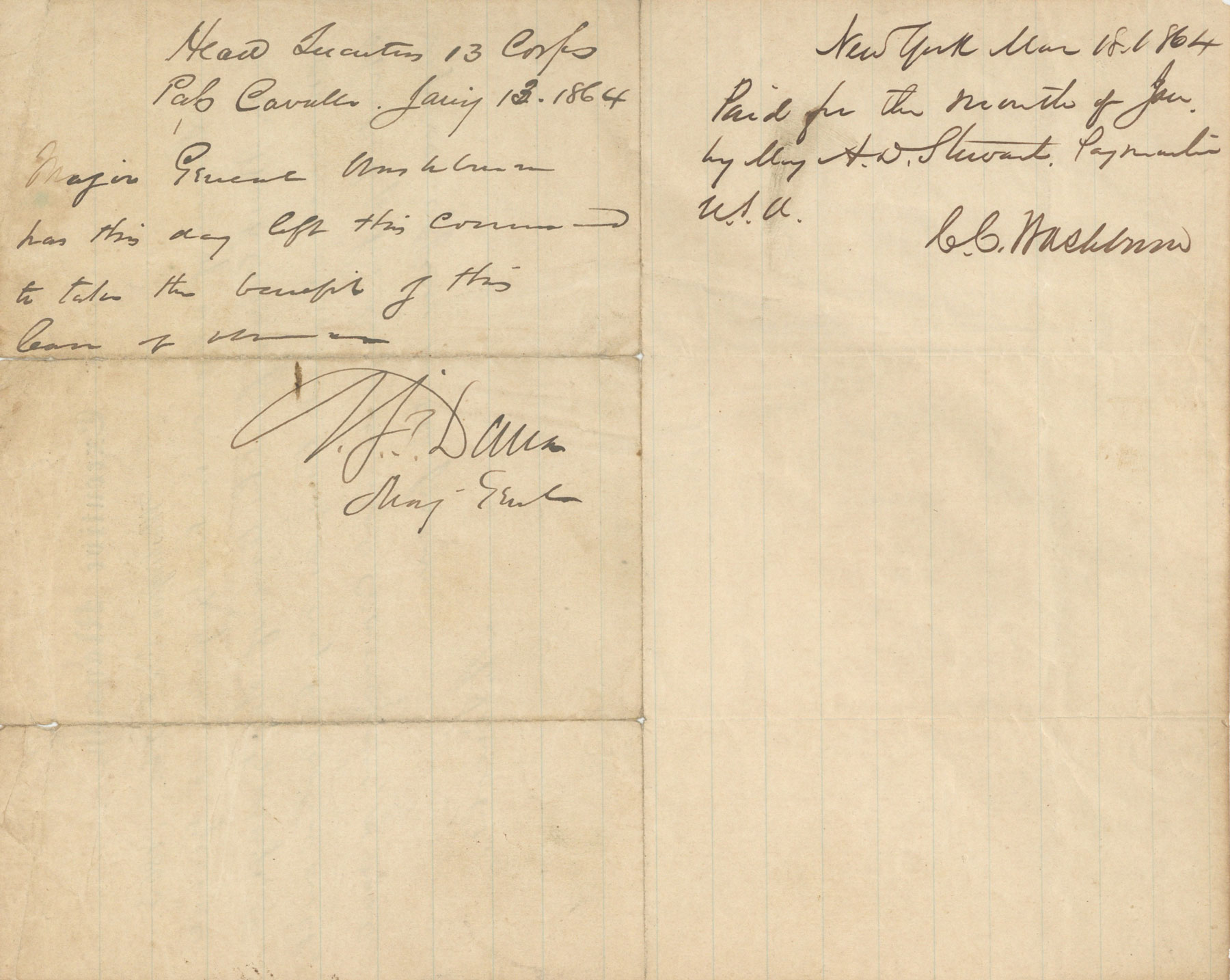
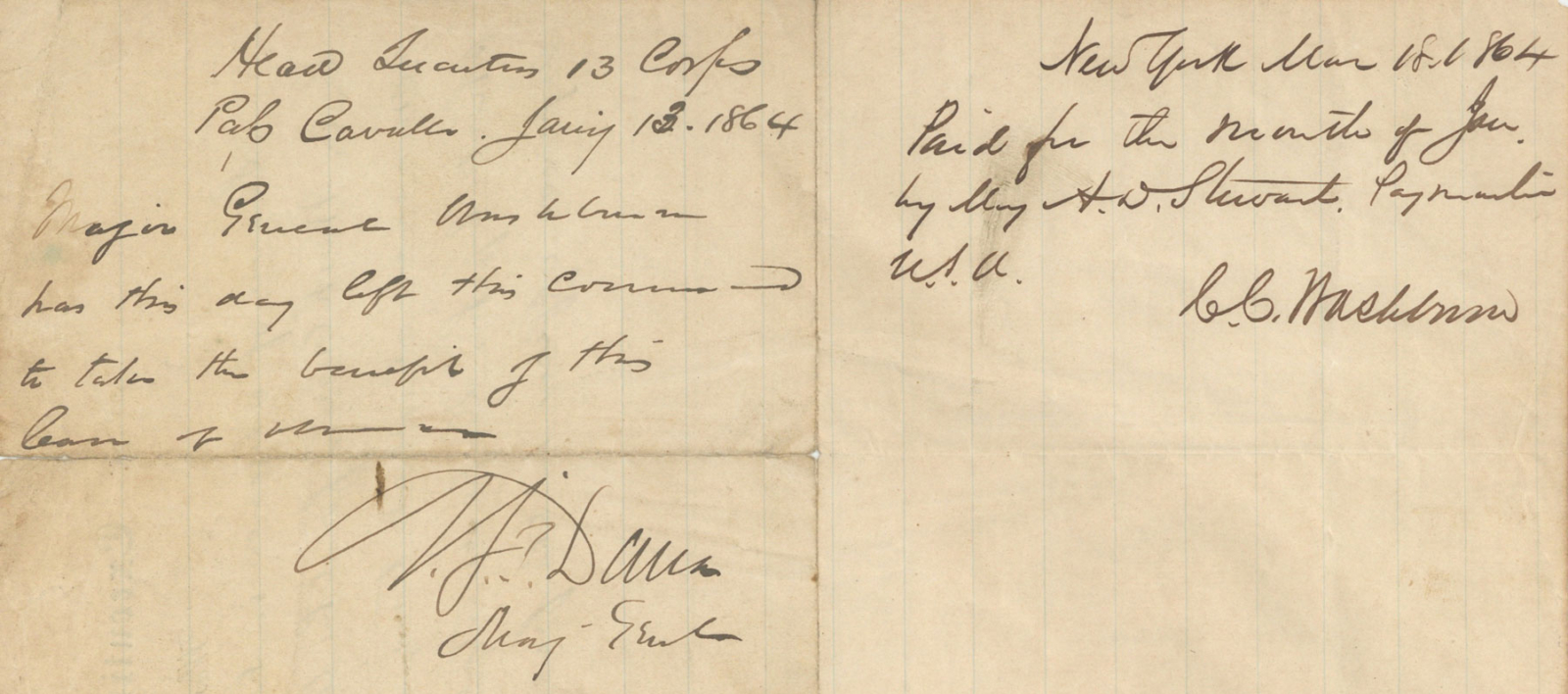
On the verso of the leave order are two endorsements. One is by Gen. Dana: “Headquarters 13 Corps, Palo Cavallo, January 13, 1864. Major General Washburne has this day left this command to take the benefit of this leave of absence.” The other by Washburne himself: “New York, March 18, 1864. Paid for the month of January by A.D. Stewart, paymaster USA.”
In early 1864, Washburne would see Lincoln in person to update the President on the happenings in Texas.
This leave paper shows the influence the Washburnes had with Lincoln, and the fact that it extended to the southern reaches of Union territorial occupation. It was not known to have survived and is not in Basler’s Collected Works of Abraham Lincoln.
Learn more on the Inspired by History podcast:

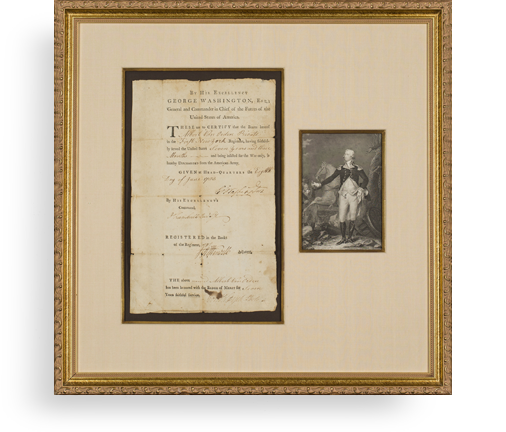
Frame, Display, Preserve
Each frame is custom constructed, using only proper museum archival materials. This includes:The finest frames, tailored to match the document you have chosen. These can period style, antiqued, gilded, wood, etc. Fabric mats, including silk and satin, as well as museum mat board with hand painted bevels. Attachment of the document to the matting to ensure its protection. This "hinging" is done according to archival standards. Protective "glass," or Tru Vue Optium Acrylic glazing, which is shatter resistant, 99% UV protective, and anti-reflective. You benefit from our decades of experience in designing and creating beautiful, compelling, and protective framed historical documents.
Learn more about our Framing Services