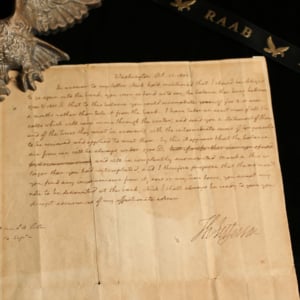




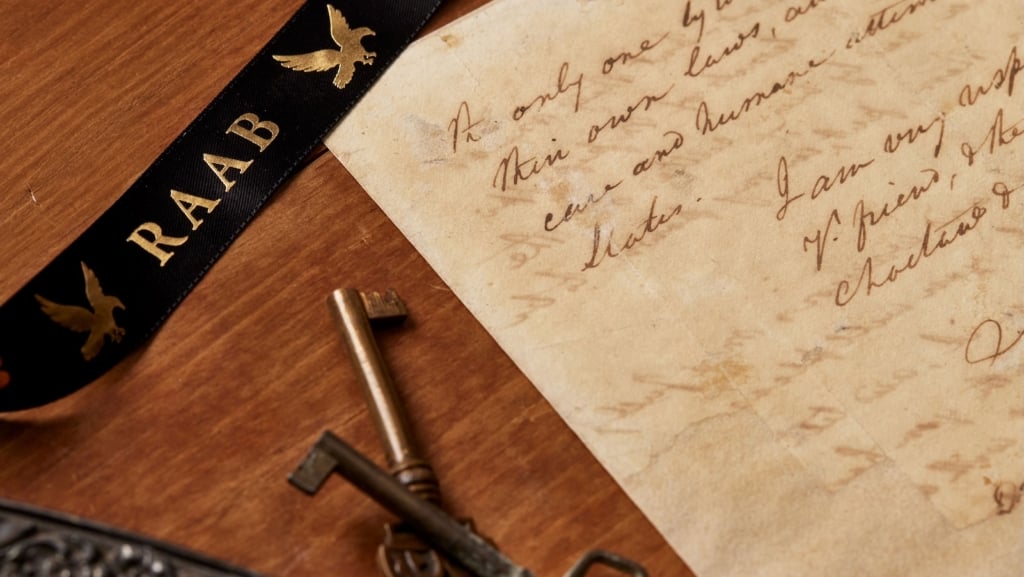
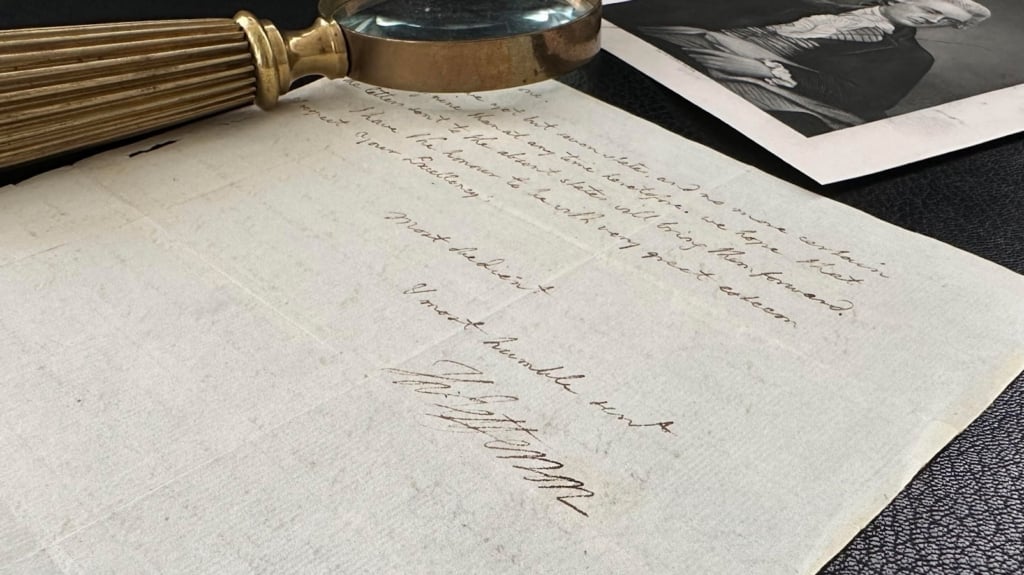
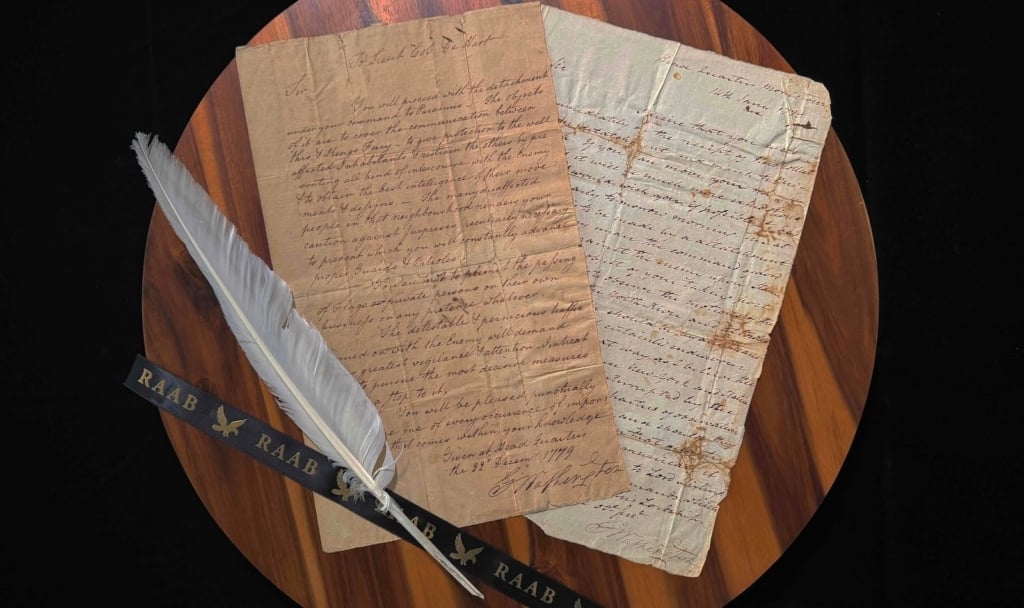


The Raab Collection announced that it has discovered and is offering for sale an unpublished letter of Abraham Lincoln with a powerful connection to Texas and Civil War history. Lincoln handwrote the letter from the White House in October of 1863, just days before the Battle of Brownsville in Texas took the Union Army to its deepest point in the Confederate states, in an effort to cut off trade routes. The document is an official grant of leave of absence to the Union General of the Battle of Brownsville, Cadwallader C. Washburn, at the behest of his brother and Lincoln political ally, Congressman Elihu Washburne.
This letter was not known to have survived and does not appear in any of Lincoln’s published correspondence, so we posed some questions to Nathan Raab about the discovery on the Inspired by History podcast. You can listen to the interview below or via your podcast player of choice. Or, if you prefer, you can read this lightly edited transcript of the conversation with embedded links to more resources.
At The Raab Collection, an original letter of Abraham Lincoln is certainly special, but not all that unusual. The piece we’re talking about today, however, is one that is unpublished, unknown to Lincoln scholars, and unseen in generations. So how does that happen? Isn’t every scrap that Lincoln ever touched or wrote or signed pretty well accounted for?
Nathan: No. Simply put, no. The majority of things he wrote as a public servant are known. There have been extensive efforts to track down and record all of his correspondence. The vast majority of things that one sees on the market exists in what I call the Lincoln Papers [at the Abraham Lincoln Presidential Library & Museum], which is a combination of some work that was done in the 20th century–the early to mid 20th century–to compile Lincoln’s writing, both to and from, and work that’s been done since by a variety of different outlets. But finding something from Lincoln’s Presidential days, when really everything was kept, and everything he was doing was important, that’s not published, where the text is new and it truly is a historical discovery, that is not common.
How were you introduced to this document?
Nathan: We were contacted by a man who’d inherited it. This goes to show you that things that had been in private collections for this long period of time–I don’t think it was a descendant, it was somebody whose father or grandfather bought this at some point generations ago and decided to sell it–and for reasons that are mostly just common sense, I suppose, it has evaded the efforts to catalog it until now.
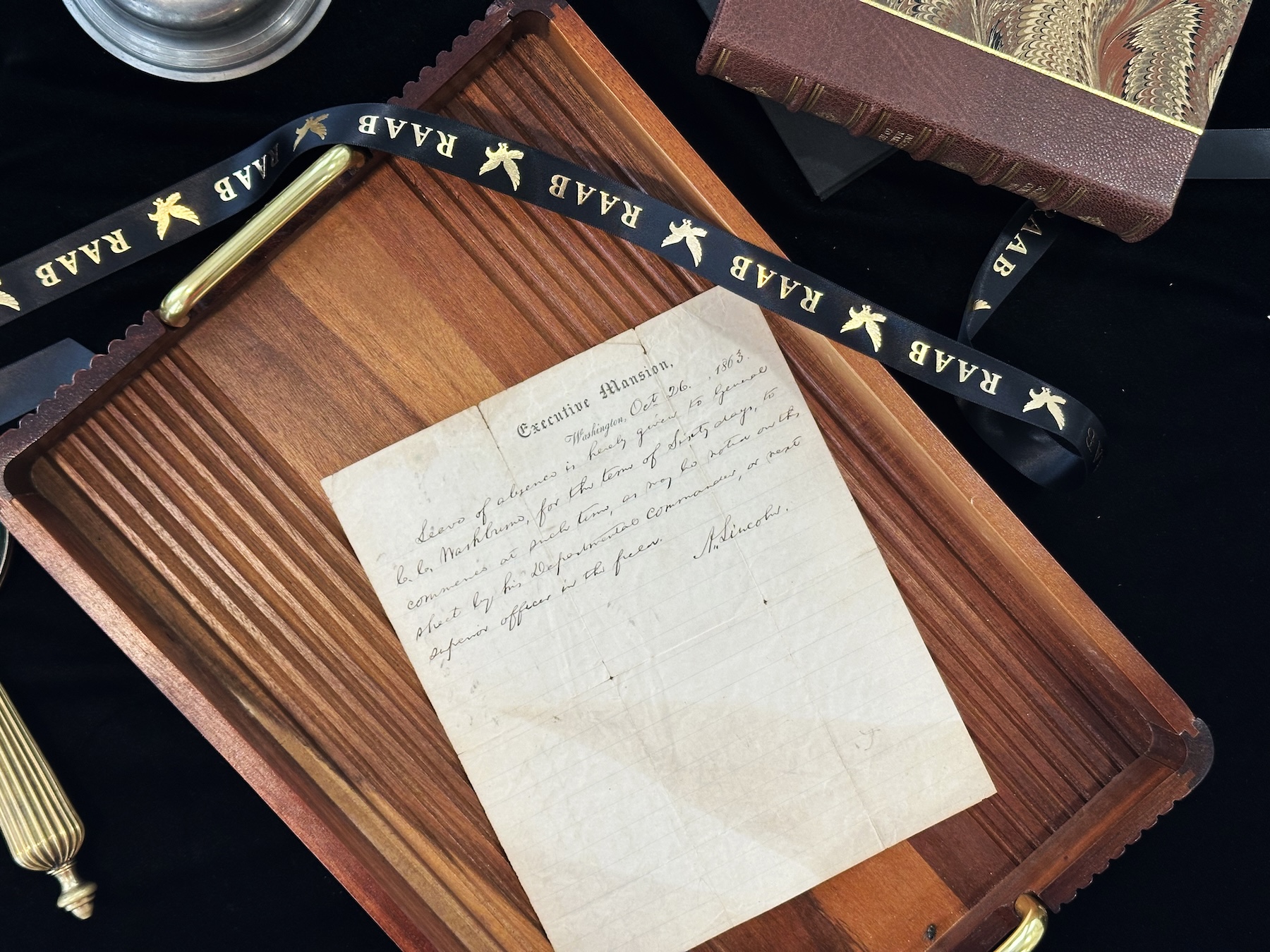
What is the backstory? From reading just a little bit about it, it sounds like there was General Washburn, and he had a brother who was a Congressman who maybe whispered in Lincoln’s ear, so to speak, that his brother needed some time off.
Nathan: Yes, the Washburn family was a very prominent political family. Elihu Washburne was a Congressman. His brother was General Cadwallader Washburn.
Great names!
Nathan: Yeah. You see some Cadwalladers dating back to the American Revolution. I think it’s an old political name, but the General was down South at a time when one of Lincoln’s major efforts from the very beginning was to strangle the South for supply. So the blockades were intense that ran along the coast that, in theory, went all the way down around Texas. So what the Union was trying to do was cut off the trade. The Confederacy was trying to get around this blockade both to bring goods in and also to sell goods out. They needed money and supplies. They never really solved that problem.
The Union accomplished this both with naval blockades and also by taking these critical border towns or border-ish towns. And one of those towns was Brownsville down in the tip of Southern Texas, which was facilitating trade with Mexico. So Washburn was down there and, a couple days after this letter was sent, the Battle at Brownsville took place.
This General was a businessman. He founded, I think it was General Mills. He had requested time off. The request was made through his brother. He got time off. And then Lincoln sends this letter, which basically says he can take the time off whenever he wants it.
Of course, he was fighting in Texas at the time, so he postponed taking leave, but this very letter traveled all the way to the tip of Texas, and we know that because the notation from the officer that replaced him notes that he took his leave approximately three months after Lincoln offered it to him.
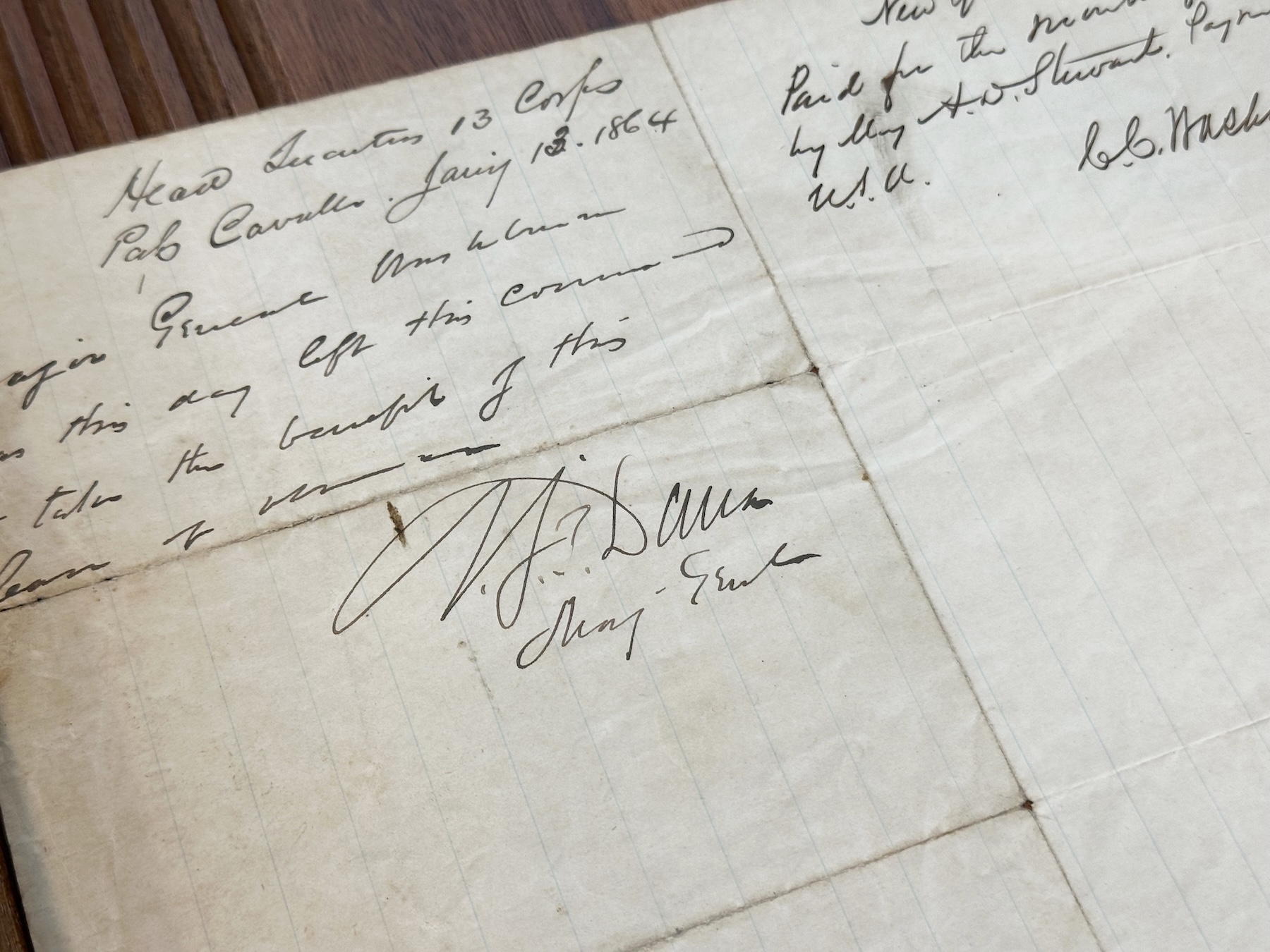
So the General stayed long enough to settle things in Texas. He took this very document from Texas–so it traveled from Washington to the tip of Texas, and then it traveled back up to New York where two months after that, Washburn himself notes that he’s been paid for biz leave. (Presumably it was paid leave.) This letter went all over the place, from the deep South, in Confederate territory, and back up north into New York.
That was really interesting. I had to look up where Brownsville, Texas, is, and it’s so far south. It seems impossible that a Civil War battle was fought there.
Nathan: I don’t think it was much of a battle. I mean, it was a battle, but it was a pretty quick Union victory. The Confederates that were there weren’t many, and they were quickly done in.
As you were saying, timing-wise the letter was written on October 26th, 1863, and within about a week, this battle happened. Did he receive the letter before the battle or during the battle or just after?
Nathan: I think probably immediately after. I don’t know, there’s no notation. It’s not a known document, so there’s no story behind it and there’s no notation on it. So we’re left to speculate.
It’s also really interesting to note that in this age of incredible governmental bureaucracy and … the autopen, here’s Lincoln in the middle of the Civil War handwriting his own letters, doing his own paperwork. Is this typical?
Nathan: Most of the documents you see coming out of the White House at this time are written by Lincoln. He did have secretaries that wrote things for him, and one does see that occasionally, but it’s not uncommon to see this handwritten. Let me put it this way, I would expect to see it.
When collectors are looking for a Lincoln signed letter or document, does the fact that it was created during the Civil War make a difference?
Nathan: People collect Lincoln documents from throughout his life. So finding something from his childhood would be incredibly uncommon and valuable. He was a lawyer, a politician. He sat in Congress then he was President. There’s no point of his life that where people are like, I’m not interested in that element of Lincoln’s life. He’s achieved near mythical status. I would say that as a percentage of documents that you see out there offered for sale, the vast majority are as President, simply because that is when he was most famous and because that’s when he wrote the most stuff. That is the most common thing that you see. We’re a supply-demand economy, so the fact that supply is higher, the demand is sky high. So that’s what keeps the price where it’s at.
Now that this has been discovered, will the Lincoln Papers incorporate it into their scholarship?
Nathan: Well, I would think so. That would make sense. I’m not in charge of what they do, but they’ll certainly learn about it, and whether they choose to include it is up to them. But since their job is to find, track down, understand, and catalog these pieces of Lincoln’s writing, I think that this certainly qualifies. I would think they would be quite excited about it.
I’m sure discoveries like this never get old to you. Thanks for sharing it with us.
Nathan: Finding cool stuff that no one has ever seen is exciting. It never gets old, and it’s sort of what makes the hunt the hunt. It’s a lot of fun.
To learn more about Lincoln documents and autographs, visit our dedicated Lincoln page and read our guide, “What to Know about Buying Abraham Lincoln Autographs & Documents.”