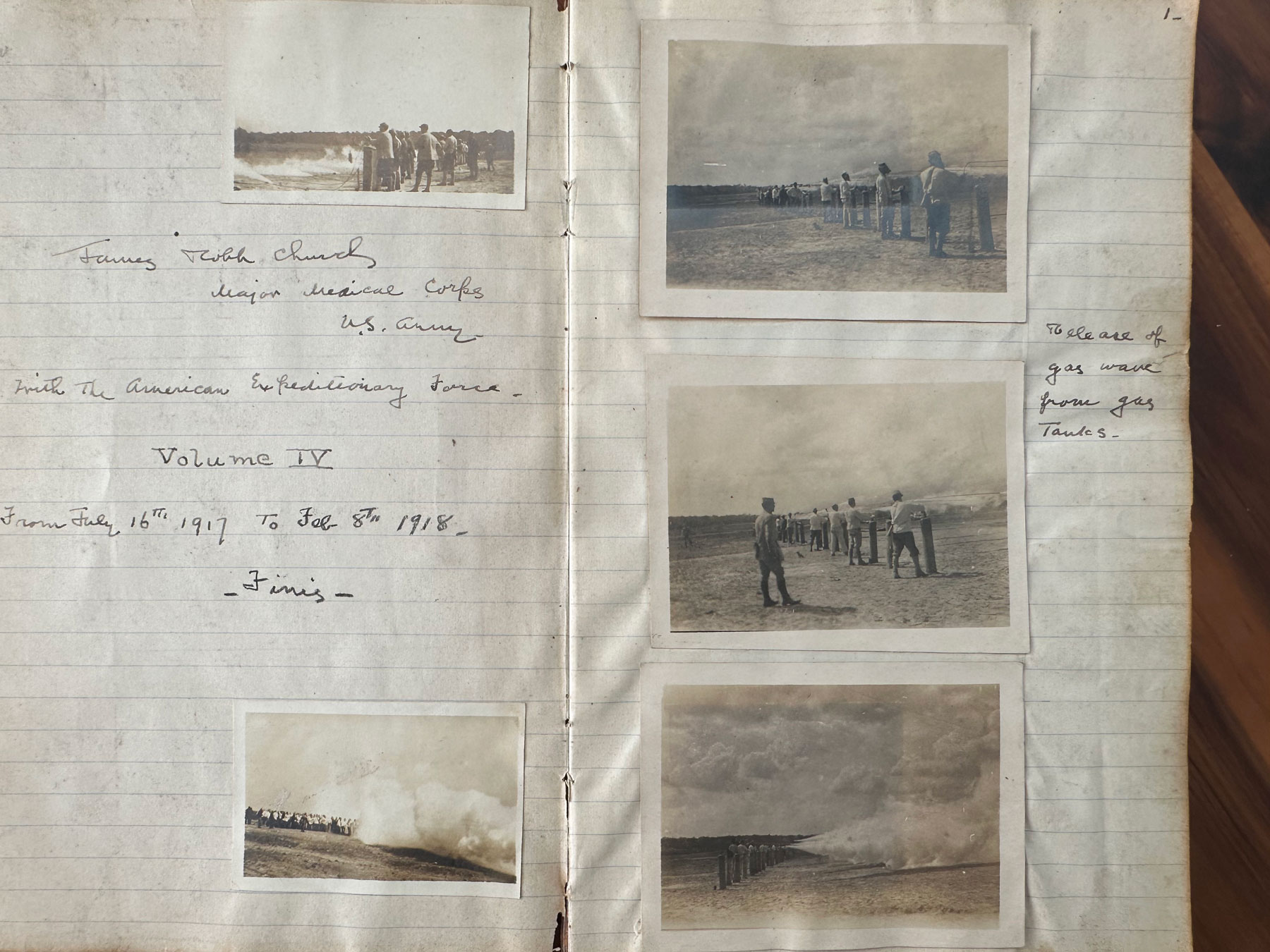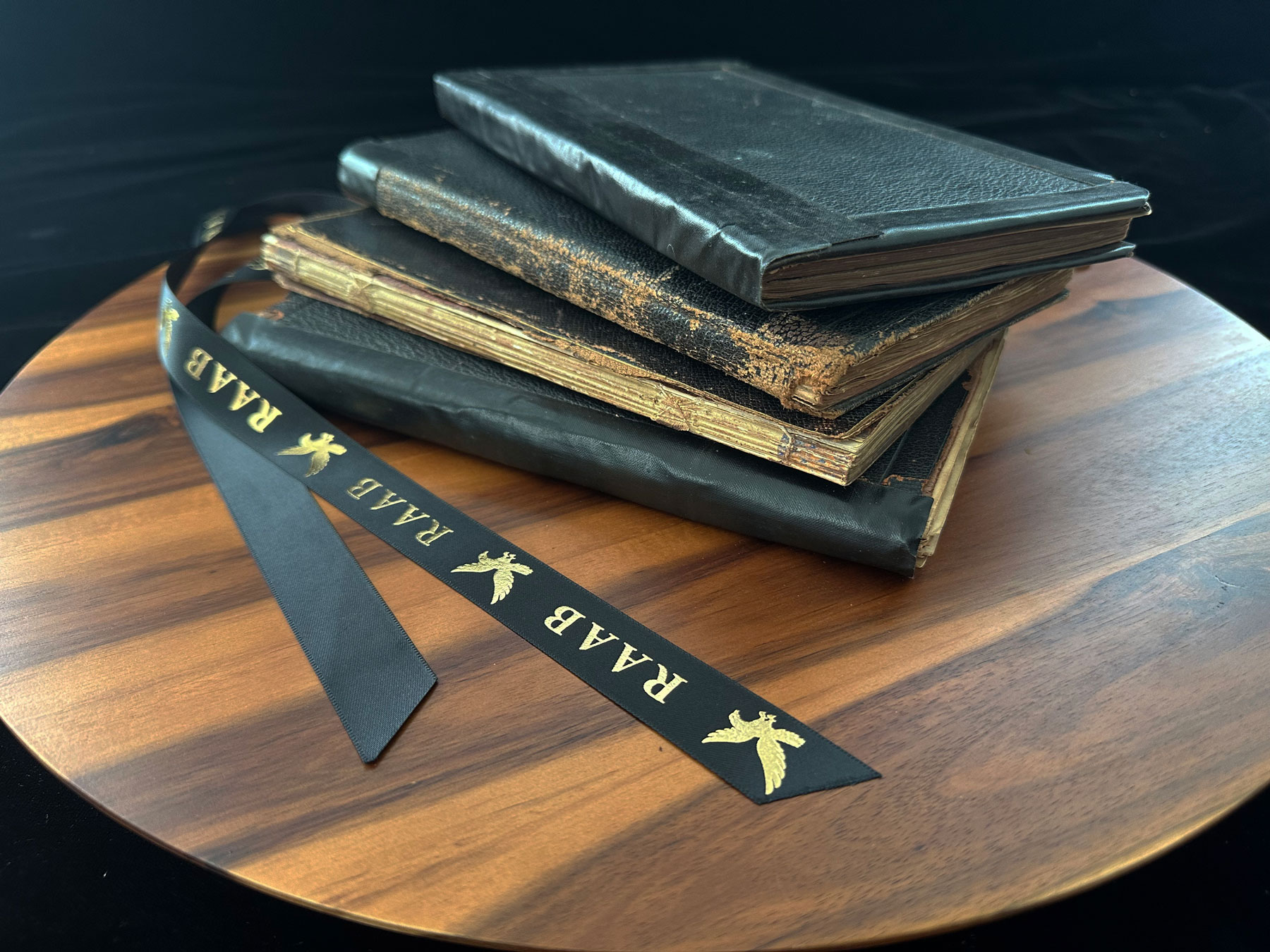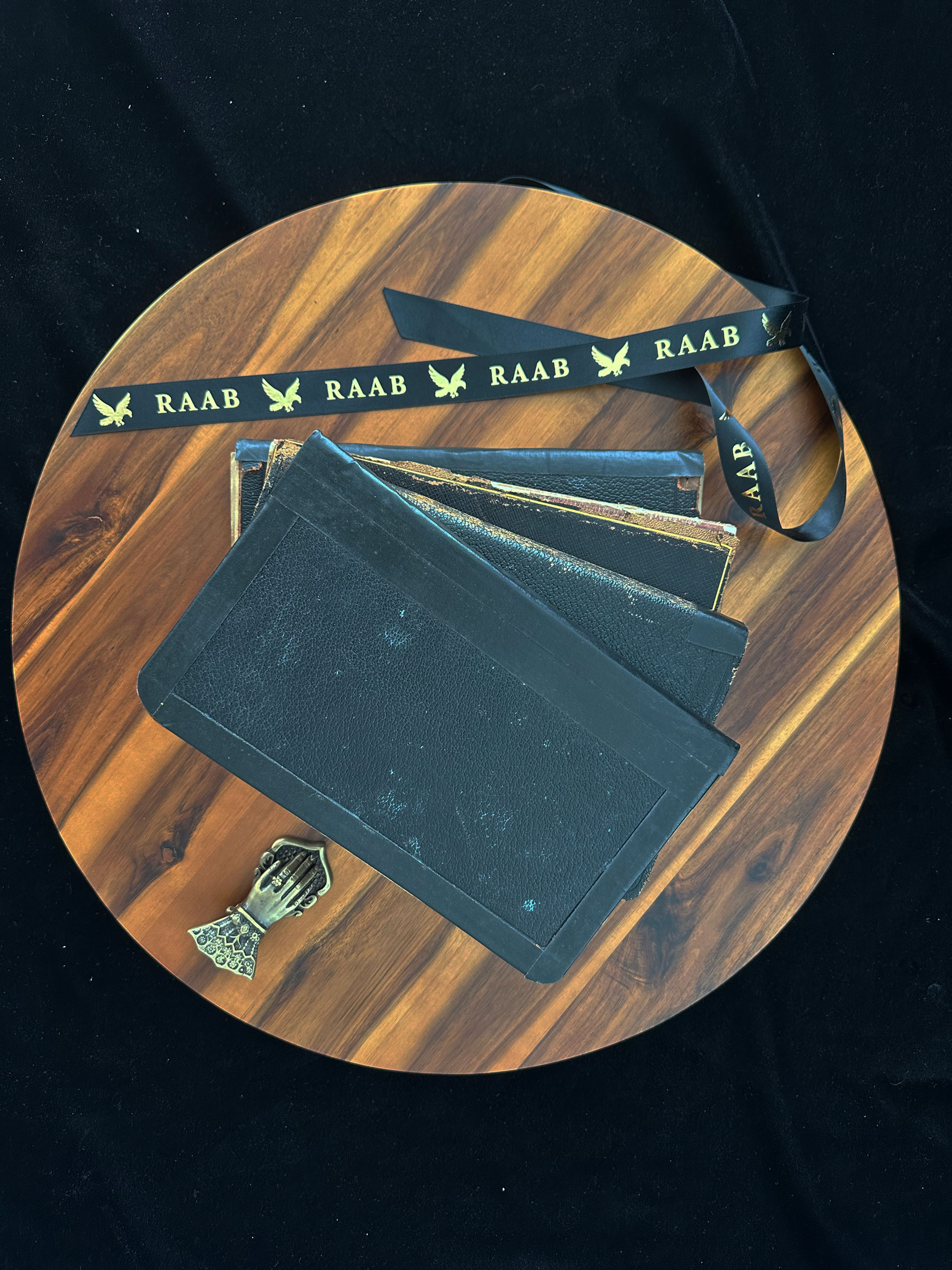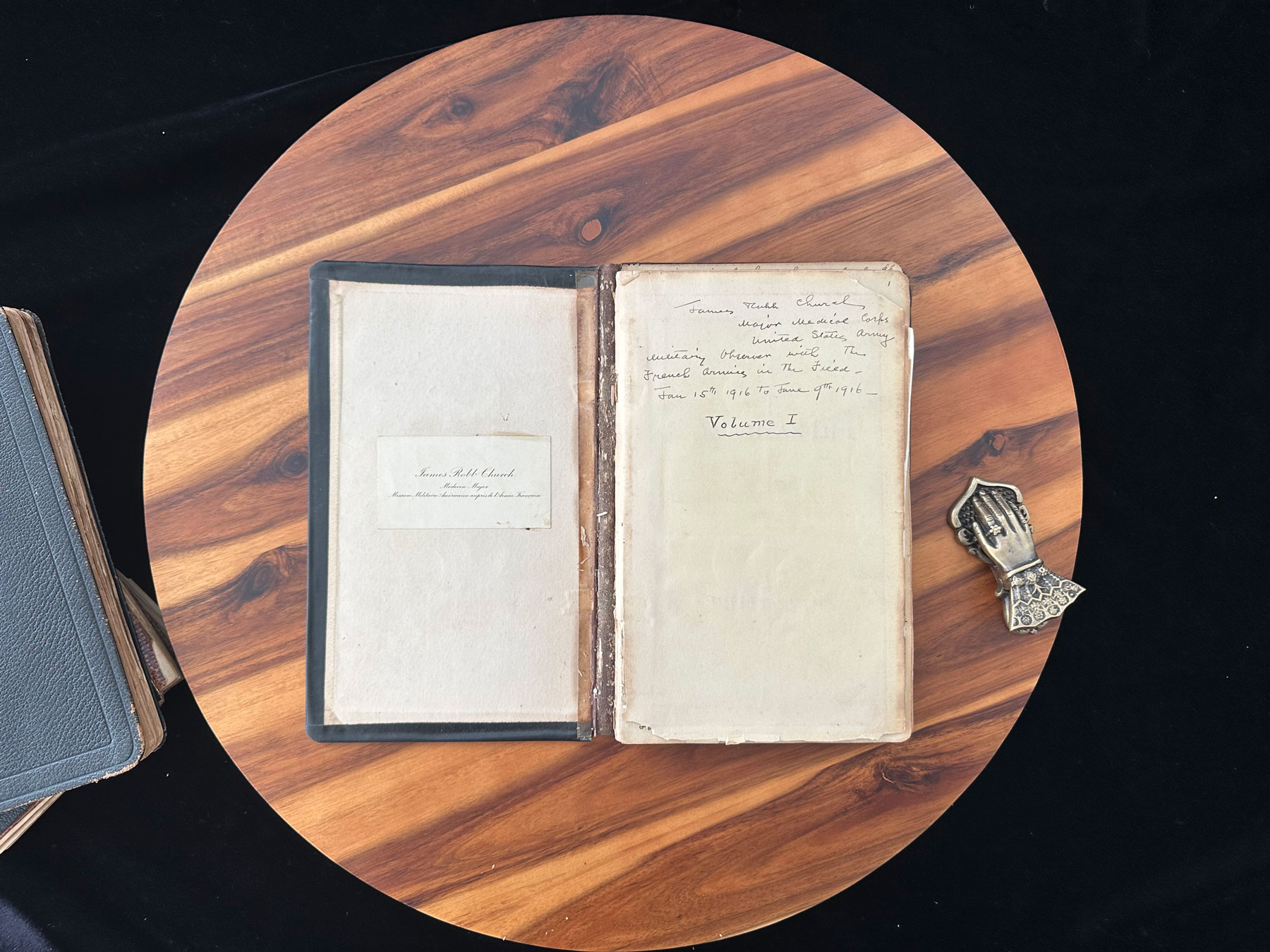




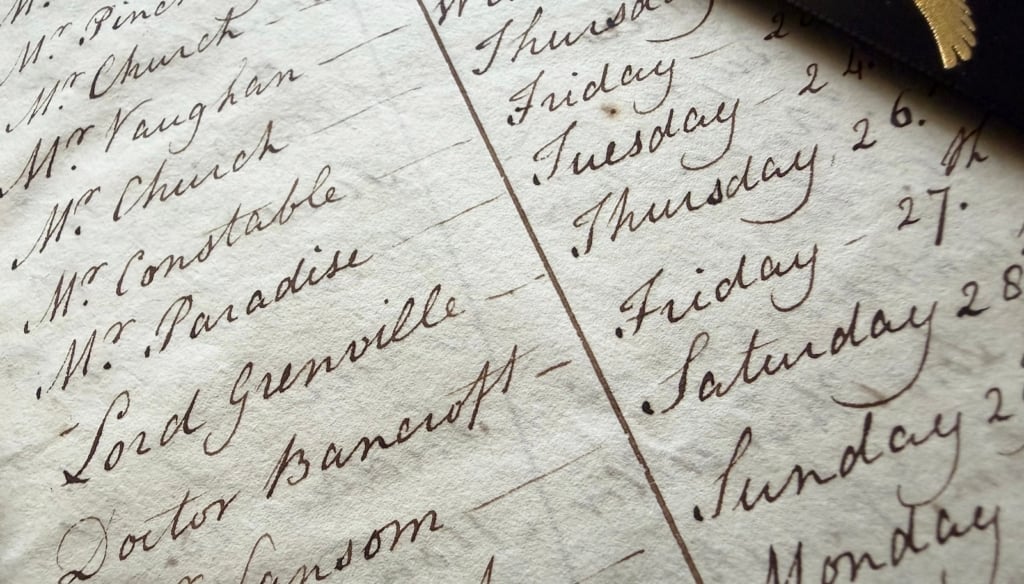


The Unpublished Journals of Embedded World War I Medical Observer James Robb Church, With Photographs and Important Observations on the Use of Gas in Combat
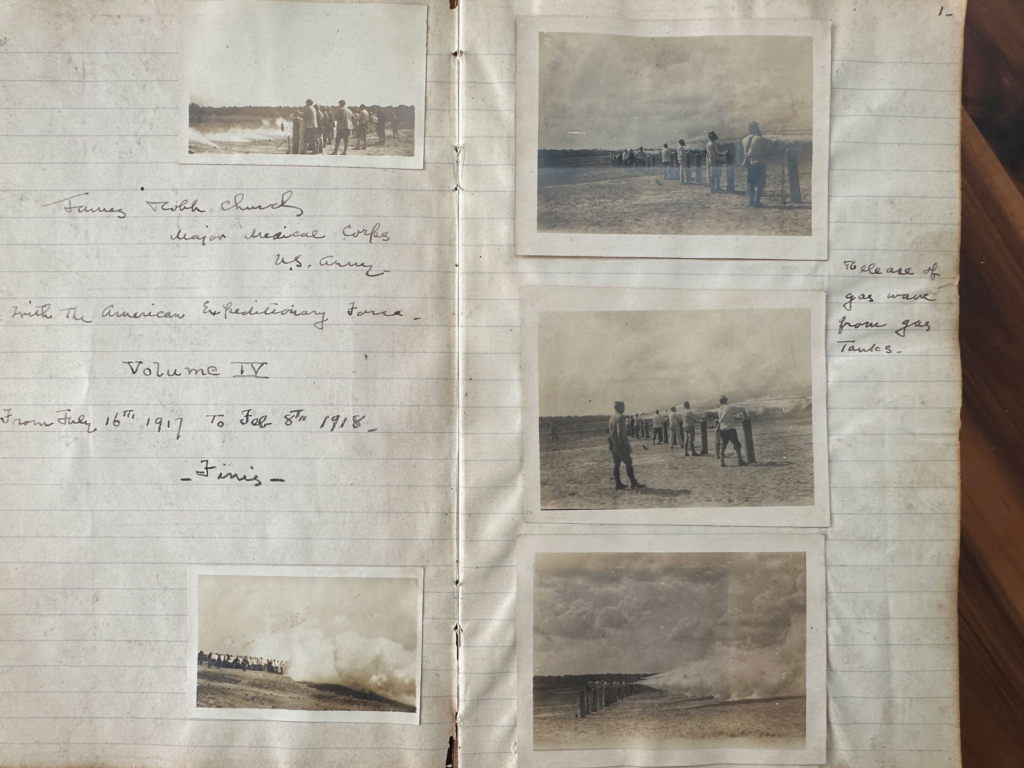


An incredibly early American witness, predating US involvement by nearly 2 years
- Currency:
- USD
- GBP
- JPY
- EUR
- CNY
 This currency selector is for viewing only.
The Raab Collection only accepts USD payments at checkout.
Exchange rates are updated hourly. Rates may be inaccurate.

“Gas questions are crowding in and I can see that before long I shall live and inhabit in an atmosphere charged and tinctured with all the foul odors and deadly results that belong to that grisly arm of war. It is a big subject and stretches its devastating arm far and away...

“Gas questions are crowding in and I can see that before long I shall live and inhabit in an atmosphere charged and tinctured with all the foul odors and deadly results that belong to that grisly arm of war. It is a big subject and stretches its devastating arm far and away thru many different spheres: Chemistry of course and primarily, and ordnance, and tactics and all the ramifications there are in the manufacture of prevention against this Hun made method of war.”
Church included many of his photos and wrote of the practices and methods of French and Belgian surgeons on the wounded from the Verdun front and elsewhere
He was witness to great events, including the official American arrival in France, by which time he had been there more than a year
“General Pershing from the balcony bowed his introduction to the people with whom he – and our own country – is now linked in the struggle against the Prussian enemy. I was moved and touched by the spirit displayed and I could well realize what it means to the French to have the moral support of our coming and the promise that we will put not only money into this cause but our own men.”
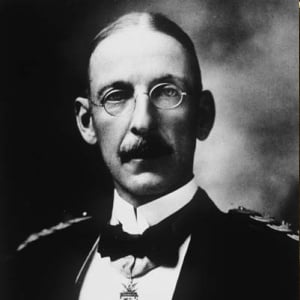
James Robb Church graduated from Princeton University in the class of 1888. He became an Assistant Surgeon in the U.S. Army, and in 1898 joined the legendary Rough Riders regiment. Church received the Medal of Honor for his actions during the Battle of Las Guasimas on June 24, 1898 during the Spanish-American War. As an officer in the Rough Riders, he knew Theodore Roosevelt well, and when Church received his Medal of Honor on January 10, 1906, he did so directly from President Theodore Roosevelt himself. It was the first time that a Medal of Honor had ever been presented in person by a president of the United States. Church’s Medal of Honor citation said, “In addition to performing gallantly the duties pertaining to his position, voluntarily and unaided carried several seriously wounded men from the firing line to a secure position in the rear, in each instance being subjected to a very heavy fire and great exposure and danger.” Church also served in World War I, and wrote about the effects of poison gas and his experiences as a wartime doctor.
In fact, Church was one of the first Americans to go into a war zone in official capacity, although since the US was not in the war in any declared fashion, he did so as a neutral, sent to observe the state of the French medical units there.
As the Defense Visual Information Service writes on Church, “On 15 November 1915, Major Church was ordered to leave his station at Fort Crockett, Texas, and report for duty as a military observer to the French Army. He was instructed to gather intelligence on French hospitals, ambulance routes, and medical outposts. Church departed the United States for England on 15 January 1916 and then traveled by ferry to France, arriving in Paris on 29 January. Church discovered the French Sanitary Services, the organizations in place for caring for the sick and wounded, had been significantly overhauled over the previous year to meet the needs of the war’s increasing casualties. Church indicated the problems facing the French health system between 1915–1916 represented a valuable opportunity to plan for American medical needs should the U.S. join the war effort. He wrote, “We must understand that it is not only the question of caring for the wounded man…Transportation, supply, records, construction, feeding, preventative medicine and many other things fall in line to make up the perplexing whole.” Church’s medical intelligence aided preparations for the implementation of the Army Medical Corps in Europe. Between 1915–1917, chemical weapons were being used with increasing regularity on the battlefield by both the Allied and Central Powers. Church’s early reports highlighted the medical needs for treating soldiers exposed to poisonous gases and were some of the first American medical observations about the effects of chemical warfare on troops. Church and other military medical observers gathered intelligence on the various “gas services,” military sections implemented by the French, German, and British for directing the use of chemical warfare. After the U.S. entered the war in April 1917, the War Department established the Gas Service and Chemical Service Sections of the U.S. Army. These sections merged in 1918 to create the Chemical Warfare Service.”
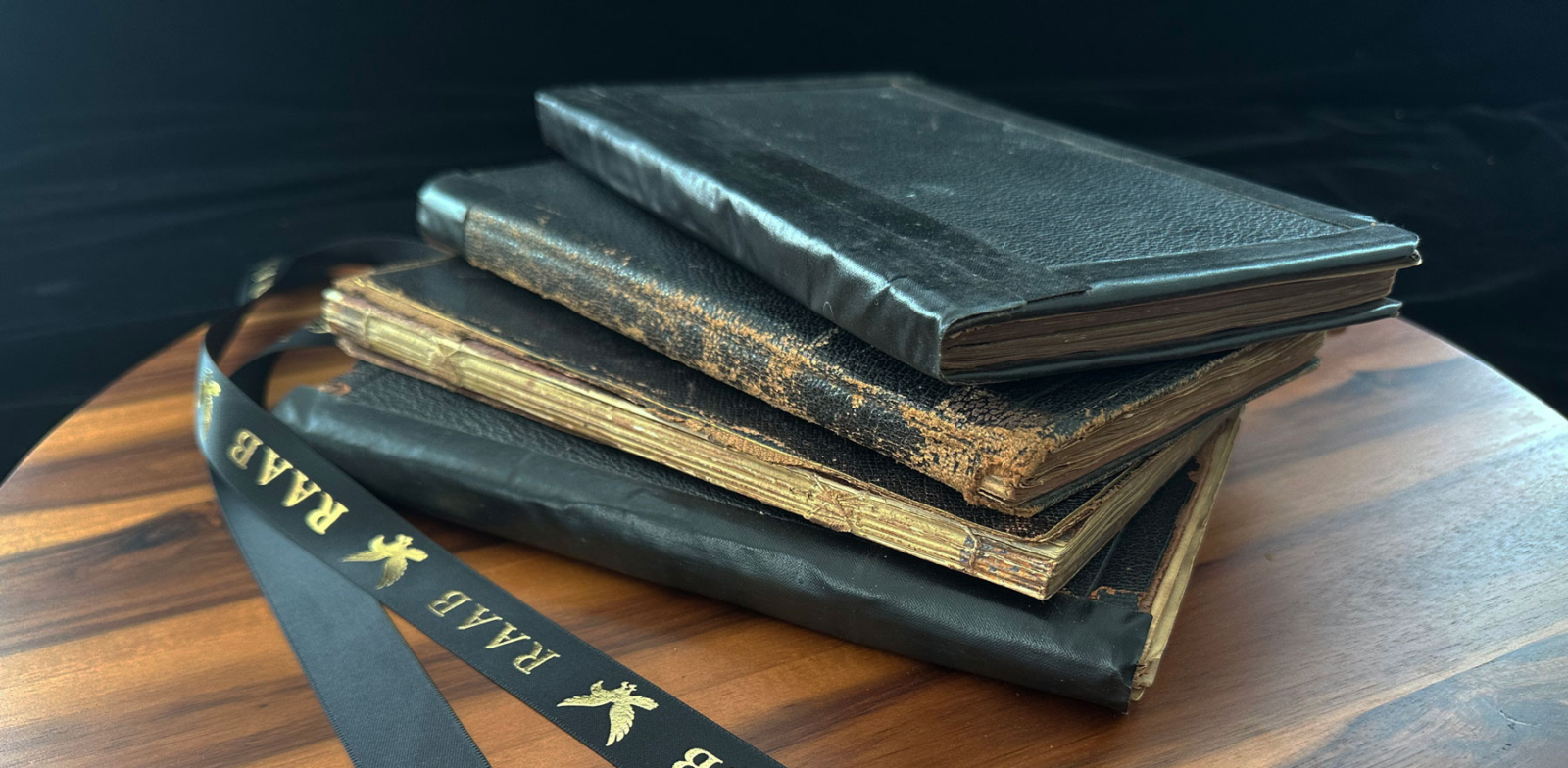
Church’s original war-time journal, the earliest of an American in World War I we could find on the market.
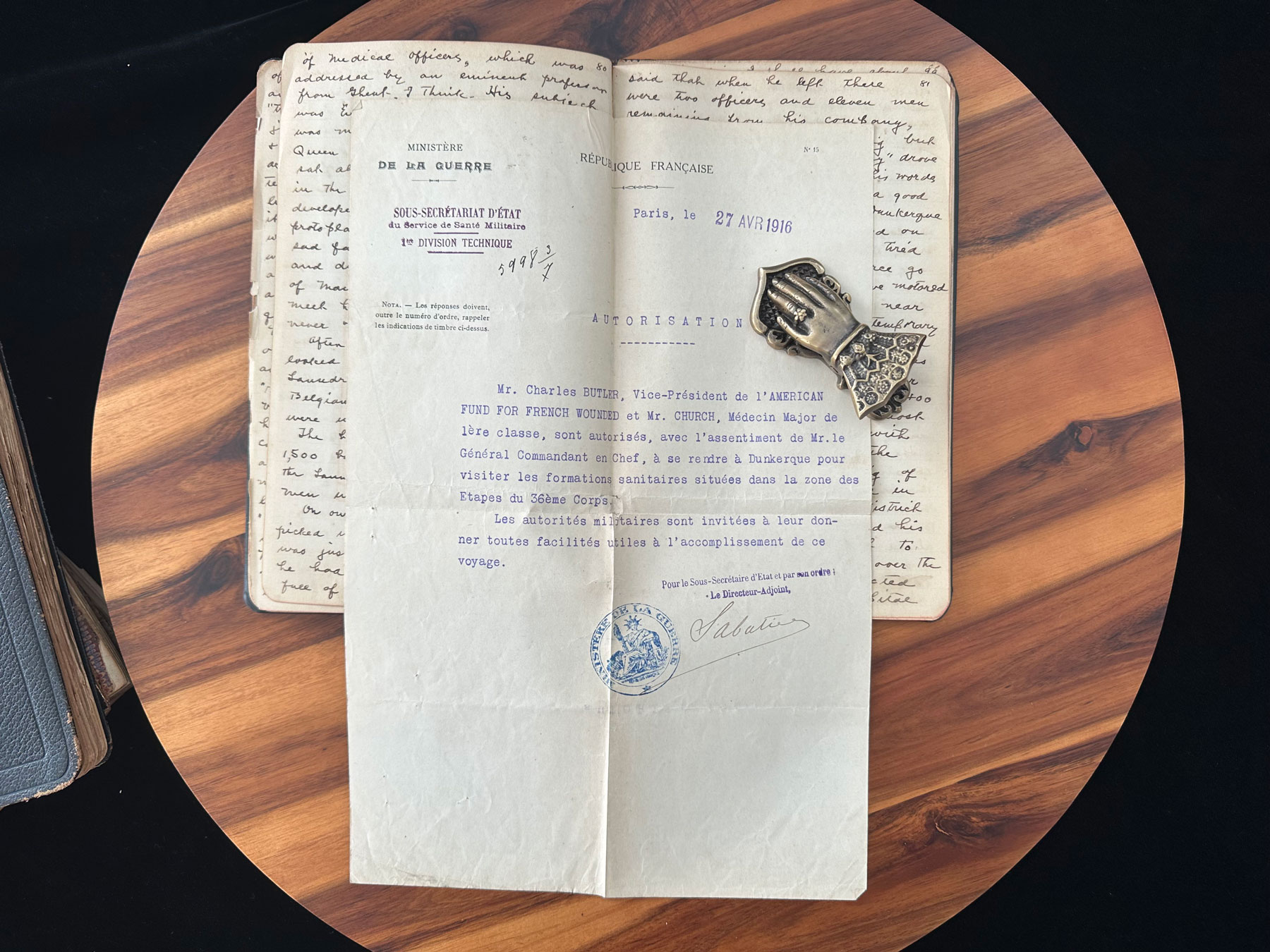
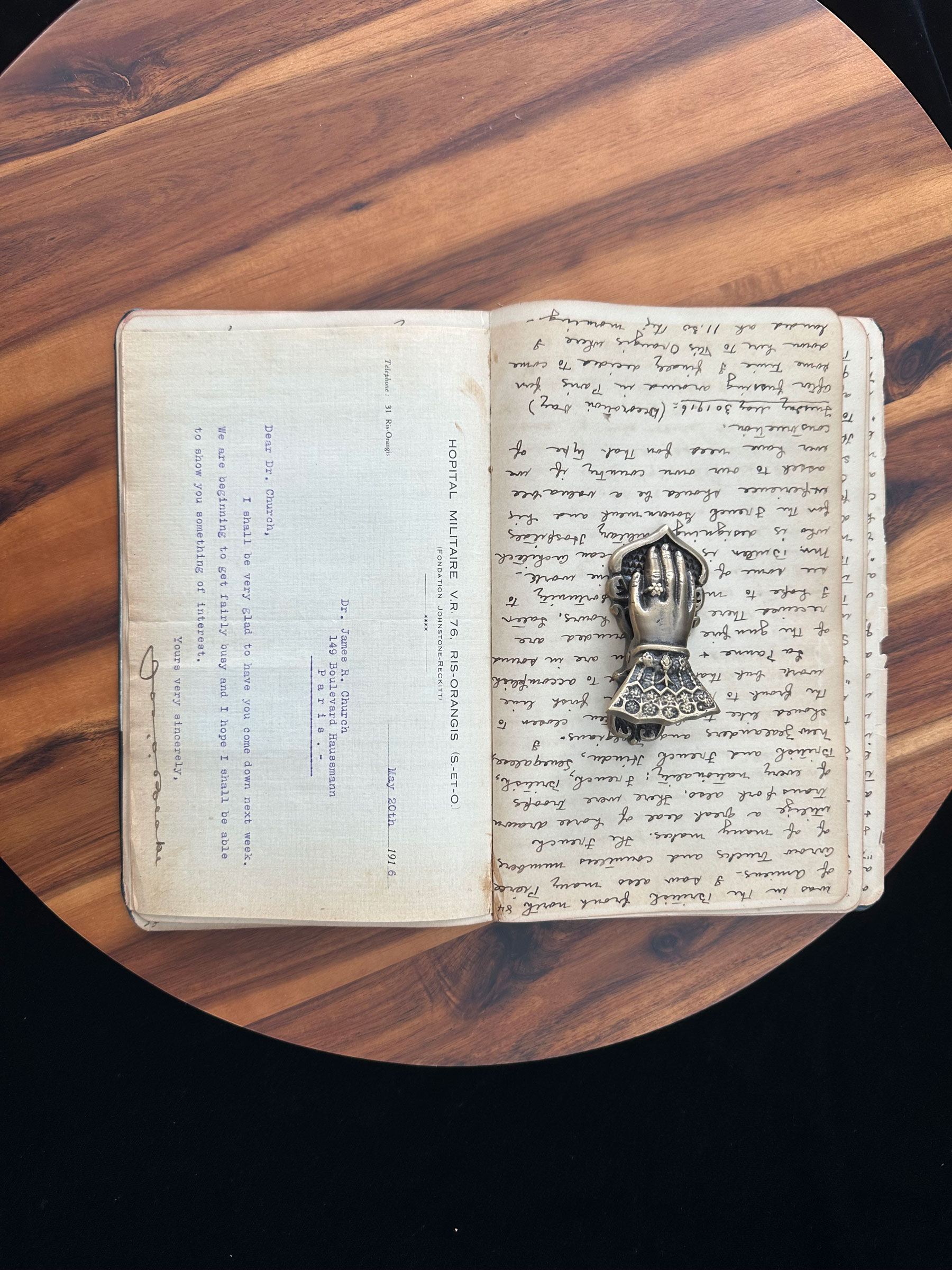
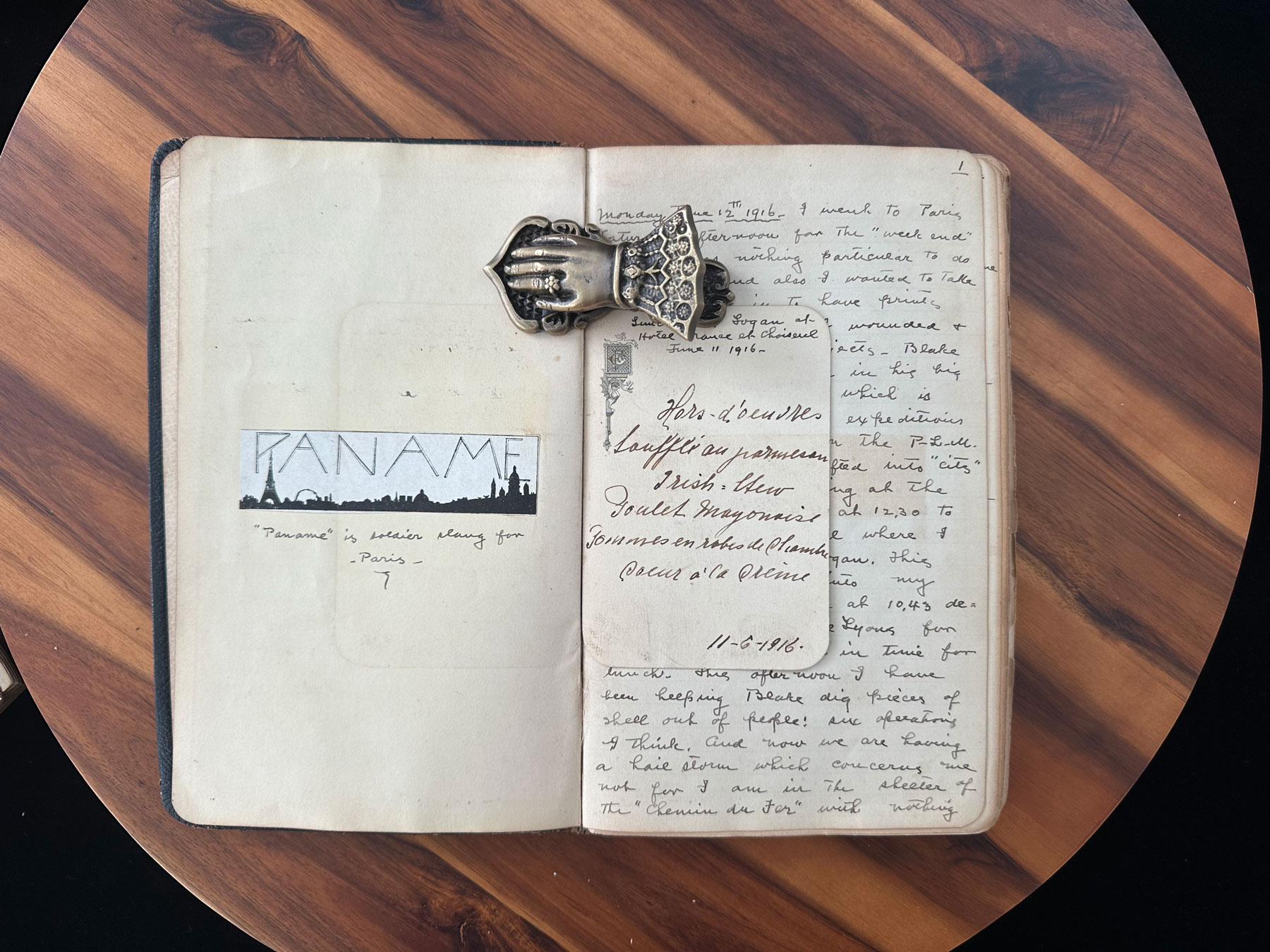
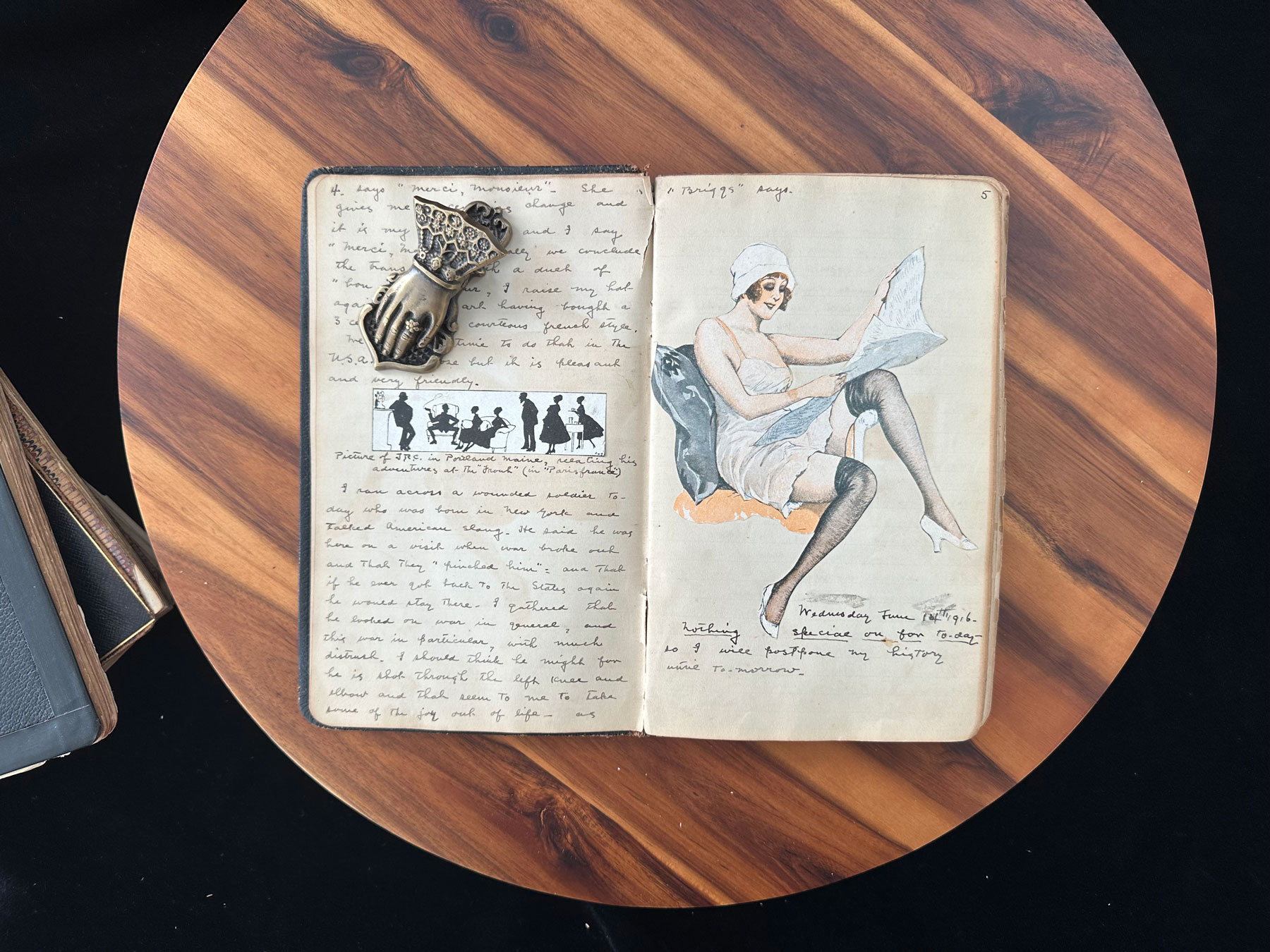
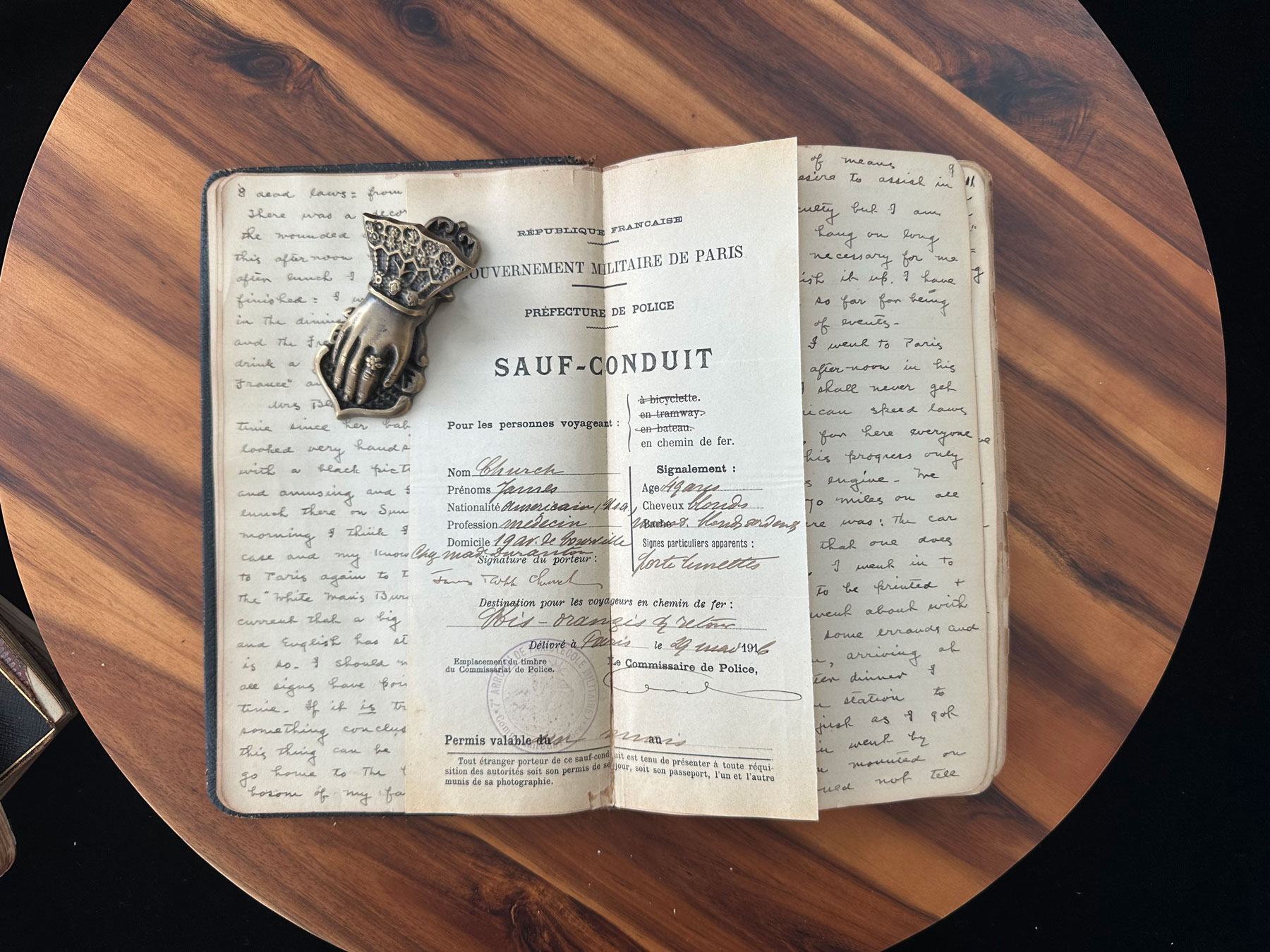
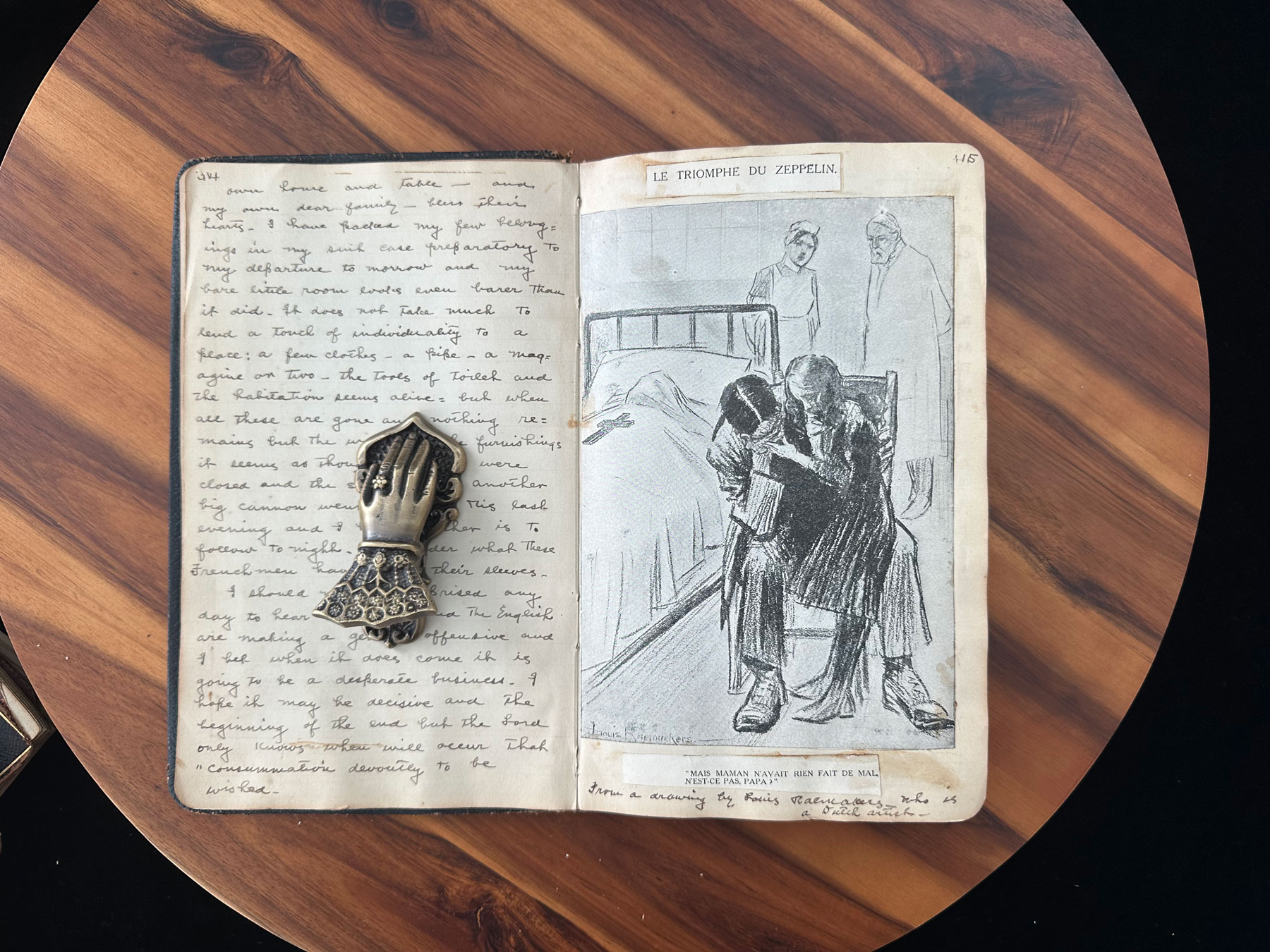
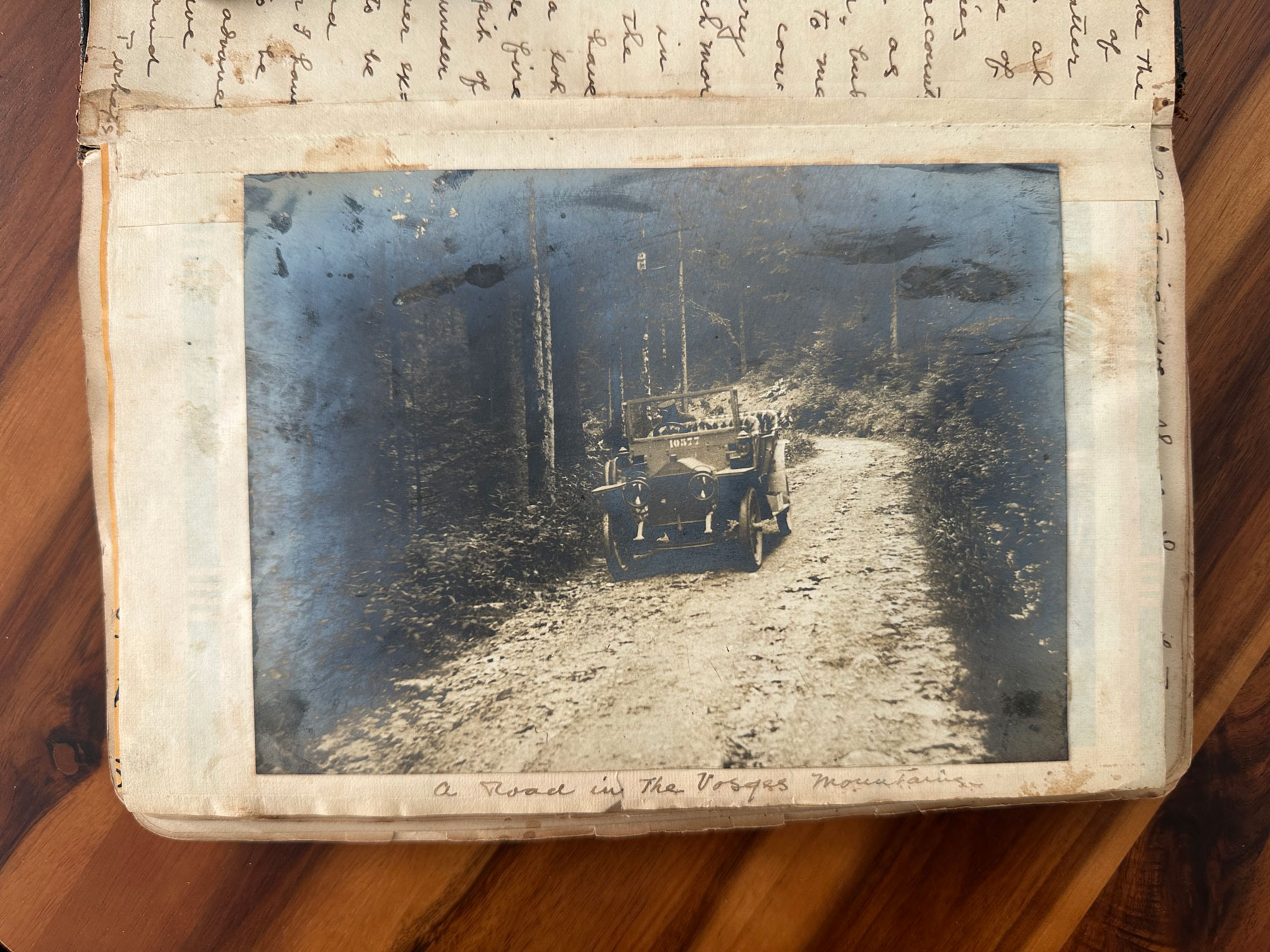
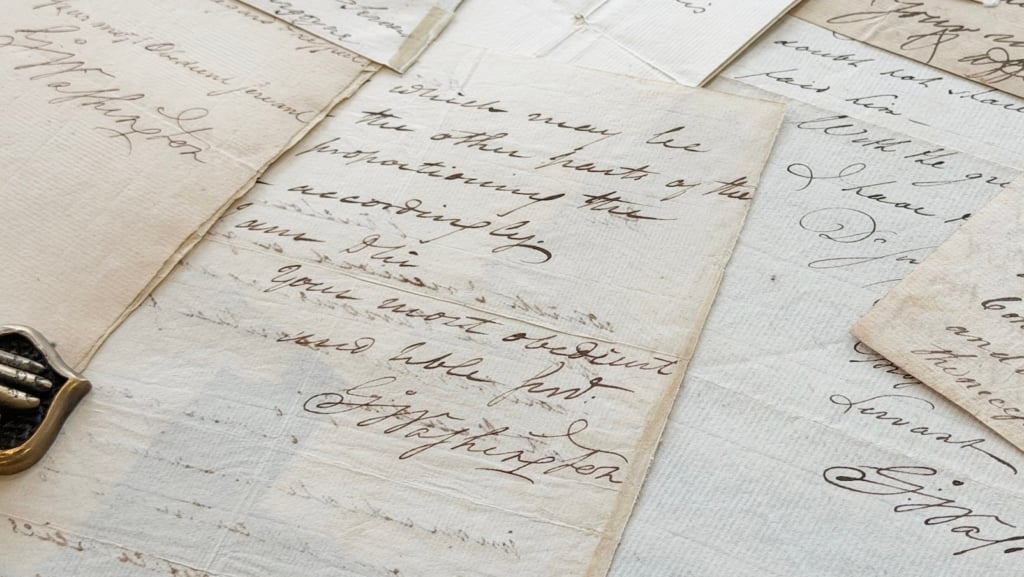
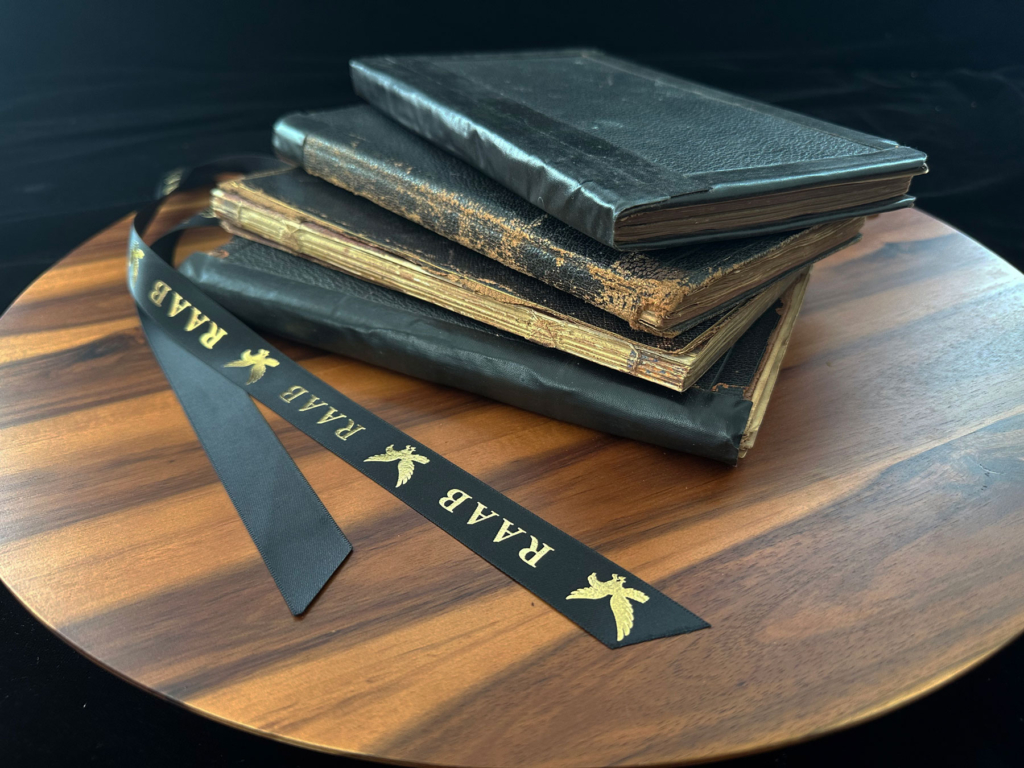
Collection of 4 volumes of diaries beginning January 15, 1916, with his arrival in France, notated by him as “Major Medical Corps, United States Army, Military observer with the French armies in the field.” The journals contain personal keepsakes, like the brochure from his trip to Europe aboard the United States Mail Steamer “Philadelphia,” noting his place in First Class. There are also original photographs taken by Church; postcards. Included is his authorization by the French government to visit medical facilities. The diaries are approximately 100 pages, totaling more than 400 pages when the inserted material is counted.
Limited excerpts:
Volume 1 – Church discusses his assignment, travels to London and then Paris with his colleagues, his impressions of France, his introduction to the war office, his role in working with doctors and the wounded; letters from other doctors to him regarding war-time medical work, his impressions of work with famed medical doctor Alexis Carrel.
Feb. 12, 1916 – “A certain amount of communicating with one’s self may be of benefit in relation to self judgment… I am strongly inclined to think that often about six months of involuntary introspection of R. Crusoe… Already after only a short period of intensive personal association with James Robb Church, I am beginning to find that he does not amuse me near as much as did…. Force of foreign life is bringing me to a sense of the interdependence of the human family…. It is largely from them [doctors and the wounded] that I am to learn my lesson: from the cunning surgeons who borrow ribs and shins to make new noses; who substitute clever hooks… for absent hands; who teach the fluid and re-educate the limbs and joints which have lost their function through the forced inaction of long and tedious healing: of their work, in the doing, of my work in adequately reporting it I think I can do no better that to tersely say ‘It’s some job.'”
Feb 24 – At the hospital in Compiegne, receiving wounded men from the start of hostilities at Verdun – “I… made rounds with [Carrée] and his staff. There are not many wounded in the hospital but the work and methods are interesting. After that I had a chat with a young Frenchman who has married mathematics to surgery and has evolved a formula from which he will predict the date on which a wound will be completely healed. It is based on the surface area of the wound…. While I was still talking to him a man was brought in from the trenches with a bad shell wound of the leg which had shattered the knee joint and cut the artery there… It makes the fighting seem nearer to have seen a fresh product from the front this morning: he had been shot this morning.”
Feb. 25 – On Nobel Prize winner Alexis Carrel: “It is interesting to know intimately a man so eminent in his profession as is [Alexis] Carrel. He has won the Nobel Prize and is ‘bien connu’ not only in his own France but wherever scientific attainment counts.” He goes on to describe his appearance in detail. “We talked… of medicine and the wounded and military procedure as it affects our profession and French politics and of American necessities; and of ‘TR’, whom they all admired… Carrel is anxious to take me in his machine to visit some of the sanitary units of the district nearer to the front…”
Feb. 27 – He describes in detail the treatment and bad condition of Robert Deviennel of the 417th Regiment and the nature of debilitating wounds at the hospital.
Feb. 29 – Reports on seeing two French planes, “like great eagles with outstretched silvery pinions” and sounds of war in the distance. He is visiting the military hospital of “Rogallien,” 1.5 miles from Compiegne. He reports on their death rates, occurrence of typhoid and other illness, and describes the hospital in detail.
The first month in Paris is spent in part trying to legitimize his mission with the French government so he can travel to the front and see more. There is much detail about working through various official channels to accomplish that. As yet he is unofficial, in that America is not yet in the war.
There is also discussion of German and Austrian prisoners whose crime, he feels, was being born on the wrong side of the border.
He visits Versailles and takes photographs, including one he says contains military planes flying overhead, which he notes.
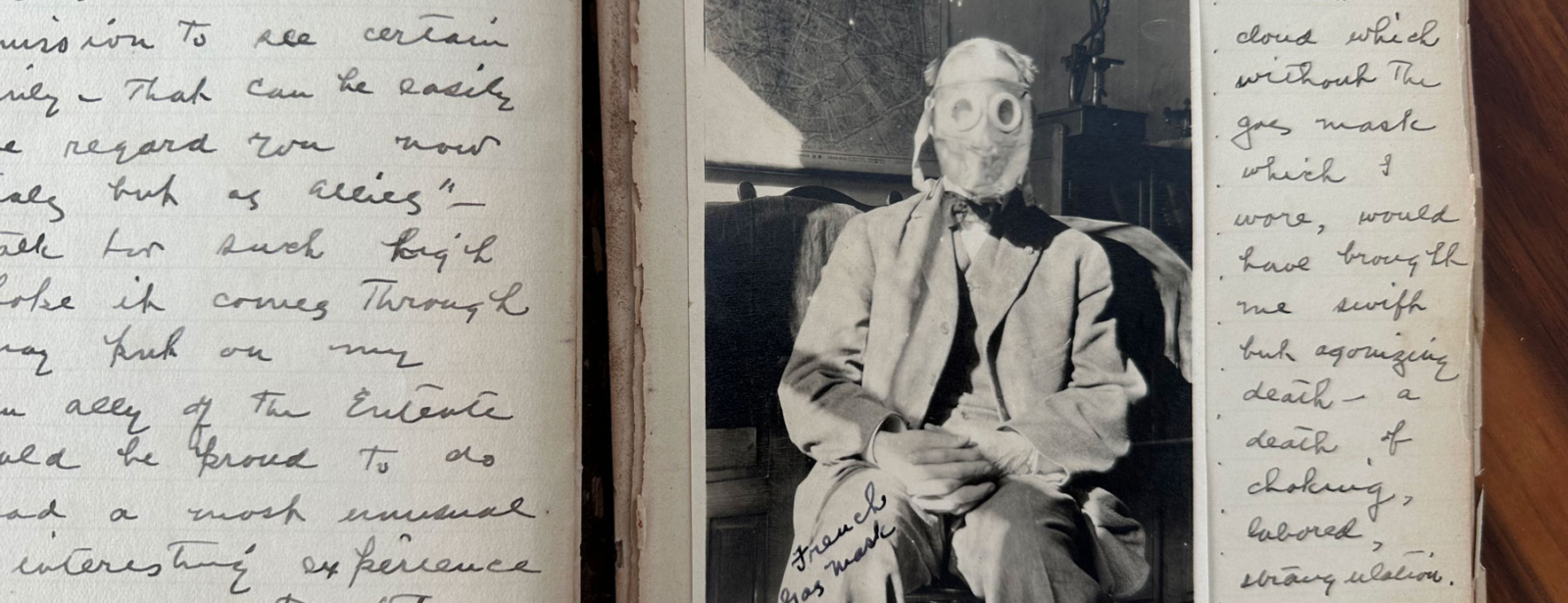
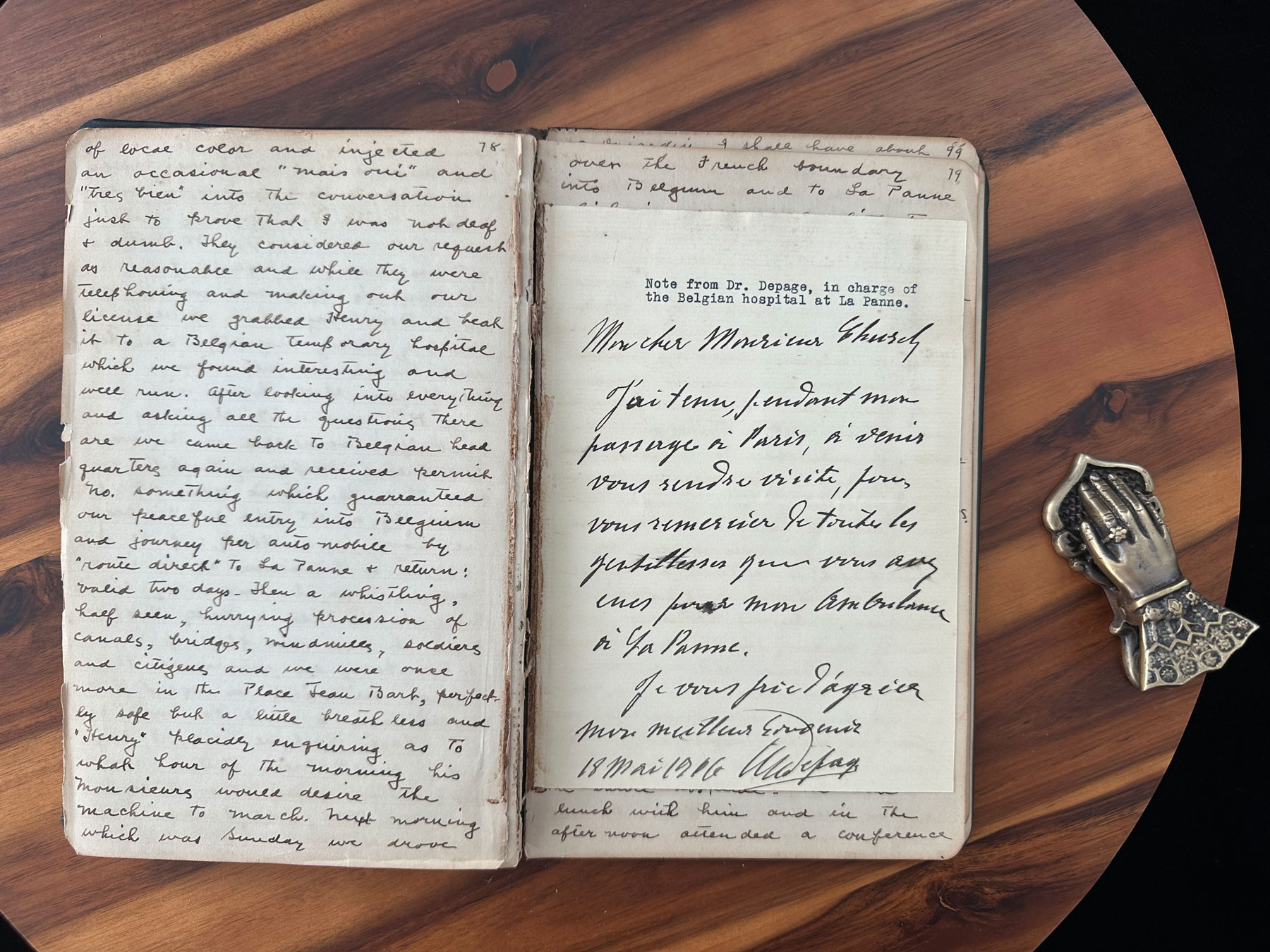
May 18 – He has arrived in Dunkirk and their party made “our respects to the military authorities of Dunkerque and after that to the RR station to inspect the evacuation hospital there. That showed evidence of aeroplane bombardment, holes in the roof and some shattering of the interior which had happened a few nights earlier. A nurse showed me one bed and pillow riddled by bomb fragments…” They stop at two further hospitals courtesy of Church’s car driver. “At Bourbourg we interviewed the Belgian authorities in regard to dispensation to visit La Panne and Dr. [Antoine] Depage’s hospital there.” Depage was a head of the Belgian Red Cross.” He gains permission to enter Belgium,.
Included here is a note from DePage, as well as an original photograph of his hospital inside with patients. The note is dated this very day and thanks him for his help during his stop at La Panne and hoping to visit him in Paris.
“Dr. DePage, a prominent Belgian surgeon, is in charge of a 1000 bed hospital there and the character of the work is high and has gained general commendation. The hospital is made up of the ‘Hotel Ocean’ and a number of generalized pavilions. Some of the wards hold as many as 125 patients which I think is too many.” He is invited to attend a “conference of medical officers, which was addressed by an eminent professor from Ghent. His subject was evolution but truth to tell, I was more interested in watching Queen Elizabeth of Belgium, who sat about four feet from me…. After the conference we went and looked over the military baths…. The bath establishment provides 1,500 baths, tub and shower, daily and the laundry which works for 75,000 men washes 16,000 pieces daily. On our way back to Dunkirk, we picked up a French Lt. who was just up from Verdun where he had been for 34 days. He was full of the fighting and said that when he left there two officers and eleven men remaining from his company.”
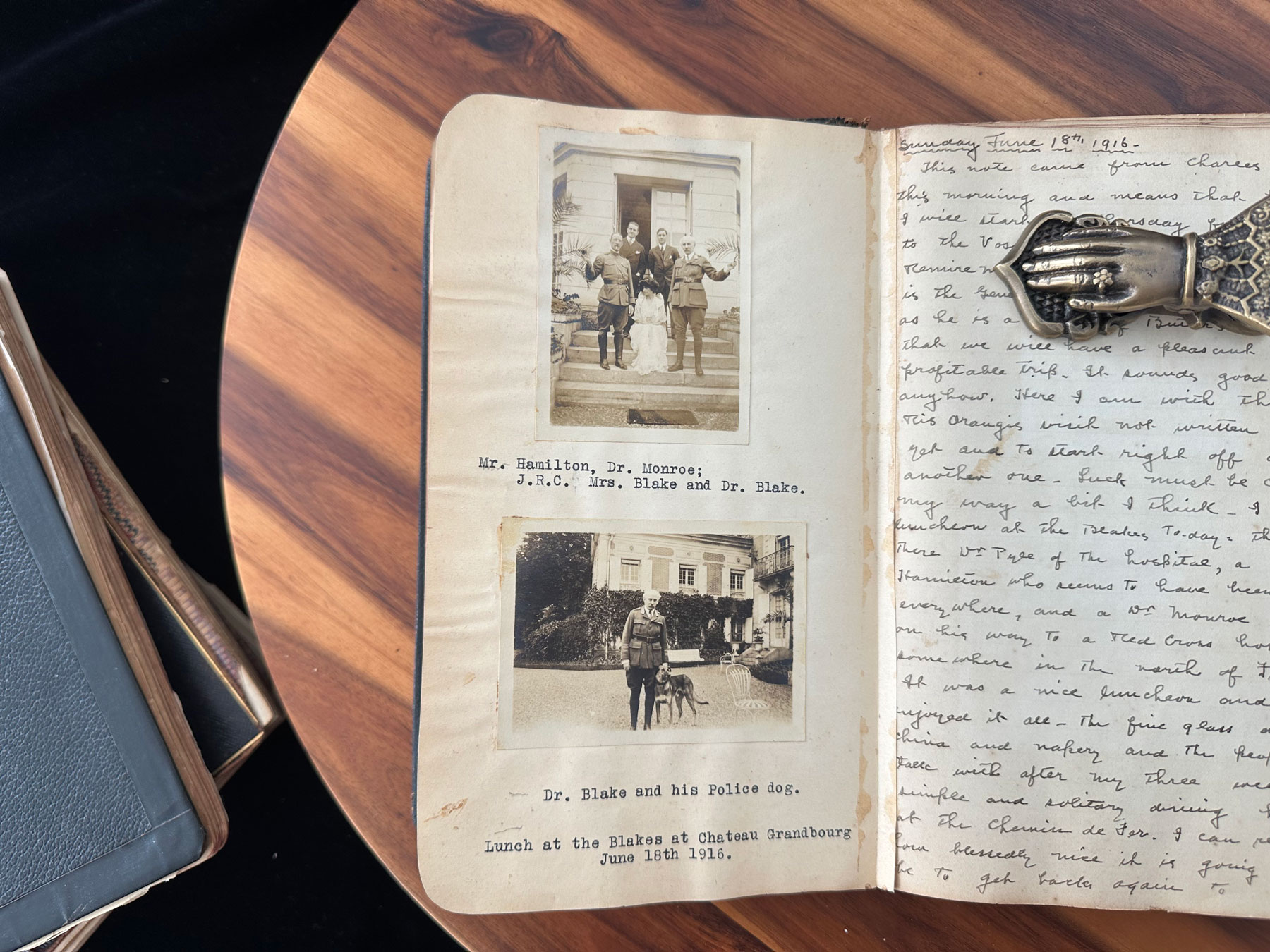
June 1 – “I have been all day in hospital, staying there for lunch. Back again with the people with shattered knees and gaping holes and amputated legs and stiff arms and all the things that are interesting and horrible. It is not a cheerful job, this being a medical observer. I suppose however that it will be useful if our own country ever has to make use of the knowledge I have gained here. Hope we do not for it is a grave thing. Not lightly to be considered and there is very little of the pomp and ceremony, the clash of martial music or the flash of uniform in a ward full of twisted, suffering, men or on a battlefield covered with still grotesque figures.” He goes on to discuss the work done by Dr. Blake at a nearby hospital.
June 8 – “Yesterday afternoon I went with Blake by motor over to Villeneuve, St Georges, about 5 minutes from here to meet a train of wounded from Verdun. There were 89 all told, which we drew 37. The rest going to two other hospitals of his region…. They came in a permanent sanitary train… There were on this platform three different places indicated by printed placards, Brunoy, Villeneuve, and Ris Orange. The cases able to walk were all herded together in one place and the litter cases put in one long line. Blake – who is medecin-chef of this group of hospitals – examined the cases, each of which was tagged and indicated where it was to go.”
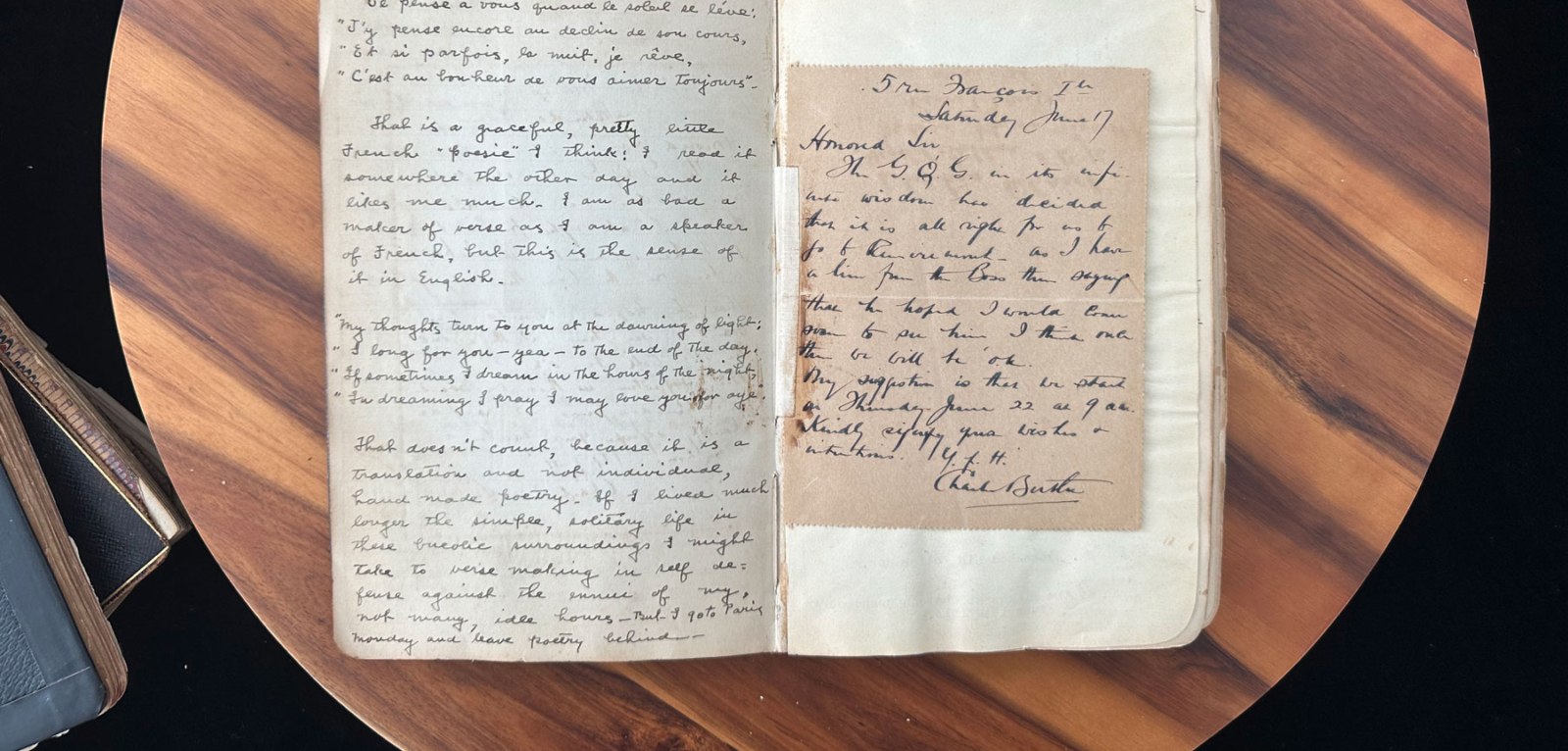
Volume 2, June 9, 1916 through September 4, 1916 – 100 pages
June 9 – “This afternoon I have been helping Blake dig pieces of shell out of people. Six operations I think.”
June 15 – “This morning I wheedled the radiologist out of the loan of 105 most excellent ray plates which I shall have printed on my return to Paris. Yesterday, Mr. Desjardins lent me 40 negatives of wounds and apparatus and with those I got from Blake, I now have about 200 all dealing with technical subjects.
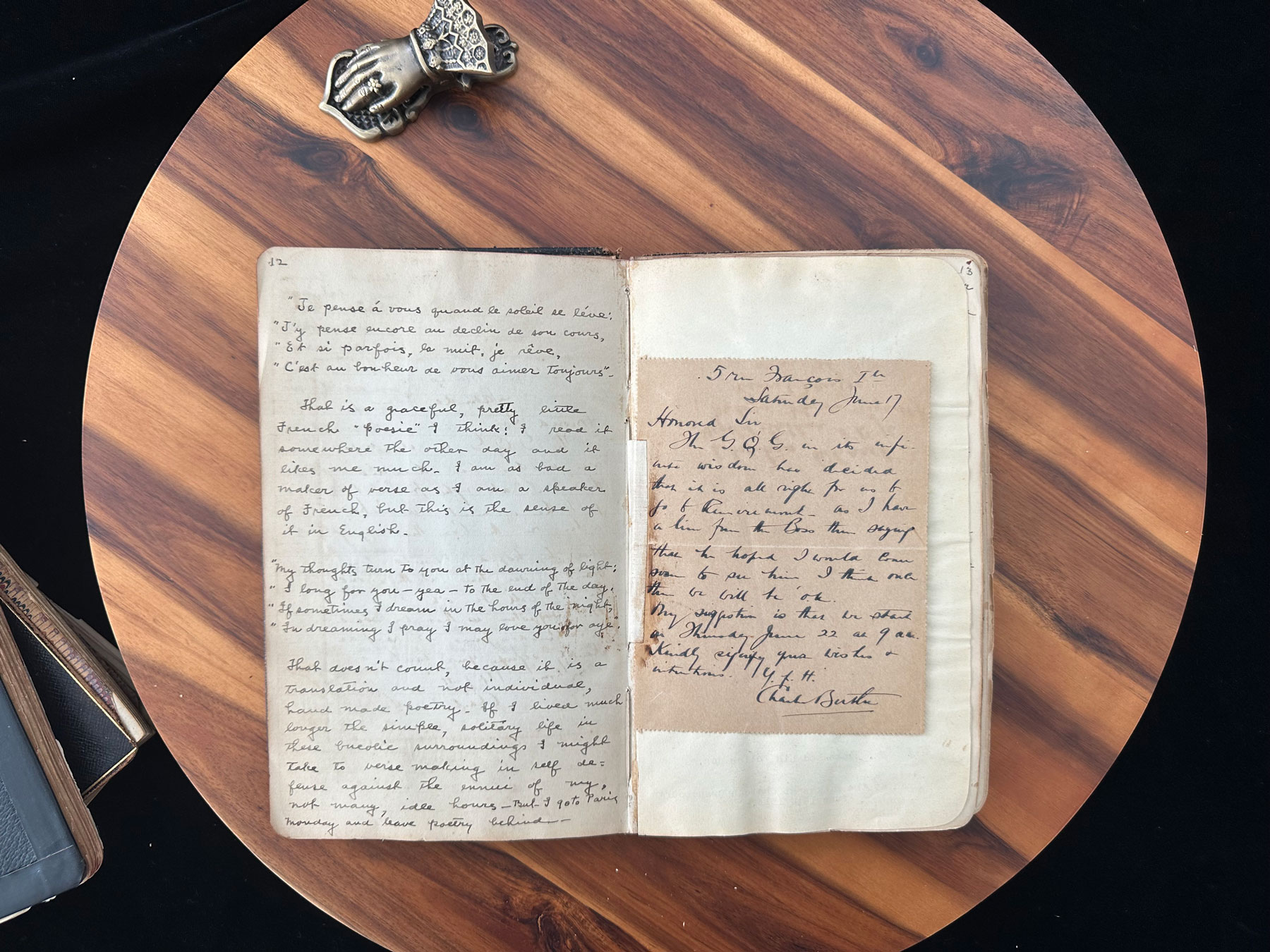
June 17 – “The horror of death in combat, of the ordeal of battle, so fills our minds that we ignore the fact that the grim reaper has his allotted task under normal conditions as well as when God’s heaven is draped with the dull cloud of conflict beneath which the ‘fiery Hun’ and his many enemies are so grimly struggling.
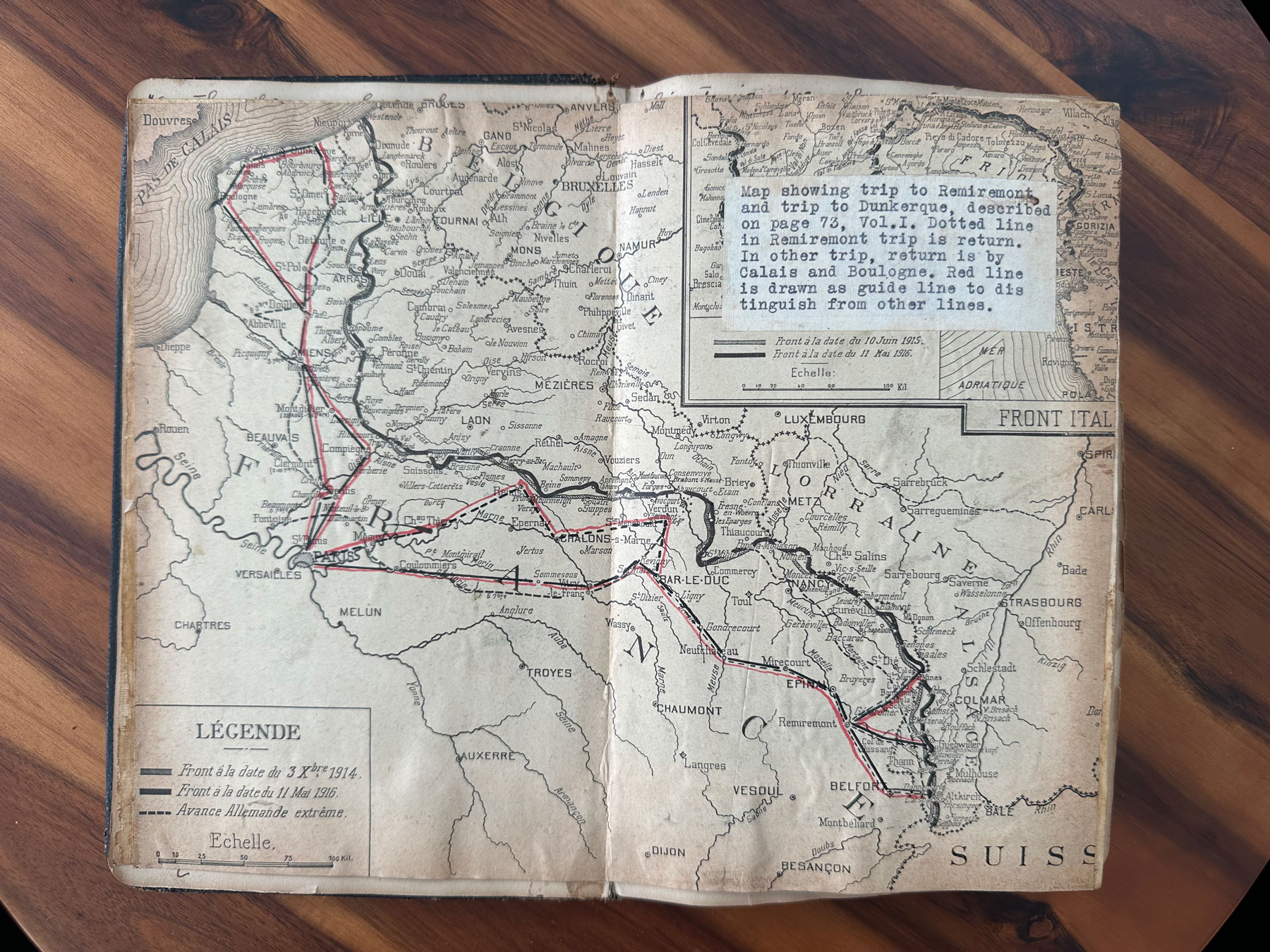
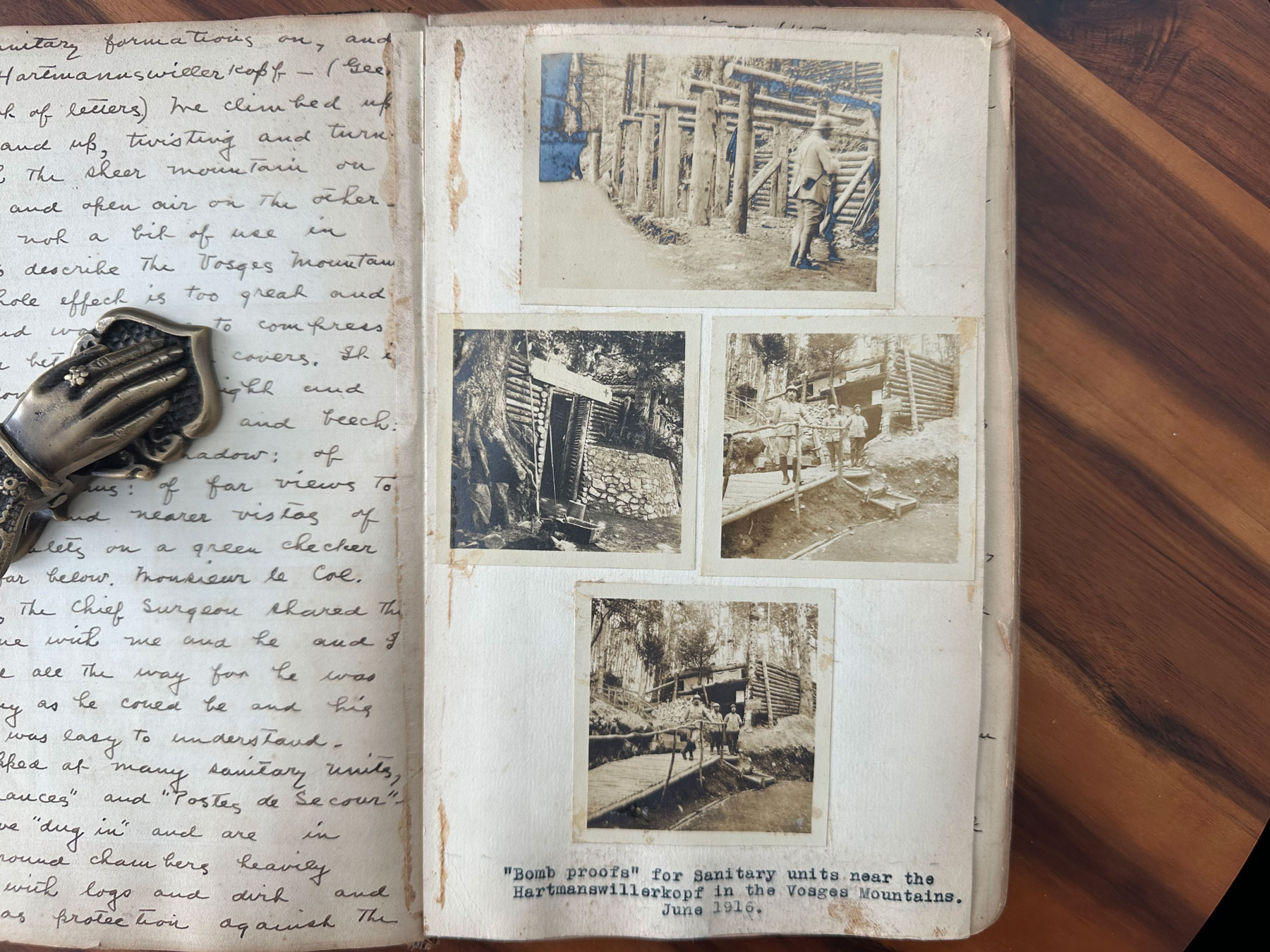
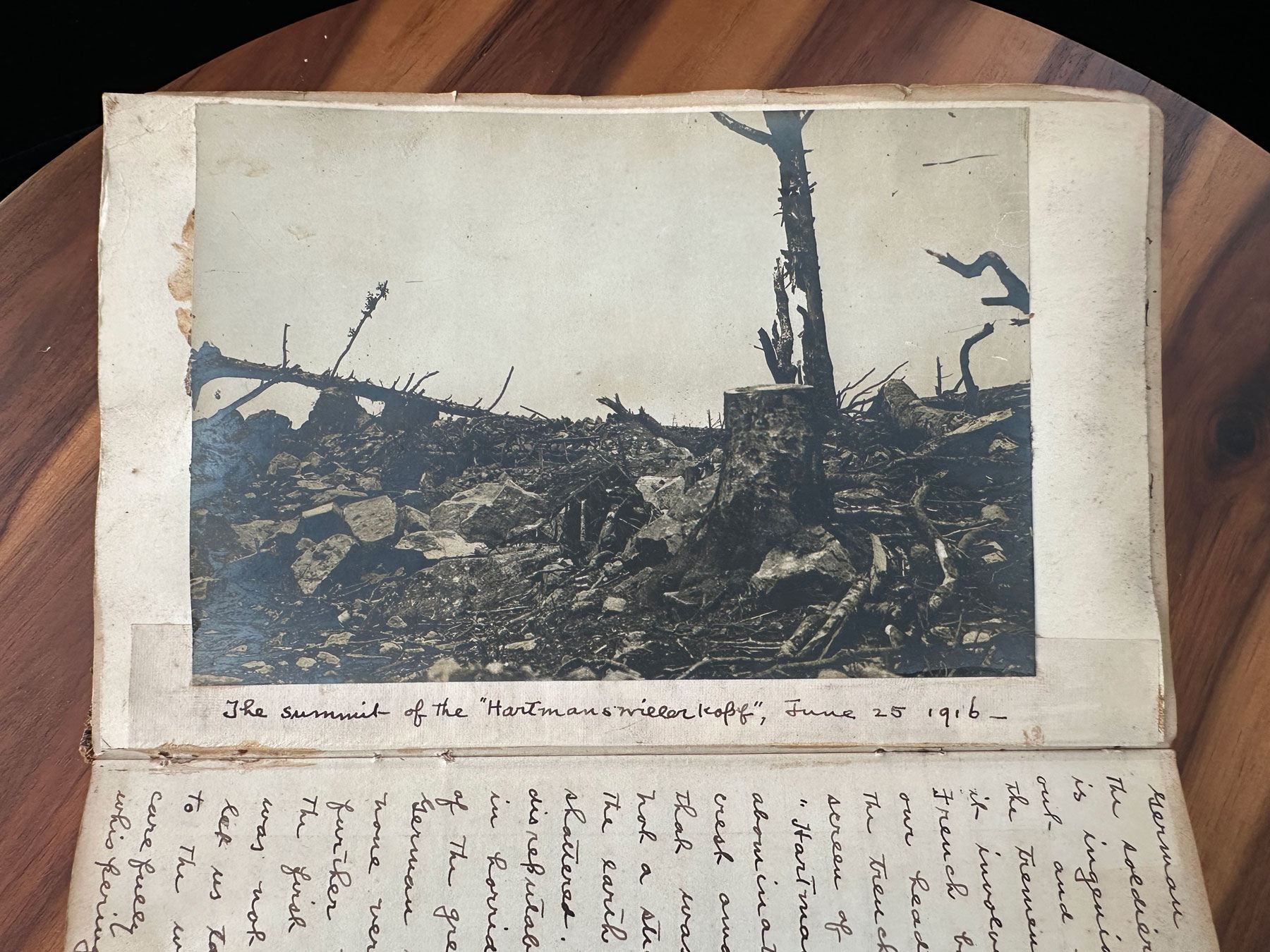
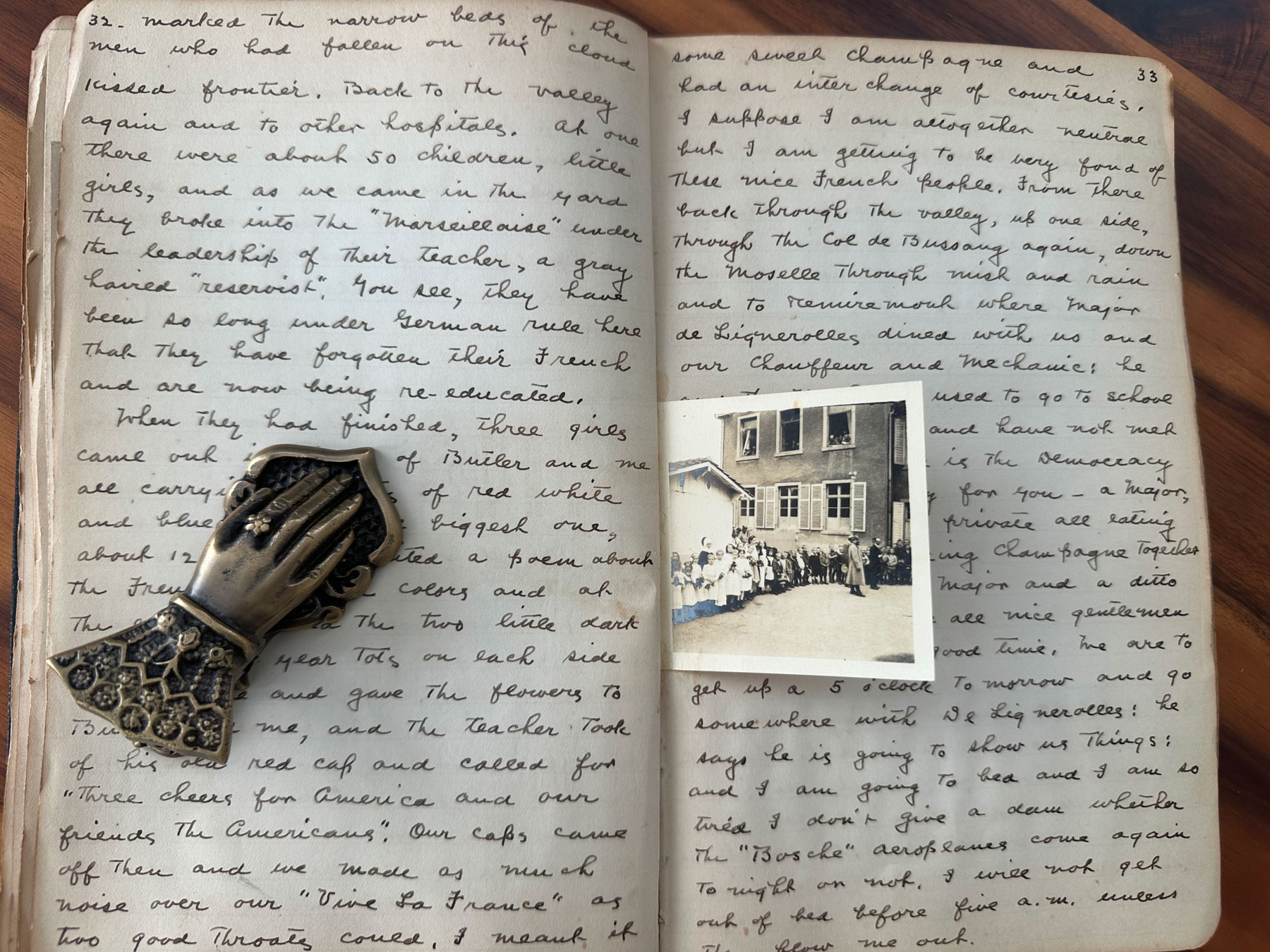
June 25 – They in Remiremont toward the East of France. He meets General Etienne de Villaret. Describes the meeting in great detail. There had been a German aerial bombardment the night before a couple times. “To our disgust we could see nothing either time. Not much damage was done and the ‘Bosches’ got away without bring hit.” The General then invites Church to visit the office of the Sanitary Service and the Chief Surgeon… We stopped at many sanitary units, ‘ambulances,’ and ‘postes de secour’ – all have dug in and are in underground chambers heavily roofed with logs and dirt and stone as protection against the German ‘Marmites’ (kettles) as the soldiers call the shells…. We could se the ‘Hartmanswillder’ – it looked like the abomination of desolation… Back to the valley again and to other hospitals. At one there were about 50 children, little girls, and as we came in the yard they broke into the Marseillaise under the leadership of their teacher. (he has taken a photograph, which is present). He gives much detail about the visit with these children…. We went on to one of the front line trenches. A Boyan is a trench about 7 feet deep, just wide enough to walk in and very zig zag so that no great length of it be take by shell explosions…I slipped and slid and caromed from one sticky earth wall to another and sweated… The blessed thing ramified and branches and right angled almost as much as a city. I should have been lost without a guide…. All the men in these these trenches lived in them… We followed the Captain out to make the round of the front trenches which were only six minutes from the shelter. He explained to us that the nearest point in his line was 75 feet from the Germans and asked that we speak softly as they were often irritable…. It smelled of dead men here. They were out in the tangle of barbed wire; in ‘no mans land’ where no one could go to bury them. (here he has included a map of the trenches and various positions). At some point during their trip the Germans started firing and they took shelter. A description of this incident ensues.
June 29 – They now move to Dugny near Verdun to inspect the wounded and hospital units here. Descriptions of the wounded and actions taken ensue. “We visited three other hospitals, all busy and bloody and then we crept through the mud and the traffic away from the growl of guns…”
July 10 – “I have still an office man: writing reports on the things I have seen for the possible edification of those in the United States.” A long description of the difficulty he is having doing this.
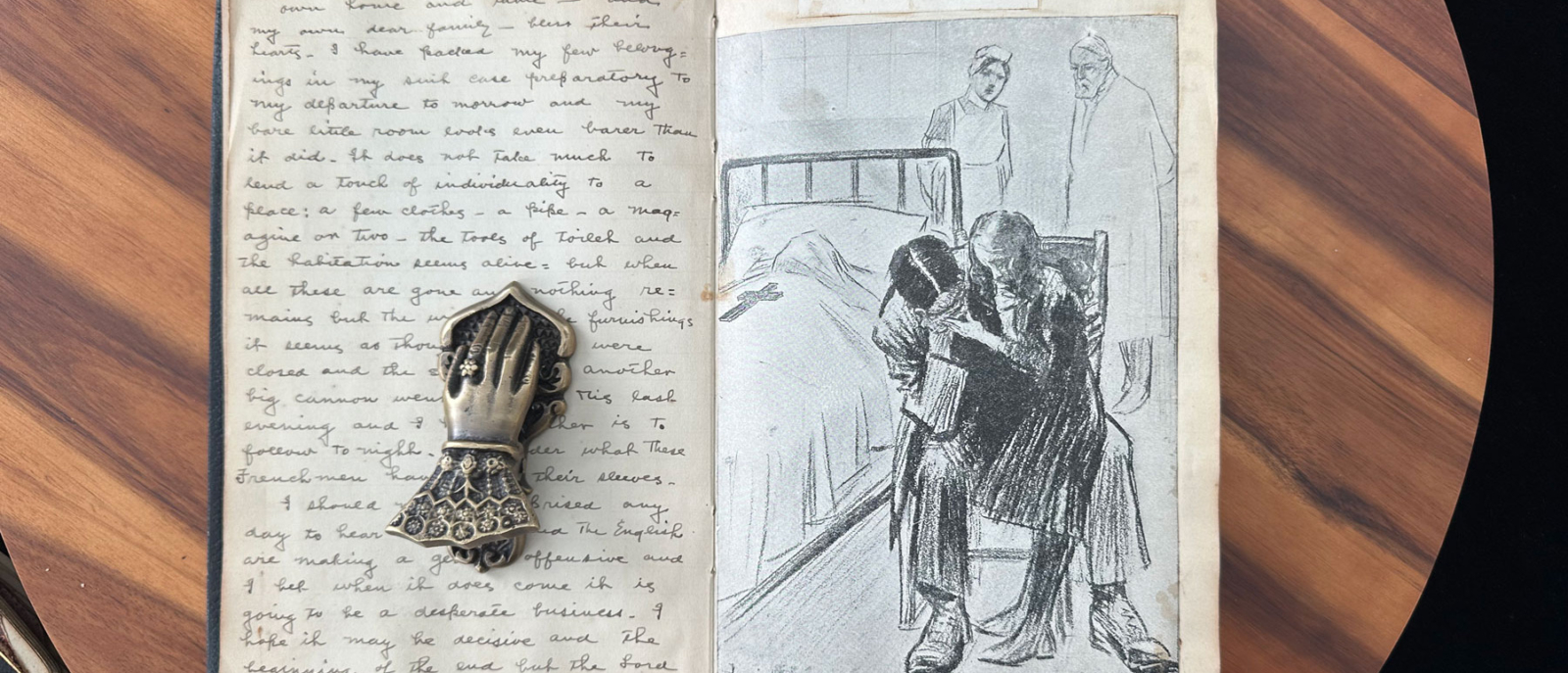
Volume 3, Sept 5, 1916 through July 8, 1917 – 100 pages
He starts the journal with a trip to Corsica to see the German prison camps there.
September 13 – “We went down to the old convent where the prisoners were, intending to finish up and go to Ghisoni… There were about 230 prisoners here all German soldiers but the normal quota is about 50… They dress in uniform and it looked like a section of Deutschland when they all lined up for inspection in the court…. I met a prof of history from the University of Freiberg, marked with the scars of the student huels at Heidelberg. His principal woe seemed to be that he as a prisoner although I am inclined to think they all hated and feared the Lt. in command. He had been all shot to pieces…”
They spend their time touring and visit various camps. There is discussion of this and many photographs.
They return to France mainland via Monte Carlo. He describes gambling in Monte Carlo.
April 16, 1917 – “Today our government formally declared that a state of war exists between the United States and Germany. And I am no longer a neutral, that pervasive ghost that has pervaded the troubled capital of France for so many months. I can say what I think.”
June 11 – “On the 6th of may, I went to British headquarters to look over their gas service… General Pershing and the rest of his staff will be here this week and probably before the end ofthe month the first of the troops.”
June 30 – “I went with the other officers to the Gare du Nord to meet the General [Pershing] and his staff. Even as we arrived at the station at 5:30, the streets were crowded and our automobile crawled down the last square between police guarded lanes of people behind a battalion of blue clad infantry which to the tap of drum marched in full kit to do honor as an escort to the American contingent coming to unite with the ‘tri-color.’ The flag of the Western Democracy. Joffre was there and the President and many of the higher dignitaries and there was a red velvet dais for the reception of the notables. The train came in about an hour late and under the escort of all the ‘brass hats’ as the British call the high authorities, and to the ‘Star spangled banner’ and the ‘Marseillaise,’ played by the fine band of the Garde Republicaine, the General of the American Force in France came down the train platform between the rows of the French ‘poidus’, who stood at rigid attention in full kit to do honor to the first contingent of their new allies and the man who was there to lead them. After the ceremonial reception we filed out to the waiting automobiles. The General and Joffre. The other high officials. The lesser lights of his staff and we of the mission who for 16 months had been as ‘benevolent neutrals’ both unhonored and unsung. It is nearly two miles from the station to the Hotel Crillon, where the General was to go and the whole route was through a lane of cheering, enthusiastic French populace. There was no hysterics, no superabundance of enthusiasm, but a sober confidence, an apparent belief that the force that was to weigh down the scale had come. Cheers – yes – all the way – and flowers – and ‘Vive l’Amerique” and all that sort of thing. But withal an unexpressed sentiment that this was the harbinger of better things for France. A real help in her hour of extremity. Slowly the automobiles crawled through the cheering crowds down the Rue Lafayette, the Rue Royal to the Hotel Crillon, where General Pershing from the balcony bowed his introduction to the people with whom he – and our own country – is now linked in the struggle against the Prussian enemy. I was moved and touched by the spirit displayed and I could well realize what it means to the French to have the moral support of our coming and the promise that we will put not only money into this cause but our own men. That we will spend not only dollars but blood. It is hard to think of in a way for the many who come to France there are many who will not go back. I shall lose friends whom I have known as I did in the little war in 1898… I must be content to do that which I am ordained to do.”
He has received orders to return to Washington to brief the medical officers there. Pershing has requested that order be rescinded but Church is sad to have come all this way to have to return.
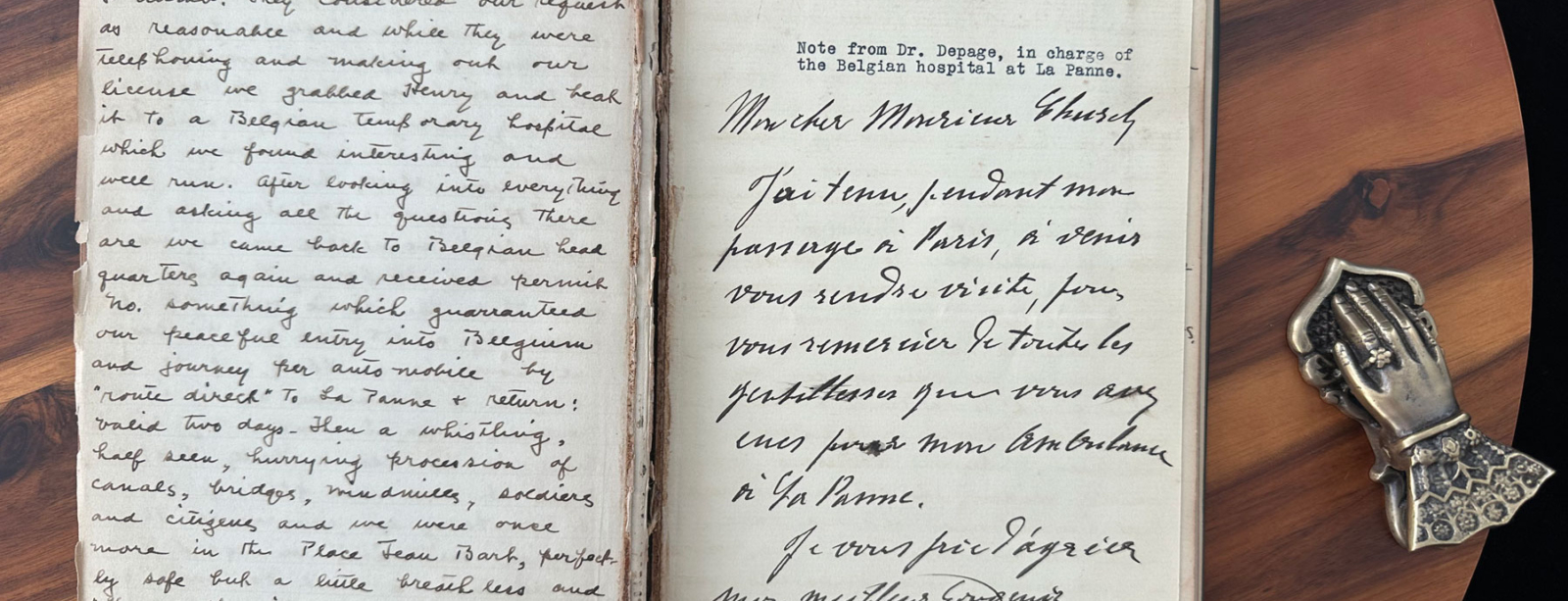
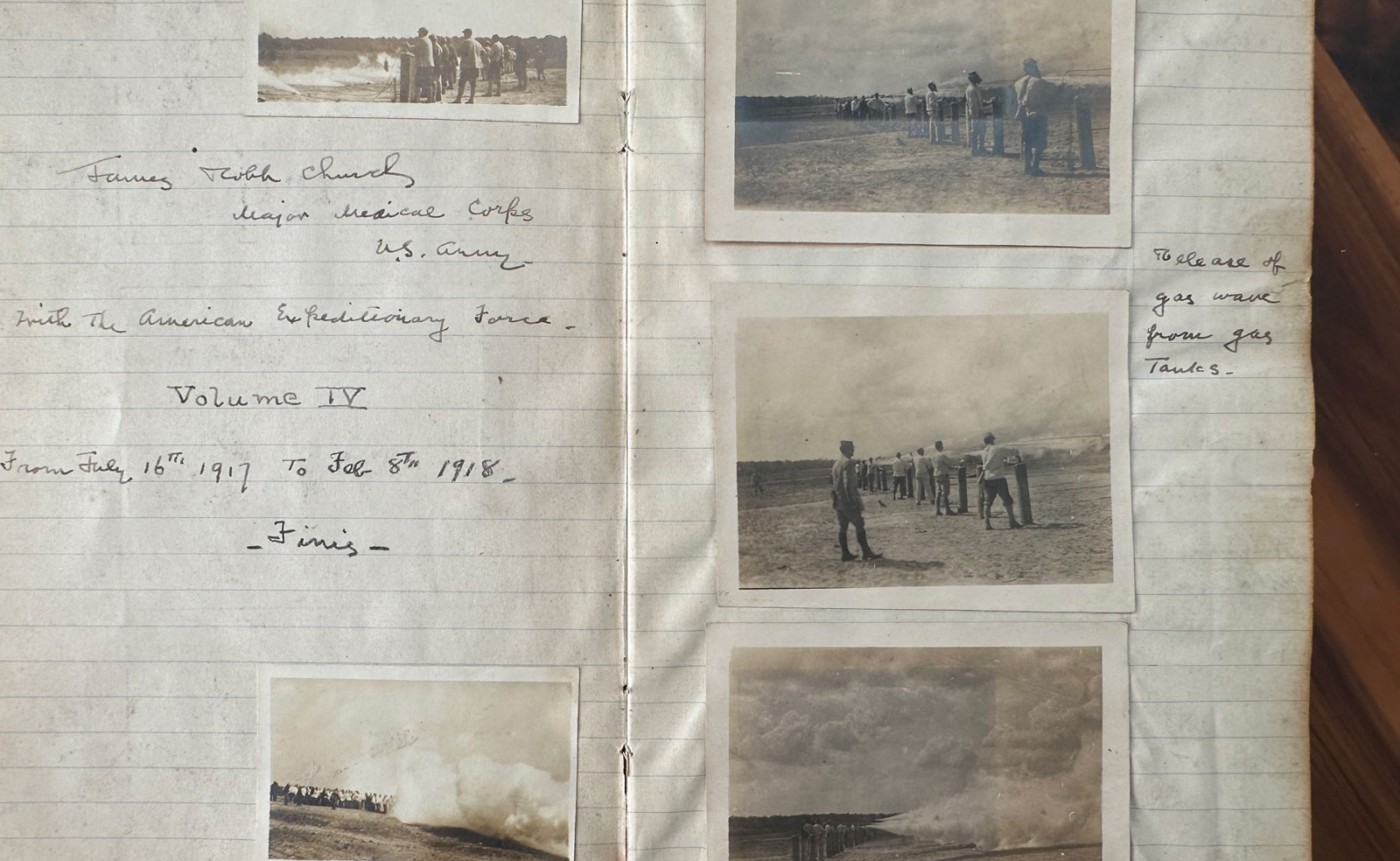
Volume 4 – July 16, 1917 – Feb 8, 1918
July 23 – “I felt with A. Piatt Andrew, who is Director of the American Field Service, to inspect some of the ambulance sections at the front.” Now that America is in the war, they can come and go as they please and he is no longer bound to the laws of civilians. “From Rarecourt, we went up thru the forest of the Argonne to a 1st aid post and from there on thru the thick woods to an observation post from which we could see the German lines not far distance and the French shells bursting over them… we went up thru the fading light to the front – while the growl of the French guns grew ever distance…. just as we came into the town one [bomb] landed close to a battery near the road and we heard the whining fragments. It killed one of the gunners and they brought his limp form in to the dressing station, head and shoulders covered with a cloth thru which the blood stains reddened and with this toes standing stiffly upright…. There was no comment, no surprise, no expressed sympathy and no shock. One smoked, one hatted or laughed a foot away. He was gone today as the others might be tomorrow. Better that way I think for after all death is the end and object of all war.” He goes on to describe the shell shocked countryside they passed through and the devastation on the French people. “Each night it is necessary to bring up to the troops in the trenches the things which they are going to need for the next 24 hours: shells, bombs, food and the things that make for war. The Germans know the usual hours of this procession of wagons and as a matter of methodical Teutonic habit they invest all the traversed road with a flaming curtain of high explosive and shrapnel. So we put our wounded in the wagon, said ‘so long’ to the lad who was to wait there thru the dark shattered night with his emergency ambulance and crept slowly out, around the shell holes and piles of fallen rock, thru the flash of our batteries and the searching shells of the enemy, slowly, always too slowly, up past the curve in the road and on by the death swept landscape back to the dead town of Montzeville…. ” Then go to Verdun. “Verdun, the key of the French lines, the rock against which the waves of the Crown Prince’s army have beat and fallen back and time and again, leaving the fields of France strewn with the grey coated legions which essayed to come thru this narrow gate in the lines to the golden prize of Paris. ‘Nach Verdun, Nach Paris’ – how many dead Bavarians and Prussians have been turned from living masses to dead gray heaps on the blasted land in the effort to make good on this attempted drive of the Kaiser’s first born son. And still and yet Verdun, shattered and torn, deserted and harried, stands staunchly French to show that these fine allies of ours meant it when they said ‘You shall not pass.’ Poor Verdun, sad Verdun, brace Verdun, with all your twisted houses and battered monuments, and blasted streets and roads, you must forever make for all that is resolute for defense of home and country….
“Just here I have been interrupted by the shrieking wail of the sirens on the fire engines which means that somewhere the German aeroplanes are near us and intent to attack.”
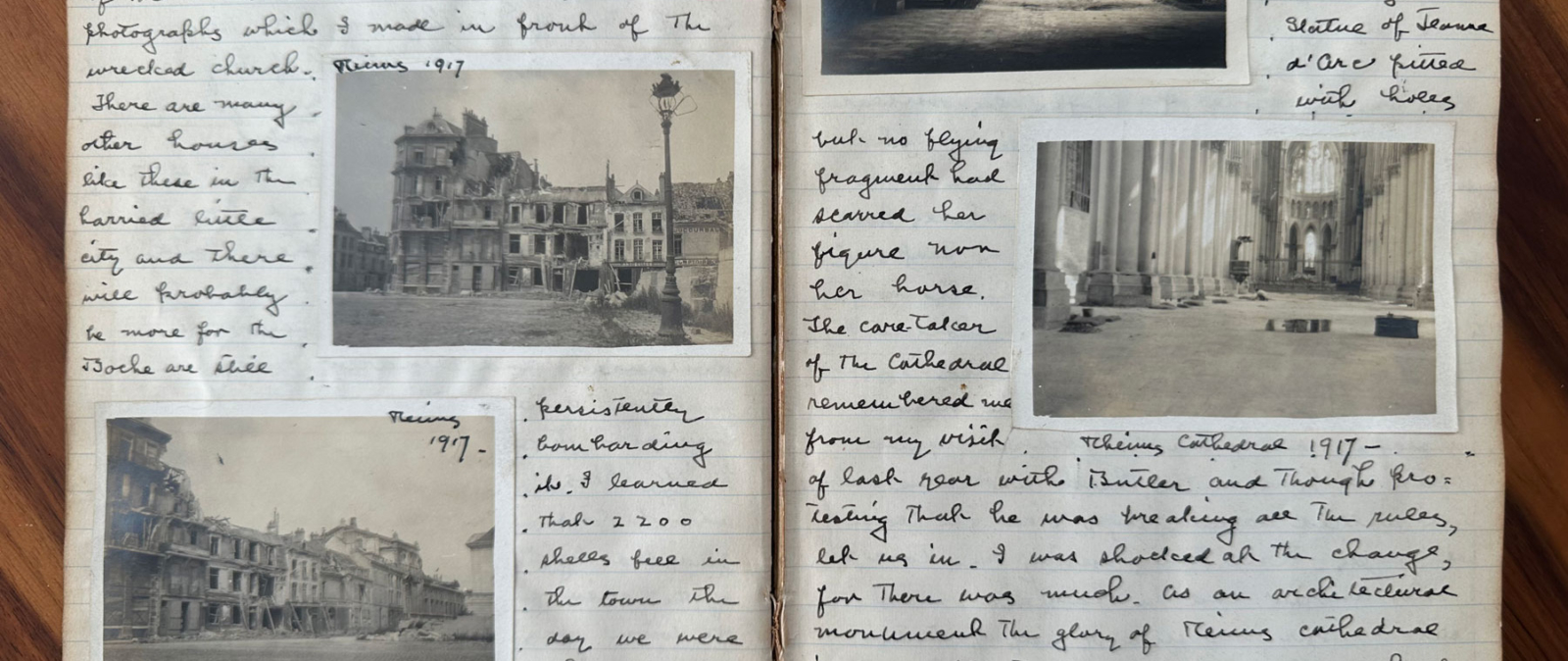
They visit the Reims Cathedral. “The glory of the Reims cathedral is gone. It stands as a monument of Hun ruthlessness, a frayed battered testimonial of their disregard for all that is beautiful and harmless. And French. We watched the patient artisans who were trying to conserve and reconstruct the fallen windows in white smocks and overalls… Other men were sifting through the debris thru sand screens and picking out glass. All the while there was the drone of projectiles overhead.
August 14 – “I am waiting for data from my Italian friends which shall lead to my departure for the land of Caesar and the Pope…. Gas questions are crowding in and I can see that before long I shall live and inhabit in an atmosphere charged and tinctured with all the foul odors and deadly results that belong to that grisly arm of war. It is a big subject and stretches its devastating arm far and away thru many different spheres: Chemistry of course and primarily, and ordnance, and tactics and all the ramifications there are in the manufacture of prevention against this Hun made method of war. God!! What a war!!”
Sept 9 – “I am now the official censor of the Gas service. I am provided with an official censor 34 stamp and no mail goes out of the office until I have stamped it…. I shall leave here on the 14th to attend a conference of the allies on the question of Gas… The Gas Service will start its own mess and I think I shall have to join that.”
October 23 – “Today I went over to Bourbonne les Baines with some other officers to see the Zepellin L 49 which was brought down there on the 20th. It was practically uninjured and I was very glad to have the chance to inspect one of these huge German air ships. It was 441 feet long and about 75 feet in diameter. …”
November 21 – “I have been hard at work translating a French work on the use of Gas shells by the artillery. Wretchedly technical stuff and my wits have about all departed in the job.”
He is being retired because he is no longer actively fit and that saddens him. He has been ordered home to report to the Surgeon General.
A fascinating if not unique set of journals about World War I and its methods of warfare, as seen from the medical perspective by a Medal of Honor winning American army surgeon.

Frame, Display, Preserve
Each frame is custom constructed, using only proper museum archival materials. This includes:The finest frames, tailored to match the document you have chosen. These can period style, antiqued, gilded, wood, etc. Fabric mats, including silk and satin, as well as museum mat board with hand painted bevels. Attachment of the document to the matting to ensure its protection. This "hinging" is done according to archival standards. Protective "glass," or Tru Vue Optium Acrylic glazing, which is shatter resistant, 99% UV protective, and anti-reflective. You benefit from our decades of experience in designing and creating beautiful, compelling, and protective framed historical documents.
Learn more about our Framing Services