





The Very Day He Assumes Office in April 1782, Edmund Burke, Now Paymaster of British Troops in the New World, Reshapes War Provisioning and Makes Plans to Manage Payment and Expenses for the Retreating of the Troops from the New United States Headed Toward Nova Scotia
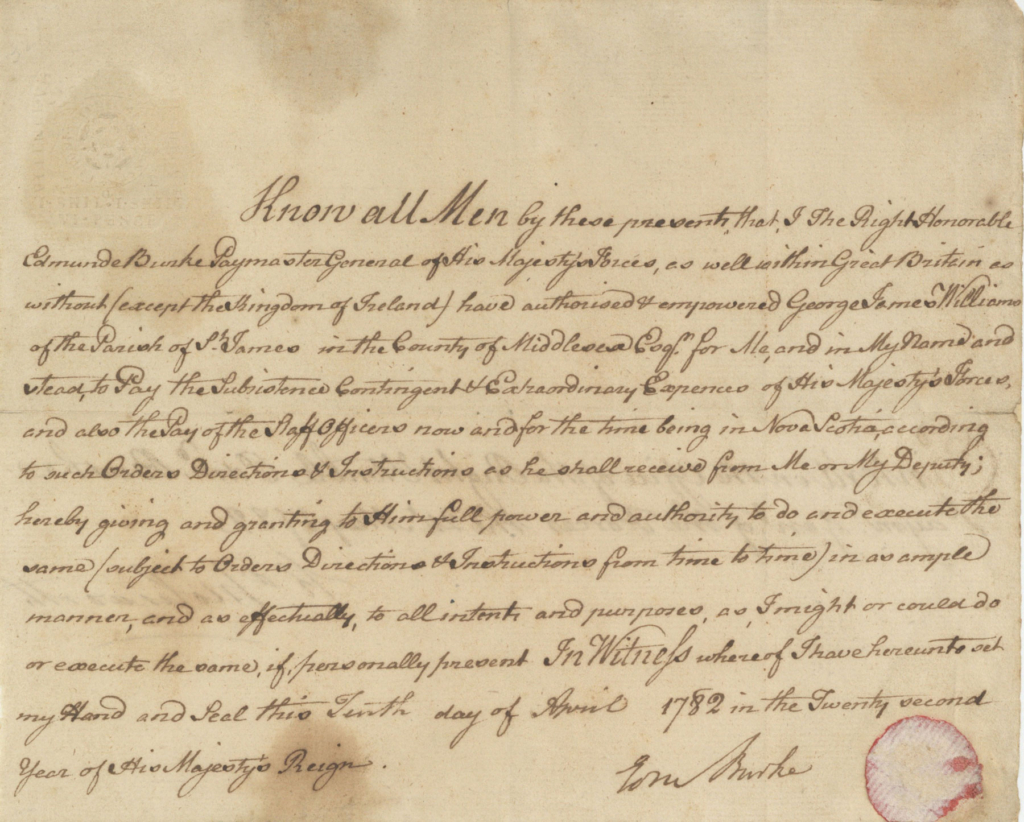

Just as Britain votes to cease military operations in America, Burke, an incredibly influential conservative figure, appoints a new Deputy Paymaster General for operations based out of Nova Scotia
- Currency:
- USD
- GBP
- JPY
- EUR
- CNY
 This currency selector is for viewing only.
The Raab Collection only accepts USD payments at checkout.
Exchange rates are updated hourly. Rates may be inaccurate.
War-related documents of Burke from his short term in this position are very uncommon
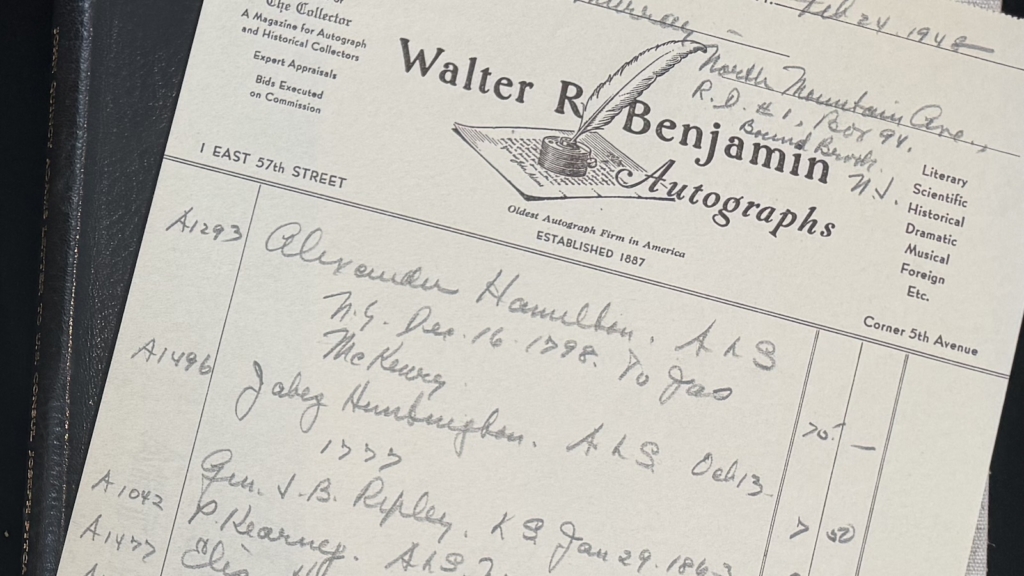
This document was last sold by Sessler’s and Mabel Zahn in the 1960s and has been in the same private collection since
The American victory at Yorktown in fall 1781 had effectively ended major combat operations in...
War-related documents of Burke from his short term in this position are very uncommon
This document was last sold by Sessler’s and Mabel Zahn in the 1960s and has been in the same private collection since
The American victory at Yorktown in fall 1781 had effectively ended major combat operations in the Revolution, and Lord North’s ministry collapsed soon afterward, bringing in a government committed to both peace negotiations and fiscal retrenchment.
Britain’s political decision to stop prosecuting the war in America came in February 1782, when the House of Commons voted on the 27th to cease further offensive operations and effectively end the war effort against the Americans. This vote reflected a dramatic shift in parliamentary opinion after Yorktown, growing public war-weariness, and sustained political pressure from MPs who argued that continued conflict was futile and fiscally unsustainable. Following this vote, Parliament, on March 5, granted the government authority to negotiate peace with the Americans.
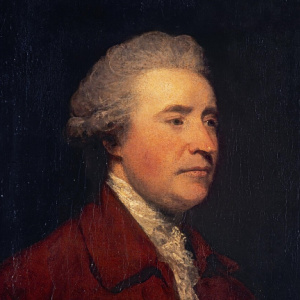
On March 22, with Lord North’s government collapsed, Charles Watson-Wentworth, 2nd Marquess of Rockingham, formally took office as prime minister. On April 10, Edmund Burke formally took over as Paymaster of all the Armed Forces, including those in the New World. Burke, a British statesman and philosopher, had advocated for the rights of the American colonists and opposed heavy-handed British policies, such as taxation without representation.
Burke’s assumption of the office of Paymaster came at a decisive moment in the final unwinding of Britain’s war effort in America. Burke, long a critic of wartime corruption and administrative excess, entered the paymastership not as a routine political appointee but as a reformer tasked with imposing order, transparency, and restraint on a military system that was rapidly contracting. His tenure coincided with Parliament’s recognition that Britain’s military presence in North America had shifted from active conquest to consolidation, evacuation, and settlement of outstanding obligations.
The payment of troops and suppliers in Nova Scotia assumed heightened importance. Halifax and the surrounding region functioned as a major logistical and administrative hub for British forces still stationed in North America, including regular regiments, Loyalist units, and the so-called “subsistence contingent and extraordinary forces” maintained after the cessation of large-scale fighting. Funds disbursed there were not merely local expenses but part of a broader effort to settle accounts for provisioning, transport, and pay connected to troops withdrawn from the former colonies. The paymaster’s oversight thus linked Nova Scotia directly to the final chapters of the American war: paying soldiers awaiting redeployment, sustaining garrisons guarding Britain’s remaining footholds, and closing the financial books on a conflict that had already been lost militarily but was still very much alive in its administrative and fiscal consequences.
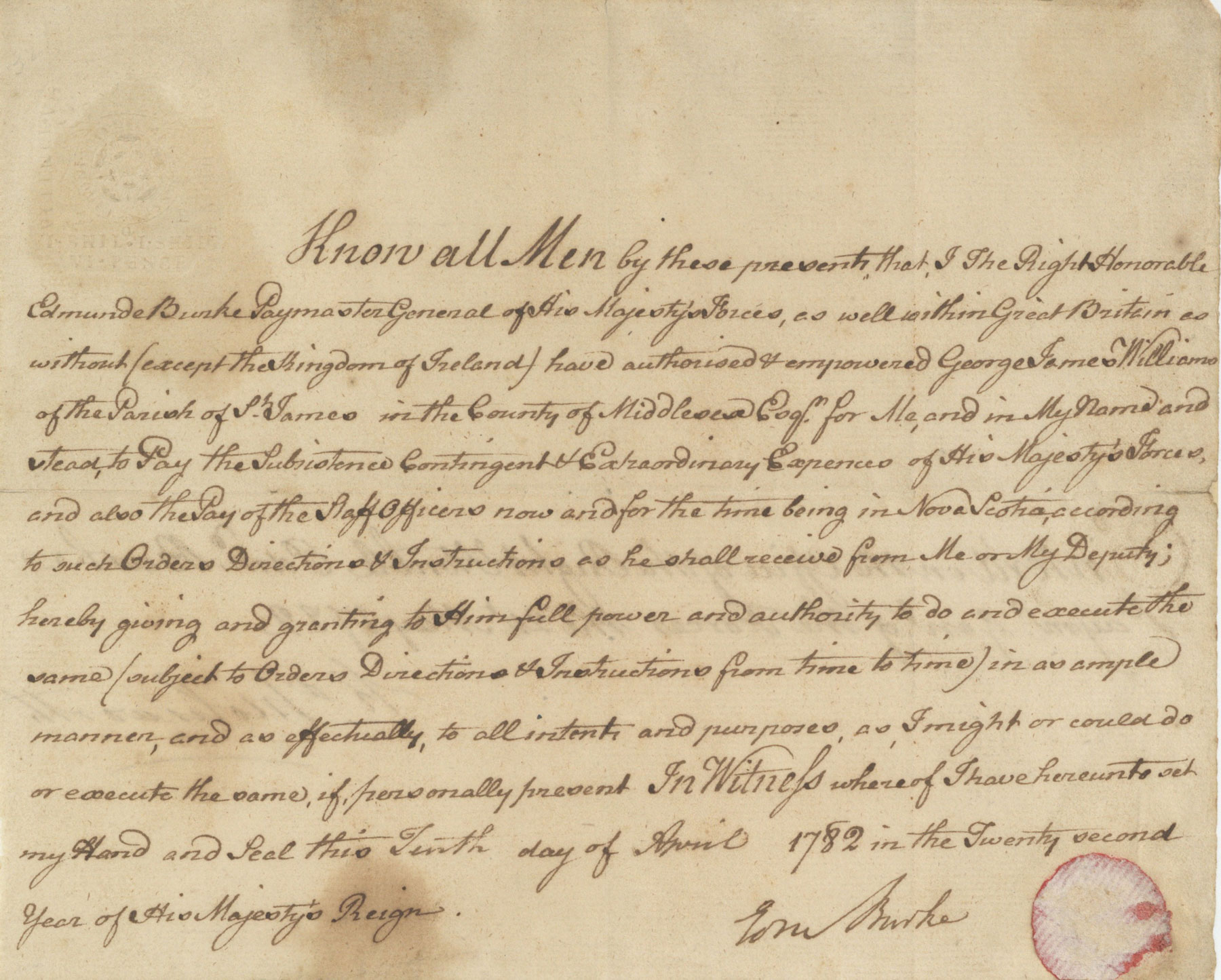
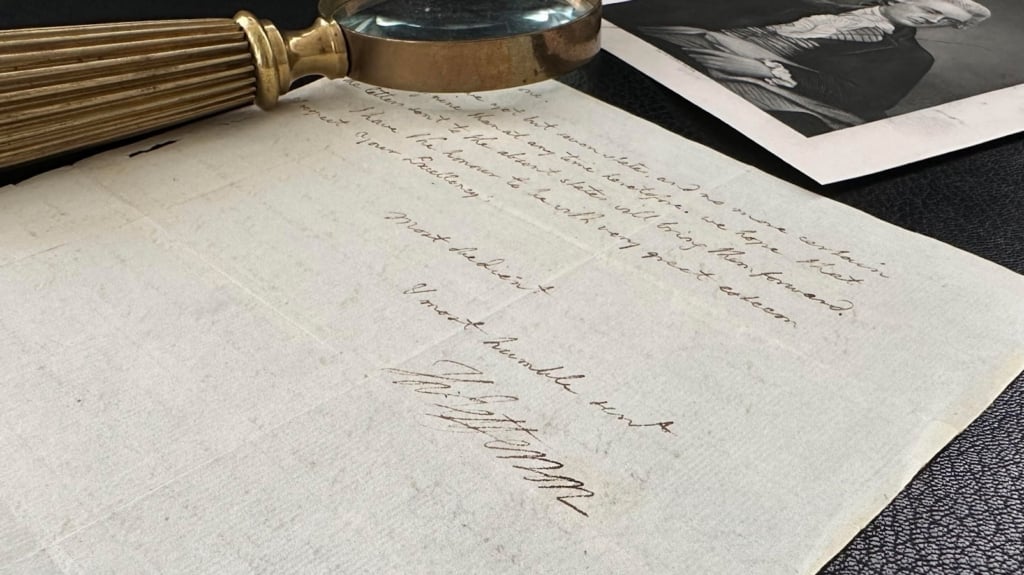
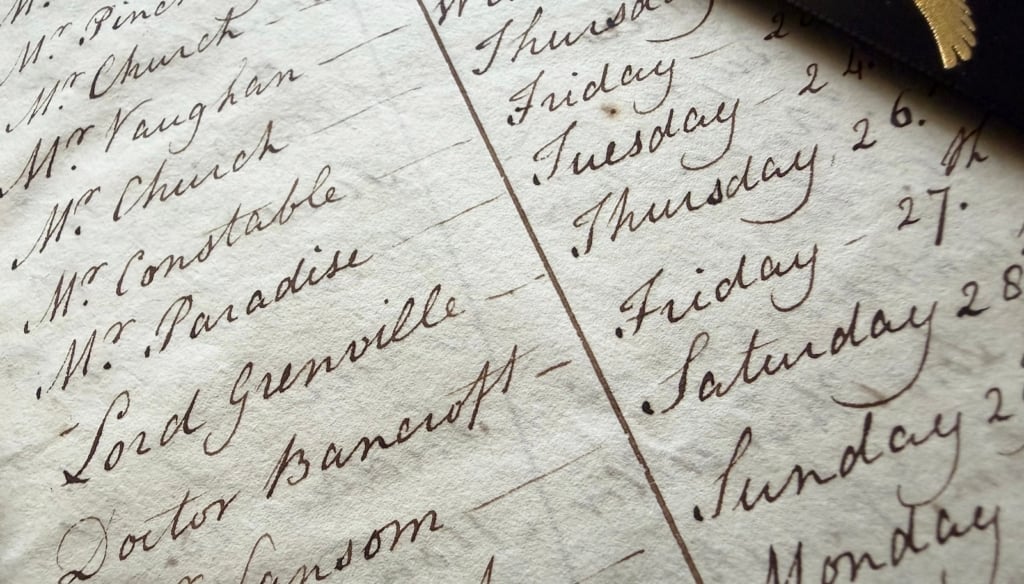
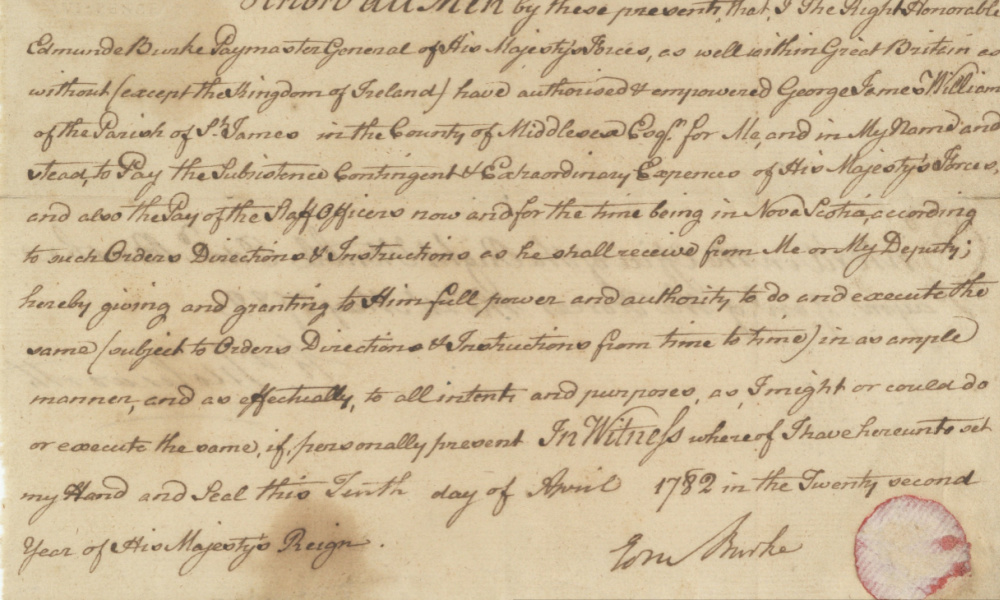
Document signed, London, April 10, 1782, the very day Burke took over. “Know all Men by these present, that I, the Right honorable Edmund Burke, Paymaster General of his Majesty’s Forces, as well within Great Britain as without (except the Kingdom of Ireland) have authorized and empowered George James Williams of the Parish of St. James in the County of Middlesex Esq. for me and in my name and stead, to pay the subsistence contingent and extraordinary expenses of his Majesty’s forces, and also the pay of the staff officers now and for the time being in Nova Scotia, according to such orders, directions and instructions as he shall receive from me and or my deputy; hereby giving and granting to him full power and authority to do and execute the same, subject to orders, directions and instructions from time to time, in as ample a manner, and as effectually to all intents and purposes, as I might or could do or execute the same.”
Burke’s enduring role in the conservative movement rests on his defense of constitutional continuity, moral restraint, and inherited political order, principles that profoundly shaped Anglo-American political thought. In Britain, his opposition to radical reform and, later, to the French Revolution articulated a conservatism grounded not in reactionary absolutism but in reverence for tradition, prescription, and gradual change. These ideas resonated strongly in America, where Burke had earlier been a sympathetic advocate of colonial rights within the British constitution, arguing that liberty was best preserved through custom and law rather than abstract theory. After independence, American statesmen and later conservative thinkers drew on Burke’s writings—especially his emphasis on ordered liberty, suspicion of centralized power, and respect for social institutions—to frame a distinctly American conservatism that valued stability, federalism, and historical continuity over revolutionary ideology.

Frame, Display, Preserve
Each frame is custom constructed, using only proper museum archival materials. This includes:The finest frames, tailored to match the document you have chosen. These can period style, antiqued, gilded, wood, etc. Fabric mats, including silk and satin, as well as museum mat board with hand painted bevels. Attachment of the document to the matting to ensure its protection. This "hinging" is done according to archival standards. Protective "glass," or Tru Vue Optium Acrylic glazing, which is shatter resistant, 99% UV protective, and anti-reflective. You benefit from our decades of experience in designing and creating beautiful, compelling, and protective framed historical documents.
Learn more about our Framing Services