






In the Wake of the Crossing of the Delaware and American Victories at Trenton, Princeton, Gen. George Washington Writes to Financier of the Revolution Robert Morris and Predicts Ominously: “A storm will burst soon, some where”
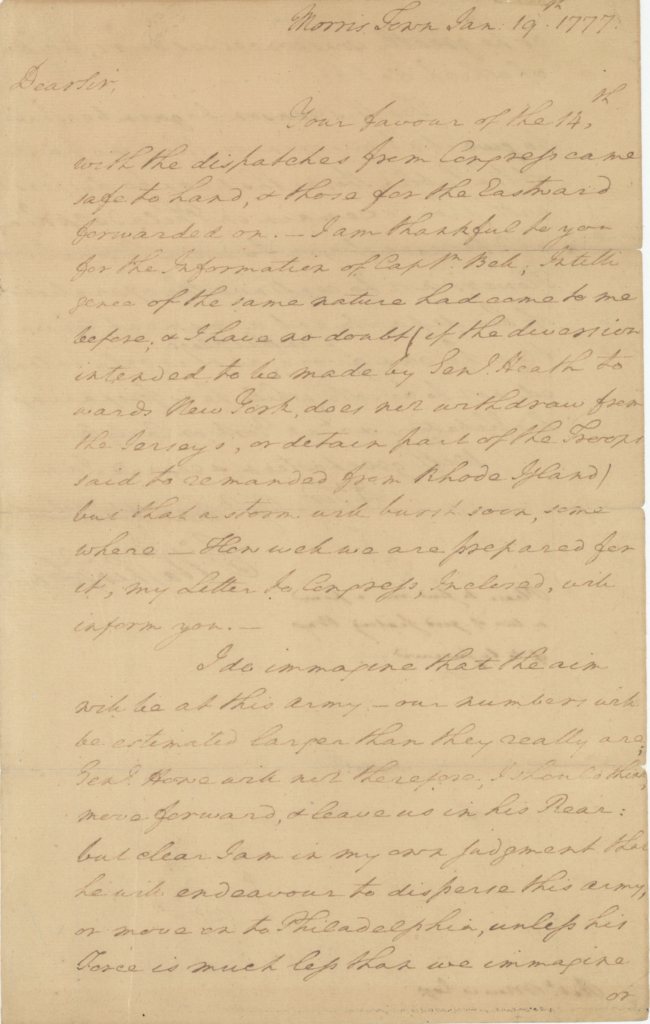

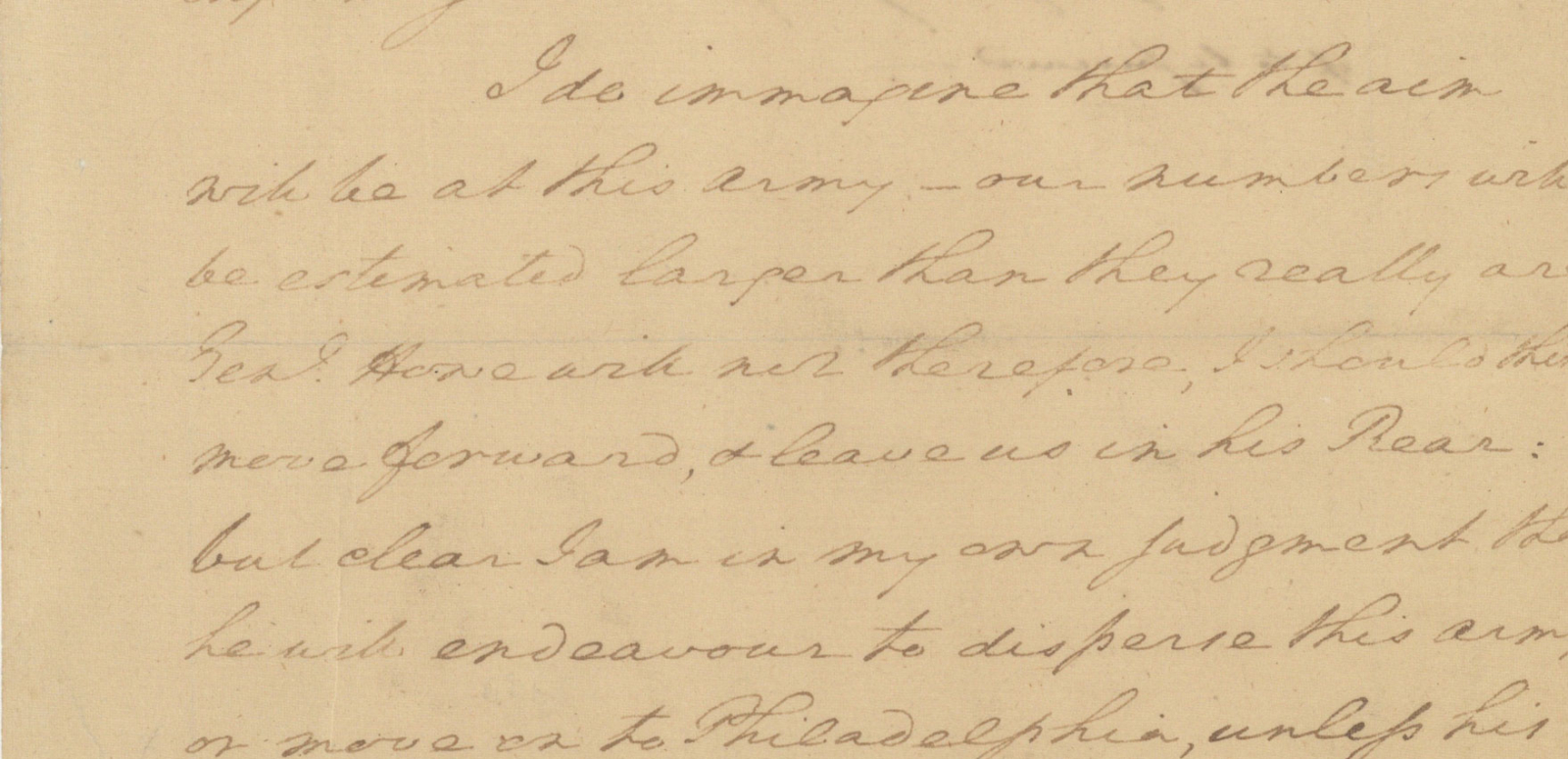
The General believes his army will be the target: "I do imagine that the aim will be at this army...Our numbers will be estimated larger than they really are”
He correctly foresees that taking Philadelphia will be another British goal, and requests that essential supplies be removed from that city: “No part of the public stores that can be dispens’d with should remain in Philadelphia…”
This very letter forwarded Washington’s report and desperate plea for troops to the Continental Congress...


He correctly foresees that taking Philadelphia will be another British goal, and requests that essential supplies be removed from that city: “No part of the public stores that can be dispens’d with should remain in Philadelphia…”
This very letter forwarded Washington’s report and desperate plea for troops to the Continental Congress and John Hancock
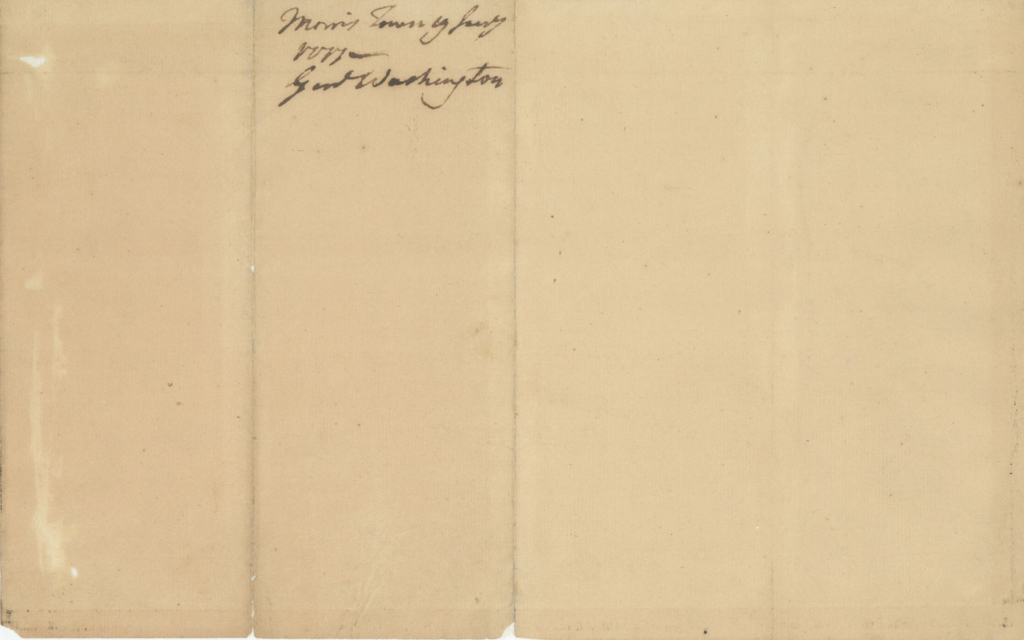
A war-date letter in Washington’s hand, containing the docket in the hand of Morris, who helped finance the Revolution
This and other letters in mid January from Washington convinced Morris of the necessity of advancing funds to the Continental Army, which in turn spurred needed soldiers to reenlist this very month
“This letter shows strength and courage, but it also shows vulnerability – as Washington knows that the British are planning a major attack at some point on Washington’s armies,” writes presidential descendant Massee McKinley
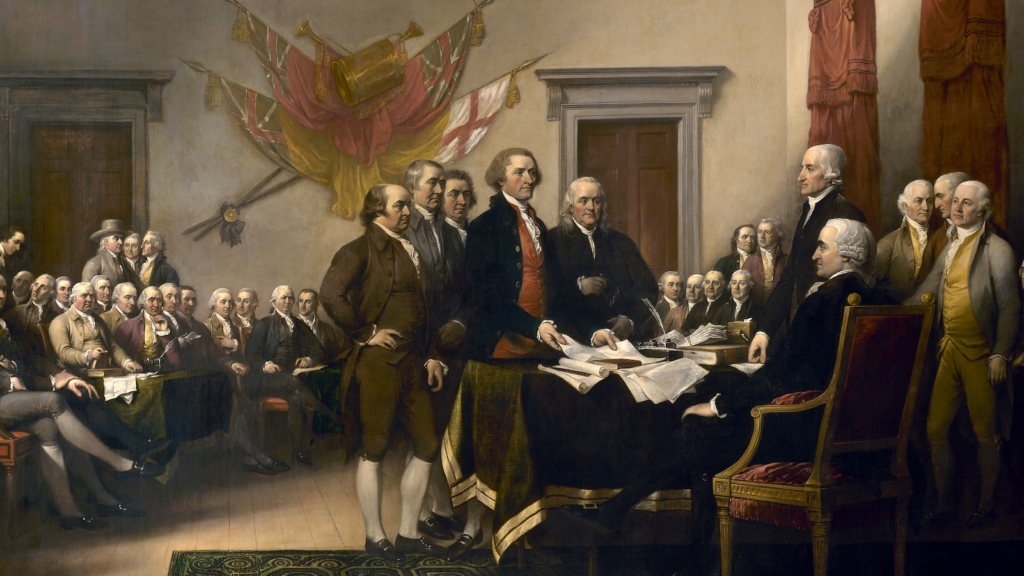
Between mid-December 1776 and mid-January 1777, George Washington led the Continental Army through one of the most dramatic and decisive sequences of the American Revolutionary War, known collectively as the Ten Crucial Days. On the night of December 25–26, Washington famously crossed the ice-choked Delaware River and surprised the Hessian garrison at the Battle of Trenton, capturing nearly 1,000 prisoners and reviving collapsing American morale. After briefly withdrawing into Pennsylvania, he re-crossed the river to hold Trenton, where on January 2, 1777, his army repelled a strong British attack at the Battle of the Assunpink Creek. That night, Washington slipped around British forces and struck again on January 3 at the Battle of Princeton, defeating British regulars and forcing the enemy to abandon much of New Jersey. Together, these rapid, audacious victories transformed the strategic situation, restored faith in the Continental cause, and secured Washington’s reputation as a bold and resilient commander. But the victory portended a British counter assault. The hard work remained.
General Washington encamped the Continental Army at Morristown, New Jersey. He found Morristown strategically located for defense and resources. With his army depleted, Washington would focus on rebuilding, recruiting new soldiers, and managing logistics. Moreover, the hills surrounding the camp offered Washington a perfect vantage point from which to keep an eye on the British army, which was headquartered across the Hudson River in New York City, and also allowed Washington to protect the roads leading from the British strongholds in New Jersey to other areas. As an additional advantage, Morristown was far from the American capital of Philadelphia, which Washington correctly believed would become a target for attack.
In Morristown, Washington was much concerned about the intentions of General William Howe, the commander of British forces. After suffering losses, Washington knew that the British would embark on a campaign which, he believed correctly, would focus on destroying the Continental Army, and on moving to take Philadelphia.
Washington developed two primary actions to protect the Continental Army and its essential resources: 1. Philadelphia: Washington strongly recommended that the valuable stores located in Philadelphia be moved to a more secure location. He feared that if the British marched toward the city, these supplies would be vulnerable to capture, which would be a significant blow to the American war effort; and 2. Encouraging longer enlistment terms: Washington understood the necessity of having a stable, standing army. He advocated for the states and Congress to focus on securing longer enlistments, ideally “for the War”. He believed that short-term militia enlistments, which often expired at critical moments, exposed the army to significant danger and operational challenges. Ultimately, Washington’s main goal was to preserve the existence of the army itself, recognizing that as long as the army was intact, the war for independence could continue.
Robert Morris, a prominent Philadelphia merchant and a member of the Continental Congress, who had signed the Declaration of Independence, was crucial in financing the war effort. He also had the ears of the leaders of Congress, and Washington turned to him to express his concerns and articulate his plans. Washington strongly advised Morris to ensure that all non-essential public military stores were removed from Philadelphia to a safer inland location like York or Carlisle, in case the city was occupied by the British.
Washington worried for the stores at Philadelphia. Joseph Flower held the post of Commissary General of Military Stores, meaning he was responsible for procuring, storing, and distributing weapons, ammunition, and other military supplies for Continental Army. Because Philadelphia was the Continental capital and the army’s main supply hub, Flower was headquartered there throughout the first half of 1777, overseeing arsenals, armories, and supply depots.
On January 16, Washington wrote to Flower, ordering the rapid construction and organization of a major military-industrial complex for cannon casting and ammunition production—initially at York but made relocatable to Carlisle.
On January 19, Washington sent an official to Congress and President John Hancock. In this report, he provides a “Sketch of our present Army, with which we are obliged to keep up Appearances, before an Enemy already double to us in Numbers,” who might he fears might “penetrate towards Philada a thing by no means difficult now, as the Ice affords an easy Passage over the Delaware.” The long report begs for reinforcements and an army not based on militia and he fears . “I think these demands of Aid should be made as quietly as the nature of the Case will admit of, especially at this time when we are deceiving our Enemies with false Opinions of our Numbers.”
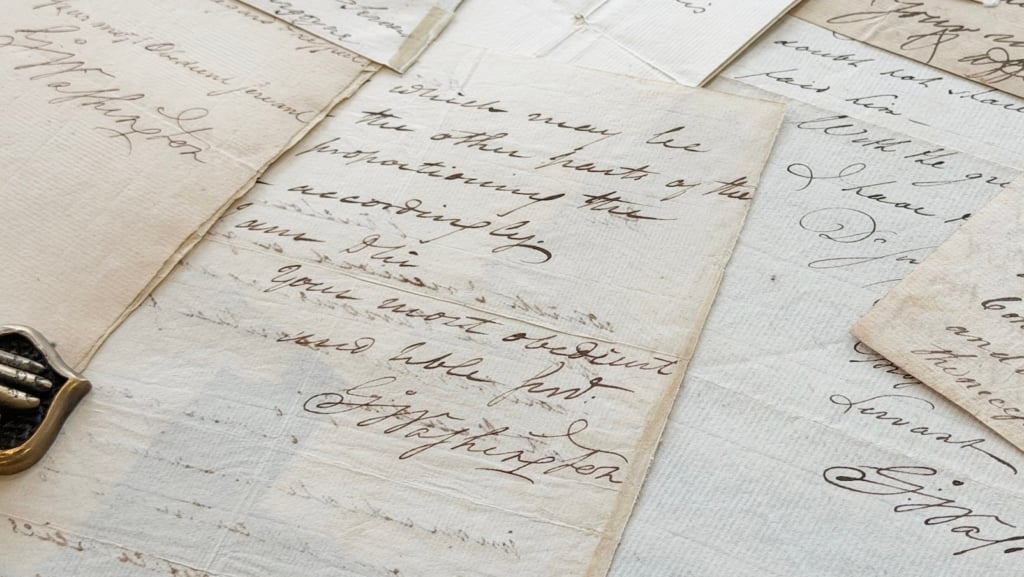
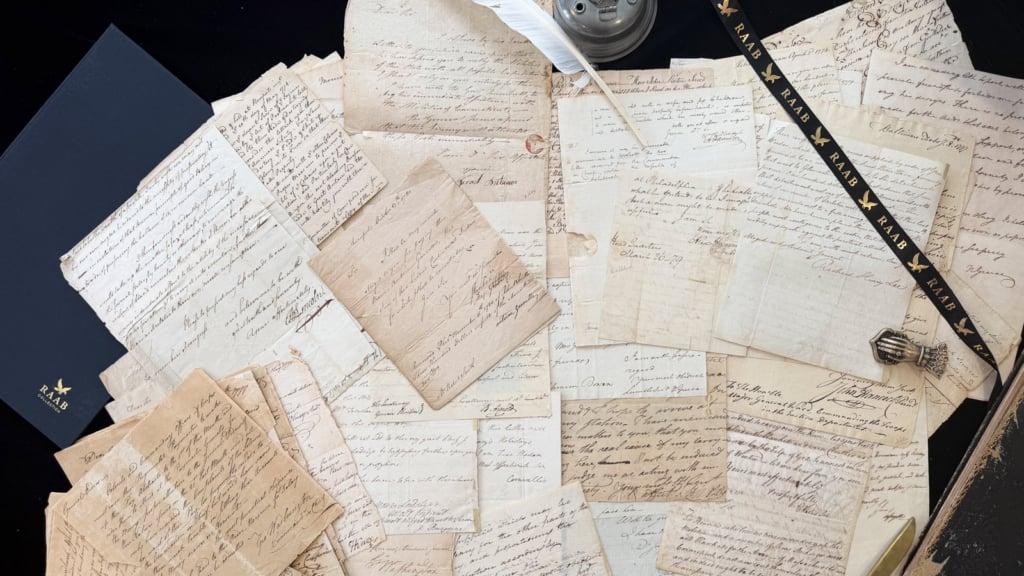
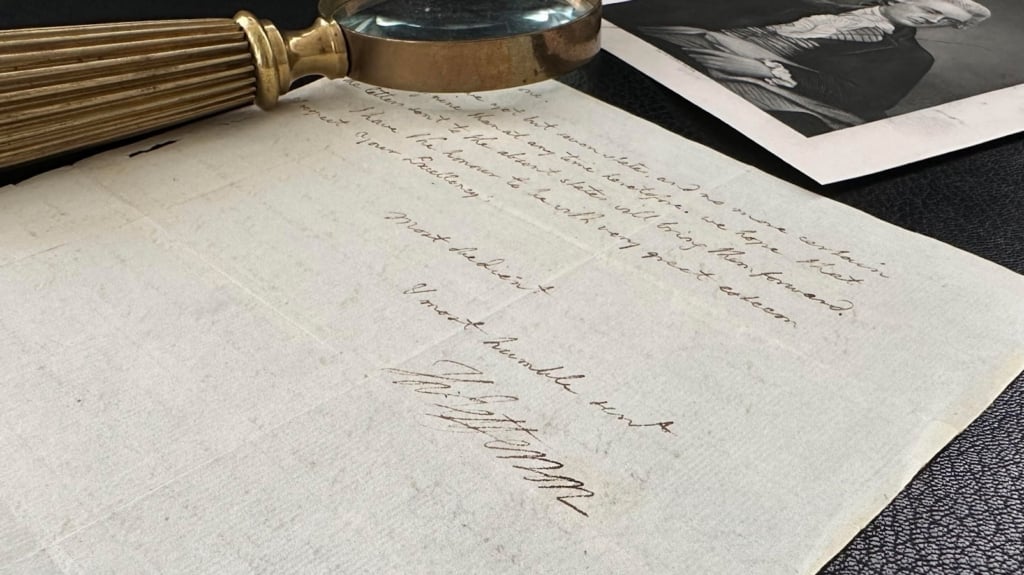
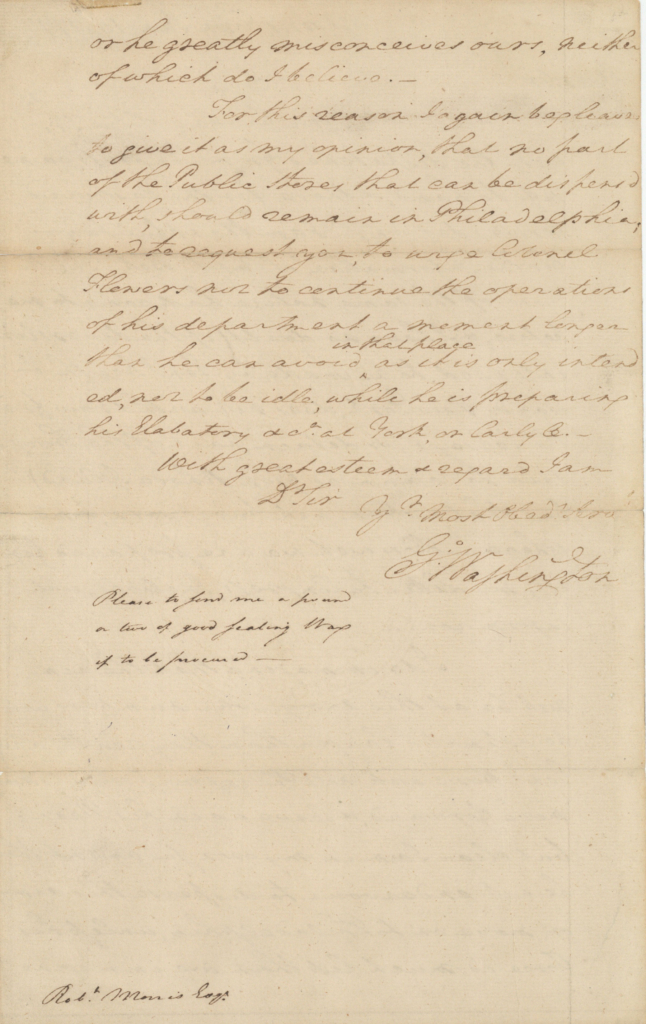
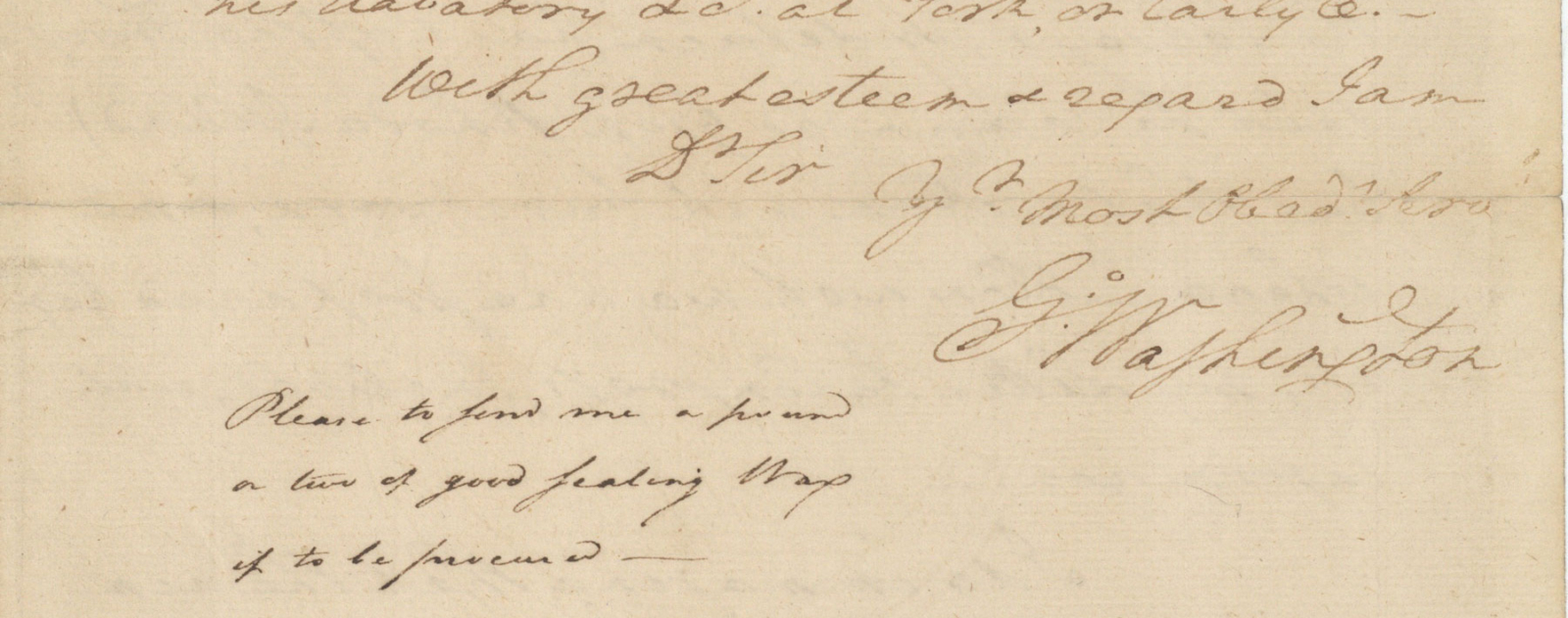
Autograph Letter Signed, “G:Washington,” as Commander in Chief, to Robert Morris, with postscript in the hand of Tench Tilghman, 2 pages, plus detached blank leaf docketed in the hand of Morris: “Morris Town 19 Jan’y 1777, Gen’l Washington”. Washington starts with a sense that a storm would burst soon, and that he expects an attack soon from General William Howe’s army. Next he urges that all military stores should be removed from Philadelphia before its possible occupation.
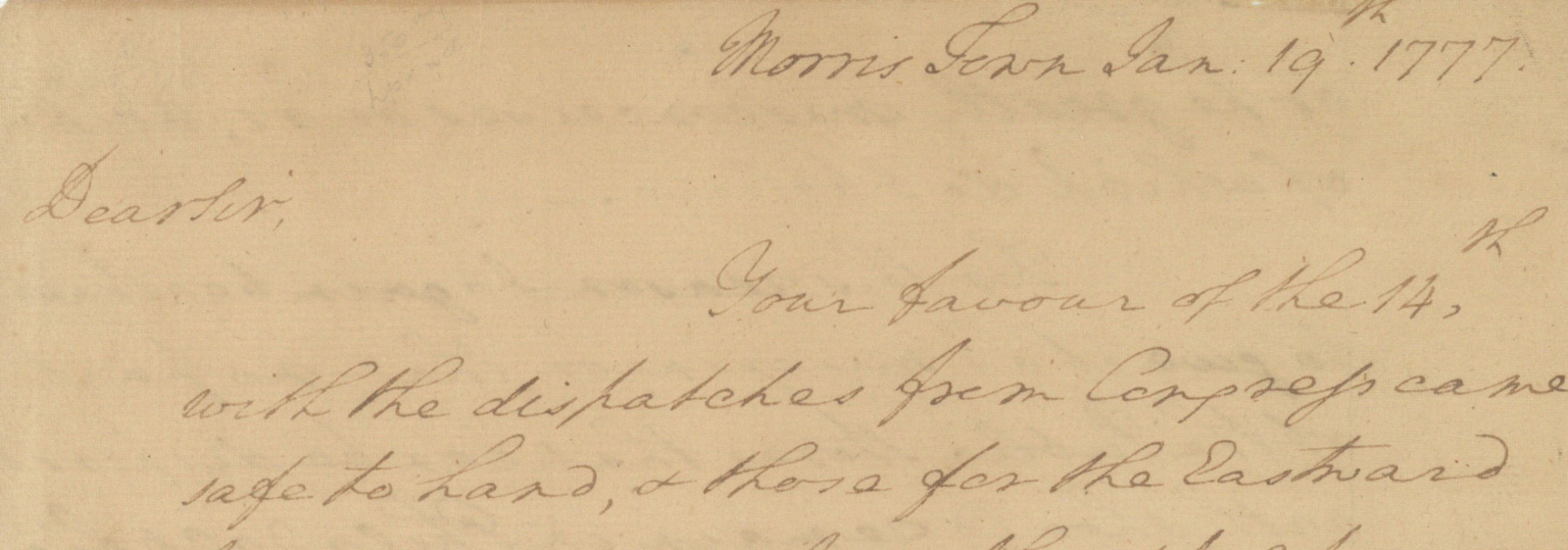
“Your favour of the 14th, with the dispatches from Congress came safe to hand, & those for the eastward forwarded on. I am thankful to you for the information of Capt’n Bell [POW held by the British and available for exchange]. Intelligence of the same nature had come to me before, & I have no doubt (if the diversion intended to be made by Gen’l Heath towards New York, does not withdraw from the Jerseys, or detain part of the troops said to [be] remanded from Rhode Island) but that a storm will burst soon, some where. How well we are prepared for it, my letter to Congress, inclosed, will inform you.
“I do imagine that the aim will be at this army. Our numbers will be estimated larger than they really are. Gen’l Howe will not therefore, I should think, move forward, & leave us in his rear, but clear I am in my own judgment that he will endeavour to disperse this army, or move on to Philadelphia, unless his force is much less than we imagine or he greatly misconceives ours, neither of which do I believe.”
“For this reason I again beg leave to give it as my opinion, that no part of the public stores that can be dispens’d with should remain in Philadelphia; and to request you, to urge Colonel Flowers not to continue the operations of his department a moment longer than he can avoid in that place, as it is only intended, not to be idle, while he is preparing his labatory &c at York, or Carlyle.”
A short postscript and the name of the addressee are written in the hand of Washington’s aide-de-camp, Tench Tilghman: “Please to find me a pound or two of good sealing wax / if to be procured. Rob’t Morris Esq’r.”
At the time Morris received this, his agents were actively advancing funds to the Continental Army on Morris’s account, based on the dire situation expressed by Washington to him on the state of the Continental Army. Washington would later write Morris of this stretch: “Your private credit, together with your public exertions, have been the means of keeping the Army together at a time when otherwise it must have dissolved.”
Published in Fitzpatrick, “Writings of George Washington,” page VII:32, and at founders.archives.gov. Light silking on the first page.
Interestingly, on January 31, Morris responded to Washington by saying that he agreed that the Continental Army would be a target, but that removal of supplies from Philadelphia “would have a bad effect & retard many useful operations.”
Washington’s concerns were all justified. As for the British, in September Howe moved his forces by sea, landing in Maryland, defeating Washington at Brandywine and Paoli, then occupying Philadelphia on September 26. But while Howe took the city, he failed to destroy Washington’s army, which later established winter quarters at Valley Forge.

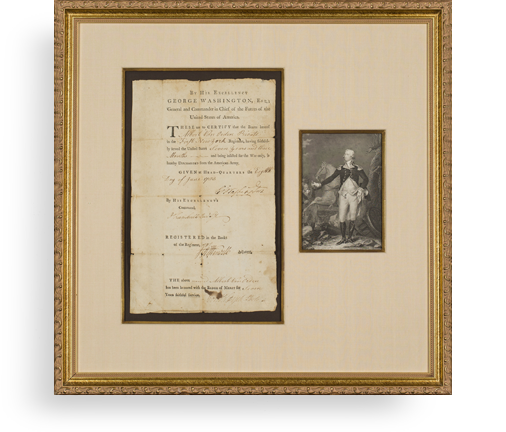
Frame, Display, Preserve
Each frame is custom constructed, using only proper museum archival materials. This includes:The finest frames, tailored to match the document you have chosen. These can period style, antiqued, gilded, wood, etc. Fabric mats, including silk and satin, as well as museum mat board with hand painted bevels. Attachment of the document to the matting to ensure its protection. This "hinging" is done according to archival standards. Protective "glass," or Tru Vue Optium Acrylic glazing, which is shatter resistant, 99% UV protective, and anti-reflective. You benefit from our decades of experience in designing and creating beautiful, compelling, and protective framed historical documents.
Learn more about our Framing Services


