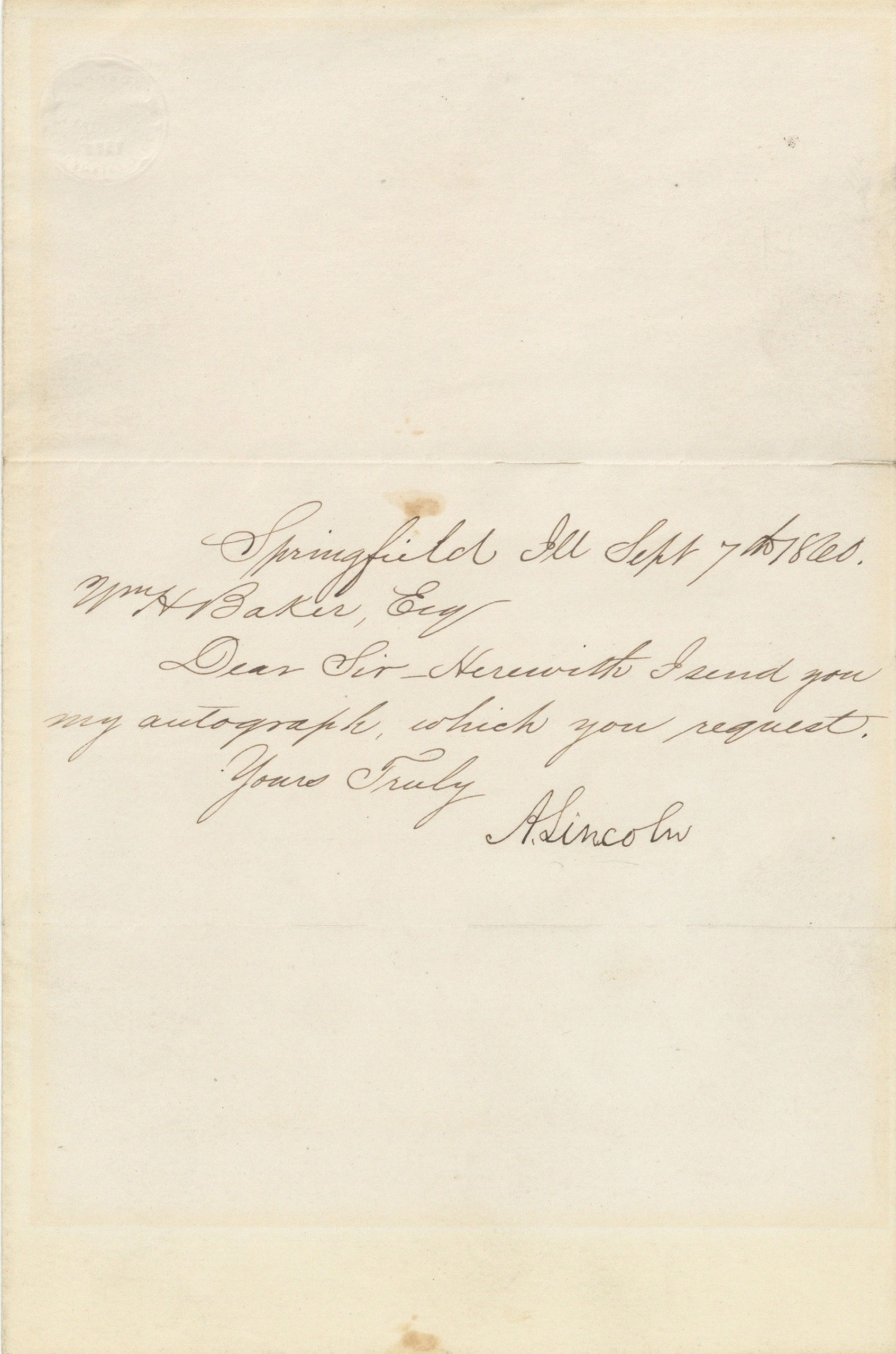






Abraham Lincoln, Candidate for President, Sends an Autograph to a Supporter, Just Two Months Before the Fateful Election That Made Him President

It is uncommon to find a Lincoln letter from so close to the election that made him president
It shows the broad reach of Lincoln’s support; the supporter was a New Jersey man
The Presidential election of 1860 was perhaps the most consequential of American history. On November 6, 1860, Abraham Lincoln defeated Southern Democrat John C. Breckinridge, Democrat Stephen A. Douglas, and Constitutional Union candidate John Bell in the...


It shows the broad reach of Lincoln’s support; the supporter was a New Jersey man
The Presidential election of 1860 was perhaps the most consequential of American history. On November 6, 1860, Abraham Lincoln defeated Southern Democrat John C. Breckinridge, Democrat Stephen A. Douglas, and Constitutional Union candidate John Bell in the presidential election. The electoral split between Northern and Southern Democrats was emblematic of the severe sectional split, particularly over slavery, and in the months following Lincoln’s election (and before his inauguration in March 1861), seven Southern states, led by South Carolina on Dec. 20, 1860, seceded from the Union, setting the stage for the Civil War.
William H. Baker was a young man when, in 1860, he wrote candidate Lincoln asking for an autograph. Later Baker became a town official of Clinton, N.J., and also had a business selling dyes.
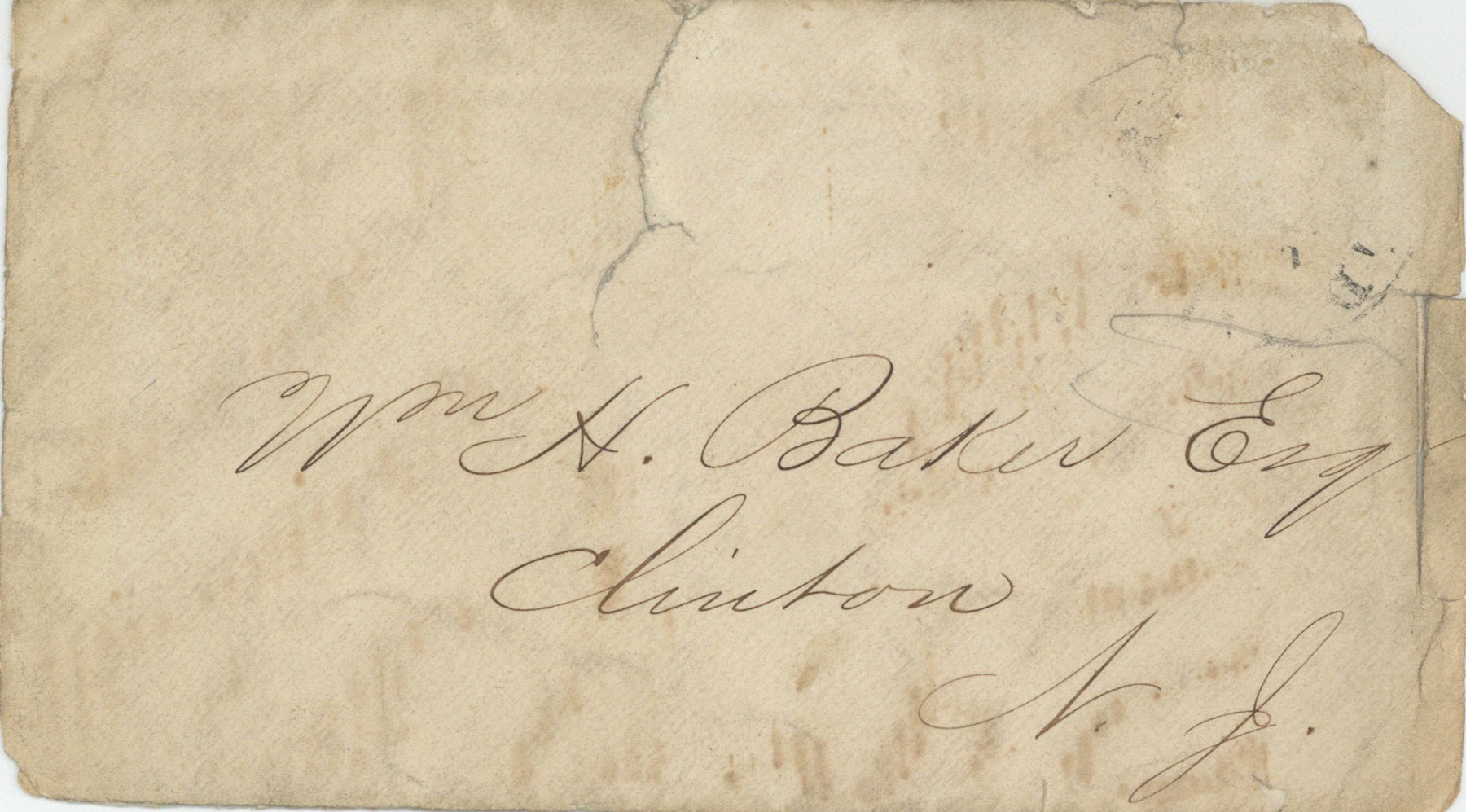
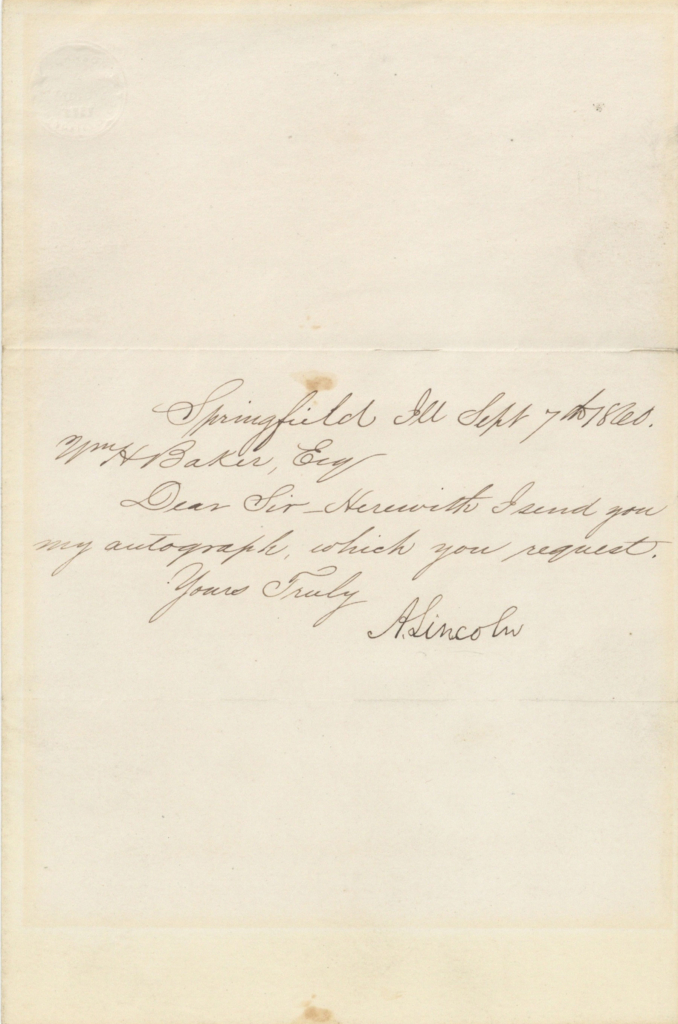
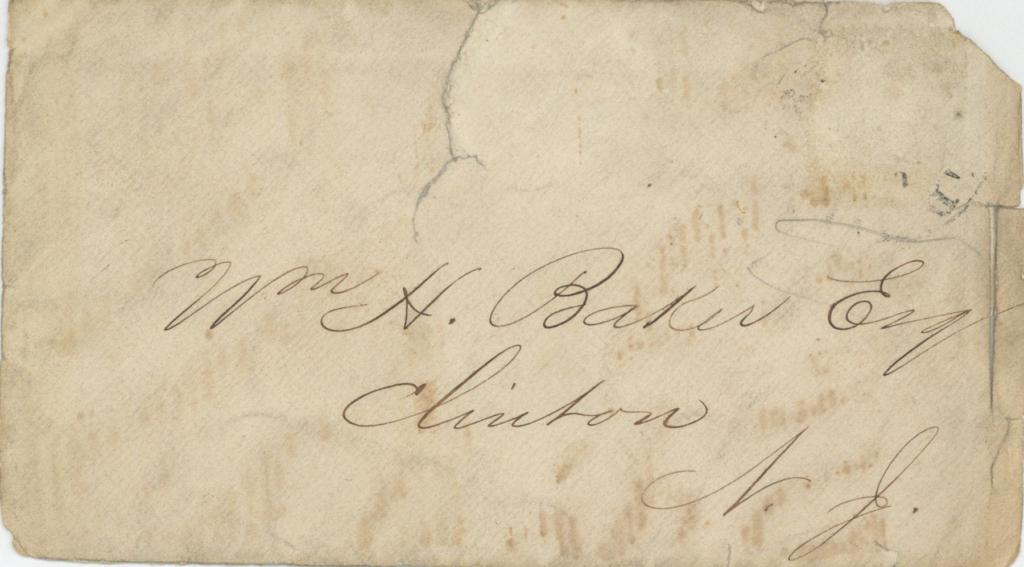
Lincoln responded. Letter signed, Springfield, Il, September 7, 1860, to William H. Baker of Clinton, N.J. “Dear Sir, Herewith I send you my autograph, which you request. Yours truly, A. Lincoln”. The text is in the hand of John Nicolay, Lincoln’s secretary and biographer. The envelope, in Nicolay’s hand, is still present.
It is uncommon to find a Lincoln letter from so close to the election that made him president.

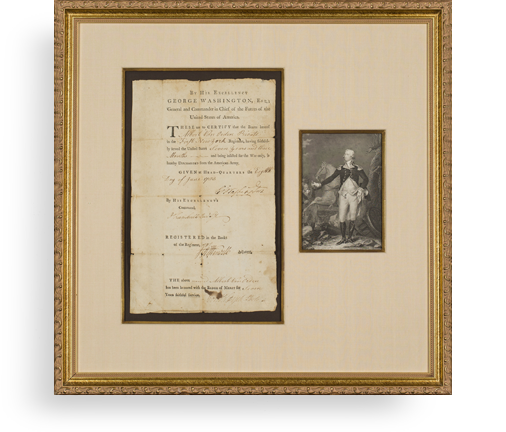
Frame, Display, Preserve
Each frame is custom constructed, using only proper museum archival materials. This includes:The finest frames, tailored to match the document you have chosen. These can period style, antiqued, gilded, wood, etc. Fabric mats, including silk and satin, as well as museum mat board with hand painted bevels. Attachment of the document to the matting to ensure its protection. This "hinging" is done according to archival standards. Protective "glass," or Tru Vue Optium Acrylic glazing, which is shatter resistant, 99% UV protective, and anti-reflective. You benefit from our decades of experience in designing and creating beautiful, compelling, and protective framed historical documents.
Learn more about our Framing Services