






President Abraham Lincoln Write His Secretary of War Offering Mercy to Young Confederate Prisoners of War Who Wanted to Take the Oath of Allegiance to the United States

The men had taken part in a daring expedition, crossing the lines and entering Kentucky and Indiana in search of Confederate support
Lincoln saw his goal as reuniting the country, and allowing Confederates to take the oath of allegiance and be discharged from prison was part of his plan
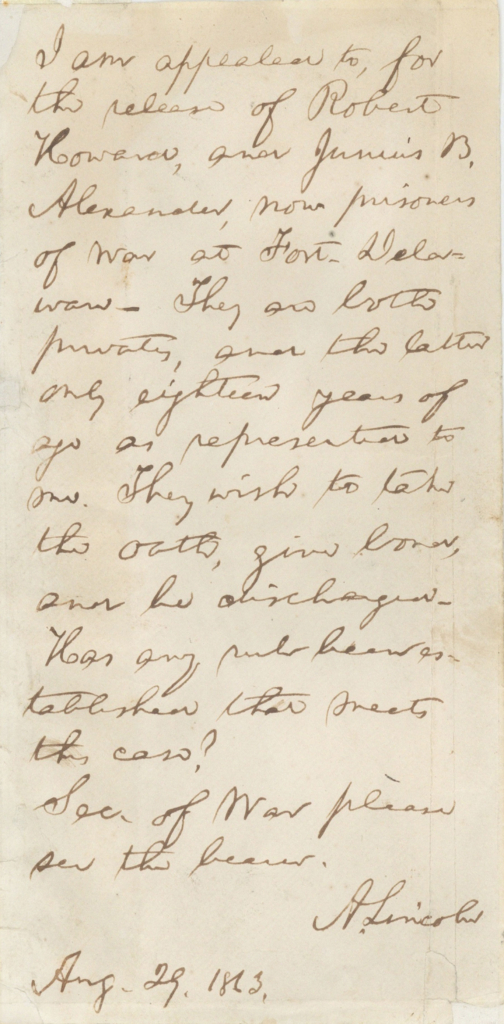
“I am appealed to for the release of Robert Howard and Junius B. Alexander, now prisoners of war at Fort Delaware. They are both...


Lincoln saw his goal as reuniting the country, and allowing Confederates to take the oath of allegiance and be discharged from prison was part of his plan
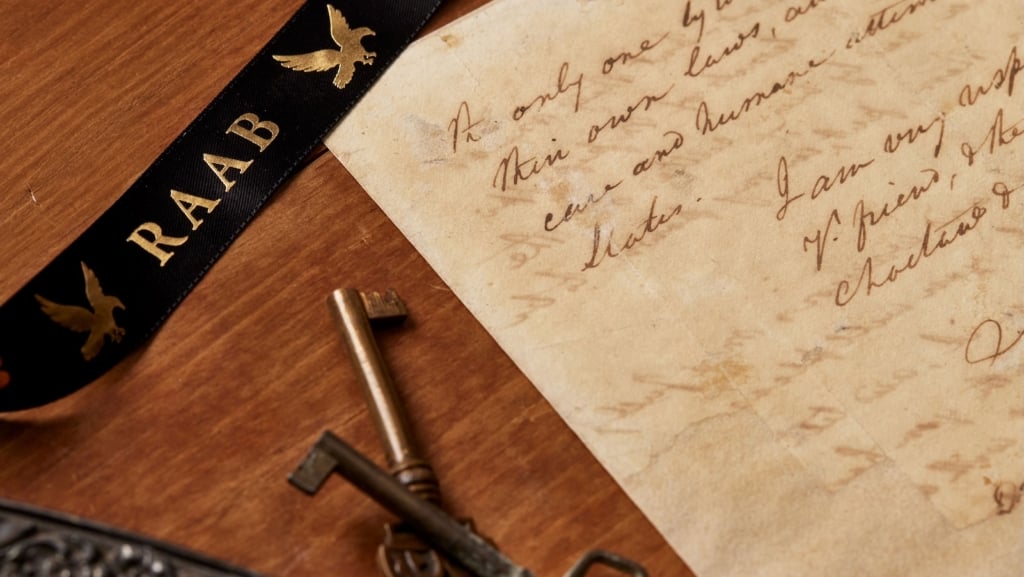
“I am appealed to for the release of Robert Howard and Junius B. Alexander, now prisoners of war at Fort Delaware. They are both privates, and the latter only eighteen years of age as represented to me. They wish to take the oath, give bond, and be discharged…Sec. of War, please see the bearer.”
In June 1863, a 25 year-old Confederate spy from Kentucky, Thomas Hines, was sent by legendary General John Hunt Morgan to ride north into Indiana and reconnoiter with Southern sympathizers there, whose dedication to the Southern cause Morgan overestimated. Hines and his party of nearly a hundred men stole uniforms from a Union supply depot in Brownsville, Kentucky, then robbed a train in Elizabethtown to acquire Union currency. Dressed as Federal troops, they crossed the Ohio River on horseback a few miles downstream from Leavenworth, then struck out for Paoli, pretending to be in pursuit of Union deserters. In French Lick, they met with the local Copperhead leader, Doctor William A. Bowles, who headed the Confederate leaning Democratic party in southern Indiana and was a supporter of slavery. Bowles told them he was unable to help them. Indiana Home Guards were then in pursuit of the Confederates. Hines hired a Leavenworth local to guide them to a safe ford over the river where they could escape into Kentucky, but the local was actually a Union supporter and betrayed them. Residents of Leavenworth carried ammunition to Union troops, who gunned several of the horsemen down as they tried to get across the river at Little Blue Island. Three Confederate soldiers were killed and a large number were taken prisoner.
Two of those prisoners were privates Junius Brutus Alexander and Robert Howard, both of Kentucky. They were incarcerated first at Fort Chase and then in July taken to Fort Delaware. They were both young, Howard being only 18 years old. And it was not long before they regretted their escapade as Confederates and wanted to take the oath of allegiance and be released. The matter came to the attention of a sympathetic President Lincoln who intervened on their behalf with the Secretary of War. This was in keeping with Lincoln’s intention to reincorporate Confederates back into the life of the United States, and to heal the war’s wounds, of which he was a great proponent. It was also in accord with his natural inclination towards mercy and kindliness.
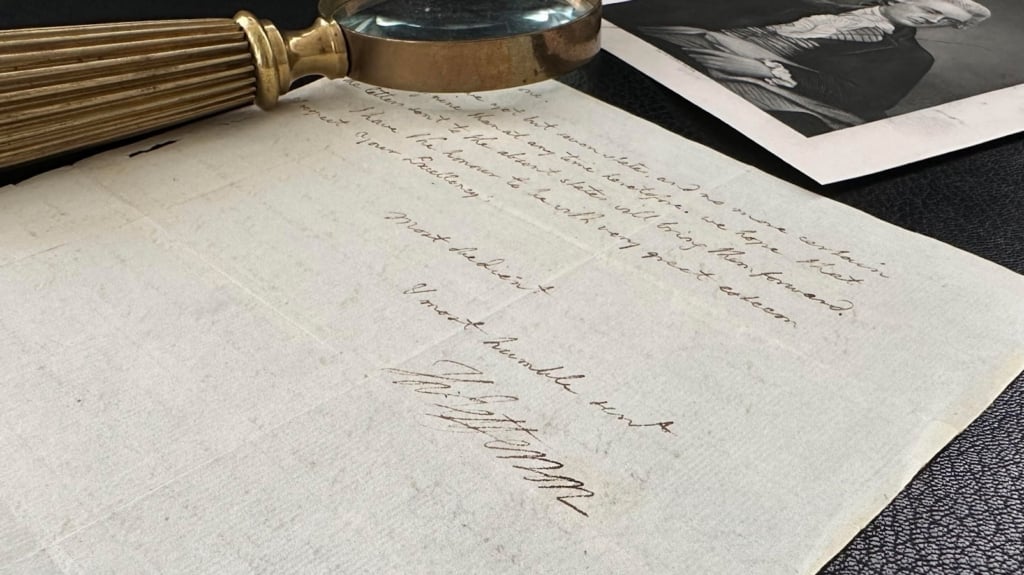
Autograph letter signed, Washington, August 29, 1863, to Secretary of War Edwin M. Stanton. “I am appealed to for the release of Robert Howard and Junius B. Alexander, now prisoners of war at Fort Delaware. They are both privates, and the latter only eighteen years of age as represented to me. They wish to take the oath, give bond, and be discharged. Has any rule been established that meets this case? Sec. of War, please see the bearer.” This letter appears in the Collected Works of Abraham Lincoln.
Stanton apparently complied and ordered the men’s release, as Alexander was living in Ohio in early 1865, while the war yet raged. After the war, Alexander attended and graduated from the Cincinnati Dental College, then moved to Louisville about 1882 and taught at the Louisville Dental College. But Lincoln’s mercy was too late for Howard, who died at Fort Delaware the very day Lincoln wrote this letter to Stanton.
This letter reflects both Lincoln’s famed mercy and his policy goal of reincorporating ex-Confederates into the life of the United States.

Frame, Display, Preserve
Each frame is custom constructed, using only proper museum archival materials. This includes:The finest frames, tailored to match the document you have chosen. These can period style, antiqued, gilded, wood, etc. Fabric mats, including silk and satin, as well as museum mat board with hand painted bevels. Attachment of the document to the matting to ensure its protection. This "hinging" is done according to archival standards. Protective "glass," or Tru Vue Optium Acrylic glazing, which is shatter resistant, 99% UV protective, and anti-reflective. You benefit from our decades of experience in designing and creating beautiful, compelling, and protective framed historical documents.
Learn more about our Framing Services
