





President Abraham Lincoln Works to Honor “My Old Friend Joseph Gillespie”, as Well as One of the Pallbearers at His Funeral
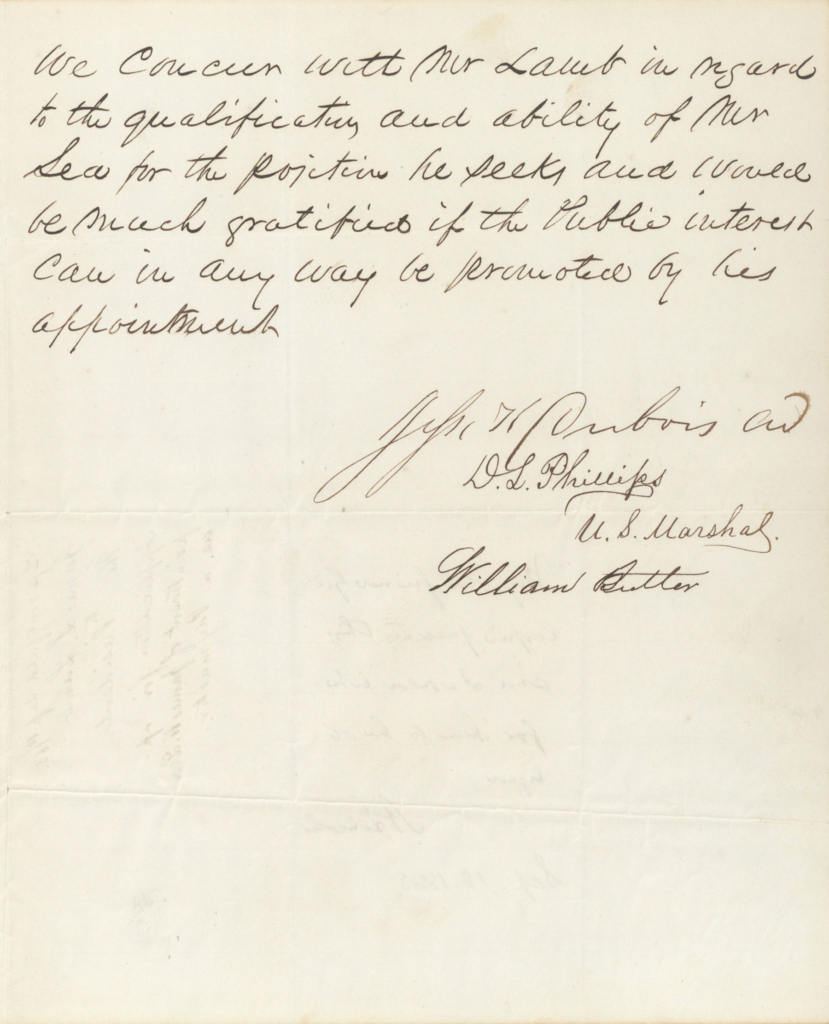

Gillespie, who was the conduit for a letter to the President, was a colleague since 1840, campaigned for Lincoln's presidential nomination and presided over the Illinois Republican State Convention in 1860
- Currency:
- USD
- GBP
- JPY
- EUR
- CNY
 This currency selector is for viewing only.
The Raab Collection only accepts USD payments at checkout.
Exchange rates are updated hourly. Rates may be inaccurate.
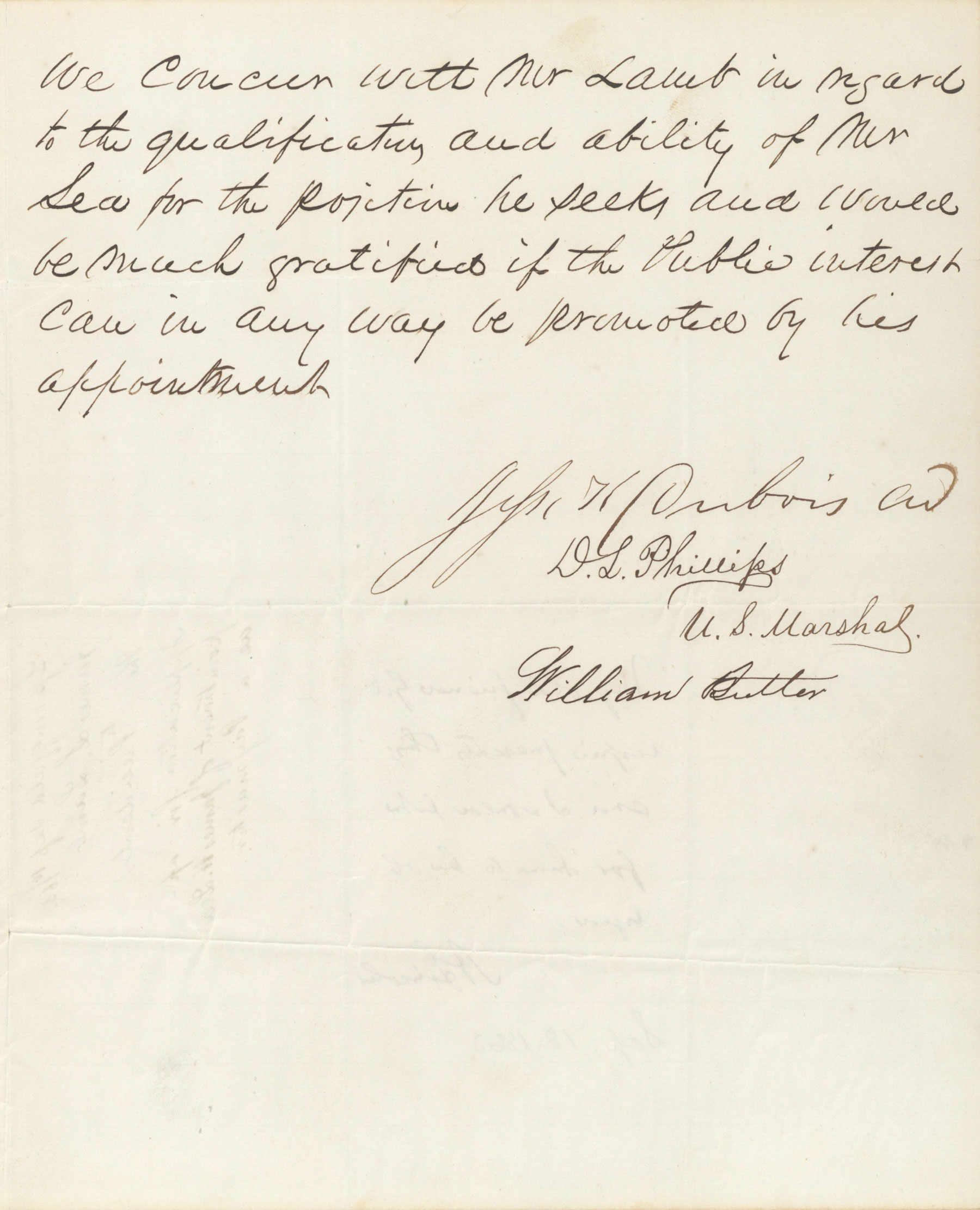
The letter itself was from Lamb, a pallbearer after Lincoln’s assassination
Joseph Gillespie was a Whig member of the Illinois Assembly in 1840-41 and then served in the State Senate from 1847 to 1859. He joined the Republicans in 1856. Gillespie chaired the Illinois Republican State Convention in 1860, where presidential electors...


The letter itself was from Lamb, a pallbearer after Lincoln’s assassination
Joseph Gillespie was a Whig member of the Illinois Assembly in 1840-41 and then served in the State Senate from 1847 to 1859. He joined the Republicans in 1856. Gillespie chaired the Illinois Republican State Convention in 1860, where presidential electors were selected who would vote for Abraham Lincoln, and served as circuit court judge in Southern Illinois from 1861 to 1873.
From when they met in 1840, Gillespie was a key political ally, lawyer, and trusted and intimate friend to Abraham Lincoln. They consulted on legal cases, and in political matters, where they kept each other informed of political developments. Gillespie visited President-elect Lincoln at Springfield, before he left for Washington. When Lincoln was president, Gillespie occasionally went to Washington to see him and kept him informed about the political situation in the western states. Their correspondence shows a close personal bond.
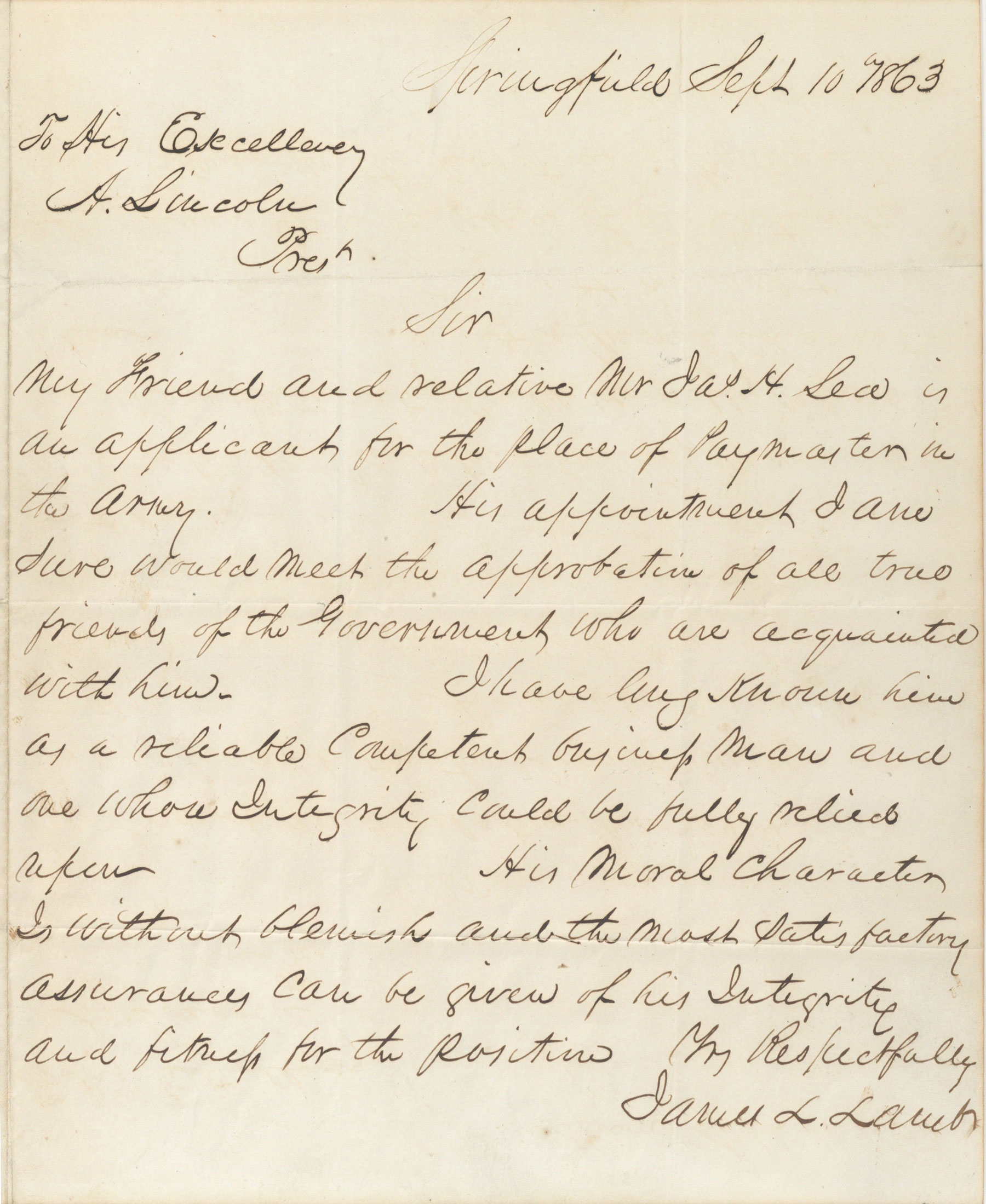
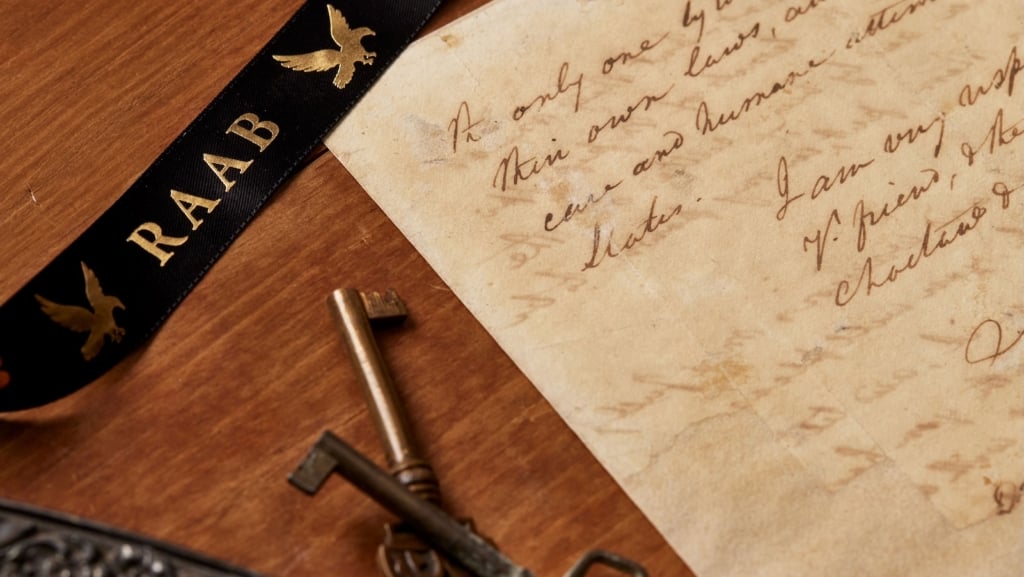
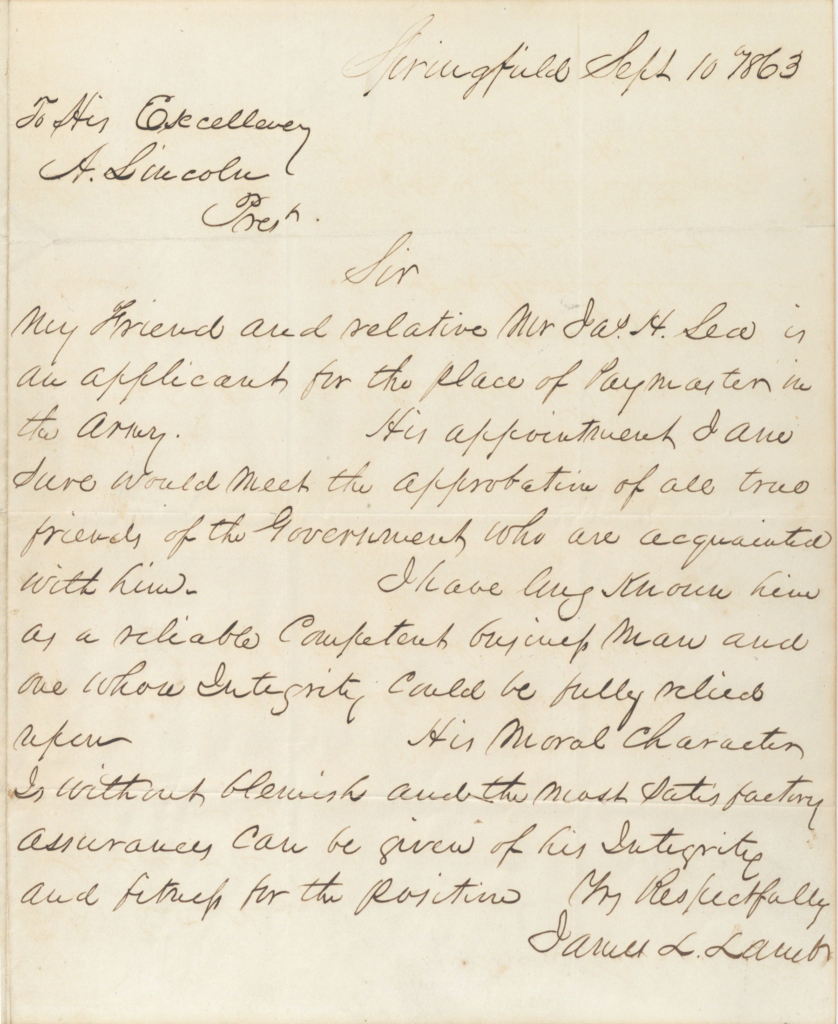
James L. Lamb was a meatpacker, industrialist, and friend of Lincoln from Illinois, known for his business dealings with the future President and his role as one of the pallbearers at Lincoln’s funeral. In a letter addressed to President Lincoln, Lamb wrote him from Springfield, Ill., September 10, 1863, to secure a position for a relative. “My friend and relative, Mr. James H. Lea, is an applicant for the position of paymaster in the army. His appointment, I am sure, would meet the approbation of all true friends of the Government who are acquainted with him. I have long known him as a reliable, competent businessman and one whose integrity could be fully relied upon. His moral character is without blemish and the most satisfactory assurances can be given of his integrity and fitness for the position.” The docket states, “Springfield, Sep. 10/63, James L. Lamb to the President. Application for appointment of James H. Lea as a Paymaster.”
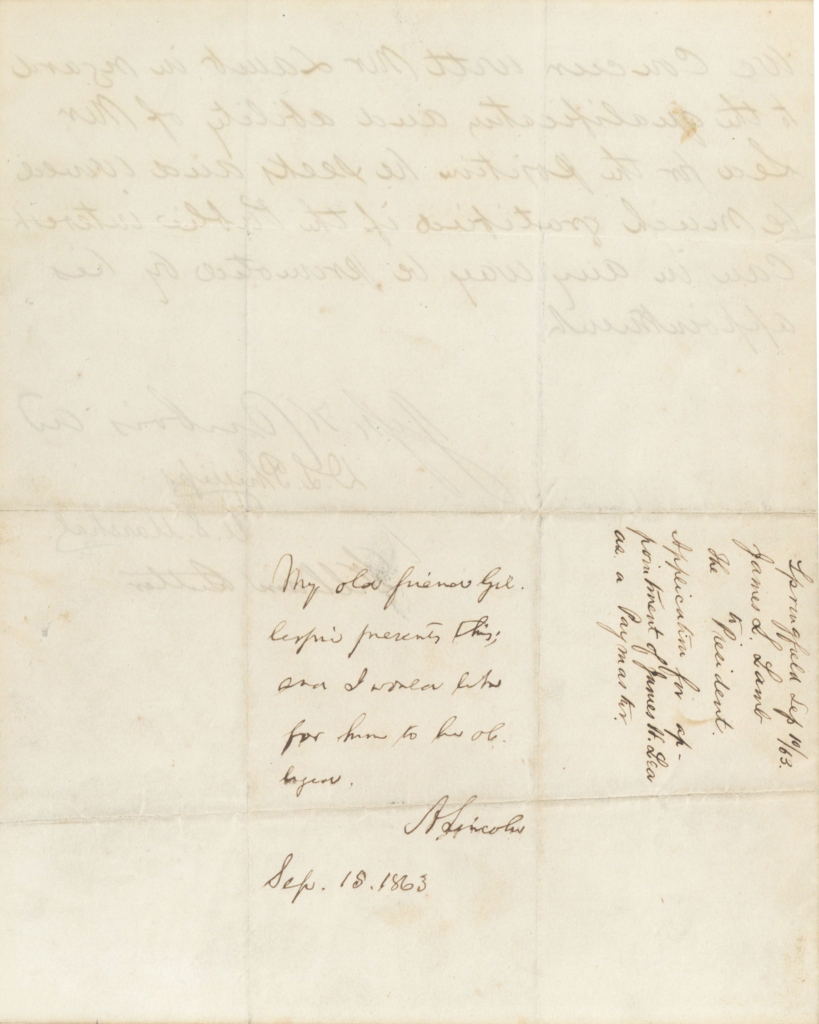
This letter was not mailed by Lamb to Lincoln. Instead Lamb gave the letter to Gillespie to enlist his support and use his influence with Lincoln. Gillespie presented Lamb’s letter to Lincoln, with his request that it be honored.
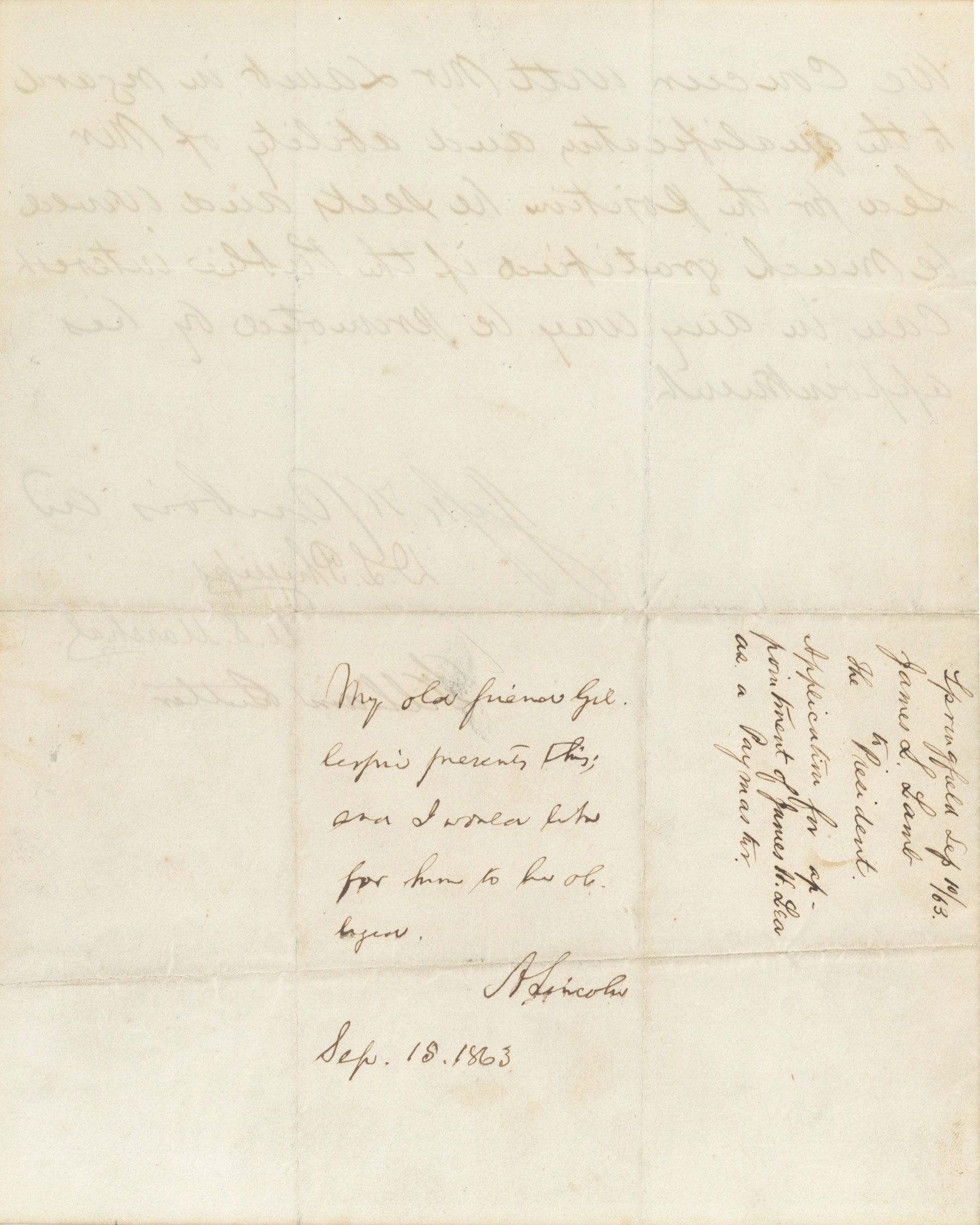
Autograph endorsement signed, Washington, September 15, 1863. “My old friend Gillespie presents this; and I would like for him to be obliged.” This is unpublished and not in Basler’s Collected Works of Abraham Lincoln. The wording of Lincoln’s endorsement, saying that Gillespie presented this to Lincoln, and the implication that Gillespie will need to be presenting this to the Secretary of War, raises the possibility that Gillespie handed this to Lincoln in person and then took the endorsement to Stanton.
On October 10, Gillespie wrote Lincoln that the appointment had not yet been made, and relating a communication with Stanton, saying, “I would beg to call your attention to the subject of the appointment of my friend James H. Lea of Alton to the office of paymaster in the regular army. Secy. Stanton told me that he would retire one now on the list to make place for Mr Lea in a short time. I have heard nothing from him since. I would take it as a great favor if this thing could be done soon. I am aware how much you must be pressed with business of an engrossing character at this juncture but hope you may find leisure to jog the secretary’s memory…”
According to papers in the Library of Congress, James H. Lea was appointed an additional paymaster of volunteers to rank from February 23, 1864. He signed his oath of office in April.
This is a fascinating endorsement, showing how Lincoln sought to assist his old friends to the extent he appropriately could.

Frame, Display, Preserve
Each frame is custom constructed, using only proper museum archival materials. This includes:The finest frames, tailored to match the document you have chosen. These can period style, antiqued, gilded, wood, etc. Fabric mats, including silk and satin, as well as museum mat board with hand painted bevels. Attachment of the document to the matting to ensure its protection. This "hinging" is done according to archival standards. Protective "glass," or Tru Vue Optium Acrylic glazing, which is shatter resistant, 99% UV protective, and anti-reflective. You benefit from our decades of experience in designing and creating beautiful, compelling, and protective framed historical documents.
Learn more about our Framing Services