






As World War II in Europe Draws to a Conclusion and He Liberates Nazi Concentration Camps, General Dwight D. Eisenhower Is Grateful to the American People for Their Support of the Troops in the Field


He also praises the sacrifices the American soldiers have made
- Currency:
- USD
- GBP
- JPY
- EUR
- CNY
 This currency selector is for viewing only.
The Raab Collection only accepts USD payments at checkout.
Exchange rates are updated hourly. Rates may be inaccurate.

“It is always encouraging to be reassured that the people at home are 100% behind us and appreciate the sacrifices of our troops.”
General Dwight D. Eisenhower, the Supreme Commander of the Allied Expeditionary Force in Europe, orchestrated the defeat of Germany’s Third Reich during World War II. He could only have...


“It is always encouraging to be reassured that the people at home are 100% behind us and appreciate the sacrifices of our troops.”
General Dwight D. Eisenhower, the Supreme Commander of the Allied Expeditionary Force in Europe, orchestrated the defeat of Germany’s Third Reich during World War II. He could only have done so with the support of the American people, for which he was eternally grateful, and of his courageous soldiers, many of whom were killed in action.
April 1945 saw the war in Europe in its final weeks, with intense fighting and many significant events. These included the continuing bloody Allied invasion of Germany, and the Battle of Berlin and Soviet advance into that city. As Allied forces in the West closed in, they liberated concentration camps like Bergen-Belsen. April was also marked by the execution of Benito Mussolini, suicide of Adolf Hitler, and on April 12, the death of President Franklin D. Roosevelt. On May 8, V-E Day, the war in Europe would come to an end.
While his role as a military leader was crucial to the war’s outcome, Eisenhower was equally important in the documentation of Nazi brutality and the truth of the Holocaust. This was an important aspect of April 1945 for him. On April 4, the Third United States Army liberated the Ohrdruf camp. That camp was an extension of the Buchenwald Concentration Camp. On the day of liberation, the SS members of Ohrdruf evacuated many of the prisoners on death marches. As U.S. troops arrived, they found scenes of mass murder, while also coming into contact with the camp’s surviving prisoners. The living prisoners were starving, emaciated, and desperately needed medical attention. Eisenhower, along with Generals George Patton and Omar Bradley, visited the Ohrdruf concentration camp personally on April 12, 1945. While driving towards the camp, the smell of decaying flesh was present, and dead bodies littered the streets. Eisenhower was “never so angry in my life” stating that the “English language didn’t even have words that could describe” what he saw. Eisenhower wrote to Winston Churchill following his time at Ohrdruf, stating that “everything you read in the paper does not adequately describe what has really happened here.” Thus, in April 1945, Eisenhower was profoundly impacted by the horrors that he witnessed and demanded that newspaper editors, representative groups, German civilians, and Allied soldiers bear witness.
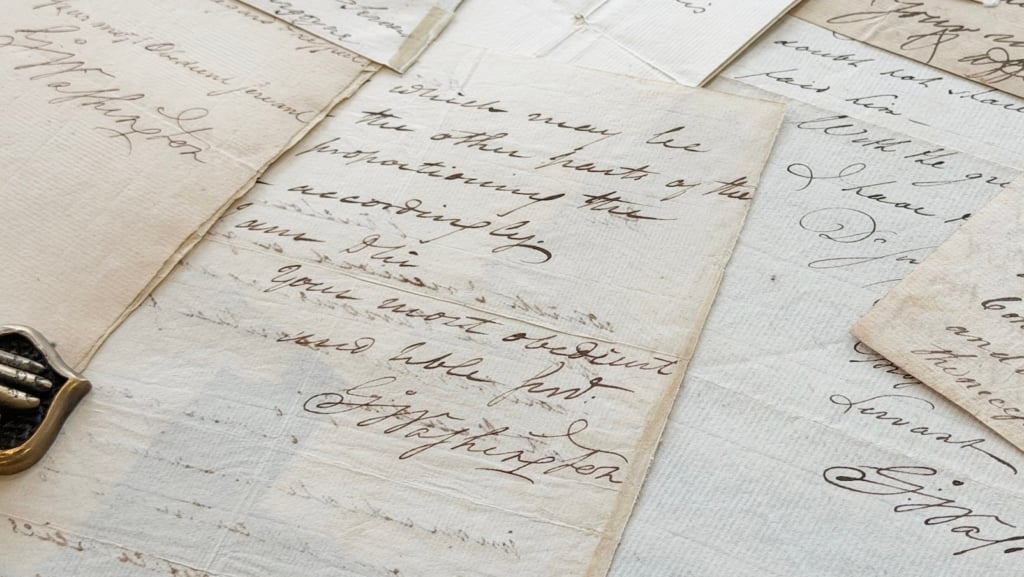
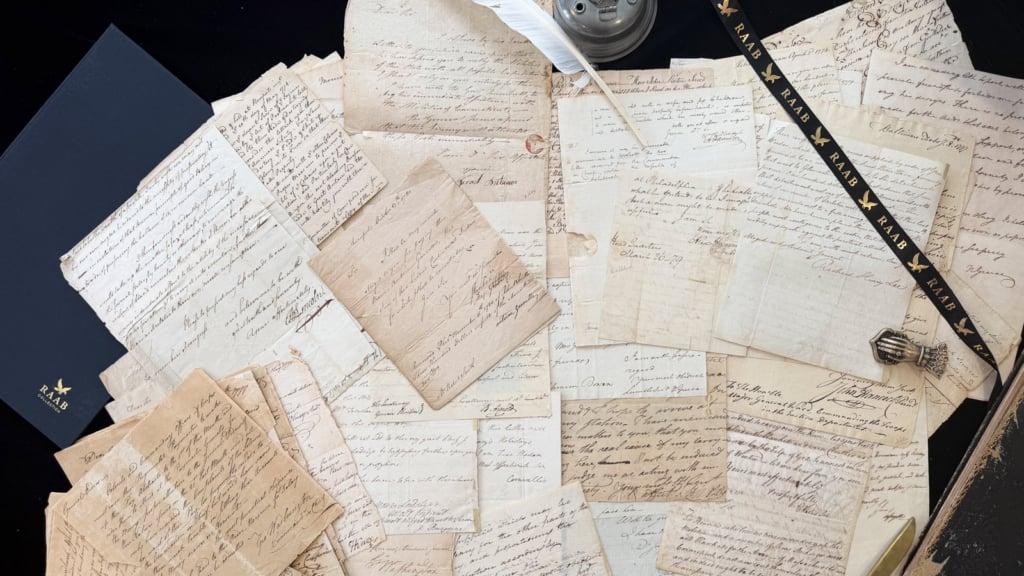
Typed letter signed, on his Supreme Headquarters Allied Expeditionary Force letterhead, Germany, April 6, 1945, just two days after the taking of Ohrdruf and six days before his famous visit there, to Mrs. Mamie Metz, thanking her and the American people for their support of the army in the field and appreciation of its sacrifices. “Many thanks for your interesting letter. It is always encouraging to be reassured that the people at home are 100% behind us and appreciate the sacrifices of our troops. My thanks, also, for your good wishes to me and all my command.”
An important statement showing Eisenhower’s feelings about the American people’s sustaining and backing the army, and gratitude for the sacrifices of the soldiers, issued right near the end of World War II in Europe.
Some trimming and evidence of past mounting on verso.

Frame, Display, Preserve
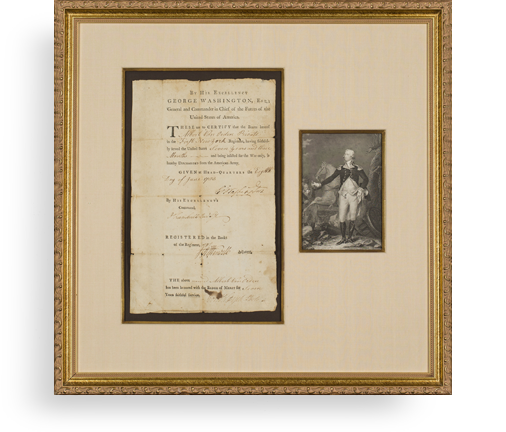
Each frame is custom constructed, using only proper museum archival materials. This includes:The finest frames, tailored to match the document you have chosen. These can period style, antiqued, gilded, wood, etc. Fabric mats, including silk and satin, as well as museum mat board with hand painted bevels. Attachment of the document to the matting to ensure its protection. This "hinging" is done according to archival standards. Protective "glass," or Tru Vue Optium Acrylic glazing, which is shatter resistant, 99% UV protective, and anti-reflective. You benefit from our decades of experience in designing and creating beautiful, compelling, and protective framed historical documents.
Learn more about our Framing Services
