





Frederick the Great Writes the Exiled Holy Roman Emperor, Charles VII, Exercising Power and Marking the Rise of the Prussian Kingdom
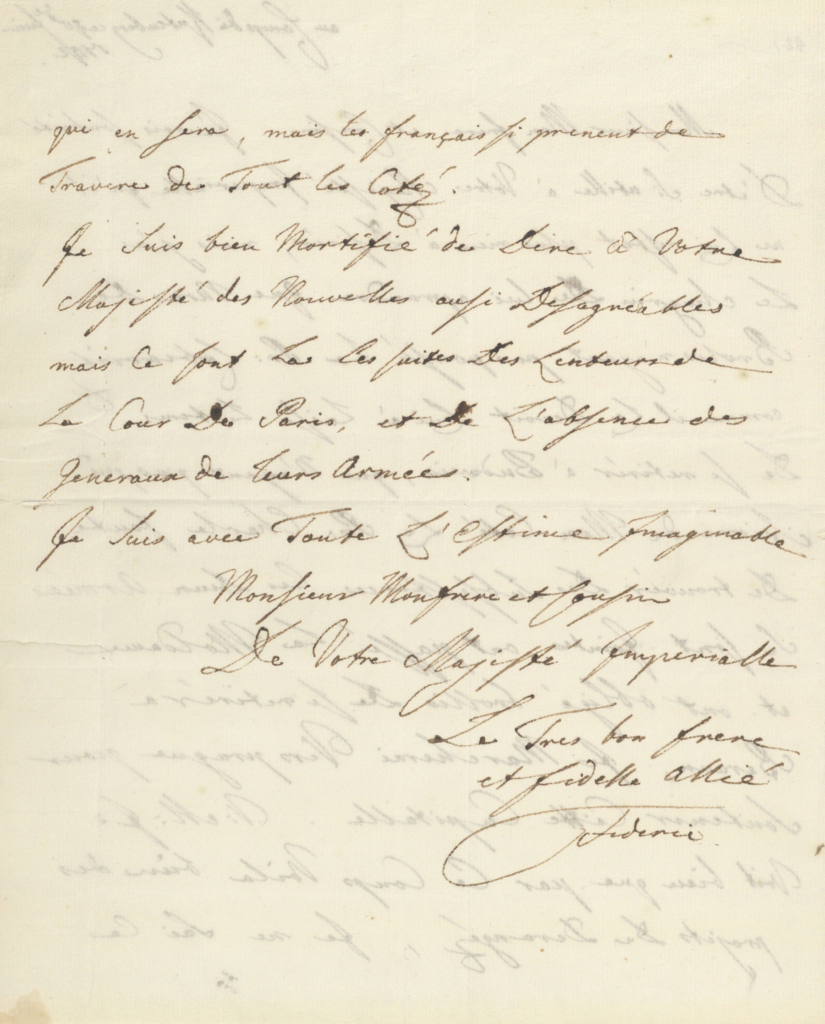
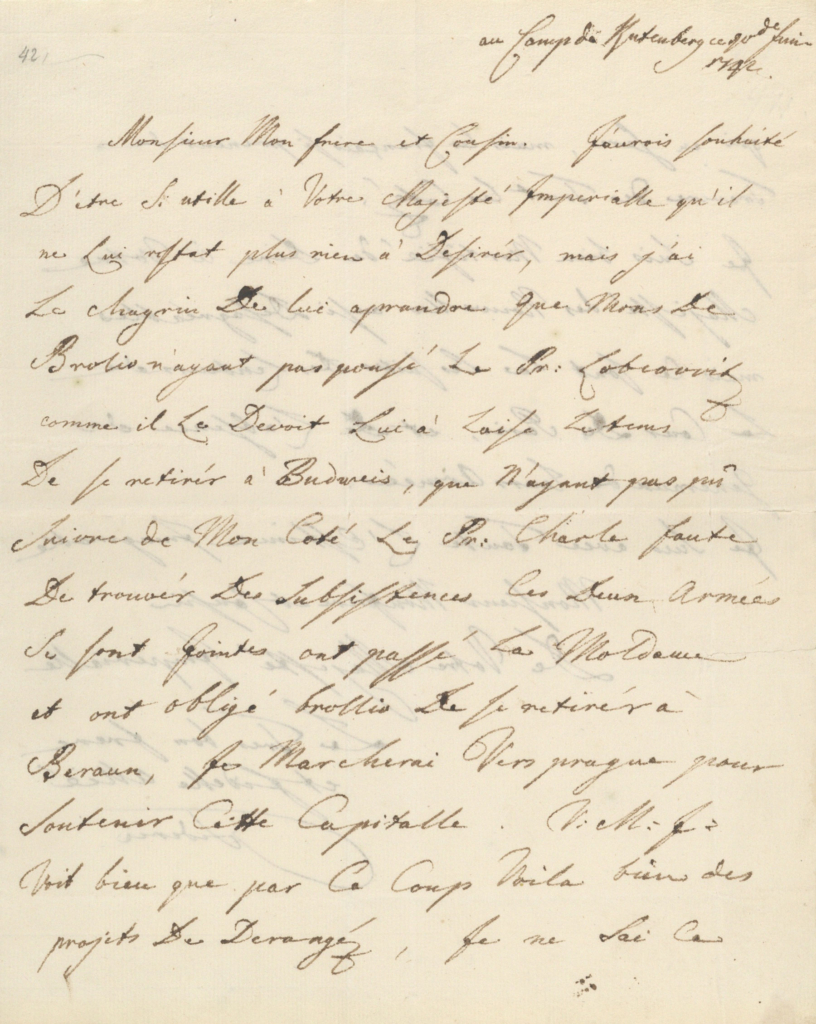

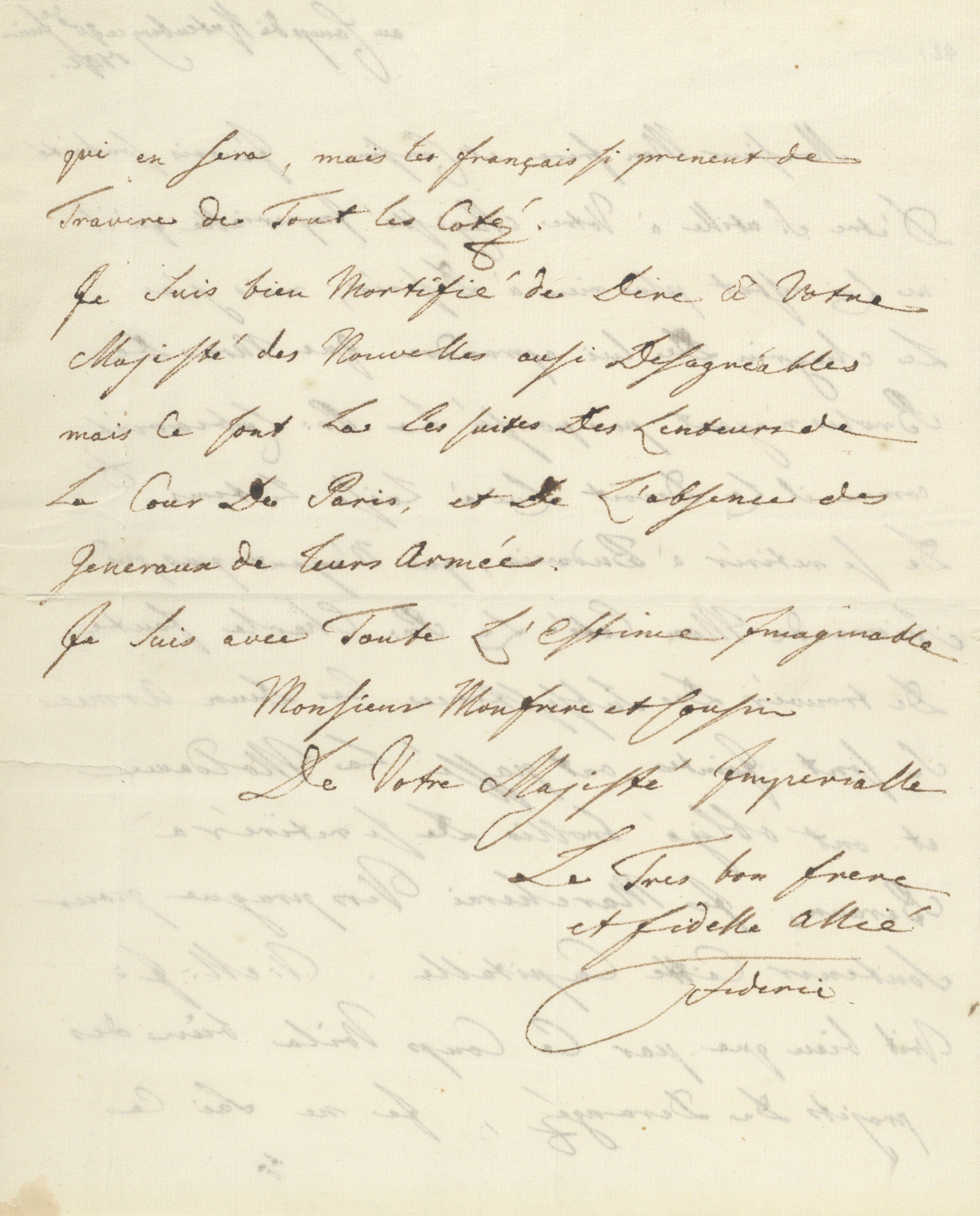
"I shall march toward Prague to support this capital. Your Imperial Majesty can clearly see that, by this blow, many plans have been disrupted. I do not know what will come of it, but the French are going about things the wrong way on all sides."
The day before a major treaty, this was part of the War of Austrian Succession that pitted Prussia, France and others against the Habsburg Empire and Maria Theresa
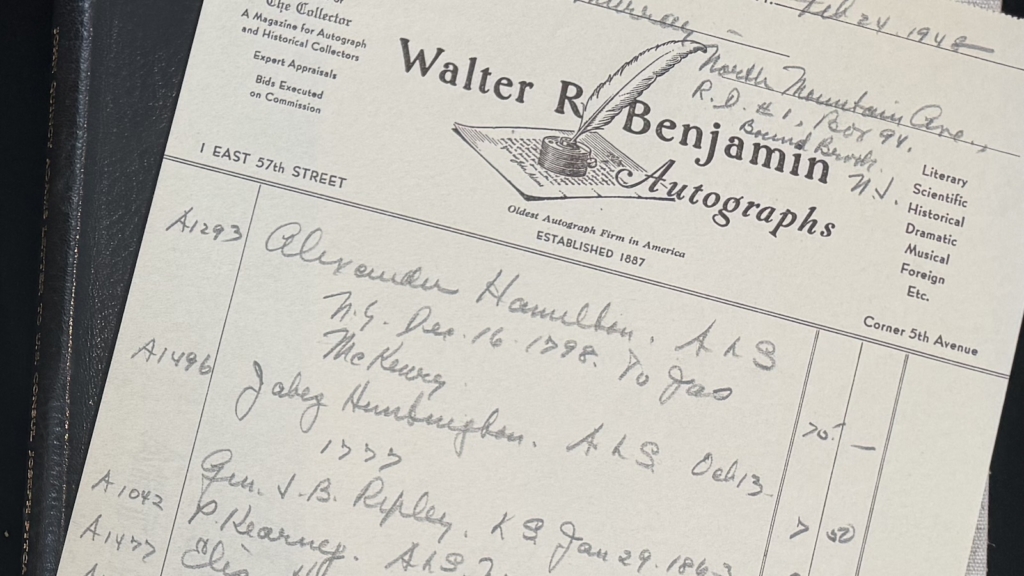
This letter has been in a private collection for at least 2 generations
Frederick was twenty-eight years old when his father died...
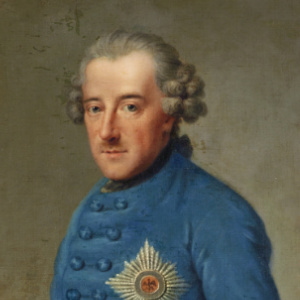
The day before a major treaty, this was part of the War of Austrian Succession that pitted Prussia, France and others against the Habsburg Empire and Maria Theresa
This letter has been in a private collection for at least 2 generations
Frederick was twenty-eight years old when his father died and he ascended to the throne of Prussia. Frederick William I had left him with a highly militarized state. Prussia was the twelfth largest country in Europe in terms of population, but its army was the fourth largest, after France, Russia and Austria. Prussia had one soldier for every 28 citizens, whereas Britain only had one for every 310, and the military absorbed 86% of Prussia’s state budget. The Prussian infantry trained by Frederick William I were, at the time of Frederick’s accession, arguably unrivaled in discipline and firepower.
The First Silesian War (1740–1742, part of the War of the Austrian Succession, which began over a dynastic dispute about Maria Theresa’s right to the Austrian throne and Holy Roman Empire) began on December 16, 1740 when Frederick invaded and quickly occupied almost all of Silesia within seven weeks. Though Frederick justified his occupation on dynastic grounds, the invasion of this militarily and politically vulnerable part of the Habsburg empire also had the potential to provide substantial long-term economic and strategic benefits. The occupation of Silesia added one of the most densely industrialized German regions to Frederick’s kingdom and gave it control over the navigable Oder River. It nearly doubled Prussia’s population and increased its territory by a third.
Charles VII was elector of Bavaria from 1726 and Holy Roman Emperor from January 1742 to his death. He was unanimously elected King of Germany on January 24, 1742 and became Holy Roman emperor upon his coronation on February 12, 1742. King George II of Great Britain, as the elector of Hanover, also voted to install Charles as emperor even though both Britain and Hanover were allied with Austria in the ongoing war.
Charles VII allied with Frederick the Great largely out of shared opposition to Habsburg dominance within the Holy Roman Empire. As Elector of Bavaria, Charles VII had his own claims to Habsburg territories and sought to elevate his position by breaking Austria’s long-standing hold on the imperial crown. His election as emperor in 1742—supported by France and Prussia—marked a dramatic departure from centuries of near-continuous Habsburg rule. At the same time, Maria Theresa, though ruler of the powerful Austrian lands, was excluded from the imperial title, creating a situation in which the traditional center of imperial authority was politically sidelined. Frederick’s invasion of Silesia weakened Austria at a critical moment, aligning his military ambitions with Charles VII’s political goals, even though this alliance was ultimately driven more by circumstance than by lasting unity.
Immediately after his election in 1742, Charles—ruler of Bavaria—held the imperial title but did not control the military power needed to defend his own lands. When Maria Theresa regrouped, Austrian forces invaded Bavaria, occupied Munich, and effectively drove Charles out of his own territory, forcing him into exile in Frankfurt am Main.
In the Spring of 1742, Charles Alexander of Lorraine (Maria Theresa’s brother-in-law) led a reinforced Austro-Hungarian army of 30,000 through Moravia toward Bohemia, hoping to disperse the Prussians and liberate Prague. In early May, a Prussian army of 28,000 led by Frederick marched into the plains of the Elbe south-east of Prague, maneuvering to block the Austrian advance. The two armies met when Charles’s Austrians attacked Prince Leopold’s camp near the village of Chotusitz on May 17; the resulting Battle of Chotusitz ended in a narrow Prussian victory, with substantial casualties on both sides. Prince Charles’s defeat at Chotusitz left Prague securely in the invaders’ hands and Austria with no immediate means of driving them out of Bohemia.
The victory was not clear and Frederick’s frustrations with French incompetence and inaction were evident. The Treaty of Breslau would be signed on June 11, just one day after this letter. But still he needed to keep the Austrians unbalanced and create leverage, as one can see from this letter.
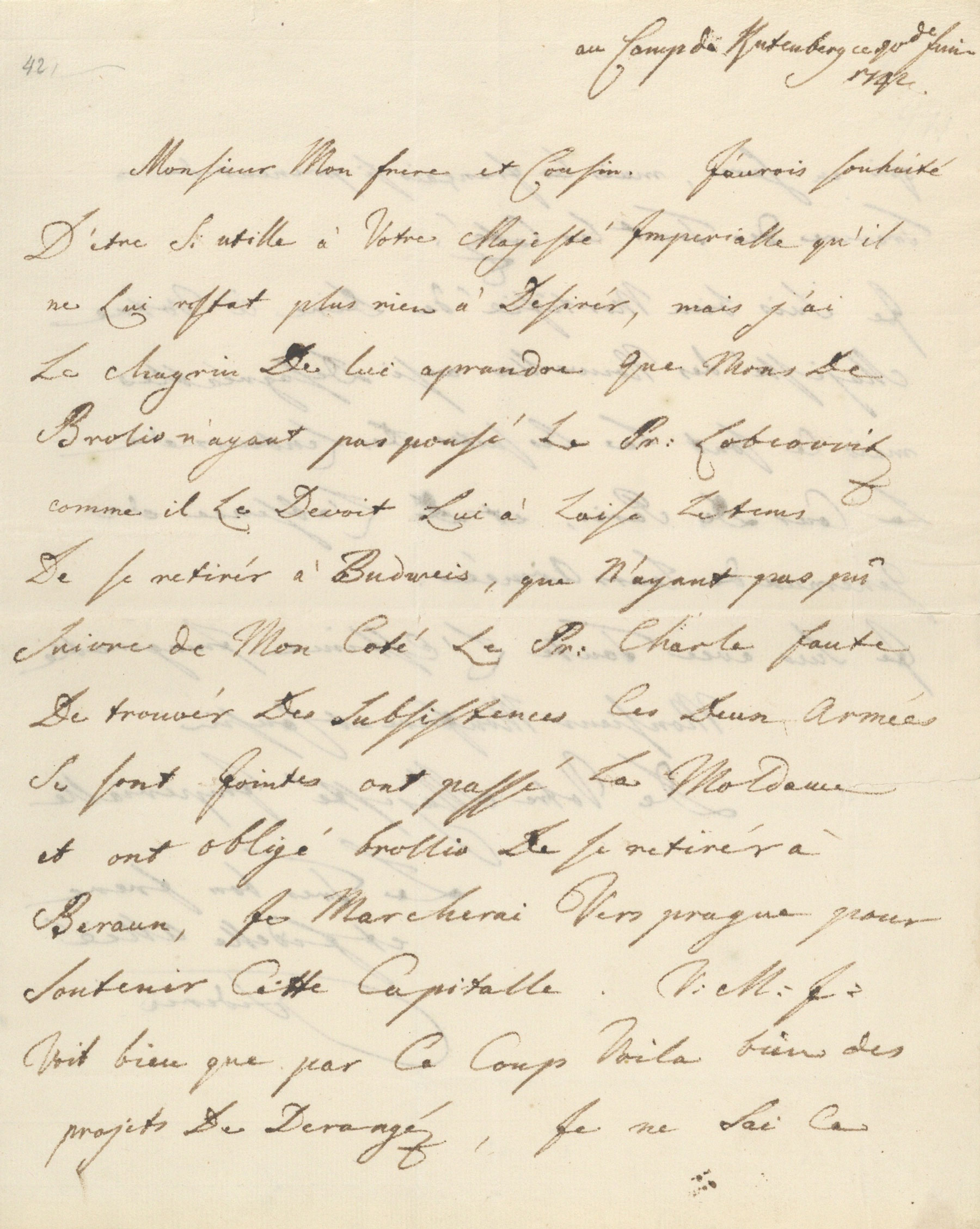
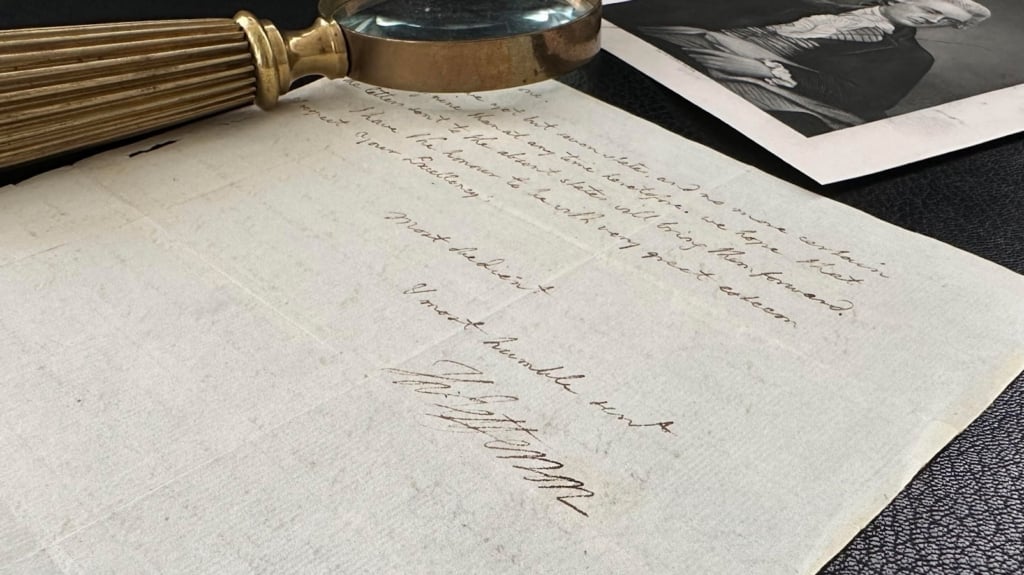
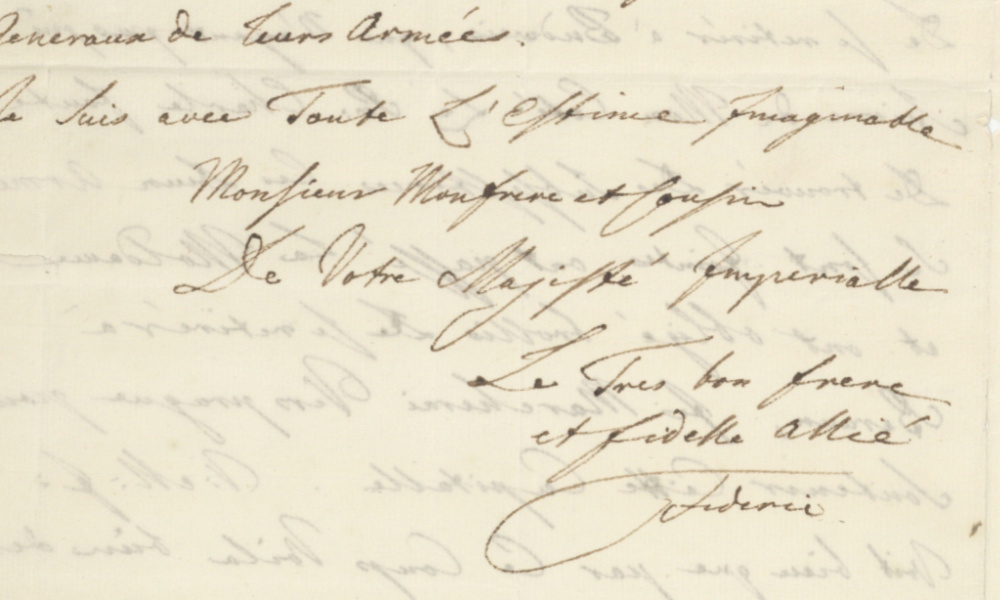
Autograph letter signed, “To the Emperor of the Romans in Frankfurt am Main”, Charles VII, Holy Roman Emperor, Camp of Kuttenberg, June 10, 1742.
“Sir, my Brother and Cousin, I would have wished to be so useful to Your Imperial Majesty that nothing more would remain for you to desire; but I have the regret of informing you that Monsieur de Broglie (the French commander), not having pressed Prince Lobkowitz as he ought to have done, has given him time to withdraw to Budweis; and as I, for my part, was unable to pursue Prince Charles for lack of provisions, these two armies have joined forces, crossed the Moldau, and have compelled Broglie to retreat to Beraun. I shall march toward Prague to support this capital.
“Your Imperial Majesty can clearly see that, by this blow, many plans have been disrupted. I do not know what will come of it, but the French are going about things the wrong way on all sides.
“I am greatly distressed to report such disagreeable news to Your Imperial Majesty, but these are the consequences of the delays of the court of Paris and of the absence of the generals of their armies.”
The war elevated Prussia’s status from a secondary German region to a major European power, capable of challenging Austria for leadership within the Holy Roman Empire. Frederick’s willingness to act independently—making peace when it suited him and abandoning unreliable allies—also set a pattern for Prussian foreign policy: pragmatic, opportunistic, and focused on state-building above all else. In short, the war confirmed that Prussia’s future lay in self-reliance and strategic expansion, laying the groundwork for its later dominance in Germany.
This letter has been in a private collection for at least 2 generations.

Frame, Display, Preserve
Each frame is custom constructed, using only proper museum archival materials. This includes:The finest frames, tailored to match the document you have chosen. These can period style, antiqued, gilded, wood, etc. Fabric mats, including silk and satin, as well as museum mat board with hand painted bevels. Attachment of the document to the matting to ensure its protection. This "hinging" is done according to archival standards. Protective "glass," or Tru Vue Optium Acrylic glazing, which is shatter resistant, 99% UV protective, and anti-reflective. You benefit from our decades of experience in designing and creating beautiful, compelling, and protective framed historical documents.
Learn more about our Framing Services