





The POW Love Letter of Winston Churchill, Written from Prison in South Africa During the Boer War to His First Love, Pamela Plowden: “I think often of you. Yours, always, Winston S. Churchill”
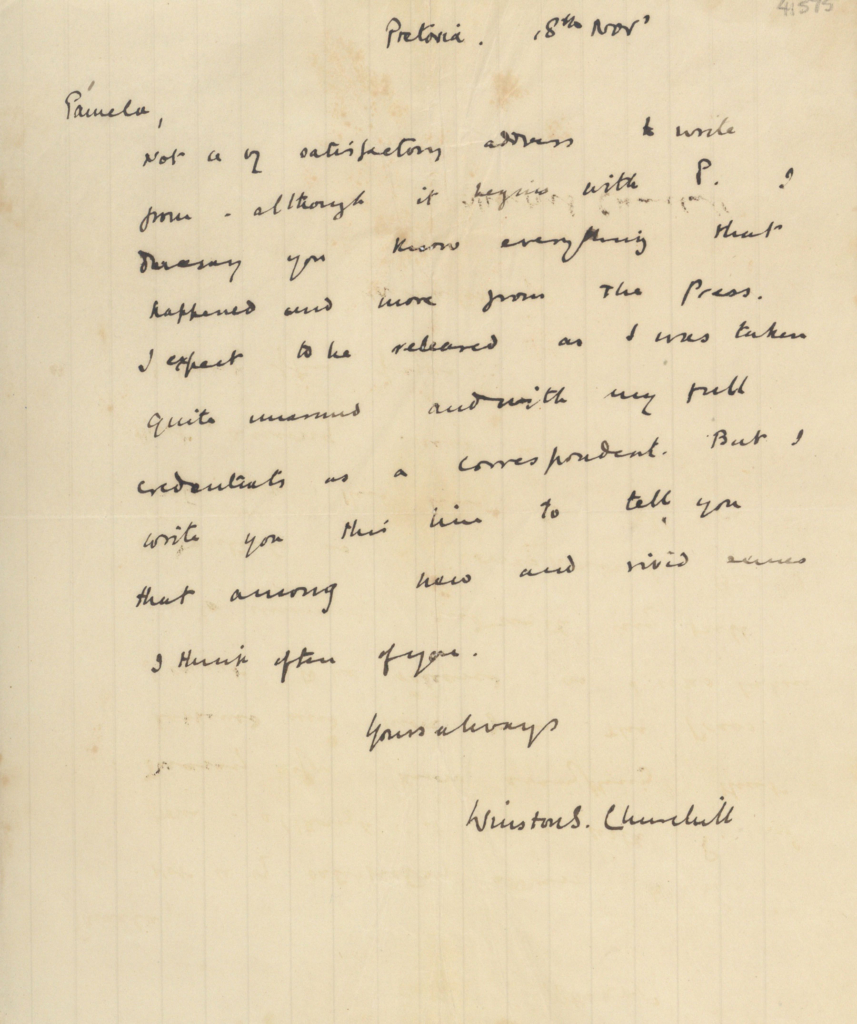

In it, he predicts wrongly that he would be released, and shows an uncommon affection rarely seen in his letters
- Currency:
- USD
- GBP
- JPY
- EUR
- CNY
 This currency selector is for viewing only.
The Raab Collection only accepts USD payments at checkout.
Exchange rates are updated hourly. Rates may be inaccurate.
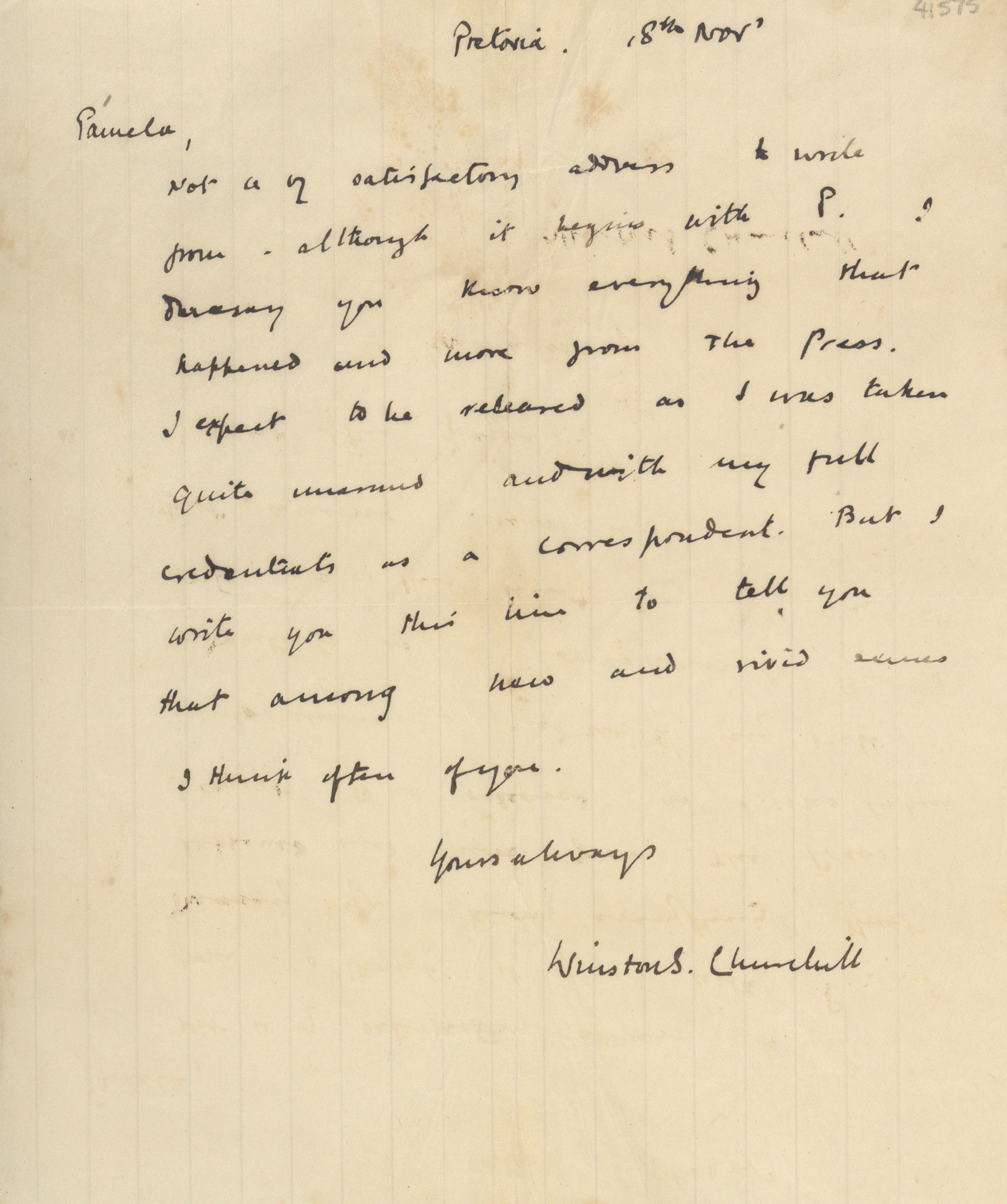
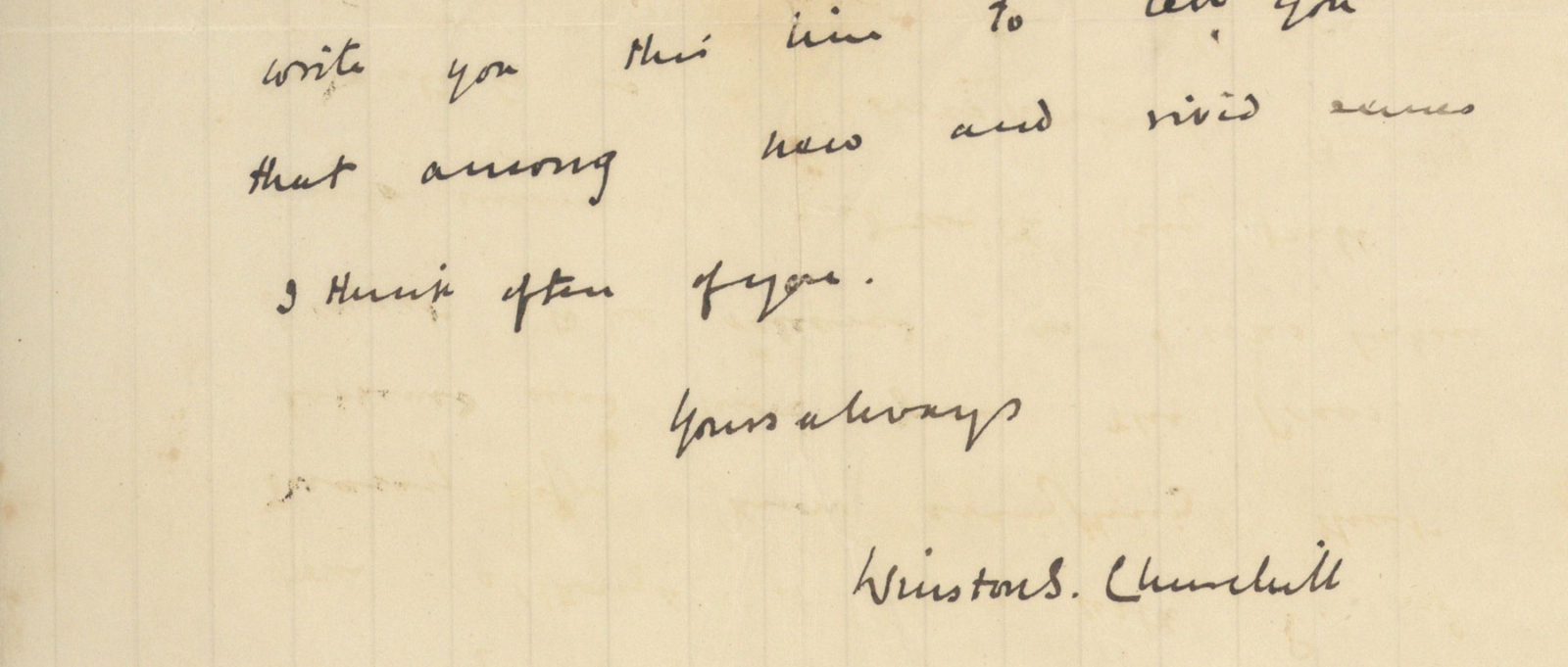
In battle and imprisonment, she is on his mind: “I write you this line to tell you that among new and vivid scenes I think often of you. Yours, always, Winston S. Churchill.”
We could find only three letters as a POW having come to market
In 1880, Britain annexed...


In battle and imprisonment, she is on his mind: “I write you this line to tell you that among new and vivid scenes I think often of you. Yours, always, Winston S. Churchill.”
We could find only three letters as a POW having come to market
In 1880, Britain annexed the Transvaal in Southern Africa, a land populated mainly by descendants of Dutch immigrants known as Boers. This led to the First Boer War, a war that, to the shock of the British people, ended in Britain’s defeat. Although, as a condition of the peace agreement, Britain agreed to respect the independence of the Boer republics, the discovery of gold and diamond deposits on Boer lands resulted in Britain again pressing in on the Transvaal, amassing troops at its borders, and claiming large swaths of new territory that effectively cut the Boer republics off from the sea. Having had enough, the Boers issued an ultimatum in October 1899 that the British disdainfully ignored. The Second Boer War was on. Unlike the British, the Boers knew the South African terrain inside and out, and chose to adopt guerrilla warfare rather than use standard military tactics like the British. Over seemingly impossible terrain, Boer soldiers could strike and then vanish without a trace. Even when under attack, the British could rarely find the enemy.
24-year old Winston Churchill was a correspondent for the Morning Post newspaper, and he managed to secure a desirable assignment to report on the war for that paper. He immediately set out for the war zone and arrived in Cape Town late on October 30, 1899. He did everything in his power to reach the front, striking out on his own, taking the last train out of Cape Town to make it through enemy territory, then catching a ride aboard a mail train out of Durban. When he finally reached the British colony of Natal, he learned that Ladysmith, a garrison town that was the front for the war, was already under siege. No one could get out or in. The only way he could even get close to the front was by boarding an armored train sent out for reconnaissance every day.
The trains were designed with heavy armor and carriages in front to protect the engines, but as Churchill later wrote, “Nothing looks more formidable and impressive than an armoured train, but nothing is in fact more vulnerable and helpless.” The trains were fixed and irresistible targets, and the Boers had to do little more than sit and wait for their prey to come to them. Already they had successfully attacked two British trains. Yet on the morning of November 15, 1899, Churchill took one of these trains, thinking it was better than watching the war play out from a distance. He cared little about personal danger, and was never one to sit on the sidelines. But not only had the Boers been closely watching the train as it made its way along the tracks that morning, but it was a regiment led by the youngest, most charismatic general in the Boer army—Louis Botha (who would become the first Prime Minister of the Union of South Africa). As soon as the train had passed them, moving slowly north, Botha and his men began piling large stones onto the tracks at the foot of the slope. Then, pushing their guns up the hills that flanked the rail line, they waited for the train to return.
On its return, while inside Boer-occupied territory near Chieveley, Boer forces ambushed the train, derailing it. The train crashed into the boulders with a mighty impact, and the Boers opened up with field guns and rifle fire. Churchill helped organize the clearing of the track and evacuation of wounded men during the ambush, displaying bravery under fire. The British soldiers did their best to get their injured and wounded colleagues out of harm’s way. They then tried to uncouple the locomotive so that it could back off down the line to safety. After some 70 minutes of action the Boers swept down the hillside. A number of men were taken prisoner, but the locomotive, loaded with men, managed to escape. However, Churchill was not on the engine, instead finding himself alone in a gully near the track. Botha got off his horse, got down on one knee and raised his rifle to bear at a range of 40 yards. Churchill went for the pistol in his belt but it wasn’t there – it was on the train. He was defenseless so he surrendered. The Boers refused to treat him as a mere civilian war correspondent because he had taken an active role in the fighting, effectively making him a combatant. They also knew that in him they had a valuable bargaining chip, as his father, Lord Randolph Churchill, had been an eminent politician, and the family bloodline went back to the Duke of Marlborough. The Boers transported Churchill to a prisoner-of-war (POW) camp housed in the converted State Model Schools in Pretoria, the capital of the Transvaal.
The following month, on December 12, having spent his twenty-fifth birthday imprisoned, Churchill made a dramatic escape by climbing over a wall, riding a freight train, hiding in a coal mine and eventually boarding a train into Portuguese East Africa. He made his way to Durban, with the Boers offering a reward of £25 for the recapture of their well-known prisoner, ‘dead or alive’. For the next six months, he encountered fire, took part in the bloody and unsuccessful battle of Spion Kop in January 1900 and, as the war turned in Britain’s favour, was present at the relief of Ladysmith and the occupation of Pretoria. His brother Jack was wounded and became one of the first patients to be treated by their mother, Lady Randolph, on the hospital ship she had organized. But Winston’s luck held. Churchill returned to England in July 1900, where news of his capture and dramatic escape spread like wild fire and made him a national hero. To welcome him over 10,000 people turned out in the streets, with flags and drums beating, and shouting themselves hoarse for two hours. This excitement provided the platform for him to be elected to Parliament in October 1900, marking a significant turning point in his life and, in time, the life of the nation. He would serve in Parliament for (with brief interruptions) nearly 64 years, representing five different constituencies, holding numerous cabinet positions, and serving twice as Prime Minister before his retirement in 1964. He was the longest-serving Member of Parliament in the 20th century.
Churchill’s relationship with Pamela Plowden was one of the most emotionally intense and personally revealing episodes of his early life, marked by deep affection, idealization, and eventual disappointment. During the late 1890s, Churchill—then a young army officer and aspiring politician—became profoundly attached to Pamela, admiring her intellect, beauty, and independence, and writing to her with an openness and vulnerability rarely seen elsewhere in his correspondence. He appears to have hoped for marriage, or at least a lasting emotional bond, but Pamela did not reciprocate his feelings to the same degree and ultimately married another man. The rejection left Churchill wounded and introspective, reinforcing a pattern in which his private emotional life remained guarded even as his public ambition burned fiercely. Though brief and unfulfilled, the relationship with Pamela Plowden is often seen by biographers as formative, sharpening Churchill’s emotional depth while teaching him—painfully—the limits of romantic idealism.
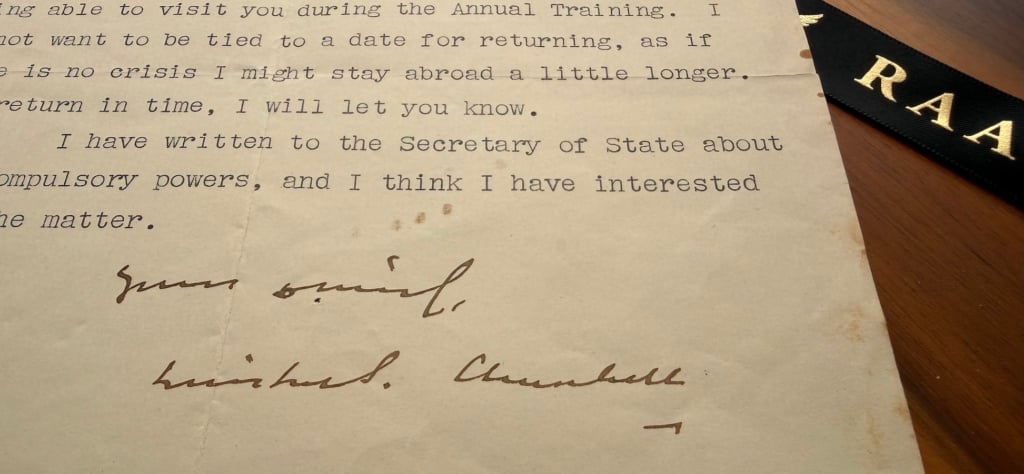
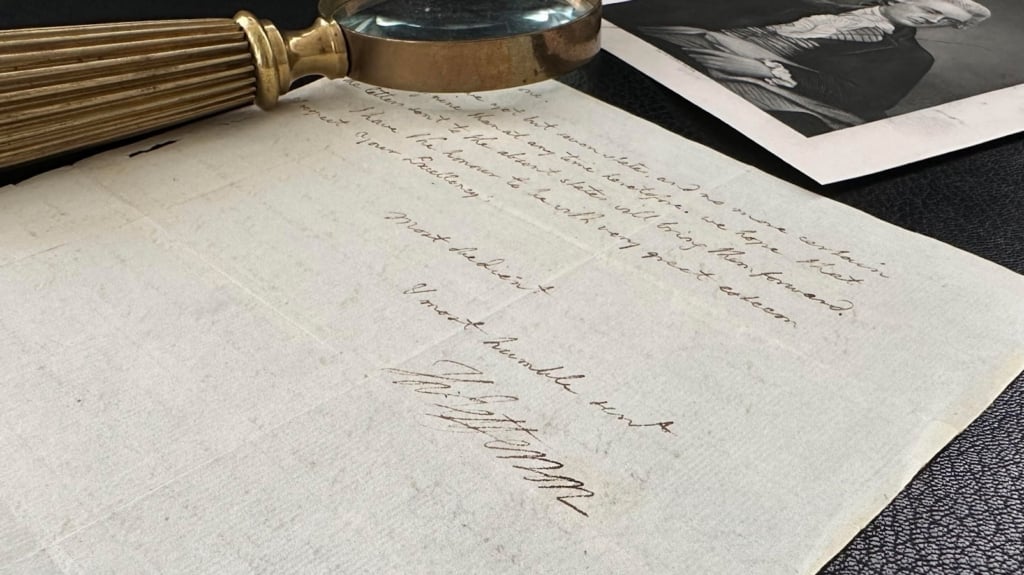
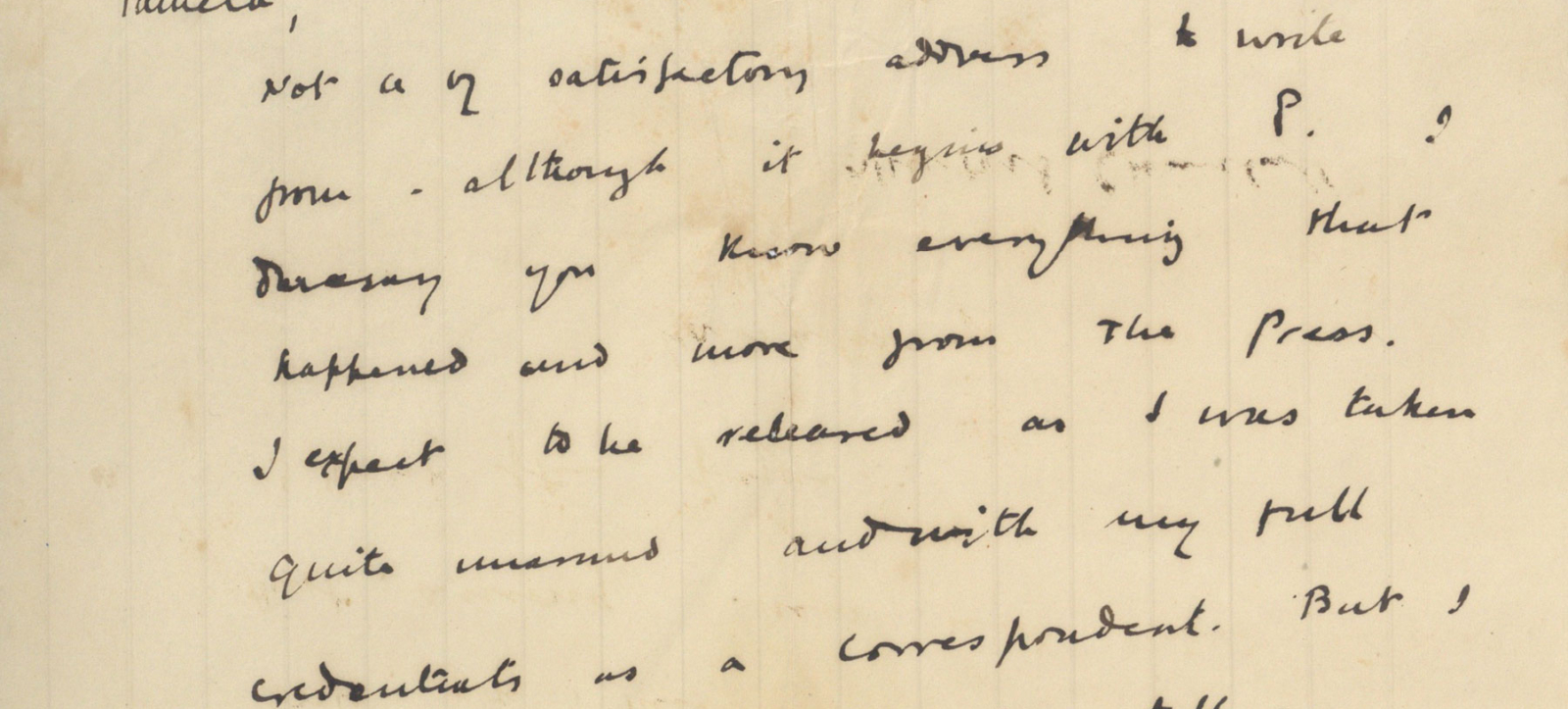
Autograph letter signed, from prison in Pretoria, November 18, 1899, to Plowden, poignantly expressing his deep affection for her, and mentioning his capture and hope of release. With the original autograph envelope showing extensive travel. “Not a very satisfactory address to write from – although it begins with P. I daresay you know everything that happened, and more from the press. I expect to be released as I was taken quite unarmed and with my full credentials as a correspondent. But I write you this line to tell you that among new and vivid scenes I think often of you. Yours, always, Winston S. Churchill.” Although he was infatuated with her, as is evident from the closing of the letter, and even eventually proposed marriage (a proposal she did not accept), Churchill’s friendship with Pamela, later Countess of Lytton, continued for the rest of his life.
This letter, written only 3 days into his captivity, shows that his feelings for Pamela immediately came to mind, as well as his confidence in being released, a confidence that was ill-founded as his appeals for clemency because of his status as a non-combatant failed and he therefore determined to escape, which he finally managed in December.
Outside of pleas to his captors and reports to his newspaper, we were able to find just three letters from captivity in Pretoria – one to Plowden, one to H.G. Spaarwater, and one to his mother. Other letters to family members may exist, though we could find none. The Spaarwater letter we carried previously.

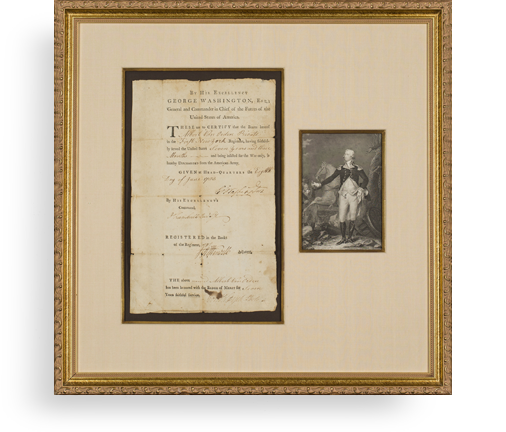
Frame, Display, Preserve
Each frame is custom constructed, using only proper museum archival materials. This includes:The finest frames, tailored to match the document you have chosen. These can period style, antiqued, gilded, wood, etc. Fabric mats, including silk and satin, as well as museum mat board with hand painted bevels. Attachment of the document to the matting to ensure its protection. This "hinging" is done according to archival standards. Protective "glass," or Tru Vue Optium Acrylic glazing, which is shatter resistant, 99% UV protective, and anti-reflective. You benefit from our decades of experience in designing and creating beautiful, compelling, and protective framed historical documents.
Learn more about our Framing Services