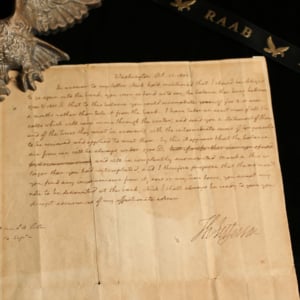




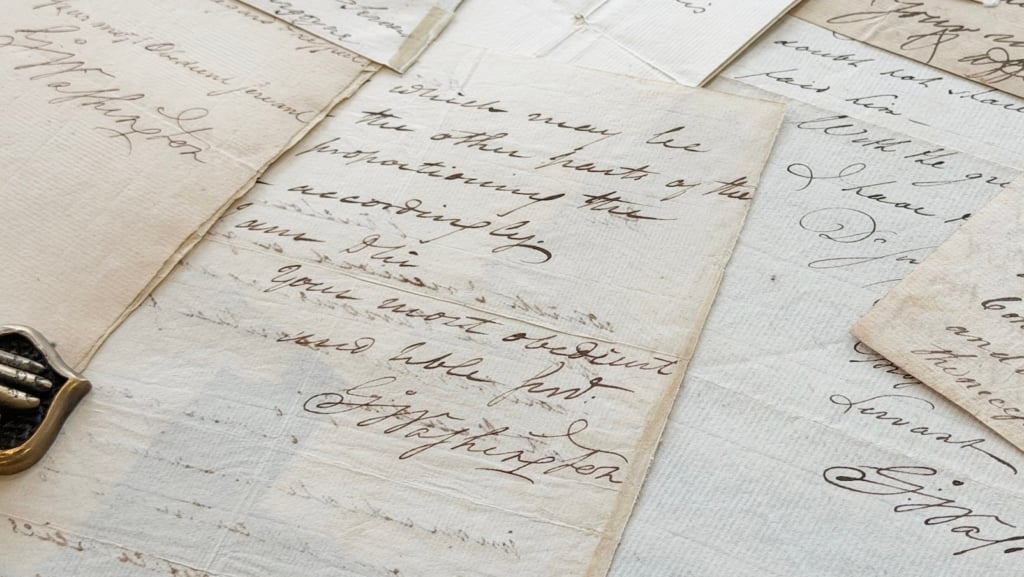
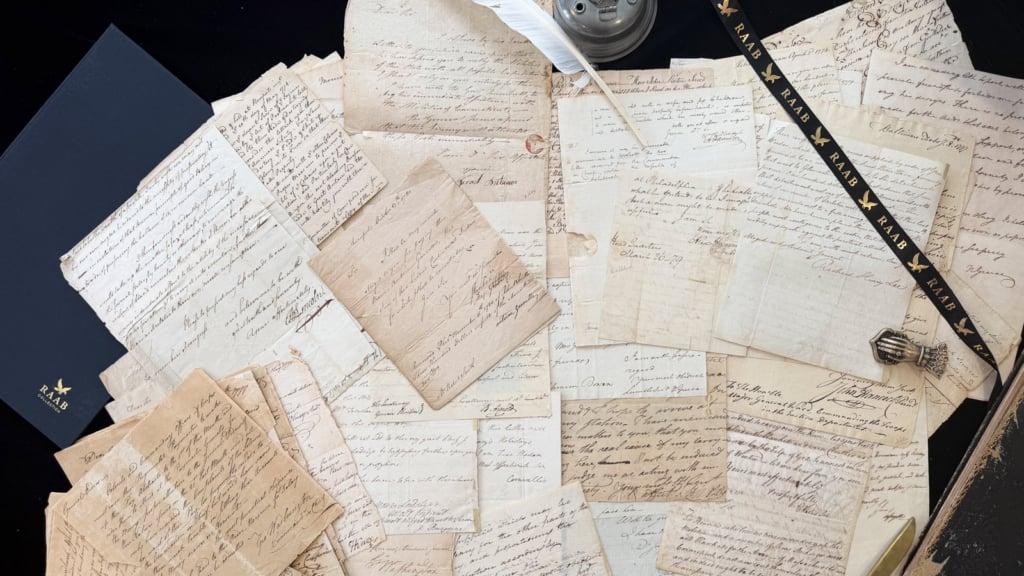
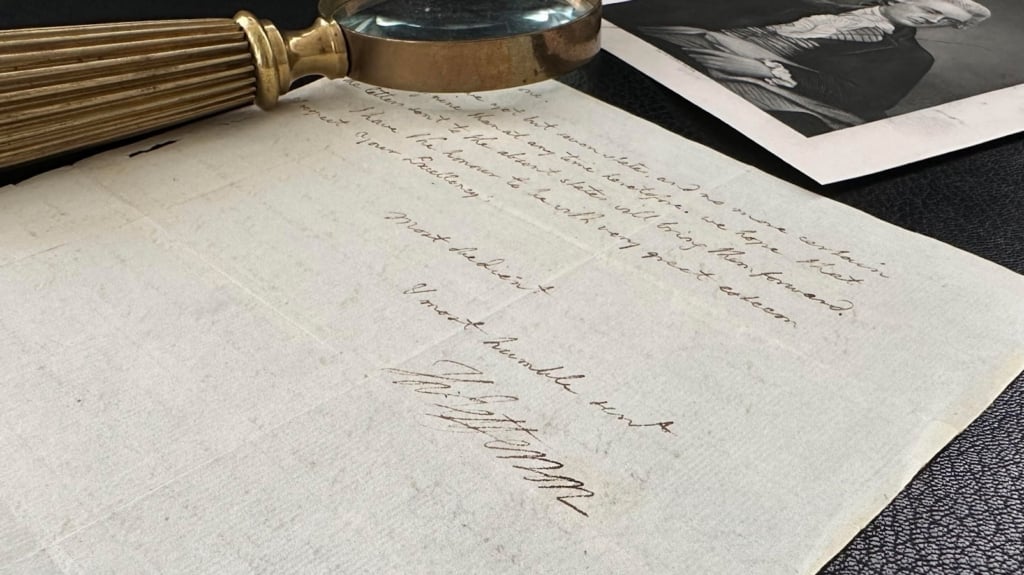


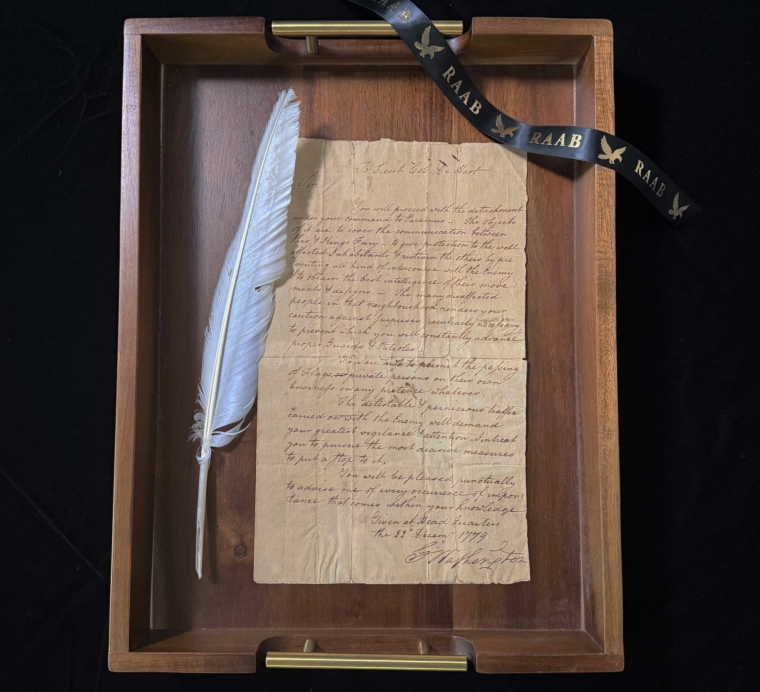
The Raab Collection has discovered and acquired two Revolutionary War-era letters of George Washington. In the same family for more than 200 years, the letters have never been offered for sale before. In them, you see Washington as strategist and commander in a powerful and vivid way.
Nathan Raab was interviewed on the Inspired by History podcast about the significance of this historical discovery and how such a find connects to America’s 250th anniversary this year. Listen to the interview below or via your podcast player of choice. Or, if you prefer, read this lightly edited transcript of the conversation with photos and embedded links to more resources.
George Washington Letters Discovered
Last fall, we discussed three newly discovered letters from President Washington to his Secretary of War and State Timothy Pickering. Today we’re talking about two new discoveries, Washington letters from during the Revolutionary War that had been in the same family for centuries and never before sold. Is this amount of newly discovered George Washington letters unusual in so short a time?
Nathan: Yeah. To find this many important George Washington documents reaching the market for the first time, reaching scholarly attention for the first time, coming out of the woodwork for the first time, is incredibly uncommon.
A lot of the letters of George Washington are either in institutions or in old collections or have been lost time, or have sold time and again over the course of the last couple centuries and more. So to find this trove of real historical gems that shed light on Washington, that shed light on the founding of the country is just a pleasure and really an honor to get to work with them.
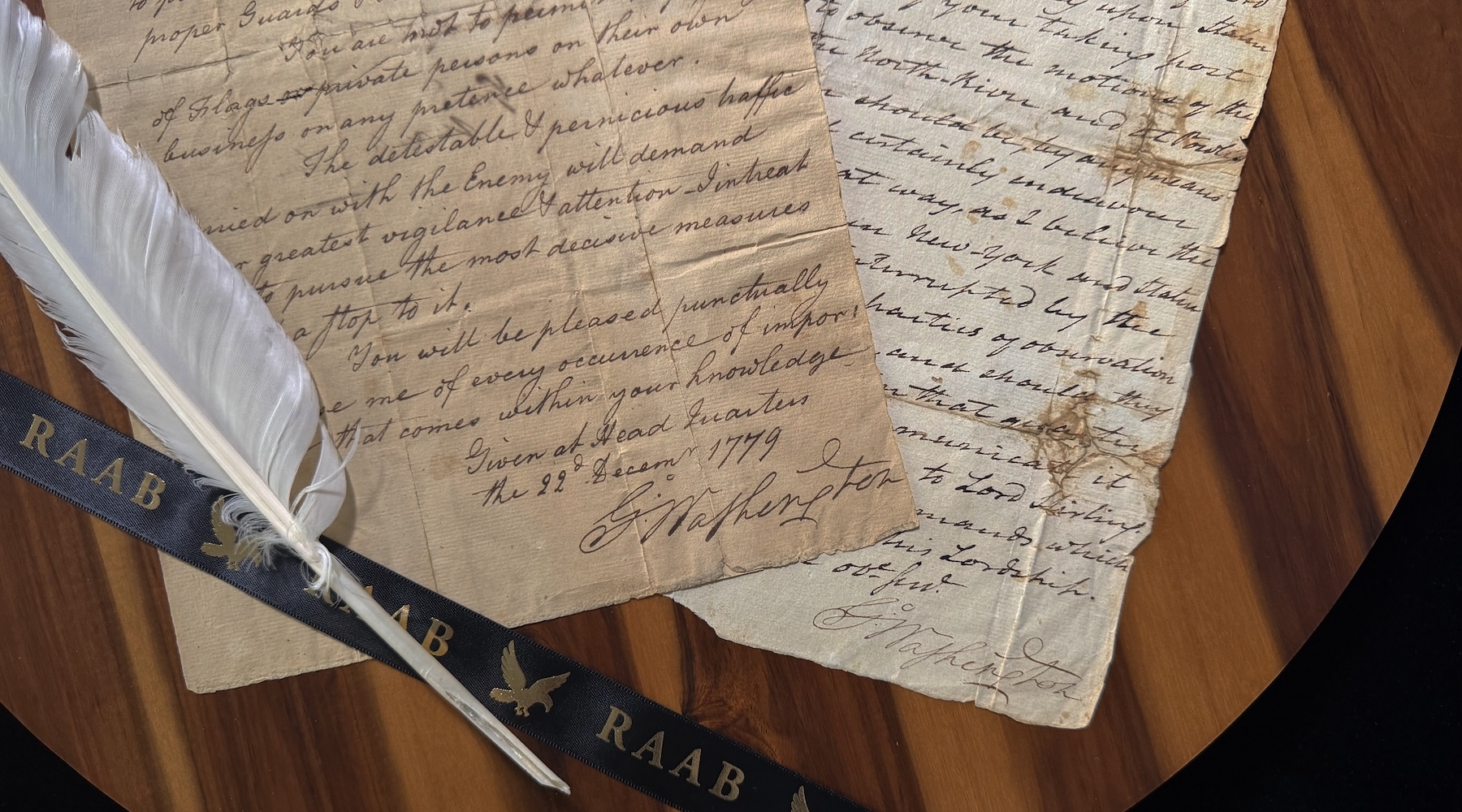
So let’s just dig into the letters a little bit. They’re written by Washington as General of the Continental Army during the war, to someone named Lieutenant Colonel William De Hart. And this is late 1779, early 1780, and they’re written from Morristown, New Jersey. What can you tell us about the content? What’s Washington saying in these letters?
Nathan: So De Hart was the major of the first New Jersey regiment in the Continental Army. He was promoted to Lieutenant Colonel. He was with Washington at Valley Forge. He was with the second New Jersey regiment, and he resigned after Yorktown. So he had quite a storied career in the Continental Army. He was at one point aide to Washington.
These letters are battlefield commands. They’re campaign commands. There’s two of them. They are giving instructions to De Hart to, in one case, kind of roundup, avoid, counteract the Tories, the bad guys amongst us, the ones who sided with the British, which is incredible. I’ve never seen anything like that. And, in the other case, protect an invasion, a planned invasion of Staten Island. New York being a stronghold for the British, where there were, again, a lot of Tories. So they are incredibly important in addition to being newly discovered and never having reached the market before, their importance is second to none in terms of getting insight into Washington’s military strategy, how he communicated with his commanders, and really how he viewed strategy and the British. I mean, to see him discuss the Tories, refer to them in scathing language “detestable and pernicious.” It’s just incredible.

What’s it like for you to be able to hold and handle and – dare I say, commune – with a letter signed by George Washington? It’s something that very few people get to do.
Nathan: Well, of course, that’s very exciting. I think the better question is, what’s it like to hold a letter of Washington that no one else besides family members has held before? This isn’t something that’s been circulating around in the market. This is something that we are really on the front lines of historical discovery.
So when we get these pieces, these two letters written to De Hart from Washington, we’re the second owners of these letters. There’s family and heirs, followed by our firm, and eventually there will be a third owner when someone acquires them. Of course, it’s always exciting to hold a letter of Washington, but to hold something that really no one else has held is a particularly exciting moment.
Did this family just call you and say we have these two George Washington letters, would you take a look – is that how it goes?
Nathan: Yes. I mean, the short answer is yes. We have a strong network, outreach network, so when people are ready to part with their family treasures or things they inherited, we’re often their first call. And they want to know what something’s worth, the value of things, and they’ve made a decision that it’s time to part with them. And oftentimes, it’s a process where, you know, they get comfortable with you and you get comfortable with them, and when the right time comes and they decide to sell, it’s a wonderful moment for us.
America 250: Historical Documents & Autographs
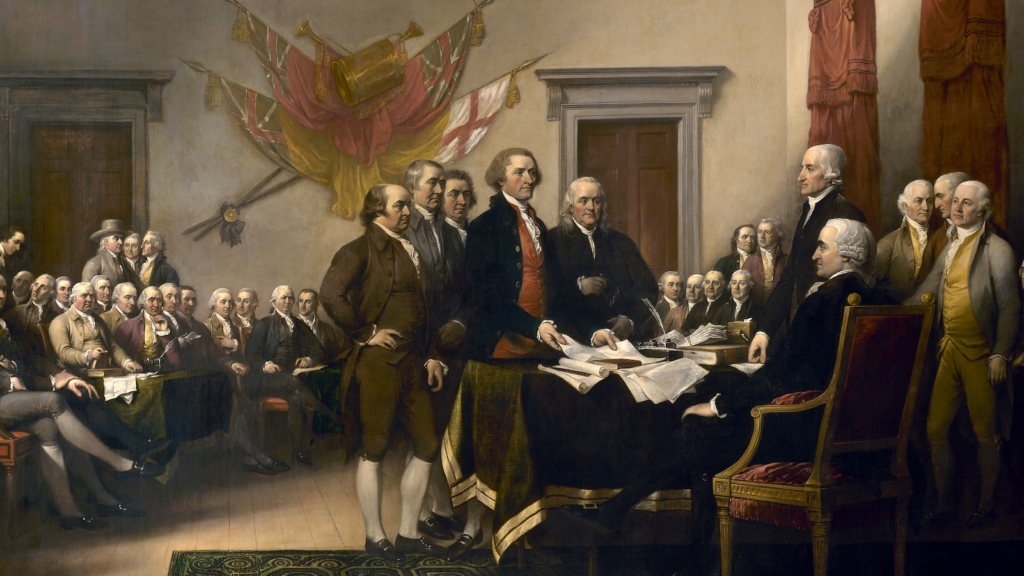
Now, as you know, this year, America is celebrating its semiquincentennial, aka the 250th anniversary of the Declaration of Independence. There are major museum exhibitions. There’s the Ken Burns documentary. There’s going to be parades and events and all kinds of stuff leading up to July. Do you think that the spotlight that’s on history this year, especially Revolutionary War history, is going to bring more documents like this to the surface?
Nathan: Yeah, I think it probably will. It highlights a piece of our history that’s a kind of a shared history and everybody claims the legacy of that history on both sides of the political aisle, and Washington in particular and the Revolutionary War are very much subjects of great demand.
I think people will decide it’s time to sell their treasures. There will be prominent sales, perhaps, but certainly in our, in our world, we’ve seen more interest in Washington, but from both sides, people wanting to buy and people wanting to sell. So I have no doubt that that will play a role.
That was going to be my next question. Do you think you’ll also see more demand? I mean, if you see more supply, will you also see more demand, particularly this year?
Nathan: I think we’ll see supply and demand.
What other documents currently for sale with Raab have a special connection to the America 250 theme?
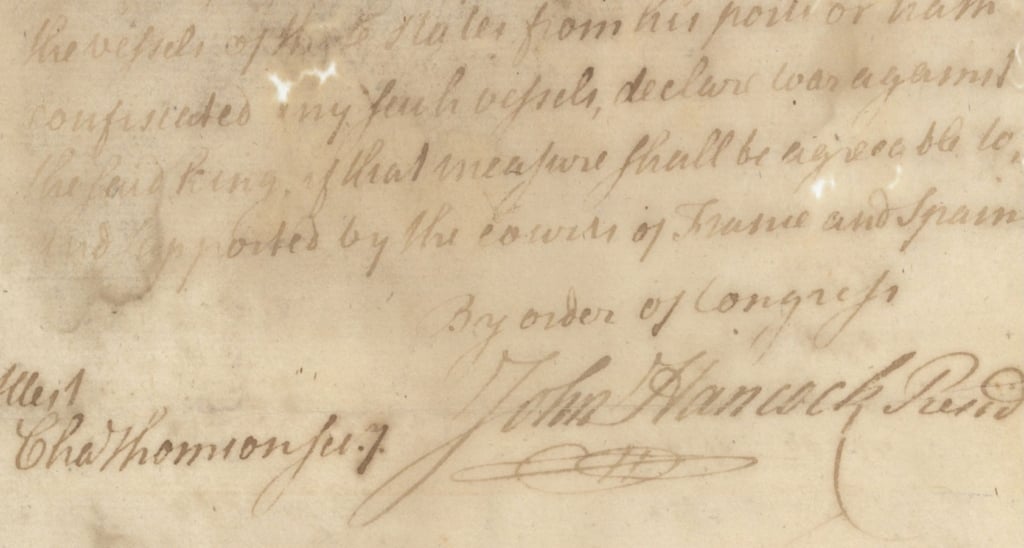
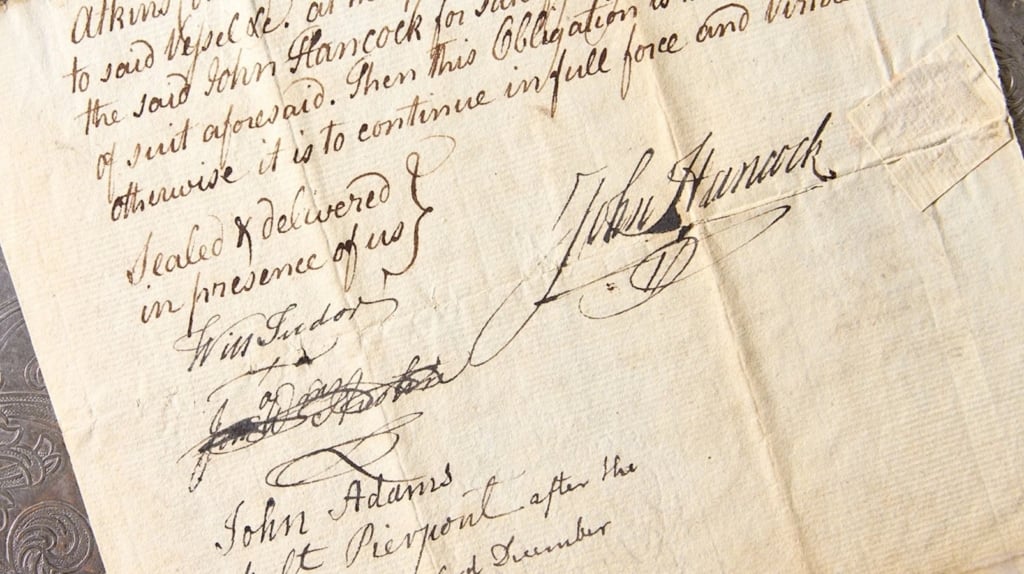
Nathan: Well, anything I think that draws attention to our founding. So, people have in their minds the Founding Fathers, men like John Hancock and Thomas Jefferson, Benjamin Franklin, John Adams, Martha Washington, Abigail Adams, the Marquis de Lafayette. People have in their mind some of the great figures, some of the heroic and historic figures from the American Revolution, and you can acquire, you can find pieces signed by them. Patrick Henry. The legacy of our founding is very strong.
There’s something about this particular slice of American history that appeals to people no matter which side of the divide they’re on.
Nathan: Yeah, I think that’s true. I mean, we’re not purveyors of politics. We sell history, not politics. I generally don’t get into the political side of things, but it’s certainly the case that members of both political parties claim the legacy of this original founding. And it’s distant enough that I think it’s perceived as above and beyond politics.
Anything else you want to say about Washington?
Nathan: People often think, what do we know about Washington? Where are these historical artifacts? Where do they come from? And this is exactly the process by which we learn where things are and learn more about the figure. People who held things in family collections or collections that have not been accessible and then one day make the decision to sell. And often we’re on that front line. We’re the first ones to see it. And this is how these pieces of early American history come into our collective conscience.
Add a little something to the historical record?
Nathan: Yeah, that’s one of the more exciting things that we do is being able to add to the historical record, uncover these pieces, bring them to our clients, who get to see them for the first time, and know that that’s a service that we’re providing not only to historical preservation, but for the collecting community and scholarly community.
To learn more about collecting George Washington documents, visit our dedicated Washington page and read our guide, “An Illustrated Guide to Buying George Washington Autographs & Documents.”