





Gen. George S. Patton, Jr. Receives His Promotion to Major General in 1941 and States His Goal as Officer
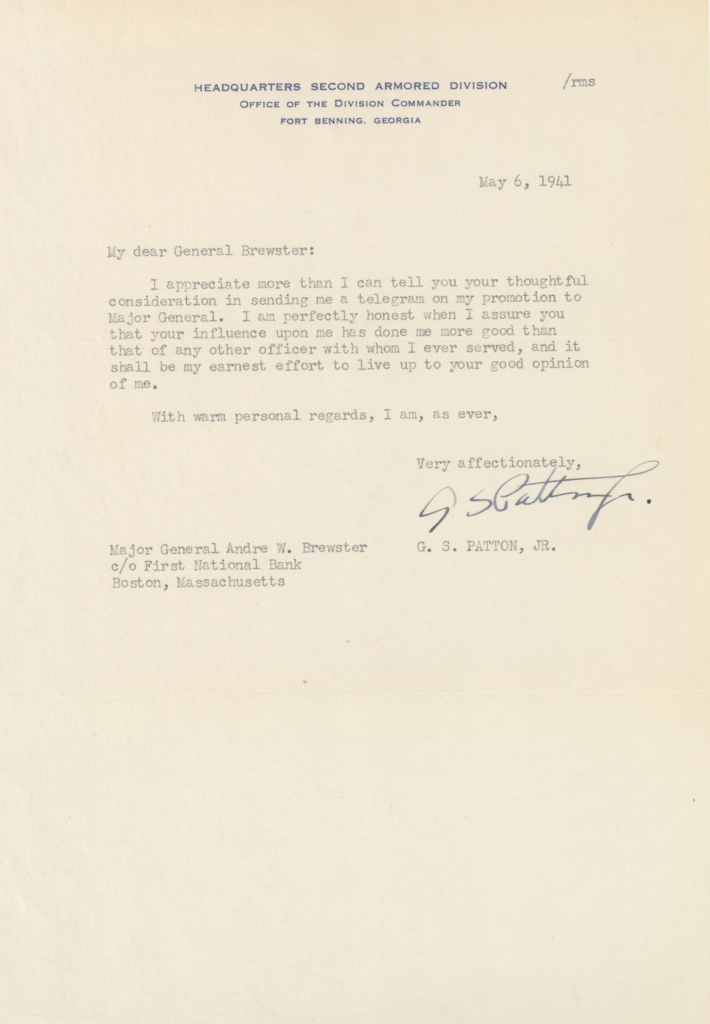

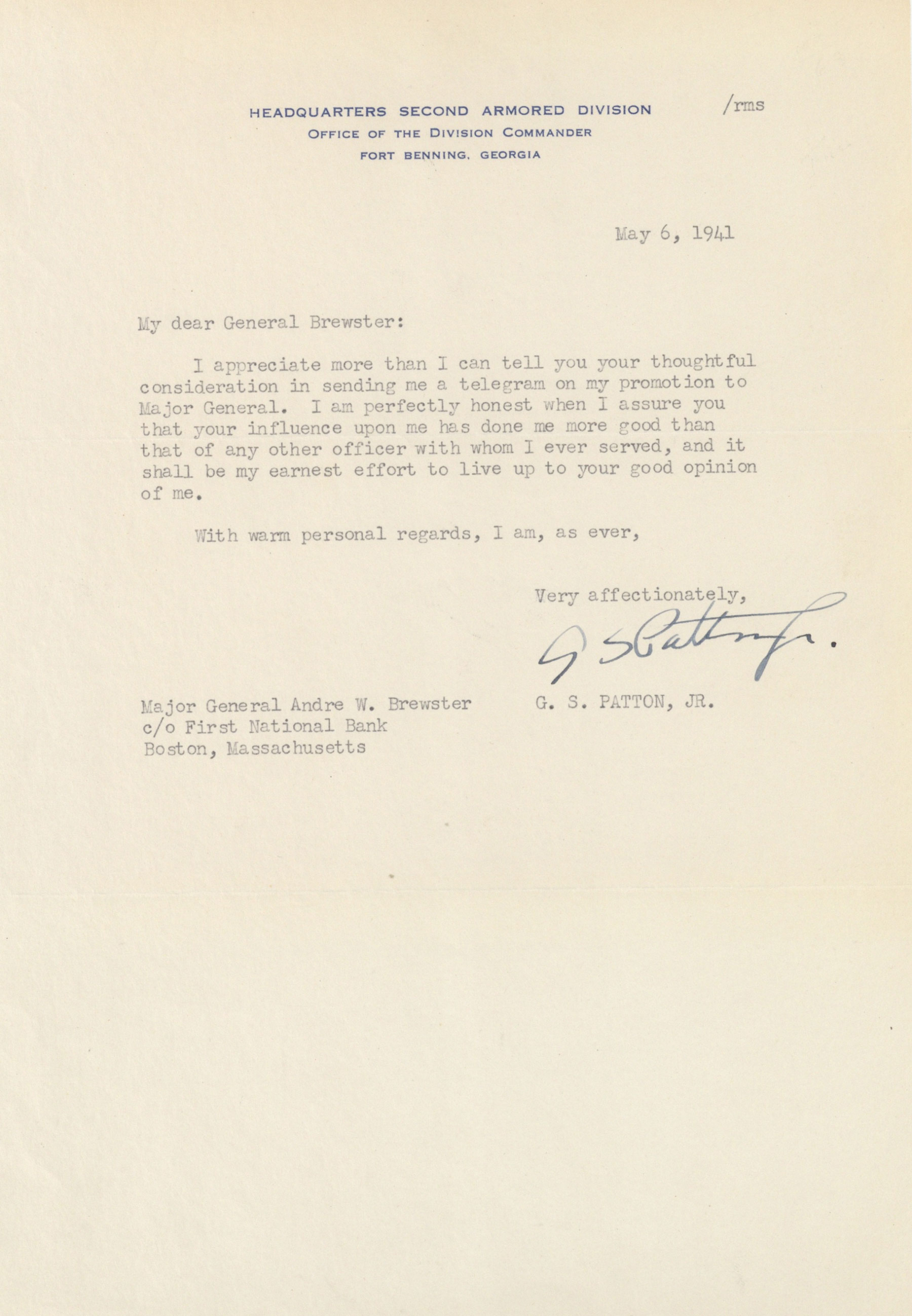
Writing his mentor: “It shall be my earnest effort to live up to your good opinion of me.”
Patton also notes how he has risen to this place: “I am perfectly honest when I assure you that your influence upon me has done me more good than that of any other officer with whom I ever served…”
Among the most evocative and important letters of Patton we have seen,...


Patton also notes how he has risen to this place: “I am perfectly honest when I assure you that your influence upon me has done me more good than that of any other officer with whom I ever served…”
Among the most evocative and important letters of Patton we have seen, for a generation in a private collection
General George S. Patton, Jr. was one of the most brilliant soldiers in American history. In World War I, he commanded the 1st Provisional Tank Brigade in France. With World War II looming ahead, he was promoted to Major General on April 4, 1941, and subsequently took command of the 2nd Armored Division at Fort Benning, Georgia, on April 11, 1941. Audacious, unorthodox and inspiring, when the war came, he led his troops to great victories in North Africa, Sicily and on the European Western Front after the landings on D-Day. At El Guettar in March of 1943 he won the first major American victory over Nazi arms. In July of that year he leaped from a landing barge and waded ashore to the beachhead at Gela, Sicily. In just thirty-eight days the American Seventh Army, under his leadership, and the British Eighth Army, under Gen. Sir Bernard Montgomery, conquered all of Sicily.
But it was as the leader of his famed Third Army on the Western Front that Patton staked out his strongest claims to military greatness. In ten months his armor and infantry roared through six countries – France, Belgium, Luxembourg, Germany, Czechoslovakia and Austria. It crossed the Seine, the Loire, the Moselle, the Saar, the Rhine, the Danube and a score of lesser rivers; captured more than 750,000 Nazis, and killed or disabled 500,000 others. It was instrumental in winning the crucial battle of the Bulge in December 1944. There were times, in those great days when the tank spearheads of the Third were racing across France with almost unbelievable speed and again when they were cutting the dying Nazi armies to pieces in the final spring of the war, that not even Supreme Headquarters itself knew where his vanguards were. Driven by his iron will, his advanced units had to be supplied with gasoline and maps dropped by air. By the time Germany surrendered on V-E Day – May 8, 1945 – Patton’s Third Army had fought for nine months since becoming operational, capturing more than 80,000 square miles of territory. During that time the Third Army suffered roughly 137,000 casualties, but it had inflicted more than 10 times that on the enemy.
Andre W. Brewster won the Medal of Honor for heroism in China in 1900. Upon his return to the United States in 1905, Brewster assumed inspector general positions for most of the remainder of his career. In 1917, General John J. Pershing selected him to be the Inspector General of the American Expeditionary Forces and he rose to the rank of Major General. Brewster knew Patton well from service in World War I, with Patton once calling him “One of the men who in the First War did so much for me”. Brewster retired from the Army in 1925 after forty years of service, and practiced law in Boston. He maintained close connections in the Army until his death in 1942.
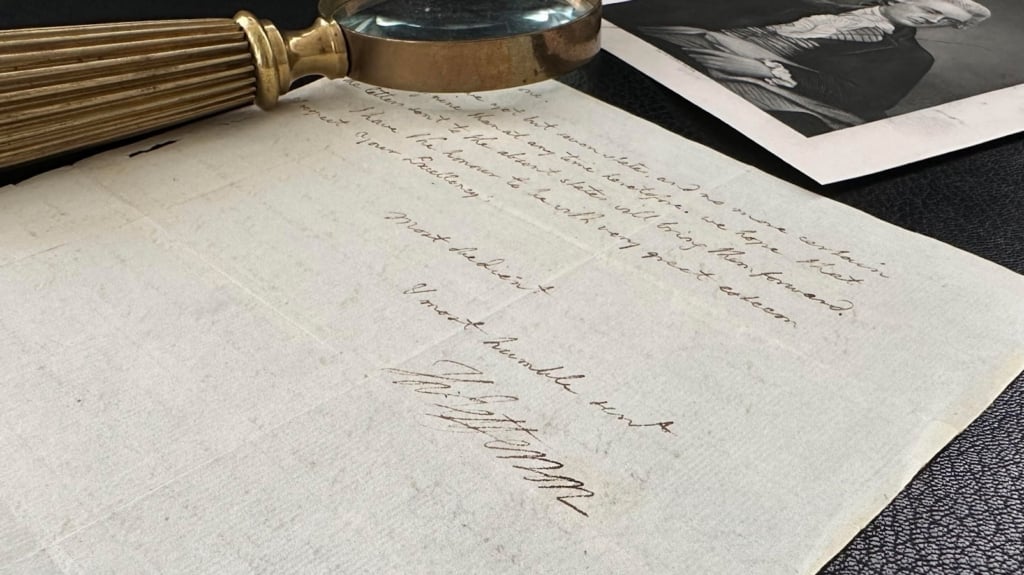
When Brewster heard of his protege Patton’s promotion to major general, he wrote him a letter of congratulation, to which Patton responded. This is that very letter. Typed letter signed, on his “HEADQUARTERS SECOND ARMORED DIVISION” letterhead, Fort Benning, May 6, 1941, to Maj. Gen. Brewster. “I appreciate more than I can tell you your thoughtful consideration in sending me a telegram on my promotion to Major General. I am perfectly honest when I assure you that your influence upon me has done me more good than that of any other officer with whom I ever served, and it shall be my earnest effort to live up to your good opinion of me.” It is signed “George S. Patton, Jr.” This letter is listed in the George S. Patton Papers.
A fascinating insight into Patton’s determination to justify his promotion, and the relationship between Patton and the man who influenced him so profoundly.

Frame, Display, Preserve
Each frame is custom constructed, using only proper museum archival materials. This includes:The finest frames, tailored to match the document you have chosen. These can period style, antiqued, gilded, wood, etc. Fabric mats, including silk and satin, as well as museum mat board with hand painted bevels. Attachment of the document to the matting to ensure its protection. This "hinging" is done according to archival standards. Protective "glass," or Tru Vue Optium Acrylic glazing, which is shatter resistant, 99% UV protective, and anti-reflective. You benefit from our decades of experience in designing and creating beautiful, compelling, and protective framed historical documents.
Learn more about our Framing Services