





Governor Patrick Henry Writes a Rare Autograph Recommendation for Former Hessian Soldier – Turned – Henry’s Own Apparent Violin Teacher as He Became a Prominent Musician and Cultural Presence in Charleston South Carolina


The musician, Jacob Eckhard, is often referred to as the Father of Music in Charleston
Manuscripts entirely in Henry’s hand are very uncommon, particularly those as Governor, with only a handful reaching the market in the past decade
Eckhard’s home still stands on Tradd Street in Charleston
He likely organized the first American public performance of Beethoven
He was the long time organist at...

Manuscripts entirely in Henry’s hand are very uncommon, particularly those as Governor, with only a handful reaching the market in the past decade
Eckhard’s home still stands on Tradd Street in Charleston
He likely organized the first American public performance of Beethoven
He was the long time organist at St. John’s Lutheran Church from 1786 to 1809, and then at St. Michael’s Episcopal Church
This document was part of collection assembled in the 1960s and has not been on the market since that time
Patrick Henry declared to the Second Virginia Convention: “Give me liberty or give me death!” He served as the first and sixth post-colonial governor of Virginia, from 1776 to 1779 and from 1784 to 1786. Henry himself loved music and played the violin. He would perform and developed real skill.
Jacob Eckhard was a Hessian soldier, who came over in 1776 with the British to fight in the Revolution. After the war, along with other Hessians, Eckhard, sometimes spelled Eckhart, stayed. He was a musician, a violinist, organist and music teacher. Eckhard knew Patrick Henry, and evidently was his violin teacher.
Patrick Henry’s lifelong devotion to the violin formed a quiet but essential part of his character and helps explain the emotional power of his oratory. Introduced to music in youth, Henry became a serious and expressive amateur violinist, playing regularly in private throughout his life. Contemporaries and early biographers noted that, while his technique was not polished, his playing was marked by intensity, feeling, and dramatic contrast—the same qualities that defined his courtroom and political speech.
In 1786, Eckhard looked South to Charleston. In that year, he became the organist of St. John’s Lutheran Church in Charleston; in 1809 received the post of organist at St. Michael’s Episcopal Church. He published a hymn book (Boston, 1816), and also wrote 2 patriotic naval songs, The Pillar of Glory and Rise, Columbia, Brave and Free. His home, the Jacob Eckhard House, still stands today.
19th century sources refer to Eckhard as the “Father of Music in Charleston”. While he was not the absolute first musician in the city’s history (Charleston had the St. Cecilia Society, one of the first musical societies in the American colonies, which was founded in 1766), Eckhard became one of its most prominent and influential professional musicians in the late 18th and early 19th centuries.
Eckhard served as an organist at St. John’s Lutheran Church from 1786 to 1809, and then at St. Michael’s Episcopal Church from 1809 until his death in 1833. By 1805, the St. Cecilia Society was composed mostly of professional musicians, including Eckhard, making it one of the most important musical societies in the country. He organized a concert in 1805 that included an overture by Ludwig van Beethoven, likely the first performance of Beethoven’s music in the United States. And at St. Michael’s, he started one of the first boys’ choirs in America. His manuscript “Choirmaster’s Book of 1809” is considered one of the earliest and most substantial manuscripts of church music in America in the Anglican tradition. The house he owned and expanded in 1797 on Tradd Street is a historic property and is still known today as the Jacob Eckhard House
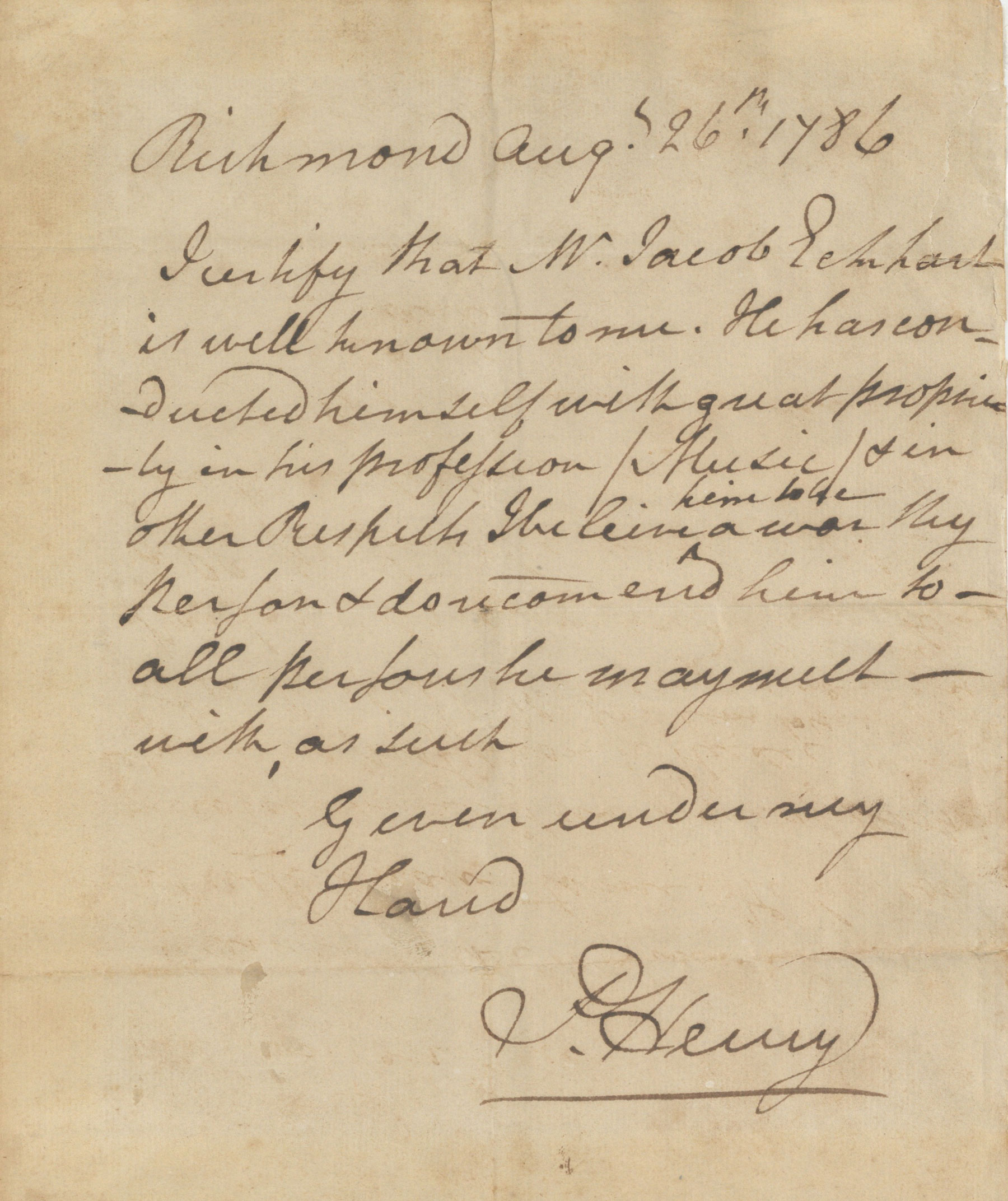
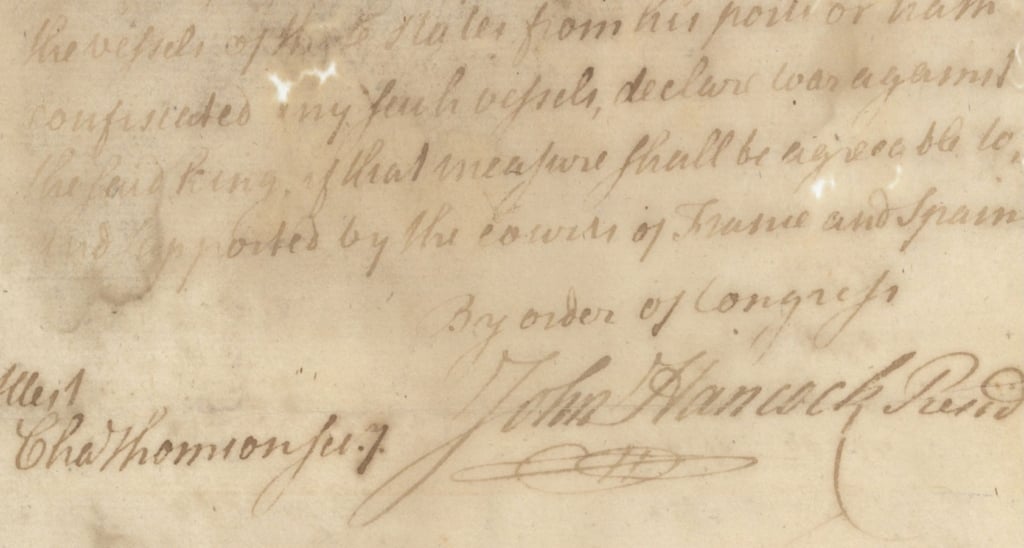
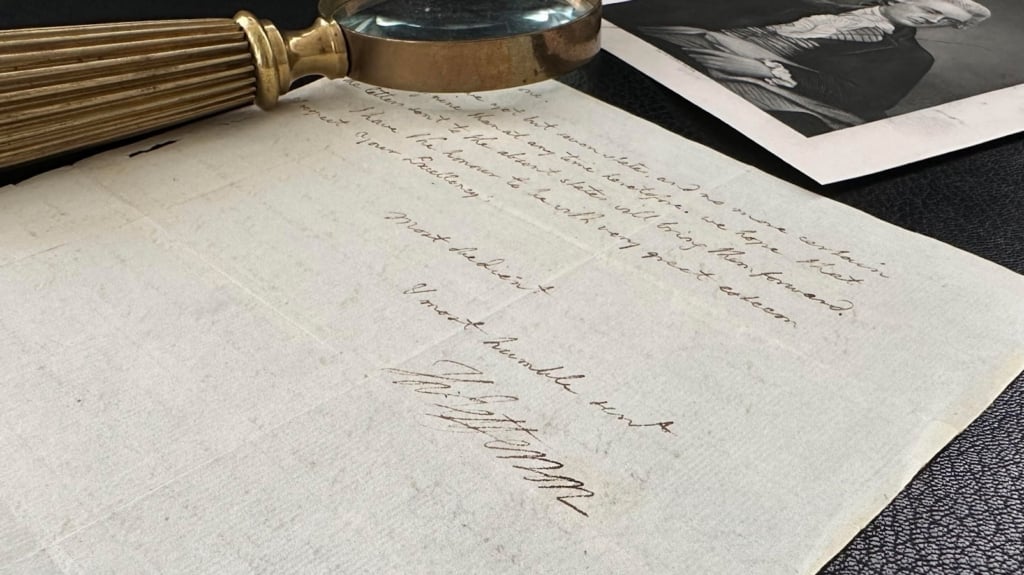
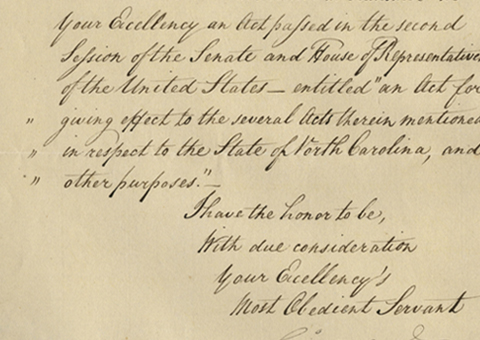
Autograph letter signed, Richmond, August 26. 1786, a letter of support from Governor Henry for Eckhard’s move to Charleston. “I certify that Mr. Jacob Eckhart is well known to me. He has conducted himself with great propriety in his profession, Music, and in other respects I believe him to be a worthy person and do recommend him to all prospects he may meet, with as such, given under my hand, P. Henry.”
No contemporary sources record Henry’s violin teacher. But his knowledge of Eckhard’s musical ability, his acknowledgment of his conduct, and his personal acquaintance demonstrated here, his use of his pen to get Eckhard his subsequent teaching position, and the absence of any other nexus for their relationship, make it very likely that Eckhard was his teacher.

Frame, Display, Preserve
Each frame is custom constructed, using only proper museum archival materials. This includes:The finest frames, tailored to match the document you have chosen. These can period style, antiqued, gilded, wood, etc. Fabric mats, including silk and satin, as well as museum mat board with hand painted bevels. Attachment of the document to the matting to ensure its protection. This "hinging" is done according to archival standards. Protective "glass," or Tru Vue Optium Acrylic glazing, which is shatter resistant, 99% UV protective, and anti-reflective. You benefit from our decades of experience in designing and creating beautiful, compelling, and protective framed historical documents.
Learn more about our Framing Services