






Signed By Both John Hancock and John Adams Together, Signers of the Declaration of Independence: From Hancock’s Mercantile Empire, Showing the Cooperation of these Founding Fathers Before the Outbreak of Revolution
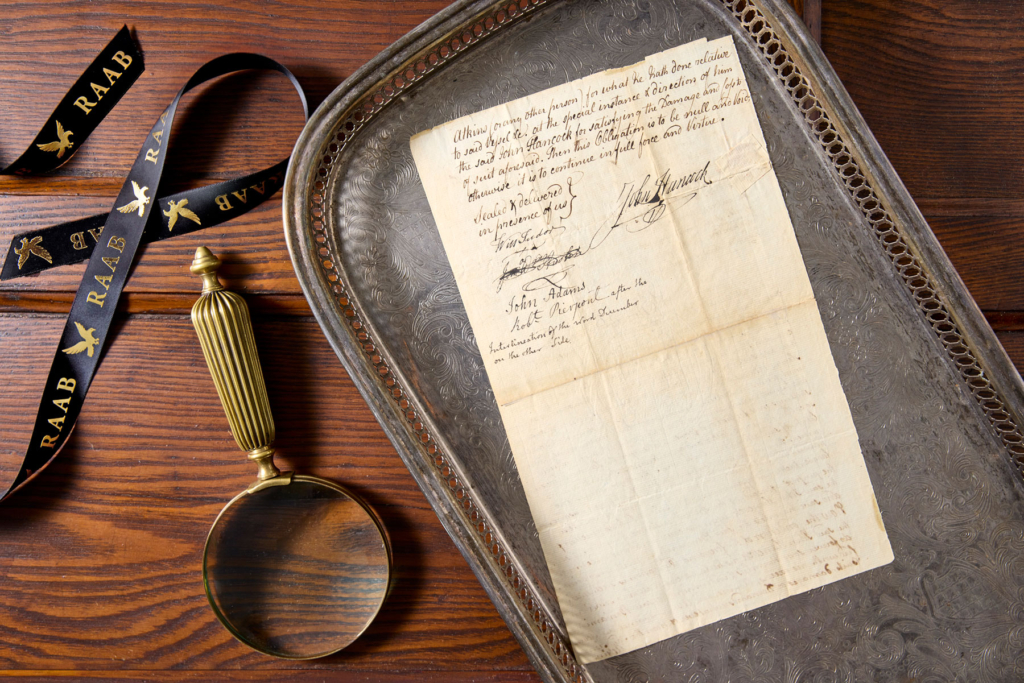
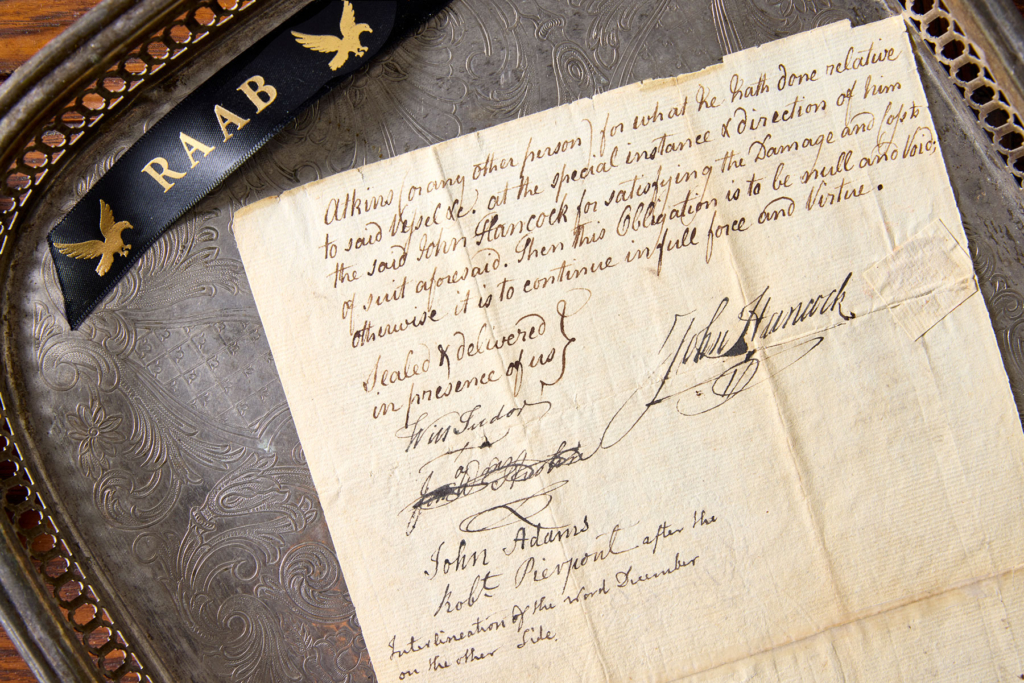
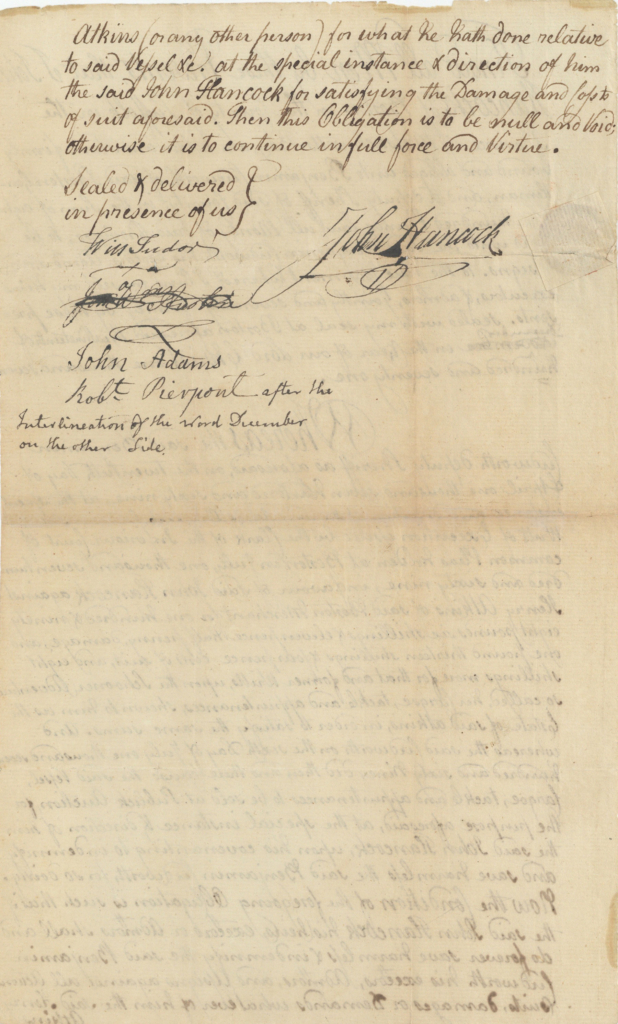


Dated 1771, Hancock promises to indemnify the sheriff for any lawsuit by the owner of a ship seized and sold at auction to satisfy a debt to Hancock
When Hancock had been prosecuted for smuggling in a highly publicized case in 1768, Adams was his lawyer and got the charges dropped
A remarkable if not unique document signed by two of America’s foremost founding fathers, and the only document we have ever seen reach the market signed by both
...
When Hancock had been prosecuted for smuggling in a highly publicized case in 1768, Adams was his lawyer and got the charges dropped
A remarkable if not unique document signed by two of America’s foremost founding fathers, and the only document we have ever seen reach the market signed by both
“The fact that Adams and Hancock both signed this document is significant and consequential. Both men likely had egos a mile long, yet they came together for the common good of the founding of this nation,” writes presidential descendant Massee McKinley
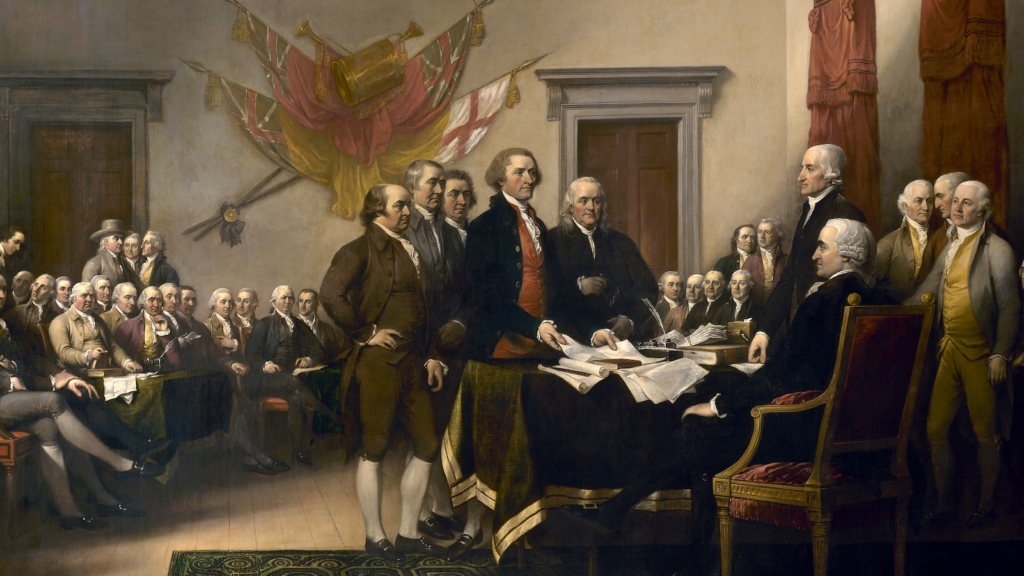
John Hancock and John Adams were both from Braintree, Massachusetts, and were acquainted from childhood. During the lead up to the Revolution and during the Revolution itself, they were both patriots and both signed the Declaration of Independence.
John Hancock was one of the wealthiest men in the thirteen colonies, having inherited a profitable mercantile business from his uncle. He began his political career in Boston as a protégé of the radical Samuel Adams, second cousin of John Adams. Because of this association and his own political views, Hancock was considered a threat by the British. In addition to protesting the Stamp Act and the Sugar Act and being a part of the Sons of Liberty, Hancock was known for riling up the crowds at meetings during the Boston Tea Party in 1773. His famous phrase, “Let every man do what is right in his own eyes,” was said to incite the colonists to fight British rule. During the Revolution, Hancock risked his fortune to support American independence by helping to raise money, secure troops and organize naval forces. He also was a delegate to the Continental Congress, famously serving as its President.
Before the Revolution, John Adams established a successful law practice in Boston. In June 1768, John Hancock’s sloop the Liberty was seized by British customs officials, and Hancock was prosecuted for smuggling, in a highly publicized trial in a British admiralty court. Remarkably, Hancock hired Adams to served as his lawyer. After nearly five months, Adams was successful in having the proceedings against Hancock dropped. This incident, known as the “Liberty Affair,” escalated tensions between the colonists and the British, contributing to the growing revolutionary sentiment. Adams also was noted for controversially defending the British soldiers involved in the Boston Massacre. Though he feared it would hurt his reputation, Adams believed that all men were entitled to a fair trial and deserved equal justice. His success in the trials – Adams secured the acquittal of seven British soldiers, with the remaining two convicted only of manslaughter rather than murder – elevated his reputation. During the Revolution, Adams served as a delegate to the Continental Congress and was part of the committee to draft the Declaration of Independence. Adams later served as a diplomat in Europe, and played a key role in securing alliances and financing with France and the Netherlands. He also helped to negotiate the Treaty of Paris that officially ended the Revolutionary War. The war concluded, he was the first United States Minister to Great Britain, vice president under Washington, and president of the United States.
In 1769, Hancock had obtained judgment against fellow merchant Henry Atkins for over 198 pounds, and Atkins’s ship the Schooner Adventure had been seized and sold at auction to satisfy the debt. The sale was handled by a deputy sheriff in Boston named Benjamin Cudworth. There was always the danger that Atkins, feeling like the injured party, might sue Cudworth for his actions. So Hancock provided him with an indenture to reimburse for any judgment Atkins or any other party might have levied against Cudworth for that sale.
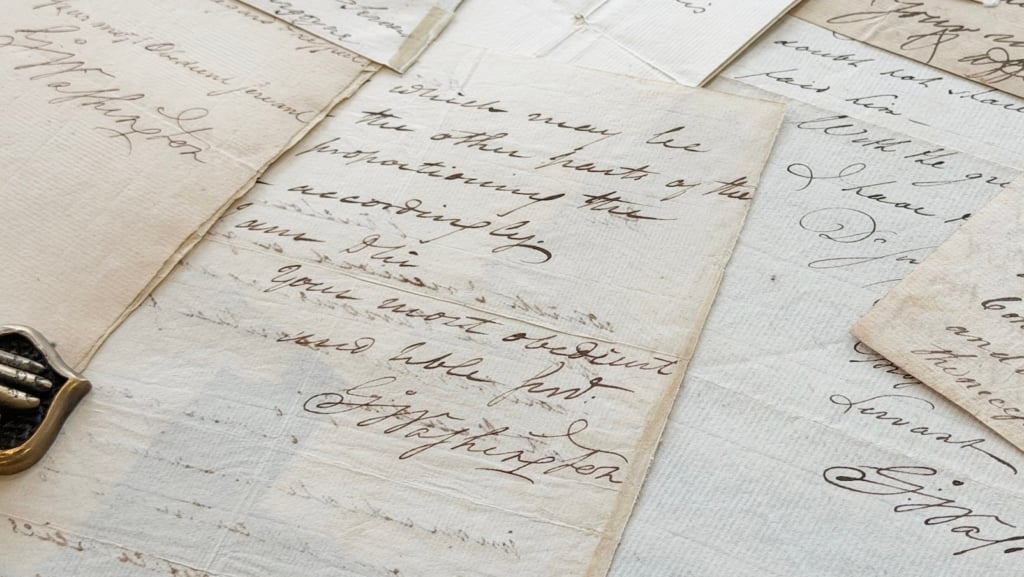
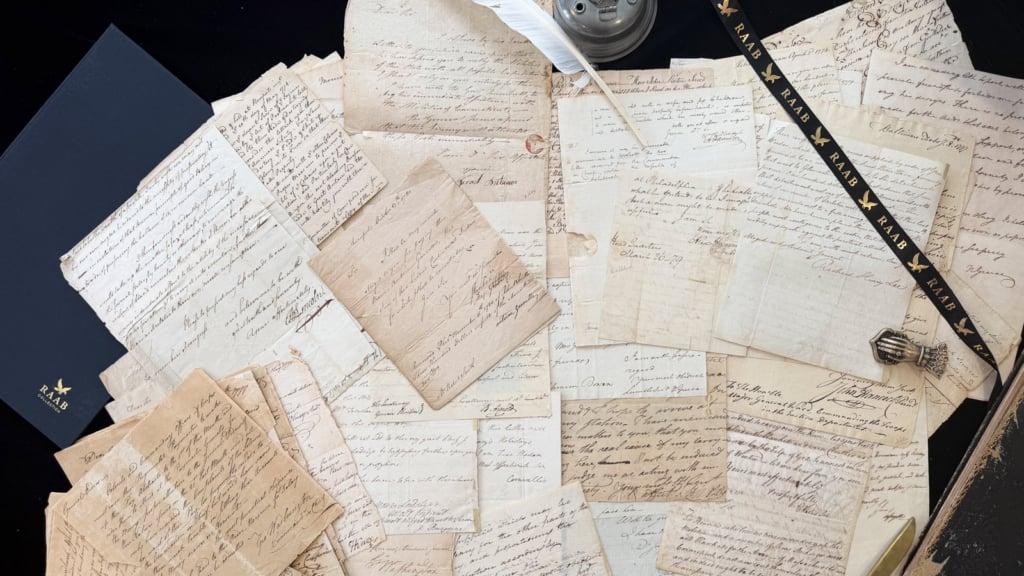
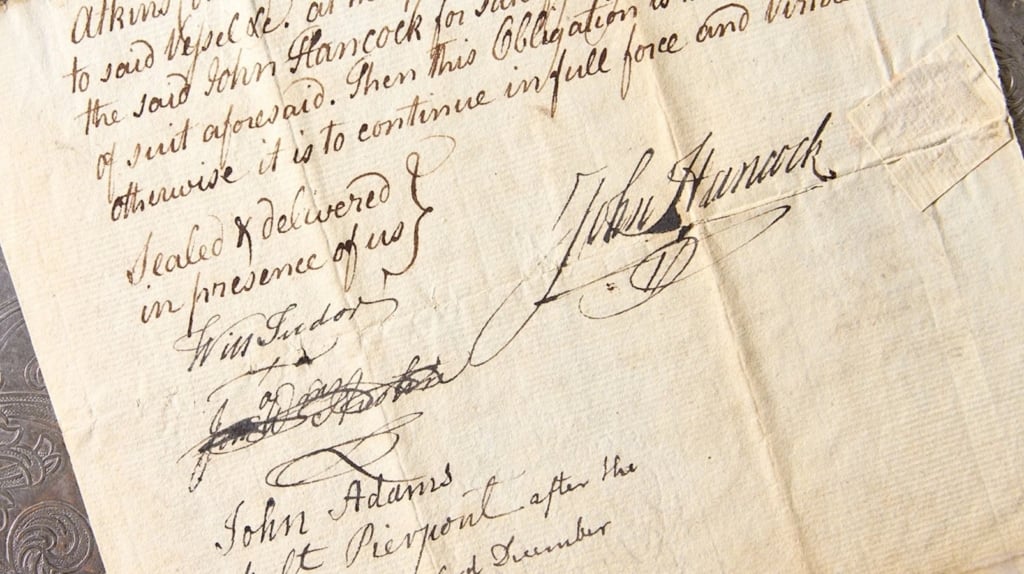
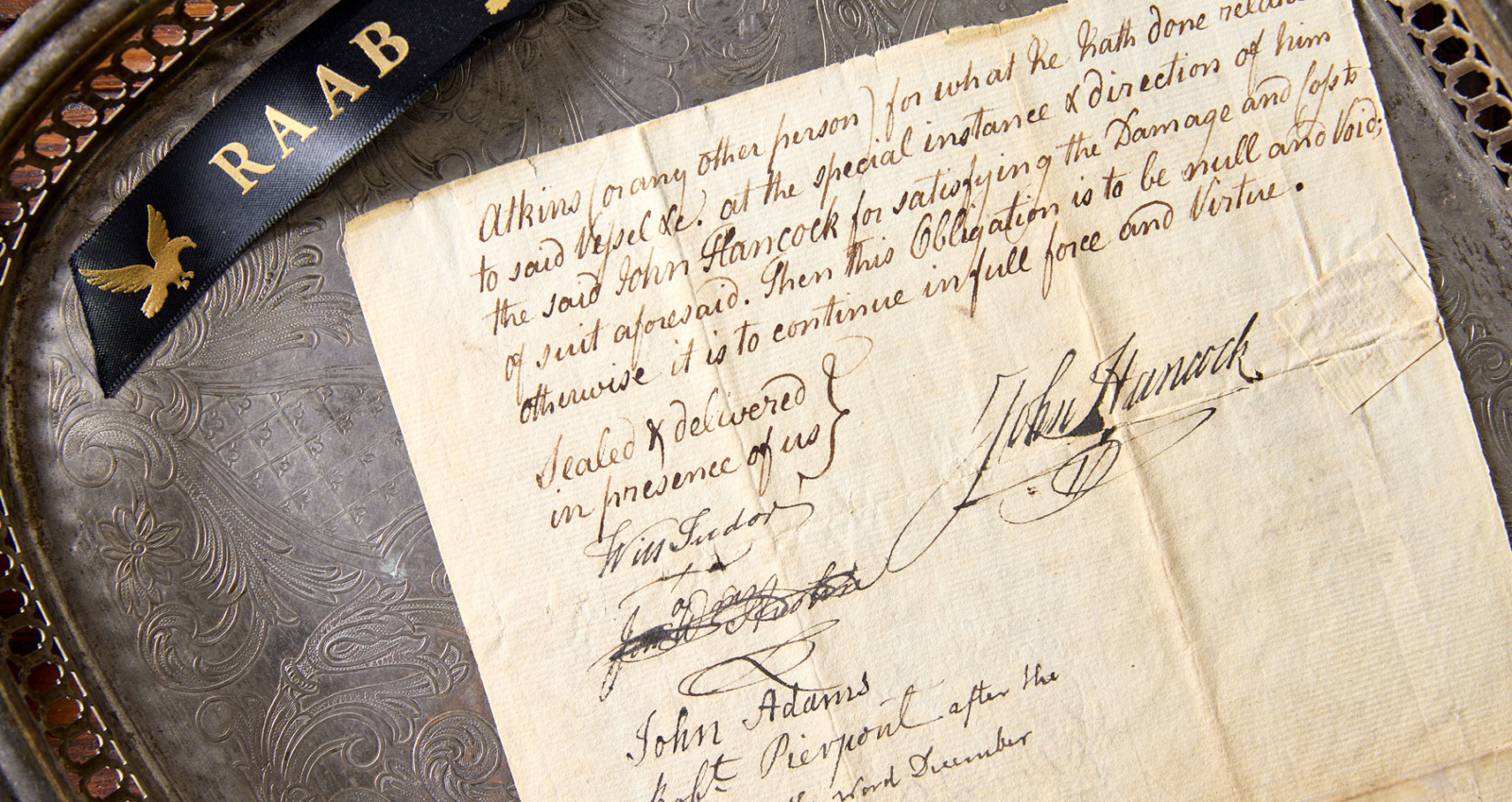
Extraordinary manuscript document signed, by both John Adams and John Hancock, one page, both sides, Boston, December 19, 1771, being that very indenture between Hancock and Cudworth. The document states that Cudworth “did then and there cause the said vessel [the “Schooner Adventure”], cargo, tackle & appurtenances to be sold at public auction for the purpose aforesaid, at the special instance & direction of him, the said John Hancock, upon his covenanting to indemnify and save harmless the said Benjamin Cudworth for so doing…” Hancock then agrees to indemnify Cudworth “in the sum of eighteen hundred pounds lawful money of said Province, to be paid unto the said Benjamin Cudworth…to the true payment whereof I bind myself, my heirs, executors, & administrators, jointly and severally, firmly by these presents…”
The document is signed boldly at the conclusion by Hancock with his distinct signature, and countersigned by three witnesses, one of whom was John Adams, then not merely an attorney but a Boston representative to the Massachusetts General Court. The other two co-signers were Robert Pierpont, one of two coroners who performed an autopsy on victim Crispus Attucks following the Boston Massacre; and William Tudor, a wealthy lawyer and leading citizen of Boston who, after George Washington arrived in Cambridge on July 2, 1775, joined his army. Tudor provided legal advice to Washington and, on July 29, 1775, was appointed Judge Advocate of the Continental Army.
An incredible if not unique document signed by two of America’s foremost founding fathers, and the only document we have ever seen reach the market signed by both.

Frame, Display, Preserve
Each frame is custom constructed, using only proper museum archival materials. This includes:The finest frames, tailored to match the document you have chosen. These can period style, antiqued, gilded, wood, etc. Fabric mats, including silk and satin, as well as museum mat board with hand painted bevels. Attachment of the document to the matting to ensure its protection. This "hinging" is done according to archival standards. Protective "glass," or Tru Vue Optium Acrylic glazing, which is shatter resistant, 99% UV protective, and anti-reflective. You benefit from our decades of experience in designing and creating beautiful, compelling, and protective framed historical documents.
Learn more about our Framing Services


