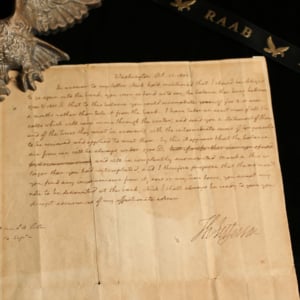





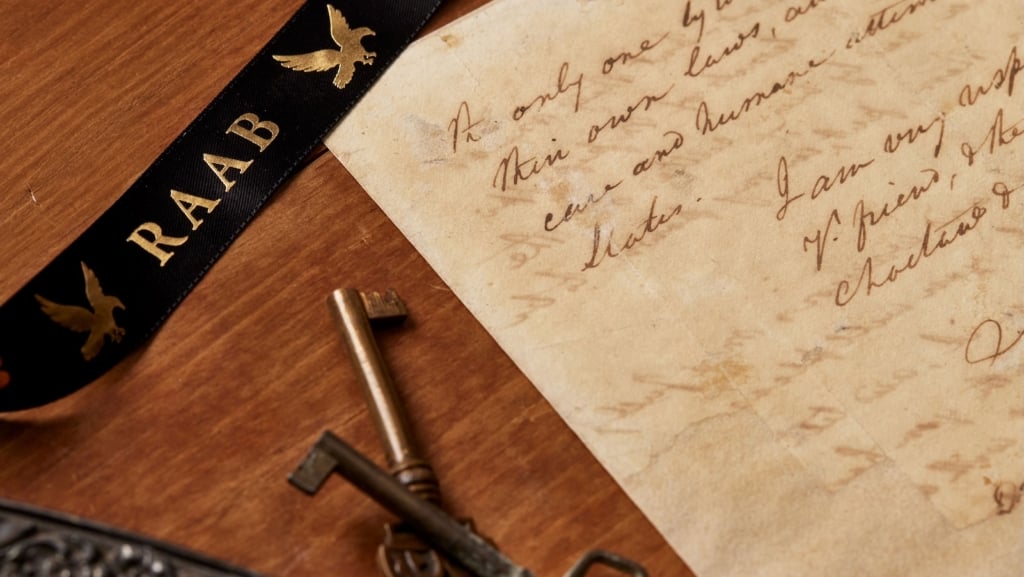
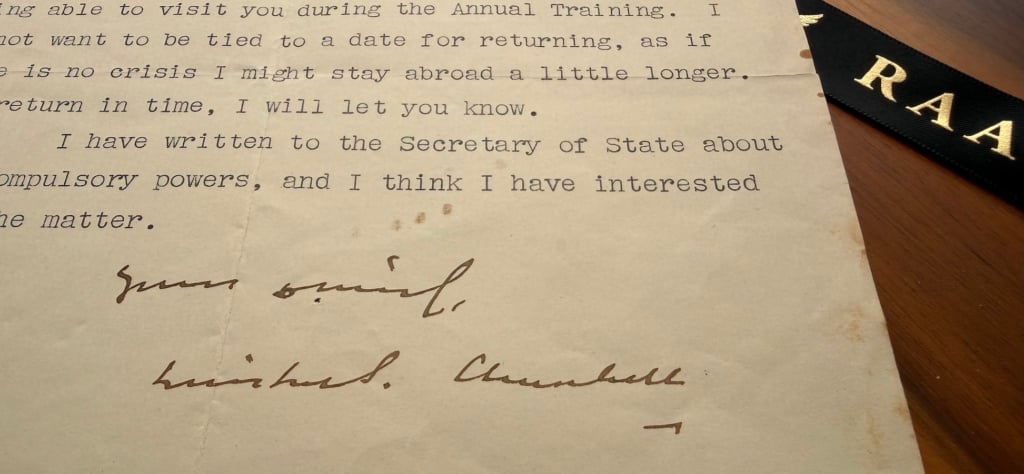
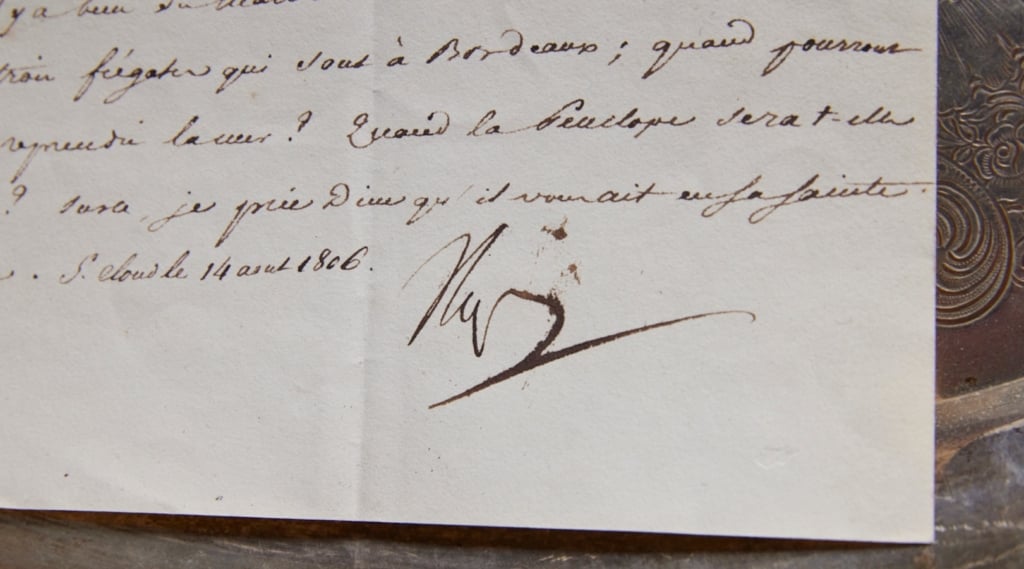
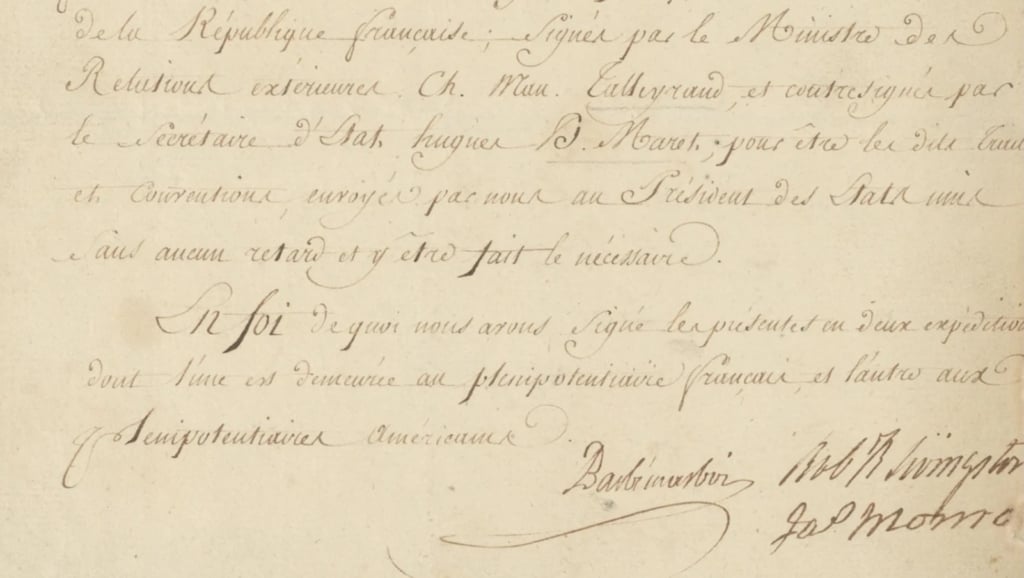

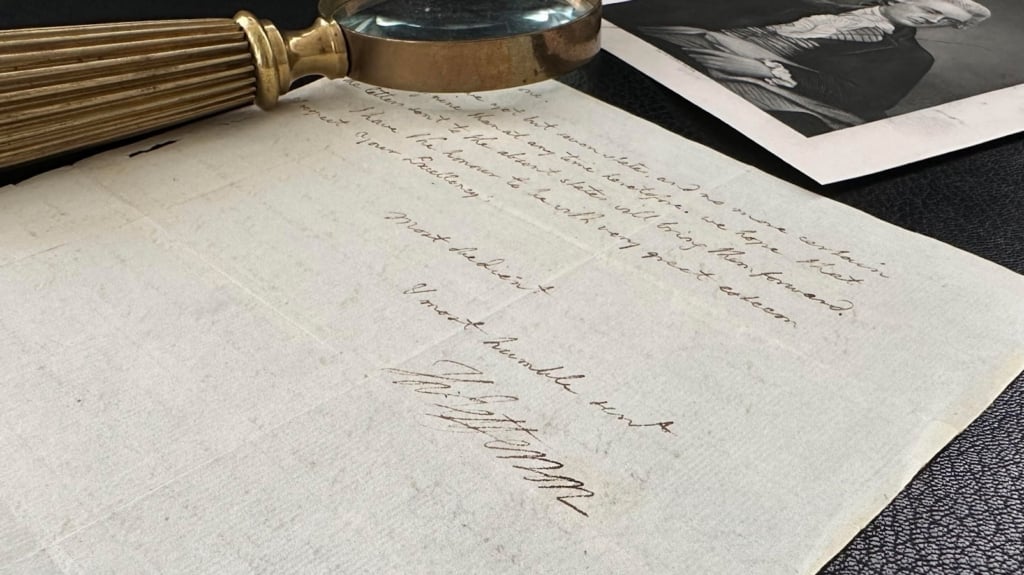


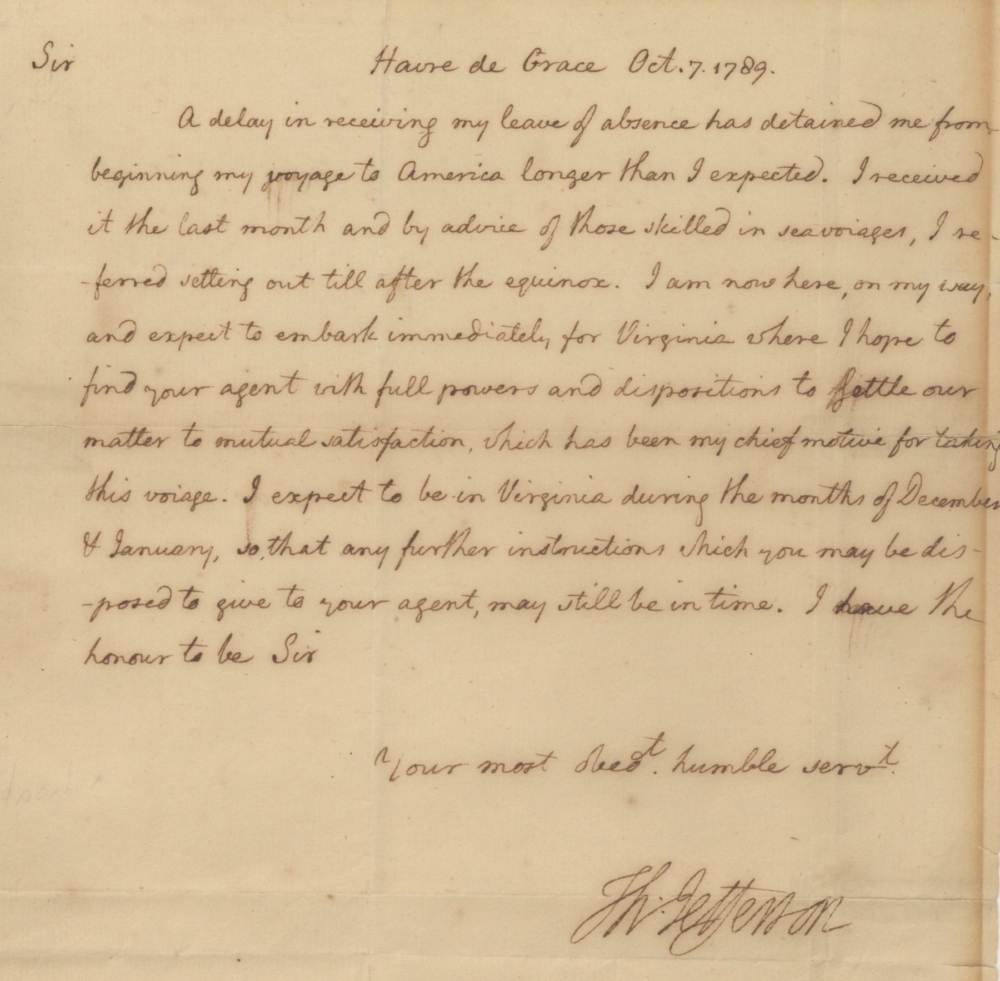
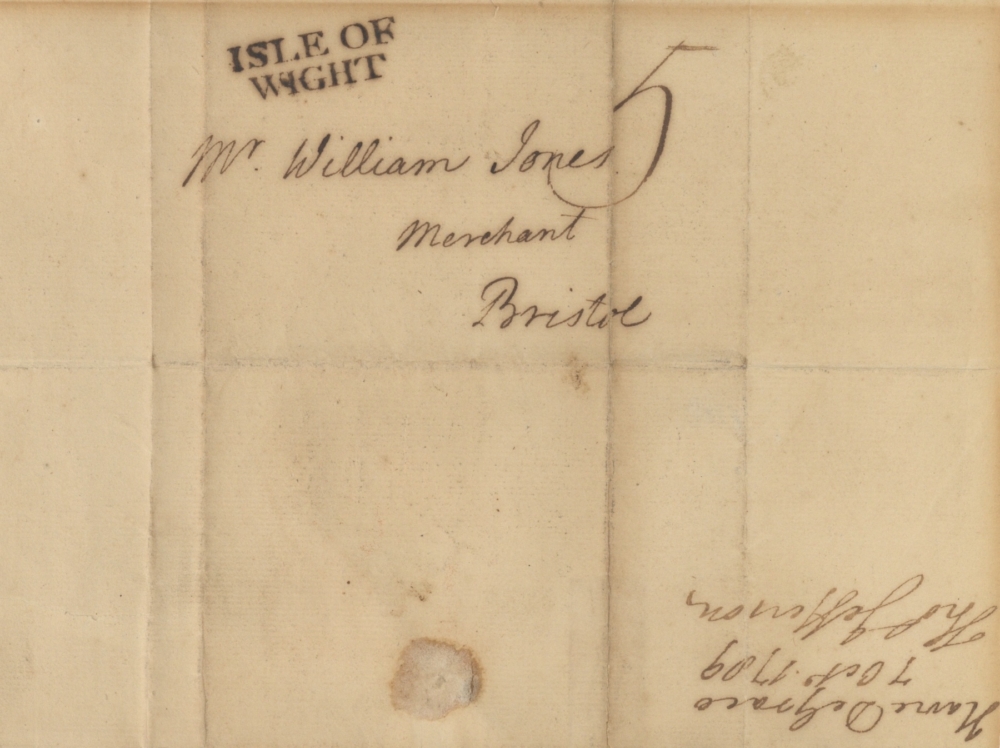
The Raab Collection has acquired and is now offering for sale a letter of Thomas Jefferson from late 1789, in which he announces he is leaving France and setting sail to return to the United States, where he would take up the position of Secretary of State for President Washington. The letter, which has been in a private collection since the 1960s, was written the day Jefferson left the Continent forever.
Nathan discussed this Thomas Jefferson letter on the Inspired by History podcast. You can listen to the interview below or via your podcast player of choice. Or, if you prefer, read this lightly edited transcript of the conversation with photos and embedded links to more resources.
In this letter, Jefferson is talking about a sea voyage that he’s about to embark upon, which is interesting, and so makes my first question to you, Nate, both geographically speaking and even more broadly: Where is Jefferson coming from and where is he headed to?
Nathan: Jefferson had taken over as Minister to France from Benjamin Franklin, and so he was stationed there as America’s representative for both countries, for America, but also for France. America is coming out of the war, going through a process of crafting a Constitution, and putting a new government in place, and, at the same time, this message of liberty and revolution has crossed the Atlantic and is now in the bloodstream of the French. So Jefferson is sitting in this position of great importance, in this pivotal moment. But he’s been there a long time. He is there with family, but he’s ready to come home. So he is doing his best to try, over the course of several months in 1789, to get permission from the American government, which itself is in this transitional stage, to come home, to come back to Virginia, to settle some primarily personal affairs. So here he is, he’s left Paris. In the context of this letter, he’s left Paris and gone west to a port in the western tip of the European continent trying to get a vessel back to Virginia.
So he’s headed home and what he doesn’t know is that he has been named Secretary of State. It sounds like he sets sail, he’s on the ocean for over a month, and when he arrives in Virginia, he’s basically told, ‘welcome home, you are Secretary of State now.’
Nathan: Yeah. One of the interesting parts about this letter is Jefferson’s coming home and he thinks he knows why, but he doesn’t know what he’ll be doing when he gets back. George Washington nominates him for the position of Secretary of State before he even leaves France.
Before this letter is written, Washington has already nominated him. Jefferson just doesn’t know it. So he gets on the boat, having been nominated, having received the nomination of Washington to be Secretary of State, which will subsequently go to the Senate.
He writes this in early October. When he comes back in late November, he’s notified, ‘Hey man, you’re the Secretary of State.’ He’s reluctant to accept that nomination. Eventually, of course, he does. Yeah, it’s fascinating to think of Jefferson, imagining coming home and realizing the situation. The nature of his return will not be what he expects.
And so incredibly different from how it works today where it’s this long, drawn-out process.
Nathan: True.
What about this letter makes it stand out to you?
Nathan: You’re capturing Jefferson at this crucial moment in his life but also in American history. Jefferson’s return from France is dramatized in the play Hamilton and in the book Hamilton. He’s been gone for quite some time. He has been gone for a lot of these crucial steps that the nation took. Jefferson’s return is a fascinating one to contemplate, and the injection of sort of a pro-French strain of politics into the American bloodstream is not insignificant. This juxtaposition between the pro-French and the pro-English–the supposedly pro-French and pro-English factions–is an undercurrent of our party system.
Not only that, it’s poignant in Jefferson’s life because here’s a man who had feted himself and others, who had enjoyed the fruits of the Old World, and had represented America’s interests there. You see him leaving Europe at a fairly young age. He wasn’t of advanced age; Jefferson lived decades after this, but he’s never to return. And one wonders, did he think that would be the case? Did he think he would go back to Europe? In any event, he never does.
Who is he writing to and what’s the general content of the letter?
Nathan: He is writing to this representative of a firm that held some of the debt of his father-in-law. He had inherited his father-in-law’s estate and with it its debt through marriage. And the letter is written to this Jones firm that holds the debt of his father-in-law. He announces that he’s received his leave of absence, which he’d been waiting for since he wrote John Jay almost a year before this. He writes Jay in late November, but he doesn’t get his credential for 10 months later. It’s a combination of the disorganization of the new government and the time it takes for mail to reach him. It can take several months on the sea for mail to go from one side of the Atlantic to the other.
So in the letter he is announcing that he’s finally received it, took longer than expected, and that he was anxious to come home and resolve this situation for himself and his family.
Everything’s so slow moving. He says in the letter that somebody told him to wait until after the equinox to sail, so he waits for that. Then he starts the journey, and they get to the Isle of Wight, and it seems like they’re there for another few days waiting for the right weather or the right currents, or I don’t know what, to make the ocean voyage.
Nathan: Well, it’s certainly the case that they were more attuned to small changes in the weather and the seasons than we are today because they could ill afford to leave in bad weather or at times that would not be fortuitous for a safe voyage. It would be very long by our standards.
He gets to Havre de Grace, they take a short boat ride to Cowes in the United Kingdom, and then they wait a little bit longer. Once he leaves Havre de Grace, he’s left the Continent forever, only to spend a handful of days in the United Kingdom just waiting for a new ship. He’s out the door.
So what’s the provenance of this letter? Where has it been for the last few decades?
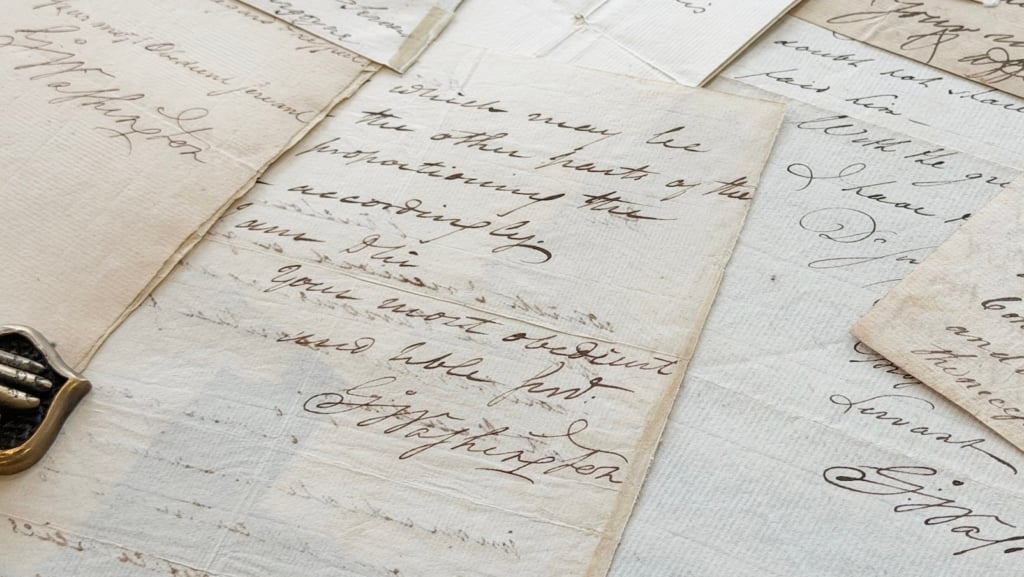
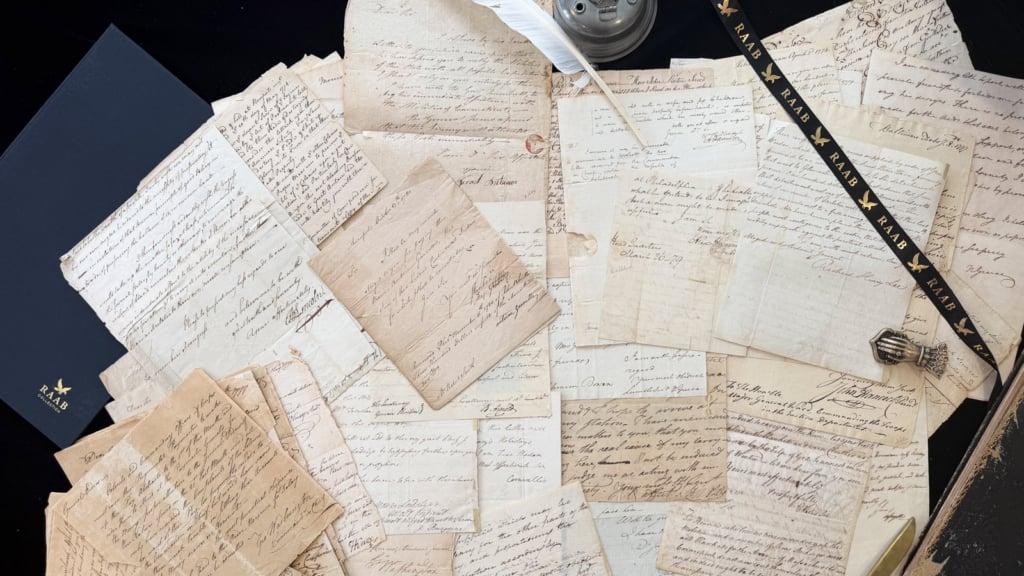
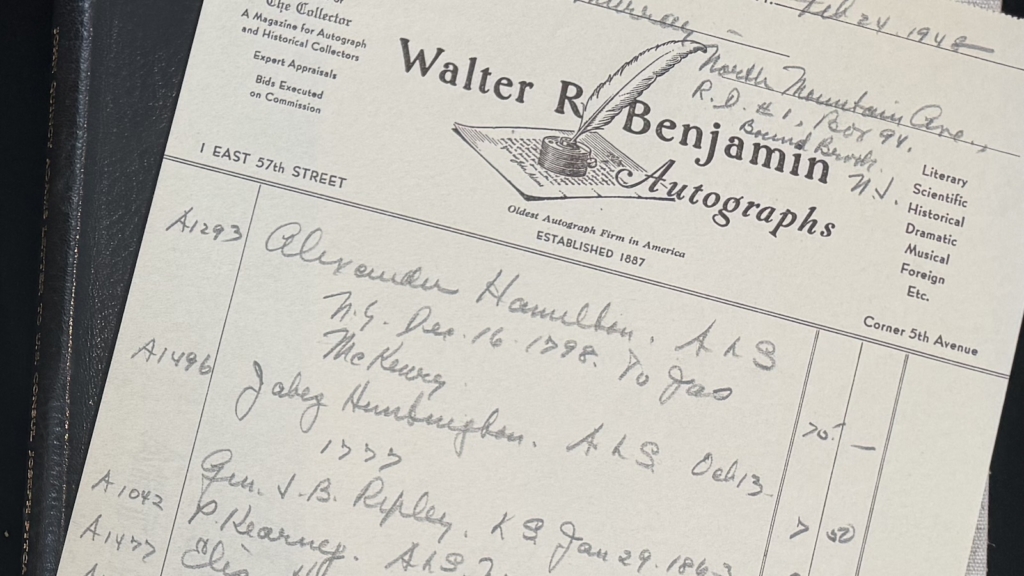
Nathan: We were contacted by a man who had been working in the medical community in Philadelphia in the 1960s, and he had wandered into a small bookshop where an older woman who was working there had helped him find this letter, and a letter of Edmund Burke, and a letter of Patrick Henry. We figured out by piecing this all together, that this was the old Sessler’s firm, and the woman that he had done business with was someone who’s a legend in our field named Mabel Zahn.
She worked in that bookshop for almost 60 years – a rare example of a woman in that stretch, running this kind of high-end bookshop, although there were others. Mary Benjamin is another. But it was amazing to be able to piece this together. It’s been in the same private collection now for over half a century, and to be able to find that it came from Mabel Zahn and Sessler’s bookshop down in Center City, Philadelphia, it’s just a remarkable journey for this piece.
It sounds like it was handed down from one collector to the next?
Nathan: No, same.
Wow!
Nathan: The guy who bought it is in his late eighties now, and he sold it to us.
That’s awesome. So it has just been a treasure of his for all that time. Your dad has mentioned Mabel Zahn a few times as one of the greats in the trade.
Nathan: Not somebody I ever met. Sessler’s bookshop was sold a long time ago. It was gone by the time I was paying any semblance of attention, but, to be able to track something back and find the source of sale and to connect it to somebody who was so knowledgeable and influential in the mid 20th-century field is not super common.
This letter finds Jefferson at an inflection point. Post-revolution and pre the formation of the United States as a formal government, in which he would play a major role as the first Secretary of State. It’s wild to think about and even wilder to see and hold this tangible piece of that history.
To learn more about Thomas Jefferson, visit our dedicated Jefferson page and read Raab’s “What to Know About Buying Thomas Jefferson Autographs & Documents.”