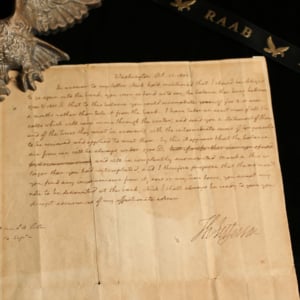




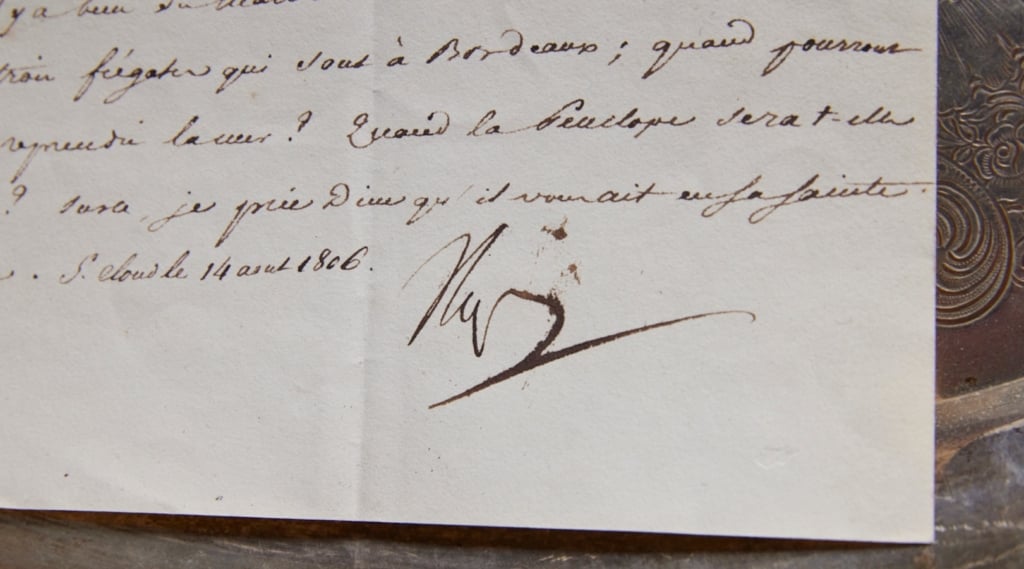
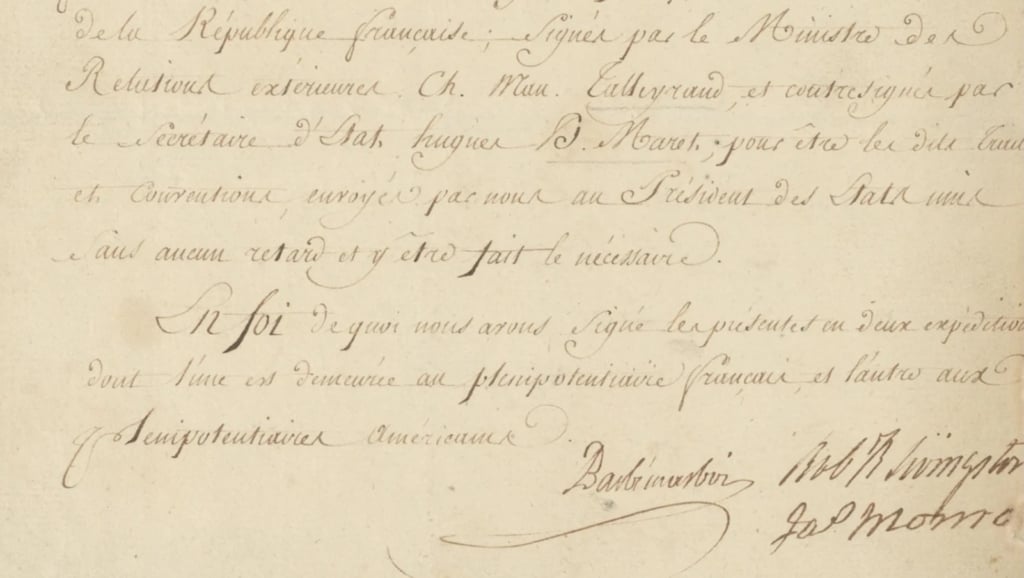
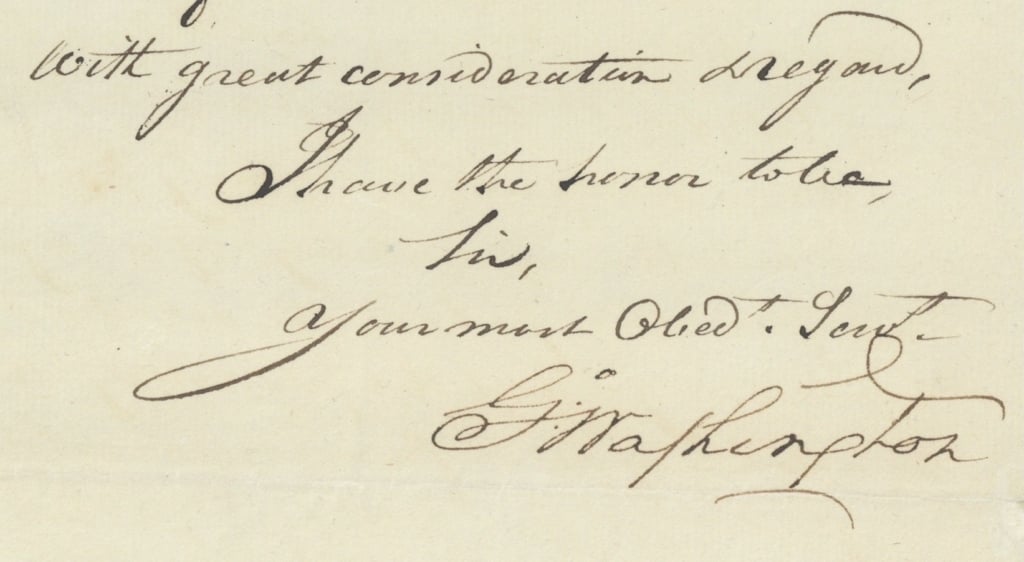
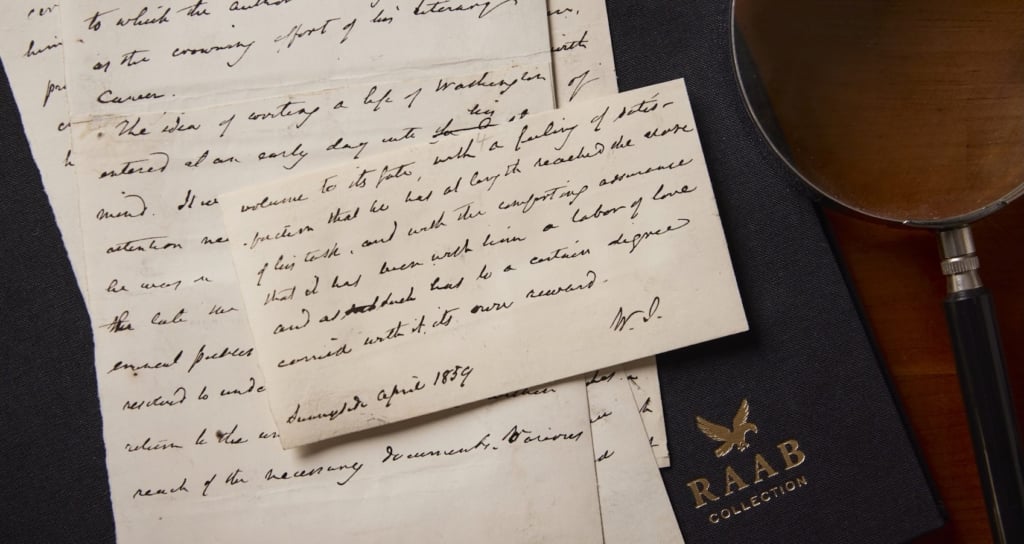
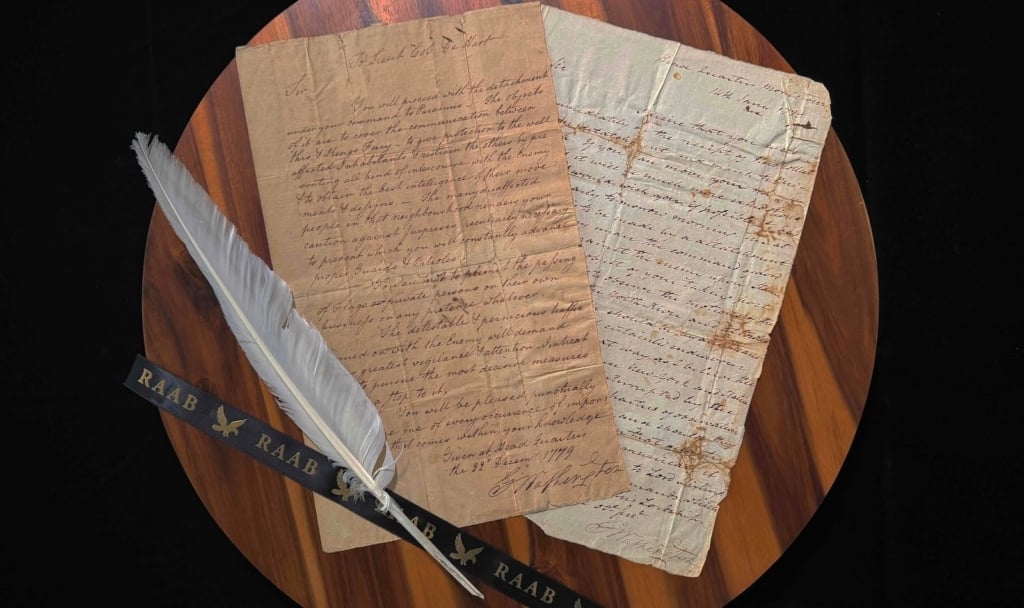
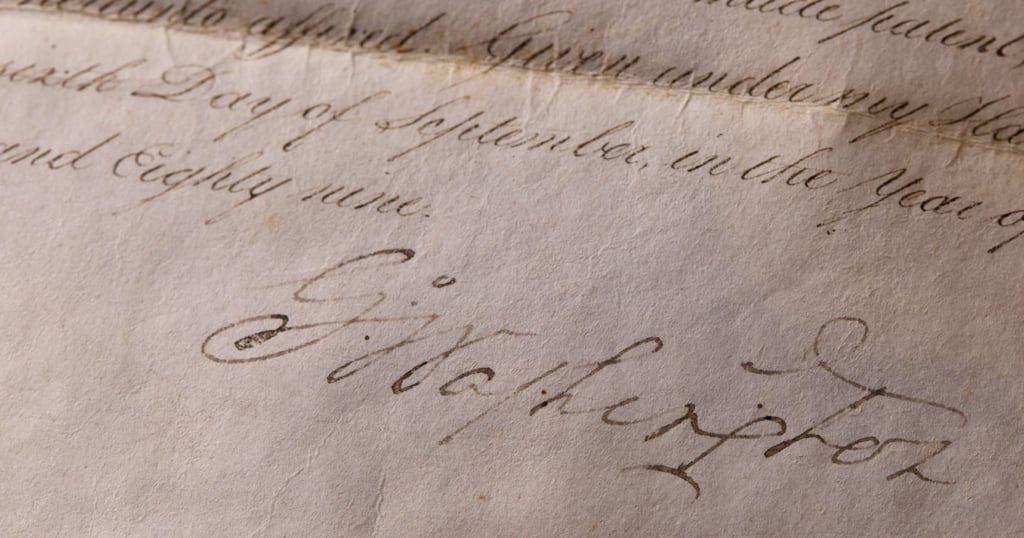
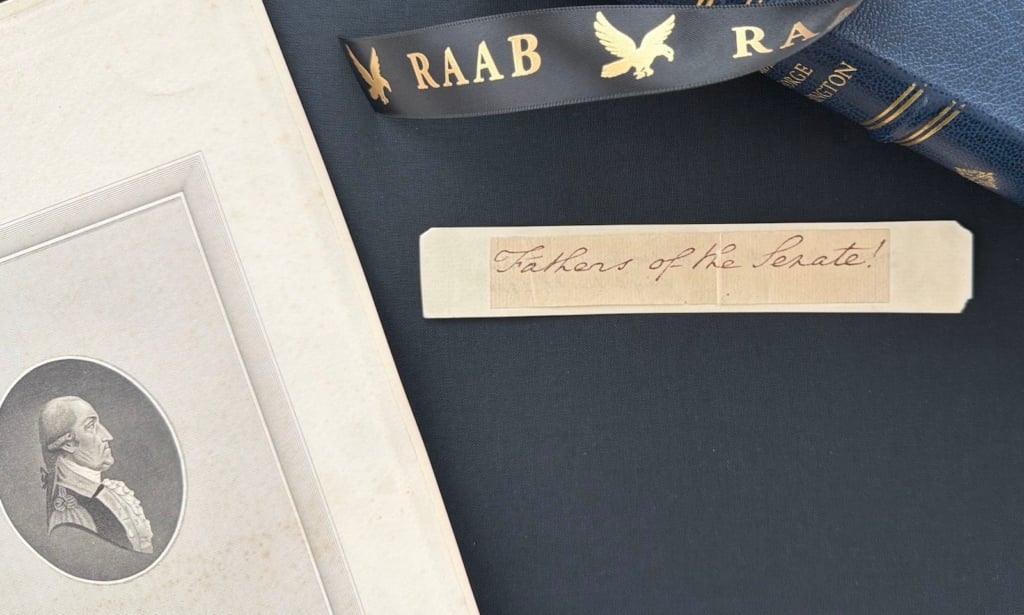


Over the past year, we have been taking a close look at the historical presidency. In a series of articles, we are delving into the qualities that led these 45 men to the highest echelons of power and leadership, illustrated by letters and documents from our collection. We began with George Washington and Thomas Jefferson. Now we’re turning our attention to Abraham Lincoln, assessing his leadership qualities and looking at some of the real historical documents signed by Lincoln that inform this history.
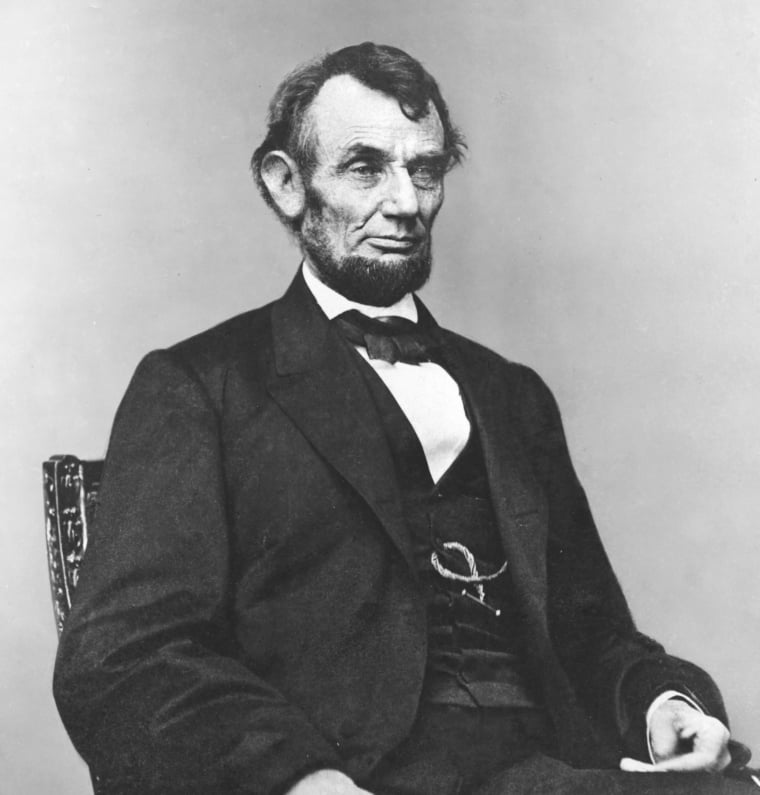
Abraham Lincoln: Brilliance in Leadership, a Study in Humility
Lincoln had many attributes that made him a great leader, including:
- Integrity and Honesty: Known as “Honest Abe,” he was trusted for his sincerity and principled, honest approach, from his time as a young lawyer until his death.
- Perseverance and Resilience: He showed remarkable strength of character in the face of immense, prolonged personal and professional challenges, difficulties, and tragedies.
- Empathy and Kindness: He was deeply compassionate, frequently showing kindness, mercy and humanity to soldiers, citizens, political opponents, and even his Confederate adversaries.
- Humility and Self-Awareness: He was known for having no pompous pride, seeking nothing for himself, and for being willing to surround himself with political rivals (the famous Team of Rivals) if it would better serve his one goal – to benefit the nation.
- Communication Skills: He possessed a rare ability to simplify complex, emotional concepts into accessible, moving language, as seen in the Gettysburg Address and his Second Inaugural.
- Decisiveness with Flexibility: While firm on core principles, he was adaptable in his methods, changing his mind over time on critical issues like emancipation.
- He Recognized Talent: He chose a brilliant Cabinet, wisely elevated U.S. Grant to lead Union forces, chose Philip Sheridan to lead the Cavalry, and was always willing to make a change if it meant placing a more talented person into a leadership role.
- Strategic Thinking: He was described as a methodical, thoughtful leader who would analyze issues from all sides before acting.
These character traits made Lincoln a highly effective, transformative leader during the most tumultuous period in American history.
Abraham Lincoln Signed Documents
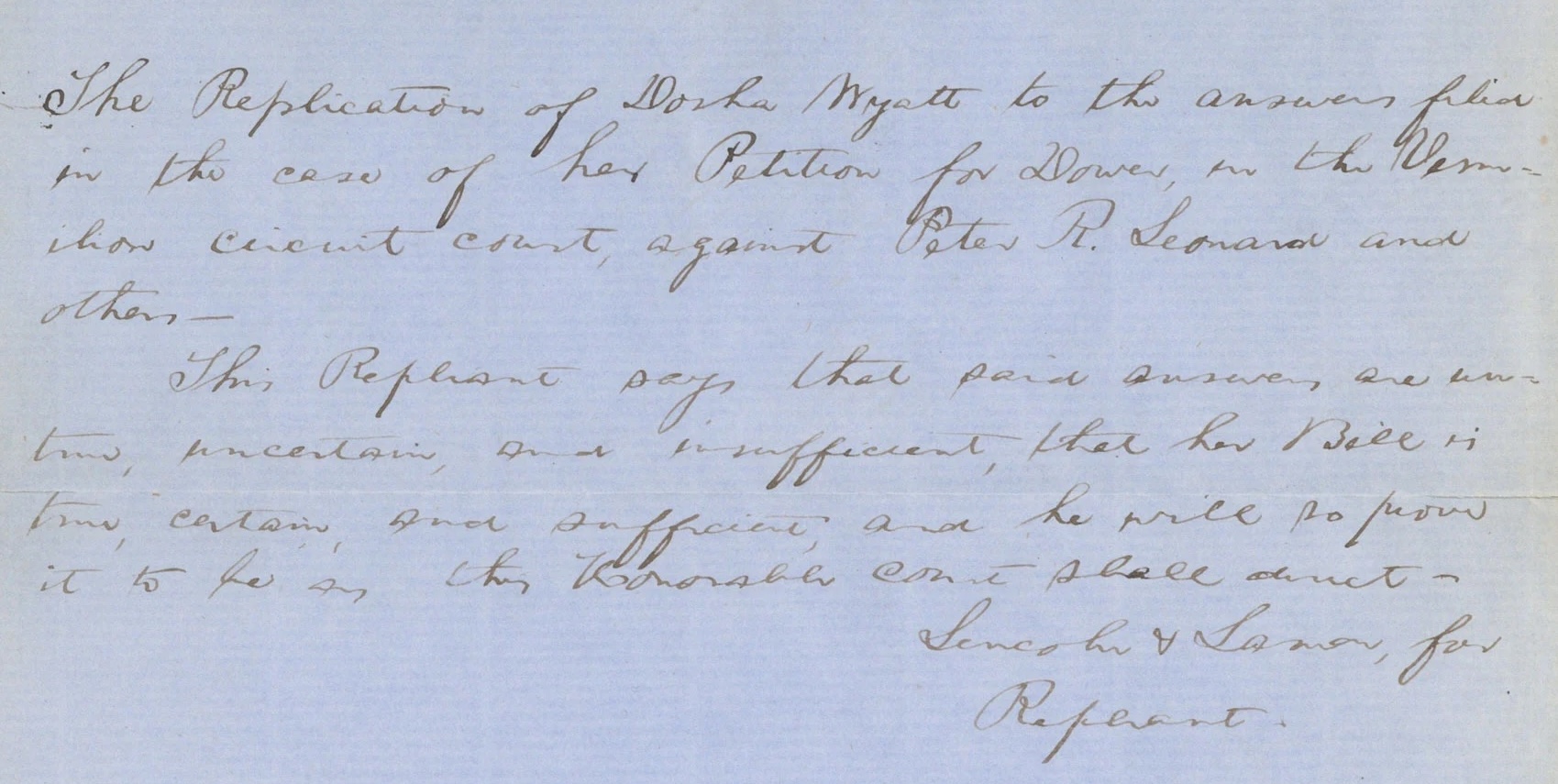
Those estimable character traits surfaced early, in his work as a lawyer, where he was involved in a substantial number of cases involving women as litigants. He was known for seeking to represent women, and working to get justice for them, in an era when women’s cases were often shunned by lawyers or not taken seriously.
When Lincoln bade farewell to his friends in Springfield, he told them that he had “a task before me greater than that which rested upon Washington.” He wasn’t exaggerating. Numerous Southern states had already succeeded, and Southerners were confident and bellicose, considering their independence already a fact. Their militias were called out, and they were well armed, very well led (the high quality of Southern military leadership is legendary), and united in the goal of independence. With a huge coastline and vast interior areas, and a brave soldiery, who could think to stop them?
Meanwhile, in the North, there was panic and desperation, as it became evident that there was no clear way to stem the secession tide. Northern politicians believed that the South had maintained an unfair advantage on the federal government for decades, and that they had been constantly called upon to compromise their principles to appease the slaveholders. Now they saw that all their efforts and painful accommodations had been for nothing, and they felt ill-used and enraged. They were not united, however, as to methods or goals (some opposed coercing the South), nor were they ready militarily. Their senior officer was a very old man too obese to get around, Winfield Scott.
Lincoln first tried to avoid a war, pleading in his first Inaugural Address for the South to avoid taking irreversible actions. The speech was considered conciliatory in the North but a provocation in the South, and thus failed to accomplish Lincoln’s goal. Lincoln was determined to save the Union at all costs, and within weeks after his inauguration, he knew that it could only be done by war. For the North, he had to define a purpose, build a consensus, mobilize the people, determine a strategy, recruit, and arm an army large enough to win, and find the right leaders.
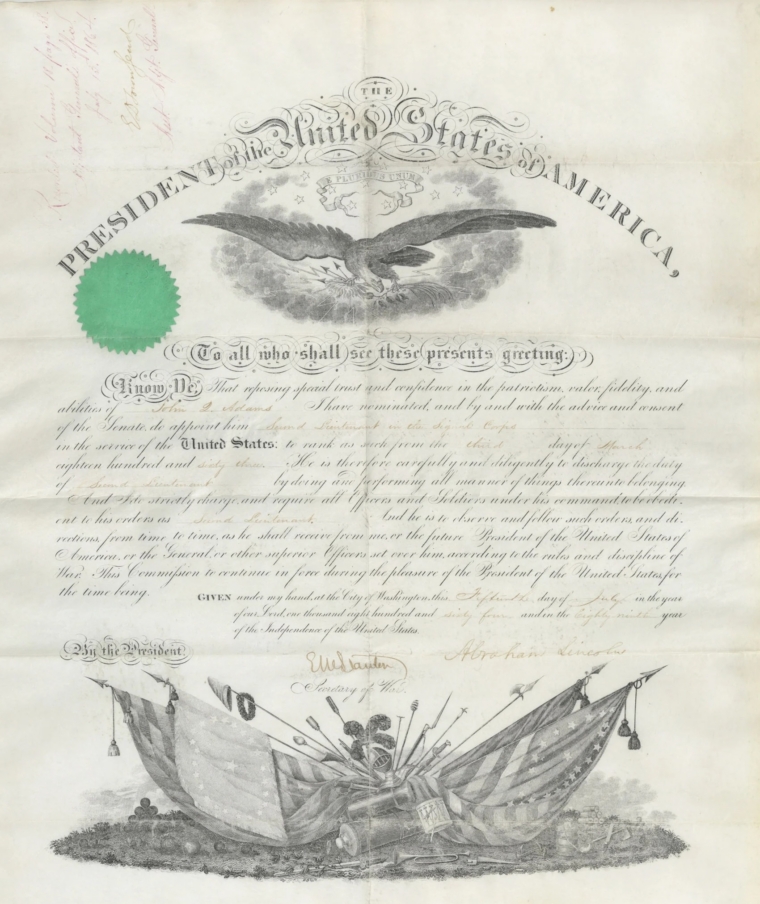
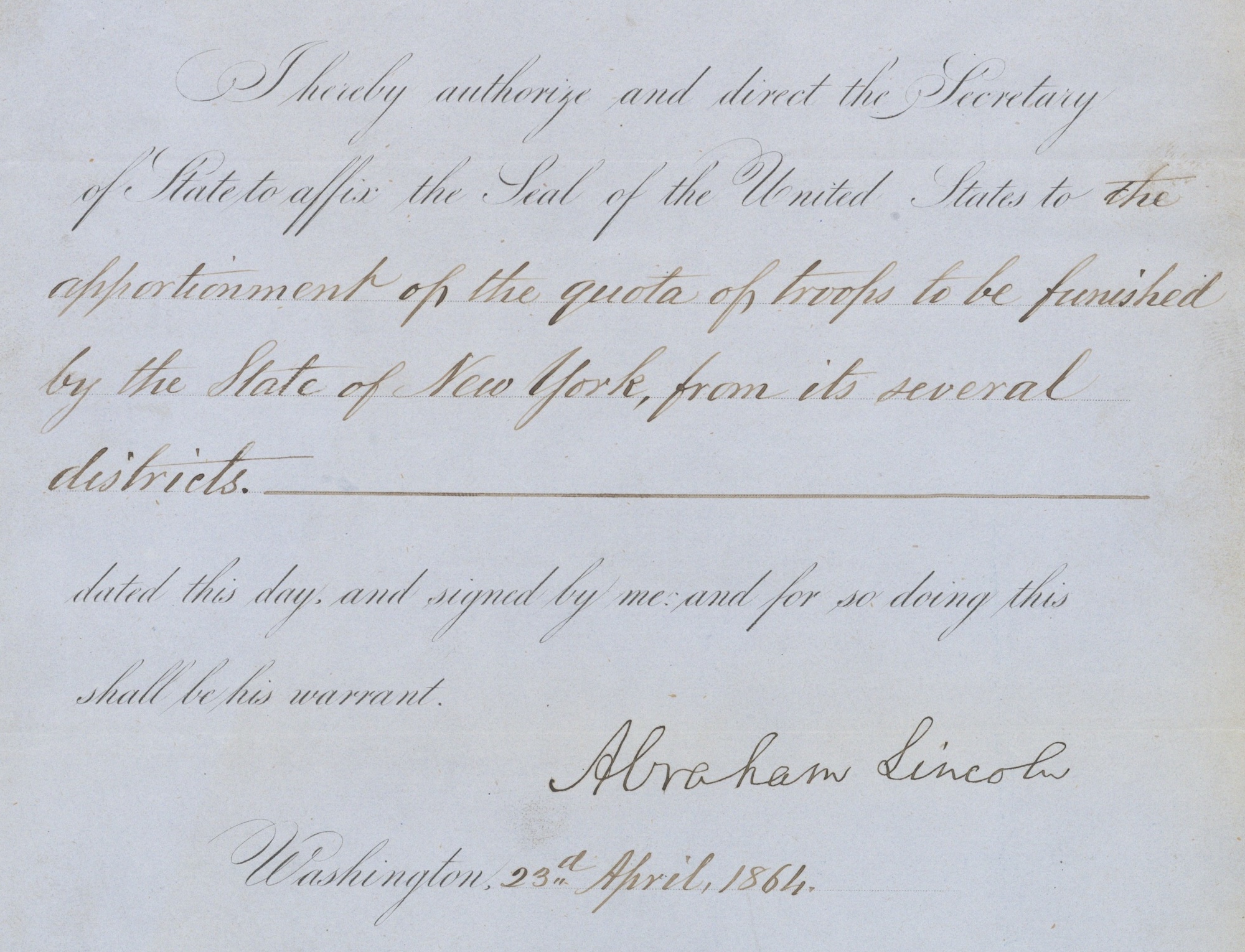
All of these things he managed to accomplish, though not without great trouble. He learned as he went. It took him a year to field a decent army and three years to find a general who could win the war. Lincoln was constantly in need of a sufficiently sizable army; when volunteers dried up, the government resorted to conscription, never a popular move. By the end of 1863, he and the Union leadership realized that more men were urgently needed. On February 1, 1864, Lincoln called for 500,000 men to serve for three years or for the duration of the war. Then he supplemented with a call for 250,000 more.
Moreover, he had to work with a contentious Congress, a body which had had no respect for an executive for decades. Few people realize that he had bitter opposition in Congress, and not simply from the opposition party; radicals in his own party fought his measures, and second-guessed him on everything. Some thought the Republicans should nominate a stronger leader in 1864, a sentiment that seems ridiculous now. In asking for support for the war and his policies, Lincoln reminded Congress that “We cannot escape history…we will be remembered in spite of ourselves. No personal significance, or insignificance, can spare one or another of us. The fiery trial through which we pass will light us down, in honor or dishonor, to the latest generation.”
One of Lincoln’s core leadership principles was that patriotism must triumph over all personal considerations. He was also humane and sympathetic to soldiers, citizens, political opponents, and even to his Confederate adversaries. In his daily correspondence, he often took the time to reward soldiers, or intervene on their behalf, or even show mercy to Confederate soldiers, because his utmost goal was to reunite the country.
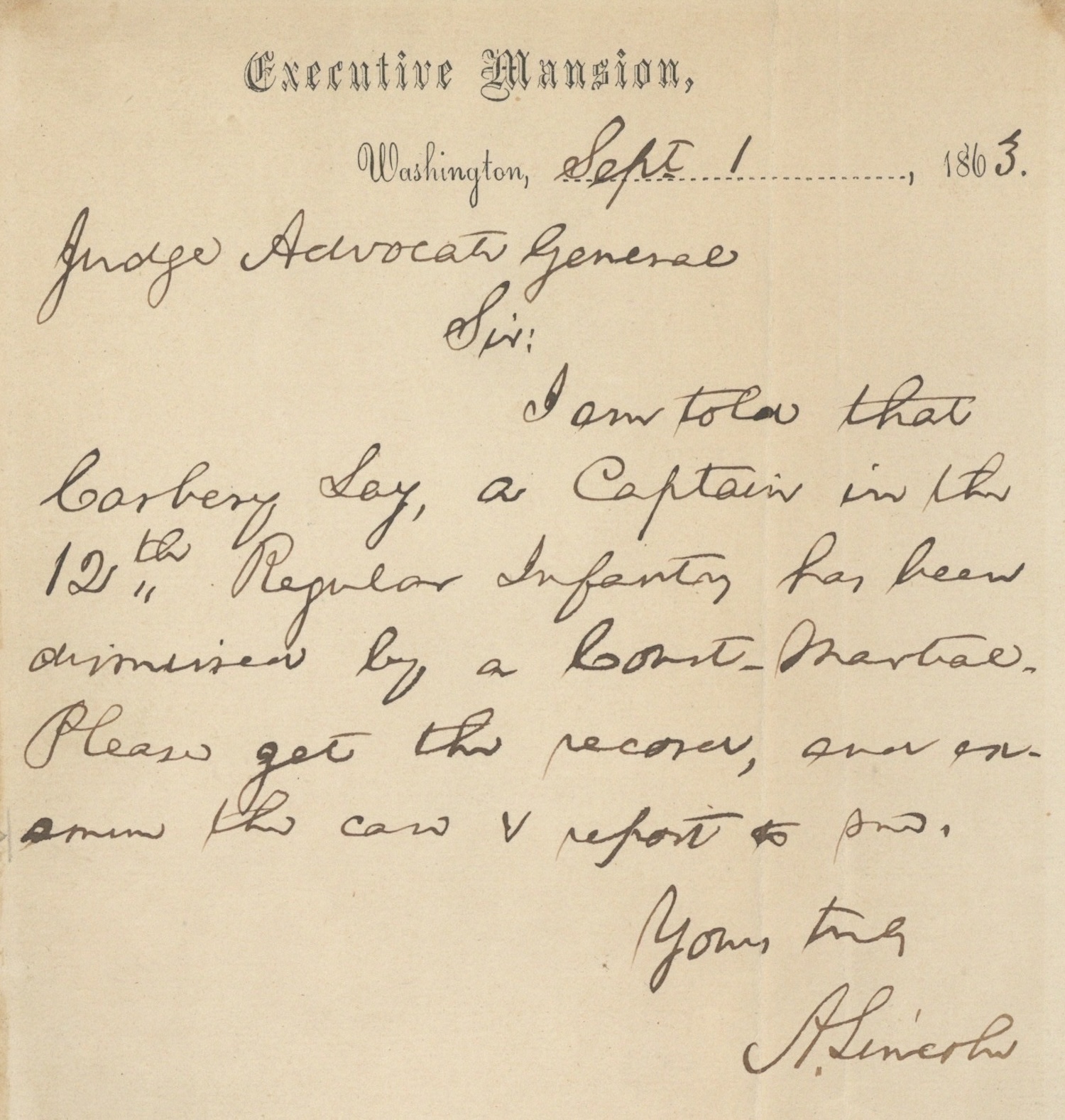
Slavery had been a flashpoint between North and South for generations, but people up North and in the loyal border states had very variant views on what should be done about it. With Union troops in the South and slaves coming within Union lines, and the sands of battle ever shifting and creating new realities, Lincoln had to fashion positions which changed to meet the issues of the hour, yet bring the country along with him. He was assailed from all sides by powerful interests, some questioning everything he did that was short of freeing the slaves, others insisting that the war was about union and not slavery, and opposing every move that implied freedom for Black people. The road he chose was one of the most difficult he had to travel in the entire war, but it eventually led to emancipation, the thing for which Lincoln himself thought he’d be most remembered.
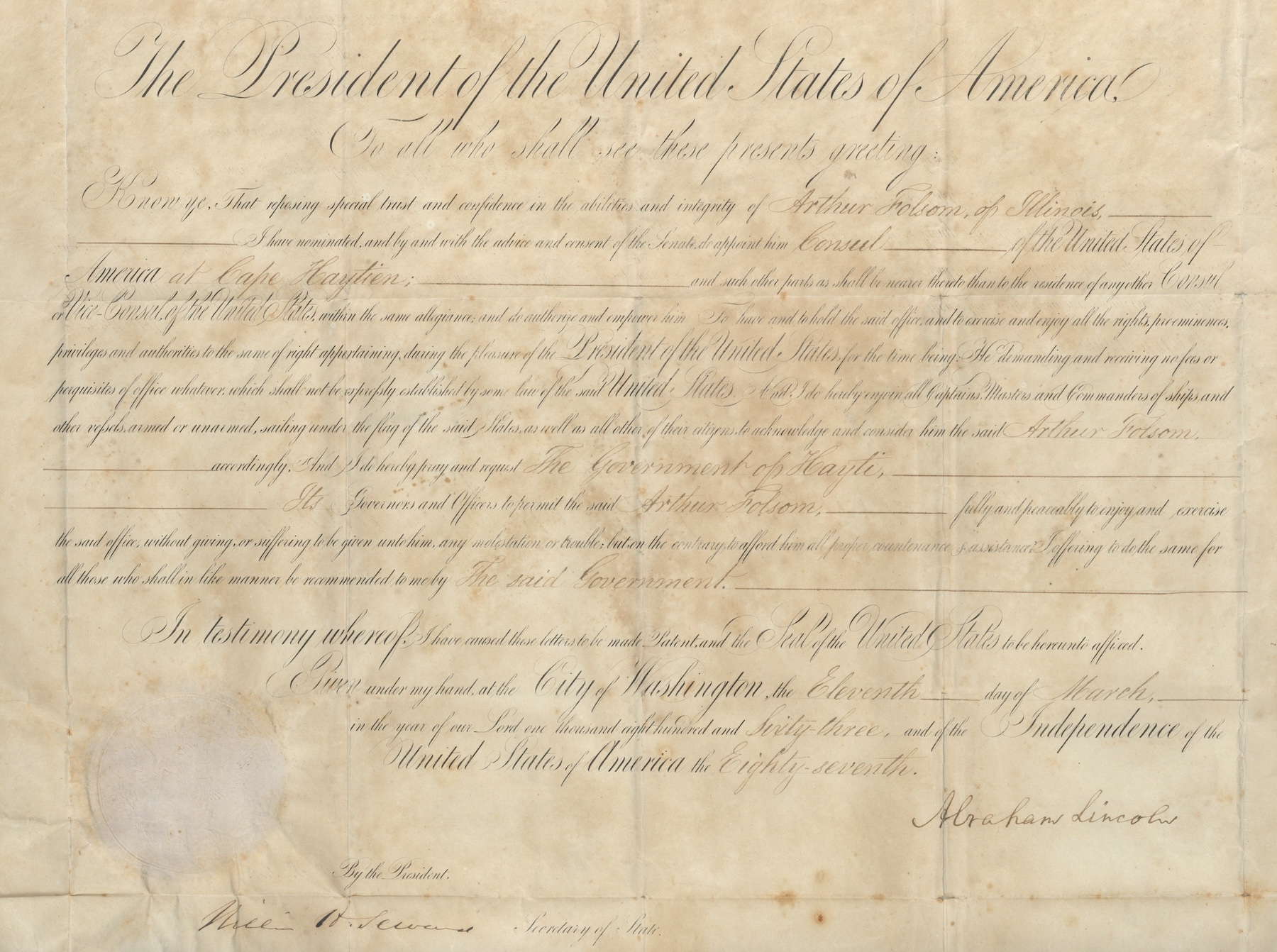
During this time, Lincoln also resolved to formally recognize the country of Haiti. That decision was a consequential one brought on by the secession of the Southern states, who had argued against inspiring future slave revolts in the US through Haitian recognition.
On the domestic front, Lincoln approved the Homestead Act, which opened the western lands and enabled hundreds of thousands of families to own their own farms, and the Morrill Act, which gave grants to establish colleges. Many of the universities which have the name “State” in them owe their existence to this law. Not bad for a man with limited schooling whose administration was absorbed by a war. He had no qualms about using executive power, and did so like no president before him. He acted in a way that his opponents at the time (and since) have considered unconstitutional, suspending habeas corpus, and at times running the war by executive fiat, getting the permission of Congress for various measures after he had already begun implementing them. He essentially initiated the powerful presidency.
The President was under tremendous personal strain the entire time. The population of the United States in 1860 was 31,500,000. By the end of the Civil War, over 1,100,000 men had been killed, wounded or died of disease. That is almost 3.5% of the entire population. Some 620,000 had died in the service, equaling about 2% of the population.
Lincoln was acutely aware of the responsibility he bore for the ongoing bloodshed, and in addition to the daily pressures he was under, he felt the cries of the widows and orphans. To make matters worse, his own son Willie died in the White House in 1862, plunging the President into despair and his wife into distraction. You can see the toll that all of this took on Lincoln by comparing photographs of him taken in 1861 with those taken in 1965.

Lincoln’s Legacy
Lincoln is considered by many to be the greatest president the country ever had. He kept the Union together, freed the slaves and signed the Homestead Act. However, he made another contribution, perhaps as great, to the entire world. He developed a philosophy of freedom, which he articulated and defined in the Gettysburg Address as “government of the people, by the people and for the people.” He also understood the importance of America to the liberty of peoples everywhere, saying in this regard that America was “the last, best hope of earth.” He is the standard by which all others are measured.
Lincoln Letters and Autographs
To learn more about our Lincoln signed documents and autographs, visit our dedicated Abraham Lincoln page and read our collecting guide, “What to Know About Buying Abraham Lincoln Autographs & Documents.”
You can also listen to the Inspired by History podcast, episode 21: “An Expert’s Guide to Collecting George Washington & Abraham Lincoln Documents & Autographs”