






One of the most important Einstein documents ever to reach the market and a monumental historical artifact with global and long-lasting significance
This statement, intended for the people of Japan, the only nation ever a victim of such a weapon, was acquired from the descendants of physicist Herbert Jehle, its original recipient
Raab also acquired from the Jehle family a remarkable Einstein letter on science and morality in the Nuclear Age
Family of one of Einstein’s closest colleagues on selling his original defense of his role in the Atomic Bomb, a scientific and global treasure
“My husband and I chose to work with the Raab team because of their professionalism, transparency, and genuine respect for both the historical significance and the precious family memories connected to our inherited materials. They took the time to listen to us, learn from us and do incredible background research on your own to ensure we captured the full history of our documents. My personal experience working in the auction space confirmed their thoughtful, ethical approach, and gave us complete confidence that our cherished family letters and photographs were being handled with the care and expertise they deserve.”
The Raab Collection announced today that it has acquired and sold a statement, signed by Albert Einstein, in which he defended his role in the development of the Atomic Bomb and his letter to President Franklin Roosevelt, one of the most important documents of Einstein to reach the market. It was acquired from the direct descendants of its original recipient and has had no other owners.
From the same source, Raab also acquired a letter showcasing Einstein’s evolution as a scientist, a pacifist, and a moralist and reflecting his deep ambivalence about the nuclear weapons race that he helped usher in.

Einstein’s Written Defense of His Role in the Creation of the Atomic Bomb
In 1952, just after the Japanese government lifted a moratorium on publishing images or details of the bombing, a magazine editor there sent Einstein a series of questions on the destructive power of the atomic bomb and its implications, ending with the direct query:
“Why did you co-operate with the production of the atomic bomb although you were aware of its tremendous destructive power?”
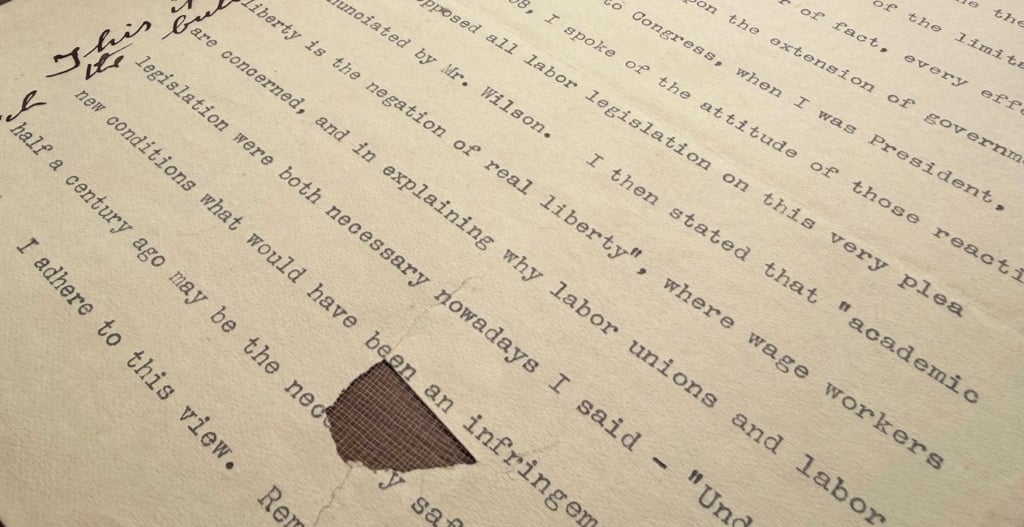
Einstein responded with a full statement, “On My Participation in the Atom Bomb Project,” aware that it would be published in Japan. He acknowledged the “dreadful danger for all mankind” posed by atomic weapons, but states, “My participation in the production of the atom bomb consisted in a single act: I signed a letter to President Roosevelt.…The probability that the Germans might work on that very problem with good chance of success prompted me to take that step.” In this statement, Einstein predicted that further development of nuclear weapons “spells universal destruction” and cited the work of Gandhi as an inspiration.
Einstein gave an English version of the text to Herbert Jehle, who edited the Society for Social Responsibility in Science newsletter. The typed manuscript is signed by Einstein at the base, “Einverstanden/ A. Einstein” [“Agreed, A. Einstein”]. This was printed in the Society’s newsletter and also in the “New Outlook” in 1953.
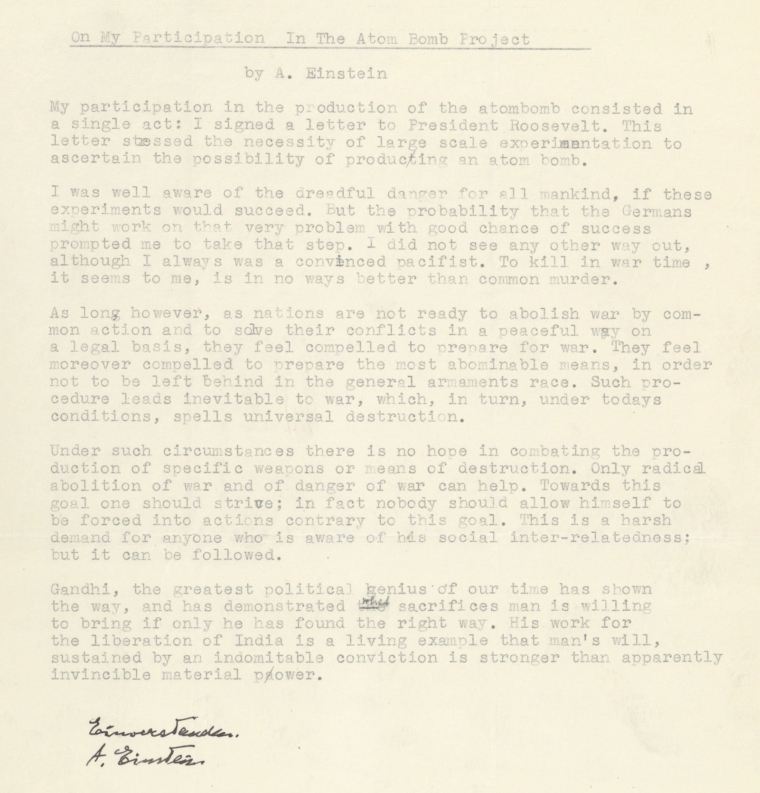
Jehle retained the original English manuscript of Einstein’s defense and passed it down to his family, from whom Raab acquired it. (The German version is held by the Albert Einstein Archives at the Hebrew University in Jerusalem.)
“This is one of the most moving and important Einstein manuscripts to reach the market. Its message is broad, international, and deeply evocative of the man himself and his development. It shows both a scientific and human side to an iconic figure,” said Nathan Raab, president of The Raab Collection and author of The Hunt for History.
Einstein Letter Urges Scientists to be Moral and Courageous
Prior to the release of that statement in the early 1950s, Einstein had long pondered the role scientists should play in the creation of weapons. Ever since World War II, his name had been tied to the Manhattan Project and the building of the bomb, even though he was an avowed pacifist. Einstein had come to terms with the fact that his famous letter to FDR in 1939 regarding the potential for nuclear weapons had led to two atomic bomb blasts in Japan and helped to usher in an arms race.

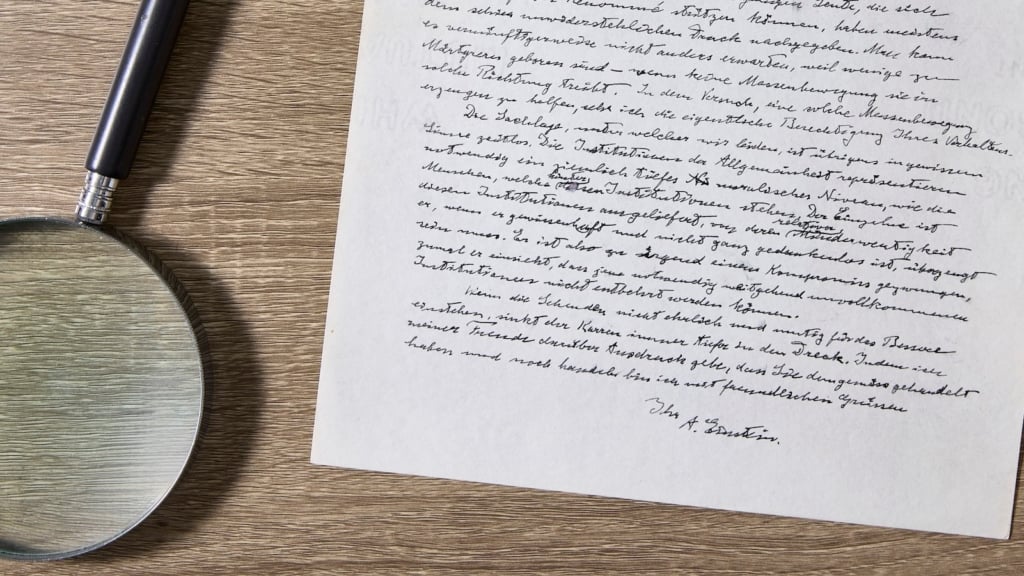
In a letter to Jehle from 1949, Einstein grapples with these issues of war, morality, science and humanity. Jehle had sent Einstein the draft of an article, “For a Universal Morality,” written and submitted to the Bulletin of Atomic Scientists. Einstein replied in this deep, warm, and inspiring letter.
“If those who see the light do not stand honestly and courageously for the good, the world will get deeper and deeper into the morass.”
In this powerful letter, Einstein reflects on the notions of ethics in science and on those scientists who follow their conscience and withdraw from military work. He applauds Jehle for attempting to move more scientists towards a greater social responsibility.
Like the manuscript described above, this remarkable letter was obtained by Raab directly from the Jehle family.
To learn more about Albert Einstein autographs and signed historical documents at Raab, review our “Illustrated Guide to Buying Einstein Autographs & Documents” and visit our dedicated Einstein page.
