





Steven Raab: Q&A with The Raab Collection’s Founder
For a special episode of Inspired by History, we invited Steven Raab, founder of The Raab Collection, into the studio. A few weeks ago we did a Q&A with Nathan Raab on the podcast and that was so fun and well-received that we thought we’d do it again. Except this time we’re going to hear Steven’s insights about buying, selling, and collecting historical documents and autographs.
You can listen below or via your podcast player of choice. Or, if you prefer, you can read this lightly edited transcript of our conversation with embedded links to more resources.
Can you recall the very first document or autograph that you purchased as a collector?
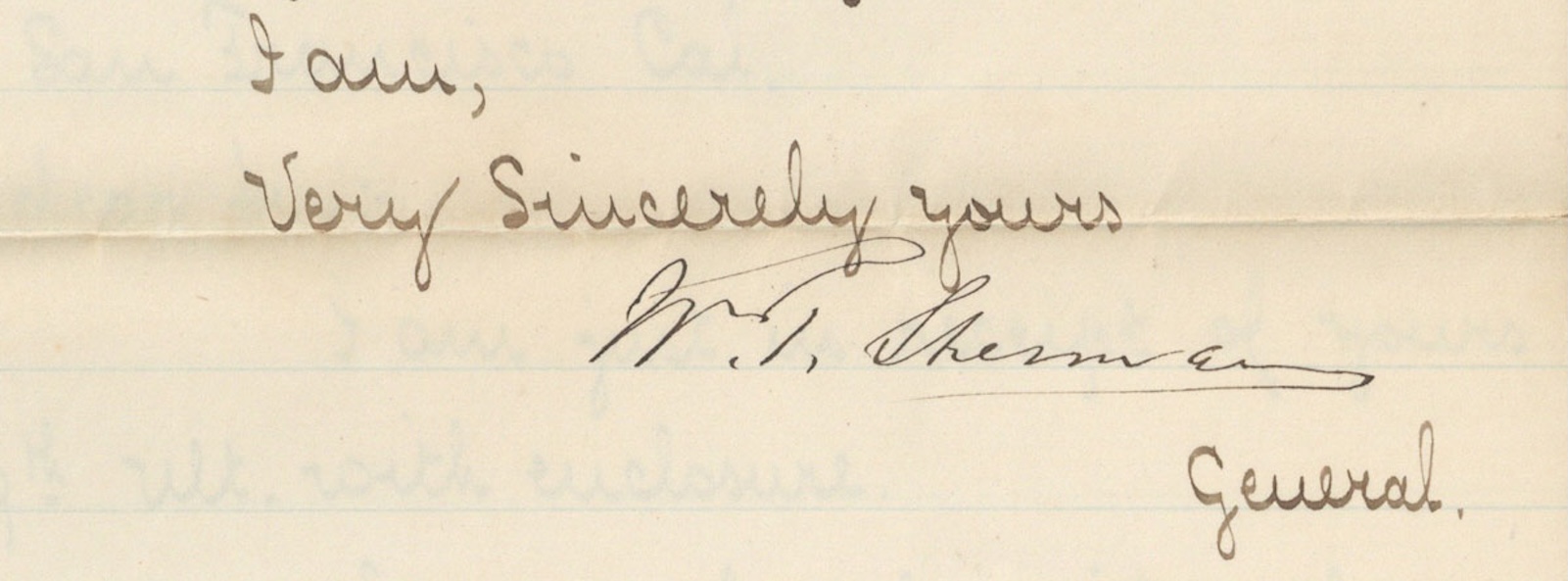
Steven: Yes. There were book and autograph fairs at Gettysburg over the July anniversary of the Battle of Gettysburg, and we used to go there frequently. I was at a show and there was a dealer and he had some autographs, and one of them was a card signed by William Tecumseh Sherman. And I was just totally smitten with it all of a sudden and bought it, and that was my first autograph purchase.
So you were a collector for some time and then you decided to become a dealer. You didn’t go straight into dealing.
Steven: That’s right.
What was your first career and how did you make the transition into becoming a full-time dealer?
Steven: I practiced law for 25 years. I had a specialty in franchising. I even wrote a book, The Blueprint for Franchising a Business. So I was a published author in the legal field. I began collecting autographs in 1985. I was very excited by it. It really took me over. I was spending more and more time on it and less and less time in the law office. And at some point it became clear to me that I couldn’t do both of these things well. I could either do the autographs or practice law, but I really couldn’t do both.
I decided to start a little side business. I never thought that it would be really successful, but the idea was, I have this card signed by William Tecumseh Sherman, but now I see a letter of his that’s much more important. I’d really like to sell the card in order to buy the letter, and so the main reason I started the business was to fuel the addiction, to get the extra money so I could upgrade the collection. But I found that the business took off, and then I was in the predicament of having to build two businesses at the same time. It wasn’t until 1998 that I closed the law office. Some of my clients were under the misapprehension they couldn’t do without me, and it wasn’t until 2006 that I finally told the last one of them that I was no longer really able to serve them in the way that I would be proud serving them, and I helped them find another attorney.
How has the trade evolved in the past 40 years, and how has it stayed the same?
Steven: Well, a lot of it is hugely different. Forty years ago, there was a large group of knowledgeable, reputable dealers, people who had been in the field for decades and decades, and that is where the action was. There were auctions, of course, there’s always been auctions. But the dealers were the ones who had what you wanted when you wanted it.
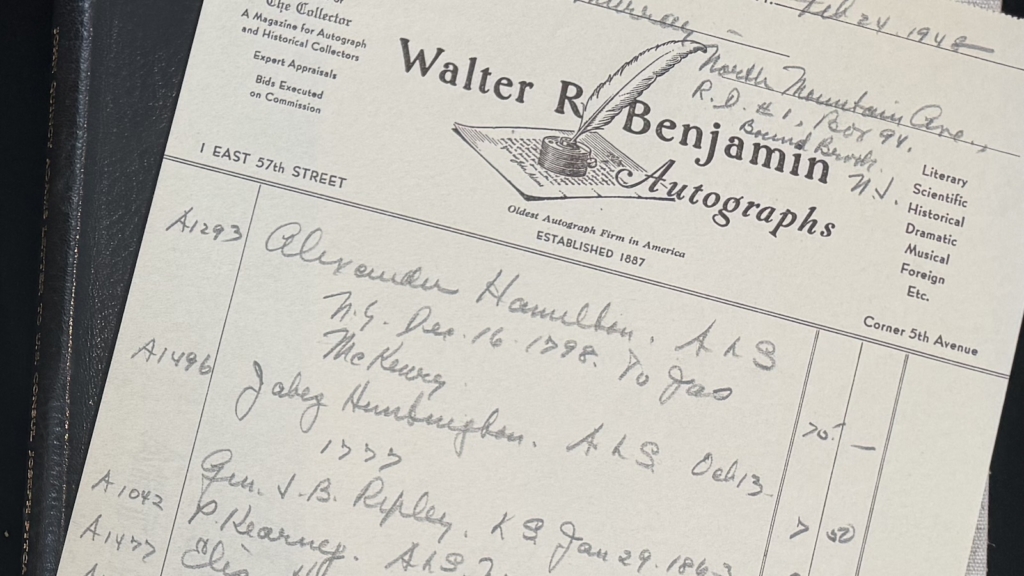
If you wanted a letter of Abraham Lincoln, there might be a dozen dealers that would have letters of Abraham Lincoln and the supply was pretty good and working with these people was a pleasure. I came to know all of them very well. But nowadays, all that’s changed and we’re just about the last man standing. Out of all those great dealers of yesteryear, they’re all deceased or retired. And so we find ourselves in a world in which auctions play a much bigger part than they used to play. Now, I think this is the way it was before the founding of the autograph trade, when people sold their autographs only through auctions. But in 1888 Walter Benjamin founded the autograph business, and the changeover began at that time, and by the early 20th century, the dealers were handling a major portion of the autographs in the field.
And of course the internet has come along and just vastly changed everything, hasn’t it?
Steven: Well, it used to be that everyone issued catalogs, and what I used to do in the law office was, when the mail came in, if there was a catalog of Robert Batchelder or something, I just put down my work and went right to the catalog. But you don’t have that anymore. People don’t issue paper catalogs anymore. You really found amazing things if you dropped everything and became the first person to call. I remember once, oh, I would say this was probably around 1990, I opened up one of Bob Batchelder catalogs, and there is Theodore Roosevelt’s original letter, coining the phrase, “Speak softly and carry a big stick.”
So I called up in a micro-millisecond, got the letter, and when I talked to them later about picking it up, she said, well, we’ve had a dozen phone calls ever since your call. So you had to move fast. You had to move fast.
You were first, you got it?
Steven: We got it. Had it for many, many, many years.
Do you remember your first big-ticket acquisition as a dealer? Something that maybe made you feel a little uneasy about buying?
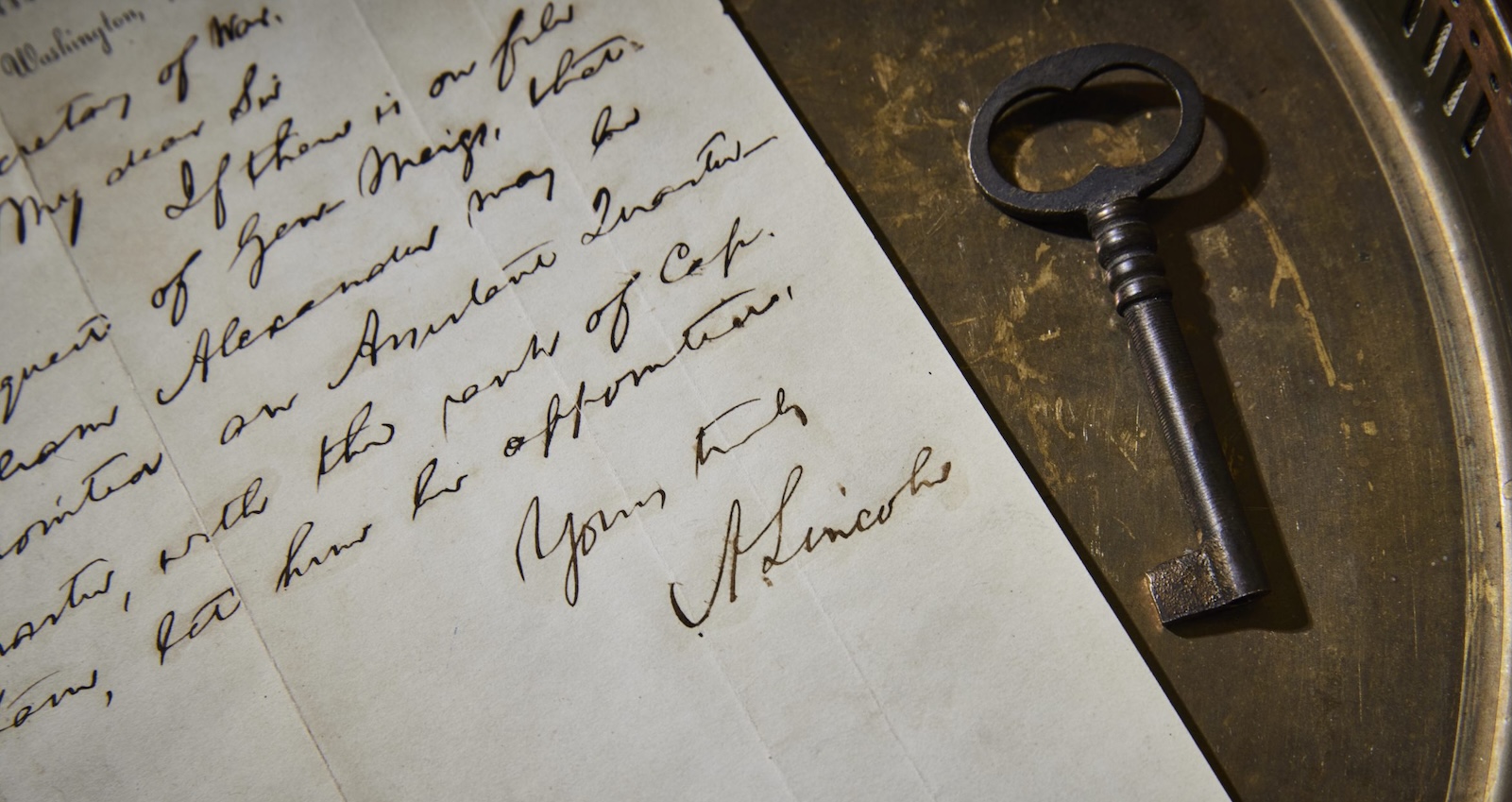
Steven: Well, I’m not exactly sure it was uneasy, but it was a little weird. I was at an autograph show in New York. A colleague of mine, Catherine Barnes, who was also located in Philadelphia, had a document signed by Abraham Lincoln, and I took a look at it, and it’s an order to blockade the Confederacy at the start of the Civil War. I never spent as much on anything as she wanted for that document, but I just bought it on the spot.
Do you still collect? I know a lot of rare book and manuscript dealers have trouble with that, whether or not they can be both a collector and a dealer.
Steven: In the very beginning, I kept my collection. It occurred to me I can’t any longer cherrypick the best pieces and build this collection on the side and still build the business. And so I decided with some reluctance that it’s just as nice to have all of these wonderful things for a little while rather than have a handful of them for a long while. So that was the reason for the decision that I would no longer collect those things. So what did I do? I substituted things that are not competitive. I collect ‘60s rock posters. I collect the autographs of great ‘60s singers and personalities like Peter, Paul and Mary and the Beatles. I have signed photos of them. I have a John Lennon autograph up right above my desk here. So that has substituted for the original history collection.
Because The Raab Collection doesn’t really do entertainment memorabilia?
Steven: No.
What is your favorite part about working with historical documents?
Steven: They have a story to tell and they give me an opportunity to tell that story. That requires research, requires understanding, it requires a love of the material, but then there it is, there’s this story and you know that it resonates with people because they’ll raise their hand and say, I’ll buy that item, that’s a great story. I did have some years back, I must admit, I did have a person who was the foremost collector of the day named Albert Small, tell me that I wrote the best descriptions in the business. He says, yours are the best. I’ve never forgotten that.
I agree. You put a lot of research into your cataloging.
Steven: Well, we’re telling a story.
Do you secretly have a favorite era or figure?
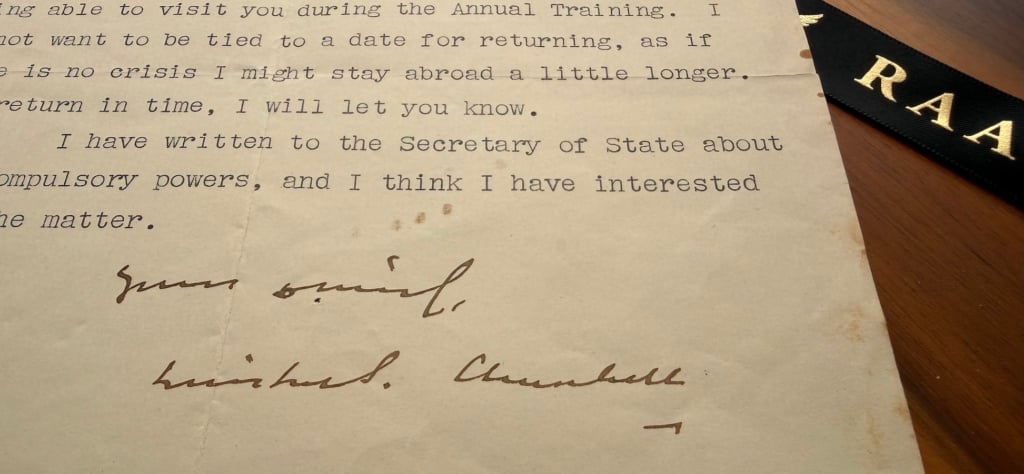
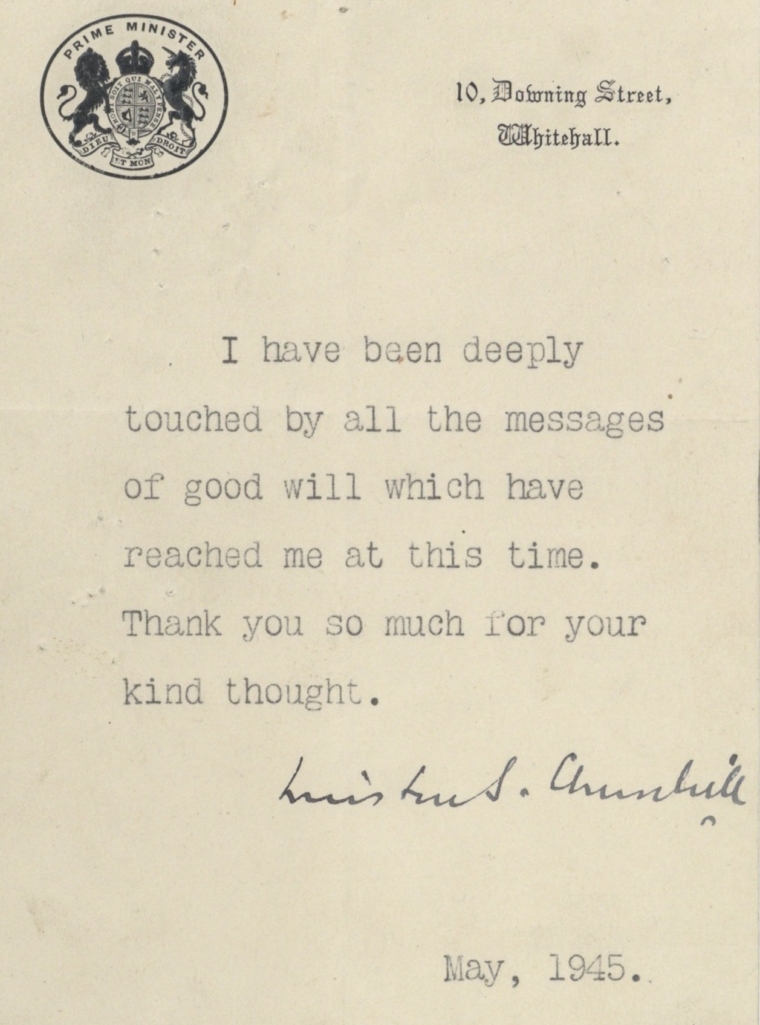
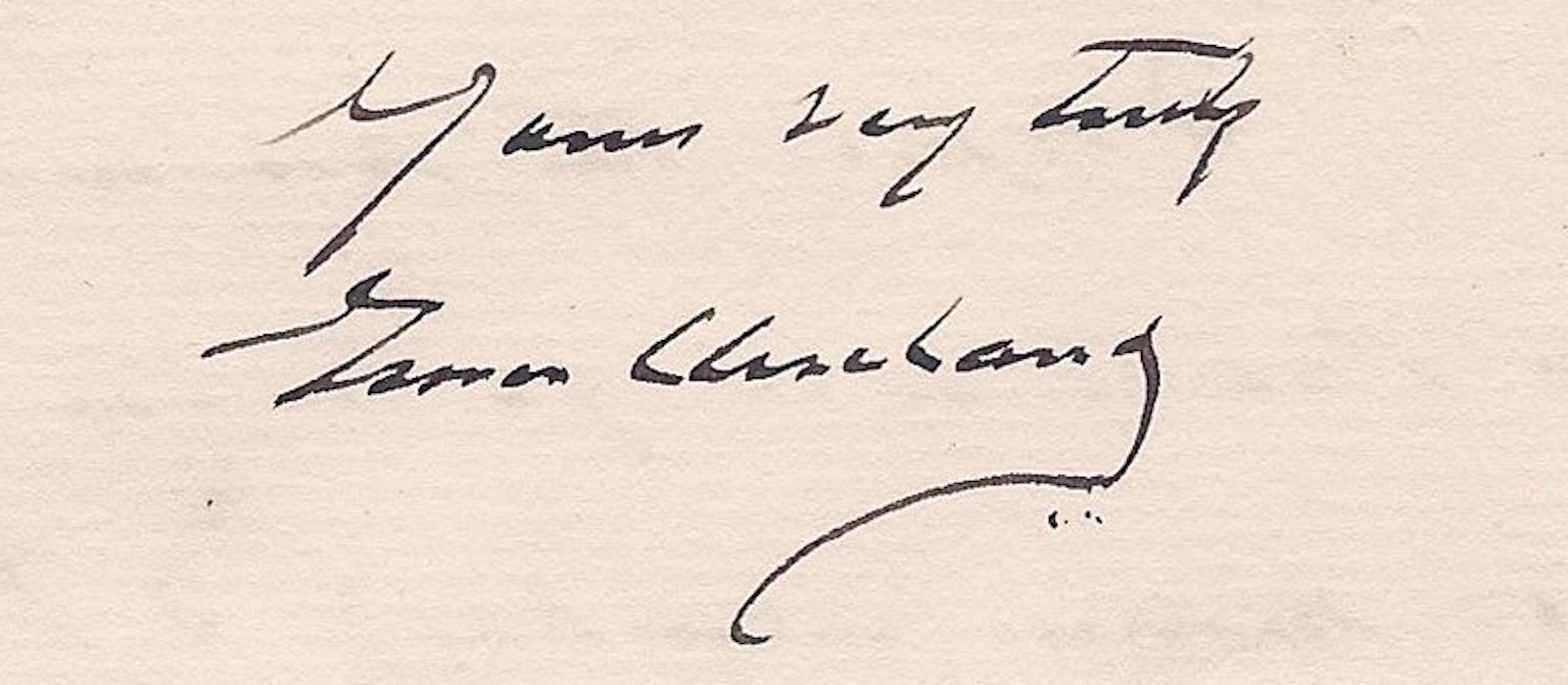
Steven: It started out with the Civil War and Abraham Lincoln. I found myself interested in that when I was very young. I got my first serious Civil War books when I was nine years old. So I was a child growing up and into this and just really enthralled by it. Over the years I’ve added to that another name, and that other name is Winston Churchill. So for me it’s about Abraham Lincoln and Winston Churchill. Those are the people I think about all the time.
Do you see something similar in the two of them?
Steven: I feel that Churchill had a vision for what was happening in Europe and he had leadership qualities that were unexcelled. He made the people believe in themselves. He made the people feel they could do things that never occurred to them that they could do. And that’s my reason for loving Churchill. I don’t know if I see Lincoln as precisely the same thing. He did have the leadership qualities, but there I was always interested in the fact that he freed the slaves, and that he was determined, and kept on even when the war was going poorly, he refused to surrender, and I like that quality, and in that way he is identical. The ‘Never Surrender’ is a quote from Winston Churchill.
What has been the hardest part of your job?
Steven: I think the hardest part of the job, certainly over the last decade, has been finding the material interesting enough that we’re excited about it and we want to present it to our clients. It was a lot easier in the old days with all the old dealers because everyone had everything and it was just a matter of choosing what you wanted, but now it’s all dependent upon the internet, upon who calls, upon who writes to you and what they have, and whether it’s of any interest. I mean, as you can imagine, probably 95% of the emails that I get offering us stuff are things that we don’t want or that are junk, or they’re replicas, facsimiles. So that’s a frustrating part, I’d much rather have my choice of things, but it does make it more exciting when you do make a discovery.
You are on the front line of this at Raab, getting all these emails and phone calls.
Steven: Nathan is really running the show, but it’s my job to help find the stuff and then to tell its story. So I’m a finder and I’m a storyteller, and that’s what I do.
Can you talk just a tiny bit about authenticity because you have to get it right 100% percent of the time.
Steven: Yes, well, one of the things you have to do when you go into this is to make the assumption that everything is a forgery and make it prove itself within the bounds of the document itself. The paper’s got to be right, the ink’s got to be right, the sentence structure’s got to be right. Nothing should be wavy. It’s got to demonstrate to you that it is authentic. Our position has always been, if we have a 1% doubt, we just don’t buy it. I think that’s what you have to do. I think it’s also very important that people who sell autographs are qualified to authenticate them.
Nathan has said the same thing. It’s just so important because you guarantee everything you sell, so you have to be right.
Steven: This business is only partly about money. It’s partly about reputation, and there’s nothing worth sacrificing your reputation for. So you’ve got to be absolutely sure of what you’re doing and be confident that this is authentic, and in your own opinion, before you can offer it to others.
Is there an acquisition or a sale that stands out as a career highlight for you?
Steven: Well, yes there is. This was just over a decade ago. These are the John F. Kennedy tapes, which I’m sure you’ve heard of. The brief backstory there is one of Kennedy’s senior aides, his family was selling artifacts and he’d kept a lot of things from the Kennedy administration, and he had a lot of tapes, reel to reel tapes. They had Kennedy speeches on them and all kinds of things from the administration. No one was paying any attention to a bunch of old reel to reel tapes, and I went over in the box because I learned a long time ago, always look. So I’m looking through the box and I’m wondering if there’s a speech here that Kennedy gave that no one knows about. Well, that didn’t turn out to be the case, but at the bottom of the box there’s the tape of the Air Force One conversations when Kennedy was assassinated that went from the plane through the White House about what to do with the body, what to do with Jacqueline – just a tremendous amount of new information. This had survived only in a highly edited format, which was itself rather suspicious, but the tape had gone missing, and I found it at the bottom of this box, and it made international news. I recall at the time being flabbergasted that it was the number one news story in Russia, of all places.
That was an excitement, and particularly when I was told by the chief council at National Archives that Congressional Committees and the Justice Department had been looking for this tape for, I guess it was 50 years, and I had found it. So I was pretty excited about that.
That is a really neat story. [Update: The Raab Collection has just announced that is bringing the original JFK Air Force One audiotape back to market.]
What piece of advice do you give to those who want to build a collection of historical documents?
Steven: This is actually advice I received at the very beginning from two dealers or maybe even three. They said, go for quality, not quantity. If your budget is $10,000, don’t get 10 things for $1,000. Get one thing for $10,000. Something that excites you, something that if you ever had to deaccession it or sell it, that it would excite someone else. So quantity is not as important as quality, and as obvious as that is, not everybody seems to realize it. So yeah, go for the good stuff.
Do you think there’s anything I missed? Anything that you’d like to add?
Steven: I could tell you that I got started with all of this stuff when I was just a kid. I used to collect baseball signatures. I would wait outside the dugouts, and I had balls signed by the Yankees and all the rest. So I was really collecting autographs from the time that I was nine years old. My parents encouraged this. They also bought me historical artifacts, Civil War rifles, like that, a sword that had been found at Gettysburg. Some of these things I still have. I’ve had them now my whole life. But it was a wonderful, wonderful way to start, and I got a lot of encouragement.
The other thing I want to mention is, no interview about the business would be complete. Without mentioning the name of a gentleman named Neale Lanigan. Neale Lanigan started his interest in autographs in the sixties, and he was mentored by the famous Mabel Zahn, the queen of autographs. She taught him the business. Fast forward now to the late eighties and very early nineties, and Neale is working with me, teaching me the business. So I had the benefit of being mentored by someone with decades of experience who loved the material and who had himself been mentored by someone famous in the field. He had a great memory. I remember one time in particular we were looking at an auction, and I thought this is unusual. He said, oh, this stuff all came up around 25 years ago. So there’s a lot of it out there. It’s not unique after all.
The only other thing I’ll mention is under the Always Look category, and this involves Neale also. We were at an auction in Philadelphia. He said, did you see the Grover Cleveland document? And I said, why would we want a Grover Cleveland document? He said, well, why don’t you go over, find out and tell me. And I went over there, and it was this appointment to the US Supreme Court. At the time, no appointment to the Supreme Court had reached the marketplace in 30 or 40 years. This was a major piece, and it was incredibly important, and I hadn’t taken the time to look. So I look at everything now. I learned my lesson from them. I can still hear him saying, go take a look and then we’ll discuss it. We bought it and I think we paid $300 for it.
That reminds me of what Larry McMurtry would say: “anything can be anywhere.” In terms of collecting, you just really never know what’s going to turn up. And some people will say, all the discoveries in the world have already been made, but I think we see again and again that that’s just not true.
Steven: Yes, well, we saw that just very recently that there’s still great things out there to be found. They’re harder to find, but they’re out there, and it just makes the search more difficult but it’s more satisfying when you find the things because it doesn’t happen every day.
Do you have a question about a historical document in your collection? Email us at [email protected], and we may answer in a future episode of Inspired by History.