



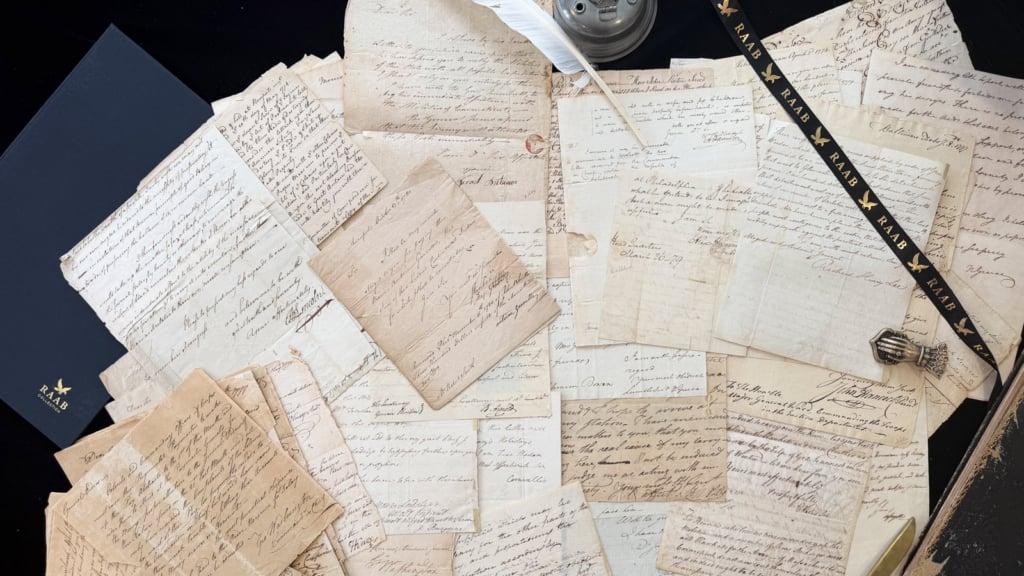
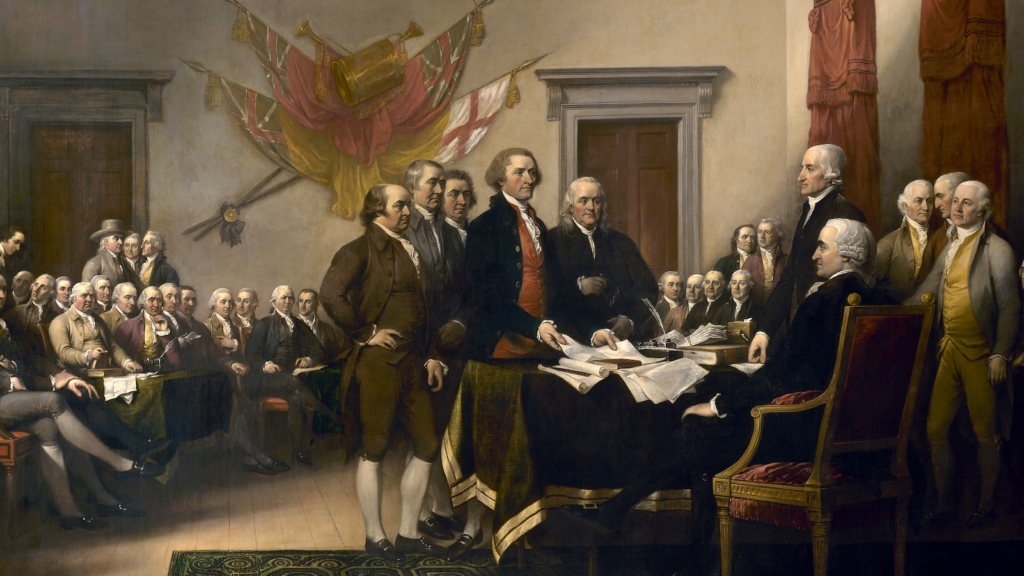
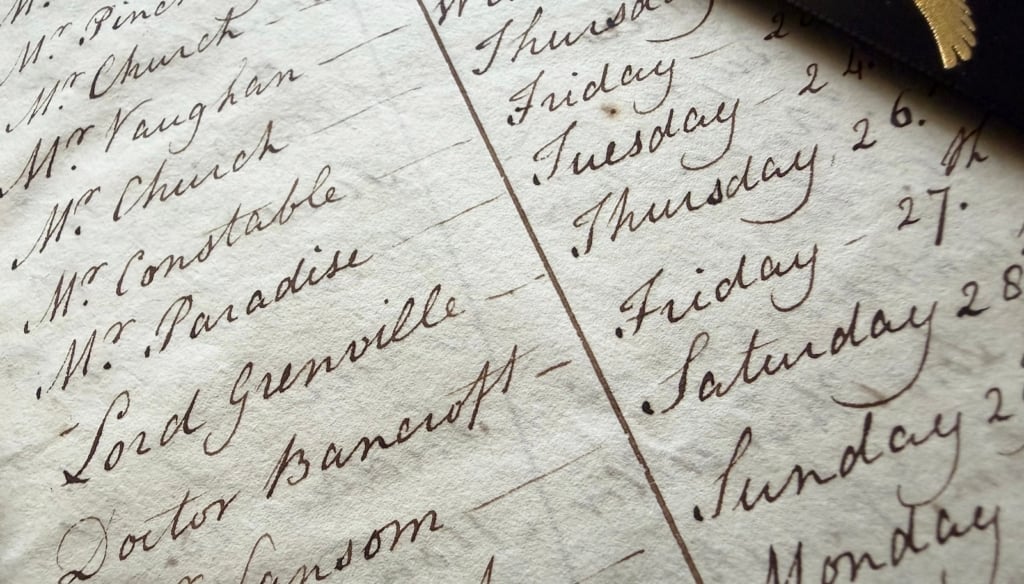


The Library of Congress has just opened a major exhibition on the two most famous Georges in history. “The Two Georges: Parallel Lives in an Age of Revolution,” which will be on view for a year, brings together their letters, diaries, maps, and historical artifacts. Drawing on collections from around the world, the exhibition “seeks to reveal the real men behind the myths.”

This remarkable endeavor, part of the library’s America 250 celebration, inspired us to take a closer look at the historical documents signed by George Washington and by King George III offered at Raab–and, for a twist, we added King George IV, as well. Documents signed by these three men offer revealing glimpses into the people and events that shaped not only a nation but a new world order, making them desirable to collectors everywhere.
George Washington
George Washington began his life as a British subject in colonial Virginia. As a planter, he felt increasingly antagonized by unfair British taxation, leading to his break with loyalism and his embrace of what would come to be known as American ideals. In turn, he would lead the Continental Army to victory during the Revolutionary War and would then serve as the first President of the United States. He was worshipped as the hero of his day, and his legacy today is largely undiminished.
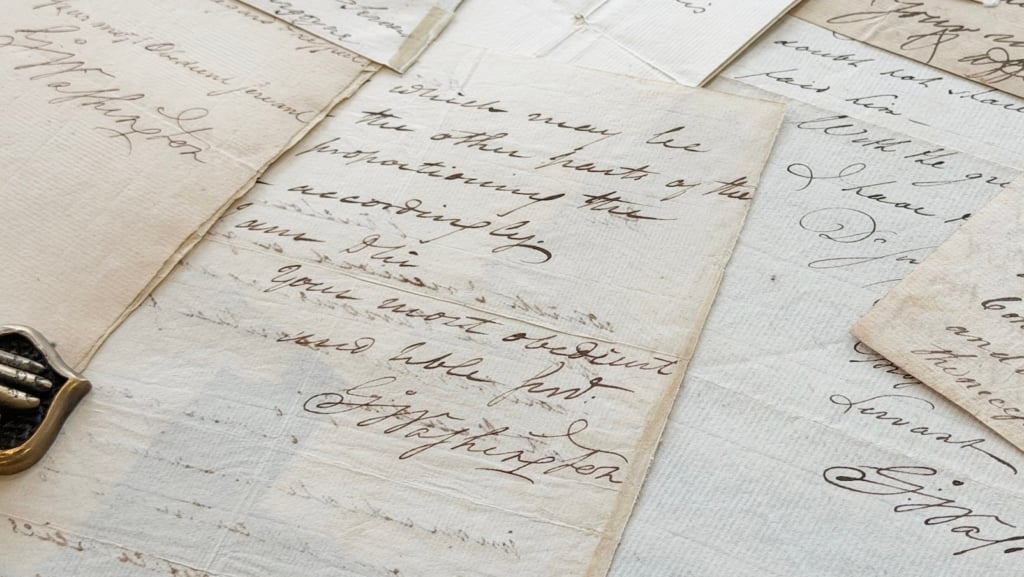
Important documents signed by Washington are rare. Below are three exemplary examples.

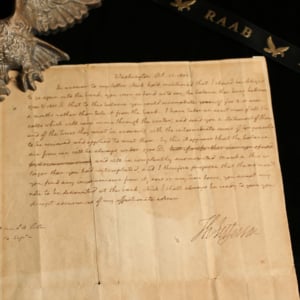
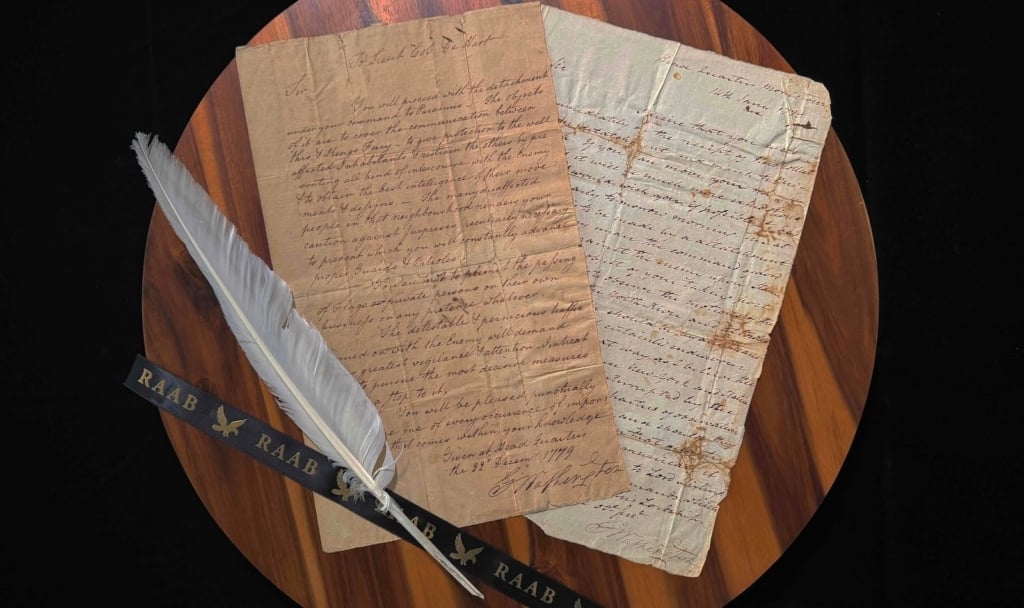
Here we see Washington as General of the Continental Army, in the thick of the fight, just before the brutal winter spent at Valley Forge. In the lead-up to that encampment, Forts Mercer and Mifflin played a crucial role in the American war plan by obstructing broader British naval access to Philadelphia to supply the enemy there. The American defense of those two forts tied up British resources for nearly seven weeks, ultimately enabling Washington’s safe arrival at Valley Forge.
In this letter, Washington praises his men’s readiness in facing the British at a crucial moment, and warns that “something more serious” may be imminent. We have never had anything like it.
“We already hear a firing which we suppose a prelude to something more serious. I sincerely wish you success…”

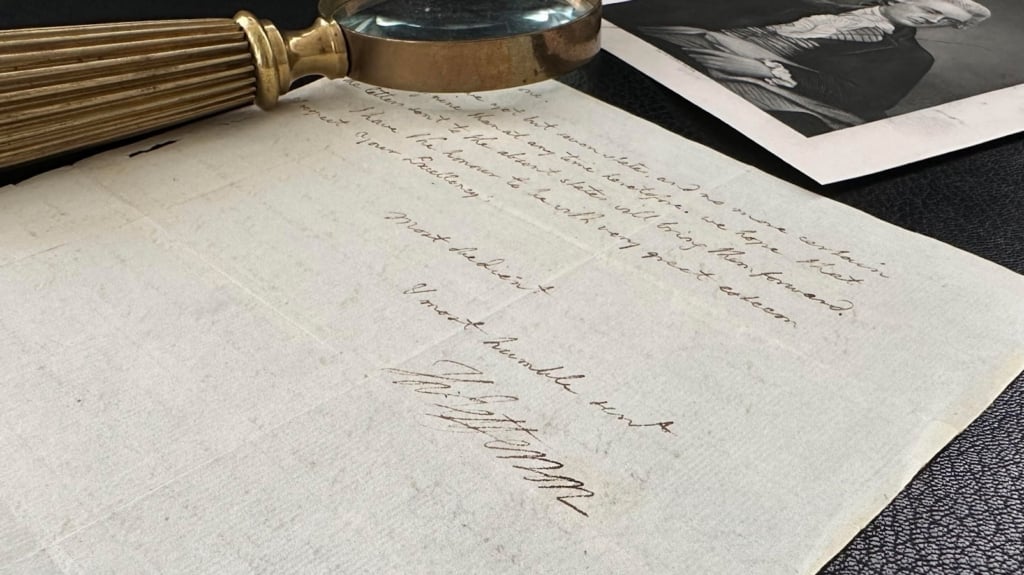
As George Washington began his second term as President, Vice President John Adams, in his capacity as president of the Senate, transmitted a message to Washington to congratulate him and express approval of his platform. Washington responded with a remarkable message to the Senate, filled with patriotism, affirming his steadfast devotion to his nation, his enduring commitment to the welfare of the United States, and his hope that his administration would make a positive difference to the American people.
Formerly in a major private collection, this document is historic and unique. We are aware of only one other Address to Adams and the Senate having reached the market, which was carried and sold by Raab.
“The pleasure, expressed by the Senate, on my reelection to the station which I fill, commands my sincere and warmest acknowledgments. If this be an event which promises the smallest addition to the happiness of our country, as it is my duty so shall it be my study to realize the expectation.”

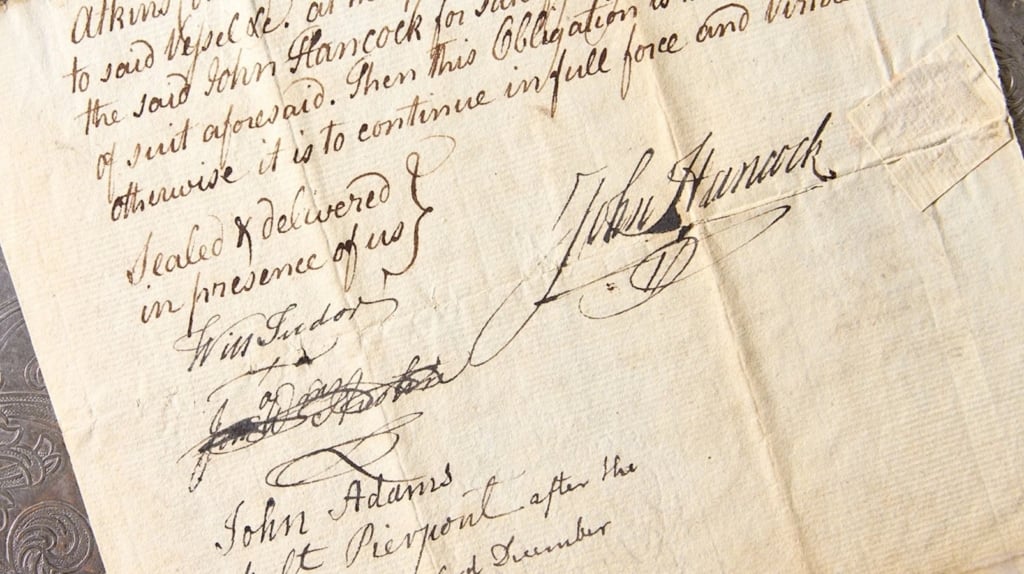
In 1789, Washington signed the Judiciary Act, establishing the federal court system in the United States. The office of the United States Marshal was thereby also established, and the country was divided into sixteen districts, each to be headed by a marshal. In the document signed by Washington pictured above, the president appoints the Revolutionary War hero Lieutenant Colonel Nathaniel Ramsay of Maryland as one of those first U.S. Marshals.
King George III
King George III assumed the British throne in 1760. Though he opposed colonial independence, Parliament was much to blame for the policies that ultimately led to both war and great losses for Britain. As the new Library of Congress exhibition demonstrates, he and Washington were close in age and extraordinarily alike in their values, perhaps making them an even match for one another in the fight that would determine the future of Anglo-American relations.
Royal autographs have been coveted for centuries, and documents signed by George III the more so, fueled by his role as the last king to rule the American colonies and his leadership during the Napoleonic Wars. Below are two significant examples from his almost 60-year reign.

In the document pictured above, signed by George III in early 1805, he confirms the appointment of an ambassador to negotiate the Treaty of Saint Petersburg and thus form an alliance with Russia against the French. This “Third Coalition” was further bolstered by Austria and Sweden, and yet, within a year, the Battle of Austerlitz would result in a victory for Napoleon.

During the Napoleonic Wars, King George III Appoints the Duke of Wellington’s Military Secretary
Here again, in 1807, George III is at work on military matters, signing his approval of Henry Torrens as Assistant Adjutant General on the Staff to accompany the Duke of Wellington to Portugal during the Iberian Campaign against Napoleon. Torrens continued to rise through the ranks. This is the most important British military appointment we have ever carried.
King George IV
While George IV did not become king until 1820, he had been leading as Prince Regent since 1811, due to his father’s prolonged illness. King George IV was known for being an extravagant collector and builder. Unfortunately he had neither the popularity nor the longevity of his father. He died in 1830, and because his only daughter died childless, the throne passed to George’s next brother, William, who became William IV.
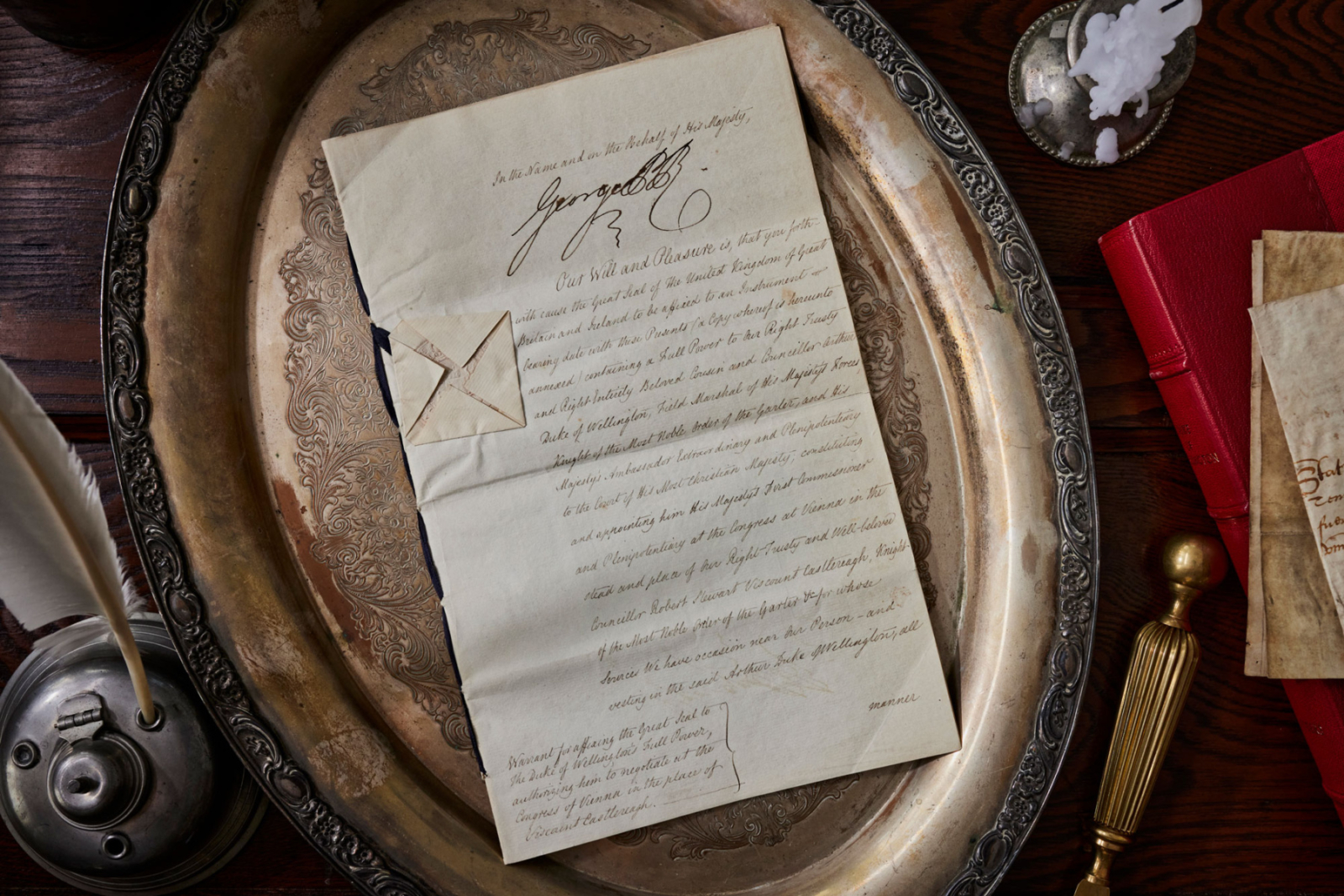
In this document from January 1815, George IV is acting as regent to handle diplomatic affairs in place of his father. Wellington had been appointed Ambassador to Paris after the abdication of Napoleon in 1814, but the weakness and instability of the restored Bourbon monarchy was such that by the autumn of that year the British government feared for his safety. Lord Castlereagh had been the initial representative of Great Britain at the Congress of Vienna until early 1815, when he had to return to his parliamentary duties. Wellington was chosen to replace him and reached Vienna on February 3, 1815. He was there on March 7 when news reached the city that Napoleon had escaped from Elba. A new coalition was hastily formed, and Wellington was soon heading west to Brussels and, ultimately, Waterloo. The Congress of Vienna continued to meet throughout the Hundred Days and the final agreement was signed on June 9, 1815.

The Congress of Vienna was the crowning moment in diplomatic history and established a European order that lasted a century. The Treaty of Vienna was so far-reaching that several additional treaties, conventions and agreements were required both to make the settlement effective and to complete the complement of nations signatory. The above document, signed by George IV as Prince Regent in place of his father, was an important link in the chain of agreements that created that order. Documents such as this relating to the epochal Congress of Vienna and signed by the chief party to the accord, seldom reach the market.
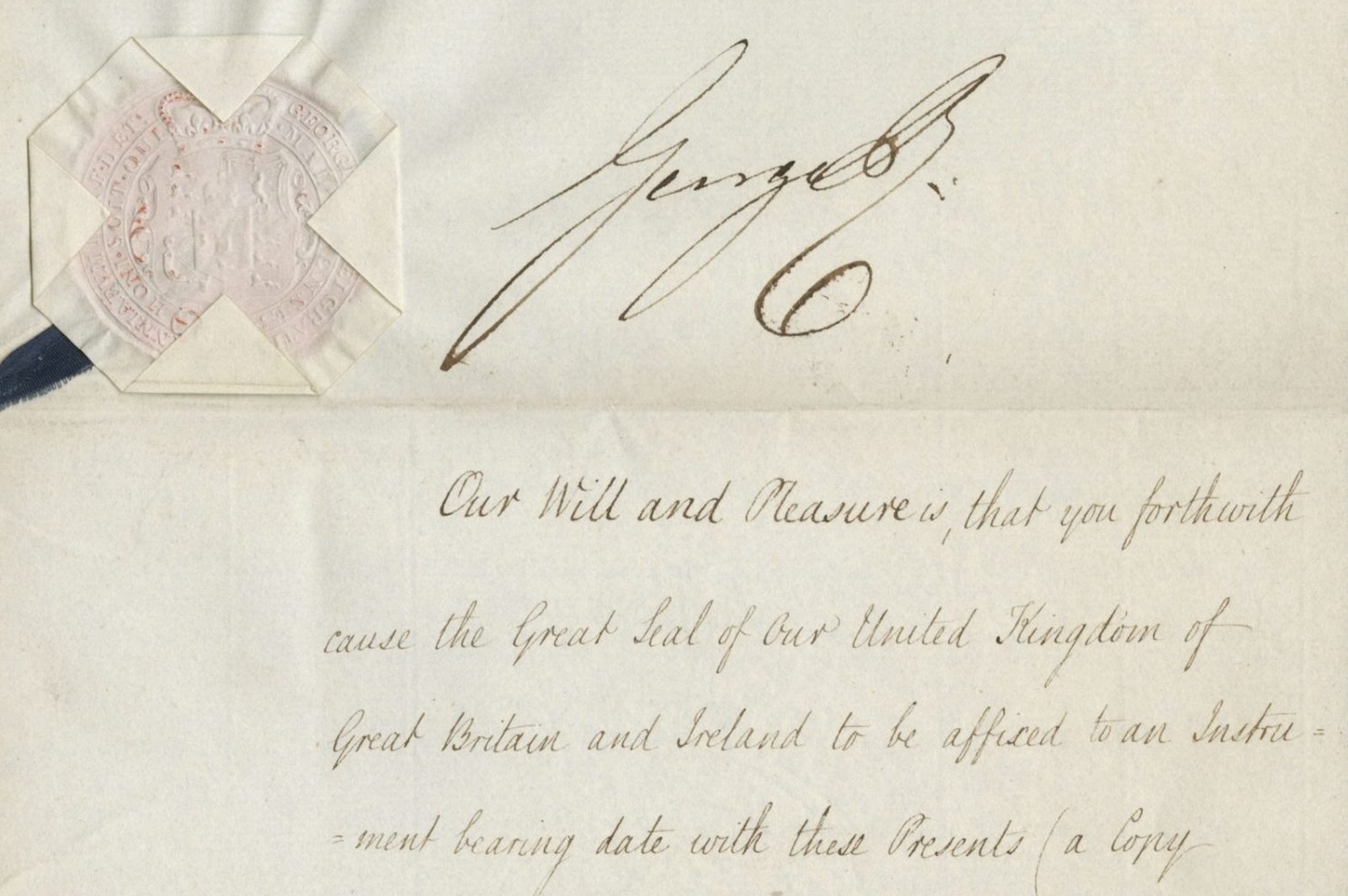
In this document from 1820, the new King George IV is still dealing with the tail end of the Napoleonic Wars. Attempts to restore the balance of power in Europe took several forms, one of which was an alliance between the four leading powers that had brought Napoleon to his knees—Austria, Great Britain, Prussia, and Russia—to assume responsibility for the territorial status quo and peace in Europe. The concord of these four nations was called the Quadruple Alliance. France, however, would not abide continued occupation. To resolve this, the Congress of Aix-la-Chapelle was held in the autumn of 1818. The above document, signed by King George IV, relates to this convention. The sessions produced an amicable settlement whereby France refinanced its reparations debt, and the Allies would withdraw all of their troops from France.
We have never before seen a document relating to the Convention of Aix-la-Chapelle signed by the chief party to the accord.
To learn more about historical documents from the Revolutionary era, check out our related stories: