



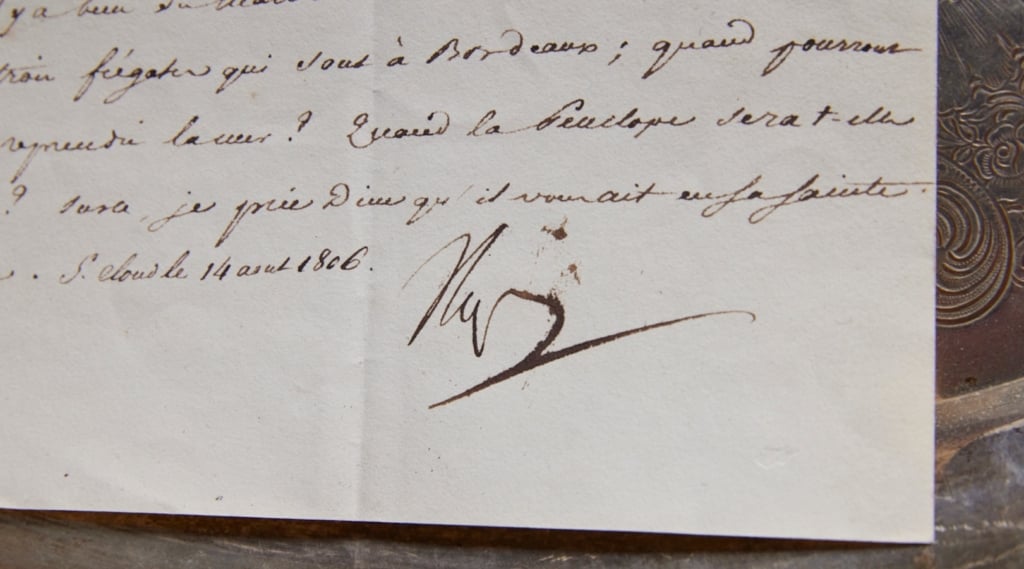
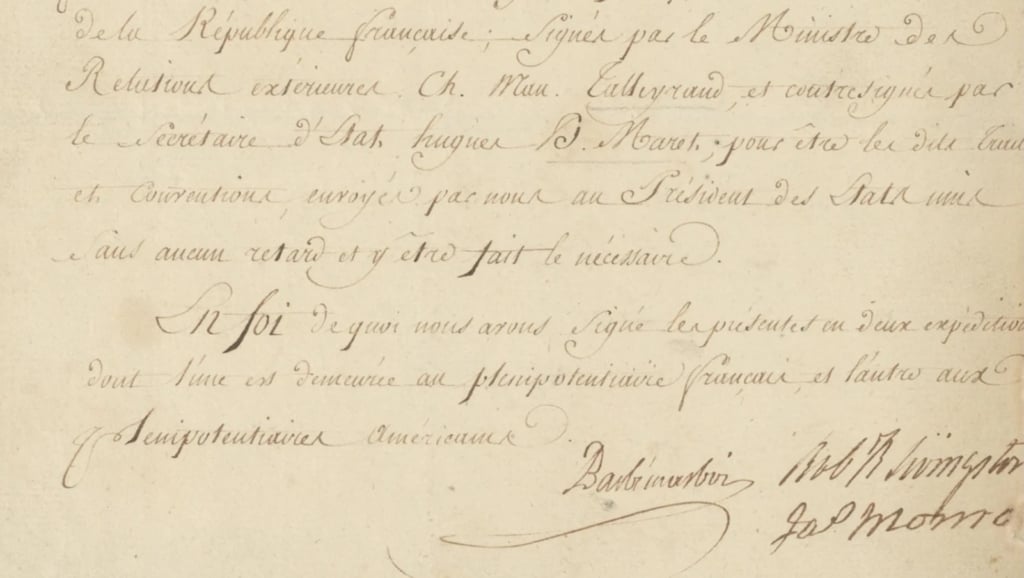
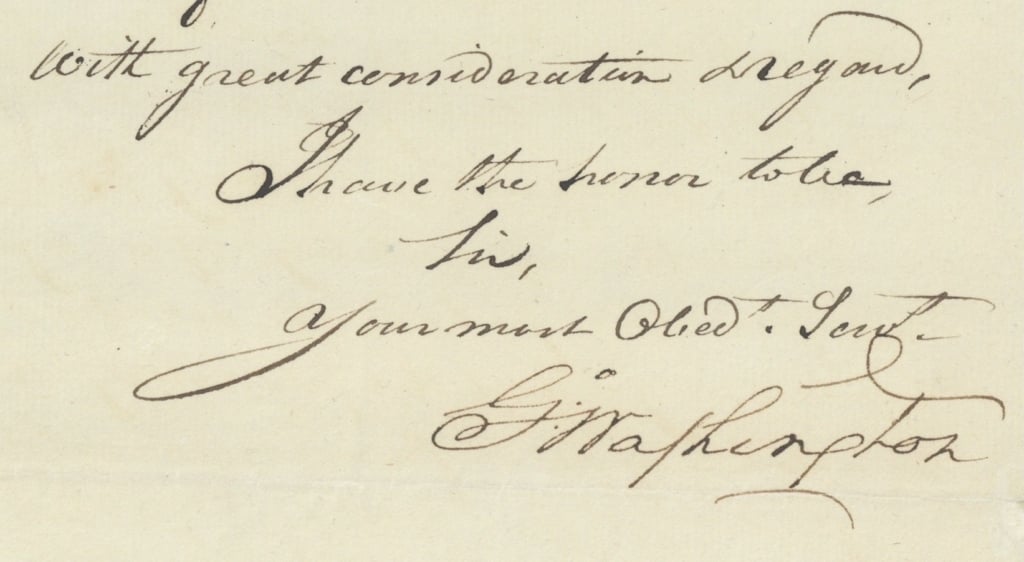
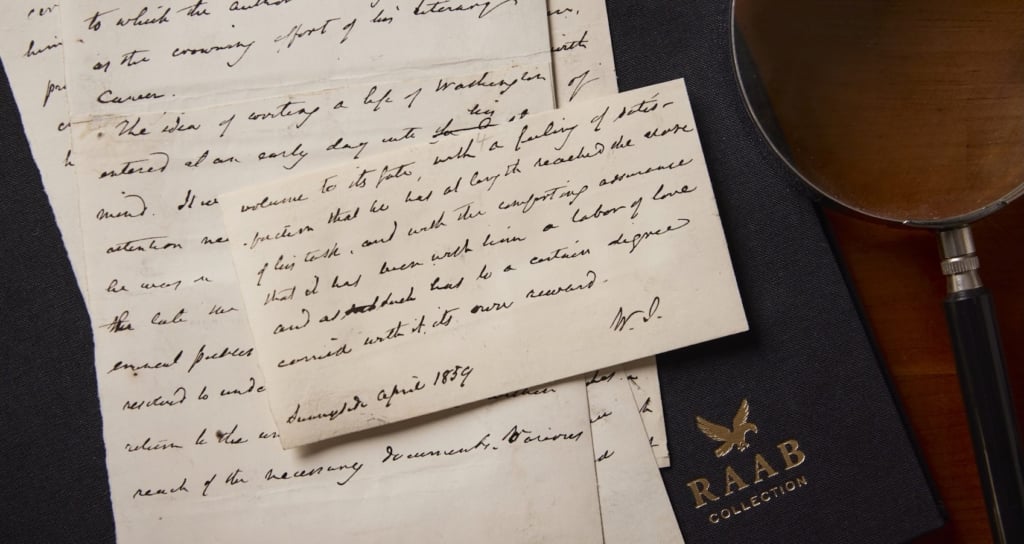
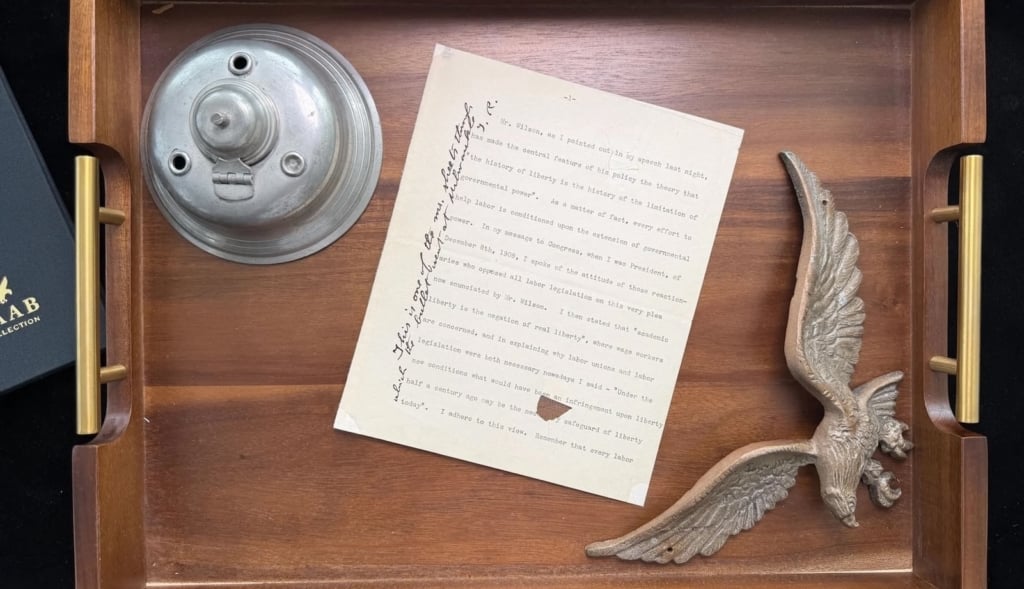


As Presidents’ Day approaches, public attention turns to two presidents routinely ranked by Americans as among the nation’s “best:” George Washington and Abraham Lincoln. Over the past several decades, Nathan Raab has discovered, acquired, and sold hundreds of documents signed by each of these historic figures, and is in a unique position to discuss the enduring appeal of collecting Washington and Lincoln.
Raab was interviewed on the Inspired by History podcast about the intricacies of collecting presidential documents and autographs. Listen to the interview below or via your podcast player of choice. Or, if you prefer, read this lightly edited transcript of the conversation with photos and embedded links to more resources.
George Washington
Welcome to a Special Presidents’ Day episode of Inspired by History. Let’s start with George Washington, the first president of the United States, and the one routinely ranked as best. He is, of course, highly sought after among collectors, both institutional and private. Nate, what types of Washington documents do you, as a dealer, tend to see?
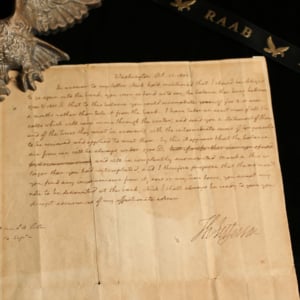
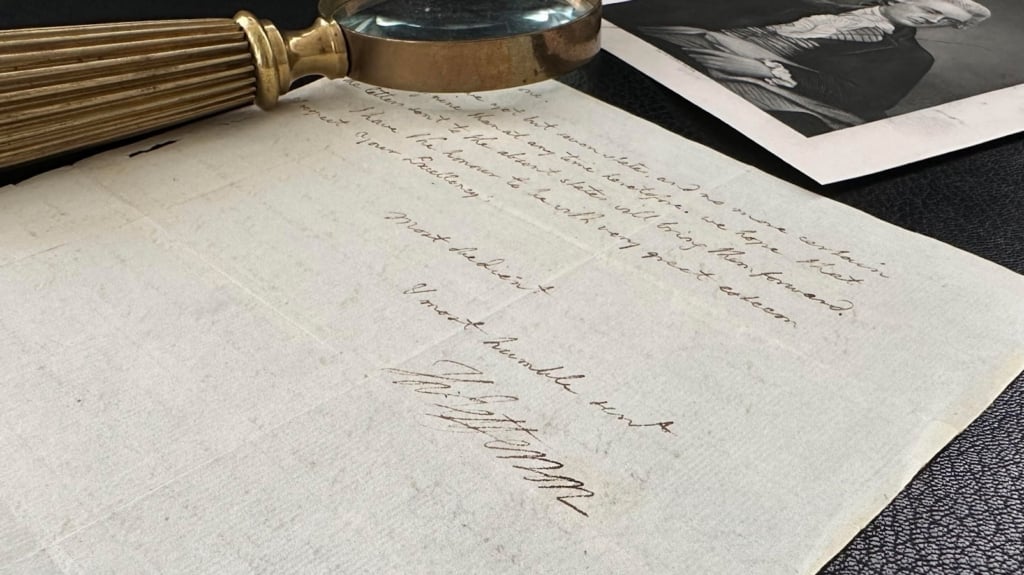
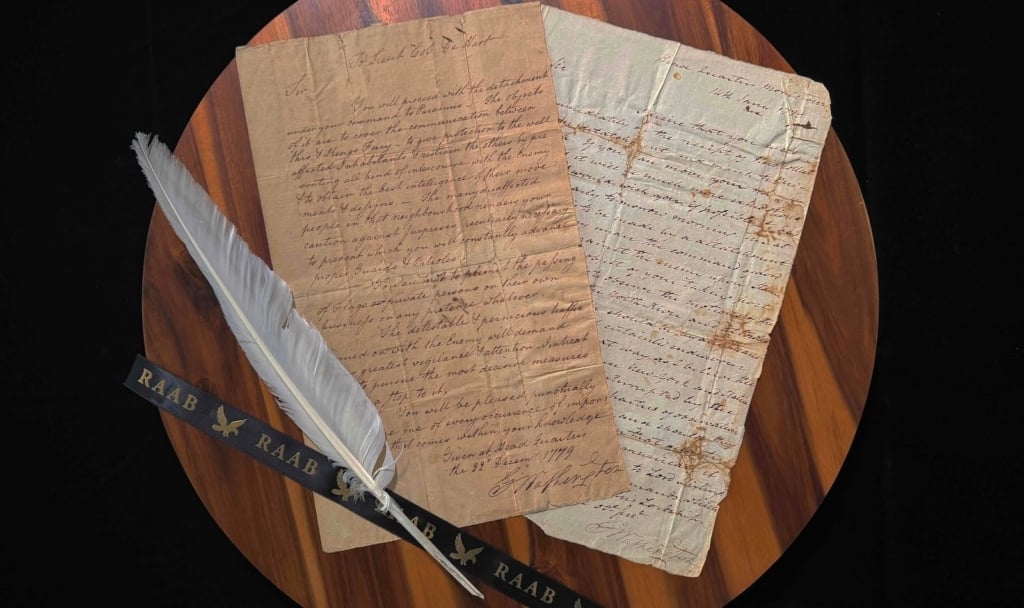
Nathan: Washington wrote letters and they survived from his youth, from his teenage years, when he was a young, aspiring businessman and surveyor, up until the days before he died. What you see are letters signed or surveys signed and other surveying related correspondence from his younger years. You can see letters from his time fighting for the British before the Revolution. Obviously there are letters in the lead up to the Revolution, and then during the Revolutionary War you see letters to his various generals and to others involved in the war and to the members of Congress and friends. Then there’s the interwar years where there’s correspondence which is mostly business related. As you get close to the Constitutional Convention in 1787, [the letters] can take on a more political bent, but otherwise he’s setting up his businesses and his land acquisitions and sales after the war. Then there are the letters and documents signed in his formal capacity as President. Then his life in retirement, back to Mount Vernon, and this correspondence, which is again, mostly relating to his business and his farm. So you do see them from the whole of his life, from before the Revolution, during the Presidency, and the retirement.
Is there one particular time where you see more?
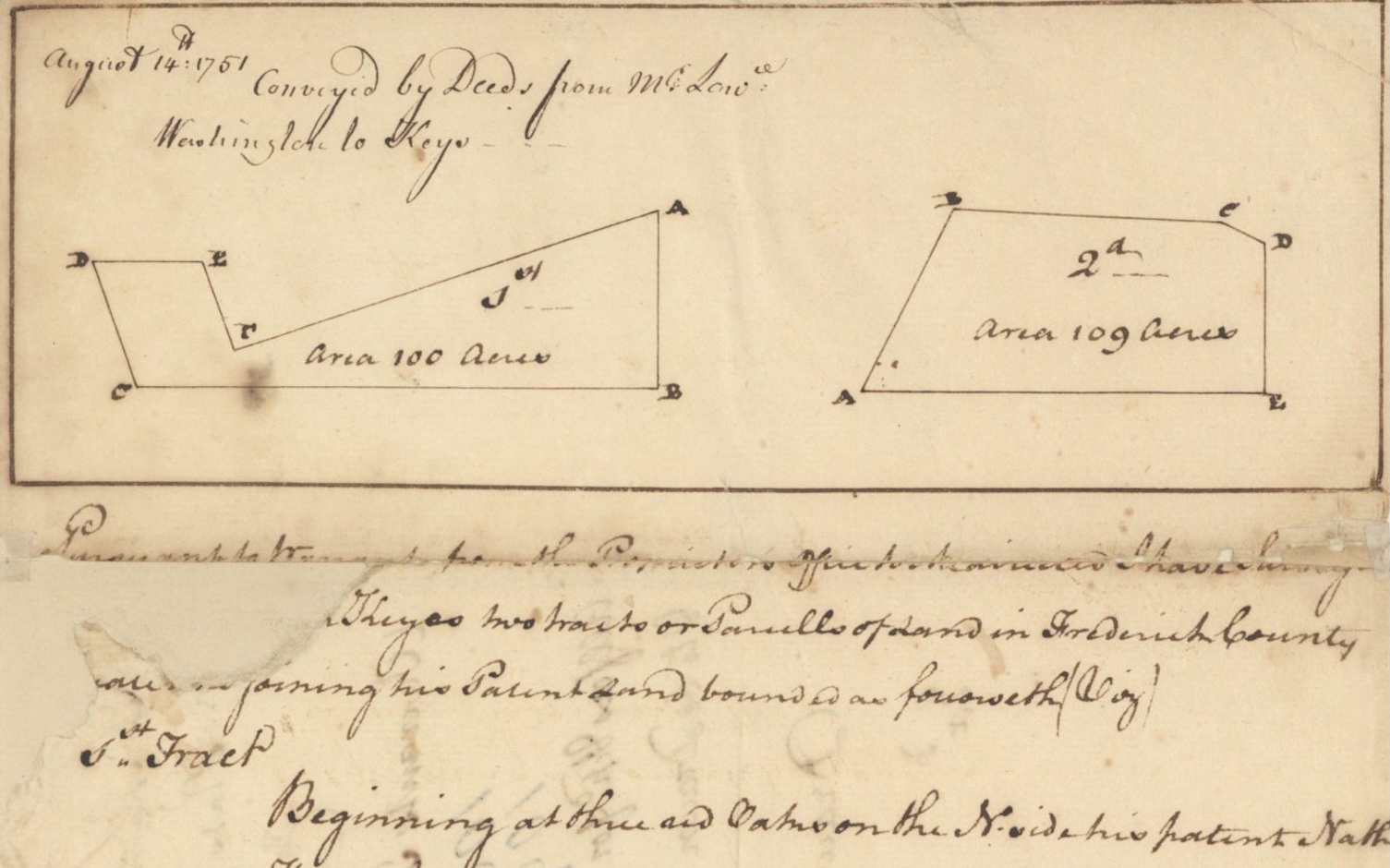
Nathan: You see them from the whole stretch. The early ones are more uncommon. They were more commonly sold about a hundred years ago. But one does find surveys, full surveys, that are drawn out and signed by Washington from his younger years. We’ve had a few of them over the years.
Probably the bulk of the correspondence that you see is from the Revolutionary War through his presidency, through the heart of his public service, which makes sense. He’s a more active correspondent with a wider variety of people. The stuff that he’s writing is more likely to have been saved because at this point, once he’s general and when he’s President, he’s a famous person. He’s perhaps the most famous person, so his stuff is more likely to be saved. It’s the official correspondence that during his presidency is much more likely to be saved.
So in the grand scheme of volume of the correspondence that one sees on the market, I would say, from 1775 or 76 through the late 1790s, including the interwar period. And what can be said about Washington is that it’s not as if finding a letter of Washington is, in and of itself, a newsworthy event. It wouldn’t be like the rarity of finding, say, a William Shakespeare, but it’s a supply and demand economy. So the supply is what it is, but the demand more than meets it, which is why these things have value and why they are fairly uncommon is, once acquired, they tend to stay where they are.
I’m sure it varies, but how many Washington letters or signed documents does Raab sell every year?
Nathan: That does vary. Tens. Not hundreds, but I don’t think about Washington letters in terms of volume. We could sell more, we could buy more. But our focus is on the things that are more important, and so I think about it more in terms of the quality and the uniqueness of the piece than how many. Our business is not a volume business. It’s a boutique business. We focus on quality over quantity.
Is there a typical price range for a Washington signed document? Do I have to be a millionaire to buy one of them?
Nathan: You can buy something signed by Washington for somewhere between $10,000 and $15,000. And there are other things that are signed by Washington that sell for millions. Washington has one of the widest ranges and obviously the things that are more important, things that are more historically significant, will sell for more money.
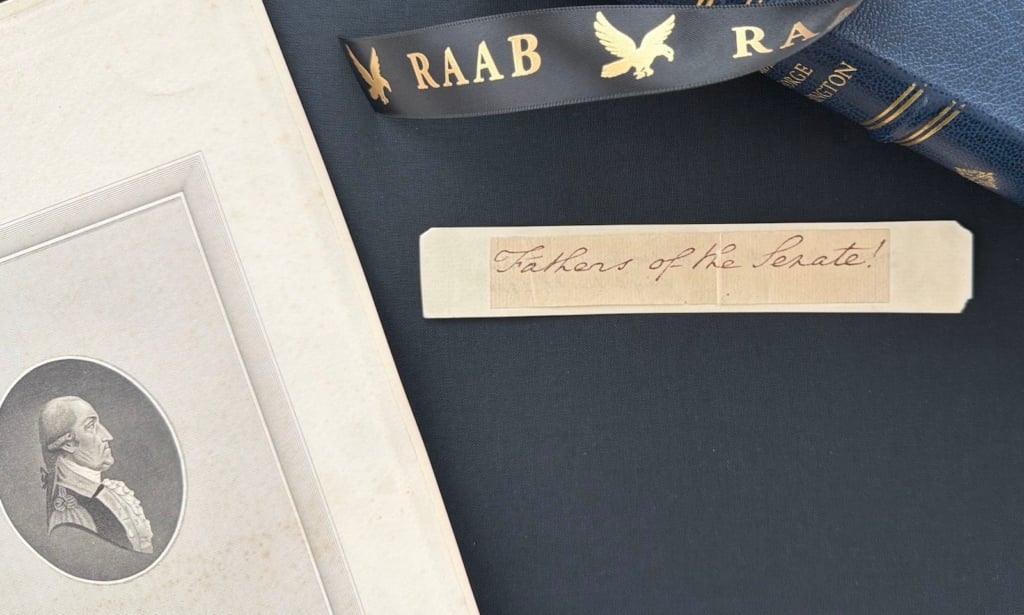
So what are you buying at $10,000-$15,000? You’re probably buying a signature or a clip from a document, perhaps even just a few words. It might be a free frank, a signature placed on a letter to indicate that the sender did not have to pay postage. Public servants don’t have to pay postage. They still don’t. Back then they would just sign their name and that would entitle them to free postage.
Up in the higher levels you’re dealing with things like the important missives from the war or that relate to the Constitution. So the pieces that I’ve seen go the highest for Washington are in general the things that relate to his feelings about opinions on the Constitution itself. Those are the things that tend to break into the seven figures. The average document of Washington goes somewhere between $35,000 and $55,000.
So, it really is the content that matters most. It’s not the condition, say, or the date or the recipient?
Nathan: I think about it from the perspective of: Content is king. Content matters most, and then something that’s in poor condition, you subtract from there. So you start from the premise that I’m assessing this letter in terms of the value of the content, and then I am discounting it based on, really material condition issues. If there’s a little ding on the side that doesn’t touch any words, or there are a couple words that are minorly affected, I don’t consider that material.
You can go out and find the most beautiful Washington letter ever written where he’s buying goods for his farm, but if you showed me a Washington letter during the war about the Constitution, even if it was in rougher condition, I would much prefer the latter.
In your 20 years of working with presidential letters and manuscripts, you’ve handled some outstanding Washington documents. Is there one that was particularly poignant to you?
Nathan: There’s always the recency bias, and remembering 20 years of selling Washington letters is not the easiest thing in the world. We just carried a series of three letters from Washington to his Secretary of War and State, and I think he was Postmaster briefly, Timothy Pickering, and those came straight from the family. They’d never been offered for sale before. They were very important. That just happens to have occurred a few months ago. But that was an exciting acquisition for us. Those letters were amazing. The condition actually, in general, was quite good.
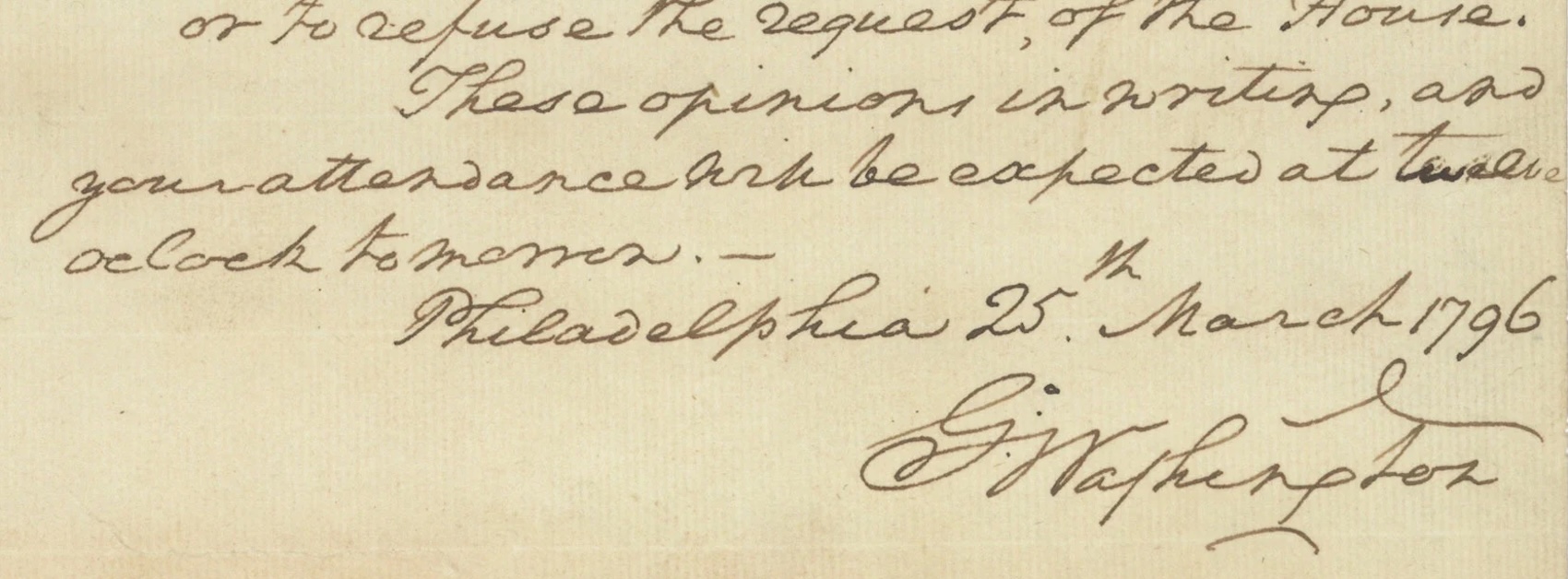
We once had a letter of Washington talking about freeing the city of Philadelphia. We sold that a decade or more ago. That was incredible. We carried a Farewell Address of Washington, written to some well-wishing citizens, which was incredibly important and powerful. If I had a list of the Washington pieces in front of me, I would remember all these old friends that I’d forgotten about.
It’s hard to remember these things. It’s also hard to imagine I’ve been doing this for 20, 21 years now which means that I started in my early twenties. We’ve had a lot of great Washington pieces, and the challenge is, once these great things have sold, finding the next ones. That’s always the challenge.
Tell us about the evolution of Washington’s signature. Did his handwriting change over time?
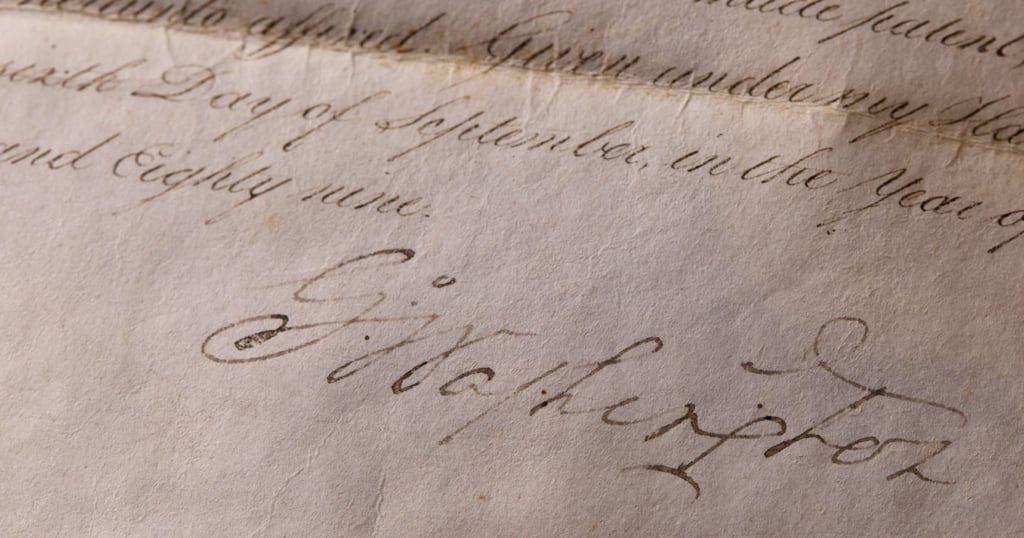
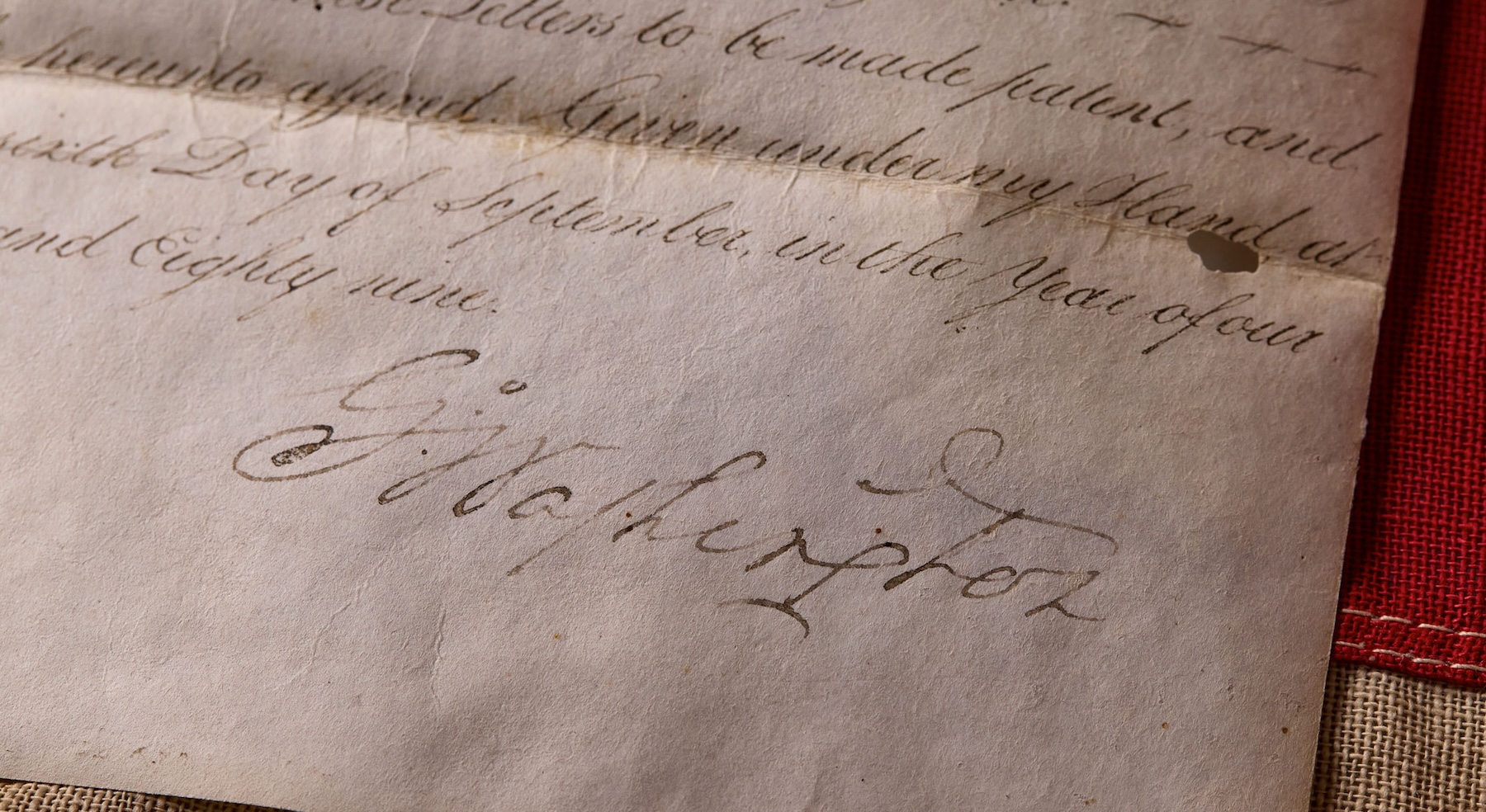
Nathan: It went through an evolution. So once you’ve crossed over out of the 1760s and you start getting into the 1770s, there’s a big change. So I wouldn’t say it changed a huge amount over time. Of course, it did change over time as anybody’s would, but it was very different in his youth. Recognizing a Washington letter in his youth is not the same as recognizing a Washington letter in his middle and older age. So it went through a transition rather than the handwriting slowly evolving and changing over time. He seems to have had a youthful way of writing and an adult way of writing is the best way to put it.
Now there have been several very good Washington forgers over the past 225 years. Who are the most prominent and what are the giveaways when you are authenticating a Washington autograph?
Nathan: My answer to this is the same as it would be for anything. It’s the feel of things. Sometimes you just look at it, if you’ve seen enough of these things, and you just look at it and it feels wrong. There’s something about it. It just gives you a little bit of a shiver, like it’s just not right.
There, of course, were a number of Washington forgers. Their handwriting is known as well, and some of them were quite good. They’re well-known. Forgers made famous by an autograph dealer in the 20th century named Joseph Cosey and Robert Spring. I see the most Spring forgeries, and they tend to come in the form of checks or Revolutionary War passes and they look the same. He had his bag of tricks and he went with it.
There are ways to spot a forgery and most of it is simply experience. The way that [Washington] forms his letters. The type of signature, not too bubbly; his signature was forceful and strong. The handwriting was straight and not wavy.
The published correspondence of Washington lists all the letters to and from him that are known. So often you can tell where a letter ought to be and that helps you avoid things that don’t belong with the person that they are with currently. And also to say, okay, well this was in a private collection 10 years ago and it was sold here. You can track its journey a little bit.
Listen, authenticating documents and being an autograph dealer is like anything else. You go with the people that have the experience. If this were something you can read a book and do, everybody would do it. You can’t read a book and learn how to do this. You can read a book and learn about the ways that the people know how to do it, know how to do it, but there’s no substitute for experience. It’s like I tell my daughter who pitches in softball: You got to get reps. There’s no substitute for reps, and that’s the case here.
Is there still space for collectors to jump in, and what advice would you give to someone who wants to buy a George Washington letter?
Nathan: Yes, of course there’s space for collectors to jump in. We sell to new buyers all the time. The key is deciding what interests you. You should always buy your passion, not someone else’s passion, and then buy the best piece within your budget that you can. I would buy one piece, to give an example, for $10,000, not 10 pieces for $1,000. That one piece for more money is gonna be more historically important. It’ll be more interesting. You’ll enjoy it more rather than just having volume. So buying the things that inspire you. Buying them within a budget which is comfortable for you, and for that, it’s different for everybody.
Abraham Lincoln
All right, let’s pivot to Abraham Lincoln, the other President in Presidents’ Day, who also routinely ranks in the top three best presidents. What types of Lincoln documents does one tend to see on the market?
Nathan: Lincoln’s documents have surfaced from his entire life. There are boyhood notes of Lincoln that have sold. They’re very uncommon and tend to go very high, and there are documents that–we’ve carried them–are signed in the final days before his assassination. There are many documents signed by him as a lawyer. We’ve just acquired a few of them. There are documents of him as a young politician trying to get in on the game. Then there are letters of him running for president during the Lincoln Douglas debate era, and as President-elect sending autographs to well-wishers.
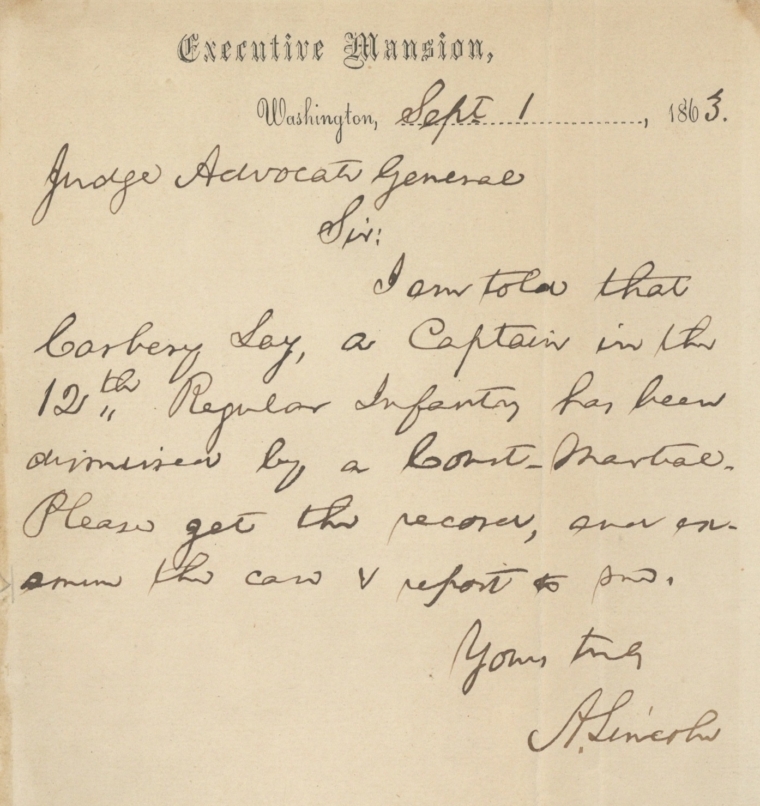
The vast majority of documents that survive are from 1861 to 1863. And here you find little notes on the back of other letters. Lincoln’s habit was to get a letter and then turn it over and then write his instructions on the back or on the side or something like that. And those are called endorsements. And so you see those, also military commissions, appointments, those large, animal skin (vellum) documents signed by him and the Secretary, usually Secretary of War.
Then of course there are letters and little notes that he wrote throughout the war. He seems to have always been in the business of writing, and so a lot of his correspondence survives. Like Washington, it’s a supply and demand situation. The demand for something signed by Lincoln is such that it supports the volume of his material.
Those military commissions, are they all valuable? Is it based on the condition or the year or the recipient? Is there any kind of math to that?
Nathan: Yes. I mean, anything signed by Lincoln is valuable. The military commissions, they’re going to go somewhere between $12,000 or $13,000 and $20,000 in general. And the condition is the main factor there because they tend to be, more or less, the same, appointing some minor officer in some regiment to a position, but they’re beautiful. They’re majestic, they’re large, they frame well. The caveat is occasionally there are Lincoln commissions of people of great import. Either household names or people in prominent positions, or there are things that, sometimes he’ll appoint somebody based on meritorious service in fill-in-the-blank battle, which gives you more color and that can influence the value on the high side, but most are in that range.
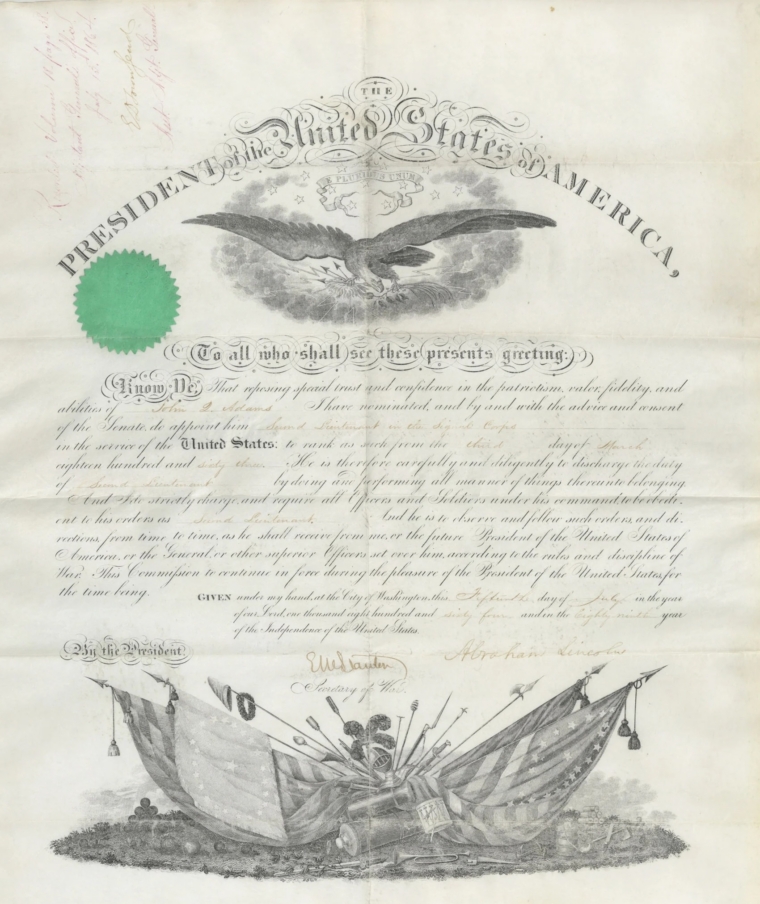
Of course if you get a Lincoln military commission that’s just really in rough shape, you can barely read the signature, now you’re talking about something that’ll be less than $10,000. For most people, that’s a huge amount of money. There’s no cheap Lincoln. You know, everybody’s sort of on the hunt for this great deal, the cheapest of the cheap. If something’s too cheap, too good to be true, it generally isn’t true. It’s generally something that you should be suspicious of.
Do letters, especially if they’re completely in his hand, go for much more than that?
Nathan: Not much more. I would say generally letters, full letters are, there’s more of his handwriting and they tend to have more of a story. They’re a little bit different. So I would say they generally go for more, not always, but generally, and not much more. If your average Lincoln commission is going to go for $16,000-$17,000, a fairly minor letter of Lincoln might go for $22,000. A difference, but not a magnitude of difference.
And the letters are based, again, mostly on content, historical importance?
Nathan: Yes. The value of a letter is what Lincoln is doing and what he’s saying. Does the letter have an important historical story to tell, or does it tell you something about Lincoln’s character? Is he stating a principle that is relevant? For our historical estimation of the figure, do we care about what he’s saying? Or is he just saying, come meet with me, or, so-and-so did this and please do it. Content is king.
I’m sure too, it matters if he’s writing to like General Grant or someone of that caliber?
Nathan: Yes, of course. A Lincoln letter to Ulysses S. Grant would be very valuable, just connecting the two figures. I’m trying to think if I’ve seen one. I’ve certainly seen Lincoln letters to major generals. I might’ve seen a letter from Lincoln to Grant, I’m trying to remember if we carried one. We had a letter of Grant to Lincoln, which was amazing. That was awesome.
Is it correct to assume that Lincoln signed documents are more plentiful on the market than Washington signed documents?
Nathan: Yes, that is correct to say. Lincoln was just more of a correspondent. His habit of signing all these military commissions in an army that was much larger than Washington’s army.
There were just a lot more people. It was a more developed army. His endorsements, the fact that it’s later and just the later things are, the more they tend to survive. Lincoln documents are much more common.
In your 20 years of working with presidential letters and manuscripts is there one Lincoln document that’s particularly poignant to you?
Nathan: This is always a difficult question because the truth is there are many. I’ll say one and then I’ll think of 10. We once had a group of two letters, which we bought from the descendant of a bishop, I think he was from New Hampshire, in which Lincoln was hoping for God’s support in the war. I just had never seen anything from Lincoln invoking God before. I thought it was incredible. We sold those for a lot of money many years ago, but those were great letters, and I may never see one like it.

There is something interesting about Lincoln’s signature. Tell us about that.
Nathan: On formal documents, Lincoln signed, formally signed his full name, Abraham Lincoln. On letters and little notes, it was always A. Lincoln, and I don’t recall ever seeing an exception to that. It’s the quickest way to spot a forger. He never signed Abe, nor did he call himself Abe Lincoln, and his signature rose and fell in the same sort of predictable way. When he was younger, of course, when he was a little kid, those really early pieces, his handwriting was different. But once he became an adult, his handwriting evolved. It looks different, it’s recognizable.

Are forgeries and facsimile of Lincoln autographs something you run up against often?
Nathan: Often is a relative term. One does see them. We see more facsimiles than forgeries, but you do see forgeries. We got quoted a forgery just a couple days ago. Something I was convinced was a forgery. I wasn’t 100 percent sure, but I didn’t take a lot of time on it, because once it enters my mind that it might be a forgery, I can’t get past that. Because 99 times out of 100, my initial gut reaction is going to be right. So we just declined it. I don’t think these are things that are being forged by the people that are quoting them to us. I think it’s something that was bought a hundred years ago, or 80 years ago, perhaps forged by one of the forgers, like Cosey or Spring. (Cosey did more of Lincoln.) And the current owners just don’t know. I mean, there are forgeries in institutional collections now.
What advice do you give to someone who wants to collect Lincoln?
Nathan: My advice for somebody collecting Lincoln is my advice for somebody collecting anything. Buy the things that you love within a budget that’s right for you. You’re putting together your collection, not someone else’s. Beware people who are saying, everybody else likes this, so you should buy it. I guess there’s a place for that, but some of the great collections that I’ve seen put together, and that I’ve helped put together, were put together by people who were really sophisticated buyers and well-read in history. They bought the things that were interesting and exciting to them. At the end of the day, they were smart and bought well.
If it’s interesting to them, it’s going to be interesting to somebody else. And in the meantime, they get to enjoy the things that they care about until it’s time to either, pass them on to a kid or a family member, or donate to an institution, or sell them – which are generally the three things that happen – and that doesn’t mean the person is done collecting. I’ve seen people sell entire collections and then put together new ones. Or, they put together collections in the forties in their fifties, and by the time they’re in their sixties, they just would rather do something else with that money. So they sell or they donate the material and the money gets put to another use.
Customers of yours who are buying either Washington or Lincoln documents, what kind of collections are they creating with them? Are they doing Presidents, are they doing Washington and his circle? Are there typical collections that they’re building? Are they going in order – every single president – or is it something with more of a narrative?
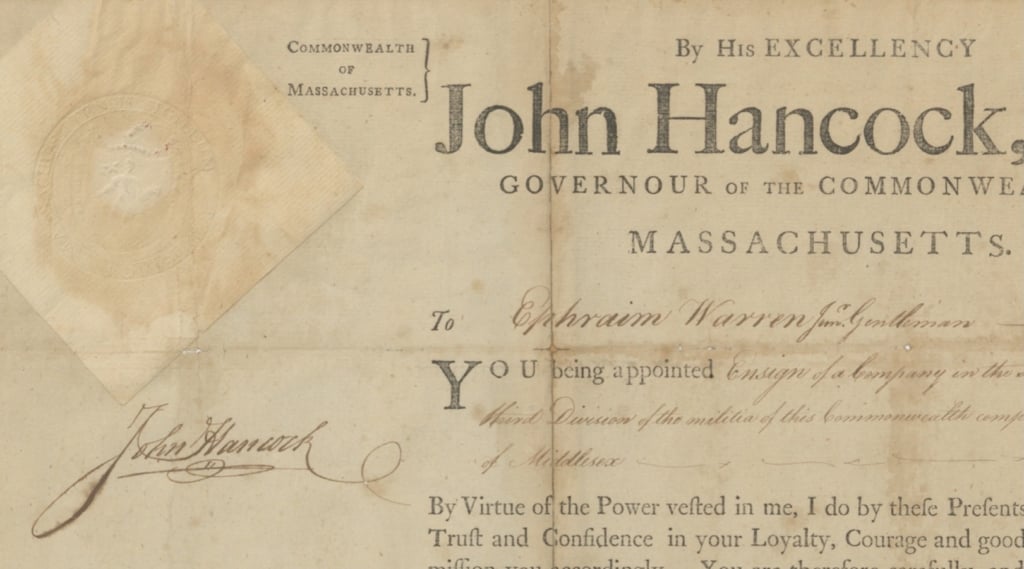
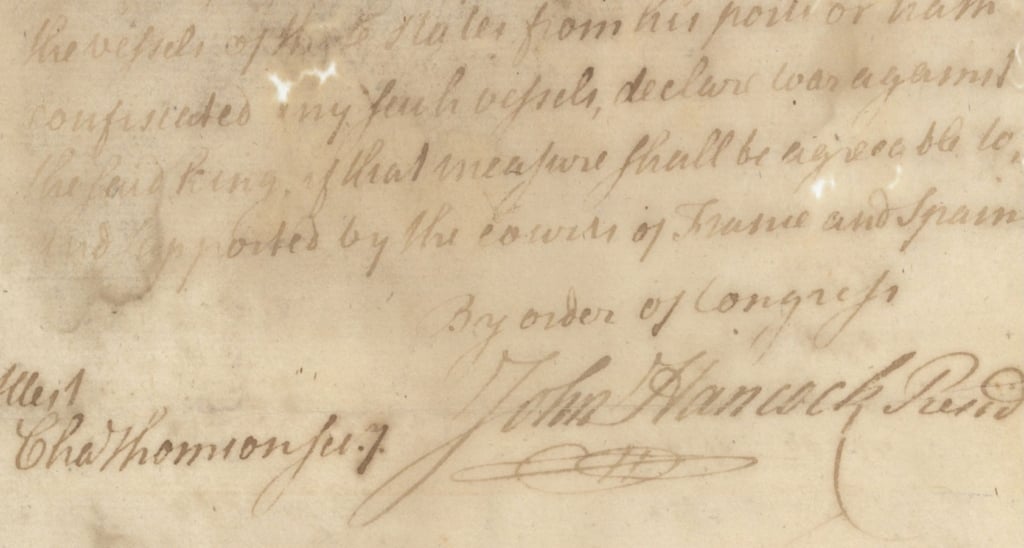
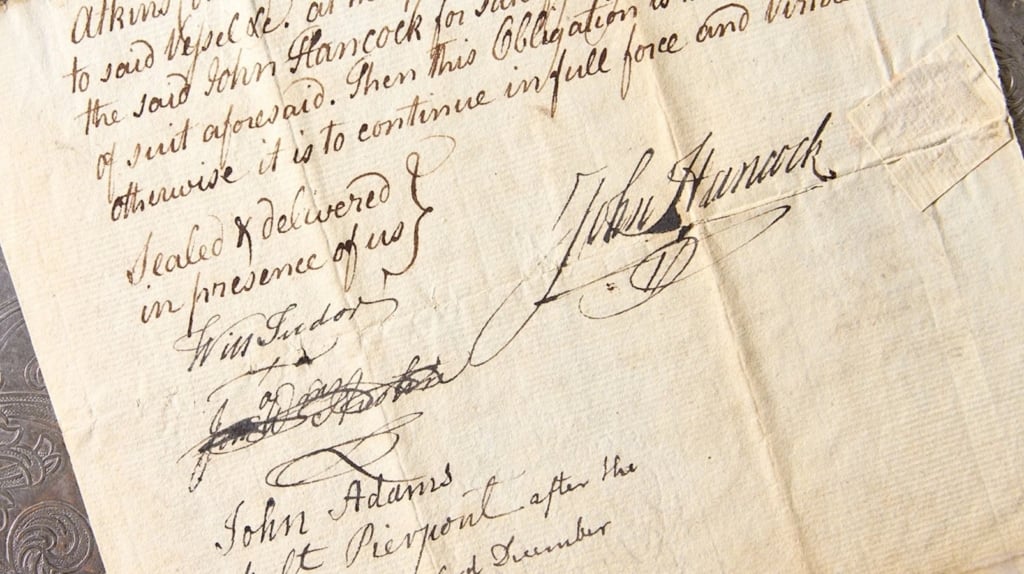
Nathan: I think nowadays it’s more of a Mount Rushmore approach. There are people who are buying every single president, often as president, but mostly people see things they love and they buy them, and they’re looking for some of the bigger names. That’s what I mean by a Mount Rushmore approach. Not necessarily the same four as on Mount Rushmore, but they’re looking at the Washingtons and the Lincolns, or even the John Hancocks. Remember John Hancock was president of the Continental Congress. Some of the big names you see out there, of course they’re the first three: Washington, Adams, Jefferson, and Lincoln, Roosevelt, both Roosevelts [Theodore and FDR], Kennedy. These are the names that tend to pop up the most, and then within those people are buying the things that are the best things they can afford.
They’re going for what’s personally inspiring to them.
Nathan: That is always what one should do. You’re buying these things, and we don’t sell them as primarily as investments. We sell them as purchases of passion. So they’re things that our clients buy because they’re meaningful to them and they’re exciting to them. They inspire them in some way or another. If you buy something that doesn’t accomplish that purpose, you’re getting less enjoyment out of it. From a purely financial perspective, your money’s not doing as much work. You’re buying something that may interest somebody else. Now, there are people that buy purely for investment. That’s not how we sell our pieces in general. This is not the art market. The autograph market functions in a very different way. So that is not the primary driver of sales in our market.
To learn more about George Washington documents, read our “Illustrated Guide to Buying Washington Autographs & Documents” and “Attributes of the President: George Washington.”
To learn more about Abraham Lincoln documents, read our guide, “What to Know about Buying Abraham Lincoln Autographs & Documents.”