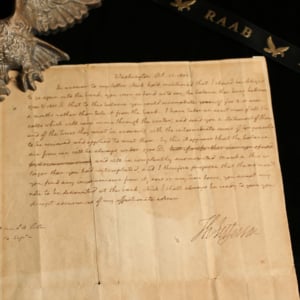




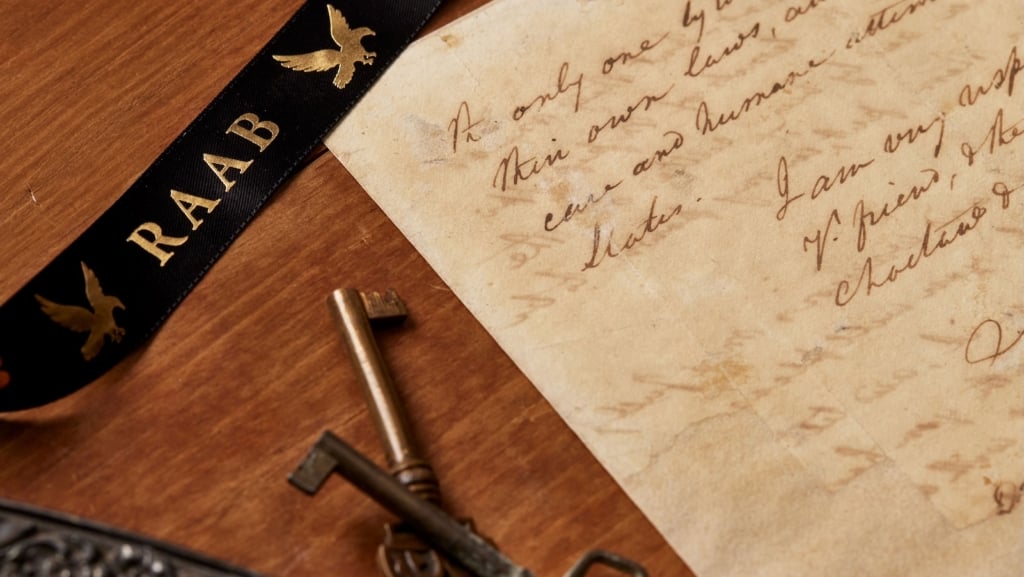
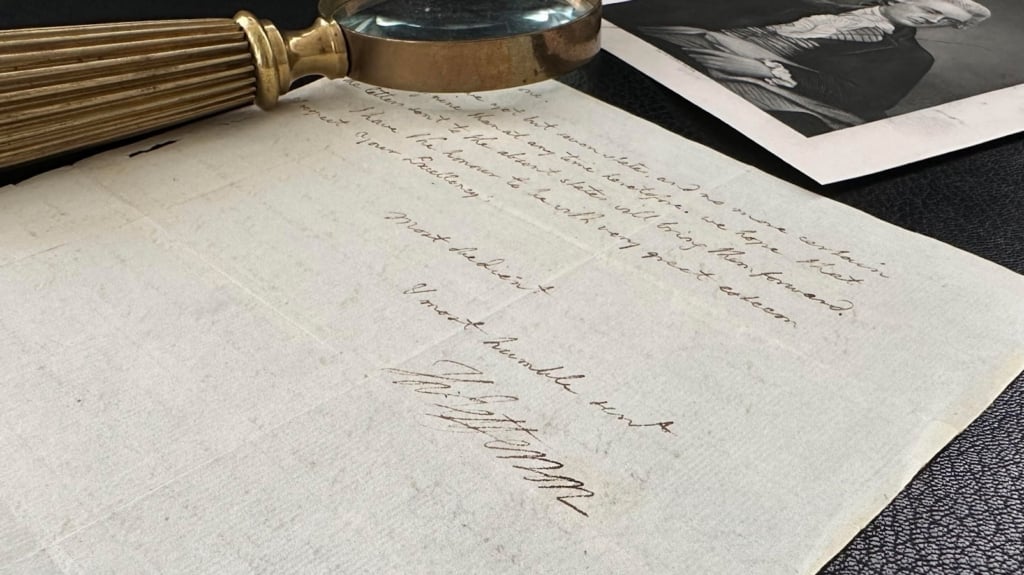


The Raab Collection has acquired and is offering for sale an unpublished letter of the Marquis de Lafayette to James Madison, written from Mount Vernon in 1784. In the letter, the famous French hero plans his forthcoming tour of New England (where he would meet John Adams), a visit to the Richmond legislature, and his acceptance of honorary citizenship by Congress. This letter has been in a private collection for nearly a century.
Nathan Raab discussed this letter and the relationships between Lafayette, Washington, and Madison on the Inspired by History podcast. You can listen to the interview below or via your podcast player of choice. Or, if you prefer, read this lightly edited transcript of the conversation with photos and embedded links to more resources.
Today we’re talking about a letter written by the Marquis de Lafayette to fellow Revolutionary War-era leader and later US President James Madison, which is to say, we’re talking about correspondence between two major figures in American history, and not only that, the year is 1784. The war had ended only a year before. So Nate, give us the lay of the land. What’s Lafayette up to now that the war is over, and why is he writing to Madison?
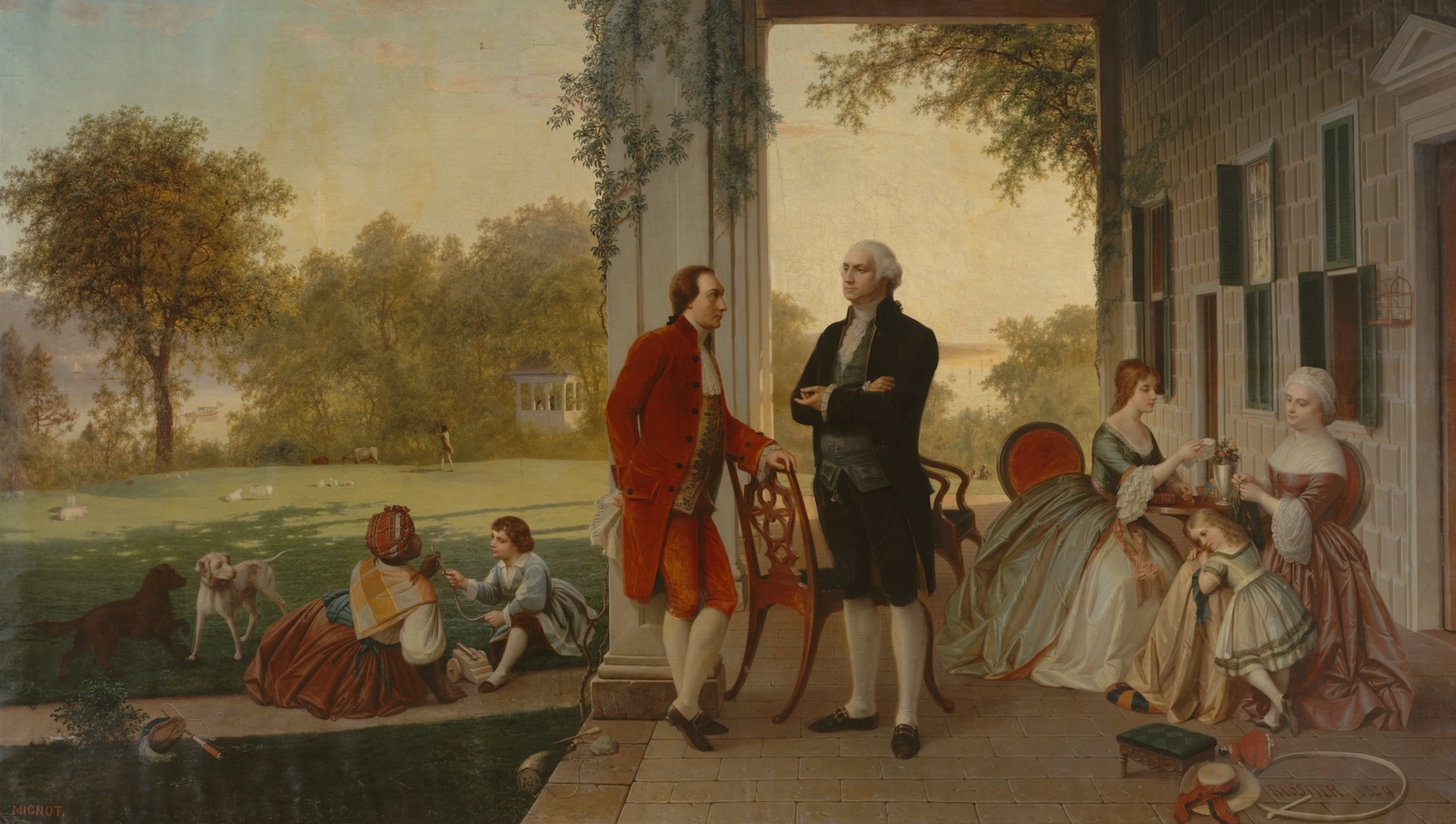
Nathan: Lafayette’s come back from France to the United States. I suppose it’s not the United States in the way that we think of it today, but he’s coming back for the first time since the war, and his first stop, once he sort of gets settled on land, is he heads towards Mount Vernon to visit his mentor General George Washington, who he still refers to as the General. He’s back for a variety of reasons. He’s visiting friends. It’s a goodwill tour. He has a handful of business matters to take care of. He’s going to accept an honorary citizenship to the country and to reacquaint himself with people who he may not have known very well but in whose circles he ran. One of them is Madison. So Madison wasn’t a close acquaintance of the Marquis during the war, but this looks to be something that they aimed to remedy, and it indeed was a friendship that would last for a very long period of time. I should note that both of them were young men during the war.
So after the war, Lafayette went back to France, and then a year later, he came back to visit. A social call?
Nathan: Yeah, I think it’s a business and social call. He’s strengthening Franco-American bonds. He’s speaking in front of legislatures in Virginia and then he goes up to Rhode Island, he accepts the citizenship, and he’s touring about, seeing friends. He engages in some Native American diplomacy with the Iroquois. I would call it a Goodwill tour. I think that’s probably the right word.
It’s pretty incredible to think about Lafayette writing to Madison while staying at Washington’s home and also he’s on his way to meet John Adams later in the tour. It’s like you’re really in their inner circle.
Nathan: Yeah, it’s like they’re all hanging out. They’re getting the gang back together. He wants to go south, but he wants to wait for Washington. Washington has to go west to survey some of his lands and assess the post-war state of affairs in what they thought of then as the Old West. Lafayette’s not going to go with him. Lafayette ends up going up to New York. Well first he goes to Baltimore. He writes Madison this letter, and instead of writing back–what appears to have happened is–he runs into Madison in Baltimore. It was both intentional and fortuitous that this happened, that he meets up with Madison. Madison basically joins up with him; the gang’s on the road. And they engage in this Iroquois negotiation and then they go east towards New England and [Lafayette] accepts honorary citizenship and then goes south–I might be slightly confusing the order here–and speaks to the Virginia legislature and ends up back again in Mount Vernon.

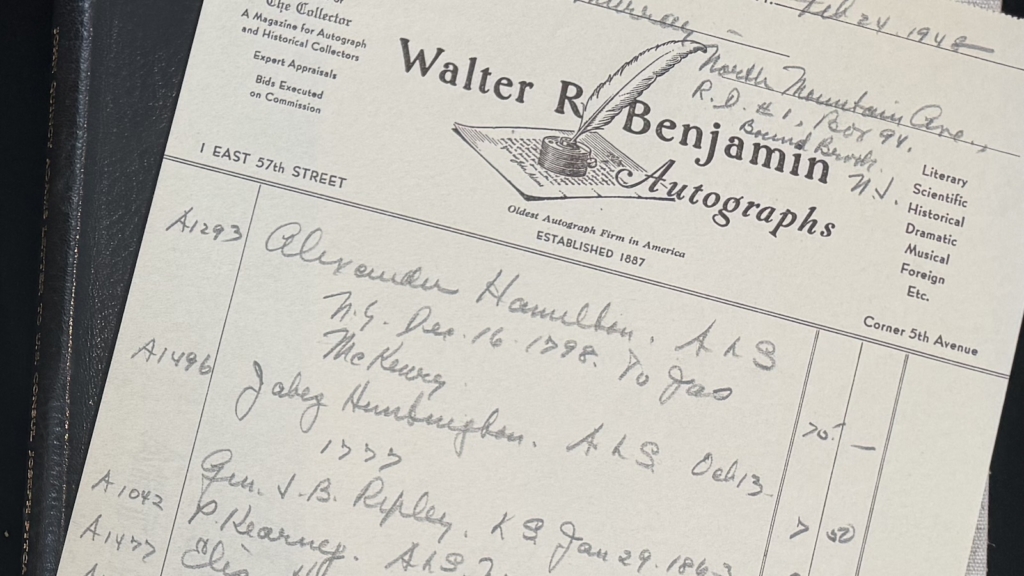
What’s remarkable about this letter is you’re really capturing Lafayette in an important moment in time. This is datelined Mount Vernon. He’s at Mount Vernon when he writes this letter, which is crazy. He’s talking about Washington. He is happy to be back in the States. He refers to the General a number of times and wanting to abide by his wishes. It’s a letter where he is basically spelling out his plans for the entire trip, and then if you look at the bottom left, he’s written Mr. Madison, Esquire. Madison was a lawyer. He’s identified the recipient of the letter, which is James Madison. It’s remarkable. Finding a letter from one Founding Father to another–and I think of both of these men as Founding Fathers, even though Lafayette was a Frenchman–from this era is virtually unheard of. A lot of their pieces are in major libraries or have long since been in private collections. The reason that this one is where it is, is that it’s been in the same family for nearly a century. It was sold at Parke-Bernet, and it was acquired by businessman, an architect and architectural historian from Parke-Bernet, probably in the late thirties or early forties, a man named Oscar Stonorov, and has been in that family ever since. So yeah it’s rare that these kinds of things surface. It’s a reminder of the close and important collegial relationships that these Founders had and how they continued to maintain that. The war was a bonding experience for these people that crossed the Atlantic.
It’s interesting that you say that about the letter, which is unpublished, that it’s been in a private collection for nearly a century. We’ve talked about letters like that before being somewhat hidden away during the years and decades when these academic papers projects sprung up and began collecting and publishing the known correspondence of people like Washington and Jefferson and Adams. Do you think that’s what happened here?
Nathan: Yeah, I would expect it just because he’s American and because of the amount of research and resources devoted to him, I would expect it to show up in the Madison papers. And it’s possible it’s in some obscure publication, but I see no evidence of it in the National Archives’ Founders’ Papers Projects. The content doesn’t come up anywhere easily accessible to me so I’m presuming that it’s unpublished. It was sold at auction at a time when these organizations weren’t actively perusing the catalogs and taking note of the content and the owner and cataloging it. It may have slipped through the cracks, which is another exciting element of the letter.
It’s an exciting find. You can go a long time without finding something similar. When the seller contacted us, of course, it was very exciting. It wasn’t immediately obvious who the recipient was. You really have to look at the letter carefully to see the recipient. But once you see the recipient, it’s obvious, and once you understand the content it makes complete sense. But it doesn’t jump out at you. Now the Parke-Bernet folder does say to Madison, but I didn’t have access to that at the time when we were first analyzing the letter. So they did identify it correctly as being Madison, the recipient.
I was wondering because he opens a letter and it’s not “Dear Mr. Madison,” it’s not apparent. So I was wondering how you went about figuring out that it was Madison he was writing to.
Nathan: It says Madison, bottom left, but it’s small and it’s not bold, so you know, it hides, it’s like just right below the final line. But it’s there. Clear as day.
Many Americans consider Lafayette to be a Founding Father, even though he was French and lived most of his life in France. Why do you think that is? Why do you think he loomed so large here?
Nathan: He’s a symbol of independence. He’s a symbol of revolution and fighting for freedom. He took the revolutionary spirit across the Atlantic to France, which would eventually adopt its own form of revolution. Less stable, of course. And because he came here to fight, and he materially helped in the war effort; he gave up the comfort of his own home to fight against this idea of tyranny on behalf of this democracy, pro-people movement, and he did it for us at great risk to himself of freedom and money and life. He was welcomed into the inner circle by men like Washington. It’s not an accident that Lafayette’s first destination in the new world was Washington’s home. He goes there, he meets with Martha. It’s a whole scene. And he’s just arrived when he writes this letter. He has just gotten there. He’s sitting down at a desk somewhere in Mount Vernon writing this letter. It’s very cool. The reference to Washington is warm.
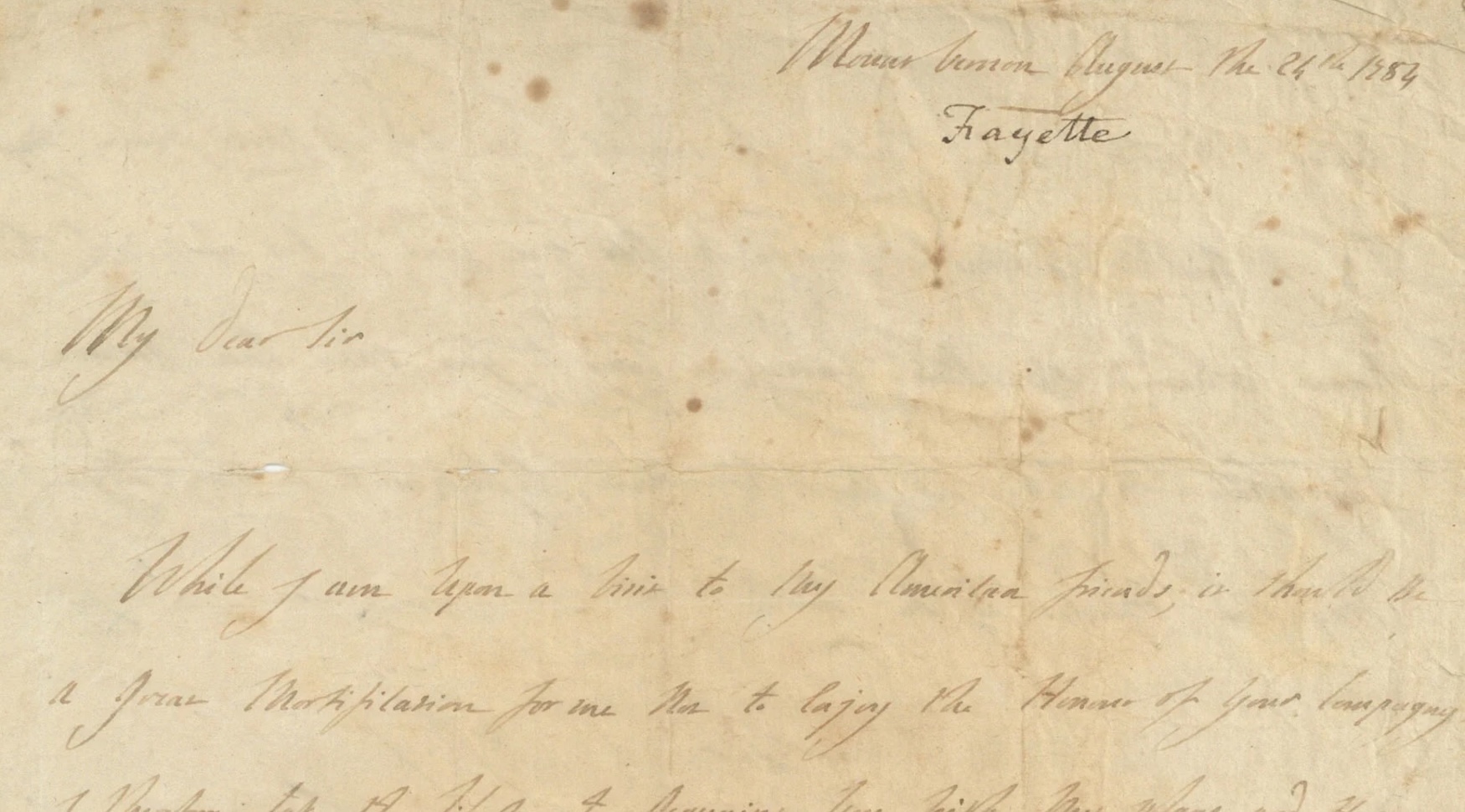
To me this is him saying, hey, here’s my plan for the rest of my trip. I’ve recently arrived, and I’d like to see you. This is the beginning of a long, close friendship, and in the more immediate term, it’s the beginning of a buddy’s trip across the United States with Madison and Lafayette.
The connection between the two Founders is remarkable. We’ve carried letters of Washington to Jefferson. They do pop up. They’re not common. They’re very valuable.
Letters between Founders are pretty uncommon?
Nathan: Oh very. They exist. They’re not impossible to find, but they’re very rare. I’ve never seen anything quite like this before. And this isn’t a business interaction. Letters between Washington and Jefferson tend to be letters between President and Secretary of State. These are two friends, corresponding cordially, and to see the dateline of Mount Vernon from Lafayette is touching.
To read more on the Marquis de Lafayette, visit our dedicated Lafayette page. To learn more about the important figures from this era in history, view our Revolution & Republic collection.